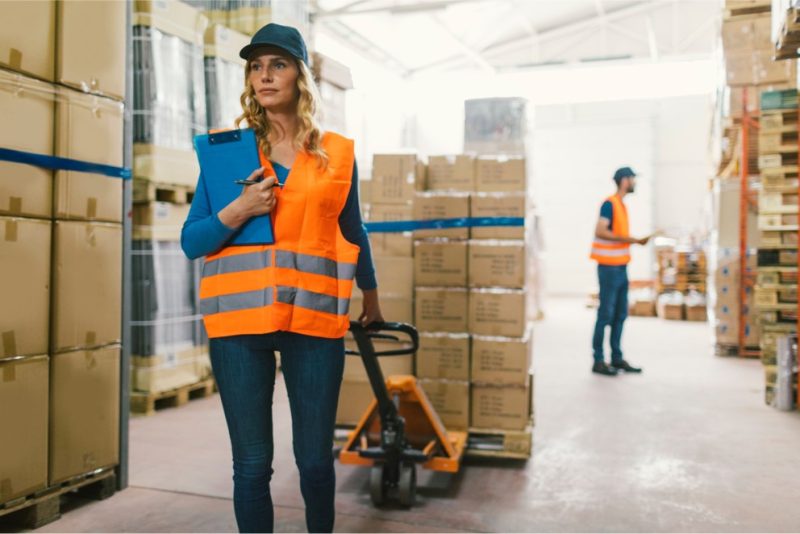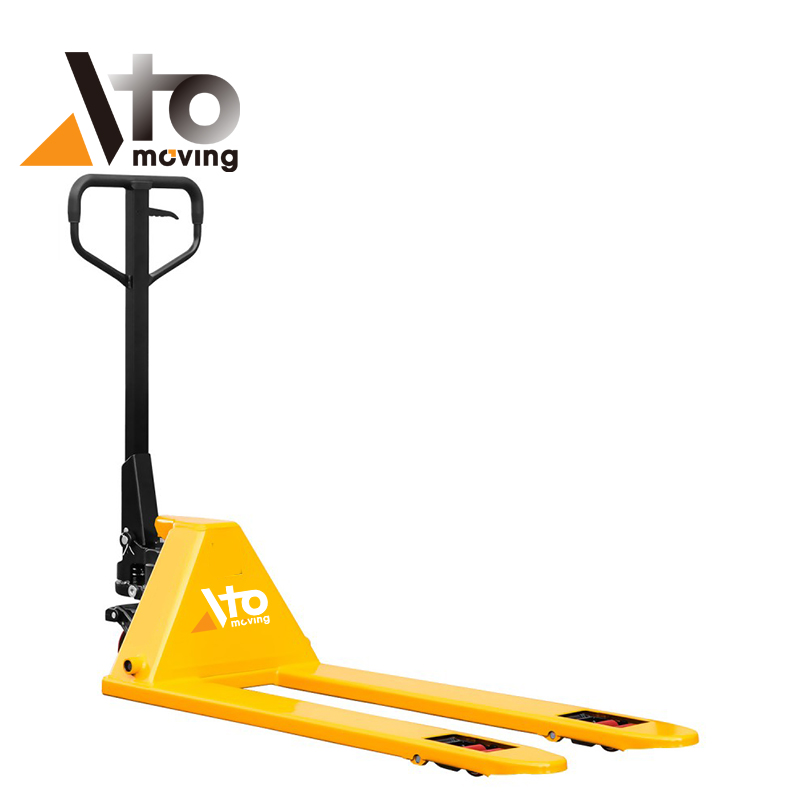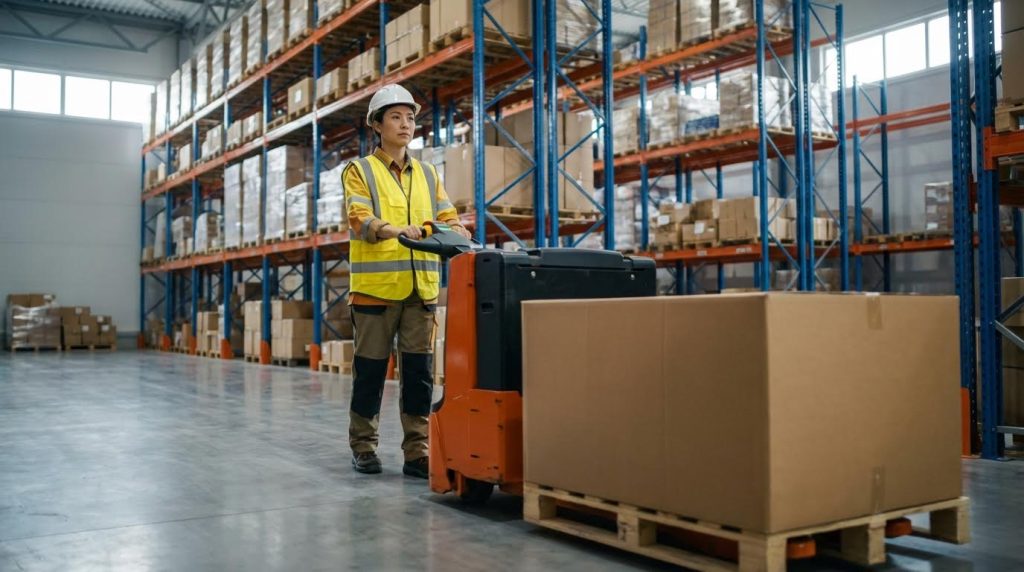
Pallet jacks are one of the simplest ways to move more product with less effort, yet they often deliver the highest return in day‑to‑day warehouse operations. This article explains what pallet jacks are, how they work, and what are the advantages of using a pallet jack compared with other handling options. You will see how they improve flow in tight aisles, support safer floor‑level handling, and reduce total cost of ownership when correctly sized. Use these guidelines to match pallet jack types and specs to your applications so you can increase throughput without adding complexity.
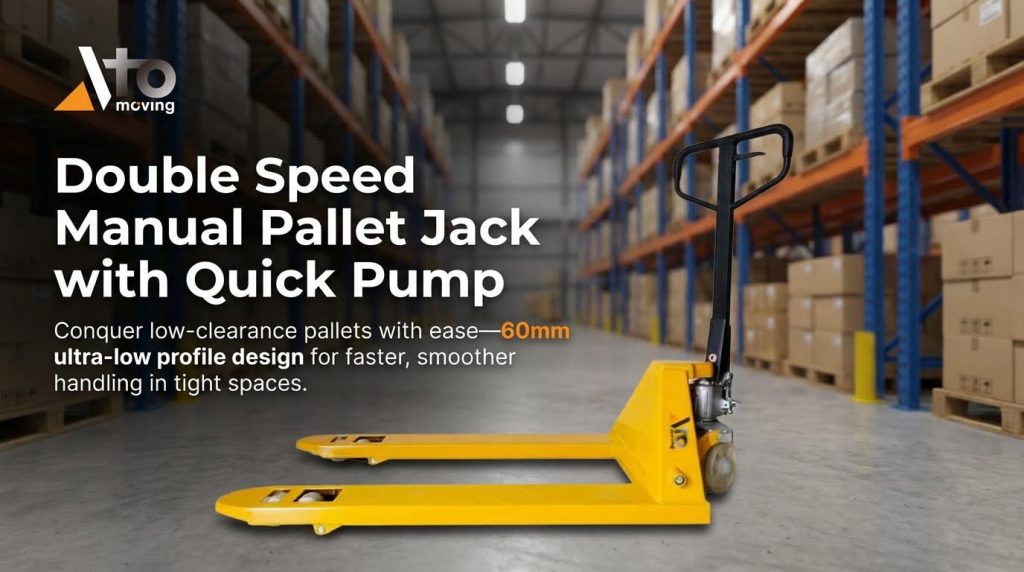
What A Pallet Jack Is And How It Improves Flow
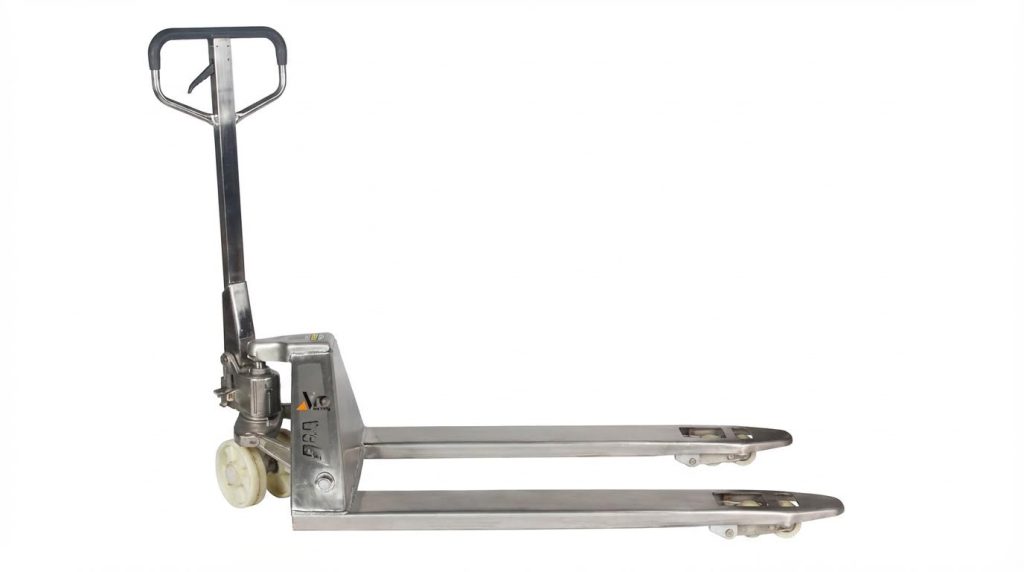
Core components and operating principle
A pallet jack is a low-lift truck designed to raise palletized loads just a few inches off the floor and move them horizontally. It improves flow by replacing manual lifting and carrying with a simple rolling motion, which speeds up pallet moves and cuts operator strain. Understanding what are the advantages of using a pallet jack starts with its basic components and how they work together.
- Key components
- Forks: Steel forks slide into the pallet openings and support the load. Standard models use fork lengths around 48 inches for typical pallets, while long forks above 60 inches help handle oversized or multiple pallets to boost productivity in larger facilities standard and long fork options.
- Steer wheels and load rollers: The steer wheels under the handle and small load rollers at the fork tips carry the weight and allow easy rolling on smooth warehouse floors. Larger wheels are preferred if the jack must cross thresholds or slightly uneven surfaces wheel and terrain considerations.
- Handle and control lever: The tiller handle provides steering and houses the control for lifting, holding, and lowering the load.
- Hydraulic pump unit: A compact hydraulic circuit converts handle pumping into lifting force.
- Operating principle
- The operator steers the pallet jack so the forks enter the pallet openings.
- Pumping the handle pressurizes the hydraulic system, which raises the forks and lifts the pallet a few inches off the floor hydraulic lifting action.
- Once raised, the operator pulls or pushes the jack to the destination, then uses the release lever to lower the load by bleeding hydraulic pressure.
This simple mechanism enables quick, repeatable pallet transfers with very low energy input from the operator, which is one of the core answers to what are the advantages of using a pallet jack in busy warehouse operations.
Maintenance and reliability factors
To keep flow consistent, facilities should inspect the hydraulic pump for leaks and smooth operation, and check that wheels are clear of debris and not excessively worn hydraulic and wheel checks. Matching the pallet jack’s rated capacity to the heaviest pallet weight prevents overloading and protects both equipment and operators capacity selection guidance. These practices keep the jack ready for continuous, low-disruption material flow.
Manual vs. electric pallet jacks in practice
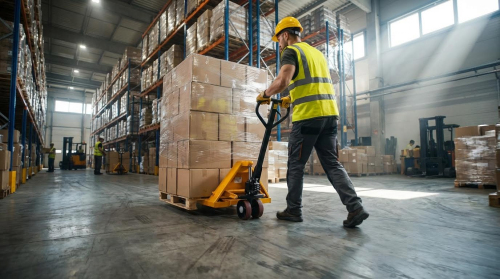
Manual and electric pallet jacks use the same basic geometry and pallet interface, but they behave very differently in real operations. Understanding those differences helps clarify what are the advantages of using a pallet jack in each format and where each type delivers the most warehouse efficiency.
| Aspect | Manual pallet jack | Electric pallet jack |
|---|---|---|
| Typical duty | Light to medium, short distances | Medium to heavy, longer runs and higher frequency |
| Power source | Operator muscle and hydraulic pump | Onboard battery powering drive and lift |
| Operator effort | Higher, especially on ramps or with heavier loads | Much lower; powered travel and lifting reduce strain electric operation benefits |
| Cost level | Low purchase price and minimal upkeep | Higher upfront cost and battery maintenance |
- Manual pallet jacks in practice
- They are cost-effective and well suited for small to mid-size facilities, short travel distances, and intermittent moves manual use cases.
- They require no formal operator certification in many regions, though training on safe handling is still recommended training expectations.
- They shine in very tight aisles where low speed and fine manual control reduce collision risk.
- Electric pallet jacks in practice
- Powered travel and lift allow one operator to handle loads that might otherwise require multiple workers, increasing pallet moves per hour and optimizing labor use labor and throughput gains.
- They reduce musculoskeletal strain and fatigue, which is a major safety advantage on long routes or in high-throughput operations injury reduction.
- Because they are powered industrial trucks, they require formal operator training to meet safety regulations training and certification.
In both versions, pallet jacks streamline material handling by minimizing manual lifting, speeding loading and unloading, and working efficiently in confined spaces where larger trucks struggle efficiency in tight spaces. These characteristics define what are the advantages of using a pallet jack for keeping goods moving smoothly through modern warehouses.
Engineering Benefits: Capacity, Safety And TCO
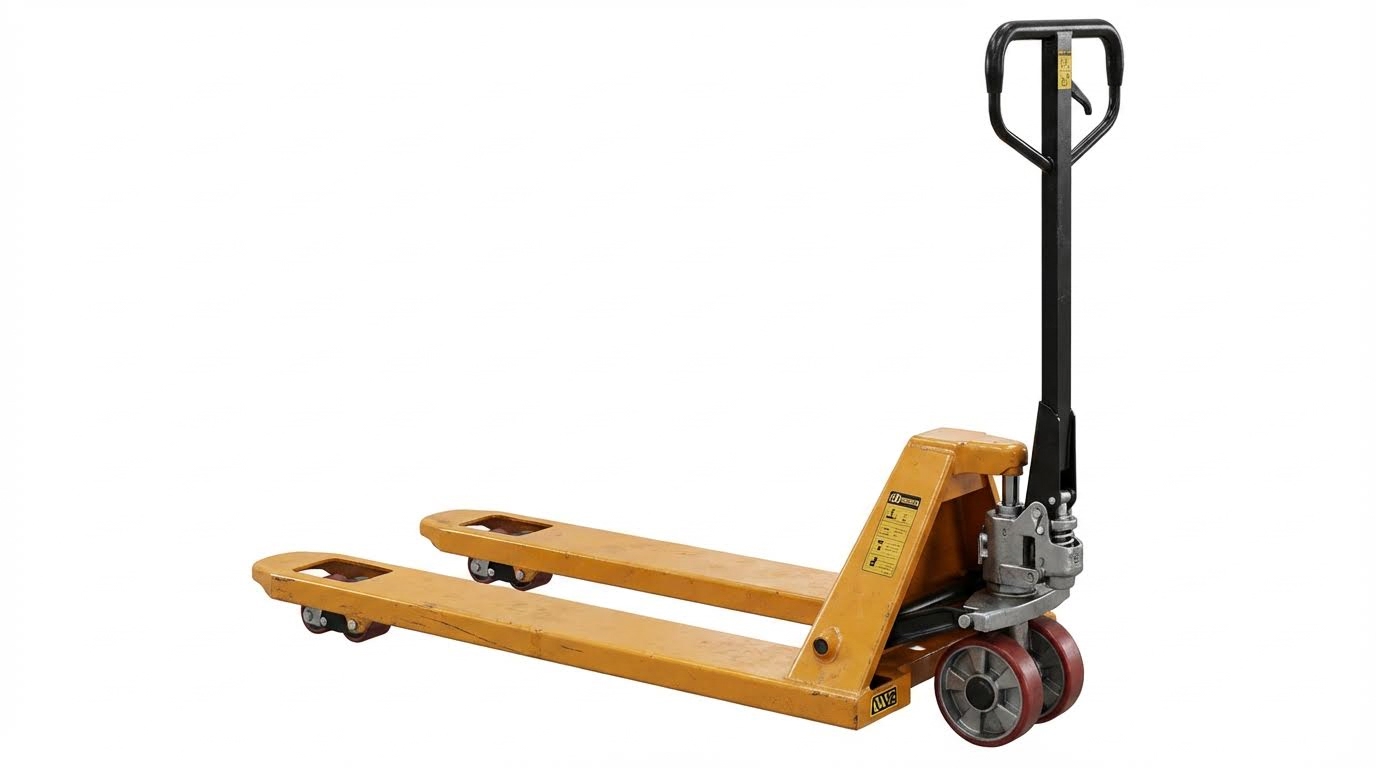
Load capacity, stability and floor-level handling
A core part of what are the advantages of using a pallet jack is matching rated capacity to your heaviest pallet. Operators should never exceed the manufacturer’s load rating to maintain stability and avoid structural damage to the truck or pallet load. Pallet jacks typically move loads only a few inches off the floor, which greatly reduces tip‑over risk compared with high-lift equipment while still allowing safe floor-level transport of heavy pallets. Keeping loads centered on the forks, with the heaviest side toward the operator, helps maintain a low center of gravity and improves directional control during turns. Correct fork length selection also supports stability: standard forks around 48 inches suit most pallets, while longer forks above 60 inches are better for oversized or multiple pallets, provided the floor is level and clear of obstacles. Long-length pallet jacks with forks exceeding 60 inches are designed for oversized or multiple pallets. Floor conditions matter as much as capacity: smooth, flat concrete and wheels in good condition reduce rolling resistance and improve braking and steering control. Wheels must be free of obstructions and show appropriate wear levels to facilitate smooth movement. These engineering choices together give pallet jacks a strong safety profile for low-height, high-frequency pallet moves.
Narrow aisle maneuverability and ergonomic gains
Compact geometry is one of the biggest engineering benefits and explains many of what are the advantages of using a pallet jack in dense storage. Short overall length, low mast height, and small turning radius allow operators to work efficiently in narrow aisles where larger lift trucks cannot turn safely. Pallet jacks offer superior maneuverability in tight warehouse aisles compared to forklifts, which need more turning space. This makes it easier to position loads at dock doors, pick faces, and staging lanes without damaging racks, walls, or product. From an ergonomics standpoint, pallet jacks replace manual lifting and carrying with rolling transport, significantly reducing push, pull, and carry forces on the body. They streamline material handling by replacing manual lifting and carrying, reducing physical strain on operators. Electric models go further by powering lift and travel, which cuts peak effort, reduces fatigue over long shifts, and supports consistent cycle times. These ergonomic gains directly support fewer musculoskeletal injuries and more sustainable productivity in high-throughput operations.
Energy use, batteries and maintenance requirements
Energy and maintenance are central to the total cost of ownership (TCO) and highlight what are the advantages of using a pallet jack versus heavier powered equipment. Manual pallet jacks consume no electrical energy and have minimal components to service, typically limited to the hydraulic pump, wheels, and linkage. Regular inspection of the hydraulic pump to check for leaks and smooth operation is essential to prevent issues. Electric pallet jacks add batteries and drive systems but still run at much lower energy and maintenance cost than full-size forklifts, while enabling higher pallet moves per hour and less labor. Facilities can achieve up to a 17% increase in pallet moves per hour using powered pallet equipment. Battery choice further shapes TCO: lead-acid offers lower upfront cost but needs watering, equalizing, and ventilation, so it suits single-shift or lower-intensity work. Lithium-ion costs more initially but supports fast and opportunity charging with no daily maintenance, ideal for multi-shift operations that cannot afford downtime. Lithium-ion batteries can often be charged for 30 minutes to power equipment through the remainder of a shift. Compared with forklifts, pallet jacks have a much lower acquisition cost, simpler training requirements, and reduced scheduled service, which together create a favorable life-cycle cost profile for horizontal pallet movement.
Matching Pallet Jacks To Your Applications
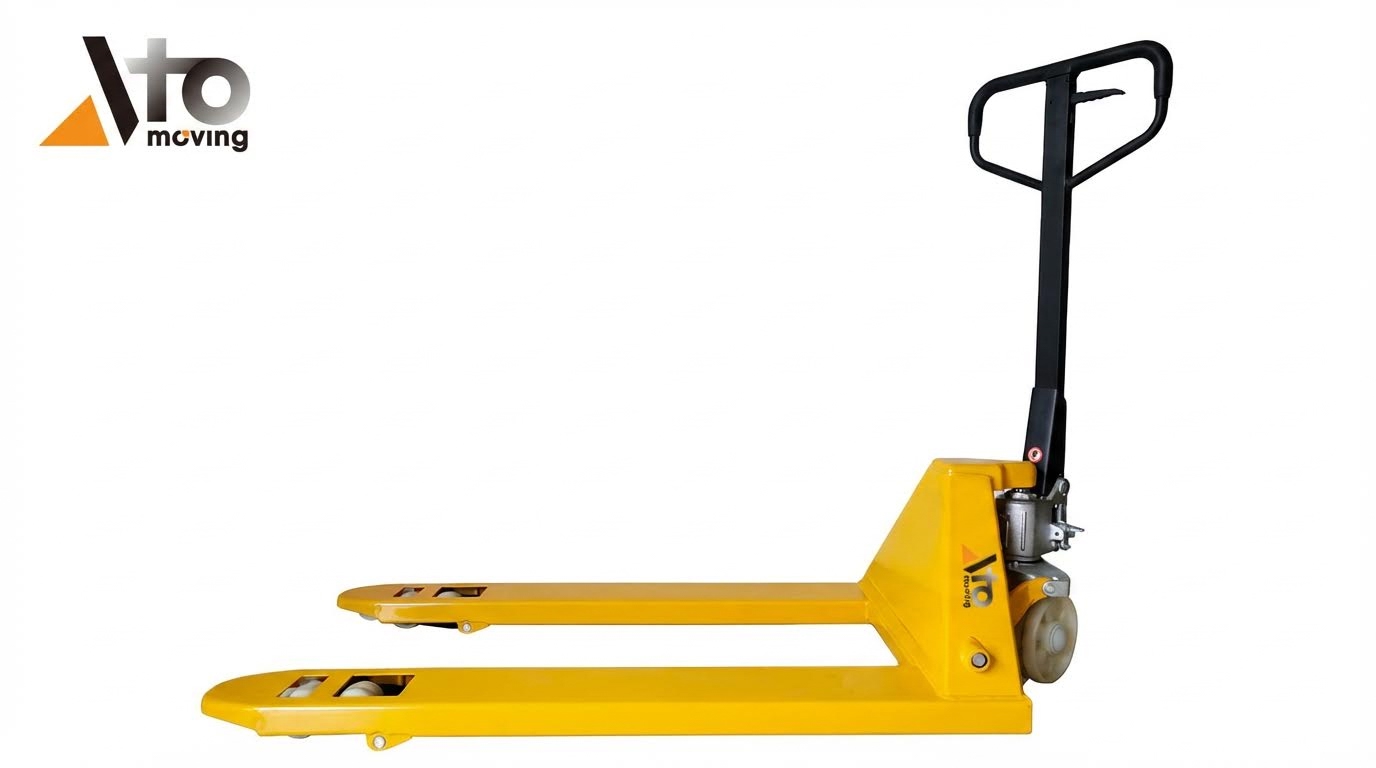
When to choose pallet jacks over forklifts
Choose pallet jacks when your loads are within light to moderate weight ranges and stay at floor level. Typical pallet jacks handle a few thousand pounds per load, while forklifts are better once you regularly exceed about 5,000 lb or need to lift to high racking. Pallet jacks are ideal where the main task is horizontal transport over short to medium distances inside small or medium facilities, such as retail backrooms, production cells, and e‑commerce picking zones. Their compact size makes them the better choice in narrow aisles or congested areas where forklifts struggle to maneuver effectively. Pallet jacks are most efficient on flat, smooth indoor floors, while forklifts are needed for rough terrain and outdoor work. If your operation is cost-sensitive, pallet jacks also minimize capital expense, maintenance cost, and operator certification requirements compared with forklifts, which supports the business case when you ask what are the advantages of using a pallet jack for basic pallet moves.
- Best for: short indoor runs, tight aisles, frequent but low-lift pallet moves.
- Use forklifts instead for: heavy loads, high stacking, outdoor yards, and long travel distances.
- Combine both when you need dock-to-rack coverage plus fine movement in dense pick areas.
Key selection criteria and sizing guidelines
Start pallet jack selection with load characteristics. The unit’s rated capacity must exceed your heaviest pallet weight, including packaging and any added dunnage, to maintain safe operation. The heaviest pallet should never exceed the pallet jack’s rated capacity. Next, match fork length to your pallet size and handling pattern. Standard pallet jacks use ~48 inch forks for most pallets, while long-fork models above 60 inches support oversized loads or two pallets at once.
| Selection factor | Key question | Typical guideline |
|---|---|---|
| Capacity | What is your maximum loaded pallet weight? | Choose a rating comfortably above your worst-case pallet. |
| Fork length | What pallet size and how many at once? | 48″ for standard pallets; longer forks for oversized or dual-pallet handling. |
| Operation type | Duty cycle and distance? | Manual for light/short work; electric for higher volumes or longer runs. Electric units reduce operator strain and support medium to heavy duty applications. |
| Floor and wheels | How smooth is the floor? | Use standard wheels on smooth concrete; consider larger or different compounds for rougher patches. Wheels must be free of damage and matched to the terrain for smooth travel. |
| Power and batteries | How many shifts and hours per day? | Lead-acid is acceptable for single-shift; lithium-ion suits multi-shift, high-throughput work with opportunity charging. Lithium-ion can recharge in about 30 minutes to cover the rest of a shift. |
Also factor in aisle width and turning radius so the pallet jack can clear racking, dock plates, and doorways without excessive three-point turns. In many cases, a correctly sized manual or electric pallet jack will move more pallets per hour with less strain than manual handling, illustrating again what are the advantages of using a pallet jack versus relying on forklifts or hand-carrying in tight, floor-level workflows. Finally, plan for basic maintenance such as hydraulic checks and wheel inspections to keep the asset reliable and safe over its life. Regular inspection of the hydraulic pump for leaks and smooth operation is essential.
“”
Summary: Where Pallet Jacks Deliver The Most Value
Pallet jacks turn basic engineering choices into real warehouse gains. Low-lift geometry keeps the center of gravity close to the floor, which sharply cuts tip-over risk while still moving heavy loads. Correct capacity and fork length sizing prevent structural overload, protect pallets, and keep steering predictable in tight turns.
Compact dimensions and small turning radius let operators work safely in narrow aisles and crowded docks where forklifts struggle. This improves slot utilization and reduces impact damage to racks and product. Rolling transport replaces manual lifting, while electric units cut push and pull forces further. That combination lowers fatigue and injury risk and supports steady throughput across long shifts.
Energy and maintenance needs stay modest, especially for manual units, which helps control life-cycle cost. Electric pallet jacks add battery care but still run cheaper than full lift trucks for floor-level work, especially when matched to the right duty cycle and battery type.
The best practice is clear: use well-sized manual or electric pallet jacks as your primary tool for horizontal, floor-level pallet moves, and reserve forklifts for heavy, high, or outdoor lifts. This mix gives safe handling, strong productivity, and attractive TCO for modern operations, especially when paired with reliable equipment from Atomoving.
Frequently Asked Questions
What are the advantages of using a pallet jack?
A pallet jack is a versatile tool for moving heavy loads efficiently in warehouses. It allows operators to lift and transport pallets with minimal effort, reducing manual labor and improving productivity. Key benefits include better maneuverability in tight spaces, faster load handling, and reduced risk of worker injury compared to manual lifting. For more details on safe operation, you can refer to Pallet Jack Safety Tips.
- Reduces physical strain on workers.
- Improves speed and efficiency in material handling.
- Enhances safety when moving heavy loads.
Why is it important to inspect a pallet jack before use?
Inspecting a pallet jack before use ensures its safe and efficient operation. Look for signs of damage such as cracks, malfunctioning wheels, or low tire pressure. Checking components like brakes, steering, controls, and forks helps prevent accidents during operation. Regular inspections also extend the lifespan of the equipment by identifying issues early. Learn more about pre-use checks from Safety Guidelines.
- Prevents equipment failure during operation.
- Ensures compliance with safety standards.
- Identifies maintenance needs proactively.