
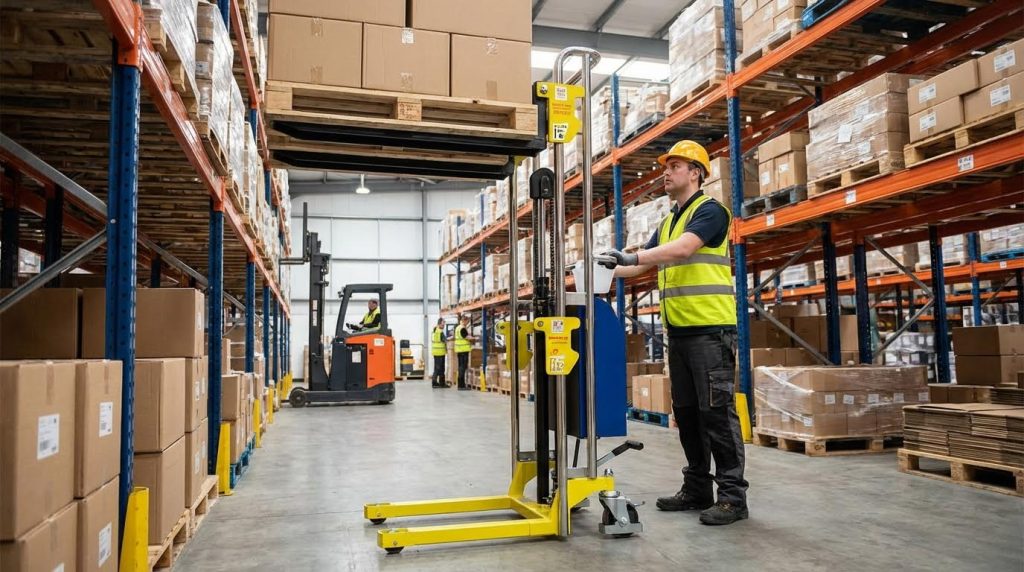
Manual pallet stacking looks simple, but the data behind injuries and lost time says otherwise. Repetitive lifting, twisting, and reaching during palletizing drove a large share of musculoskeletal disorder cases that led to days away from work in recent U.S. statistics involving manual material handling. This article explains why you should do not stack pallets by hand whenever possible, how engineering controls and automation reduce risk, and how to choose the right mix of equipment and practices for your facility. You will see practical guidance on ergonomics, layout, and technology so you can cut injuries, improve throughput, and keep your palletizing operations stable and safe.
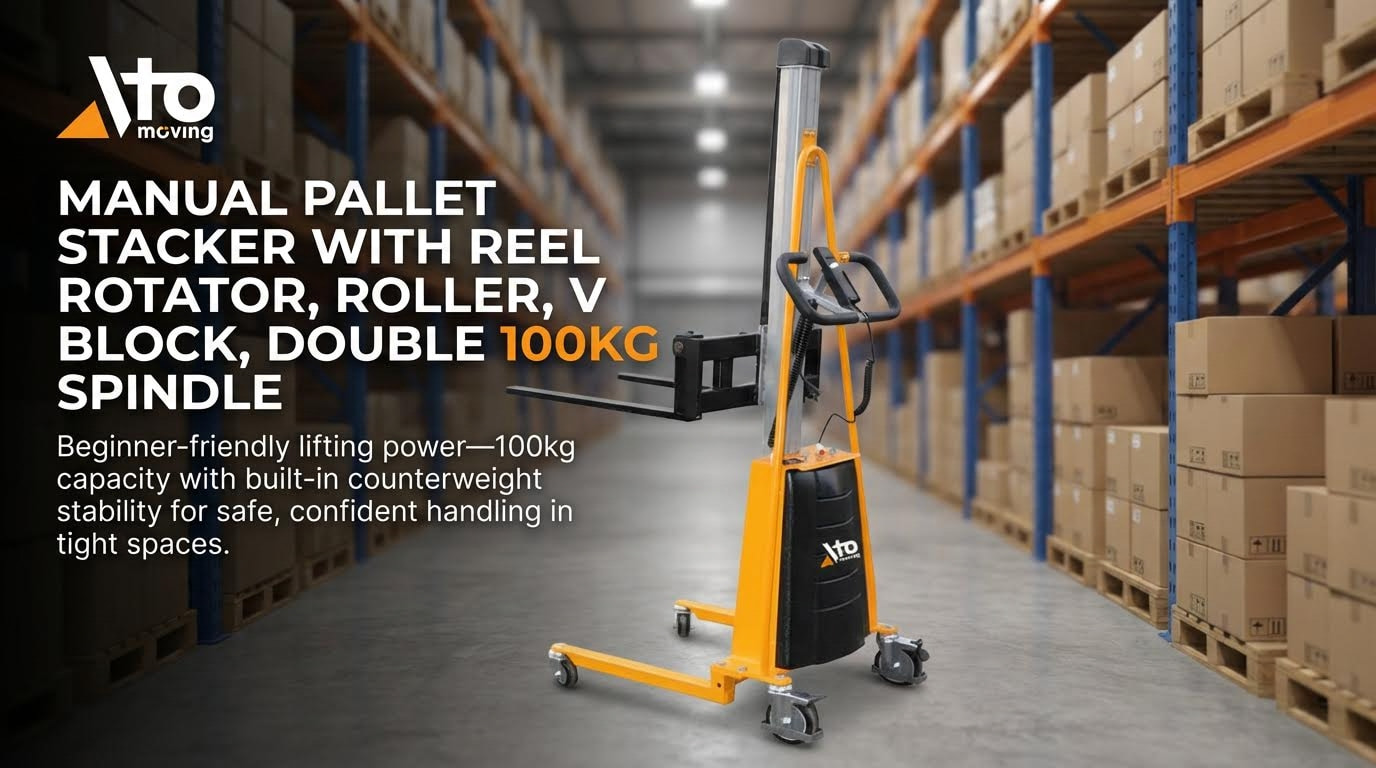
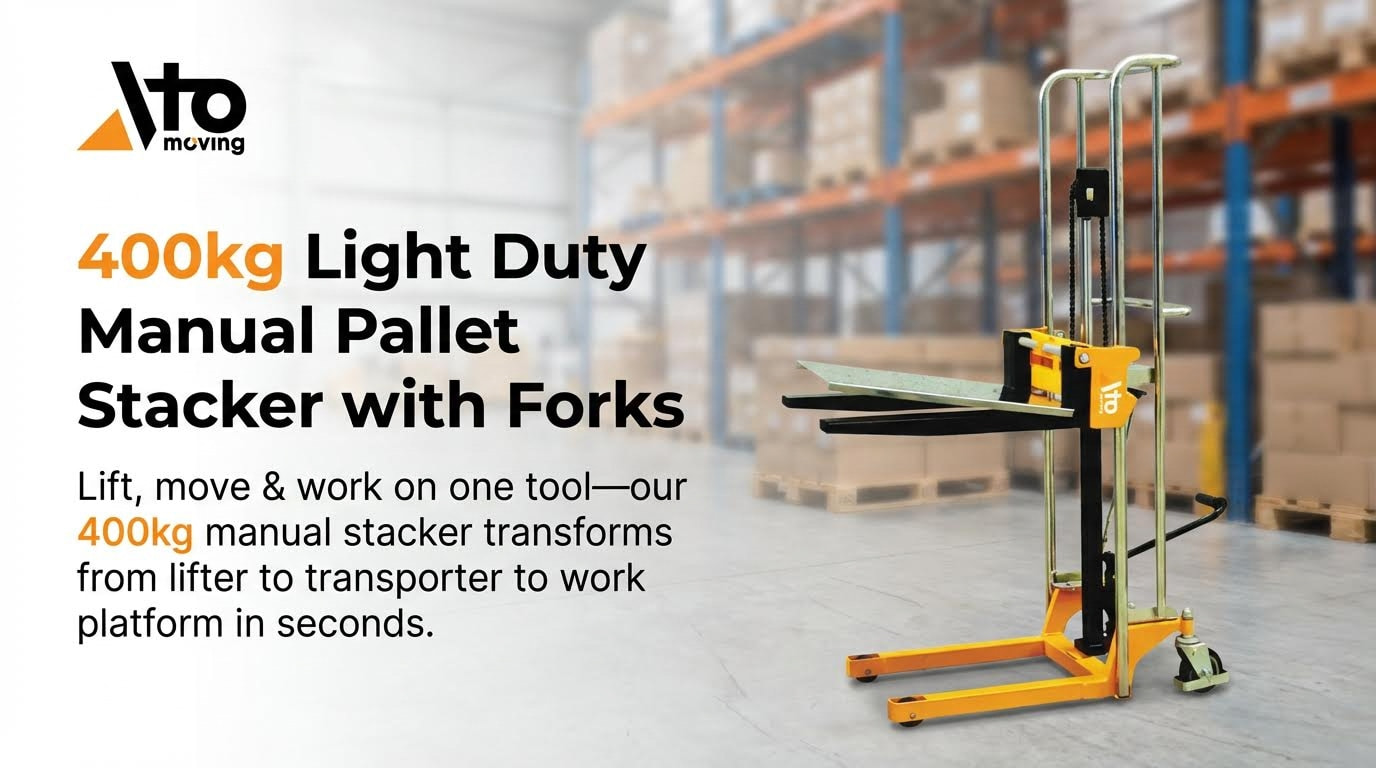
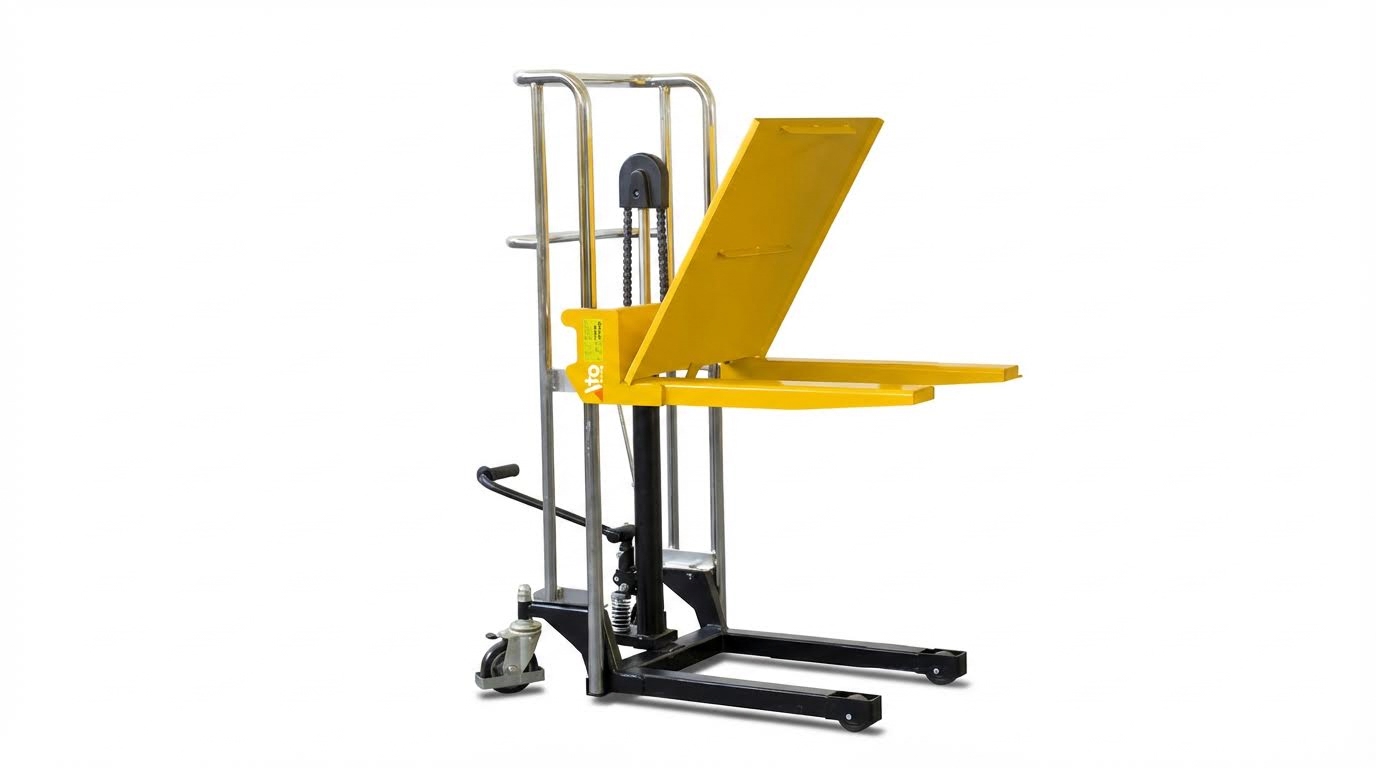
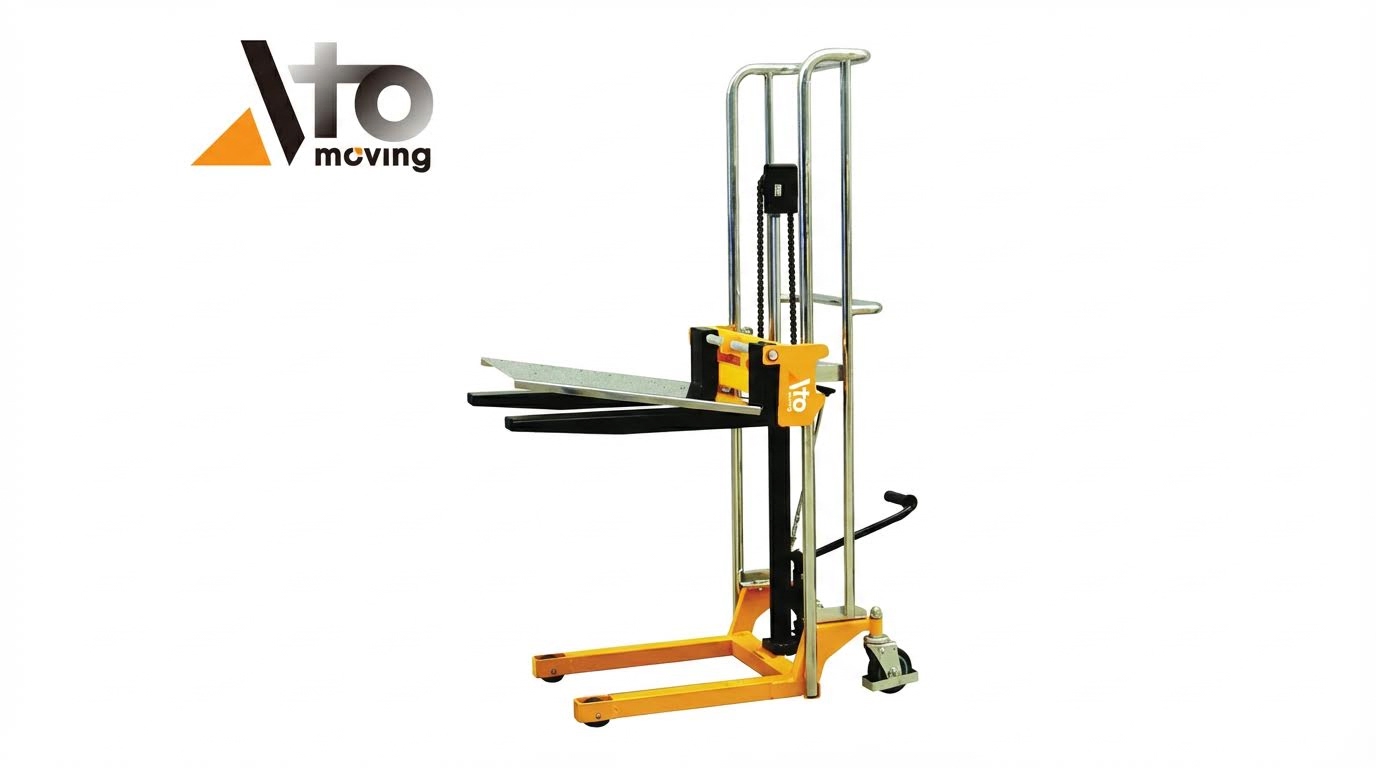
manual pallet jack, low profile pallet jack, hydraulic pallet truck, and drum dolly are some examples of safer alternatives to consider.
Understanding The Hidden Risks Of Hand Stacking
Ergonomic load on the human body
When you tell people to do not stack pallets by hand, you are really trying to control the cumulative load on the spine, shoulders, and knees. Hand stacking combines weight, reach distance, frequency, and awkward posture in a way that quickly exceeds what most bodies tolerate over a full shift.
- Awkward postures: Frequent bending, twisting, and overhead reaching place high compressive and shear forces on the lumbar spine and shoulders. Awkward postures were identified as a primary risk factor in manual palletizing.
- Repetitive motions: Continuous reaching to pick cartons and place them on pallets drives fatigue in small stabilizing muscles, which increases the chance of a sudden strain late in the shift. Repetition was listed as a core driver of musculoskeletal disorders.
- Forceful exertions: Lifting and turning heavy or bulky cases demands high peak forces at the hands, elbows, and lower back, especially when workers rush to meet production targets.
- Pressure points and static postures: Gripping sharp-edged cartons and holding loads at arm’s length create local contact stresses and static muscle loading that accelerate fatigue. These factors were all linked to higher MSD risk in manual palletizing tasks.
- Personal risk factors: Pre‑existing back or shoulder issues, low fitness, smoking, and limited rest increase the likelihood that the same task will injure one worker but not another. Personal health and lifestyle were highlighted as important modifiers of risk.
Why “light” boxes still cause serious injuries
Even when individual cartons stay within common manual lifting guidelines, the combination of high repetition and poor geometry can push the cumulative load past safe limits. Tools like the NIOSH Lift Equation and Composite Lifting Index were developed for exactly this reason: they show that a “safe” 20–30 lb carton can become unsafe when lifted from floor level, at full reach, or hundreds of times per shift. Risk assessment methods were recommended to capture these cumulative effects.
Typical injury modes and incident patterns
Facilities that ignore the warning to do not stack pallets by hand see a consistent pattern of injuries and near misses. These are rarely “freak accidents” and more often predictable outcomes of how the task is designed.
- Acute strains and sprains: Sudden low‑back, shoulder, or neck strains occur when workers twist while lifting, catch a slipping carton, or over‑reach to top off a tall pallet. Musculoskeletal disorders were identified as a major outcome of manual palletizing.
- Cumulative musculoskeletal disorders (MSDs): Repeated micro‑trauma to discs, tendons, and ligaments leads to chronic back pain, tendonitis, and shoulder impingement.
- Slips, trips, and falls: Stray stretch wrap, broken boards, and clutter around pallet stations contribute to falls while carrying loads, which magnify impact forces on joints. Manual palletizing environments were noted for elevated slip, trip, and fall risk.
- Contact injuries from pallets: Damaged boards, protruding nails, and unstable stacks cause cuts, punctures, foot crush injuries, and struck‑by incidents. Regular pallet inspection was recommended to reduce these hazards.
- Fatigue‑driven errors: As fatigue builds, workers misjudge distances, mis‑place cartons, or shortcut safe lifting technique, which increases both ergonomic and stability risks. Fatigue and repetitive tasks were linked to higher error and injury rates.
Industry data reinforced how widespread these issues became. Manual materials handling, including palletizing, consistently showed higher injury rates than many other industrial tasks, and musculoskeletal disorders alone accounted for well over two hundred thousand lost‑time cases in a single recent year. 266,530 MSD cases with days away from work were reported for 2022.
Common red flags in your palletizing area
Supervisors should treat the following as early‑warning signs that manual pallet stacking is pushing people beyond safe limits:
- Frequent reports of “sore backs” or “tight shoulders” after shifts.
- Regular use of improvised steps or standing on lower pallets to reach the top layer.
- Damaged pallets left in circulation instead of being removed from service.
- Visible clutter, loose wrap, or debris around stacking zones.
- Near‑miss reports involving falling cartons or partial pallet collapses.
When these patterns appear, the engineering message is clear: redesign the task, apply ergonomic tools, and whenever feasible, do not stack pallets by hand.
Engineering Controls And Safer Handling Methods
Applying NIOSH and CLI to pallet stacking tasks
Engineering teams should treat “do not stack pallets by hand” as a design requirement, not just a safety slogan. Tools like the NIOSH Lifting Equation and Composite Lifting Index (CLI) help you prove when a task has moved from acceptable to high risk. They quantify the cumulative load on the spine and shoulders so you can justify automation or redesign. Below is a practical way to apply them to pallet stacking.
Key concepts: NIOSH RWL and CLI in simple terms
The NIOSH Recommended Weight Limit (RWL) estimates the maximum safe load for a specific lift, based on:
- Horizontal reach (distance from body)
- Vertical height at start and end of lift
- Travel distance of the lift
- Twist/turn angle
- Lift frequency and duration
- Quality of handholds
The Composite Lifting Index (CLI) then combines many different lifts in a job to show the overall risk level for the shift. Higher CLI values mean higher risk and a stronger case for engineering controls and automation. These tools supported the push to reduce manual palletizing risk and encourage more automation. Risk assessments used NIOSH and CLI to evaluate cumulative physical demands.
To use NIOSH and CLI effectively in palletizing, you first map the task, then adjust the design until the calculated indices fall in a tolerable range. That process naturally drives you toward mechanical aids and automation instead of relying on workers to stack pallets by hand.
- Task mapping
- Document pick heights (e.g., floor, waist, shoulder).
- Measure horizontal reach at pick and place.
- Record twist angle between source and pallet.
- Count lifts per minute and per shift.
- Note carton weight range and grip quality.
- Calculate RWL and LI for representative lifts
- Use worst-case combinations (high frequency, long reach, high/low tiers).
- Calculate Lifting Index (LI = actual weight / RWL) for each lift.
- Use CLI to combine all lifts in the job into one risk metric. These indices helped quantify cumulative demands in manual palletizing.
- Redesign until indices improve
- Raise loads closer to waist height with lift tables.
- Bring pallets closer to the worker to reduce reach.
- Eliminate twisting with turntables or conveyors.
- Reduce lift frequency using accumulation conveyors or buffer zones.
Practical triggers: when NIOSH/CLI say “stop stacking by hand”
In practice, many facilities adopted internal rules such as:
- If LI > 1.0 for common lifts, redesign the workstation.
- If CLI > 1.5–2.0 for the job, prioritize engineering controls and automation.
- If redesign cannot bring indices down, convert the task to semi-automatic or robotic palletizing.
This data-driven approach supports policies that workers should do not stack pallets by hand for high-frequency, high-weight, or awkward lifts.
Designing pallet layouts for stability and low strain
Good pallet layout design solves two problems at once: it keeps loads stable in transport and it keeps forces on the worker’s body within safe limits. Pattern, tier count, and working height all matter as much as carton weight. Instead of relying on “strong workers,” you design the system so that even average workers can handle tasks safely and consistently.
Key layout and handling parameters you should define before deciding whether to stack pallets by hand are summarized below.
| Design Aspect | Safer Practice / Typical Range | Why It Matters |
|---|---|---|
| Stack height | Common guidance: 4–6 ft for stability and access Recommended stacking height for standard pallets was 4 to 6 feet | Higher stacks increase toppling risk and require overhead reaching. |
| Carton weight | Above ~50 lb requires team lift or mechanical aid manual pallet jack | Heavier units rapidly increase spinal compression and injury risk. |
| Pattern | Interlocked or brick patterns for stability; avoid tall column stacks for mixed loads | Improves stability, reduces need for rework and manual restacking. |
| Working height | Keep active work zone roughly between mid-thigh and chest using lift tables or adjustable platforms | Limits extreme bending and overhead reaching that drive MSDs. |
| Pallet condition | Inspect and remove cracked or broken pallets, exposed nails, and warped decks Inspection for cracking, breaking, or exposed nails was recommended | Prevents sudden collapses and trip hazards during stacking. |
| Standardization | Use standardized pallet sizes wherever possible Standardized dimensions supported predictable loading and stacking patterns | Allows repeatable patterns and better use of automation and guards. |
Once these parameters are set, you can define which parts of the task may still be done manually and which must be engineered out using equipment. This is how you move from “be careful” rules to enforceable design standards.
- Stability controls
- Apply shrink wrap or straps on taller or mixed-load pallets for transport stability. Securing stacks with straps or wrap was recommended for stability.
- Keep heavy items low and centered to reduce tipping moments.
- Use corner posts or slip sheets to improve column strength.
- Ergonomic controls
- Use height-adjustable pallet positioners so the top layer stays in the safe lift zone.
- Install turntables so workers step, not twist, between pick and place.
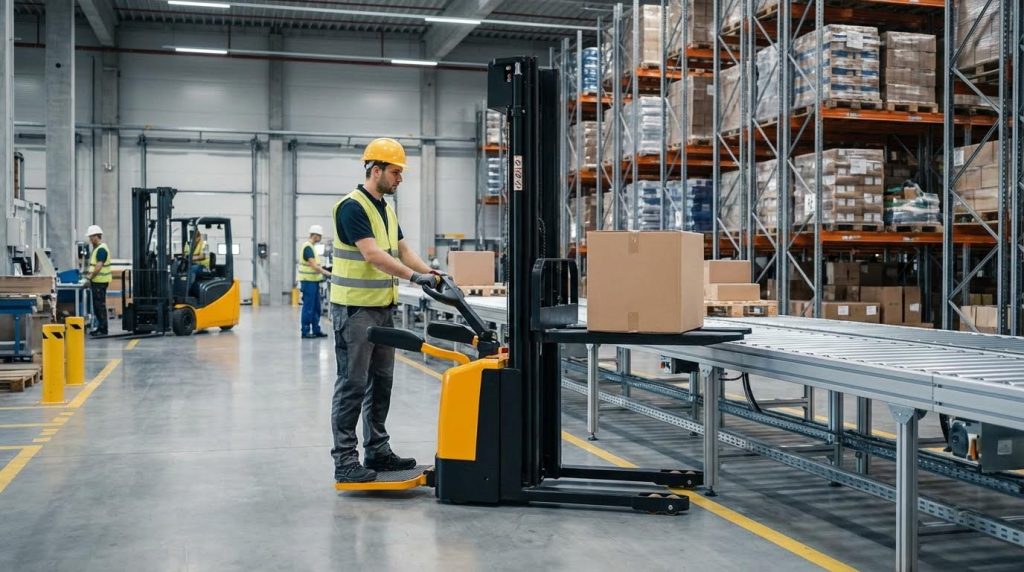
- Provide ergonomic equipment such as height-adjustable pallet jacks and assist rails to reduce strain. Ergonomic equipment reduced operator strain and fatigue.
Layout rules that support “do not stack pallets by hand” policies
Facilities that moved away from manual stacking often used rules like:
- No manual stacking above shoulder height or beyond the 4–6 ft pallet height band.
- No hand stacking of cartons above a defined weight (e.g., 35–50 lb) on upper tiers.
- Mandatory use of lift tables and powered equipment for all outbound full pallets.
- Manual work limited to light rework, labeling, or partial-case handling.
These layout rules make it physically difficult for workers to stack pallets by hand in high-risk zones, so safe behavior is built into the system.
Semi-automatic and robotic palletizing options
Once NIOSH and CLI show that a palletizing task is high risk, the cleanest solution is to remove most of the manual lifting. Semi-automatic and robotic palletizing do this by shifting heavy, repetitive motions to machines while keeping people in supervisory or exception-handling roles. This both enforces a “do not stack pallets by hand” culture and improves throughput.
| Option | Human Role | Main Benefits | Typical Use Case |
|---|---|---|---|
| Semi-automatic palletizing | Operator feeds product, monitors flow, manages pallets; machine performs main stacking motion | Reduces repetitive strain; improves consistency; still flexible for product changes. Semi-automated systems handled most physical tasks while humans supervised. | Medium volumes, frequent SKU changes, limited floor space. |
| Robotic / fully automatic palletizing | Operator sets recipes, oversees alarms, does maintenance; robot handles all stacking | Minimizes human involvement, reduces injuries, and improves efficiency. Fully automated palletizing used advanced robotics to handle the entire process. | High volumes, stable product mix, strong case for long-term ROI. |
Semi-automatic systems often used conveyors, layer-forming machines, or assist robots that handle the heavy stacking while operators only guide product flow. This significantly reduced repetitive strain injuries compared with manual palletizing. Semi-automated palletizing was reported to improve efficiency and reduce strain.
- Robotic palletizers and safety
- Use defined safety zones, sensors, and emergency stops to separate people from moving arms. Robotic palletizing systems minimized worker-robot accidents with safety zones and sensors.
- Handle heavy, large, or hazardous items so workers no longer lift or stabilize them manually.
- Maintain consistent patterns and layer quality, reducing rework and manual restacking.
- Efficiency and ROI
- Robotic systems operated faster and with higher accuracy than manual methods. They managed more pallets per time unit and adhered to stacking patterns.
- Typical investment ranges were on the order of HKD 500,000–1.5 million, with annual operating costs around HKD 50,000. Reported robotic palletizer costs and operating expenses fell in this range.
- In scenarios where manual labor for palletizing cost about HKD 1.8 million per year, payback on a HKD 1 million system could be less than one year. Labor savings allowed rapid ROI on robotic systems.
Workforce and safety impact of automation
Automation did more than cut injuries; it changed job content:
- Workers moved from lifting roles into monitoring, quality, and maintenance tasks.
- Dependence on hard-to-find manual palletizing labor dropped. Automation allowed employees to focus on more complex tasks and reduced reliance on manual palletizers.
- Morale improved as the most physically punishing jobs disappeared. Automation was associated with better morale and reduced product damage.
These outcomes reinforced the business case to do not stack pallets by hand wherever engineering controls and automation are feasible.
Selecting Equipment And Practices For Your Facility

Criteria for choosing manual vs. automated palletizing
Choosing between manual, semi-automatic, and robotic palletizing starts with a sober look at risk, volume, and labor. If your operation still relies heavily on people to stack loads, you already have a strong reason to do not stack pallets by hand wherever engineering controls can take over. Use the criteria below as a structured decision checklist.
| Decision Criterion | Manual / Hand Stacking | Semi‑Automatic Palletizing | Fully Automated / Robotic Palletizing |
|---|---|---|---|
| Typical investment level | Very low (existing labor, basic tools) | Medium (conveyors, lifts, simple robotics) | High upfront (robotic cell, guarding, integration) Robotic systems often cost in the HKD 500,000–1,500,000 range |
| Labor cost impact | Highest ongoing labor; multiple operators per line | Reduces number of handlers; operators supervise rather than lift Most physical tasks shift to machinery | Largest labor reduction; 1 operator can oversee several lines Labor savings of ~HKD 1.8M/year for a 10‑person team were reported |
| Injury and MSD risk | Highest risk: repetitive lifting, bending, twisting, static postures, and forceful exertions drive musculoskeletal disorders These factors are tied to strains, sprains, and chronic disabilities | Medium to low: machines take over most high‑force and repetitive work, but some manual touches remain Semi‑automated systems perform most physical tasks | Lowest: robots handle heavy, large, or hazardous items and repetitive stacking cycles Safety zones, sensors, and emergency stops reduce accidents |
| Throughput and accuracy | Moderate and highly variable; fatigue and inconsistency affect stacking quality Manual performance varies and errors are common | Higher and more stable; equipment enforces repeatable patterns | Highest and most consistent; robots follow programmed patterns precisely Robotic palletizers operate faster with higher accuracy than manual methods |
| Flexibility for product changes | High: operators can improvise for irregular SKUs and mixed loads Manual palletizing adapts easily to varying product shapes and sizes | Medium to high: usually handles families of products with some adjustment | Medium: reprogramming or tooling changes may be needed for new SKUs Manual methods remain more flexible for frequent changes |
| Space requirements | Low; uses existing floor area but can create clutter and trip hazards Cluttered environments increase slips, trips, and falls | Medium; needs room for conveyors, lifts, and guarded zones | Medium to high; requires defined safety zones and access for maintenance |
| Maintenance and operating costs | Low on equipment, high on injuries and absenteeism | Moderate; scheduled servicing for mechanical systems | Predictable but non‑trivial; typical annual maintenance in the tens of thousands HKD range Maintenance costs of HKD 20,000–30,000 per year were reported |
| Payback period | No capital payback, but rising long‑term labor and injury costs | Often short to medium term, depending on volume | Can be under 1 year in high‑volume, high‑labor operations One example recovered a HKD 1M system cost in less than a year |
Manual palletizing still had advantages where volumes were low, SKUs changed frequently, and capital budgets were tight. However, where you have sustained high throughput, repetitive stacking, and rising labor or injury costs, the engineering answer is clear: do not stack pallets by hand as the primary method; move to semi‑automatic or robotic systems and reserve manual work for exceptions only.
Quick rule‑of‑thumb for choosing a palletizing level
Use these simple thresholds to start the discussion (you still need a detailed engineering and financial review):
- Mostly manual palletizing – Daily pallet count is low; products are irregular; operators frequently reconfigure patterns; capital is very limited.
- Semi‑automatic palletizing – Medium volumes; some standardization; operators can feed or supervise equipment while machines do the heavy stacking.
- Robotic / fully automatic palletizing – High and stable volume; standardized packaging and pallets; labor is costly or hard to hire; you need consistent quality and traceable output.
Integrating ergonomic tools and training programs
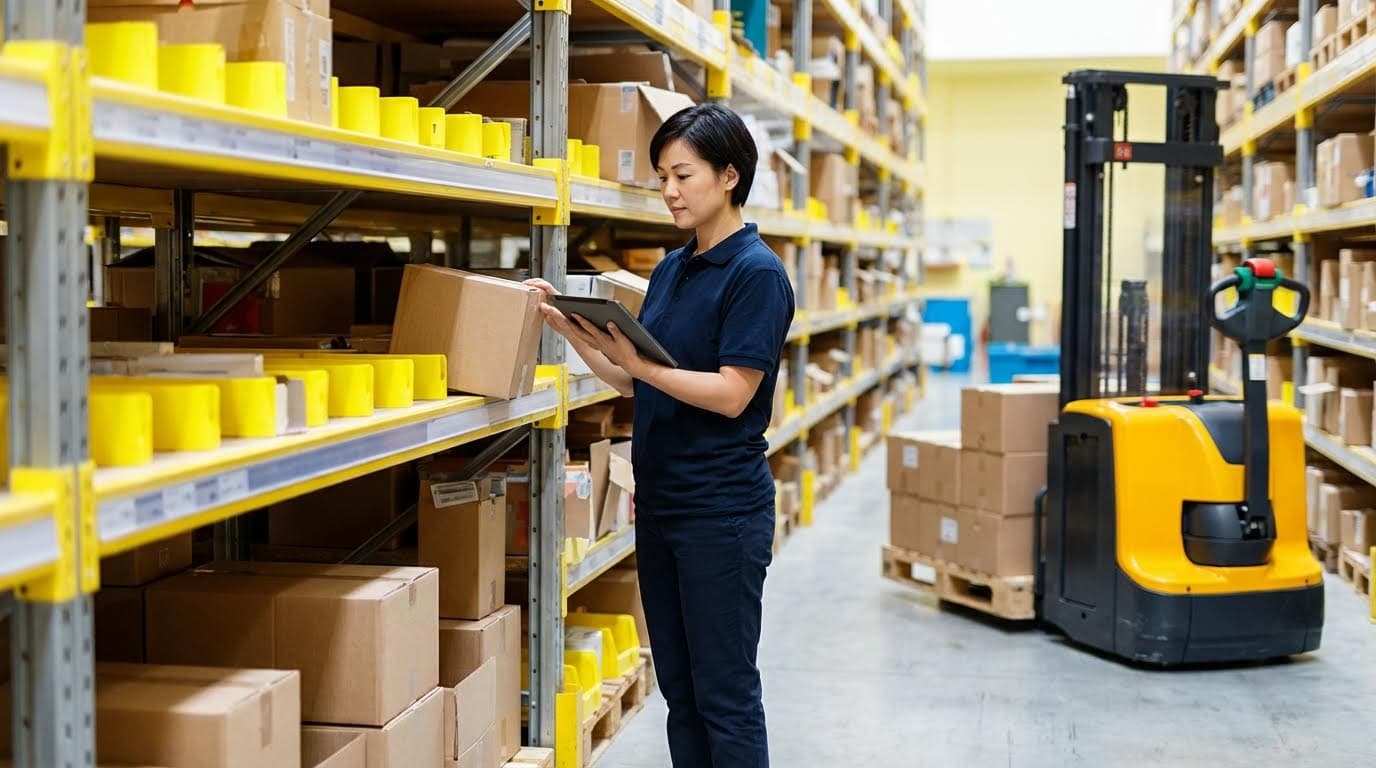
Even if you deploy automation, people will still interact with pallets. The goal is to engineer the job so that when contact is unavoidable, forces, postures, and repetition stay within safe limits. That is how you make “do not stack pallets by hand” a design principle, not just a slogan on a poster.
Integrate three layers: ergonomic equipment, safe work practices, and structured training. The elements below form a practical implementation checklist for most facilities.
- Use ergonomic handling equipment to remove high‑risk lifts
- Introduce pallet jacks, lift tables, and height‑adjustable platforms so workers can keep loads near waist height and avoid deep bending and overhead reaches. Ergonomic tools like height‑adjustable manual pallet jack and assist rails reduced operator strain and fatigue and helped sustain productivity. Equipment with intuitive controls and feedback also improved precision
- Apply clear manual weight limits and enforce mechanical aids above that level. For example, set a threshold near 50 lb for single‑person lifts and require team lifts or equipment above it. Guidance suggested team lifting for loads over 50 lb
- Standardize pallets and layouts to simplify motion
- Use standardized pallet sizes wherever possible to create predictable handling geometry and stacking patterns. This consistency improved vertical space usage, reduced setup time, and simplified inventory control. Standardized dimensions also supported better data collection on damage and loading time
- Define safe stacking heights and stability rules so workers never have to reach or push at unsafe heights. Stacking pallets between roughly 4 and 6 ft helped maintain stability and reduce toppling risk. Stacks could be strapped or wrapped to enhance stability
- Engineer the work area to avoid slips, trips, and impact hazards
- Keep pallet zones clean and organized. Spills, debris, and stray pallets created trip hazards and contributed to slips and falls in manual palletizing areas. Good housekeeping directly improved safety and efficiency
- Inspect pallets before use and remove damaged units with cracks, broken boards, or exposed nails from circulation. Using damaged pallets undermined load stability and increased the chance of collapse or puncture injuries. Regular inspection reduced structural failures
- Teach and reinforce safe body mechanics
- Train workers to lift with legs, not the back, by bending at the knees, keeping the spine neutral, and holding loads close to the body. Proper lifting technique training reduced musculoskeletal injury risk
- Use task rotation to avoid long periods of repetitive motion or static postures on any one job. Rotating workers between demanding tasks helped reduce fatigue and overuse injuries. Rotation limited prolonged physical strain on a single worker
- Provide appropriate PPE and make it standard practice
- Issue gloves to protect against splinters and sharp edges, safety footwear with toe protection against dropped loads, and eye protection in dusty or debris‑prone zones. These measures reduced common pallet‑related injuries
- Implement structured, hands‑on training programs
- Use interactive training that combines demonstration, practice, and feedback so workers internalize efficient handling techniques. Emphasis on rhythm and sequencing minimized wasted motion and improved consistency. Ongoing coaching reinforced both technique and safety
- Cross‑train teams across shifts so palletizing methods, patterns, and safety expectations stay consistent. Cross‑training improved communication and problem‑solving when issues arose. Alignment across teams reduced miscommunication
Viewed together, these measures shift manual pallet work from high‑risk, high‑force tasks to low‑risk, controlled interactions with engineered systems. As you add semi‑automatic and robotic palletizers, keep upgrading ergonomic tools and training so the remaining human touches are as safe and efficient as the machines they support.
Final Thoughts On Reducing Manual Pallet Stacking Risks
Manual pallet stacking is not just tiring work. It is a structural weakness in your safety, productivity, and staffing plans. The geometry of the task—low picks, long reaches, twisting, and overhead work—pushes joint and disc loads past safe limits even when each carton seems light. That same poor geometry also destabilizes pallets, which raises the risk of collapses, trips, and impact injuries.
Engineering tools such as the NIOSH Equation and CLI let you prove when a job crossed the line. Layout rules, height limits, and standardized pallets then turn “work carefully” into hard design constraints. Semi-automatic and robotic palletizing go one step further. They remove the highest-force, most repetitive motions and lock in stable patterns at higher throughput.
The practical path is clear. Treat “do not stack pallets by hand” as a design rule, not a slogan. Use risk indices to target the worst stations. Replace high-risk lifts with pallet jacks, lift tables, and, where volume justifies, automated cells. Keep the remaining human tasks in the mid‑height, low‑force zone and back them with training and PPE. Facilities that follow this roadmap cut injuries, improve output, and make palletizing roles easier to staff and sustain.
Frequently Asked Questions
Is it safe to stack pallets?
Stacking pallets can be safe if done correctly. According to OSHA regulations under 29 CFR 1910.176(b), materials stored in tiers must be stacked, blocked, interlocked, and limited in height to remain stable and secure against sliding or collapse. OSHA Stacking Guidelines.
- Ensure materials are interlocked to prevent sliding.
- Limit the height to maintain stability.
- Block and secure items to avoid collapse.
What is the correct way to stack pallets?
The correct way to stack pallets involves blocking, stacking, limiting height, and interlocking materials to ensure they don’t collapse or slide during shipping or storage. Pallet stack instability can lead to accidents. Pallet Stacking Safety Tips.
- Interlock materials for added stability.
- Limit the height based on weight capacity.
- Ensure even load distribution.
Can you stack two pallets on top of each other?
While double stacking pallets can increase storage efficiency, it’s crucial to consider weight capacity and load distribution. The additional weight from the upper pallet can potentially crush or compromise the items beneath. Always verify the structural integrity of both pallets before stacking. Double Stacking Pallets.
Is it okay to stack pallets in racking?
Storing pallets in racking systems can clear valuable floor space and improve traffic flow. However, ensure that pallets are properly secured and do not exceed the rack’s weight limit. Proper use of pallet racks can enhance warehouse safety and organization. Pallet Racking Safety.