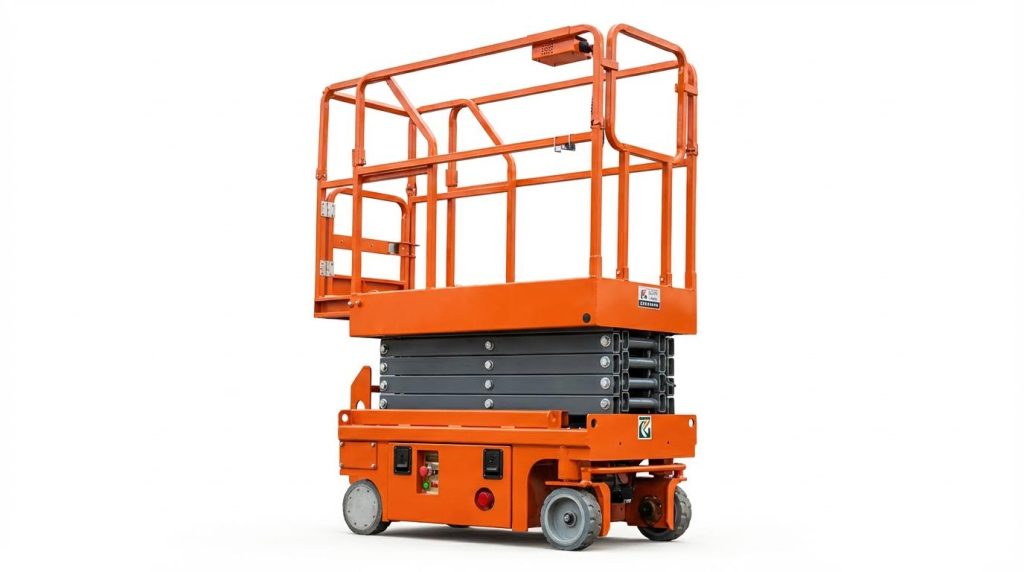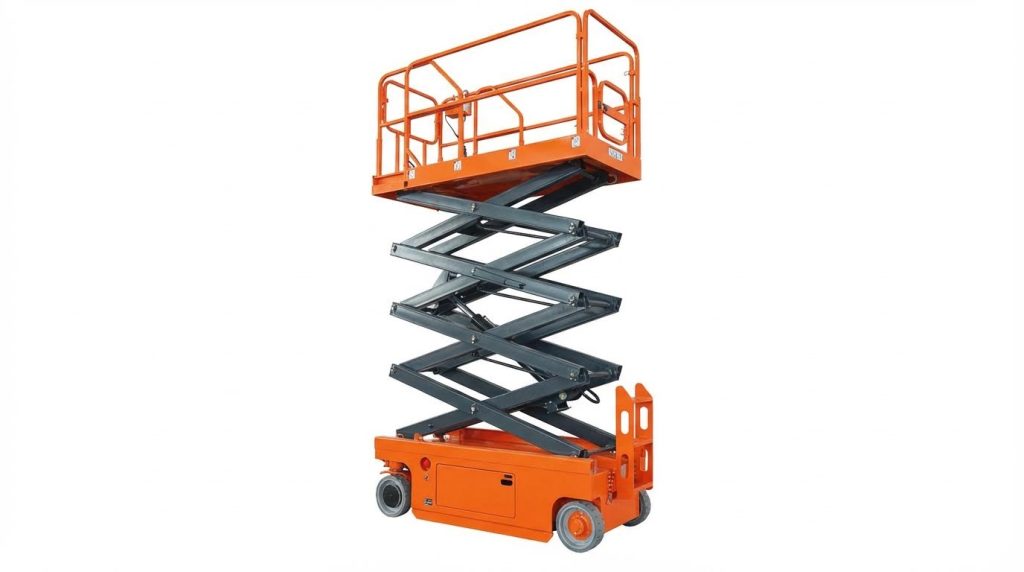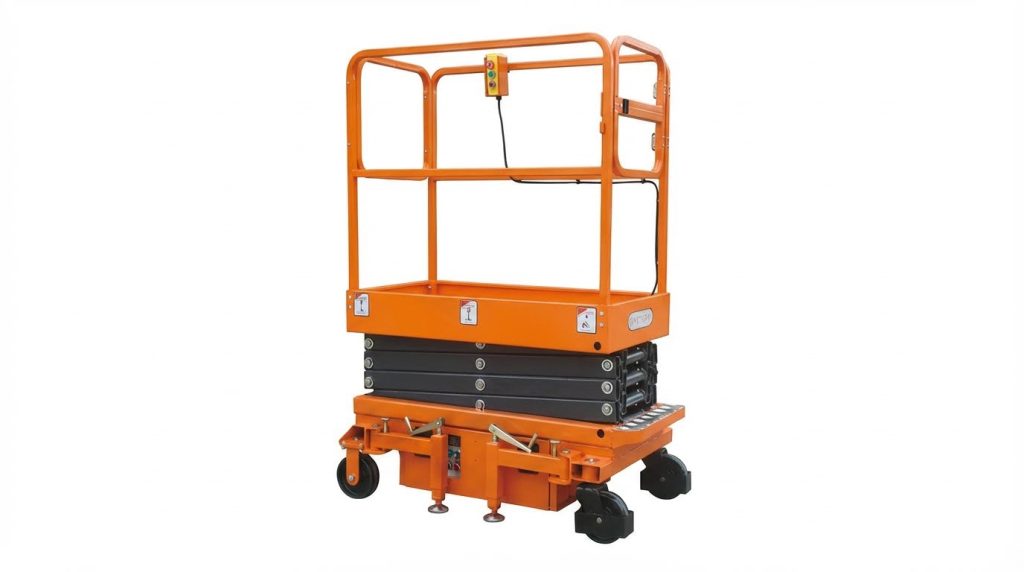
Elektrische Scherenarbeitsbühnen nutzen Akkuleistung, Hydraulik und intelligente elektronische Steuerung, um Personen und Werkzeuge sicher in die Höhe zu heben. Dieser Leitfaden erklärt die Funktionsweise elektrischer Scherenarbeitsbühnen von Grund auf und behandelt Energiequellen, Konstruktion, Steuerungslogik und Ladevorgang. Sie erfahren, wie Akkus, Motoren, Hydraulik und Sensoren zusammenwirken und welche Auswirkungen dies auf Sicherheit, Laufzeit und Wartung im praktischen Einsatz hat. Nutzen Sie ihn als praktisches Nachschlagewerk für die Auswahl, den Betrieb und die Verwaltung einer Flotte von Scherenarbeitsbühnen.
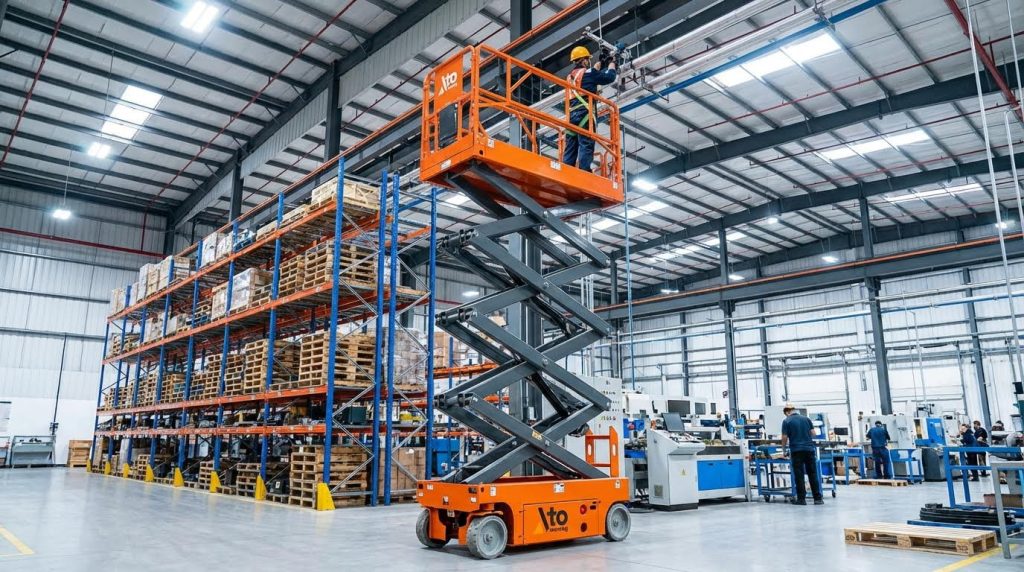
Kernarchitektur von elektrischen Scherenhubwagen
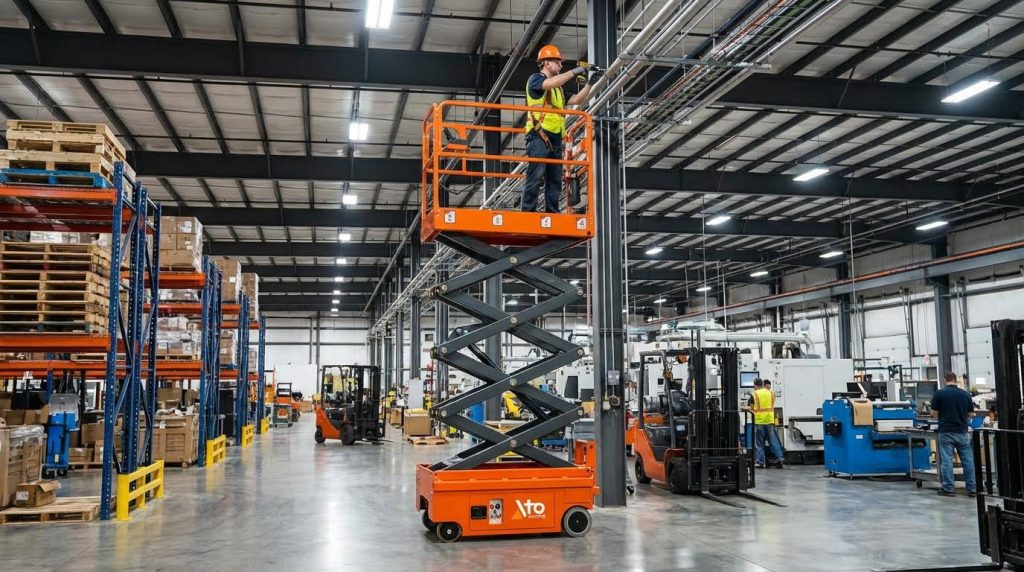
Die Kernarchitektur von elektrischen Scherenhebebühnen erklärt, wie elektrische Scherenhebebühnen von der Batterie über die Räder bis zur Plattform funktionieren und elektrische Energie in eine gleichmäßige, vertikale Bewegung mit einer kompakten Scherenstruktur und kontrollierter Hydraulikkraft umwandeln.
Im Wesentlichen besteht eine elektrische Scherenbühne aus drei Hauptkomponenten: der Energiequelle und dem Antrieb, dem hydraulischen Hubsystem und der Stahlscherenplattform , die Plattform und Last trägt. Das Verständnis dieser Bausteine ermöglicht es Ihnen, die tatsächliche Laufzeit, die Hubgeschwindigkeit und die sichere Tragfähigkeit auf Ihrer Baustelle vorherzusagen.
Energiequelle, Antrieb und hydraulische Betätigung
In diesem Abschnitt wird die Funktionsweise von elektrischen Scherenarbeitsbühnen in der Praxis erläutert: Batterien versorgen Elektromotoren mit Strom, welche wiederum Räder und eine Hydraulikpumpe antreiben, welche die Zylinder unter Druck setzt, um die Plattform anzuheben.
Moderne elektrische Scherenarbeitsbühnen nutzen wiederaufladbare Akkus, um die Antriebs- und Hydraulikpumpenmotoren mit Gleichstrom zu versorgen und so einen kompletten Schichtbetrieb in Innenräumen zwischen den Ladevorgängen zu ermöglichen. Das Hydrauliksystem wandelt diese elektrische Energie dann in eine lineare Kraft an den Hubzylindern um.
| Teilsystem | Typische Wahl im Ingenieurwesen | Schlüsselkennzahl / Bereich | Betriebliche Auswirkungen |
|---|---|---|---|
| Batterietyp | Lithium-Ionen- oder Bleiakku Daten zur Stromquelle | 8–10 Stunden Laufzeit pro Ladung (typischer Innenbetrieb) | Deckt eine komplette Schicht auf ebenen Böden mit geplanter Aufladung über Nacht ab. |
| Traktions-/Pumpenmotoren | Wechselstrom-Asynchronmotoren oder Permanentmagnet-Synchronmotoren mit Frequenzumrichter Motordaten | Stufenlose Reisegeschwindigkeit von 0.1–0.5 m/s | Präzise Positionierung in engen Gängen und reibungsloser Zugang zu den Arbeitsbereichen. |
| Hydraulische Betätigung | Elektrisch angetriebene Hydraulikpumpe speist Hubzylinder Hydrauliksystem | Druckauslegung für Nennlast (≈230–1,150 kg elektrische Klasse) | Ermöglicht eine kontrollierte Hubgeschwindigkeit bei gleichzeitiger Einhaltung des Sicherheitsfaktors hinsichtlich der Zylinderbelastung. |
| Lärmemission | Elektrischer Antrieb mit Hydraulikpumpe in kompaktem Aggregat | <70 dB(A) am Bedienerplatz Rauschdaten | Geeignet für Lagerhallen, Krankenhäuser, Schulen und lärmarme Bereiche. |
| Emissionen | Batterieelektrisch, kein Verbrennungsmotor | Null Abgase am Einsatzort Emissionen | Sicher für die Verwendung in Innenräumen unter Einhaltung begrenzter Belüftungs- und Ökobauvorschriften. |
| Tragfähigkeit | Elektrische Scherenhebebühne für Platten | Plattformkapazität ≈230–1,150 kg Leistungsbereich | Die meisten Wartungs- und Installationsarbeiten im Innenbereich können mit zwei Personen und Werkzeug durchgeführt werden. |
| Energieeffizienz | Batterie plus effiziente Motorantriebe | Geringerer Energieverbrauch pro Stunde im Vergleich zu Dieselaggregaten Effizienz | Niedrigere Betriebskosten; Aufladen über Nacht günstiger als tägliches Tanken. |
Die von einem Elektromotor angetriebene Hydraulikpumpe fördert Öl in einen oder mehrere Hubzylinder des Scherenhubsystems. Ingenieure dimensionieren Zylinderbohrung, Pumpenfördermenge und Druck der Überdruckventile so, dass die Hubgeschwindigkeit im zulässigen Bereich bleibt und gleichzeitig Belastungen und Öltemperatur unter maximaler Nennlast innerhalb der Grenzwerte gehalten werden. Beim Absenken wird der Ölfluss zurück in den Tank dosiert, sodass die Plattform kontrolliert absinkt. Neuere Konstruktionen verfügen häufig über eine Energierückgewinnung, die während des Absenkvorgangs Energie in die Batterie zurückspeist und so den Energieverbrauch reduziert.
- Batteriepack: Versorgt Fahr- und Pumpenmotoren mit Gleichstrom – Definiert die Laufzeit und die Anzahl der Hubzyklen pro Schicht.
- Elektrischer Antrieb: Nutzt variable Frequenz oder ähnliche Steuerung für stufenlose Drehzahlregelung – Verbessert die Positionierungsgenauigkeit und reduziert Ruck.
- Hydraulikpumpe + Zylinder: Drehbewegung in lineare Hubkraft umwandeln – Transportieren Sie die Plattform und die Ladung sicher auf Arbeitshöhe.
- Sicherheitsventile: Öffnen bei etwa 110 % des Nenndrucks – Pumpe und Struktur im Fehlerfall vor Überlastung schützen.
Wie der Antriebsstrang die Frage „Wie funktionieren elektrische Scherenhubwagen?“ beantwortet.
Durch die Joystick-Steuerung des Bedieners wird der Pumpenmotor aktiviert und der Hydraulikdruck in den Zylindern aufgebaut. Die Scherenarme öffnen sich und heben die Plattform an. Beim Loslassen der Steuerung schließen die Ventile und halten die Plattform mit minimalem Drift in der gewünschten Höhe.
💡 Hinweis für den Außendiensttechniker: Bei Kühllagerung oder winterlichen Außeneinsätzen sinken sowohl die Akkukapazität als auch die Viskosität des Hydrauliköls. Planen Sie daher bei Temperaturen unter ca. 0 °C mit kürzeren Laufzeiten und geringeren Hubgeschwindigkeiten. Für Flotten im Mehrschichtbetrieb empfiehlt sich die Verwendung von Tieftemperatur-Hydrauliköl und etwas größer dimensionierten Akkus.
Tragwerksplanung und Lastpfade
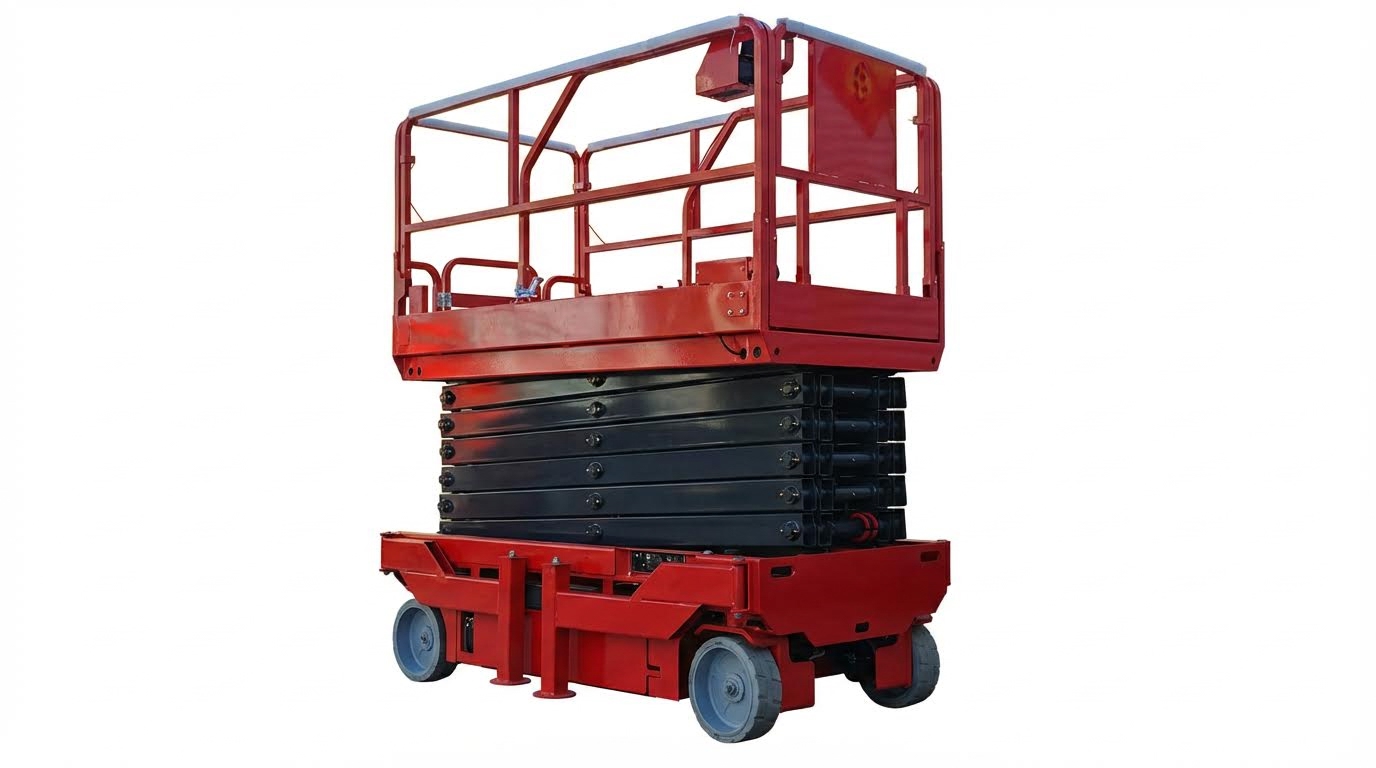
Die Konstruktion und die Lastpfade erklären die mechanische Funktionsweise von elektrischen Scherenhubwagen: Der Scherenstapel und das Fahrgestell verteilen die Lasten der Plattform sicher auf den Boden und widerstehen gleichzeitig Biegung, Knickung und Seitenlasten.
Elektrische Scherenhubtische nutzen einen kompakten X-förmigen Stahlrahmen, dessen Arme an den Enden und in der Mitte gelenkig verbunden sind, um den Hub des Zylinders in eine vertikale Bewegung umzuwandeln. Plattform, Schienen und Fahrgestell bilden einen geschlossenen Lastpfad, der Personen, Werkzeuge und dynamische Lasten zurück in die Bodenplatte transportiert.
| Strukturelement | Funktion im Lastpfad | Typischer Designfokus | Betriebliche Auswirkungen |
|---|---|---|---|
| Plattformdeck | Unterstützt Arbeiter, Werkzeuge und Materialien | Durchbiegungsgrenzen bei einer Nennlast von ≈230–1,150 kg Leistungsbereich | Stabiles Arbeitsgefühl; weniger Nachgeben bei Fußgängerverkehr und Werkzeugaufprall. |
| Geländer | Personal innerhalb der Plattform halten | Höhe und Festigkeit zur Erfüllung der Absturzsicherungsstandards | Verringert das Sturzrisiko, ohne dass bei vielen Tätigkeiten eine separate Gurtverankerung erforderlich ist. |
| Scherenarme | tragen Druck- und Biegekräfte | Knickfestigkeit, Verschleiß der Stiftverbindung, Schweißnahtermüdung | Bestimmt die maximale Plattformhöhe und -steifigkeit bei vollständiger Ausdehnung. |
| Hubzylinderhalterungen | Hydraulische Kraft in den Scherenstapel übertragen | Scher- und Lagerfestigkeit an Bolzen und Halterungen | Verhindert Rissbildung bei hohen Lastwechselzahlen und Stoßbelastungen. |
| Fahrgestellrahmen | Verteilt die Last auf Räder oder Stützen | Torsionssteifigkeit und lokale Verstärkung an den Radaufhängungen | Steuert Neigung und Wankbewegungen beim Fahren auf ebenen Böden. |
| Radstand und Spurweite | Stabilitätsbereich definieren | Geometrie vs. Plattformhöhe und Nennlast | Legt im Handbuch die zulässigen Seitenneigungs- und Windgrenzwerte fest. |
- Vertikale Lasten: Plattformgewicht, Nutzlast und Eigengewicht werden über die Scherenarme in das Chassis übertragen – Unerlässlich für die Dimensionierung von Armsegmenten und Stiften.
- Seitliche Belastungen: Wind, Werkzeugdruck und Arbeiterbewegung wirken auf Plattformebene – Konstruktion der Antriebsschutzplanke und Chassisbreite.
- Dynamische Effekte: Anfahren, Anhalten und kleinere Stöße erzeugen vorübergehende Kräfte – Einfluss auf die Ermüdungslebensdauer und die Auswahl der Schweißnahtdetails.
Da elektrische Scherenarbeitsbühnen häufig in Innenräumen auf glatten Böden eingesetzt werden, optimieren Konstrukteure die Konstruktion eher auf hohe Zyklenzahlen und geringe Geräuschentwicklung als auf extreme Beanspruchung in unebenem Gelände. Dennoch erfordern Nennlasten bis ca. 1,150 kg konservative Sicherheitsfaktoren gegen Knicken, insbesondere bei maximalen Plattformhöhen, wo jede Seitenlast hohe Biegemomente in den Scherenarmen erzeugt (siehe Tragfähigkeits- und Anwendungshinweise).
Warum die Bodenbeschaffenheit für das Tragverhalten von Bedeutung ist
Die Lastverteilung setzt einen festen, ebenen Untergrund voraus. Auf weichem oder geneigtem Untergrund verteilen sich die Radlasten ungleichmäßig, was die lokale Beanspruchung des Chassis erhöht und die Hebebühne empfindlicher gegenüber Seitenlasten macht. Daher sind elektrische Scherenhebebühnen standardmäßig nur für glatte, ebene Flächen geeignet.
💡 Hinweis für den Außendiensttechniker: Wiederholte Risse an den Schweißnähten der Scherenarme oder den Bolzenaufnahmen einer Maschinenflotte deuten oft darauf hin, dass die Maschinen über Bodenfugen oder Schlaglöcher gefahren werden. Selbst kleine Unebenheiten im Beton können die dynamischen Lasten deutlich über die statische Tragfähigkeit von 1,000 kg ansteigen lassen. Daher sollte in den Baustellenregeln festgelegt werden, dass die Plattform vor dem Überfahren von Unebenheiten abgesenkt werden muss.
Elektrischer Antriebsstrang, Steuerung und Sicherheitslogik
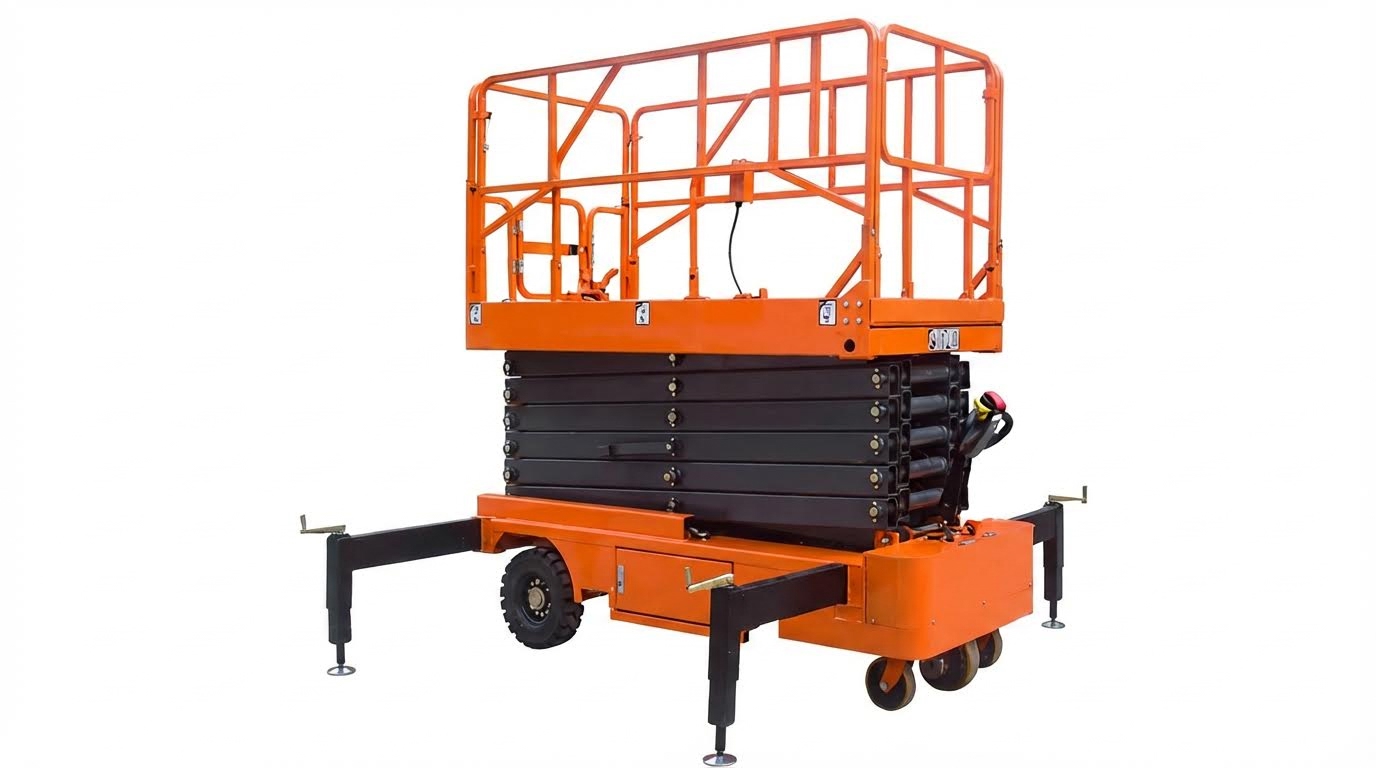
Der elektrische Antriebsstrang, die Steuerungselektronik und die Sicherheitslogik erklären im Wesentlichen die Funktionsweise von elektrischen Scherenarbeitsbühnen im täglichen Einsatz. Batterien versorgen Elektromotoren mit Strom, Motoren treiben Hydraulik und Räder an, und mehrstufige Steuerungssysteme gewährleisten sichere und vorhersehbare Bewegungen.
- Batteriepack: Liefert Gleichstrom für Traktion und Heben – Definiert Laufzeit und Ladestrategie.
- Motor und Hydraulik: Elektrische Energie in Auftriebskraft umwandeln – Hubgeschwindigkeit und -gleichmäßigkeit bestimmen.
- Wechselrichter und Controller: Motordrehmoment und Drehzahl regeln – Ermöglicht eine präzise, ruckfreie Positionierung.
- Sensoren und Verriegelungen: Achten Sie auf Last, Höhe und Neigung – Stoppen Sie unsichere Bewegungen, bevor Schaden entsteht.
💡 Hinweis für den Außendiensttechniker: Bei der Fehlersuche an „langsamen“ oder „schwachen“ Hebebühnen sollten Sie die Spannung unter Last an der Batterie und am Motorregler überprüfen, bevor Sie die Hydraulik verantwortlich machen – ein Spannungsabfall kann einen Hydraulikfehler vortäuschen, ist aber wesentlich günstiger zu beheben.
Batterietechnologien und Leistung im Arbeitszyklus
Die Batteriechemie und -größe bestimmen, wie elektrische Scherenarbeitsbühnen während einer 8- bis 10-stündigen Schicht funktionieren, einschließlich Hubfrequenz, Fahrstrecke und Zeitaufwand für das Laden im Vergleich zum Betrieb.
Die meisten modernen elektrischen Scherenarbeitsbühnen nutzen wiederaufladbare Akkus zur Stromversorgung der Fahr- und Hydraulikpumpenmotoren mit Gleichstrom. Auf ebenen Innenböden ermöglichen sie einen Betrieb von etwa 8–10 Stunden pro Ladung. Leistungsstärkere Akkus wie Lithium-Ionen erhöhen die nutzbare Kapazität und verkürzen die Ladezeit im Vergleich zu herkömmlichen Bleiakkus.
| Batterietyp | Typischer Einsatz in Scherenhubwagen | Ladezeit (ca.) | Betriebszyklusmerkmale | Betriebliche Auswirkungen |
|---|---|---|---|---|
| Überflutete Blei-Säure | Üblich bei Hallenaufzügen | 6–8 Stunden, bei einigen Geräten bis zu 16 Stunden. Quelle | Gut für den Einsatz in einer Schicht geeignet, wenn über Nacht geladen; empfindlich gegenüber Tiefentladung und Zwischenladung. | Planen Sie das Aufladen über Nacht; vermeiden Sie wiederholtes Aufladen während der Pausen, um die Lebensdauer zu verlängern. |
| Versiegeltes AGM / Gel | Wartungsarm für den Innenbereich | Ähnlich wie bei geflutetem Bleiakkumulator (typischerweise 6–10 Stunden) | Keine Bewässerung; weiterhin anfällig für Über-/Unterladung | Reduziert den Wartungsaufwand; ideal bei eingeschränktem Zugang zu Elektrolyten. |
| Lithium-Ionen | Fortschrittliche vollelektrische Modelle | Bei einigen Ausführungen kann der Akku in etwa 3.5 Stunden von leer auf voll aufgeladen werden. Quelle | Hohe Energiedichte; unterstützt Zwischenladung und lange Lebensdauer | Unterstützt den Mehrschichtbetrieb mit kurzen Ladefenstern und weniger Austauschvorgängen. |
Üblicherweise werden die Batterien am Ende jeder Schicht 6–8 Stunden lang geladen, damit das Ladegerät seinen gesamten Ladezyklus abschließen kann, anstatt sie häufig nur kurzzeitig zu laden, was die Sulfatierung beschleunigt. Batterietemperatur und Umgebungsbedingungen beeinflussen ebenfalls die Funktionsweise von elektrischen Scherenarbeitsbühnen; kalte Umgebungen reduzieren die verfügbare Kapazität und die Laufzeit, weshalb Ingenieure für den Wintereinsatz größere Akkus verwenden oder die Ladeinfrastruktur erweitern.
- Passende Ladegeräte: Verwenden Sie ausschließlich Ladegeräte, die für die Batteriespannung und -chemie ausgelegt sind. Verhindert Überhitzung und elektrische Störungen. Quelle
- Belüftung während des Ladevorgangs: Blei-Säure-Batterien setzen Wasserstoff und Sauerstoff frei – Zur Kontrolle des Explosionsrisikos sind gut belüftete Ladebereiche erforderlich. Quelle
- Disziplinarmaßnahmen: Vermeiden Sie routinemäßiges Zwischenladen und Tiefentladen – Verlängert die Akkulaufzeit und stabilisiert die tägliche Laufzeit. Quelle
Wie Batteriemonitoringsysteme den täglichen Betrieb verändern
Moderne Batterieüberwachungssysteme protokollieren Ladeverlauf, Ladezustand, Entladung, Flüssigkeitsstand und Ladegerätleistung direkt auf der Maschinensteuerung und stellen die Diagnosedaten den Bedienern und Wartungsteams zur Verfügung. Proprietäre Algorithmen geben sogar Empfehlungen zum Nachfüllen von Wasser basierend auf Nutzung und Umgebungstemperatur und wandeln so die bisherige Schätzung in eine planmäßige, datengestützte Wartung um.
💡 Hinweis für den Außendiensttechniker: Sollten Sie feststellen, dass die Hebebühnen regelmäßig vor Schichtende „tot“ zurückkommen, protokollieren Sie die tatsächliche Laufzeit und prüfen Sie, ob die Batterien chronisch unterladen oder durch Kälte durchnässt sind, bevor Sie davon ausgehen, dass Sie mehr Maschinen benötigen.
Motorantriebe, Hydraulik und Energierückgewinnung

Elektromotoren, Hydraulikpumpen und Energierückgewinnungssysteme wandeln Batterieenergie in vertikale Hubkraft um und gewinnen beim Absenken einen Teil davon zurück. Dies ist ein zentraler Aspekt für die effiziente Funktionsweise von elektrischen Scherenarbeitsbühnen.
Elektrische Scherenarbeitsbühnen nutzen Hydraulikantrieb zum Anheben: Eine Hydraulikpumpe fördert Druckflüssigkeit zu den am Scherenhubwerk befestigten Hubzylindern. Ingenieure dimensionieren Pumpenfördermenge, Überdruckventileinstellungen und Zylinderbohrung, um die angestrebten Hubgeschwindigkeiten und Nennlasten der Plattform mit entsprechenden Sicherheitsfaktoren zu erreichen. Wechselstrom -Asynchronmotoren oder Permanentmagnet-Synchronmotoren, die von Frequenzumrichtern angetrieben werden, ermöglichen eine stufenlose Drehzahlregelung im Bereich von 0.1–0.5 m/s für eine gleichmäßige Plattformbewegung.
| Teilsystem | Schlüsseltechnologie | Typische Leistung | Betriebliche Auswirkungen |
|---|---|---|---|
| Traktions-/Hebemotoren | Wechselstrom- oder Permanentmagnet-Synchronmotoren | Stufenlose Geschwindigkeitsregelung 0.1–0.5 m/s über Frequenzumrichter Quelle | Ermöglicht ein präzises Anfahren der Arbeitsbereiche und sanftes Starten und Stoppen. |
| Hydraulische Betätigung | Pumpe + Zylinder mit Überdruckventilen | Konfiguriert für Nennlasten von etwa 230–1,150 kg bei elektrischen Geräten Quelle | Definiert Hubkraft und Hubgeschwindigkeit; Überdruckventile schützen vor Überlastung. |
| Vektorregelung | Erweiterte VFD-Algorithmen | Die Motoreffizienz stieg um ca. 25 %, der Energieverbrauch sank in einigen Systemen um ca. 30 %. Quelle | Verlängert die Akkulaufzeit und reduziert die Wärmeentwicklung in geschlossenen Innenräumen. |
| Energierückgewinnung | Motor im Generatorbetrieb beim Abstieg | Durch energiesparende Steuerung kann der Stromverbrauch über einen 10-m-Zyklus um etwa 15 % gesenkt werden. Quelle | Mehr Hubvorgänge pro Ladung; geringere CO₂-Emissionen bei gleicher Arbeitsleistung. |
Bei einigen Konstruktionen wird der Motor während des Abstiegs in den Generatorbetrieb geschaltet und die zurückgewonnene Energie über ein Energierückgewinnungssystem in die Batterie zurückgeführt. Dadurch wird der Stromverbrauch bei einem 10-Meter-Hebe- und Senkzyklus um etwa 15 % reduziert. Vollelektrische Architekturen, die gänzlich auf Hydraulik verzichten, gehen noch einen Schritt weiter: Sie kombinieren eine einzelne Lithium-Ionen-Batterie mit Energierückgewinnung und Zwischenladung, um den Stromverbrauch um etwa 70 % zu senken und eine sehr lange Batterielebensdauer zu erreichen.
- Vorwärts-/Rückwärtssteuerung: Schütze oder Halbleiterrelais schalten die Motorphasenfolge – Ermöglicht sanfte Richtungswechsel ohne mechanische Kupplungen. Quelle
- Beschleunigungsmanagement: Die Drehzahl des Frequenzumrichters erhöht sich bei Volllast in etwa 1.5 Sekunden von 0 auf rund 0.3 m/s – Begrenzt die Stoßbelastung für die Struktur und die Insassen. Quelle
- Bürstenlose Upgrades: Bürstenlose Gleichstrommotoren mit Permanentmagneten können die Lebensdauer von etwa 2,000 auf 10,000 Stunden verlängern – Verkürzt Ausfallzeiten und Wartungszyklen von Monaten auf Jahre. Quelle
💡 Hinweis des Außendiensttechnikers: Bei Geräten mit Energierückgewinnung erzielen Bediener, die die Steuerung für ein sanftes, kontinuierliches Absenken „feinfühlen“, oft eine deutlich längere Laufzeit als diejenigen, die die Plattform wiederholt auf und ab bewegen.
Steuerungselektronik, Sensoren und Schutzsysteme
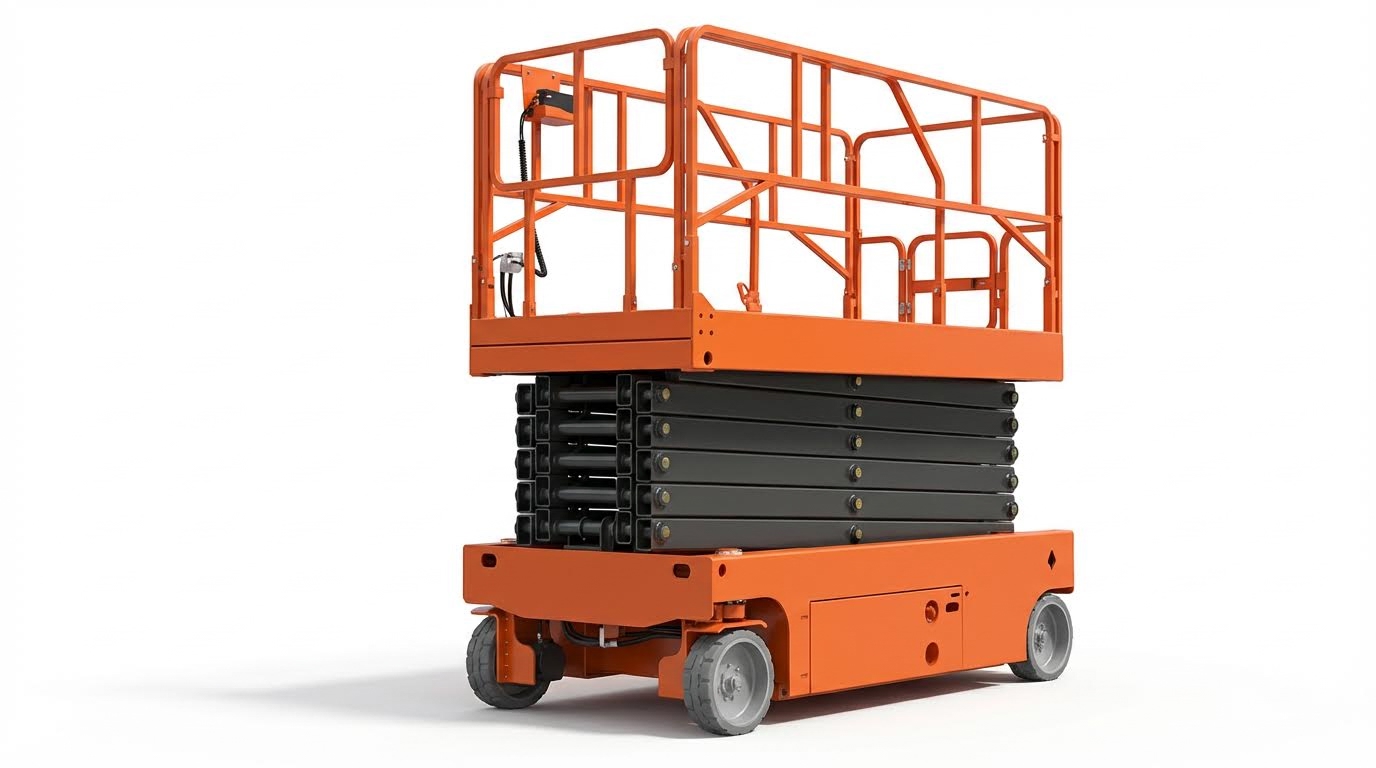
Die Steuereinheit, die Sensoren und die Verriegelungen bilden das Sicherheitsrückgrat der Funktionsweise von elektrischen Scherenhubwagen und setzen Joystick-Eingaben nur dann in Bewegung um, wenn die Bedingungen innerhalb sicherer Grenzen liegen.
Das elektrische Steuerungssystem basiert auf einer zentralen Steuereinheit – häufig einer SPS oder einem dedizierten Motherboard – mit Millisekunden-Verarbeitung, die mehrere Hub- und Sicherheitssignale mit Reaktionszeiten von ≤ 50 ms integriert. Wenn ein Bediener einen Hubvorgang auslöst, liest die Steuerung Daten zu Last, Höhe und Neigung ein und berechnet anschließend die Motorparameter, um ruckartige Anläufe, insbesondere auf hohen Plattformen um die 10 m, zu vermeiden.
<Charging Systems, Maintenance, And Fleet PlanningDas Laden, Warten und Planen von Flotten für elektrische Scherenarbeitsbühnen bestimmt die tatsächliche Betriebszeit, die Batterielebensdauer und die Gesamtkosten und ist ein wesentlicher Bestandteil des Verständnisses, wie elektrische Scherenarbeitsbühnen im täglichen Betrieb funktionieren.
- Design des Ladesystems: Definiert, wie schnell man sich von einer Schicht erholt – hat direkte Auswirkungen auf die Maschinenverfügbarkeit und die Schichtplanung.
- Batteriewartung: Hält Kapazitäts- und Sicherheitsmargen stabil – Vermeidet plötzlichen Höhen- oder Antriebsverlust.
- Flottenplanung: Passt zu Ladegeräten, Stromversorgung und Maschinen – Verhindert Engpässe an der Steckdose statt am Arbeitsplatz.
💡 Anmerkung des Außendiensttechnikers: In den meisten Lagerhallen liegt die „versteckte“ Einschränkung nicht in der Batteriegröße, sondern in der zu geringen Anzahl an passend aufeinander abgestimmten Ladegeräten an zu wenigen Stromkreisen. Dies begrenzt stillschweigend die Anzahl der Hubvorgänge, die pro Schicht durchgeführt werden können.
Lademethoden, Ladezeiten und Infrastruktur: Die Lademethoden für elektrische Scherenarbeitsbühnen basieren auf der vollständigen Aufladung über Nacht, dem kontrollierten Zwischenladen und einer ausreichend dimensionierten Infrastruktur, um sicherzustellen, dass jede Einheit zu Schichtbeginn einsatzbereit ist. In der Praxis hängt der Betrieb von elektrischen Scherenarbeitsbühnen über einen ganzen Tag davon ab, die Batteriekapazität an den Arbeitszyklus anzupassen und die Energie anschließend mit dem richtigen Ladegerät am richtigen Ort und für die richtige Dauer wieder aufzuladen.
- Nutzen Sie die vollen Übernachtladungen: Lassen Sie das Ladegerät die Lade-, Absorptions- und Ausgleichsphasen abschließen – Dadurch wird die Tiefenkapazität wiederhergestellt, anstatt nur die Oberflächenladung.
- Vermeiden Sie das gewohnheitsmäßige Aufladen während der Kaffeepause: Nicht mehrmals täglich für 10–20 Minuten an das Stromnetz anschließen – Dies beschleunigt die Sulfatierung der Platten und verkürzt deren Lebensdauer.
- Vor jedem Ladevorgang prüfen: Überprüfen Sie Kabel, Stecker und Anschlüsse auf Beschädigungen oder Korrosion – Verringert Lichtbögen, Brände und störende Ladegerätfehler.
- Ladeplätze ausweisen: Halten Sie sie frei von brennbaren Materialien und sorgen Sie für gute Luftzirkulation – Schützt vor Wasserstoffzündung in Blei-Säure-Systemen.
- Verwenden Sie nach Möglichkeit intelligente Ladegeräte: Ladeverlauf und Alarme erfassen – Ermöglicht es Flottenmanagern, zu sehen, welche Aufzüge missbraucht oder zu niedrig abgerechnet werden.
Wie das Aufladen mit der Frage „Wie funktionieren elektrische Scherenhubwagen?“ zusammenhängt
Elektrische Scherenarbeitsbühnen wandeln gespeicherte Gleichstromenergie in Hydraulik- und Fahrleistung um. Das Ladegerät lädt diesen Energiespeicher zu Beginn jeder Schicht wieder auf. Unzureichendes Ladeverhalten verkürzt unbemerkt die Laufzeit, was von den Bedienern als „schwache Hubkraft“ oder „langsames Fahren“ wahrgenommen wird, obwohl Motoren und Hydraulik einwandfrei funktionieren.
💡 Anmerkung des Außendiensttechnikers: Wenn sich ein Kunde beschwert, dass die Aufzüge „nur 3–4 Stunden laufen“, überprüfe ich als Erstes die Ladeprotokolle; in neun von zehn Fällen werden die Ladegeräte lange vor Abschluss des Algorithmus ausgesteckt.
Batteriepflege, Umweltgrenzen und LebenszykluskostenDie Batteriepflege für elektrische Scherenarbeitsbühnen konzentriert sich auf die korrekte Wasserbefüllung, Korrosionsschutz, Temperaturregulierung und die Vermeidung von Tiefentladung, damit Kapazität und Sicherheit über viele Jahre innerhalb der Auslegungsgrenzen bleiben. Hier treffen die physikalischen Funktionsweisen elektrischer Scherenarbeitsbühnen auf die Kosten: Batterien stellen in der Regel den größten Einzelposten bei den Ersatzteilkosten dar, sodass kleine Wartungsmaßnahmen im Laufe der Zeit Tausende von Euro einsparen oder einsparen können.
- Zugbetreiber zu SOC-Grenzwerten: Bringen Sie ihnen bei, bei Warnstufen zu parken und zu laden – Dies ist günstiger als der Austausch sulfatierter Packungen alle 12–18 Monate.
- Standardisierung von PSA und Werkzeugen: Isolierte Werkzeuge verwenden und unbedingt erforderlichen Augen-/Handschutz tragen – verringert die Schwere und Häufigkeit von batteriebedingten Vorfällen.
- Protokollieren Sie jeden Batteriewechsel oder jede Störung: Erfassungsdatum, Uhrzeit und Fehlermodus – Hilft Ihnen dabei, im nächsten Beschaffungszyklus bessere Chemikalien oder Ladegeräte auszuwählen.
Umweltbedingte Grenzen und Kältebedingungen
Die Batteriekapazität sinkt bei niedrigen Temperaturen, was die Laufzeit in Kühlhäusern oder bei winterlichen Außeneinsätzen verkürzt. Mit sinkender Umgebungstemperatur steigt der Innenwiderstand, sodass bei gleicher Stromaufnahme ein stärkerer Spannungsabfall und eine frühere Abschaltung aufgrund zu niedriger Spannung auftreten. Ingenieure kompensieren dies durch eine höhere Batteriekapazität, eine reduzierte Auslastung pro Schicht oder durch das Einplanen von Ladevorgängen während der Schicht in einer wärmeren Halle. Dies ist ein entscheidender Aspekt der Fuhrparkplanung für Standorte mit großen, unbeheizten Bereichen.
💡 Anmerkung des Außendiensttechnikers: An kalten Standorten plane ich so, als ob jede Batterie nur 60–70 % ihrer Nennamperestunden liefert; wenn man die Ladegeräte und die Schichtlängen darauf auslegt, hören die Bediener auf, sich an frostigen Morgen über das „Heben von Lasten“ zu beschweren.
 Abschließende Überlegungen zur Spezifizierung von elektrischen Scherenarbeitsbühnen: Elektrische Scherenarbeitsbühnen ermöglichen sicheres und kostengünstiges Arbeiten in der Höhe nur dann, wenn sie als integrierte Systeme und nicht lediglich als batteriebetriebene Plattformen betrachtet werden. Die Antriebskonstruktion bestimmt Hubgeschwindigkeit und -dauer. Strukturgeometrie und Radstand definieren Stabilität und Fahrbereich im angehobenen Zustand. Steuerungselektronik, Sensoren und Verriegelungen entscheiden darüber, ob eine riskante Bewegung überhaupt ausgeführt werden kann. Ladestrategie und Batteriepflege schließen den Regelkreis. Geeignete Ladegeräte, vollständige Ladungen am Schichtende und saubere, mit Wasser gefüllte Bleiakkus minimieren den Spannungsabfall. Dies erhält die Hubgeschwindigkeit und verhindert unerwünschte Stillstände. Fehlerhafte Gewohnheiten verkürzen unbemerkt die Batterielebensdauer und erhöhen die Flottenkosten, selbst wenn die mechanischen Teile intakt sind. Für Ingenieure und Betriebsteams ist der beste Ansatz einfach: Beginnen Sie mit Last, Höhe, Bodenbeschaffenheit und Schichtplan. Wählen Sie die passenden Bühnenmodelle und Batterietypen und dimensionieren Sie anschließend Ladegeräte und Stromkreise entsprechend. Weisen Sie die Bediener auf die Laderegeln, die zulässigen Bodengrenzen und die Regel „Plattform vor Fahrt über unebene Stellen absenken“ hin. Nutzen Sie Überwachungstools und Servicedaten – ob von Atomoving-Geräten oder anderen Anbietern –, um die Flottengröße, die Anzahl der Ladegeräte und die Wartungsintervalle anzupassen, bevor Probleme am Einsatzort auftreten. Häufig gestellte Fragen: Wie funktionieren elektrische Scherenbühnen? Eine elektrische Scherenbühne funktioniert, indem sie Hydraulikzylinder mit Hydraulikflüssigkeit oder Druckluft befüllt. Die Hydraulikflüssigkeit oder -luft wird dann in den Zylinder gepresst, wodurch dieser ausfährt. Durch diese Ausfahrbewegung werden die Scherenbeine auseinandergedrückt, wodurch die Plattform angehoben wird. Funktionsprinzip der ScherenhebebühneWelche Probleme treten häufig bei Elektroliften auf? Zu den häufigsten Problemen bei Elektroliften gehören Hydraulikflüssigkeitsverluste, Motorstörungen und Probleme mit der Steuerung. Regelmäßige Wartung hilft, diese Probleme zu vermeiden. Weitere Informationen zur Fehlersuche finden Sie in Anleitungen wie beispielsweise Tipps zur Wartung von ElektroaufzügenWie hebt und senkt man eine Scherenbühne? Zum Anheben schalten Sie die Stromzufuhr ein und lassen Sie das Hydrauliksystem die Zylinder ausfahren, wodurch die Beine auseinandergedrückt und die Plattform angehoben wird. Zum Absenken gehen Sie umgekehrt vor, indem Sie den Hydraulikdruck ablassen. Beachten Sie beim Betrieb stets die Sicherheitsvorschriften. Bedienungsanleitung.
| Batterieaspekt | Wichtigste Vorgehensweise / Limit | Am besten geeignet für… / Auswirkungen auf den Betrieb |
|---|---|---|
| Überfluteter Blei-Säure-Elektrolytspiegel | Platten nur kurz vor dem Befüllen abgedeckt; Füllrohr erst nach vollständiger Befüllung und Abkühlung von oben nach unten befüllen Referenz | Verhindert freiliegende Platten (Kapazitätsverlust) und Überlaufen (Korrosion und Bodenverunreinigung). |
| Wasserqualität | Verwenden Sie ausschließlich destilliertes Wasser; kein Leitungswasser. Referenz | Verringert mineralische Verunreinigungen und Plattenverschleiß. |
| Inspektionshäufigkeit | Mindestens monatlich für täglich genutzte Aufzüge. Referenz | Hält Zellungleichgewicht und frühzeitiges Zellversagen unter Kontrolle. |
| Versiegelte (AGM/Gel) Schecks | Nicht gießen; auf Ausbeulungen, Lecks, Überhitzung und Endzustand prüfen. Referenz | Erkennt interne Schäden vor einem plötzlichen Ausfall. |
| Korrosion und Kabelzustand | Ablagerungen entfernen, neutralisieren, trocknen, schützen; auf Knicke, gebrochene Litzen und Risse in der Isolierung prüfen. Referenz | Verringert Spannungsabfall, Wärmeentwicklung und Brandgefahr; gewährleistet die volle Leistung der Motoren. |
| Abflusstiefenbegrenzung | Vermeiden Sie es, den typischen Abschaltpunkt (~20 % Ladezustand) zu unterschreiten; verlassen Sie sich auf die automatische Abschaltung. Referenz | Verhindert das Ablösen des aktiven Materials und die Korrosion des Gitters; verlängert die Lebensdauer. |
| Temperaturkontrolle | Achten Sie auf übermäßige Temperaturerhöhung während des Ladevorgangs; verwenden Sie Ladegeräte mit Temperaturkompensation. Referenz | Verringert das Risiko einer thermischen Überhitzung und eines Elektrolytverlusts. |
| Persönliche Schutzausrüstung während der Wartung | Schutzbrille, säurebeständige Handschuhe, kein Schmuck, Kontakt mit stromführenden Anschlüssen vermeiden Referenz | Verhindert chemische Verbrennungen, Lichtbögen und Kurzschlussverletzungen. |
| Fortschrittliche Überwachungssysteme | Echtzeit-Protokollierung von Ladezustand, Flüssigkeitsstand und Ladeverlauf Referenz | Unterstützt vorausschauende Wartung und optimierte Austauschzeitpunkte. |