Wenn Sie sich fragen, welche Geräte in modernen Lagern Lasten auf Paletten heben, reicht die Antwort von Robotern über Gabelstapler und Hubwagen bis hin zu ergonomischen Positionierern. Dieser Leitfaden beschreibt die wichtigsten Maschinentypen, ihre sicheren Arbeitsbereiche in kg und m und wie Sie diese optimal auf Ihre Lasten, Lagergänge und Durchsatzziele abstimmen, um ein zuverlässiges und normkonformes Palettenhandling zu gewährleisten.
Maschinen passend zu Lasten, Layouts und Arbeitsabläufen
Die Abstimmung der Hebevorrichtungen auf Ihre Lasten, Ihr Gebäude und Ihre Arbeitsabläufe beugt Engpässen, Beschädigungen und unsicherem Betrieb vor. Die richtige Wahl ergibt sich aus der Quantifizierung der Last-, Gang- und Regalkapazitätsgrenzen sowie der Abwägung von Lebenszykluskosten und Energieverbrauch.
- Beginnen wir mit der Ladung: Masse, Stellfläche und Steifigkeit der Verpackung bestimmen, ob manuelle PalettenhubwagenGabelstapler oder Roboterpalettierer eignen sich dafür – Dadurch wird eine Unter- oder Überdimensionierung der Ausrüstung vermieden.
- Die Gebäudehülle respektieren: Gangbreite, Türhöhe und Bodenbeschaffenheit begrenzen, welche Lkw oder Roboter den Raum sicher nutzen können. Dadurch wird verhindert, dass auf dem Papier perfekte Entwürfe schon am ersten Tag scheitern.
- Design rund um den Arbeitsablauf: Wareneingang, Lagerung, Kommissionierung und Warenausgang haben jeweils unterschiedliche Anforderungen an die Handhabung – Oft benötigt man einen kleinen Flottenmix, nicht nur eine einzige „Heldenmaschine“.
- Denken Sie an die Kosten pro bewegter Palette: Energieaufwand, Wartung und Arbeitskosten übersteigen in der Regel den Kaufpreis – So vergleicht man manuelle, halbautomatische und vollautomatische Optionen fair.
💡 Hinweis für Außendiensttechniker: Im Zweifelsfall sollten Sie den Prozess mit Maßband und Stoppuhr ablaufen, bevor Sie Broschüren konsultieren. Die tatsächlichen Gangbreiten, Wendekreise und Kommissionierleistungen pro Stunde helfen schnell bei der Entscheidung, ob Maschinen geeignet sind oder nicht.
Bewertung von Last-, Gang- und Regalbeschränkungen
Die Bewertung von Last-, Gang- und Regalbeschränkungen erfordert die Umsetzung der physikalischen Grenzen in verbindliche Auswahlregeln für Hebezeuge, die Lasten auf Paletten heben. Jede infrage kommende Maschine muss diese Grenzen mit ausreichendem Sicherheitsspielraum erfüllen, nicht nur gemäß den technischen Daten.
| Einschränkungstyp | Wichtige zu messende Parameter | Typische Auswirkungen auf die Ausrüstung | Betriebliche Auswirkungen |
|---|---|---|---|
| Lastmasse und Platzbedarf | Einheitsladungsmasse (kg), Palettengröße (mm × mm) | Roboterpalettierer handhaben Nutzlasten von 30–800 kg pro Kommissionierung werden auf dieser Seite erläutert; manuelle Palettenstapler und Stapler arbeiten typischerweise bis zu etwa 2,000 kg. werden auf dieser Seite erläutert. | Gewährleistet, dass die Maschine auch die schwersten Artikel ohne Leistungsreduzierung oder Mehrfachentnahmen heben kann. |
| Laststabilität und Verpackungssteifigkeit | Schwerpunkthöhe, Verpackungsart (Beutel, Karton, Fass), Umhüllung/Umreifung | Roboterpalettierer sind auf EOAT angewiesen, das auf die Verpackung und Steifigkeit abgestimmt ist. werden auf dieser Seite erläutertGabelstapler und Hochhubwagen verlieren an Kapazität, wenn die Hubhöhe zunimmt werden auf dieser Seite erläutert. | Verringert das Risiko des Ausrutschens oder Umkippens, insbesondere bei hohen Hebebühnen oder während des Transports. |
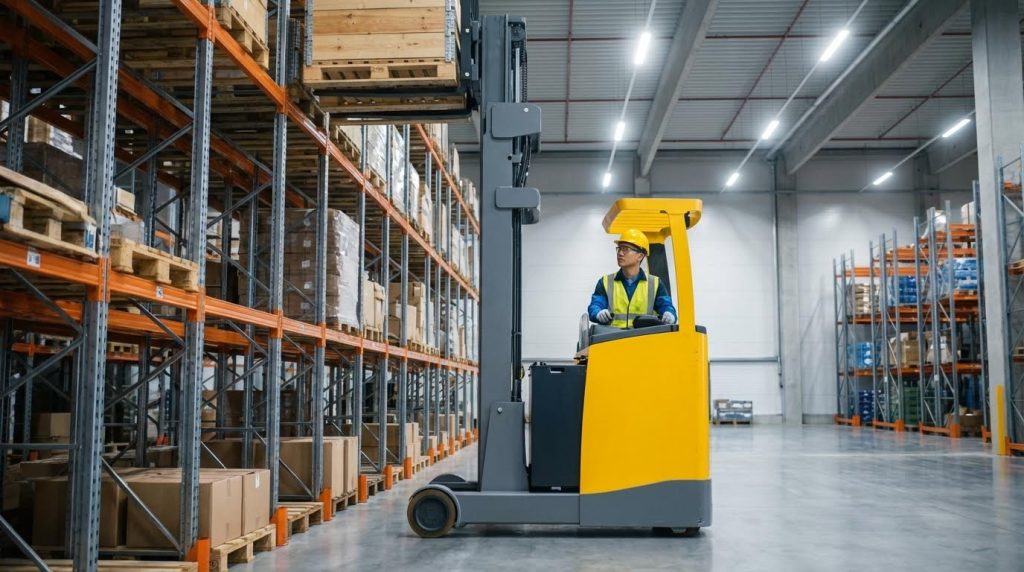
| Gangbreite | Lichte Gangbreite (mm) zwischen Regalständern oder Hindernissen | Standard-Schubmaststapler benötigen breitere Gänge als Schmalgangstapler, die in Gängen arbeiten können, die nur geringfügig breiter als die Palettenbreite sind. werden auf dieser Seite erläutert. | Bestimmt, ob die Speicherdichte erhöht werden kann oder ob aus Gründen der Manövrierfähigkeit eine geringere Speicherdichte in Kauf genommen werden muss. |
| Hubhöhe / Regalsysteme | Obere Trägerhöhe (m), unterste Trägerhöhe (mm), Trägerabstand | Mitgänger-Hochhubwagen heben üblicherweise etwa 1.5–3 m. werden auf dieser Seite erläutertSchubmaststapler und Gabelstapler können hingegen Höhen von über 10 m erreichen. werden auf dieser Seite erläutert. | Verhindert eine Unterdimensionierung der Masthöhe und gewährleistet einen sicheren und effizienten Zugang zu allen Rack-Ebenen. |
| Durchsatzanforderung | Kisten oder Paletten pro Stunde an jedem Knotenpunkt | Roboterpalettierer erreichen eine Leistung von etwa 30 Kisten pro Minute. werden auf dieser Seite erläutertweit darüber hinaus manuelle Palettenhubwagen oder Mitgänger-Stapler. | Zeigt, wo manuelle Handhabung zum Engpass wird und wo sich Automatisierung auszahlt. |
| Bedienernähe und Ergonomie | Greifhöhe, Reichweite, Häufigkeit manueller Berührungen | Palettenpositionierer und Hubtische halten die oberste Ebene in etwa Hüfthöhe und können sich bei Laständerungen automatisch nivellieren. werden auf dieser Seite erläutert. | Verringert das Beugen und Verdrehen, wodurch Ermüdung und das Risiko von Muskel-Skelett-Verletzungen reduziert werden. |
- Definieren Sie Ihre „Auslegungslast“: Verwenden Sie die schwerste, höchste und instabilste Palette, die Sie jemals handhaben werden – Dies legt die Mindestanforderungen für das sichere Heben von Lasten auf Paletten fest.
- Kompatibilität mit dem Rack prüfen: Stellen Sie sicher, dass die Abmessungen der Gabel, die Mastneigung und die Reichweitenmechanismen mit Ihrem Trägerabstand und den Freiräumen kompatibel sind – Dadurch werden zeitaufwändige „Rührvorgänge“ vermieden.
- Leitsysteme berücksichtigen: Bei sehr schmalen Gängen empfiehlt sich der Einsatz von Draht- oder Schienenführungen an Drehkranzstaplern – Dies schützt die Regale und beschleunigt die Bewegung in engen Räumen.
Wie Sie Ihr Gelände schnell überblicken, bevor Sie die Ausrüstung auswählen
Gehen Sie jeden Gang und jeden Prozessschritt durch. Messen Sie Gangbreiten, Türöffnungen, Wendezonen und alle Regalhöhen. Notieren Sie Bodenneigungen, Abflüsse und beschädigte Betonflächen. Erfassen Sie die maximale Anzahl an Paletten pro Stunde an Laderampen, Bereitstellungsflächen und Lagerbereichen. Diese einfache Bestandsaufnahme verhindert die Anschaffung von Geräten, die zwar auf dem Papier passen, im realen Betrieb aber zu Engpässen führen.
💡 Hinweis für den Monteur: Wenn Sie sich der maximalen Gangbreite oder Hubhöhe nähern, betrachten Sie die Katalogangaben als optimalen Fall. Planen Sie zusätzlich einen Sicherheitszuschlag von mindestens 100–150 mm ein und berücksichtigen Sie eine reduzierte Tragfähigkeit bei maximaler Höhe, um einen realistischen Sicherheitsbereich zu gewährleisten.
Gesamtbetriebskosten, Energieverbrauch und Wartungsstrategie
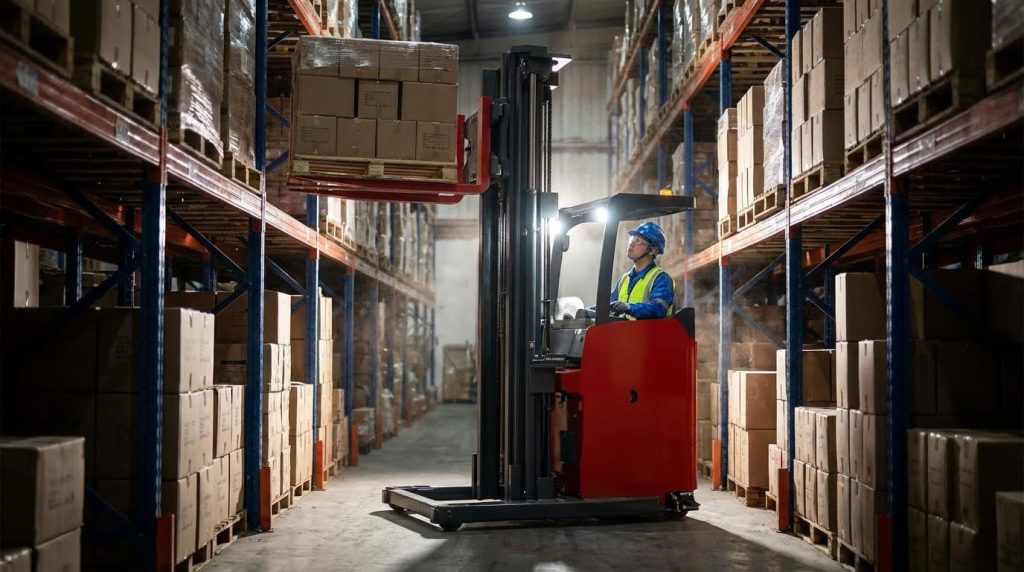
Die Gesamtbetriebskosten (TCO), der Energieverbrauch und die Wartungsstrategie verwandeln eine einmalige Anschaffung in planbare Kosten pro bewegter Palette. Sie vergleichen verschiedene Maschinen zum Heben von Lasten auf Paletten anhand der Lebenszykluskosten, nicht anhand des Listenpreises.
| Option | Typischer Anwendungsfall | Energieprofil | Wartungsprofil | Beste für… |
|---|---|---|---|---|
| Manuelle Palettenhubwagen | Kurze Bewegungen, geringes Verkehrsaufkommen, ebene Böden | Keine Antriebsenergie; nur menschliche Anstrengung | Sehr niedrig, hauptsächlich Räder und Hydraulikdichtungen | Kleine Baustellen, wo die Arbeitskräfte billig sind und nur wenige Paletten pro Stunde verarbeitet werden. |
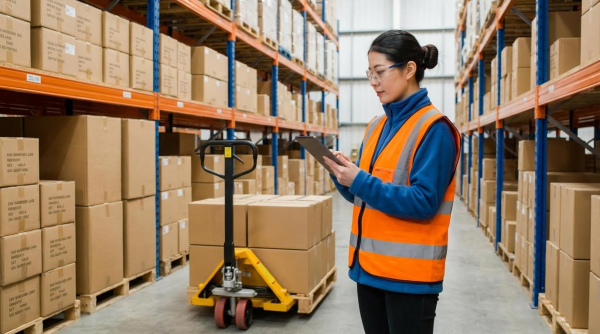
| Elektrische Hubwagen / Mitgänger-Hochhubwagen | Niedrige bis mittlere Höhe (≈1.5–3 m) und mäßiger Durchsatz werden auf dieser Seite erläutert | Batteriebetrieben; moderater Stromverbrauch pro Schicht | Regelmäßige Batteriepflege, Bremsen, Hydraulik; einfacher als bei großen Gabelstaplern. | Kleine bis mittelgroße Lagerhallen, die einen motorisierten Hubwagen benötigen, aber keine vollständige Gabelstaplerkapazität. |
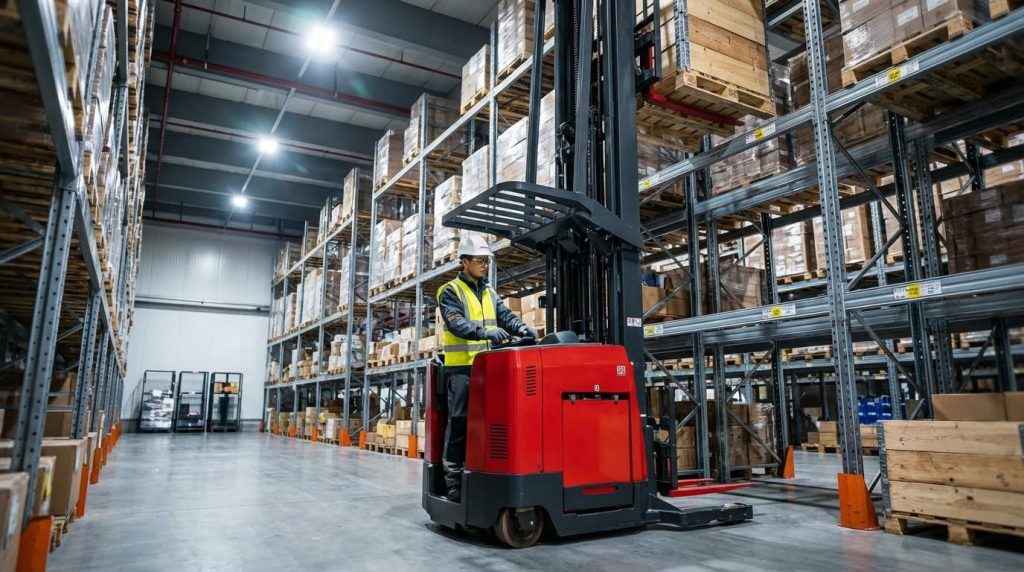
| Gabelstapler / Schubmaststapler | Mittlere bis schwere Lasten, mehrstöckige Regalsysteme bis über 10 m Höhe. werden auf dieser Seite erläutert | Höherer Energieverbrauch; elektrische Einheiten nutzen häufig regeneratives Absenken, um die Batterielebensdauer zu verlängern werden auf dieser Seite erläutert | Geplante Wartung von Hydraulik, Masten, Bremsen und Elektronik | Hochregallager und Docks, wo Geschwindigkeit und Hubhöhe entscheidend sind. |
| Roboterpalettierer / Cobots | Palettierung am Ende der Produktionslinie für Nutzlasten von 30 bis 800 kg bei bis zu 30 Kartons/min. werden auf dieser Seite erläutert | Elektrische Antriebe; gleichmäßige, vorhersehbare kWh-Werte pro Palette; oft geringerer Energieverbrauch pro Einheit als bei manueller Antriebnutzung. | Erfordert vorbeugende Wartung an Robotern, Endmontagegeräten und Förderbändern; KI-Tools können Ausfälle anhand von Motor- und Sensordaten vorhersagen. werden auf dieser Seite erläutert | Bei Produktionslinien mit hohem Durchsatz, wo Arbeitsersparnis und gleichmäßige Stapelung die Automatisierung rechtfertigen, ist dies der Fall. |
| Palettenpositionierer / Hubtische | Ergonomisches Be- und Entladen an festen Stationen | Intermittierende elektrische, hydraulische oder pneumatische Nutzung werden auf dieser Seite erläutert | Gering bis mittel; Schwerpunkt auf Zylindern, Schläuchen und Bedienelementen | Reduzierung der Belastung bei Personen, die den ganzen Tag manuell Paletten bauen oder zerlegen. |
- Kosten pro bewegter Palette berechnen: Energieaufwand, Wartung und Arbeitskosten hinzurechnen; durch die Anzahl der Paletten über die Lebensdauer der Anlage teilen – Dies zeigt, ob Automatisierung tatsächlich die manuelle Vorgehensweise übertrifft.
- Nutzen Sie regenerative Funktionen: Elektrische Schubmaststapler und Palettierer mit regenerativer Absenkung reduzieren den Nettoenergieverbrauch – Dadurch wird die Akkulaufzeit verlängert und die Ladeinfrastruktur reduziert.
- Nutzen Sie nach Möglichkeit vorausschauende Wartung: Die KI-gestützte Überwachung von Stromstärke, Temperatur, Vibration und Zyklenzahl sagt Ausfälle voraus, bevor sie die Produktionslinie zum Stillstand bringen. werden auf dieser Seite erläutert - Dies schützt den Datendurchsatz.
- Wartungsfenster an die Produktion anpassen: Planen Sie den Service während Schichten mit geringer Nachfrage oder Schichtwechseln – Dadurch bleiben Ihre wichtigen Palettenhebegeräte auch bei Auftragsspitzen verfügbar.
Wie sich die Integration von WMS und Automatisierung auf die Lebenszykluskosten auswirkt
Durch die Integration von Roboterpalettierern, Gabelstaplern und Positionierern in Förderanlagen und Lagerverwaltungssysteme (WMS) kann das System Artikelnummern (SKUs) Paletten-IDs zuordnen, Muster automatisch umschalten und die Arbeitslast zwischen den Linien verteilen . Dies reduziert manuelles Scannen, Fehlbeladungen und Nacharbeiten, was langfristig oft höhere Kosteneinsparungen ermöglicht als geringfügige Preisunterschiede bei der Maschinenanschaffung.
💡 Anmerkung des Außendiensttechnikers: Bei knappen Budgets empfehle ich oft ein oder zwei höherwertige Elektro-Lkw anstelle mehrerer günstigerer Fahrzeuge. Bessere Energieeffizienz, regenerative Funktionen und geringere ungeplante Ausfallzeiten machen sich in der Regel über die gesamte Lebensdauer des Lkw bezahlt, insbesondere im Mehrschichtbetrieb.
Abschließende Gedanken zur Auswahl von Palettenhebegeräten
Technische Grenzwerte für Last, Geometrie und Stabilität dienen nicht nur der Datenblattauffüllung. Sie definieren Ihren tatsächlichen Sicherheitsbereich. Durch die Einhaltung dieser Grenzwerte reduzieren Sie das Risiko von Umkippen, herabfallenden Lasten und Regalkollisionen und gewährleisten gleichzeitig einen planbaren Durchsatz.
Beginnen Sie mit der höchsten Auslegungslast und den engsten Gang- und Regalabmessungen. Wählen Sie Hubwagen, Stapler, Gabelstapler und Palettierer, die innerhalb dieser Grenzen bleiben und ausreichend Spielraum bei maximaler Höhe und Reichweite bieten. Dies schützt Bediener und Produkte, selbst bei abgenutzten Böden, beschädigten Paletten oder schwacher Verpackung.
Betrachten Sie dann nicht nur den Kaufpreis. Vergleichen Sie die Optionen anhand der Kosten pro bewegter Palette, einschließlich Energie, Arbeitsaufwand und Wartung. Nutzen Sie nach Möglichkeit regenerative Funktionen, WMS-Anbindungen und vorausschauende Wartung. Diese Maßnahmen gewährleisten die Verfügbarkeit von Atomoving und ähnlichen Geräten bei Bedarfsspitzen und reduzieren die Energie- und Servicekosten über die gesamte Lebensdauer.
Die beste Vorgehensweise ist einfach: Messen Sie Ihren Standort, definieren Sie klare Regeln und testen Sie jedes infrage kommende Gerät anhand dieser Regeln. Setzen Sie auf einen kleinen, optimal abgestimmten Fuhrpark, anstatt auf einen einzigen Alleskönner zu setzen. Wenn die Teams aus Technik, Betrieb und Sicherheit diese Methode befolgen, bleiben Ihre Hubwagen über ihre gesamte Lebensdauer sicher, produktiv und wirtschaftlich.
Häufig gestellte Fragen
Welche Maschine hebt Lasten auf Paletten?
Ein Hubwagen, auch Palettenhubwagen oder Palettenpumpe genannt, ist ein Gerät zum Anheben und Bewegen von Paletten. Er ist der einfachste Gabelstaplertyp und ideal für den Transport von herkömmlichen Lasten auf Paletten und Kufen. Weitere Informationen zum Hubwagen.
Wie nennt man eine Palettenkommissioniermaschine?
Kommissioniergeräte sind Flurförderzeuge, die zum Entnehmen und Transportieren von Artikeln aus Regalen oder Palettenregalen eingesetzt werden, um Bestellungen im Lager zu kommissionieren. Technisch gesehen sind Kommissioniergeräte eine Art Gabelstapler. Kommissioniergeräte-Leitfaden.