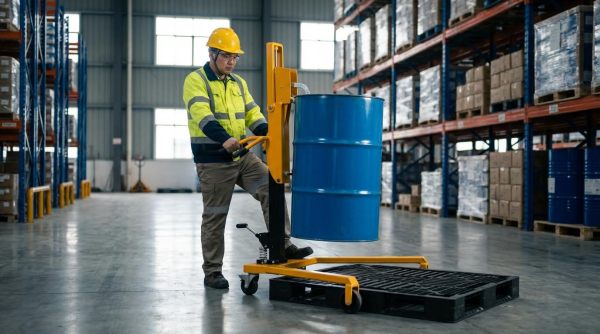
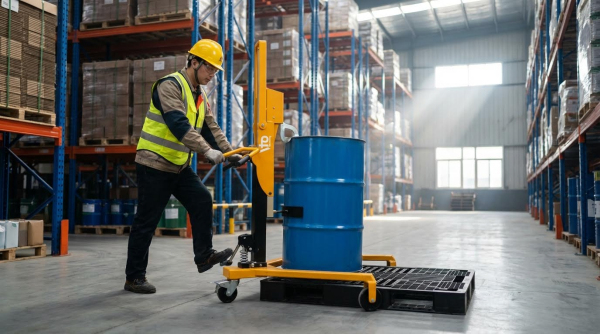
Las plataformas rodantes para barriles son plataformas bajas con ruedas que permiten mover barriles pesados de vino, alimentos y bidones industriales de forma segura y con mínimo esfuerzo manual. Esta guía explica qué son, cómo están diseñadas y cómo usarlas correctamente en diferentes tipos de suelo, entornos y barriles.
Qué es un carro para barriles y cómo funciona
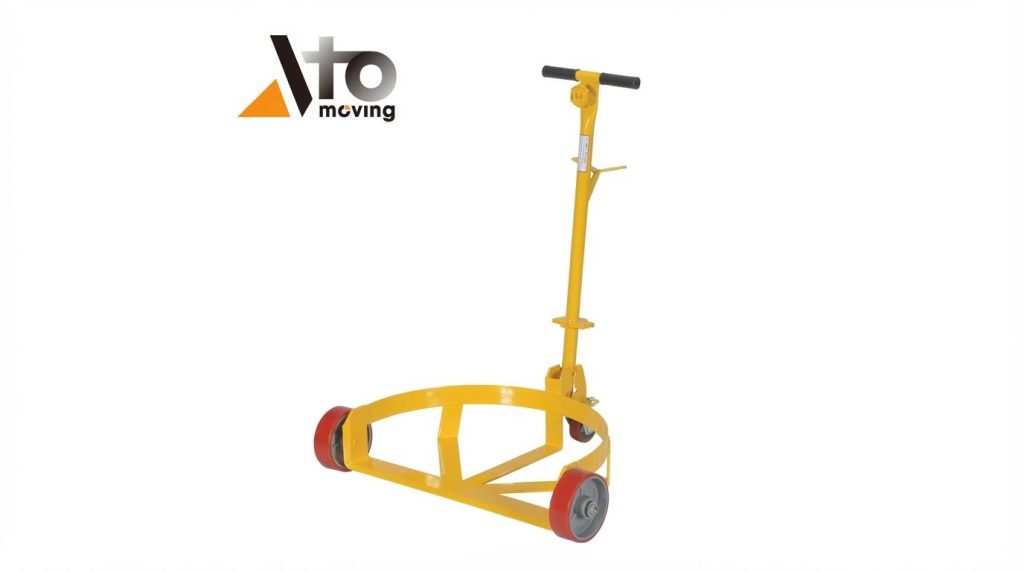
Un carro para barriles es una estructura baja con ruedas que soporta y mueve bidones llenos de vino, alimentos o productos industriales con un mínimo esfuerzo manual. Mantiene la base del barril apoyada sobre un anillo o travesaño rígido, mientras que las ruedas desplazan la carga por el suelo.
Para entender cómo usar un carro para barriles, primero hay que saber cómo su estructura, anillo y ruedas distribuyen la carga. El barril se coloca dentro de un soporte circular o poligonal, de modo que el carro soporta el peso mientras usted solo proporciona la dirección y la fuerza de empuje.
- Funciones: Apoye la base del cañón sobre un marco rígido. Protege las paredes delgadas del tambor de cargas puntuales.
- Movilidad: Utilice varias ruedas giratorias. Permite maniobras precisas en sótanos, almacenes y salas de producción.
- Seguridad: Mantén el centro de gravedad bajo. Reduce el riesgo de vuelco al arrancar, parar o girar.
- Compatibilidad: Diseñado para barriles típicos de 110 a 210 litros. Se adapta a los diámetros comunes de bidones de vino, alimentos e industriales.
Cómo un carro para barriles transporta realmente la carga
La masa total del barril se transfiere a través de su base al anillo o travesaño del carro. El bastidor distribuye entonces esta fuerza a las ruedas, que entran en contacto con el suelo en varios puntos, reduciendo la presión sobre la superficie y facilitando el desplazamiento.
💡 Nota del ingeniero de campo: Cuando los operarios se quejan de que una carretilla es difícil de empujar, suele deberse a un problema con el chasis, no solo con las ruedas. Un anillo o travesaño ligeramente doblado puede alterar la geometría de la rueda giratoria, provocando que una de ellas se arrastre en lugar de rodar, lo que aumenta la fuerza necesaria para empujarla.
Componentes principales y geometría del marco
Los componentes principales de un carro para barriles son el bastidor de soporte, el anillo de carga o travesaño y la interfaz con las ruedas. Su geometría determina si el barril se siente estable o inestable al moverlo.
- Anillo o plataforma de soporte: Anillo circular o poligonal del tamaño de la base del cañón – Evita que el tambor se deslice lateralmente.
- Estructura de refuerzo transversal: Vigas en forma de X o radiales debajo del anillo – El peso del cañón se reparte entre varios miembros.
- Altura de perfil bajo: Normalmente entre 100 y 200 mm de longitud total. Mantiene el centro de gravedad del cañón cerca del suelo.
- Soportes para ruedas giratorias: Placas rígidas de esquina o radiales – Mantén las ruedas alineadas para que se desplacen correctamente bajo carga.
- Paradas perimetrales: Labios curvados hacia arriba o postes cortos – Actúa como tope mecánico si el cañón se desplaza.
Por qué la baja altura es importante para la estabilidad.
Un bidón lleno de 200 litros puede pesar entre 200 y 300 kg. Elevar esa masa tan solo 50-80 mm aumenta el momento de vuelco durante una parada repentina o cuando una rueda choca contra un desnivel en el suelo. Los bastidores bajos minimizan este momento y reducen el riesgo de vuelco.
| Característica del marco | Implementación típica | Impacto operativo |
|---|---|---|
| Geometría de soporte | Cubierta con anillo y refuerzo en X | Distribuye la carga; apto para transportar bidones de vino y bidones industriales en el mismo carro. |
| Apertura de la cubierta | X abierta o cuadrícula, no placa sólida | Permite que el agua de lavado y los derrames drenen en lugar de acumularse debajo de los barriles de alimentos. |
| Restricción perimetral | Anillo o pestañas en relieve alrededor del borde | Ayuda a mantener centrados los barriles de vino altos en suelos irregulares. |
| Altura desde el suelo | Aproximadamente 100–200 mm incluyendo las ruedas. | Elimina pequeños residuos, pero mantiene el cañón bajo para un empuje manual seguro. |
Disposición de las ruedas giratorias, materiales de las ruedas y maniobrabilidad.
La disposición de las ruedas y el material de las mismas determinan la facilidad de maniobra de un carro para barriles cargado y los tipos de suelo sobre los que puede circular con seguridad. Es común que tenga cuatro ruedas giratorias, ya que ofrecen un equilibrio entre estabilidad y maniobrabilidad en giros cerrados.
- Recuento de lanzadores: Normalmente cuatro ruedas giratorias – Proporciona un apoyo estable de cuatro puntos con cambios de dirección sencillos.
- Diámetro de la rueda: Aproximadamente 75 mm (3 pulgadas) para uso estándar. Lo suficientemente pequeño como para mantener una altura reducida, pero lo suficientemente grande como para pasar por encima de las articulaciones.
- Ancho de la rueda: Alrededor de 30 mm – Distribuye la carga para evitar daños en el suelo.
- Opciones de material para las ruedas: Estructura de acero con bandas de rodadura de polímero o caucho – Mejora el agarre, reduce el ruido y protege el suelo.
- Cojinetes giratorios: Pistas de rodamientos de bolas – Reduzca el esfuerzo de dirección cuando los barriles estén cerca de su peso máximo.
| Material de la rueda | Mejor para… | Impacto operativo |
|---|---|---|
| Polímero duro (por ejemplo, de tipo poliolefina) | Hormigón liso y duro | Baja resistencia a la rodadura; ideal para recorridos largos en bodega con barriles pesados. |
| Banda de rodadura de tipo poliuretano | Suelos acabados, epoxi, zonas de alimentos revestidas | Protege el suelo y funciona silenciosamente en salas de embotellado o envasado. |
| Banda de rodadura de caucho más blando | Suelos irregulares o ligeramente rugosos | Mejor absorción de impactos; útil en lugares donde abundan los desagües y los umbrales pequeños. |
Cómo afecta la disposición de las ruedas al uso de una plataforma rodante para barriles
Con cuatro pivotes, basta con empujar desde un lateral o un extremo para que las ruedas se alineen automáticamente. Unos empujes cortos y suaves mantienen las ruedas en su sitio. En curvas cerradas, un ligero tirón hacia atrás antes de girar ayuda a que todas las ruedas giren en la nueva dirección, reduciendo la fuerza necesaria.
💡 Nota del técnico de campo: En bodegas y plantas de procesamiento de alimentos reales, una pendiente del suelo de tan solo el 1-2% es suficiente para que un carro para barriles cargado se deslice lateralmente sobre ruedas duras. Cuando el suelo no esté perfectamente nivelado, elija neumáticos ligeramente más blandos y estacione siempre con al menos un freno de rueda activado.
Diseño de ingeniería de carros para barriles
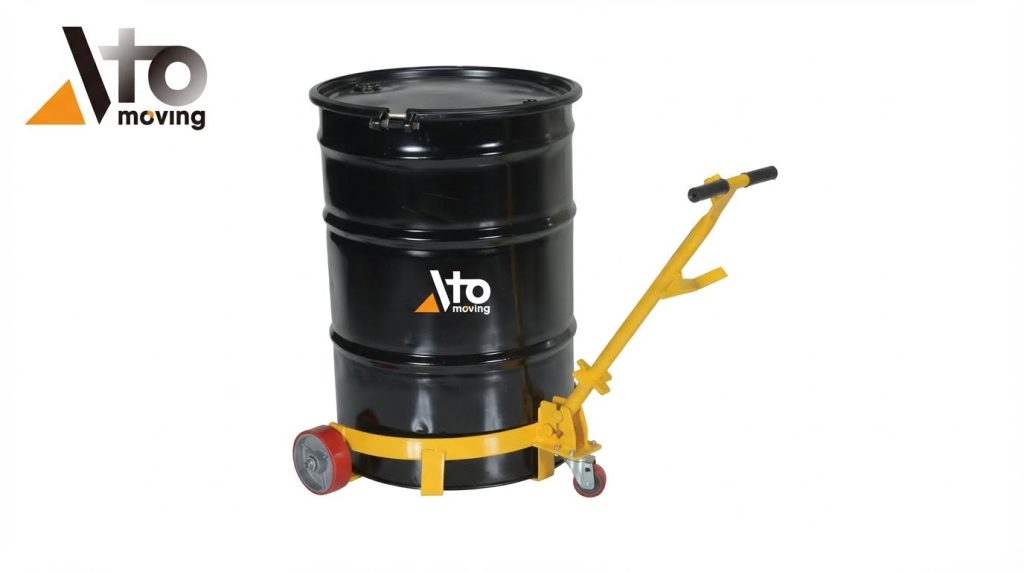
El diseño de ingeniería de los carros para barriles se centra en la capacidad de carga, la selección del bastidor y el revestimiento, y las características de estabilidad, para que los operarios puedan comprender de forma segura cómo utilizar un carro para barriles en bodegas y plantas reales.
Para el transporte de vino, alimentos y bidones industriales, un buen diseño convierte un simple carrito en un sistema de manipulación controlado. El objetivo es transportar barriles llenos de forma segura, manteniendo la higiene, la resistencia a la corrosión y la facilidad de desplazamiento en suelos convencionales.
Capacidades de carga para barriles de vino, alimentos y productos químicos.
La capacidad de carga define el peso máximo seguro que el carro puede transportar, incluyendo el líquido, el barril y cualquier accesorio.
Debido a que el vino, el jugo, el aceite y los productos químicos tienen densidades diferentes, un barril del mismo volumen puede variar mucho en masa. Una capacidad de carga conservadora mantiene la estructura y las ruedas dentro de sus límites de tensión y reduce el riesgo de fallas repentinas.
| Tipo típico de barril/tambor | Aprox. Volumen | Rango de masa completo típico | Clase de carga de carretilla recomendada | Impacto operativo |
|---|---|---|---|---|
| Barrica de vino (225–300 L) | 225–300 litros | 220-320 kg | ≥ 350–400 kg | Cubre la variación de la densidad del vino y el chapoteo durante los arranques y las paradas. |
| Bidón de aceite/jarabe para uso alimentario (200 L) | 200–220 litros | 200-260 kg | ≥ 400–500 kg | Maneja líquidos de mayor densidad sin sobrecargar la estructura. |
| Tambor industrial estándar (30–55 galones) | 114–210 litros | 120-280 kg | Rango de aproximadamente 450–1,100 kg (1,000–2,500 libras) por carros industriales comunes | Admite bidones de acero de 55 galones (210 litros) en almacenes y plantas industriales. |
| Tambor para productos químicos (líquidos de alta densidad) | 100–200 litros | Hasta ~300 kg | Extremo superior de la clase de 1,100 kg (2,500 libras) para mayor margen de seguridad | Proporciona capacidad de reserva para cargas de impacto y suelos irregulares. |
- Clasificación de carga estática: Masa máxima que el carro puede soportar en reposo – debe superar el peso del barril lleno más pesado que planea mover.
- Asignación dinámica: Margen adicional para baches, juntas y paradas repentinas. Evita la sobrecarga del bastidor o de las ruedas al aprender a usar una plataforma rodante en espacios reducidos.
- Planificación de la mezcla de barriles: Detalle su producto más pesado y el barril de mayor tamaño. Dimensiona la carretilla según el peor de los casos, no según el promedio.
Cómo estimar la capacidad de carga necesaria
Toma la masa del barril vacío, suma la masa del líquido (volumen × densidad) y luego agrega un margen de al menos 25-50% para efectos dinámicos y cambios futuros del producto. Elige la siguiente clase de carga estándar superior.
💡 Nota del ingeniero de campo: En caso de duda entre dos clases de carga, elija la superior. En instalaciones reales, los operarios suelen apilar herramientas o contenedores pequeños sobre el barril; esos “20-30 kg adicionales”, sumados a los defectos del suelo, reducen rápidamente el margen de seguridad.
Materiales de la estructura, revestimientos y diseño higiénico
El material del bastidor y el tratamiento de la superficie determinan la resistencia a la corrosión, la facilidad de limpieza y la integridad estructural a largo plazo.
Las bodegas de vino, las plantas procesadoras de alimentos y los almacenes de productos químicos exponen las plataformas rodantes a la humedad, los ácidos, las sales y los productos químicos de limpieza. Un material o recubrimiento inadecuado puede provocar soldaduras oxidadas, descamación de la pintura y problemas de higiene o seguridad.
| Tipo de marco/acabado | Construcción típica | Uso recomendado | Impacto operativo |
|---|---|---|---|
| Acero al carbono pintado/con recubrimiento en polvo | Acero soldado con recubrimiento de pintura en polvo en la superficie. común en carros para tambores estándar | Almacenes secos, bidones industriales en general | Es rentable, pero necesita inspección para evitar daños en el revestimiento y oxidación. |
| Acero inoxidable (por ejemplo, 304) | Perfiles de acero inoxidable con acabado pulido o cepillado. Ofrecido para entornos corrosivos | Bodegas, cervecerías, áreas de alimentos y limpieza CIP, algunos productos químicos | Resistente a la corrosión y fácil de limpiar, ideal para lugares donde la higiene y el lavado son habituales. |
| acero cincado | Acero al carbono con recubrimiento de zinc como uno de varios acabados | Zonas moderadamente húmedas o adyacentes al exterior. | Mejora la resistencia a la corrosión en comparación con el acero sin recubrimiento, pero aún así requiere revisiones periódicas. |
| Acero inoxidable pulido / acabado de alta calidad | Superficies lisas y de baja rugosidad utilizado como acabado de primera calidad | Zonas de alta higiene, salas de degustación a la vista | Reduce la acumulación de suciedad y el riesgo de formación de biopelículas; además, ofrece una imagen profesional en las zonas de atención al cliente. |
- Soldaduras cerradas y juntas lisas: Evite huecos y grietas. Atrapan el vino, el azúcar y los residuos de productos, lo que dificulta la limpieza.
- Cubierta abierta frente a bandeja sólida: Las cubiertas con refuerzos transversales en forma de X permiten que los líquidos se drenen. y reducir la agrupación – Es importante tenerlo en cuenta al aprender a usar una plataforma rodante para barriles en salas de embotellado húmedas.
- Geometría del anillo de soporte: Anillos perimetrales alrededor de la cubierta evitar que los barriles se deslicen – especialmente importante en el caso de barricas de vino redondas.
Detalles higiénicos que debe comprobar antes de comprar.
Busque soldaduras continuas, mínimos salientes horizontales y fácil acceso bajo la estructura para la limpieza del suelo. En la industria alimentaria y vinícola, evite el galvanizado rugoso o los recubrimientos descascarillados que podrían contaminar las zonas de contacto con el producto.
💡 Nota del ingeniero de campo: En zonas de lavado, el bastidor no es el único riesgo de corrosión. Los sujetadores y horquillas de acero al carbono estándar se oxidarán mucho antes de que falle un bastidor de acero inoxidable, por lo que es importante que las ruedas y los herrajes tengan el mismo nivel de higiene que el carro principal.
Estabilidad, características antivuelco y ergonomía.
La estabilidad y la ergonomía determinan la facilidad con la que el carro de transporte puede ser manipulado cuando los operarios empujan, tiran y giran barriles llenos sobre suelos reales.
Un buen diseño reduce el centro de gravedad, amplía la base de apoyo y controla el movimiento del barril. Esto disminuye el riesgo de vuelco y facilita el aprendizaje del uso seguro de un carro para barriles.
| Características de diseño | Implementación típica | Estabilidad / Efecto ergonómico |
|---|---|---|
| Base de apoyo amplia | Diámetro de la plataforma de aproximadamente 600 mm para bidones de 200 L (≈ 24 pulgadas). con 24×24 en variantes | Una mayor separación entre las ruedas de apoyo aumenta la resistencia al vuelco durante las curvas. |
| Altura de cubierta baja | Altura total aproximada de 100 a 200 mm (4 a 8 pulgadas) dependiendo del modelo | Mantiene el centro de gravedad del cañón cerca del suelo, reduciendo el momento de vuelco. |
| Refuerzo transversal / Cubierta en X | Elementos de soporte en forma de X debajo del cañón más anillo perimetral | Evita que el tambor se hunda y se balancee, mejorando el control de la dirección. |
| Correas antivuelco / correas cruzadas | Correas transversales y estructuras de marco seguras utilizados como elementos antivuelco | Evita que el cañón se deslice si el carro choca contra una junta o una rampa. |
| Ruedas giratorias (3 pulgadas / ≈ 75 mm) | Cuatro u ocho ruedas giratorias de aproximadamente 75 mm de diámetro. con rodamientos opcionales y materiales especiales | Permite giros cerrados con menos fuerza de empuje, especialmente en sótanos concurridos. |
| Frenos/bloqueos de ruedas opcionales | Frenos en una o más ruedas | Mantenga la plataforma rodante inmóvil durante la carga o en pendientes leves, lo que reducirá el esfuerzo del operario. |
- Altura y agarre del mango: Un punto de presión bajo y firme mejora el control. Empujar cerca de la mitad de la altura del cañón reduce el riesgo de vuelco.
- Resistencia a la rodadura: Rodamientos de calidad y material de rueda adecuado – Reducir la fuerza necesaria para poner en marcha y mantener el cañón en movimiento.
- Postura del operador: Diseñado para que los usuarios puedan mantener los codos cerca del cuerpo y caminar erguidos. Esto reduce directamente la tensión en la espalda y los hombros.
Cómo elegir las ruedas para su piso
Las ruedas más duras son adecuadas para hormigón liso, pero pueden ser ruidosas y dañar las juntas. Las ruedas más blandas o de mayor diámetro son útiles en suelos rugosos o con juntas de dilatación y reducen las cargas de impacto en el cilindro y el bastidor.
💡 Nota del ingeniero de campo: Muchos vuelcos ocurren en los umbrales de las puertas y en las rejillas de desagüe, no en suelos abiertos. Al especificar una carretilla, recorra la ruta real con una cinta métrica y verifique la altura de cada junta con respecto al diámetro de las ruedas y la altura libre de la plataforma antes de dar su aprobación.
Uso seguro, aplicaciones y selección de carros de transporte
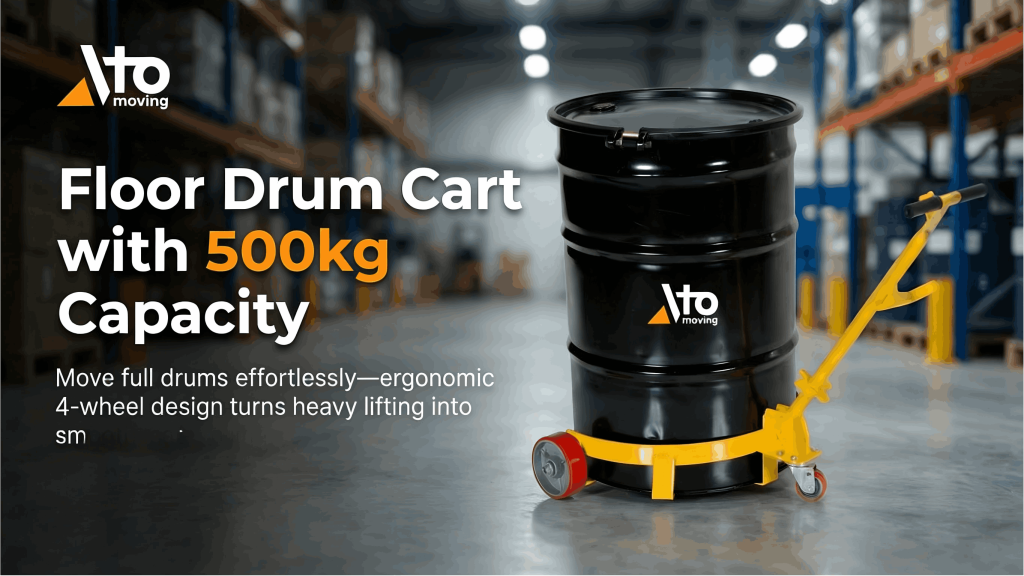
Esta sección explica cómo usar un carro para barriles de forma segura, dónde funciona mejor y cómo seleccionar el diseño adecuado para barriles de vino, alimentos e industriales. Se hace hincapié en la estabilidad, la ergonomía y la adaptación de la geometría del carro al tipo de suelo y barril.
Paso a paso: cómo cargar y mover un barril
Esta guía paso a paso le muestra cómo usar una carretilla para barriles para cargar, mover y estacionar barriles con un riesgo mínimo de vuelco y un esfuerzo mínimo por parte del operario.
- Paso 1: Inspeccione el carro – Compruebe que el marco, las ruedas y cualquier correa o anillo no presenten daños o estén sueltos. Evita fallos bajo carga.
- Paso 2: Despeje y verifique la ruta. – Retire los escombros, el plástico retráctil y las astillas de los palés; evite agujeros o cambios bruscos de nivel. Reduce las cargas de impacto repentinas que pueden volcar un cañón alto.
- Paso 3: Coloque la plataforma rodante – Coloque la carretilla justo al lado del barril vertical, lo más cerca posible de su base. Reduce el brazo de palanca y el esfuerzo necesario para hacer rodar el cañón.
- Paso 4: Sujete el cañón – Colócate de pie con las piernas separadas, los pies al menos a la anchura de los hombros y un pie ligeramente detrás. Te proporciona una base estable frente a la masa del cañón.
- Paso 5: Deslice el barril sobre la carretilla. – Incline ligeramente el cañón hacia usted y, a continuación, guíe el borde inferior sobre el anillo de apoyo o el travesaño aplicando una fuerza controlada. Mantiene el centro de gravedad sobre el carro lo antes posible.
- Paso 6: Centrar el cañón – Una vez colocado sobre la plataforma rodante, empuje o haga palanca en el cañón hasta que la base quede completamente asentada y centrada. Mejora la estabilidad al girar o cruzar articulaciones.
- Paso 7: Asegure si corresponde. – Sujete las abrazaderas, correas o mordazas que incluya el carro de transporte. Evita que el barril se deslice o se mueva sobre suelos irregulares.
- Paso 8: Empiece a moverse con suavidad – Empuja desde la parte baja del cañón o desde una empuñadura baja, y acelera gradualmente. Limita el balanceo dinámico y los momentos de vuelco.
- Paso 9: Controlar la velocidad en pendientes – Mantenga el barril en la ladera de la pendiente siempre que sea posible y evite el desplazamiento diagonal a través de las rampas. Mantiene la estabilidad lateral.
- Paso 10: Estacione y coloque calzos si es necesario. – Deténgase en terreno llano, accione los frenos si es necesario y utilice calzos o bloqueos de ruedas en zonas inclinadas. Evita el desplazamiento lento o descontrolado.
- Nunca tire solo del borde: Mantén siempre al menos una mano en la parte baja de la concha o del asa. Reduce las fuerzas de torsión en el tambor y en tu espalda.
- Evite los cambios de rumbo bruscos: Gira en un amplio arco en lugar de girar sobre tu propio eje. Reduce la carga lateral sobre las ruedas y el cañón.
- Respete la capacidad nominal: Haga coincidir la masa del barril con la capacidad en kg indicada para el carro. Evita el colapso del marco o de las ruedas.
💡 Nota del técnico de campo: En bodegas y fábricas con espacios reducidos, la mayoría de los vuelcos ocurren en los umbrales de las puertas y las rejillas de drenaje. Trate cada borde como un badén: reduzca la velocidad, golpee lo más recto posible y mantenga ambas manos controlando el barril.
Cómo enseñar a los nuevos empleados a usar una carretilla para barriles
Empiece con barriles vacíos o parcialmente llenos, demuestre la inclinación y el centrado durante la carga, y luego añada complejidad: giros cerrados, umbrales y rampas suaves. Solo pase a barriles llenos de alto valor cuando demuestren un control constante y una buena postura corporal.
Adaptar el tipo de carro al barril, al suelo y al entorno.
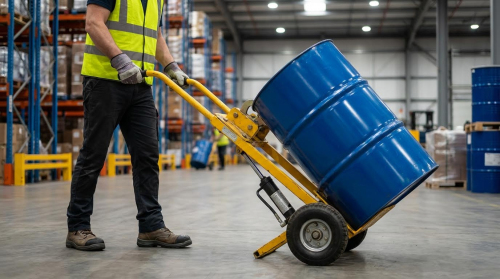
Para utilizar un carro para barriles de forma eficiente, lo primero es elegir el carro adecuado: haga coincidir el tamaño de sus anillos, el estilo de su estructura y sus ruedas con las dimensiones de su barril, la calidad del suelo y los requisitos de higiene o corrosión.
| Factor de selección | Elección clave | Mejor para… | Impacto operativo |
|---|---|---|---|
| Tamaño y forma del cañón | Anillo redondo frente a marco cuadrado/rectangular | Barricas de vino, bidones de 200 L para alimentos, bidones de 200 L para productos químicos | Los anillos redondos se adaptan a los barriles curvos; los marcos cuadrados son adecuados para depósitos y bolsas de fondo plano. |
| Capacidad de carga | Peso nominal en kg frente a la masa total del cañón | Barriles pesados de 200 a 225 litros | Evita la sobrecarga y el fallo del bastidor o de las ruedas durante el empuje y el giro normales. |
| Estilo de marco | Anillo cerrado frente a refuerzo transversal en X | Sótanos húmedos, áreas de lavado, zonas propensas a derrames | El refuerzo transversal permite el drenaje de los líquidos; los anillos cerrados proporcionan el máximo soporte de la base en bidones de paredes delgadas. |
| Material de la rueda/rueda giratoria | Banda de rodadura dura frente a banda de rodadura más blanda | Azulejos, epoxi, hormigón, patios exteriores | Las bandas de rodadura duras ruedan con mayor facilidad sobre suelos lisos; las bandas de rodadura más blandas ofrecen mejor agarre y toleran mejor las irregularidades del terreno. |
| Diámetro de la rueda | Ruedas pequeñas frente a ruedas grandes | Suelos con juntas, umbrales y desagües. | Las ruedas más grandes suben por los bordes con mayor suavidad y reducen los picos de fuerza de empuje. |
| Resistencia a la corrosión | Acero pintado frente a acero inoxidable o recubierto | Plantas de alimentos, bebidas y productos químicos | Los recubrimientos de acero inoxidable o de alta calidad resisten la oxidación y el descascarillado durante el lavado o la exposición a productos químicos. |
| limpieza e higiene | Perfiles abiertos frente a perfiles cerrados | Producción de vino y alimentos | Los marcos más sencillos y lisos se limpian más rápido y acumulan menos residuos o biopelícula. |
| Frecuencia de manejo | Diseño ligero frente a diseño pesado | Traslados ocasionales frente a operaciones de 3 turnos | Los bastidores y las ruedas de alta resistencia soportan un uso continuo con menos reparaciones. |
- Bodegas de vino: Elija carros de perfil bajo con anilla redonda y armazones lisos y fáciles de lavar. Mantiene las barricas estables y facilita la limpieza.
- Plantas alimenticias: Prefiera marcos de acero inoxidable o con revestimiento de alta calidad y con mínimas hendiduras. Favorece la higiene y los ciclos de saneamiento rápidos.
- Tambores químicos e industriales: Utilice bastidores robustos con anillas o travesaños resistentes y ruedas compatibles con productos químicos. Soporta masas más elevadas y líquidos más corrosivos.
- Suelos ásperos o dañados: Seleccione ruedas de mayor diámetro y peldaños más anchos. Reduce la carga de impacto y el vuelco al atravesar defectos.
- Pasillos estrechos: Opte por estructuras compactas con ruedas giratorias completas. Permite giros cerrados sin arrastrar el carro lateralmente.
Lista de verificación rápida antes de comprar una carretilla para barriles
Mida el diámetro del barril en la base, estime la masa máxima que se llenará, recorra la ruta prevista y observe los defectos del suelo, los desagües y las pendientes. A continuación, decida si el lavado o la exposición a productos químicos serán rutinarios. Utilice estos cuatro datos para preseleccionar los carros de transporte adecuados.
💡 Nota del ingeniero de campo: Si tiene dudas entre dos modelos, elija el que tenga mayor capacidad y mejores ruedas, en lugar de características adicionales en el marco. En plantas reales, el rendimiento de las ruedas y la estabilidad sobre suelos irregulares determinan si los empleados siguen utilizando la carretilla o si vuelven al método manual, que es inseguro.
Consideraciones finales sobre el uso y la selección de carros para barriles
Los carros para bidones transforman bidones pesados y voluminosos en cargas controladas y de bajo riesgo si se combinan correctamente el diseño, la capacidad y las condiciones del suelo. La clave está en tratar el carro como un equipo de carga diseñado específicamente, no como un simple carrito. La geometría del bastidor, la disposición de las ruedas y la altura de la plataforma trabajan en conjunto para mantener el centro de gravedad bajo, distribuir las fuerzas y evitar que se vuelque sobre obstáculos como juntas y desagües.
La correcta capacidad de carga y la elección adecuada de los materiales protegen tanto a las personas como al producto. Al dimensionar el sistema para el barril lleno más pesado, añadir un margen dinámico y elegir bastidores y ruedas resistentes a la corrosión, se reduce la probabilidad de fallos repentinos, oxidación y problemas de higiene. Una buena ergonomía disminuye el esfuerzo, permitiendo a los operarios mover barriles llenos con un esfuerzo constante y predecible.
Para los equipos de operaciones e ingeniería, la mejor práctica es clara. Analice sus barriles, rutas, pendientes y régimen de limpieza. Seleccione carros con capacidad de carga moderada, perfil bajo y estable, y ruedas adaptadas a su tipo de suelo. Capacite al personal con un método paso a paso y exija la inspección antes de su uso. Al seguir estos principios y combinarlos con equipos de eficacia comprobada de proveedores como Atomoving, la manipulación de barriles se vuelve más segura, rápida y fácil de estandarizar en toda su planta.
Preguntas frecuentes
¿Cómo se utiliza una carretilla para barriles?
Para usar una carretilla para bidones, empújela hasta el bidón y coloque sus patas en la base del mismo. Incline la carretilla hacia adelante y active el bloqueo de la carretilla al bidón. Tire de la carretilla con el bidón hacia atrás hasta que descanse sobre las ruedas. Para más detalles, consulte la Guía para mover bidones.
¿Debes empujar o tirar de una carretilla para barriles?
Empujar una carretilla para barriles suele ser más fácil y seguro que tirar de ella. Al empujar, se utiliza el peso corporal para facilitar el movimiento, mientras que al tirar, la carretilla puede golpear las espinillas o los tobillos. Para obtener recomendaciones profesionales, consulte los consejos de OSHA sobre manipulación de materiales.
¿Son fáciles de mover las plataformas rodantes para barriles?
Los carros para bidones están diseñados para facilitar el traslado de bidones pesados, pero su facilidad de uso depende de factores como el ángulo de la superficie, la distribución de la carga y los obstáculos. Una técnica adecuada, como empujar en lugar de tirar, puede mejorar la maniobrabilidad. Obtenga más información sobre el manejo eficiente de materiales en el análisis de empuje vs. tracción.