Si buscas cómo mover un palé sin transpaleta , tienes más opciones de las que imaginas. Esta guía te muestra métodos prácticos y seguros para mover palés usando rodillos, plataformas rodantes, carros, cintas transportadoras y otras herramientas. Aprenderás qué opciones se adaptan mejor a tu suelo, peso de la carga y distancia de recorrido para que puedas reducir el esfuerzo y el riesgo, manteniendo el movimiento de los palés de forma eficiente.
Métodos básicos para el traslado de palés sin camiones

Esta sección explica cómo mover un palé sin transpaleta utilizando rodillos, tuberías, sistemas de gravedad, carretillas, patines y carros remolcables de baja tecnología. Se hace hincapié en los rangos de carga seguros, las condiciones del suelo y los casos de uso reales.
Utilizando rodillos, tuberías y sistemas de gravedad.
Utilizar rodillos, tuberías y la gravedad es una solución práctica para mover un palé sin transpaleta cuando se trata de recorridos cortos y definidos. La idea es convertir la fricción por deslizamiento en fricción por rodadura, de modo que se necesite mucha menos fuerza para empujar.
- Tubos de acero / barras redondas debajo del palé: Inserte de 2 a 4 tubos debajo de la plataforma de la paleta. Crea una sencilla plataforma de rodillos que permite desplazar palets de entre 500 y 1,000 kg poco a poco con una fuerza de empuje moderada.
- Rolling progresivo “egipcio”: Cuando la paleta se aleje del tubo trasero, mueva ese tubo hacia adelante. Te permite desplazarte varios metros con tan solo unas pocas tuberías.
- Arrastre con lona y cuerda para palés ligeros: Coloca una lona o sábana resistente debajo de un palé de menos de 250 kg y tira con cuerdas. Distribuye la carga y reduce los daños en el suelo de hormigón liso.
- Transportadores de rodillos por gravedad: Utilice rodillos de gravedad inclinados (con una pendiente de entre el 2 % y el 5 %) para paletas de entre 500 kg y 1,500 kg por posición. Deje que los palés se muevan por gravedad en lugar de empujarlos manualmente.
- Finales de carrera y control de velocidad: Instalar topes físicos y controladores de velocidad en las pistas de descenso con mayor pendiente. Evita que los palés se salgan de control y que se produzcan daños por impacto.
| Método | Rango de carga típico | Requisito de piso/sendero | Mejor para… | Impacto operativo |
|---|---|---|---|---|
| Tubos de acero sueltos como rodillos | Aproximadamente 500–1,000 kg (dependiendo del tamaño y la separación de las tuberías) | Suelo duro y plano; juntas o agujeros mínimos. | Traslados puntuales de entre 2 y 10 metros | Convierte un palé atascado en uno que se puede mover, pero es un proceso lento y laborioso. |
| Escota + arrastre de cuerda | < 250 kg palé | Suelo muy liso; corta distancia | Traslados de emergencia “sin equipo” | Bajo costo, alta resistencia; solo para cargas ligeras y poco frecuentes. |
| Transportador de rodillos por gravedad | Aproximadamente 500–1,500 kg por posición de palé. | Línea fija inclinada (2–5%) con protección | Flujos repetidos entre dos estaciones | Alto rendimiento con prácticamente nulo empuje manual una vez cargado. |
Cómo establecer una pendiente de gravedad segura
Comience con una pendiente de aproximadamente el 2 % (20 mm de desnivel por cada 1,000 mm de longitud) y pruebe con el palé más pesado. Aumente la pendiente solo si los palés no ruedan de forma fiable y añada siempre topes finales y, para tramos más largos, reguladores de velocidad.
- Guantes y control de puntos de pellizco: Mantenga las manos alejadas cuando la paleta se desplace sobre o desde tuberías o rodillos. Reduce las lesiones por aplastamiento y cizallamiento.
- Planificacion de la ruta: Mantén el camino recto sin cambios bruscos de nivel. Evita que las tuberías salgan disparadas o que los palés se caigan de las cintas transportadoras.
💡 Nota del ingeniero de campo: En almacenes reales, los rodillos para tuberías improvisados solo funcionan en suelos muy limpios y planos. El polvo, los tornillos pequeños o el hormigón roto pueden detener por completo una paleta de 1,000 kg, obligando a los trabajadores a aplicar fuerzas de empuje peligrosas o a golpear las tuberías; por lo tanto, considérelo como un método controlado y de último recurso, no como un proceso diario.
Utilizando carretillas, patines y carros remolcables.
Las plataformas rodantes , los patines para maquinaria y los carros remolcables son la forma más controlable de mover una paleta sin una transpaleta cuando se tienen pisos lisos y rutas planificadas. Estos dispositivos transfieren el peso a ruedas diseñadas específicamente para este fin, en lugar de a horquillas.
- Plataformas rodantes debajo de los palés: Coloca una o dos plataformas rodantes bajas debajo de una paleta ligera. Ideal para cargas ligeras en distancias cortas sobre suelos lisos.
- Patines para maquinaria: Utilice patines de maquinaria de perfil bajo con una capacidad de carga de entre 1,000 y 3,000 kg. Una vez que hayas levantado o hecho palanca unos milímetros, podrás transportar palés completos.
- Carros remolcables para palés: Coloca los palets en un carro con ruedas y barra de remolque. Permite que un tractor de remolque arrastre varios palés a largas distancias.
- Palancas de rodillos / barras de palanca: Utilice una palanca de rodillos para levantar un lado del palé unos pocos milímetros. Permite deslizar patines o carretillas por debajo en espacios reducidos.
| tipo de material | Capacidad típica | Requisitos de piso | Mejor para… | Impacto operativo |
|---|---|---|---|---|
| Muñecas | Palets ligeros (generalmente < 300–400 kg por carretilla) | Pisos muy lisos y nivelados | Traslados cortos en talleres o almacenes pequeños. | Barato y compacto, pero requiere mucho esfuerzo manual para empujarlo y su estabilidad es limitada. |
| Patines de maquinaria | Carga total aproximada de 1,000 a 3,000 kg. | Rutas lisas, sin escombros y en su mayoría rectas. | Reposicionamiento de palés o maquinaria pesada | Permite transportar cargas pesadas con baja resistencia a la rodadura, pero requiere un control preciso de la dirección y los frenos. |
| Carros remolcables para palés | Depende del carro; a menudo entre 1,000 y 2,000 kg por palé. | Rutas de remolque definidas; buen estado del suelo. | Carreras repetidas de 30 a 200 metros o más. | Reduce considerablemente la fuerza necesaria para caminar y empujar al utilizar un tractor de remolque o un remolcador. |
- Método de elevación inicial: Planifica cómo elevarás el palé entre 20 y 40 mm para poder colocar patines o carretillas debajo. Evita el apalancamiento inseguro con barras o bloques aleatorios.
- Dimensionamiento de ruedas y rodamientos: Seleccione ruedas de mayor diámetro y calidad para suelos más irregulares. Reduce la resistencia a la rodadura y la vibración sobre la carga.
- Rutas de viaje definidas: Marcar carriles rectos y libres de obstáculos para patines y carros de remolque. Mejora el control y reduce el riesgo de colisión.
- Gestión de equipos: Utilice al menos dos personas para cargas pesadas en patines (una conduciendo, otra vigilando) – Mantiene la paleta estable y mejora el tiempo de reacción.
Cuándo basta con una carretilla y cuándo se necesita un carrito de remolque.
Utilice una carretilla para mover ocasionalmente palés ligeros a distancias superiores a 10-15 m, donde una sola persona pueda empujarlos con seguridad. Cambie a un carro portapalés con tractor de remolque cuando mueva palés muchas veces por turno, a distancias superiores a 20-30 m, o cuando la distancia total de empuje diario sea excesiva para la manipulación manual.
💡 Nota del ingeniero de campo: Para cargas superiores a unos 1,000 kg sobre patines, incluso pequeñas pendientes o juntas de dilatación pueden provocar una pérdida repentina de estabilidad o dirección. Pruebe siempre la ruta primero con un juego de patines vacío y luego con un palé parcialmente cargado, antes de cargar la totalidad de la masa y alcanzar la velocidad de producción normal.
Consideraciones de ingeniería y límites de seguridad
Los límites de ingeniería definen cómo mover una paleta de forma segura sin una transpaleta manual , adaptando la carga, el tipo de suelo y la capacidad humana al método o dispositivo alternativo elegido. Si se ignoran estos límites, se sacrifica el bajo costo del equipo a cambio de un alto riesgo de lesiones y daños.
Esta sección le ofrece las reglas prácticas que utilizan los ingenieros para mantener el movimiento de palés dentro de un margen de seguridad cuando se utilizan rodillos, carretillas, patines, carros, cintas transportadoras o manipulación en equipo en lugar de transpaletas hidráulicas.
Capacidades de carga, condiciones del suelo y estabilidad
La capacidad de carga, la calidad del suelo y la estabilidad son los primeros factores a considerar al decidir cómo mover un palé sin una transpaleta manual . Si alguno de estos tres factores es incorrecto, el traslado se vuelve inseguro independientemente de la herramienta que se elija.
- Respete la capacidad indicada en la placa de características: Manténgase siempre en o por debajo del componente con la calificación más baja. El eslabón más débil (patinillo, carretilla, rodillo, palanca, eslinga) determina la carga segura.
- Capacidades típicas: Los carros de transporte pesados y los patines para maquinaria suelen manejar entre 1,000 y 3,000 kg por palé. Suficiente para la mayoría de las cargas estándar en palés si los suelos están en buen estado.
- Sistemas de gravedad y de transporte: Los transportadores de rodillos y paletas por gravedad suelen transportar entre 500 y 1,500 kg por posición de paleta. Ideal para rutas repetitivas con trazados fijos.
- Planitud del suelo: Estas alternativas necesitan suelos lisos y libres de escombros. Pequeñas piedras o trozos de hormigón rotos pueden detener en seco un palé de 2,000 kg y provocar una tensión repentina en los operarios.
- Nivel frente a pendientes: En pendientes inferiores a unos pocos por ciento, evite realizar movimientos manuales siempre que sea posible. La pendiente aumenta drásticamente las fuerzas de empuje y el riesgo de descontrol.
- Centro de gravedad: Mantén el lado más pesado del palé bajo y centrado. Las cargas elevadas o descentradas se vuelcan con mayor facilidad al chocar contra una junta del suelo o un umbral.
- Requisitos iniciales de elevación: Los patines y las plataformas rodantes a menudo necesitan una palanca o un gato para elevar el palé unos pocos milímetros. Planifique el espacio y los ángulos de palanca seguros para este paso.
- Geometría de la trayectoria: Los patines y los rodillos de gravedad son como líneas rectas. Las curvas cerradas o en forma de S aumentan las cargas laterales y pueden hacer que los patines se salgan de debajo del palé.
| Método/Dispositivo | Rango de carga típico (kg) | Requisitos de piso | Características de estabilidad | Impacto operativo |
|---|---|---|---|---|
| Patines para maquinaria / plataformas rodantes pesadas | ≈1,000–3,000 | Duro, liso, limpio, nivelado | Muy estable si se coloca uniformemente debajo del palé. | Ideal para traslados rectos y planificados de palés completos dentro de áreas de producción o almacenes. |
| Transportadores de rodillos/palets por gravedad | Aproximadamente 500–1,500 por palé | Estructuras diseñadas, pendiente fija del 2 al 5 % | Pista estable; riesgo en los extremos y puntos de transferencia. | Excelente para rutas repetitivas donde los palets se desplazan entre estaciones de trabajo sin necesidad de carretillas elevadoras. |
| Rodillos/tubos debajo del palé | Hasta la capacidad de carga del palé; prácticamente mantener <≈1,000 | Duro, liso, nivelado, sin huecos | Baja estabilidad lateral; los rodillos pueden escapar. | Método de emergencia o de baja frecuencia; requiere supervisión constante y un equipo experimentado. |
| Sábanas / lonas con cuerdas | Por debajo de ≈250 | Suelo muy liso y de baja fricción. | La carga puede variar; los ángulos de las cuerdas son importantes. | Solo para palés ligeros o cargas parciales en distancias cortas. |
| Mesas elevadoras / plataformas elevadoras de tijera | ≈500–2,000+ | Suelo sólido, anclaje correcto o foso | Muy estable verticalmente; riesgo en los bordes. | Ideal para el traslado en altura a cintas transportadoras o estaciones de trabajo sin necesidad de elevación manual. |
Cómo comprobar si tu suelo es “suficientemente bueno”
Recorra lentamente todo el trayecto con un palé de prueba cargado en el dispositivo elegido. Marque cada punto donde las ruedas se enganchen, la carga se mueva o la dirección se dificulte. Lije los bordes, rellene los baches o modifique la ruta antes de su uso habitual.
💡 Nota del ingeniero de campo: Al instalar patines o rodillos de gravedad sobre concreto antiguo, presupueste la reparación del piso. Un desnivel de 3 a 5 mm en una junta de dilatación puede detener instantáneamente una paleta de 2,000 kg, justo cuando los operarios instintivamente hacen más fuerza y se lastiman la espalda o los hombros.
Ergonomía, fuerzas de empuje y manejo en equipo
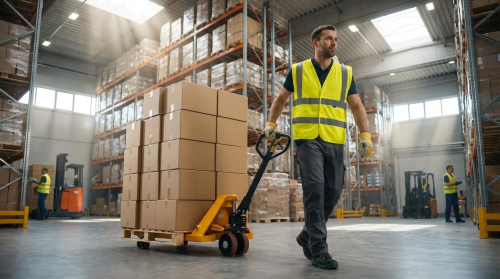
La capacidad humana y la ergonomía limitan la forma de mover un palé sin una transpaleta manual mucho antes de que el acero o las ruedas alcancen su límite de resistencia. El objetivo es mantener las fuerzas de empuje/tracción y la repetición dentro de límites seguros para personas reales, no para trabajadores de laboratorio idealizados.
- Empuja, no tires: Configure siempre las carretillas, los carros y las cuerdas de manera que los operarios empujen siempre que sea posible. Empujar requiere ejercitar músculos más fuertes de las piernas y reduce el riesgo de caer hacia atrás.
- Mantenga baja la resistencia a la rodadura: Las ruedas de gran diámetro y calidad sobre suelos limpios pueden reducir las fuerzas de arranque en más de la mitad. Esto hace que levantar entre 1,000 y 1,500 kg sea manejable para realizar empujones cortos con una o dos personas.
- Solo distancias cortas: Las alternativas manuales son las mejores para movimientos cortos. Si se realizan caminatas de más de 10 a 20 metros repetidas durante todo el día, la fatiga y el riesgo de sufrir lesiones musculoesqueléticas aumentan rápidamente.
- Tamaño del equipo y coordinación: Para palés más pesados, utilice de 2 a 4 personas con un líder dando órdenes. Los empujones descoordinados retuercen la carga y sobrecargan a los trabajadores individualmente.
- Altura de las manos y postura: El diseño admite alturas de entre 900 y 1,100 mm. Esto mantiene la espalda en una posición más neutra y los hombros por debajo de los 90° de elevación.
- Evite arranques y paradas bruscas: La inercia de un palé de 1,500 a 2,000 kg es implacable. La aceleración y el frenado suaves protegen las articulaciones y mantienen las cargas estables.
- Frecuencia límite: Si el personal tiene que mover palés pesados muchas veces por hora, cambie a opciones motorizadas o automatizadas. No se puede eliminar el uso excesivo crónico solo con entrenamiento.
- Utilice la ventaja mecánica con prudencia: Las palancas y las herramientas de palanca reducen el esfuerzo máximo pero concentran las cargas. Instruya a los operarios de la capacitación para que mantengan los pies alejados y nunca excedan la capacidad indicada de la herramienta.
Regla práctica para fuerzas de empuje manual
Como regla general, muchos ergonomistas buscan que la fuerza de empuje inicial sea inferior a la que un trabajador promedio puede aplicar con un empuje firme a dos manos a la altura del pecho durante toda la jornada. Si los operarios necesitan tomar impulso, la carga o el método son demasiado pesados.
💡 Nota del ingeniero de campo: Fíjese en las personas, no solo en los números. Si ve a los trabajadores apoyándose contra una pared o contra otra paleta para mover un carro, su método manual ya supera los límites ergonómicos seguros, incluso si el carro y el suelo "pueden soportar" el peso.
Controles de riesgos, normas e inspecciones
Los controles de riesgo formales, el cumplimiento básico de las normas de manipulación y las inspecciones rutinarias son lo que convierte el traslado improvisado de palés en un proceso repetible y justificable. Sin ellos, los métodos puntuales se convierten silenciosamente en práctica cotidiana sin ninguna red de seguridad.
- Tratar las alternativas como soluciones de ingeniería: Incluso los rodillos o carros sencillos necesitan un procedimiento definido. documentar quién puede utilizarlos, en qué rutas y para qué cargas.
- Definición de la ruta y señalización: Marcar las rutas fijas de las paletas para patines, carros o carriles de gravedad – Esto mantiene el paso de los peatones despejado y evita cruces inesperados con carretillas elevadoras o vehículos utilitarios.
- Frenos y calzos: En caso de pendientes, especifique calzos para ruedas, frenos mecánicos o topes finales. La gravedad nunca debería ser tu único “sistema de control”.
- Protecciones y topes finales en cintas transportadoras: Las cintas transportadoras por gravedad y las de paletas necesitan topes físicos y protecciones laterales. Evitan que el material se derrame cuando un palé llega al final más rápido de lo previsto.
- Borrar etiquetas de carga: Indique la masa máxima de palé por dispositivo y por ruta en kg. Los operarios nunca deberían tener que adivinar si un palé de 1,800 kg es aceptable.
- Rutinas de inspección: Revise las ruedas, los bastidores, las palancas y los rodillos en busca de grietas, piezas dobladas y cojinetes atascados. Los pequeños defectos aumentan considerablemente las fuerzas de empuje y el riesgo de fallos.
- Formación y permisos: Aunque se trate de herramientas “simples”, capacite al personal sobre la postura corporal, las señales de comunicación y las paradas de emergencia. especialmente para sistemas de empuje de varias personas y sistemas de gravedad.
- Regla de escalamiento: Establezca una regla que indique que si un palé no se puede mover sin problemas con el método aprobado, el trabajo se detiene y un supervisor elige una solución de mayor calidad. Esto evita arrastres o levantamientos improvisados.
Lista de verificación de inspección antes de mover un palé sin camión.
Antes de cada turno: (1) Verifique que las ruedas o rodillos giren libremente. (2) Confirme que no haya grietas, dobleces ni sujetadores sueltos. (3) Recorra la ruta para detectar derrames, escombros u obstáculos. (4) Confirme el tamaño del equipo y sus funciones. (5) Vuelva a comprobar que la paleta esté intacta, sin tablas rotas ni carga inclinada.
💡 Nota del ingeniero de campo: El control más efectivo que he visto es una regla simple de "sin cargas sorpresa": si un palé es más pesado, más alto o más frágil que la caja estándar para la que se diseñó la ruta, debe transportarse con montacargas, apilador o equipo motorizado, no con rodillos improvisados o personal adicional.
Seleccionar la alternativa adecuada para sus instalaciones
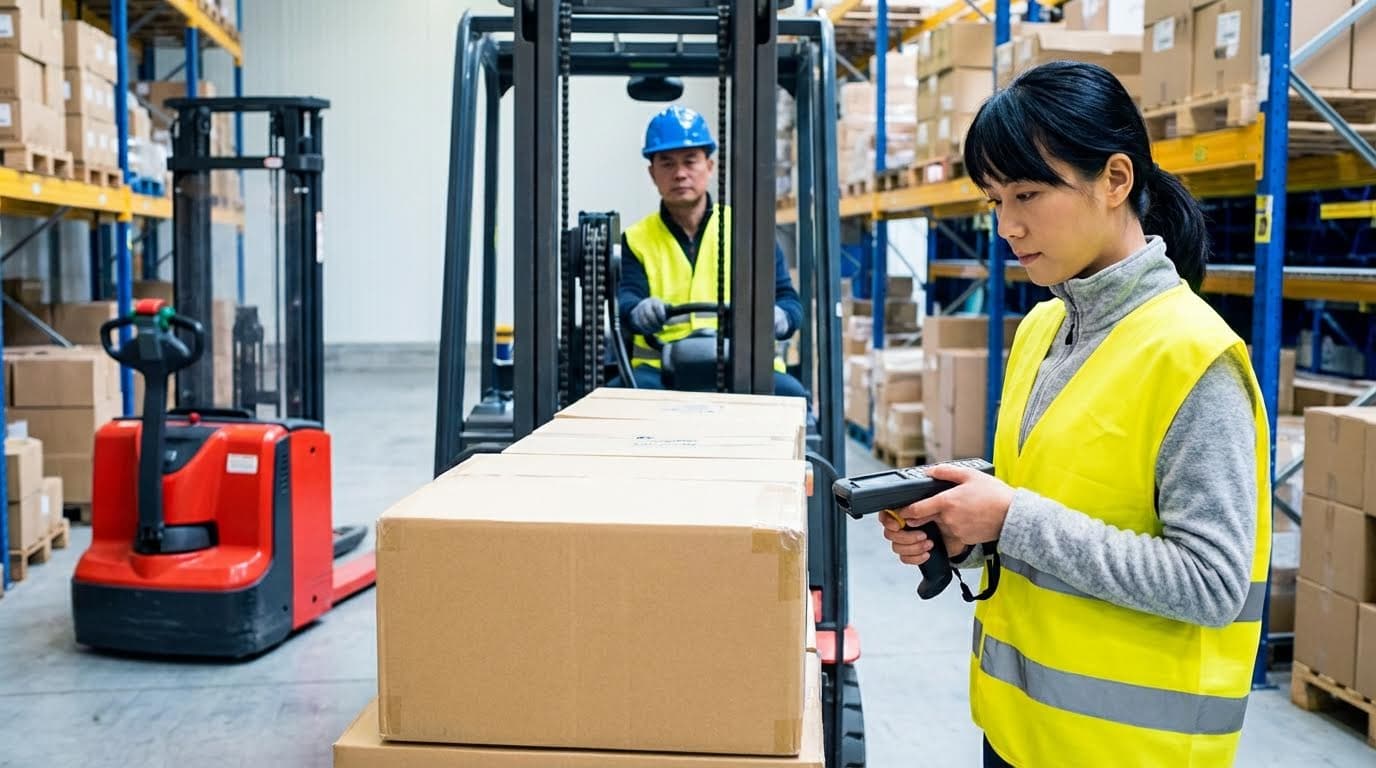
Esta sección explica cómo mover un palé sin transpaleta , adaptando cada método a la distancia, la frecuencia, el coste y la integración del sistema. El objetivo es evitar improvisaciones inseguras y diseñar una solución repetible y bien planificada.
💡 Nota del ingeniero de campo: Antes de comprar cualquier kit nuevo para manipulación de palés, recorra las rutas reales con una cinta métrica y una cámara. Las juntas del suelo, las pendientes superiores al 2 % y los giros cerrados de 90° a menudo eliminan las opciones que parecen "perfectas en teoría", como los patines básicos o las pequeñas carretillas.
Opciones de coincidencia con la distancia y la frecuencia
La mejor manera de mover un palé sin transpaleta depende principalmente de la distancia recorrida, la frecuencia de los desplazamientos y la calidad del suelo. Esto le ayudará a decidir cuándo basta con rodillos y cuándo necesita carros, cintas transportadoras o robots móviles.
| Escenario (Distancia y frecuencia) | Rango de carga típico | Tipos de equipos más adecuados | Por qué funciona | Impacto operativo |
|---|---|---|---|---|
| Traslados muy cortos y poco frecuentes (1–5 m, unas pocas veces por semana) | Hasta ~250 kg (palés ligeros o cargas parciales) | Sábanas y cuerdas, carretillas ligeras, palancas de rodillos | De bajo costo, con una configuración mínima, aceptable para uso ocasional. | Útil para mantenimiento o reajustes puntuales; no apto para el flujo de producción. |
| Traslados cortos y ocasionales (5–20 m, diarios pero de bajo volumen) | 500-1,500 kg | Carros de transporte de alta resistencia, patines para maquinaria, carros remolcables para paletas | Transportar palés completos sobre ruedas dimensionadas para la carga y la distancia de frenado. | Mejora la seguridad en comparación con el arrastre; requiere suelos lisos y limpios. |
| Distancia media y frecuencia alta (20–60 m, muchos viajes por turno) | 1,000-3,000 kg | Carros remolcables, tractores de remolque, cintas transportadoras por gravedad o motorizadas. | Reduce las fuerzas de empuje y la fatiga del operario en rutas repetitivas. | Estabiliza el tiempo de ciclo y facilita el reabastecimiento en la línea de producción. |
| Rutas largas dentro de grandes plantas (>60 m, flujo continuo) | Hasta ~2,000 kg por palet | Trenes de remolque, transportadores de paletas, AMR/AGV con plataformas elevadoras | Automatiza el transporte horizontal y minimiza la manipulación manual. | Alto rendimiento, menor riesgo de lesiones, admite operaciones 24/7. |
| Transferencia vertical entre niveles (entrepisos, muelles) | 500–2,000+ kilogramos | Mesas elevadoras de tijera, transportadores verticales, polipastos | Desacopla el levantamiento del movimiento horizontal. | Reduce el riesgo de caídas desde altura; mejora la ergonomía en los puestos de trabajo. |
- Define tu ruta principal: Mide el camino más largo y más utilizado. Esto suele determinar si puedes seguir trabajando en modo manual o si debes optar por un sistema semiautomatizado o totalmente automatizado.
- Clasificar frecuencia: Raro, diario, por hora o continuo – Una mayor frecuencia justifica un mayor gasto de capital para reducir la mano de obra y las lesiones.
- Compruebe el suelo y las pendientes: Tome nota de grietas, umbrales y pendientes. patines y pequeños carritos dificultad en suelos o rampas dañadas.
- Planificar la gestión en ambos extremos: Métodos de carga y descarga – Los rodillos o cintas transportadoras son inútiles si los operarios aún tienen que levantar la carga manualmente en los extremos.
Cómo planificar rápidamente las rutas de los palés antes de elegir el equipo.
Recorre cada ruta con una lista de verificación sencilla: distancia en metros, número de giros, punto de estrangulamiento más estrecho en milímetros, pendiente máxima y masa típica de los palés. Fotografía los puntos problemáticos, como muelles de carga, desagües y umbrales de puertas. Esto te dará una base objetiva para comparar las opciones de equipo y evitar sobredimensionar o subdimensionar.
Costo, TCO e integración con WMS y automatización
Para elegir la forma más sostenible de mover un palé sin transpaleta , compare el coste total de propiedad, no solo el precio de compra. Incluya la mano de obra, el mantenimiento, el tiempo de inactividad y la compatibilidad de cada opción con su sistema de gestión de almacenes (WMS) o automatización.
| Tipo de solución | Caso de uso típico | Perfil de costos (relativo) | Factores determinantes del TCO | Mejor para… |
|---|---|---|---|---|
| Carretillas y carros básicos | Palets ligeros, traslados internos cortos | Gastos de capital muy bajos; mantenimiento bajo | Tiempo de trabajo, riesgo ergonómico en cargas más elevadas | Talleres pequeños, áreas de bajo volumen, diseños temporales. |
| Carros remolcables de alta resistencia para palés | Rutas regulares entre zonas | Gastos de capital bajos a medios | Energía del vehículo remolcador, desgaste de ruedas y cojinetes | Las plantas están incorporando trenes de remolque en lugar de más carretillas elevadoras. |
| Transportadores de palets por gravedad y motorizados | Carriles fijos de alto volumen | Gastos de capital medios-altos | Mantenimiento de rodillos, cadenas, motores y controles. | Líneas de producción y vías de envío con flujo constante de palés. |
| Mesas elevadoras y plataformas elevadoras de tijera | Elevar los palés a una altura ergonómica. | Gastos de capital medianos | Servicio hidráulico, inspecciones, dispositivos de seguridad | Puestos de trabajo donde los operarios montan o desmontan palés durante todo el día. |
| AMR/AGV con plataformas para palés | Logística interna flexible, múltiples rutas | Alto gasto de capital | Software, baterías, supervisión de flotas, soporte informático | Instalaciones que buscan automatización escalable sin cintas transportadoras fijas. |
| Tractores de remolque y trenes de arrastre | Traslados horizontales de larga distancia | Gastos de capital medios-altos | Consumo de energía, desgaste de neumáticos, mano de obra del conductor | Grandes campus, operaciones de transbordo, supermercados dentro de las plantas. |
- Incluya la mano de obra en cada comparación: Calcular los minutos por movimiento y el salario por hora. Esto suele compensar el coste del equipo en un plazo de 12 a 24 meses.
- Factor de riesgo de lesiones: Las fuerzas de empuje elevadas y el levantamiento manual aumentan los costos ocultos. Las reclamaciones, el tiempo perdido y la rotación de personal anulan cualquier ahorro derivado de los métodos "baratos".
- Planifique el mantenimiento desde el primer día: Definir las inspecciones para ruedas, rodillos, sistemas hidráulicos y frenos. Esto evita fallos repentinos con palés llenos.
- Verifique las necesidades de WMS y datos: Decida si solo necesita el movimiento físico o también el seguimiento de palés en tiempo real. Esto determina si basta con carros sencillos o si se necesitan cintas transportadoras con escáneres o robots móviles autónomos (AMR).
Los sistemas modernos de transporte de palés pueden integrar lectores de códigos de barras o RFID para enviar información en tiempo real sobre la posición de los palés a las plataformas WMS o ERP, lo que permite la preparación de pedidos justo a tiempo y la toma de decisiones automáticas en las rutas. Los transportadores integrados también permiten la monitorización en tiempo real del estado de los módulos para la planificación del mantenimiento y la mejora del tiempo de actividad. Para redes más complejas, los carros de transferencia, las plataformas giratorias y los transportadores de acumulación permiten que los palés se pongan en cola, cambien de dirección y cambien de línea sin necesidad de carretillas elevadoras. Las arquitecturas de los transportadores para la manipulación de palés muestran cómo los transportadores CDLR, de cadena portacables y de transferencia se combinan para formar una estructura central que sustituye muchos movimientos manuales.
Comprobación sencilla del retorno de la inversión antes de invertir en cintas transportadoras o robots móviles autónomos (AMR).
Calcule sus horas anuales actuales de trabajo para la manipulación de palés (movimientos por turno × tiempo por movimiento × turnos × días). Multiplique por la tarifa horaria a plena carga para obtener el coste actual. Compare este coste con el coste anualizado del nuevo sistema (inversión de capital dividida por la vida útil prevista más el mantenimiento y el consumo energético anuales). Si el periodo de recuperación de la inversión es inferior a 18 meses y la seguridad mejora, la actualización suele estar justificada.
Consideraciones finales sobre alternativas para la manipulación de palés
La manipulación segura de palés sin transpaleta depende de la disciplina técnica, no de la improvisación. Cada método descrito en esta guía implica un equilibrio entre la capacidad de carga, la calidad del suelo, el esfuerzo humano y el coste de inversión. Si se respetan las capacidades de carga, se controlan las pendientes y se mantienen los suelos lisos, los rodillos, patines, carros y cintas transportadoras funcionan dentro de un margen de seguridad predecible.
Los equipos de operaciones deben comenzar con el mapeo de rutas y los datos de carga, para luego elegir el dispositivo más sencillo que mantenga bajas las fuerzas de empuje y alta la estabilidad. Utilice rodillos, carretillas o patines manuales solo para movimientos cortos y controlados. Pase a carros de remolque, cintas transportadoras o sistemas automatizados cuando aumenten las distancias, los pesos o la frecuencia. Esto protege al personal y estabiliza el tiempo de ciclo.
Los equipos de ingeniería y seguridad deben plasmar estas decisiones en normas claras, inspecciones y capacitación. Cada alternativa debe considerarse un sistema de ingeniería con límites definidos y una regla de parada ante cambios en las condiciones. Ante la duda, es preferible recurrir a la manipulación automatizada o motorizada en lugar de aumentar el personal o la fuerza.
Gestionado de esta forma, el traslado de palés sin camiones se convierte en una parte fiable del flujo de materiales, no en una solución provisional. Las soluciones de Atomoving pueden entonces fundamentarse en una sólida base de ingeniería, en lugar de compensar métodos inseguros.
Preguntas frecuentes
¿Qué puedo usar en lugar de una transpaleta para mover un palé?
Si no dispone de una transpaleta, existen métodos alternativos para mover palés de forma segura. Para palés ligeros, puede utilizar herramientas manuales como ganchos para arrastrarlos por el suelo o deslizarlos. Como alternativa, puede utilizar transpaletas de baja elevación o apiladores manuales para cargas más pesadas. Estas herramientas ayudan a reducir el esfuerzo de los trabajadores y a mejorar la eficiencia. Guía de alternativas a las carretillas elevadoras.
¿Cómo mover un palé vacío a mano?
Mover un palé vacío a mano es posible con la técnica adecuada. Primero, incline el palé para que quede en posición vertical y así reducir la fricción. Luego, use un gancho o herramienta similar para arrastrarlo por el suelo. Si el palé es ligero (por ejemplo, de plástico o madera blanda), también puede transportarlo horizontalmente entre dos personas. Asegúrese siempre de usar técnicas de levantamiento adecuadas para evitar lesiones. Consejos de WorkSafe para la manipulación de palés.