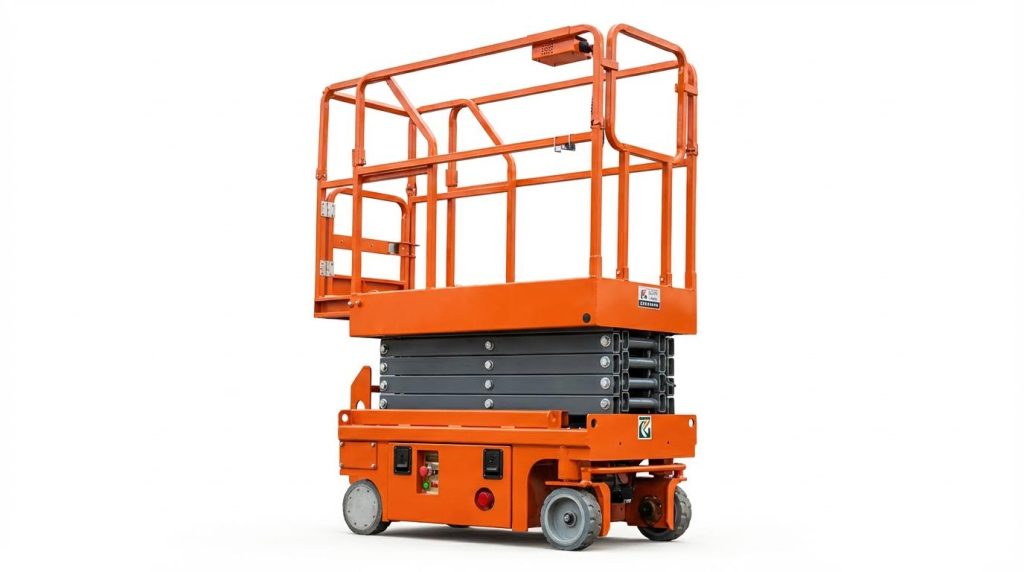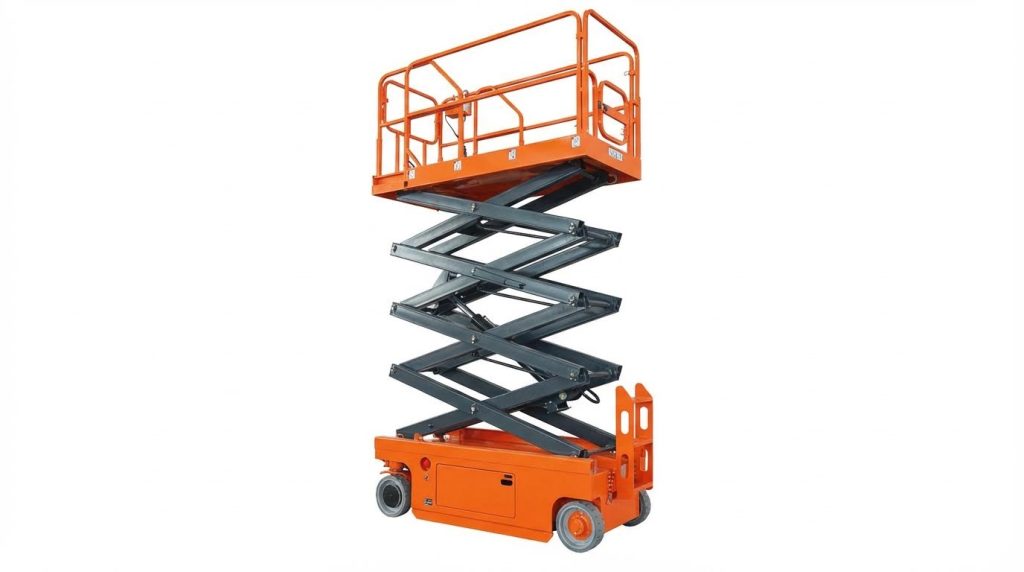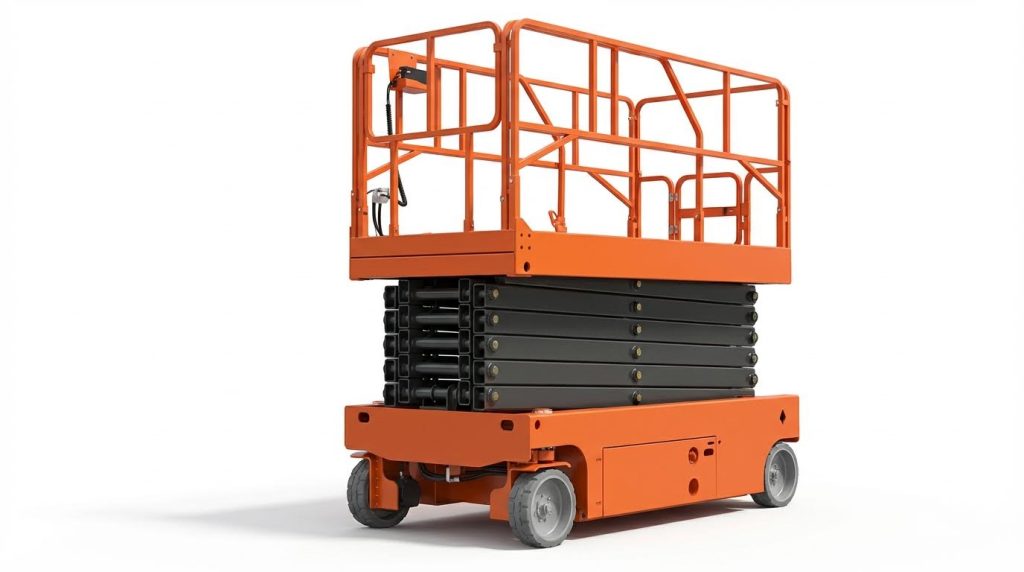
Lift gunting kompak biasanya mencakup ketinggian kerja rendah hingga menengah di ruang dalam ruangan yang sempit, dan panduan ini menjelaskan secara tepat seberapa tinggi lift ini dapat mencapai dan di mana lift ini paling efektif digunakan. Anda akan melihat bagaimana ketinggian platform, ketinggian kerja, kapasitas beban, dan pilihan sistem penggerak berubah seiring dengan ukuran sehingga Anda dapat menyesuaikan setiap rentang ketinggian dengan tugas-tugas di fasilitas Anda. Jika Anda bertanya seberapa tinggi platform gunting kompak dapat mencapai, Anda juga akan mempelajari kapan Anda harus beralih dari model kompak ke mesin yang lebih besar untuk cakupan yang aman dan efisien di seluruh bangunan Anda.
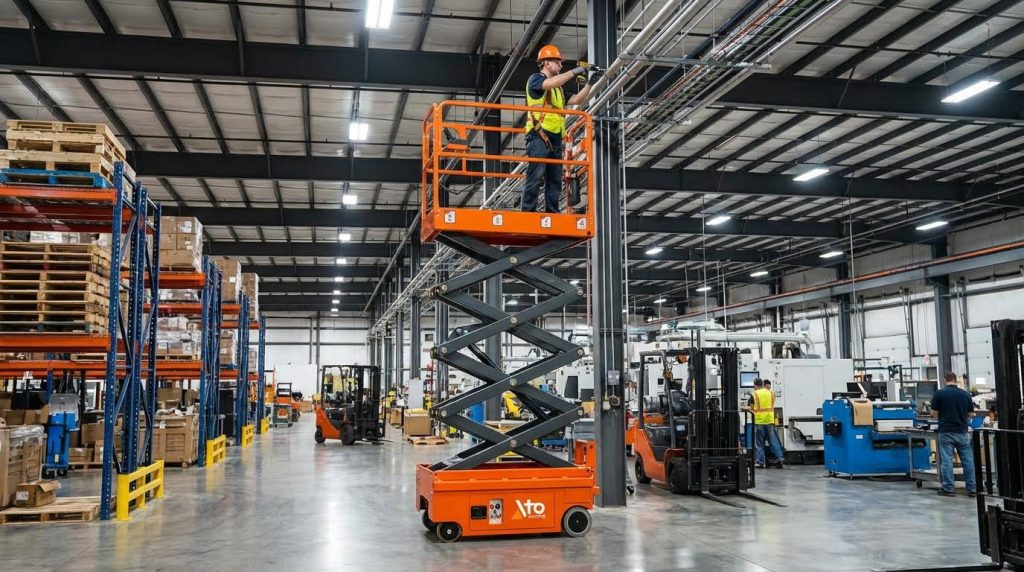
Mendefinisikan Lift Gunting Kompak dan Batas Ketinggian
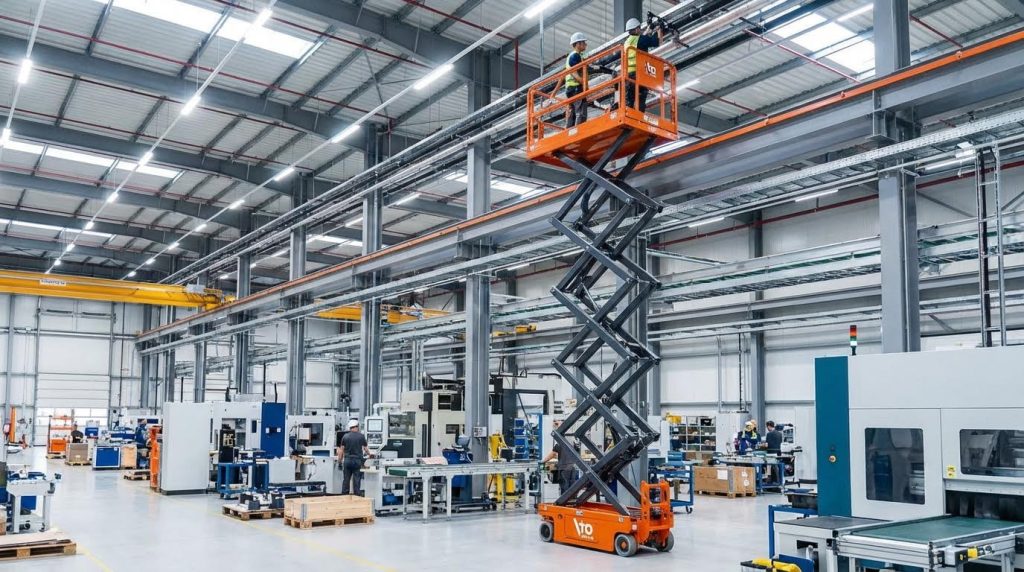
Lift gunting kompak adalah platform akses yang sempit dan ringan yang dirancang untuk pekerjaan di dalam ruangan dan ruang sempit, dengan batasan ketat pada ketinggian platform, ketinggian kerja, beban, dan stabilitas yang harus Anda patuhi agar tetap sesuai dengan standar dan garansi.
Memahami batasan-batasan ini adalah satu-satunya cara untuk menjawab pertanyaan “seberapa tinggi lift gunting kompak dapat mencapai” untuk fasilitas Anda, karena tinggi, kapasitas lantai, dan jenis tugas semuanya saling berkaitan.
Tinggi platform vs. tinggi kerja
Tinggi platform adalah tinggi pengangkatan mekanis, sedangkan tinggi kerja menambahkan jangkauan operator dan biasanya sekitar 2.0 m lebih tinggi untuk tujuan spesifikasi dan perbandingan. Kesalahan dalam membedakan keduanya dapat menyebabkan spesifikasi mesin yang kurang atau berlebihan.
Tinggi platform adalah jarak vertikal dari lantai ke dek platform pada posisi terentang penuh, sedangkan tinggi kerja biasanya didefinisikan sebagai tinggi platform + 2.0 m, dengan asumsi jangkauan operator rata-rata. Konvensi ini banyak digunakan dalam lembar data peralatan akses. Salah satu contohnya menggambarkan tinggi platform 5.71 m yang sesuai dengan tinggi kerja 7.71 m.
- Tinggi platform: Jarak dari lantai dasar ke dek saat terbentang penuh – Menentukan seberapa tinggi struktur mesin tersebut benar-benar mengangkat Anda.
- Ketinggian kerja: Tinggi platform + ~2.0 m – Menggambarkan jangkauan tangan orang pada umumnya di atas kepala.
- Lembar spesifikasi: Sering diiklankan ketinggian kerja – Angka-angka pemasaran bisa terlihat lebih besar daripada tinggi platform sebenarnya.
- Risiko kebingungan: Mencampurkan keduanya dalam perencanaan – Dapat membuat teknisi berada 1–2 m dari perlengkapan target.
Cara menafsirkan tinggi badan dalam penilaian risiko Anda
Saat menulis pernyataan metode, selalu cantumkan kedua nilai tersebut, misalnya “tinggi platform 6.0 m, tinggi kerja 8.0 m,” dan pastikan semua bahaya di atas kepala (balok, alat penyiram, kabel) diperiksa terhadap tinggi kerja, bukan hanya tinggi mesin.
💡 Catatan Teknisi Lapangan: Ketika klien bertanya “seberapa tinggi lift gunting kompak dapat mencapai,” saya menekankan agar mereka mengkonfirmasi ketinggian platform sebenarnya sesuai dengan pekerjaan, kemudian menambahkan margin keamanan 0.5–1.0 m daripada bekerja tepat pada jangkauan maksimum teoretis.
Pita pengukur ketinggian lift gunting kompak standar
Lift gunting kompak biasanya digunakan untuk pekerjaan di dalam ruangan dengan ketinggian rendah hingga menengah, dengan ketinggian kerja tipikal sekitar 3–9 m, sedangkan unit ukuran penuh dapat mencapai ketinggian yang jauh lebih tinggi tetapi membutuhkan lebih banyak ruang, kapasitas beban, dan lantai yang lebih berat.
Data industri menunjukkan lift gunting kompak menawarkan ketinggian kerja sekitar 10–30 kaki (≈3.0–9.1 m), dengan platform sempit selebar 610–910 mm dan panjang 1.8–3.0 m, serta kapasitas sekitar 225–450 kg. Unit kompak ini jauh lebih kecil daripada model ukuran penuh yang mencapai ketinggian kerja 9–18+ m dan membawa beban yang lebih berat.
| Jenis lift | Kisaran ketinggian kerja tipikal | Perkiraan rentang ketinggian platform | Kapasitas tipikal | Terbaik untuk / Dampak operasional |
|---|---|---|---|---|
| Mini/mikro kompak elektrik | Hingga ≈6.0 m (≈20 kaki) | ≈4.0 m | ≈150–230 kg | Muat melalui pintu standar; ideal untuk kantor, toko, dan perawatan dengan langit-langit rendah. |
| Lift gunting kompak standar | ≈3.0–9.1 m (10–30 kaki) | ≈1.0–7.0 m | ≈225–450 kg (500–1,000 lbs) | Mencakup sebagian besar tugas MRO dalam ruangan, penerangan, dan pemasangan rak hingga ketinggian platform ~7 m. |
| Gunting ukuran penuh untuk penggunaan di dalam dan luar ruangan | ≈9.0–18.0+ m (30–60+ kaki) | ≈7.0–16.0 m | ≈450–1,600+ kg (1,000–3,500+ lbs) | Lokasi konstruksi dan pabrik besar; membutuhkan lantai yang lebih kuat dan ruang bebas yang lebih luas. |
Jadi, seberapa tinggi lift gunting kompak dapat mencapai dalam praktiknya? Untuk sebagian besar model kompak yang digerakkan sendiri dan digunakan di dalam ruangan, Anda harus merencanakan ketinggian kerja maksimum sekitar 8–9 m, yang sesuai dengan ketinggian platform sekitar 6–7 m, tetap dalam batasan kelas kompak pada umumnya. Lift gunting mini elektrik yang lebih kecil berada di ujung bawah kisaran ini, hingga sekitar 6 m ketinggian kerja.
- Di bawah ketinggian kerja ≈4 m: Lift mikro/mini – Paling cocok untuk ruangan dengan batasan beban lantai dan pintu yang sempit.
- Tinggi kerja sekitar 4–8 m: Tali jam tangan kompak inti – Mencakup sebagian besar perawatan dalam ruangan dan instalasi ringan.
- Tinggi kerja sekitar 8–9 m: Batas kompak atas – Periksa beban dan goyangan lantai, dan pertimbangkan ukuran penuh jika Anda membutuhkannya lebih besar.
Mengapa tidak mendorong lift kompak melebihi ketinggian yang ditentukan?
Peringkat ketinggian sudah mencakup margin stabilitas berdasarkan pusat gravitasi, lebar sasis, dan faktor angin atau gangguan dalam ruangan. Melebihi ketinggian yang tertera pada label atau menggunakan tangga darurat pada platform akan mengurangi margin tersebut dan bertentangan dengan standar seperti ANSI dan EN280.
💡 Catatan Teknisi Lapangan: Setelah ketinggian kerja yang Anda butuhkan secara konsisten di atas sekitar 9 m, saya biasanya merekomendasikan untuk beralih ke mesin yang lebih berat dan lebih lebar daripada menjalankan unit kompak pada posisi tertingginya sepanjang hari; stabilitas ekstra dan area platform yang lebih luas akan memberikan keuntungan dalam hal keselamatan dan produktivitas.
Spesifikasi Utama yang Berubah Sesuai Tinggi Badan
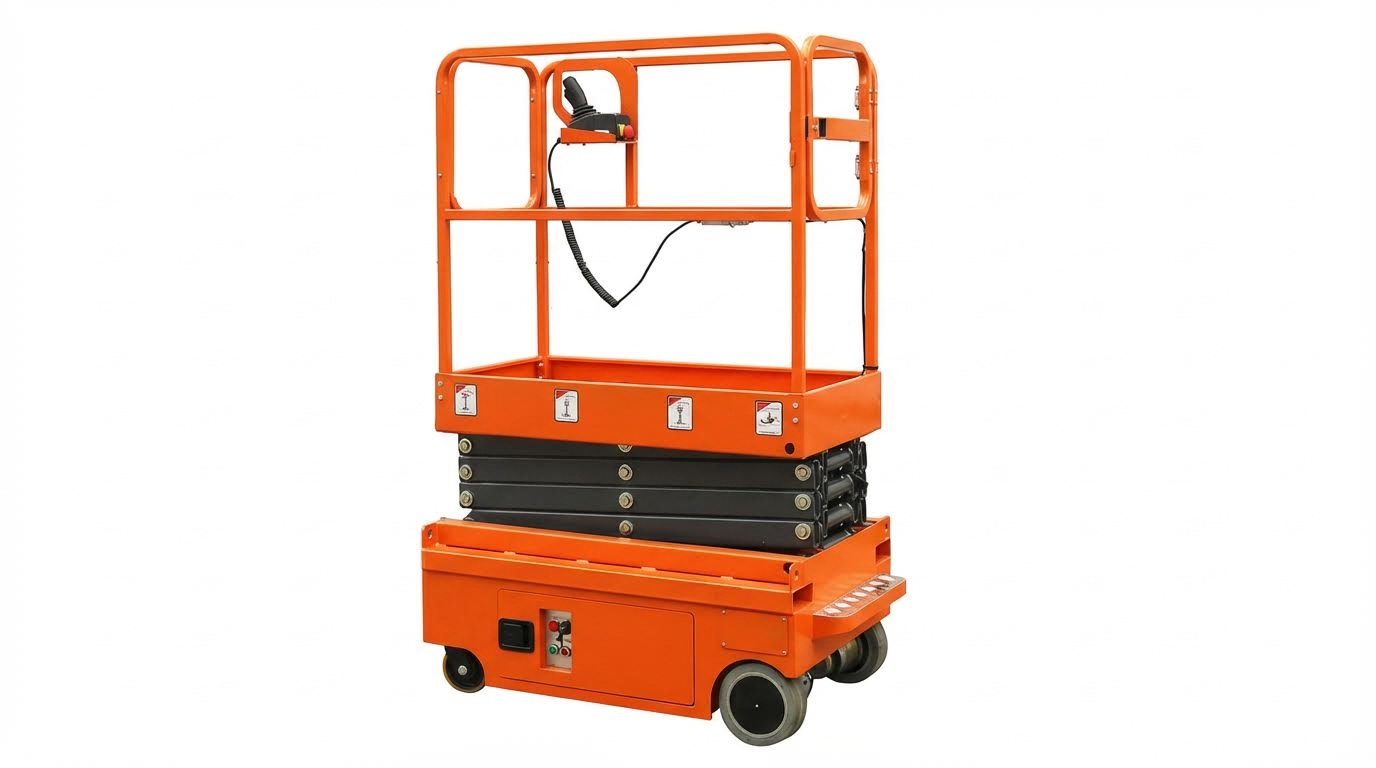
Spesifikasi utama yang berubah seiring ketinggian adalah ukuran platform, kapasitas orang, kapasitas beban, stabilitas, beban lantai, sistem penggerak, hidrolik, dan siklus kerja, dan semuanya mempersempit jawaban praktis tentang seberapa tinggi lift gunting kompak dapat mencapai di fasilitas Anda.
Seiring bertambahnya ketinggian platform, struktur gunting, sasis, dan sistem tenaga semuanya ikut membesar. Baja tambahan dan jangkauan yang lebih luas meningkatkan akses tetapi membutuhkan lantai yang lebih kuat, lebih banyak energi, dan kontrol stabilitas yang lebih ketat.
Ukuran platform, ekstensi, dan peringkat orang
Ukuran platform, ekstensi, dan kapasitas beban semua bertambah seiring dengan tinggi badan, tetapi setiap milimeter tambahan pada dek dan setiap orang tambahan akan sangat mengurangi kemudahan penggunaan lift pada jangkauan maksimum.
Lift gunting kompak biasanya menggunakan platform persegi panjang, seringkali berukuran sekitar 1,700 mm × 1,000 mm, dengan ekstensi geser opsional yang meningkatkan area lantai yang dapat digunakan. Ekstensi biasanya memiliki kapasitas beban yang lebih rendah daripada dek utama, sehingga Anda harus memperlakukannya sebagai zona pemuatan terpisah. Perilaku platform dan ekstensi yang umum menunjukkan bahwa kapasitas beban orang dan beban ekstensi adalah hal pertama yang akan mengalami penurunan kapasitas seiring bertambahnya ketinggian.
| Jenis Lift / Rentang Ketinggian | Ukuran Platform Khas | Perilaku Ekstensi | Peringkat Orang (tipikal) | Dampak Operasional |
|---|---|---|---|---|
| Mini/kompak elektrik (tinggi kerja ≈ 3–6 m) | dek berukuran ≈ 1,700 mm × 1,000 mm contoh ukuran | Geser keluar pendek; beban lebih rendah pada ekstensi. | 1–2 orang | Cocok untuk pekerjaan di dalam ruangan yang sempit dengan lebar pintu sekitar 2.0–2.1 m. |
| Lift slab kompak yang lebih tinggi (tinggi kerja ≈ 6–10 m) | Dek lebih panjang; namun tetap sempit (≤ 1,000 mm) untuk lorong. | Perpanjangan yang lebih panjang; penurunan peringkat yang lebih agresif pada zona perpanjangan. | 2 orang biasanya | Mendukung dua teknisi beserta peralatan untuk pekerjaan langit-langit di area seluas 8–10 m². |
| Ukuran penuh untuk dalam/luar ruangan (tinggi kerja > 10 m) | Dek yang lebih lebar dan lebih panjang (seringkali > 2,000 mm panjangnya) | Ekstensi besar; aturan pemuatan yang ketat | 2–3 orang | Cocok untuk aula besar atau fasad luar ruangan, bukan interior dengan lorong sempit. |
- Jejak platform tumbuh seiring dengan jangkauan: Lift yang lebih tinggi membutuhkan dek yang lebih panjang atau lebih lebar agar ruang kerja dapat digunakan – Namun, hal ini juga meningkatkan momen guling pada ketinggian tertentu.
- Perluasan area perdagangan untuk kapasitas: Menggeser dek sejauh 600–900 mm akan menggeser beban ke luar – Jadi, para produsen menurunkan kapasitas beban maksimum yang diizinkan pada ekstensi tersebut.
- Penilaian terhadap seseorang didasarkan pada kemampuan: Angka "berapa banyak orang" hanyalah kapasitas dibagi dengan massa orang yang diasumsikan – Peralatan atau material tambahan dapat dengan cepat menghabiskan satu "slot orang".
- Pembatas jalan dan papan pijakan kaki menambah bobot: Model yang lebih tinggi menggunakan sistem rel yang lebih berat – Hal ini mengurangi kapasitas muatan yang tersisa untuk orang dan peralatan.
Bagaimana peringkat orang terkait dengan "seberapa tinggi lift gunting kompak dapat mencapai"
Meskipun lift gunting kompak secara teknis dapat mencapai ketinggian kerja 8–10 m, Anda mungkin menemukan bahwa kapasitas beban pada labelnya terbatas hanya untuk satu orang saat menggunakan ekstensi. Hal itu secara efektif membatasi kegunaan ketinggian tersebut untuk tugas-tugas yang biasanya dilakukan oleh dua orang, seperti pemasangan saluran udara atau pekerjaan pada baki kabel.
💡 Catatan Teknisi Lapangan: Saat Anda mendorong lift kompak mendekati ketinggian platform maksimumnya, perlakukan ekstensi tersebut seperti papan perancah kantilever. Jauhkan kotak perkakas dan material berat di dalam zona dek utama; gunakan ekstensi terutama untuk jangkauan, bukan untuk menumpuk beban di tepi.
Kapasitas beban, stabilitas, dan beban lantai
Kapasitas beban, stabilitas, dan beban lantai menjadi kendala yang lebih ketat seiring bertambahnya ketinggian, dan di banyak bangunan, hal-hal tersebut membatasi seberapa tinggi lift gunting kompak dapat naik jauh sebelum brosur menyebutkan batas atasnya.
Lift gunting kompak umumnya mampu menopang beban sekitar 225–450 kg (500–1,000 lbs), sedangkan berat mesin itu sendiri dapat mencapai 700–1,800 kg (1,500–4,000 lbs) untuk model kompak dan hingga 5,500 kg (12,000 lbs) atau lebih untuk unit ukuran penuh. Rentang berat ini secara langsung memengaruhi stabilitas dan pemeriksaan desain lantai.
| Parameter | Gunting Kompak (khas) | Gunting Ukuran Penuh (umum) | Dampak Operasional |
|---|---|---|---|
| Rentang ketinggian kerja | ≈ 3–9 m (10–30 kaki) kisaran kompak khas | ≈ 9–18+ m (30–60+ kaki) | Menentukan apakah Anda dapat tetap menggunakan ukuran yang ringkas atau harus beralih ke unit ukuran penuh yang lebih berat. |
| Kapasitas muatan dinilai | ≈ 225–450 kg (500–1,000 lbs) | ≈ 450–1,600+ kg (1,000–3,500+ lbs) | Bangunan yang lebih tinggi biasanya membutuhkan kapasitas yang lebih besar untuk pekerjaan fasad, pelapis dinding, dan sebagainya. |
| berat mesin | ≈ 700–1,800 kg (1,500–4,000 lbs) | ≈ 2,300–5,500+ kg (5,000–12,000+ lbs) | Mesin yang lebih berat mungkin melebihi beban desain mezanin atau pelat lantai gantung. |
| Fitur stabilitas | Rangka lebar, terkadang dilengkapi penyangga samping, batas angin hanya untuk penggunaan di dalam ruangan. | Dasar lebih lebar, sasis lebih berat, penstabil samping, peringkat ketahanan angin luar ruangan. | Pekerjaan di luar ruangan di ketinggian seringkali memaksa untuk beralih ke ukuran penuh, meskipun ketinggiannya serupa. |
- Stabilitas berkaitan dengan pusat gravitasi (CoG): Saat platform naik, pusat gravitasi gabungan juga naik – membuat lift lebih sensitif terhadap beban samping dan lantai yang tidak rata.
- Batasan kecepatan angin membatasi ketinggian di luar ruangan: Banyak lift slab listrik kompak hanya "untuk penggunaan di dalam ruangan" karena tidak dirancang untuk kecepatan angin di atas ≈ 11–12.5 m/s – Ini membatasi tinggi yang dapat digunakan di luar ruangan. Pertimbangan angin umum.
- Beban lantai seringkali menjadi hambatan tersembunyi: Lift slab kompak seberat 1,500–3,000 kg dapat memberikan beban titik yang sangat tinggi melalui roda-roda kecilnya – yang mungkin melebihi peringkat pelat kantor atau mezanin bahkan pada ketinggian yang sederhana.
- Standar dan aturan penurunan peringkat berlaku: Penggunaan ekstensi platform atau bekerja di zona angin kencang seringkali memerlukan pengurangan beban atau ketinggian sesuai dengan standar seperti ANSI/EN280 dan instruksi pabrikan – Mengabaikan hal ini akan mengurangi margin keamanan.
Bagaimana mempertimbangkan beban lantai untuk lift kompak?
Jangan hanya membandingkan berat mesin dengan “kg/m²” luas lantai. Area kontak roda kecil, sehingga tegangan lokal bisa beberapa kali lebih tinggi daripada rata-rata. Insinyur struktur mengevaluasi ini sebagai beban titik atau beban garis, terutama di dekat tepi pelat, parit kabel, atau papan berongga. Ketika Anda bertanya seberapa tinggi lift gunting kompak dapat naik, jawaban jujurnya mungkin "hanya setinggi yang diizinkan oleh lantai di bawahnya."
💡 Catatan Teknisi Lapangan: Pada lantai mezanin atau lantai kantor keramik yang lebih tua, saya sering kali menentukan ketinggian kerja yang lebih rendah atau model yang lebih kecil dan ringkas daripada yang secara teoritis dibutuhkan untuk tugas tersebut. Lift yang lebih ringan dan pendek yang melakukan dua gerakan lebih aman daripada unit yang tinggi dan berat yang dapat memecahkan keramik atau memberi tekanan berlebih pada balok.
Sistem penggerak, hidrolik, dan siklus kerja
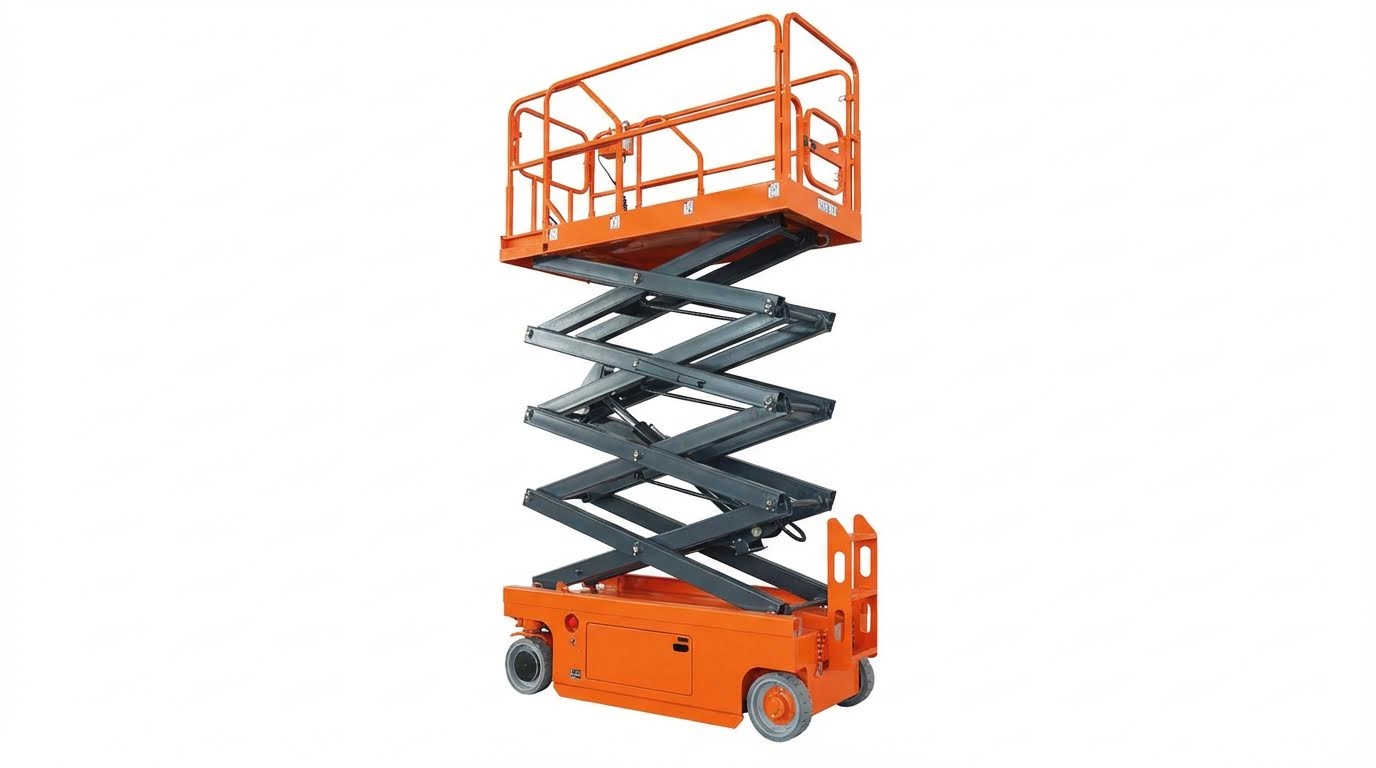
Sistem penggerak, hidrolik, dan siklus kerja sangat bergantung pada ketinggian, jadi semakin tinggi Anda berada, semakin banyak anggaran yang harus Anda alokasikan untuk kapasitas baterai, ukuran pompa, dan perawatan agar lift tetap produktif dan aman.
Sebagian besar lift gunting kompak menggunakan sistem penggerak listrik dengan paket baterai dan silinder hidrolik untuk mengangkat lengan yang bertumpuk. Unit listrik populer di dalam ruangan karena bebas emisi dan senyap, sementara model luar ruangan yang lebih besar sering menggunakan mesin diesel dan hidrolik berkapasitas lebih tinggi. Pilihan sistem penggerak secara langsung memengaruhi berapa banyak siklus pengangkatan penuh yang dapat Anda jalankan per shift.
| Aspek | Gunting Listrik Kompak | Gunting yang Lebih Besar / untuk Medan Kasar | Dampak Operasional |
|---|---|---|---|
| Sumber daya | Bertenaga baterai listrik, nol emisi lokal. cocok untuk dalam ruangan | Mesin diesel atau listrik tugas berat | Mesin listrik cocok untuk lokasi dalam ruangan/berventilasi rendah; mesin diesel cocok untuk shift kerja luar ruangan yang panjang. |
| Sistem hidrolik | Silinder lebih kecil, aliran lebih rendah, kecepatan sedang | Silinder lebih besar, aliran lebih tinggi, daya pompa lebih tinggi. | Lift yang lebih tinggi membutuhkan volume oli dan daya yang lebih besar, sehingga meningkatkan penggunaan energi. |
| Duty cycle | Dioptimalkan untuk tugas-tugas dalam ruangan yang bersifat sementara. | Dirancang untuk bersepeda secara rutin dan medan yang berat. | Gerakan naik/turun frekuensi tinggi pada ketinggian penuh mungkin memerlukan baterai atau mesin yang lebih besar. |
| Tingkat kebisingan | Tingkat kebisingan rendah, cocok untuk hotel, kantor, dan toko ritel. manfaat kebisingan | Tingkat kebisingan lebih tinggi, namun masih dapat diterima di luar ruangan. | Fasilitas yang sensitif terhadap kebisingan seringkali membatasi ketinggian listrik yang dapat Anda gunakan pada tingkat yang kompak. |
- Angkat beban yang lebih tinggi membutuhkan lebih banyak energi per siklus: Menaikkan platform dari ketinggian 0 hingga 8–10 m membutuhkan energi hidrolik jauh lebih banyak daripada menaikkannya hingga ketinggian 3–4 m. sehingga baterai lebih cepat habis saat bekerja di ketinggian yang tinggi.
- Kecepatan hidrolik vs kenyamanan: Kecepatan pengangkatan yang lebih tinggi meningkatkan produktivitas tetapi meningkatkan beban dinamis dan goyangan – Kamera kompak yang lebih tinggi sering menggunakan kecepatan konservatif untuk menjaga agar gerakan tetap dapat diterima pada ketinggian tersebut.
- Lingkungan dingin memengaruhi oli dan baterai: Dalam kondisi penyimpanan dingin atau musim dingin, viskositas oli hidrolik meningkat dan baterai kehilangan kapasitas – Hal ini secara efektif mengurangi seberapa tinggi dan seberapa sering lift gunting kompak dapat beroperasi sebelum perlu diisi ulang.
- Interval perawatan semakin ketat seiring dengan ketinggian dan penggunaan: Semakin banyak siklus pada tekanan yang lebih tinggi, semakin cepat keausan pada selang, segel, dan pompa – Oleh karena itu, lift tinggi berkapasitas besar memerlukan sistem inspeksi yang lebih ketat.
Mengapa siklus kerja penting saat merencanakan ketinggian kerja maksimum?
Jika pekerjaan Anda mengharuskan Anda naik ke ketinggian platform mendekati maksimum sebanyak 30–40 kali per shift, Anda tidak bisa hanya melihat baris "ketinggian kerja maksimum". Anda harus memastikan bahwa paket baterai, ketersediaan pengisi daya, dan kapasitas pendinginan hidrolik dapat mendukung siklus gerakan penuh sebanyak itu tanpa kepanasan atau penurunan tegangan. Jika tidak, jawaban Anda yang sebenarnya dan dapat digunakan tentang seberapa tinggi lift gunting kompak dapat naik adalah "hanya untuk setengah shift pertama."
💡 Catatan Teknisi Lapangan: Untuk fasilitas yang beroperasi dua atau tiga shift, saya sering kali menentukan lift kompak yang sedikit lebih pendek dengan langkah yang lebih kecil tetapi hidrolik yang lebih cepat dan efisien. Operator menghabiskan lebih sedikit waktu untuk mencapai ketinggian maksimum, baterai bertahan lebih lama, dan waktu operasional lebih berharga daripada manfaat teoritis dari jangkauan tambahan satu atau dua meter.
Menyesuaikan Rentang Ketinggian dengan Operasi Fasilitas
Rentang ketinggian lift gunting kompak berhubungan langsung dengan tinggi langit-langit, lebar lorong, dan jenis tugas, jadi Anda harus menentukan ukuran berdasarkan pekerjaan dan geometri bangunan sebelum menanyakan seberapa tinggi lift gunting kompak dapat mencapai.
| Rentang ketinggian kerja | Tinggi platform tipikal | Kasus penggunaan umum | Fasilitas terbaik yang sesuai |
|---|---|---|---|
| Hingga ~6 m | ~ 4 m | Akses dalam ruangan tingkat rendah, perawatan ringan. | Kantor, ritel, gudang bertingkat rendah |
| ~6–9 m | ~4–7 m | Perawatan dan perbaikan umum (MRO), penerangan, saluran udara, rak. | Gudang standar, jalur produksi |
| ~9–11.5 m | ~7–9.5 m | Akses ruang tinggi, inventaris, mezanin | Gudang logistik bertingkat tinggi, mezzanine 2–3 tingkat |
Lift gunting kompak biasanya menawarkan ketinggian kerja sekitar 3–9 m (10–30 kaki) tergantung modelnya, dengan sasis sempit yang cocok untuk ruang dalam ruangan yang sempit. Rentang kompak yang umum didokumentasikan di sini . Jika Anda membutuhkan ketinggian kerja lebih dari ~9–10 m secara teratur, Anda biasanya beralih ke unit ukuran penuh atau unit medan berat daripada yang "kompak".
💡 Catatan Teknisi Lapangan: Selalu periksa penghalang terendah Anda, bukan hanya ketinggian atap. Pada instalasi yang lebih tua, jembatan pipa di atas kepala atau baki kabel seringkali berada 500–1,000 mm di bawah garis rangka dan menjadi batas sebenarnya untuk ketinggian kerja yang aman.
Perawatan dalam ruangan, MRO, dan instalasi ringan.
Untuk perawatan dalam ruangan dan instalasi ringan, Anda biasanya memilih lift gunting kompak di bagian bawah rentang ketinggian untuk meminimalkan berat dan beban lantai.
- Tinggi langit-langit hingga ~4 m: Pilih ketinggian kerja 5–6 m – Jangkauan yang nyaman untuk lampu, papan nama, dan saluran ventilasi rendah dengan ruang gerak yang cukup.
- Tinggi langit-langit sekitar 6–8 m: Pilih ketinggian kerja 8–9 m – Mencakup sebagian besar tugas MRO (Maintenance, Repair, and Overhaul) di gudang dan industri ringan.
- Tinggi langit-langit sekitar 8–10 m: Pilih ketinggian kerja 10–11 m – Dibutuhkan untuk pemasangan lampu penerangan area tinggi, kepala sprinkler, dan pekerjaan baki kabel.
Lift gunting kompak di kelas ini biasanya menyediakan ketinggian kerja sekitar 3–9 m (10–30 kaki) dengan platform sempit sekitar 600–900 mm lebarnya dan 1.8–3.0 m panjangnya, menopang sekitar 225–450 kg (500–1,000 lbs). Dimensi dan kapasitas ini tipikal untuk unit listrik lantai beton dalam ruangan . Lift gunting mini listrik dengan ketinggian kerja hingga sekitar 6 m (20 kaki) dan ban yang tidak meninggalkan bekas seringkali cukup untuk hotel, kantor, dan toko ritel. Lift ini dirancang khusus untuk lingkungan tersebut.
- Tenaga listrik: Unit baterai memberikan pengoperasian tanpa emisi – Sangat penting jika ventilasi terbatas. Panduan dalam ruangan menyoroti keunggulan ini..
- Kebisingan rendah: Penggerak dan sistem hidrolik yang senyap – Mengurangi gangguan di kantor, rumah sakit, dan sekolah yang sedang beroperasi. Kebisingan merupakan faktor kunci dalam bangunan sensitif..
- Jejak yang ringkas: Sasis seringkali lebarnya kurang dari 800 mm – Memungkinkan untuk melewati pintu standar dan koridor layanan. Kemampuan manuver di lorong sempit adalah tujuan desain utama..
Seberapa tinggi lift gunting kompak dapat diangkat untuk pekerjaan pemeliharaan dan perbaikan (MRO) dalam ruangan pada umumnya?
Untuk perawatan dalam ruangan dan instalasi ringan, sebagian besar fasilitas dapat bekerja dengan nyaman menggunakan lift gunting kompak yang menawarkan ketinggian kerja hingga sekitar 9–10 m. Ini mencakup sebagian besar bangunan dengan ketinggian bersih 6–8 m sambil menjaga agar mesin tetap ringan dan mudah dipindahkan.
Pergudangan, lorong sempit, dan akses inventaris.
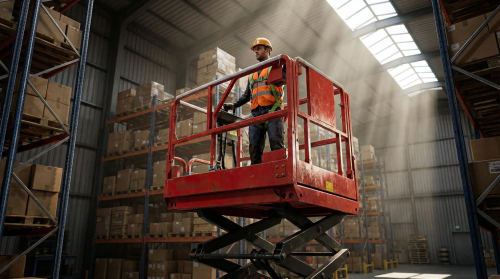
Untuk pergudangan dan lorong sempit, Anda menentukan ukuran lift gunting kompak berdasarkan tinggi rak dan lebar lorong, dengan menjaga sasis sesempit mungkin namun tetap dapat menjangkau balok teratas.
- Rak penyimpanan rendah (tinggi balok atas hingga ~5 m): Tinggi kerja 6–7 m – Pengecekan stok, penggantian label, dan pengambilan barang ringan.
- Rak sedang (balok atas ~6–8 m): Tinggi kerja 8–9 m – Akses dan pemeliharaan inventaris umum di lantai atas.
- Ruang tinggi atau mezanin (~9–11 m di tingkat kerja): Pertimbangkan lift slab kompak kelas atas atau beralih ke lift gunting listrik yang lebih besar dengan ketinggian platform hingga sekitar 11.9 m, yang memberikan ketinggian kerja lebih tinggi di lantai yang halus. Kompor listrik tipe slab dengan ketinggian platform hingga sekitar 11.9 m didokumentasikan di sini..
Lift gunting gudang kompak mengandalkan sasis sempit dan ban yang tidak meninggalkan bekas agar dapat bekerja di antara rak dan di lantai yang sudah jadi. Panduan untuk penggunaan di dalam ruangan menekankan perlindungan lantai dan pemeriksaan stabilitas . Tinggi kerja biasanya dibatasi oleh seberapa besar stabilitas lateral yang dapat Anda pertahankan pada alas yang sempit tanpa penopang.
| Skenario gudang | Tinggi kerja yang disarankan | Pertimbangan sasis/lorong | Dampak operasional |
|---|---|---|---|
| Ruang penyimpanan belakang toko ritel / rak ringan | 5-7 m | Lorong sangat sempit, pintu lebarnya sekitar 0.9 m. | Gunakan lift gunting listrik mini untuk menjangkau rak paling atas tanpa menghalangi lorong. |
| Rak palet standar | 7-9 m | Lorong-lorongnya sekitar 2.5–3.0 m | Lift slab kompak berbagi ruang dengan pemetik pesanan semi listrik dan petugas pengambilan pesanan. |
| Tepian langit-langit tinggi/mezanin | 9-11 m | Periksa kapasitas beban pelat beton dan tinggi pagar pengaman. | Mungkin memerlukan lift gunting listrik yang lebih berat atau unit ukuran penuh. |
Seberapa tinggi lift gunting kompak dapat menjangkau di lorong-lorong sempit?
Di lorong gudang yang sempit, lift gunting kompak biasanya beroperasi pada ketinggian kerja 6–9 m untuk menyeimbangkan jangkauan dan stabilitas pada sasis yang ramping. Jangkauan yang lebih tinggi seringkali membutuhkan mesin yang lebih lebar dan lebih berat atau peralatan akses yang berbeda.
Pertimbangan Akhir untuk Spesifikasi Lift Kompak
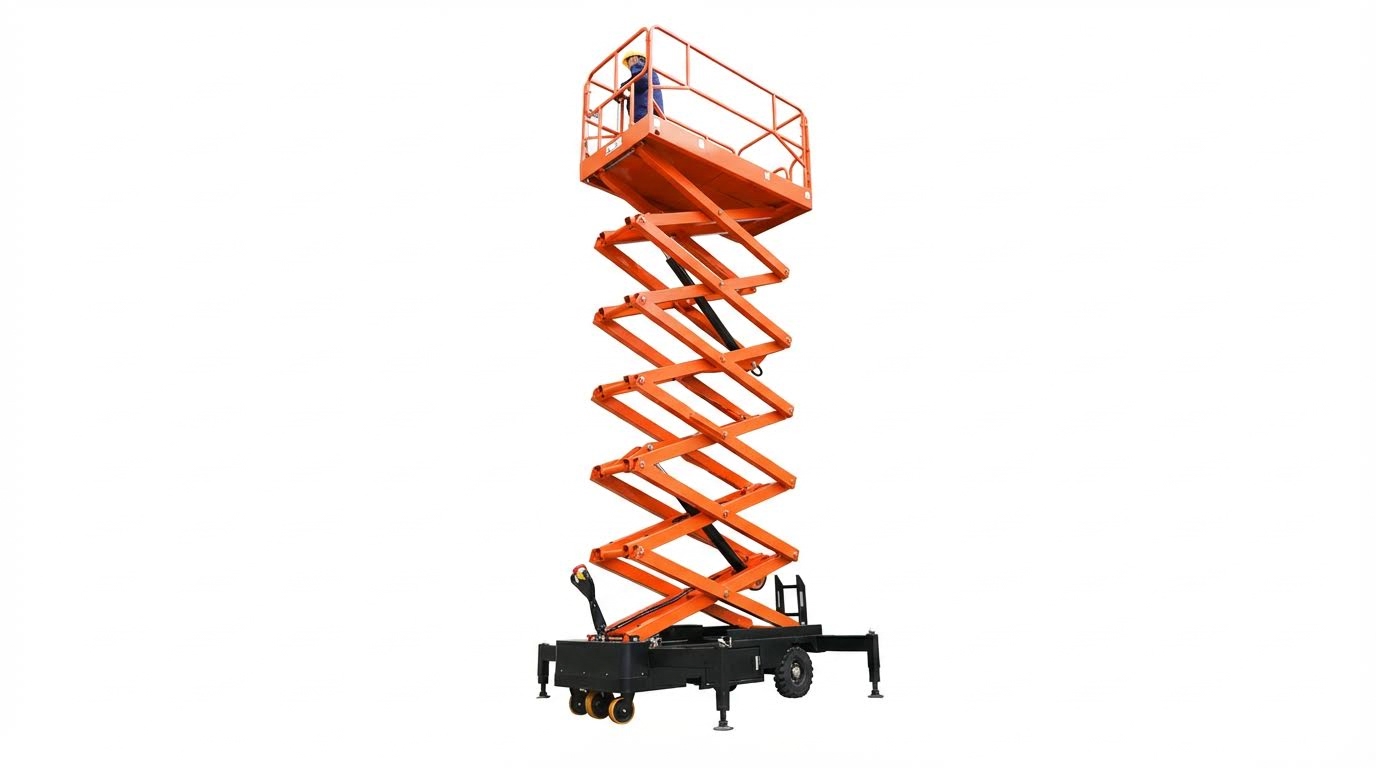
Keputusan spesifikasi akhir untuk lift gunting kompak harus menyeimbangkan tinggi, beban, kekuatan lantai, dan siklus kerja dengan kendala fasilitas yang sebenarnya, bukan hanya rentang katalog atau harga. Di sinilah Anda memastikan pilihan yang aman, efisien, dan tahan lama.
- Jelaskan “seberapa tinggi maksimal lift gunting kompak dapat menjangkau” untuk lokasi Anda: Sebagian besar unit kompak menawarkan ketinggian kerja sekitar 6–9 m (10–30 kaki), sedangkan model ukuran penuh mencapai 9–18+ m (30–60+ kaki). Mencegah pemilihan spesifikasi mesin besar yang berlebihan untuk langit-langit rendah atau pemilihan spesifikasi yang kurang tepat untuk rak yang tinggi. Rentang ketinggian kerja
- Selalu pisahkan ketinggian platform dari ketinggian kerja: Ketinggian kerja biasanya adalah ketinggian platform + sekitar 2.0 m, yang mencerminkan jangkauan operator. Mencegah Anda menemukan pada hari pertama bahwa lift berhenti 500 mm sebelum mencapai lokasi pekerjaan. Platform vs ketinggian kerja
- Periksa area platform, penggunaan ekstensi, dan peringkat pengguna secara bersamaan: Dek kompak standar berukuran sekitar 1,700 mm × 1,000 mm dengan ekstensi geser akan kehilangan kapasitas pada bagian yang diperpanjang dan mungkin memiliki batasan kapasitas untuk 2–3 orang. Menghindari kelebihan beban pada rangkaian alat yang panjang pada ekstensi dengan kapasitas terbatas. Ukuran dek dan kapasitas orang
- Sesuaikan kapasitas beban dengan pekerjaan sebenarnya, bukan hanya berat badan orang: Lift kompak biasanya mampu menopang beban sekitar 225–450 kg (500–1,000 lbs), sedangkan meja industri dapat mencapai 500–2,000 kg atau lebih. Mencegah kelebihan beban halus dari peralatan, material, dan tempat penyimpanan suku cadang yang ditambahkan kemudian. Kapasitas angkat industri
- Konfirmasikan beban lantai dengan data teknik, bukan sekadar perkiraan: Lift swa-gerak kompak dapat memiliki berat 1,500–3,000 kg, dan unit luar ruangan yang lebih besar melebihi 3,500 kg, memusatkan beban ke dalam jejak roda yang kecil. Melindungi pelat lantai gudang dan mezanin dari retak atau kerusakan akibat lubang. Pemeriksaan berat mesin dan lempengan
- Perhatikan stabilitas, peringkat tahan angin, dan batasan yang tertera pada pelat nama: Stabilitas bergantung pada pusat gravitasi, lebar sasis, dan penstabil samping, dengan model yang dirancang untuk penggunaan luar ruangan memiliki kecepatan angin maksimum sekitar 11–12.5 m/s. Mengurangi risiko terguling saat bekerja di dekat pintu, dermaga, atau area terbuka. Batasan angin dan stabilitas
- Terapkan aturan penurunan daya untuk perluasan, angin, dan bangunan tambahan: Standar dan instruksi pabrikan mensyaratkan kapasitas yang lebih rendah saat menggunakan ekstensi platform atau bekerja di zona angin kencang. Mencegah spesifikasi yang "sesuai dengan aturan di atas kertas" menjadi tidak aman setelah realitas di lokasi kerja berubah. Panduan penurunan peringkat
- Pilih kendaraan listrik atau diesel berdasarkan pertimbangan lingkungan dan siklus kerja: Lift kompak bertenaga baterai menawarkan pengoperasian tanpa emisi dan rendah kebisingan untuk pekerjaan di dalam ruangan, sementara unit diesel dan unit medan berat cocok untuk tugas-tugas berat di luar ruangan dengan kapasitas lebih tinggi hingga sekitar 750 kg. Menyelaraskan sistem penggerak dengan batasan ventilasi, panjang perpindahan gigi, dan medan jalan. Penggunaan listrik di dalam ruangan Pilihan sistem penggerak
- Pertimbangkan kecepatan hidrolik dan efisiensi energi untuk tugas berulang: Model berkapasitas tinggi atau langkah panjang menggunakan silinder yang lebih besar dan laju aliran yang lebih tinggi, yang meningkatkan daya pompa dan penggunaan energi, tetapi katup proporsional dan penurunan regeneratif dapat memulihkan energi. Meningkatkan efisiensi dan mengurangi biaya listrik atau bahan bakar di lokasi yang beroperasi dalam beberapa shift. Efisiensi hidrolik
- Tetapkan fitur keselamatan dan rezim inspeksi pada tahap spesifikasi: Lift modern menyediakan pendeteksi beban berlebih, sensor kemiringan, pemberhentian darurat, dan kontrol ganda, tetapi semua itu hanya berfungsi jika disertai dengan inspeksi harian dan operator yang terlatih. Membangun strategi akses yang sesuai dan minim insiden, alih-alih hanya mengandalkan APD (Alat Pelindung Diri). Inspeksi dan pelatihan Sistem keselamatan terpadu
- Verifikasi kepatuhan terhadap standar ANSI/EN280 dan peraturan setempat: Pihak pengadaan harus memastikan bahwa lift kompak tersebut memenuhi standar ANSI, EN280, CE, dan kode lokal lainnya, serta bahwa dokumentasi dan papan nama sudah lengkap. Mengurangi risiko hukum dan menyederhanakan audit, terutama pada armada yang memiliki banyak lokasi. Standar dan kepatuhan
Cara cepat memilih lift kompak yang tepat
Gunakan filter cepat ini sebelum Anda mempelajari model secara mendalam:
- Langkah 1: Konfirmasikan tinggi kerja maksimum yang dibutuhkan dalam meter, lalu hitung mundur tinggi platform. Memastikan pertanyaan "seberapa tinggi lift gunting kompak dapat mencapai" dijawab berdasarkan tugas aktual Anda, bukan batas maksimum yang tertera di brosur.
- Langkah 2: Cantumkan beban hidup terburuk dalam kg (orang + peralatan + material). – Mencegah penumpukan beban kerja secara bertahap seiring perkembangan tugas.
- Langkah 3: Ukur lebar pintu, lorong, atau ruang putar tersempit dalam mm. Menghilangkan model yang secara fisik tidak dapat menjangkau area kerja.
- Langkah 4: Periksa data desain lantai atau mintalah seorang insinyur untuk memverifikasi beban titik. Melindungi pelat beton, mezanin, dan lantai gantung.
- Langkah 5: Pilih kendaraan listrik atau diesel berdasarkan ventilasi, batas kebisingan, dan pola perpindahan gigi. Sesuai dengan target kualitas udara dalam ruangan dan waktu operasional.
💡 Catatan Teknisi Lapangan: Saat Anda mendorong lift gunting kompak mendekati batas ketinggian maksimumnya, bahkan tambahan kecil—rak pipa, baterai tambahan, peralatan berat—dapat mengurangi stabilitas dan margin kapasitas. Selalu periksa kembali batas pada pelat nama dan catatan penurunan kapasitas setelah Anda memasang aksesori atau mengubah tujuan penggunaan; kapasitas "saat dikirim" tidak selalu sama dengan kapasitas "saat dioperasikan" di lapangan.
Pertimbangan Akhir untuk Spesifikasi Lift Kompak
Keamanan lift gunting kompak tidak hanya berasal dari peringkat ketinggian saja. Keamanan tersebut bergantung pada seberapa baik Anda menyelaraskan ketinggian platform, ketinggian kerja, beban, dan sistem penggerak dengan geometri bangunan dan tugas sebenarnya. Jika ukurannya tepat, operator akan bekerja dalam rentang yang stabil, bukan di batas kemampuan lift.
Batasan ketinggian menentukan apa yang mungkin, tetapi beban lantai, lebar lorong, dan tata letak rak menentukan apa yang sebenarnya aman. Saat Anda membangun lebih tinggi, pusat gravitasi naik, beban roda meningkat, dan kapasitas orang seringkali menurun. Itulah mengapa Anda harus memperlakukan perluasan, batasan angin, dan aturan penurunan kapasitas sebagai masukan desain, bukan sebagai detail kecil.
Praktik terbaiknya sederhana. Pertama, tentukan ketinggian kerja sebenarnya dan beban hidup terburuk. Kedua, periksa jalur akses dan kapasitas pelat beton. Ketiga, pilih listrik atau diesel berdasarkan kualitas udara, siklus kerja, dan kebisingan. Terakhir, tetapkan rutinitas inspeksi dan pelatihan operator agar sistem keselamatan bawaan dapat berfungsi dengan baik.
Tim pengadaan dan teknik yang mengikuti metode ini biasanya menghasilkan lift kompak yang sedikit lebih pendek dan ringan, namun tetap dapat menjangkau setiap tugas, tetapi beroperasi dengan stabilitas dan waktu kerja yang lebih tinggi. Atomoving mendukung pendekatan ini dengan menawarkan model kompak yang disesuaikan dengan rentang ketinggian tertentu, kondisi lantai, dan siklus kerja, sehingga Anda dapat mencocokkan setiap lift dengan kasus penggunaan yang jelas dan dapat dipertanggungjawabkan.
Pertanyaan yang Sering Diajukan
Seberapa tinggi lift gunting kompak dapat menjangkau?
Lift gunting kompak biasanya memiliki rentang ketinggian platform 12–20 kaki, yang berarti rentang ketinggian kerja 18–26 kaki. Lift ini dirancang untuk tugas-tugas yang membutuhkan akses ke ketinggian yang lebih rendah dan ideal untuk ruang sempit karena ukurannya yang lebih kecil. Untuk informasi lebih detail, Anda dapat merujuk ke Panduan Ketinggian Lift Gunting ini.
Apa lift gunting tertinggi yang tersedia?
Lift gunting tertinggi di dunia adalah Dingli 3730HRT, yang memiliki ketinggian kerja 37 meter (sekitar 121 kaki). Model ini luar biasa dan tidak lazim untuk lift gunting kompak standar. Untuk mempelajari lebih lanjut tentang peralatan yang mengesankan ini, lihat artikel tentang Lift Gunting Tertinggi di Dunia.
Apakah ada peraturan keselamatan khusus untuk lift gunting?
Ya, OSHA memiliki peraturan keselamatan khusus untuk pengoperasian lift gunting. Karyawan tidak diperbolehkan menggunakan tangga atau pagar pengaman untuk mencapai posisi yang lebih tinggi di lift gunting, karena hal ini dapat membahayakan stabilitas. Selain itu, bersandar di pagar pengaman dilarang. Untuk panduan keselamatan yang komprehensif, kunjungi sumber daya ini tentang Keselamatan Lift Gunting OSHA.