Artikel ini adalah panduan tentang tangga dan platform udara yang membandingkan penggunaan yang aman, batasan, dan aplikasi terbaiknya untuk pekerjaan di ketinggian. Anda akan melihat bagaimana peraturan, ergonomi, dan aturan inspeksi memengaruhi pilihan antara tangga dan platform bertenaga. Kami menerjemahkan standar menjadi aturan praktis yang dapat Anda terapkan pada pekerjaan nyata, mulai dari perbaikan cepat hingga perawatan jangka panjang. Gunakan ini sebagai alat bantu pengambilan keputusan untuk mengurangi risiko jatuh sambil mempertahankan produktivitas.
Prinsip-Prinsip Keselamatan Dasar untuk Tangga dan Platform
Bagian ini menjelaskan aturan keselamatan yang tidak dapat ditawar yang membedakan pekerjaan tangga yang aman dari penggunaan platform yang ditinggikan, membentuk tulang punggung panduan untuk tangga dan platform kerja di ketinggian . Tujuannya adalah untuk menentukan kapan setiap metode akses dapat diterima, dan bagaimana mengendalikan risiko jatuh.
Batasan peraturan tentang penggunaan tangga
Pihak berwenang membatasi penggunaan tangga hanya untuk pekerjaan pendek dan ringan, dan mewajibkan penggunaan platform atau perancah jika pekerjaan tidak dapat dilakukan dengan aman dari anak tangga. Ini adalah titik keputusan pertama sebelum seseorang meninggalkan tanah.
Hanya untuk durasi singkat: Tutup pemandu standar biasanya berfungsi sekitar 30 menit dalam satu posisi – Di luar itu, kelelahan dan kesalahan langkah meningkat tajam, sehingga diperlukan platform atau perancah.Batasan durasi sering dirujuk dalam daftar periksa risiko ketinggian..
Kapan harus melakukan upgrade ke platform tertentu: Jika pekerjaan tersebut membutuhkan dua tangan, alat berat, atau jangkauan yang sulit, peraturan menyatakan Anda harus beralih ke platform kerja, perancah, atau MEWP (Mobile Elevated Work Platform) – Hal ini mengubah posisi yang tidak stabil menjadi tempat kerja yang terlindungi.Pihak berwenang secara tegas mensyaratkan platform alternatif jika pekerjaan menggunakan tangga tidak aman..
Mengapa 30 menit adalah batas atas praktis untuk tugas-tugas yang menggunakan tangga?
Studi yang membandingkan platform dan tangga menunjukkan bahwa pijakan tangga yang sempit sekitar 60 mm memungkinkan berdiri terus menerus selama kurang lebih 20 menit sebelum terasa tidak nyaman, sementara platform berukuran 760 mm × 300 mm mendukung sekitar 40 menit berkat beban pinggang yang lebih rendah dan area kontak kaki yang lebih besar. Peningkatan dua kali lipat waktu berdiri yang nyaman di platform ini menunjukkan mengapa peraturan memperlakukan tangga sebagai "hanya untuk durasi singkat". Data ergonomis menghubungkan lebar pijakan, waktu berdiri, dan beban punggung bawah.
💡 Catatan untuk Teknisi Lapangan: Ketika perencana pekerjaan bersikeras menggunakan tangga “untuk menghemat waktu,” tanyakan durasi tugas, berat alat, dan apakah pekerjaan dengan dua tangan diperlukan. Jika ada jawaban yang melebihi batas kemampuan dasar tangga, Anda memiliki dasar peraturan untuk mewajibkan penggunaan platform atau MEWP (Mobile Elevated Work Platform) sebagai gantinya.
Kondisi stabilitas, posisi, dan dukungan.
Penggunaan tangga dan platform yang aman bergantung pada geometri dan kondisi tanah: sudut, panjang di atas pijakan, dan penyangga yang kokoh semuanya secara langsung mengendalikan risiko tergelincir atau terbalik.
Ekstensi di atas area pendaratan: Jika tangga memberikan akses ke sebuah bordes, rentangkan anak tangga setidaknya 1 m di atas – Ini memberikan pegangan yang aman dan mengurangi risiko terjatuh saat berpindah tempat.WorkSafeBC mensyaratkan perpanjangan dan pengamanan sekitar 1 m..
Lebar perancah/platform minimum: Platform kerja pada perancah harus memiliki lebar minimal 500 mm (300 mm untuk sistem tertentu) – Hal ini memberikan pijakan yang cukup untuk posisi berdiri yang stabil dan penanganan material.Persyaratan lebar platform perancah telah didefinisikan dengan jelas..
Pengardean struktur logam di dekat sumber listrik: Perancah logam di dekat konduktor tegangan tinggi harus diarde jika tegangan induksi melebihi 30 V atau terasa sengatan listrik – Hal ini mengurangi muatan berbahaya dan mencegah potensi cedera akibat terpeleset.Pedoman menetapkan kriteria pentanahan untuk perancah logam..
Metode Akses
Aturan Stabilitas Utama
Dimensi/Batas Khas
Dampak Operasional
Tangga bersandar
Atur pada sudut 75° dan kencangkan.
Rasio tinggi terhadap dasar 1:4; 1 m di atas pendaratan
Akses aman untuk pendakian pendek; tidak aman untuk pekerjaan panjang atau pembebanan samping.
Platform perancah
Gunakan alas yang kokoh dan rata serta pengikat yang tepat.
Lebar platform ≥ 500 mm (300 mm untuk sistem tertentu)
Mendukung pekerjaan dengan durasi lebih lama menggunakan material dan peralatan.
MEWP (gunting/boom)
Beroperasi pada kondisi permukaan tanah yang sesuai dan dalam batas kemiringan.
Perangkat peringatan jika kendaraan pengangkut tidak rata
Mempertahankan stabilitas saat bergerak atau diangkat.
Bagaimana lebar platform dan area pijakan kaki memengaruhi kelelahan
Pada tangga biasa, area kontak kaki sekitar 0.012 m², sedangkan platform kerja kecil dapat menyediakan area kontak sekitar 0.23 m². Peningkatan hampir 20 kali lipat ini menyebarkan tekanan, meningkatkan keseimbangan, dan menunda kelelahan, itulah sebabnya platform lebih disukai untuk tugas-tugas yang membutuhkan waktu lebih dari beberapa menit di ketinggian. Perbandingan ergonomis mengukur efek dari permukaan pijakan yang lebih lebar.
💡 Catatan Insinyur Lapangan: Selama survei lokasi, selalu periksa kemiringan tersembunyi dan titik-titik lunak di bawah lempengan atau paving. Tangga yang terasa kokoh saat tidak berbeban dapat bergeser begitu pekerja seberat 90 kg bersandar ke samping, terutama di atas beton poles atau ubin berdebu.
Perlindungan jatuh kolektif vs. pribadi
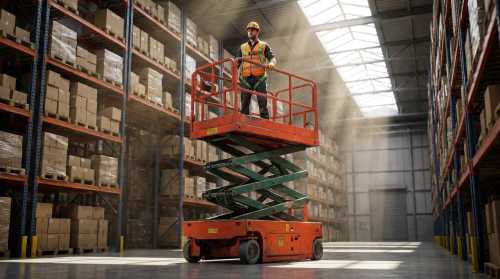
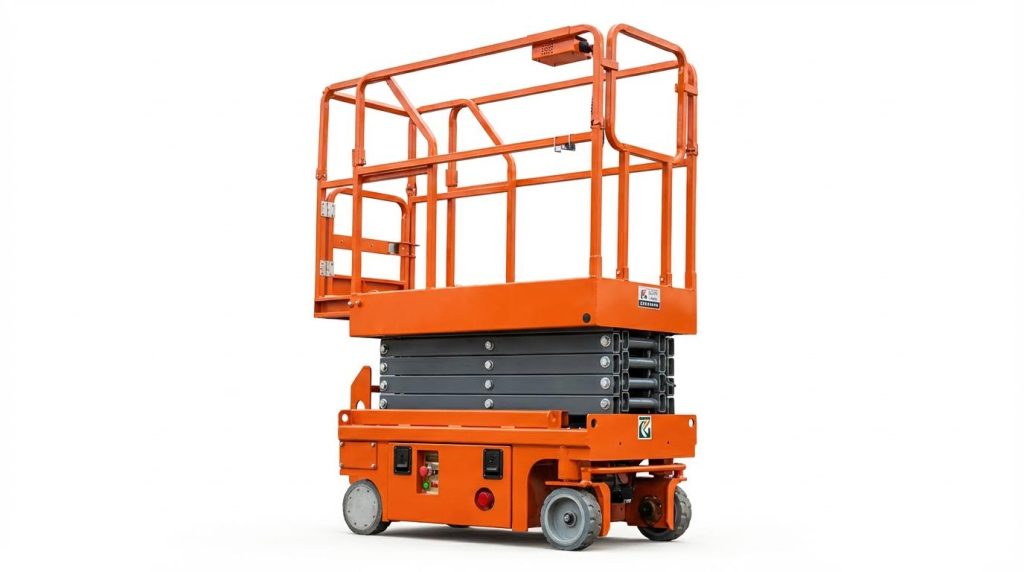
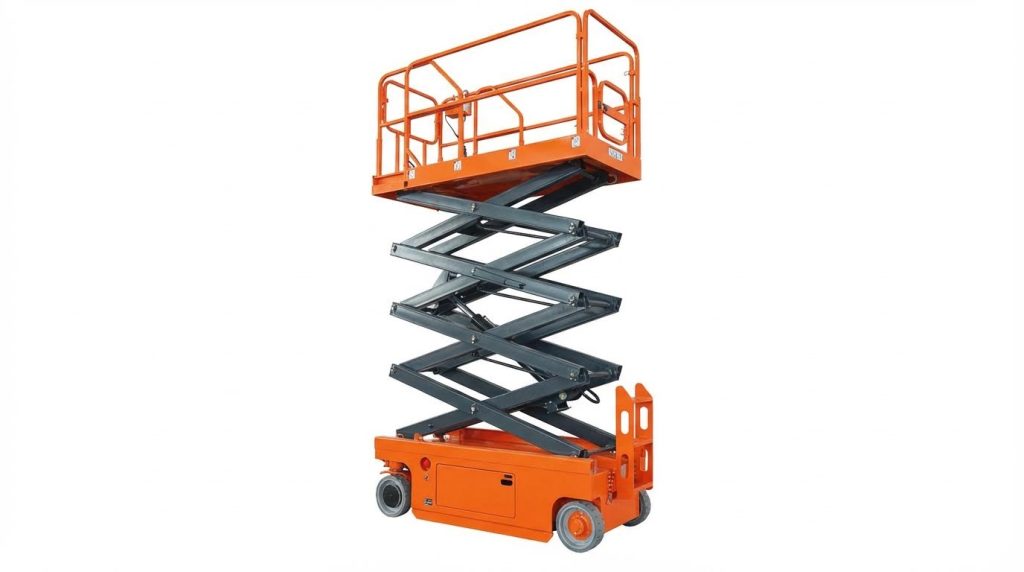
Keselamatan kerja di ketinggian memprioritaskan tindakan kolektif seperti pagar pengaman dan papan pengaman kaki sebelum sistem sabuk pengaman pribadi, dan hierarki ini merupakan inti dari setiap panduan untuk tangga dan platform kerja di ketinggian tipe gunting .
Dimensi pagar pembatas: Rel atas setidaknya harus setinggi 950 mm dengan rel tengah dan papan kaki ≥ 150 mm – Hal ini mencegah baik pekerja terjatuh maupun benda jatuh.Dimensi pelindung tepi ditentukan dengan jelas..
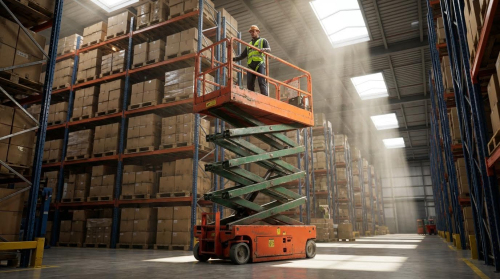
Pengecualian untuk lift gunting: Pada lift gunting dengan pagar pengaman yang utuh di permukaan tanah yang rata dan kokoh, peraturan mungkin tidak mewajibkan penggunaan alat penahan jatuh pribadi – Sistem pagar pengaman menyediakan penghalang kolektif.Lift gunting mengandalkan pagar pengaman sebagai perlindungan utama terhadap jatuh..
Jalur bantuan independen: Untuk platform gantung yang ditopang oleh kurang dari empat tali, sistem penahan jatuh harus terpisah dari sistem penggantungan – Hal ini menghindari kegagalan tunggal yang dapat melumpuhkan dukungan dan cadangan sekaligus.Persyaratan mengharuskan adanya jalur penahan jatuh independen..
Perlengkapan kolektif (pagar pengaman, papan pengaman kaki, jaring)
Perancah, platform tetap, banyak MEWP (Mobile Elevated Work Platform).
Pembatas jalan 950 mm, rel tengah, papan kaki ≥ 150 mm
Pekerjaan yang sering atau berdurasi lama di mana banyak pekerja beroperasi.
Pembatasan/penempatan kerja
Atap, tepi terbuka, beberapa keranjang MEWP
Sabuk pengaman dan tali pengaman disesuaikan untuk mencegah jangkauan ke tepi.
Lakukan tugas di dekat tepi di mana Anda dapat mencegah akses ke bahaya jatuh.
Penangkapan jatuh
Lift boom, platform gantung, struktur kompleks
Sabuk pengaman seluruh tubuh, peredam energi, jangkar berperingkat, tali pengaman independen.
Situasi di mana jatuh tidak dapat dicegah sepenuhnya tetapi harus dihentikan dengan aman.
Bagaimana hal ini memengaruhi pilihan Anda antara tangga dan platform.
Karena tangga hampir tidak menawarkan perlindungan jatuh kolektif, tangga bergantung pada perilaku pengguna dan kontak tiga titik. Platform, perancah, dan MEWP (Mobile Elevated Work Platform) dapat mengintegrasikan pagar pengaman, papan pengaman kaki, dan jaring, menjadikannya pilihan utama setiap kali Anda dapat merancang perlindungan kolektif ke dalam pekerjaan tersebut.
💡 Catatan Teknisi Lapangan: Selama pra- ""
Memilih Metode Akses yang Tepat untuk Setiap Tugas
Pilih metode akses teraman dengan mencocokkan jenis tugas, durasi, dan lingkungan dengan batasan peralatan, bukan kenyamanan. Bagian ini mengubah panduan tangga dan platform kerja yang ditinggikan menjadi alat bantu pengambilan keputusan praktis untuk setiap tugas.
Seleksi berdasarkan tugas, lingkungan, dan durasi.
Pilihlah antara tangga, podium, perancah, dan platform kerja yang dapat ditinggikan berdasarkan berapa lama Anda bekerja di satu tempat, intensitas tugas, dan pola akses.
Tangga (hanya untuk tugas pendek dan ringan): Gunakan hanya untuk pekerjaan ringan di mana satu tangan tetap bebas dan durasi pada satu posisi kurang dari sekitar 30 menit – Meminimalkan kelelahan dan risiko jatuh akibat menjangkau terlalu jauh dan berdiri terlalu lama.Kriteria keselamatan tangga dan panduan durasi penggunaan
Tangga podium / platform kecil: Gunakan untuk pekerjaan tingkat rendah dan berulang di mana Anda tetap berada di satu area kecil – Memberikan area berdiri yang lebih luas dan pagar pengaman, mengurangi kelelahan dan risiko terpeleset.Rekomendasi untuk anak tangga podium dan pekerjaan di ketinggian rendah.
Menara perancah: Digunakan untuk pekerjaan berdurasi lebih lama di lokasi tetap – Menyediakan platform yang lebar (biasanya ≥500 mm) dengan perlindungan kolektif yang sesuai untuk tugas-tugas yang berlangsung selama beberapa jam.Persyaratan lebar minimum platform perancah
MEWP (platform kerja bergerak yang dapat diangkat): Gunakan saat Anda harus menjangkau beberapa posisi atau ketinggian yang berbeda – Mengurangi aktivitas memanjat, meningkatkan stabilitas, dan menjaga agar peralatan tetap berada di dekat pekerja.Pemilihan MEWP berdasarkan jenis tugas
Akses tali: Dicadangkan untuk tugas-tugas khusus pada struktur yang sulit dijangkau – Memberikan akses ke tempat-tempat yang tidak dapat dijangkau oleh platform atau MEWP, tetapi membutuhkan kompetensi tinggi dan rencana penyelamatan yang terperinci.Akses tali sebagai metode spesialis
Bagaimana durasi tugas dan ergonomi memengaruhi pilihan peralatan
Pijakan tangga yang sempit (sekitar 60 mm) hanya menopang sekitar 0.012 m² area kontak kaki, sedangkan platform kerja kecil dapat menawarkan sekitar 0.23 m², hampir 20 kali lebih luas permukaannya. Area yang lebih besar ini memungkinkan berdiri terus menerus selama kurang lebih 40 menit di platform berukuran 760 mm × 300 mm dibandingkan sekitar 20 menit di tangga, karena koefisien beban pinggang turun dari 1.0 pada tangga menjadi sekitar 0.62 pada platform. Pengurangan stres terkait postur sebesar 38% ini secara signifikan mengurangi kelelahan dan nyeri punggung bawah selama tugas yang lebih lama. Perbandingan ergonomis platform dan tangga
Inspeksi singkat, sekali saja (beberapa menit): Tangga mungkin dapat diterima jika stabil dan memiliki sudut yang tepat – Cepat dipasang dengan pengaturan minimal.
Pekerjaan berulang di satu area (30–60 menit): Lebih suka podium atau platform kecil – Mengurangi kelelahan dan jangkauan berlebihan dibandingkan dengan tangga.
Instalasi atau perbaikan yang memakan waktu beberapa jam: Gunakan menara perancah atau MEWP – Memberikan perlindungan kolektif dan area berdiri yang ergonomis.
Banyak posisi di sepanjang jalur (misalnya, rak gudang): penggunaan petugas pengambilan pesanan gudang atau platform seluler – Meningkatkan radius kerja dan mengurangi waktu penyesuaian posisi.
💡 Catatan Teknisi Lapangan: Ketika suatu tugas "terus berkembang" dari pemeriksaan cepat menjadi pekerjaan setengah hari, ganti tangga dengan platform atau MEWP (Mobile Elevated Work Platform). Sebagian besar kecelakaan tangga yang saya lihat terjadi setelah 15-20 menit pertama, ketika kelelahan dan jangkauan yang berlebihan mulai muncul.
Kondisi tanah, beban, dan pengaturan perlindungan jatuh.
Pastikan permukaan tanah dapat menopang peralatan dengan aman, beban sesuai dengan kapasitas yang diizinkan, dan Anda dapat memasang alat pelindung jatuh kolektif atau pribadi sebelum memilih antara tangga dan platform yang ditinggikan.
Kekerasan dan kerataan permukaan tanah: Semua peralatan akses harus diletakkan di atas permukaan tanah yang kokoh dan rata; ini wajib untuk tangga, perancah, dan sebagian besar MEWP (Mobile Elevated Work Platform) – Mencegah terguling dan pergeseran tiba-tiba.Persyaratan untuk dukungan yang tegas dan merata
Beban tangga: Gunakan tangga kelas industri (misalnya, EN 131) hanya untuk pekerjaan ringan dengan satu tangan bebas – Mencegah kelebihan beban dan hilangnya tiga titik kontak.Kriteria dan batasan penggunaan tangga industri
Beban platform dan perancah: Platform perancah harus memenuhi lebar minimum dan dirancang untuk menahan beban yang diharapkan, terutama untuk struktur tinggi atau struktur kantilever – Memastikan stabilitas struktural di bawah pekerja, peralatan, dan material.Lebar platform perancah dan persyaratan teknik
MEWP dan platform yang dipasang di truk: Pilih jenis dan model berdasarkan daya dukung tanah dan jangkauan; periksa setidaknya setiap 12 bulan dan sebelum setiap pergantian shift penggunaan – Mempertahankan integritas struktural dan kontrol.Frekuensi inspeksi untuk platform kerja yang dapat dinaikkan
Platform yang dipasang pada forklift: Gunakan hanya jika tangga dan platform konvensional tidak praktis, dan pastikan kepatuhan terhadap standar ANSI B56 serta inspeksi setiap kali dipasang dan pada awal shift – Mengendalikan profil risiko yang lebih tinggi dari akses darurat.Persyaratan penggunaan platform yang dipasang pada forklift.
Memilih alat pelindung jatuh untuk tangga vs. platform
Saat menggunakan tangga, Anda hampir sepenuhnya bergantung pada perilaku pribadi: sudut yang tepat (sekitar 75°), pijakan yang aman, dan tiga titik kontak. Pekerja tidak boleh membawa beban berat atau besar yang membahayakan cengkeraman atau keseimbangan, dan jika pekerjaan tidak dapat dilakukan dengan aman dengan cara ini, Anda harus beralih ke platform kerja. Pembatasan penggunaan dan penempatan tangga
Pada platform kerja yang ditinggikan, Anda dapat dan harus membangun sistem pengamanan teknik dan kolektif. Pagar pengaman dengan ketinggian sekitar 950 mm dengan rel perantara dan papan kaki memberikan pencegahan jatuh kolektif pada perancah dan banyak MEWP (Mobile Elevated Work Platform). Jika pagar pengaman tidak memadai atau tidak ada, pekerja harus menggunakan sistem penahan jatuh pribadi yang diikatkan ke titik yang sesuai, dengan tali pengaman independen untuk platform gantung tertentu. Panduan perlindungan jatuh kolektif dan pribadi Persyaratan penahan jatuh pada platform kerja
Utamakan kolektif: Jika Anda dapat memasang pagar pengaman, papan pengaman kaki, jaring, atau pelindung tepi, pilihlah perancah atau MEWP (Mobile Elevated Work Platform) daripada tangga – Mengurangi ketergantungan pada perilaku individu.Langkah-langkah perlindungan kolektif
Sistem pribadi jika diperlukan: Jika perlindungan kolektif tidak memungkinkan, gunakan penahan, pengaturan posisi kerja, atau sistem penahan jatuh dengan jangkar berperingkat dan rencana penyelamatan yang jelas – Meredakan dampak dari terjatuh.Perencanaan perlindungan dan penyelamatan pribadi terhadap jatuh.
💡 Catatan Teknisi Lapangan: Jika ragu antara tangga dan platform kerja yang ditinggikan, ajukan satu pertanyaan: “Bisakah saya memasang pagar pengaman atau sabuk pengaman yang tepat dengan jalur penyelamatan yang jelas?” Jika jawaban jujurnya adalah tidak, rancang ulang pekerjaan atau ubah metode akses sebelum siapa pun meninggalkan permukaan tanah.
Pertimbangan Akhir untuk Pengambilan Keputusan Kerja di Ketinggian yang Aman
Keselamatan kerja di ketinggian berasal dari pilihan yang disiplin, bukan dari keseimbangan atau pengalaman individu. Peraturan, geometri, dan ergonomi semuanya mengarah pada hal yang sama: perlakukan tangga sebagai alat akses pendek dan ringan, dan gunakan platform ketika pekerjaan menjadi lebih panjang, lebih berat, atau lebih kompleks. Sudut yang tepat, penyangga yang kokoh, dan pengikat yang aman menjaga tangga tetap berada dalam batas keselamatan yang sempit. Platform yang lebar, pagar pengaman, dan jalur beban yang dirancang memungkinkan perancah dan MEWP (Mobile Elevated Work Platform) membawa beban yang lebih tinggi untuk jangka waktu yang lebih lama dengan kelelahan yang jauh lebih rendah.
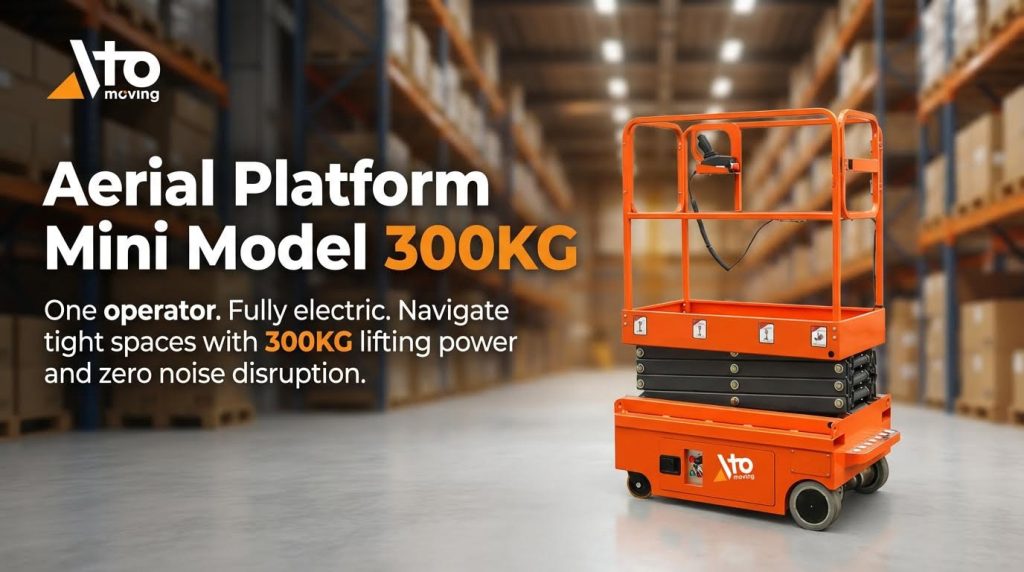
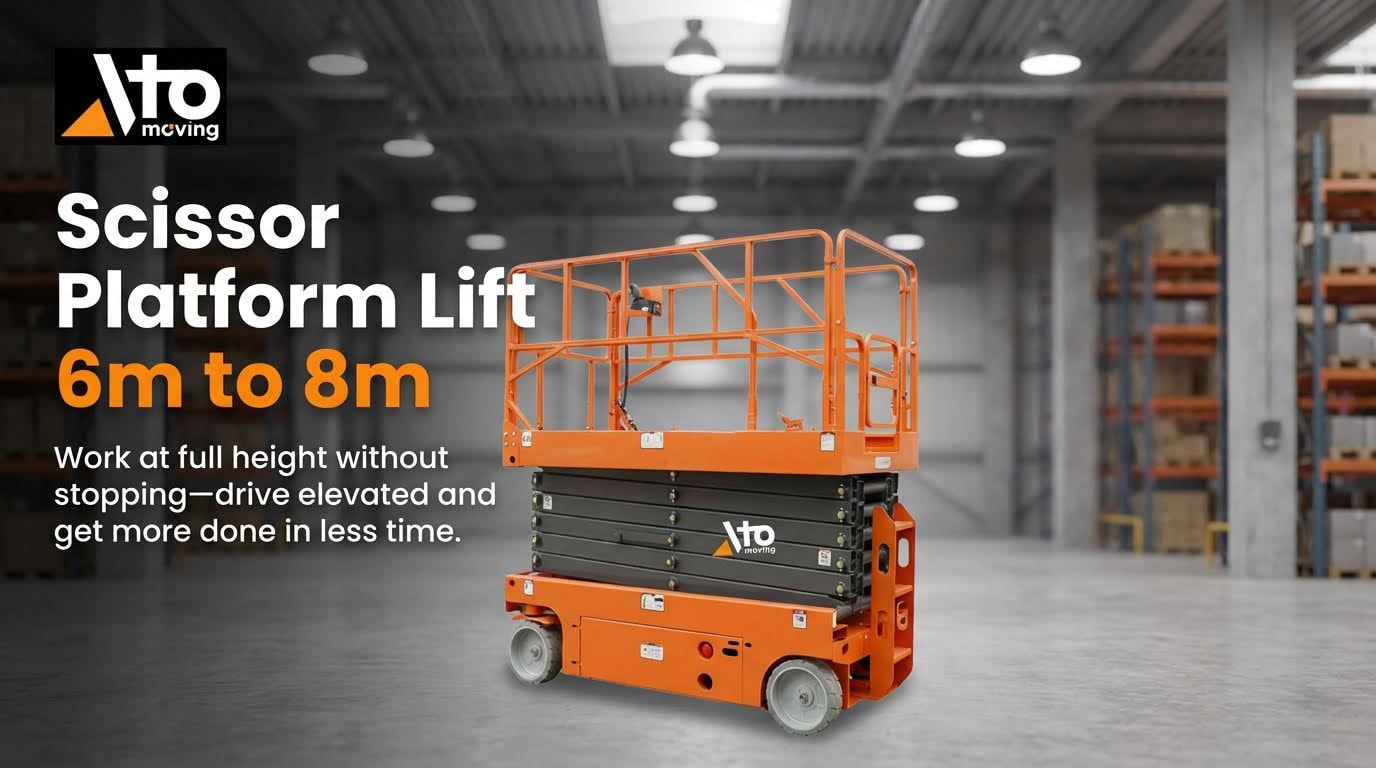
Perlindungan kolektif harus menjadi prioritas utama dalam setiap perencanaan. Jika memungkinkan untuk memasang pagar pengaman, papan pengaman kaki, atau jaring, biasanya Anda harus memilih perancah, MEWP (Mobile Elevated Work Platform), atau solusi khusus seperti platform Atomoving daripada tangga. Jika tidak memungkinkan untuk memasang langkah-langkah perlindungan kolektif, Anda harus merancang perlindungan jatuh dan penyelamatan pribadi sejak awal pekerjaan. Kondisi tanah, jangkauan, dan interval inspeksi kemudian akan menyempurnakan pilihan peralatan akhir.
Praktik terbaik untuk tim operasi dan teknik itu sederhana. Mulailah dengan tugas, durasi, dan lingkungan. Pilih metode akses dengan risiko terendah yang memungkinkan perlindungan bersama dan pijakan ergonomis. Gunakan tangga hanya jika pekerjaan tersebut jelas sesuai dengan batasan ketatnya, dan tingkatkan ke platform sejak dini ketika cakupan atau waktu bertambah.
Pertanyaan yang Sering Diajukan
Apa itu Platform Kerja yang Ditinggikan?
Platform kerja yang ditinggikan (Elevated Work Platform/EWP) adalah perangkat yang digunakan untuk mengangkat dan memposisikan pekerja, peralatan, dan material di atas permukaan tanah. Platform ini juga disebut sebagai platform kerja udara atau lift. Jenis yang umum meliputi lift gunting (scissor lift), lift boom (boom lift), dan perangkat udara lainnya. Platform ini dapat dipasang pada kendaraan atau digerakkan sendiri dan mungkin memiliki fitur pergerakan teleskopik, artikulasi, atau keduanya. Panduan Keselamatan MEWP.
Apa saja praktik keselamatan yang harus dilakukan saat bekerja di platform yang ditinggikan?
Saat bekerja di platform yang ditinggikan, selalu kenakan alat pelindung diri (APD) yang sesuai. Gunakan sistem perlindungan jatuh yang tepat dan pasang ke titik jangkar yang telah ditentukan. Harness seluruh tubuh yang disetel dengan benar dengan lanyard atau tali pengaman yang dapat ditarik sendiri mengurangi risiko jatuh dari platform. Ikuti panduan produsen dan pastikan pemeriksaan peralatan dilakukan secara berkala. Tips Keselamatan Platform.
Apa Saja Jenis-Jenis Platform Kerja Ketinggian yang Umum?
Platform kerja ketinggian hadir dalam berbagai jenis, termasuk lift gunting, lift boom, dan perangkat udara. Lift gunting menyediakan elevasi vertikal, sementara lift boom menawarkan jangkauan vertikal dan horizontal. Platform ini dapat dipasang pada kendaraan atau digerakkan sendiri, tergantung pada aplikasinya. Gambaran Umum Jenis-Jenis EWP.