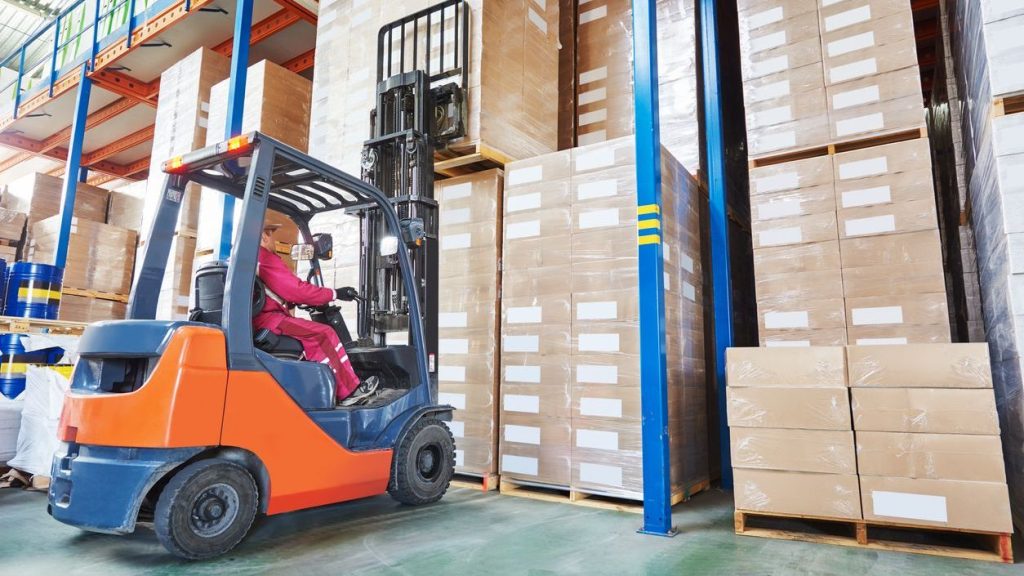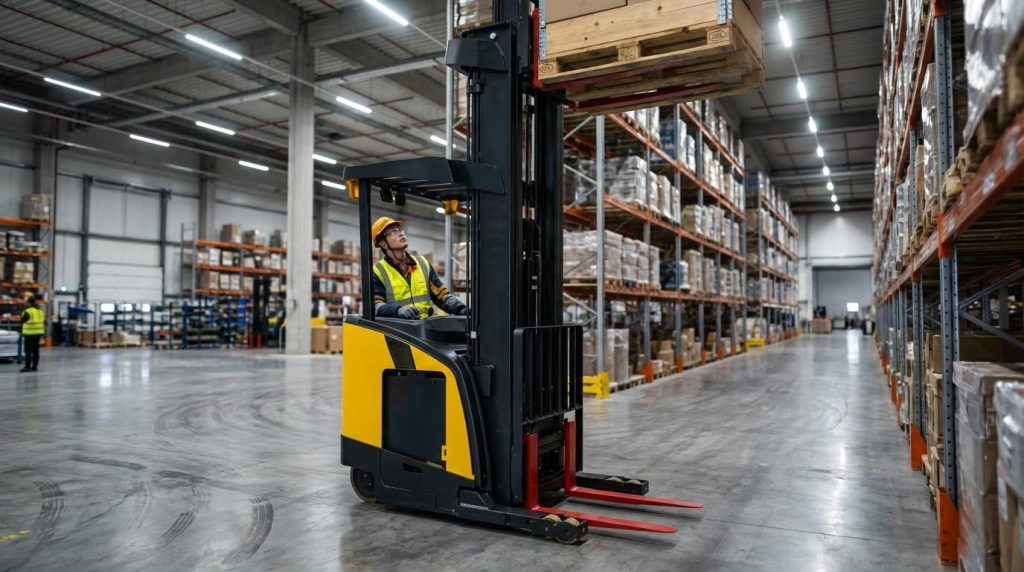
Elektrische heftrucks kunnen doorgaans heffen van ongeveer 3,300 mm tot meer dan 11,500 mm, afhankelijk van het mastontwerp, de capaciteit en de toepassing. De vraag "hoe hoog kan een elektrische heftruck heffen?" is daarom altijd een technische kwestie en geen eenduidig getal. Deze handleiding legt de verschillende mastfasen, belangrijke hoogte-termen, vermogensreductie en veiligheidslimieten uit, zodat u de juiste hefhoogte voor uw gebouw, ladingen en gebruikscyclus kunt bepalen zonder in te leveren op stabiliteit of doorvoer.
De hefhoogte afstemmen op de toepassing en de technologie.
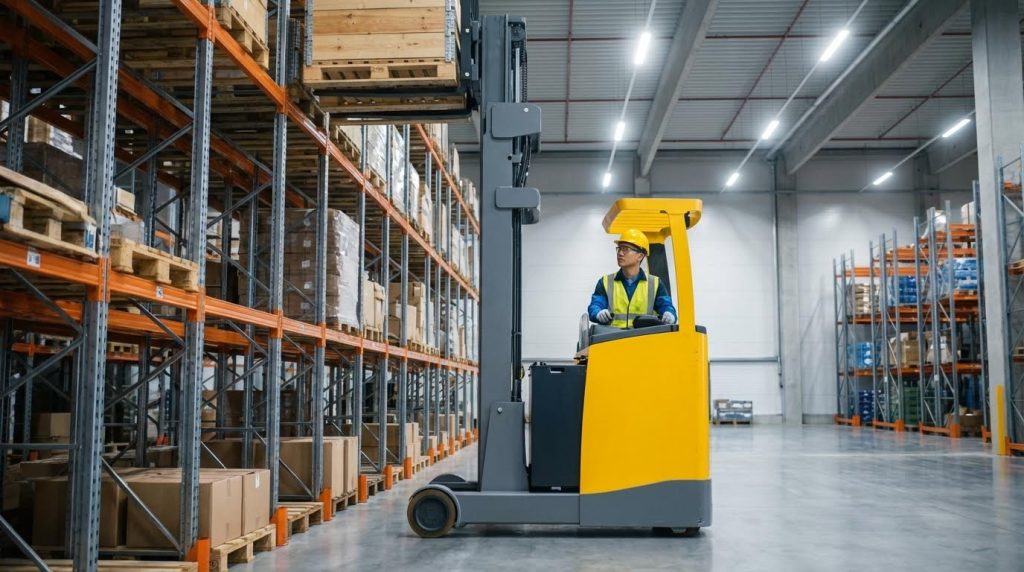
Om de hefhoogte af te stemmen op de toepassing, moet je beginnen bij de beperkingen van je stellingen en gebouw, en vervolgens het type mast, de accu en de hydrauliek kiezen die die hoogte herhaaldelijk kunnen bereiken zonder onveilige vermindering van het hefvermogen of stilstand. Als mensen vragen hoe hoog een elektrische heftruck kan heffen, is het juiste antwoord: "zo hoog als je last, gangpad en aandrijfsysteem veilig aankunnen."
In dit gedeelte vertalen we de opgegeven hefhoogtes naar concrete gebruikssituaties in magazijnen en laten we zien hoe de batterij, hydrauliek en inschakelduur de praktische toepasbaarheid van hoogbouw beperken, zelfs wanneer de specificaties aangeven dat de mast hoger kan reiken.
Lengteklassen voor magazijnwerk en orderverzameling
Hoogteklassen voor heftrucks voor magazijnen en orderverzameling worden ingedeeld op basis van de maximale vorkhoogte die ze kunnen bereiken en het type werk dat ze ondersteunen. Dit is de meest praktische manier om te bepalen hoe hoog een orderverzameltruck in uw specifieke gebouw en met uw specifieke SKU-profiel kan heffen.
De specificaties laten zien dat standaard elektrische contragewichtheftrucks vaak een maximale hoogte van 4.1–7.7 m bereiken, terwijl speciale orderverzameltrucks een vorkhoogte van 4.8–11.6 m kunnen halen, met een groot hefbereik voor krappe gebouwen. De gegevens over contragewichtheftrucks en de specificaties van orderverzameltrucks illustreren dit verschil.
| Hoogte klasse | Typische maximale vorkhoogte (MFH) | Typisch type apparatuur | Typisch gebruiksscenario | Operationele impact |
|---|---|---|---|---|
| Laag niveau | tot ongeveer 3.3 m | Elektrisch contragewicht met lage mast | Handling op vloerniveau, dockwerk, lage stellingen | Geschikt voor 1-2 balkenlagen; past gemakkelijk tussen deuren en containers. |
| Standaard magazijn | ~4.1–5.0 m | 2-traps of 3-traps contragewicht | Algemene palletopslag, lichte stellingen | Geschikt voor 3-4 balkniveaus met een vrije ruimte van 150-200 mm boven de bovenste balk. |
| Middenbaai | ~5.0–7.7 m | Triplex contragewicht- of reachtruck | Hogere stellingen, gemengde opslag van dozen en pallets | Vereist zorgvuldige controles op de vermindering van het draagvermogen en stabiele vloeren op de bovenste verdiepingen. |
| Orderverzameling in hoogbouwmagazijn | ~4.8–8.0 m | orderverzamelmachines | Het verzamelen van dozen uit stellingen op middelhoogte. | Het bestuurdersplatform komt omhoog; de rijsnelheid neemt af naarmate de vorken omhoog gaan. |
| Orderverzameling op zeer grote hoogte | ~8.0–11.6 m | Orderverzameltruck met hoge capaciteit | Compacte, hoogbouw magazijnen voor e-commerce fulfilment | Vereist zeer vlakke vloeren, speciaal ontworpen stellingen en strikte snelheidslimieten. |
Gegevens van een bepaalde familie van elektrische contragewichtheftrucks tonen aan dat de maximale hefhoogte voor een standaardmast rond de 3.3 meter ligt, terwijl verlengde masten variëren van ongeveer 4.16 meter tot 7.70 meter, afhankelijk van de configuratie. Dezelfde bron vermeldt een verlaagde masthoogte van ongeveer 2.5 meter, wat cruciaal is voor deuren en trailers.
Gespecialiseerde orderpickers beantwoorden de vraag hoe hoog een elektrische heftruck kan tillen voor orderverzameling met een persoon op de grond: één specificatieblad toont maximale vorkhoogtes van ongeveer 4.8 m tot 11.58 m, met een vrije hefhoogte tussen ongeveer 76 mm en 2.64 m, afhankelijk van het type mast. Deze cijfers laten zien waarom orderverzameling in hoogbouwmagazijnen speciaal ontworpen trucks vereist in plaats van standaard heftrucks met contragewicht.
- Definieer de hoogte van het bovenste rek: Voeg 150–200 mm toe aan uw hoogste lichtbundel – Dit is uw minimale MFH-vereiste.
- Controleer OALH en OARH: Vergelijk de hoogte van de mast in verlaagde en verhoogde stand met de hoogte van de deuren en het dak. Voorkomt beschadiging van headers en sprinklers.
- Afstand tussen pallet en persoonshoogte: Gebruik een contragewicht/reikwijdtemeter voor het verplaatsen van pallets. semi-elektrische orderpicker voor een man-zijn-houding – voorkomt dat de vrachtwagen verkeerd gespecificeerd wordt.
- Gerelateerd aan gangpadbreedte: Hogere klassen vereisen een kleinere stuurmarge. Voorkomt schade aan stellingen en masten in smalle gangpaden.
💡 Opmerking van de veldtechnicus: Zodra de stellingen hoger zijn dan circa 7 meter, beschouw ik "standaard" heftrucks met contragewicht niet langer als een optie. De vlakheid van de vloer, de stijfheid van de stellingen en de vermindering van het draagvermogen worden dan zo cruciaal dat speciale reachtrucks of orderpickers met een speciaal ontworpen mast en geleidingssystemen doorgaans veiliger en goedkoper zijn gedurende de looptijd van het project.
Hoe kies je een hoogteklasse voor een nieuw magazijn?
Begin met uw SKU- en gebouwgegevens, niet met een catalogus. Koppel de zwaarste pallet aan het geplande opslagniveau en bereken vervolgens de benodigde MFH (meterhoogte) en de resterende capaciteit op die hoogte met behulp van de deratingtabellen van de fabrikant. Kies pas daarna de mastfamilie die voldoet aan zowel de geometrie als de capaciteit.
Batterij, hydrauliek en inschakelduur bij hoge hefhoogte
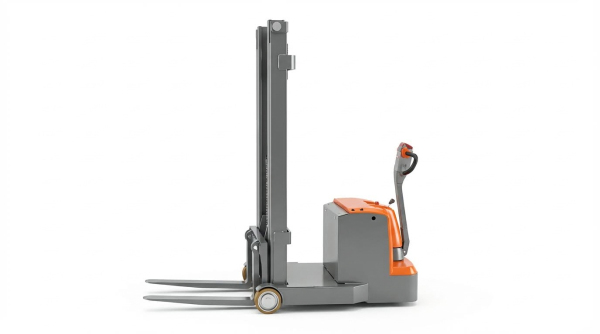
De accugrootte, de hydraulische prestaties en de gebruiksduur bepalen of een heftruck herhaaldelijk op grote hoogte kan heffen zonder te vertragen, oververhit te raken of de accu te veel te ontladen. Op papier kunnen veel elektrische heftrucks tot 7-12 meter heffen, maar in de praktijk vormen de energiekosten van frequent heffen op grote hoogte vaak de beperkende factor.
Grote elektrische heftrucks met contragewicht, voorzien van 80V-accu's met een capaciteit van circa 840 Ah en een accugewicht van bijna 2,178 kg, bereiken hefsnelheden van ongeveer 0.33–0.46 m/s zonder belasting en 0.35–0.46 m/s met belasting, met daalsnelheden van ongeveer 0.46–0.55 m/s. Het energieverbruik volgens EN 16796:2016 ligt voor deze modellen tussen de 9.8 en 12.2 kWh. Deze waarden tonen aan dat masten en lasten met een hoog vermogen een aanzienlijk hydraulisch vermogen verbruiken.
| Parameter | Typisch waardebereik | Waar het van toepassing is | Operationele impact bij hoge hefhoogtes |
|---|---|---|---|
| Batterij voltage | 80 V | Grote elektrische contragewicht | Een hogere spanning stabiliseert de liftsnelheid bij zware lasten en grote hoogtes. |
| Capaciteit van de batterij | ~840 Ah | Zwaar uitgevoerd, klasse 4-5 ton | Geschikt voor lange werkdagen met veel mastcycli voordat opladen nodig is. |
| Batterij gewicht | ~ 2,178 kg | Tegengewicht | Verbetert de stabiliteit, maar verhoogt de vloerbelasting en het energieverbruik. |
| Hefsnelheid (belast) | ~0.35–0.46 m/s | Verticale beweging | Definieert de cyclustijd naar de bovenste lichtbundels; deze wordt trager naarmate de batterijen ouder worden of leeg raken. |
| Snelheid verlagen | ~0.46–0.55 m/s | Terugslag | Snel, maar moet wel beheersbaar blijven om schokken bij het belasten van de stellingen te voorkomen. |
| Energieverbruik | ~9.8–12.2 kWh | Volgens EN 16796:2016 cyclus | Hoger bij gebruik van hoge masten en frequente hijsbewegingen op volle hoogte. |
| Aandrijfmotor voor orderverzameltruck | ~4.7–5.2 kW | Reiskracht | De snelheid wordt automatisch verlaagd naarmate de vorkhoogte en de stuurhoek toenemen. |
| Orderverzameltruck hydraulische motor | ~10.5 kW | Hefkracht | Biedt de verticale bewegingsvrijheid voor de bestuurder en de vorken tot een hoogte van 4.8–11.6 m. |
Eén type orderverzameltruck heeft accuvakken met een breedte van ongeveer 790-979 mm en een hoogte van circa 800 mm, wat de fysieke afmetingen van het accupakket beperkt. Binnen deze grenzen proberen ingenieurs een balans te vinden tussen accucapaciteit, gewicht van de truck en prestaties in de gangpaden.
Naast de catalogusgegevens wijst de technische handleiding erop dat de laadstatus van de accu een grote invloed heeft op het hefvermogen en de snelheid. Naarmate de spanning daalt bij een hoge stroomsterkte, nemen de hefsnelheid en de acceleratie af, wat de doorvoer vermindert. Zware werkzaamheden met frequente hefbewegingen op grote hoogte vereisen grotere accupakketten of tussentijds opladen; prestatieverlies treedt ook op bij lage temperaturen of naarmate de accu's verouderen. Technische handleidingen benadrukken dit als een belangrijke beperking voor de prestaties van hoogheffende voertuigen in de praktijk.
- Kies de juiste accugrootte voor verticaal gebruik, niet alleen voor de gebruiksduur: Tel het aantal mastbewegingen naar de bovenbalk per dienst – Hoge hefhoogtes verbruiken meer ampère-uren dan lage hefhoogtes.
- Let op spanningsdalingen: Een trage laadstroom in de laatste 20-30% van de laadstatus wijst op te kleine accu's. Plan de mogelijkheid om op te laden of grotere pakketten te bestellen.
- Houd rekening met de snelheidsbeperkende regels: Orderverzameltrucks verlagen automatisch de rijsnelheid bij hogere vorkhoogtes en stuurhoeken. Dit waarborgt de stabiliteit en de veiligheid van de operators.
- Hydraulische gezondheid is capaciteit: Versleten kettingen, lekkende cilinders of vermoeide pompen verlengen de hijstijden. Directe snijbewerkingen per uur op een hoog niveau.
- Stem de maststanden af op het energiebudget: Hoge triplex/quad masten verhogen de hydraulische belasting – Plan voor een hoger energieverbruik of vaker opladen.
💡 Opmerking van de veldtechnicus: Wanneer een locatie vraagt hoe hoog een elektrische heftruck kan heffen, gebruik ik twee getallen: het maximaal veilige hefvermogen in meters per uur (MFH) volgens het typeplaatje en de maximale hoogte die de heftruck gedurende de hele dienst kan bereiken zonder dat de onderspanningsbeveiliging in werking treedt. Het tweede getal is meestal lager en is het getal dat uw doorvoerplanning beschermt.
Telematica gebruiken om de werkcycli van zware lasten te beheren.
Moderne hoogwerkers maken gebruik van telematica en digitale tweelingen om mastcycli, hijshoogtes, laadgewichten en accustroom in realtime te volgen. Ingenieurs analyseren deze gegevens om de slijtage van masten en hydraulische systemen te schatten en om abnormale hijstijden of drukpieken te signaleren die wijzen op opkomende problemen. Voorspellend onderhoud op basis van deze signalen maakt het mogelijk om kettingen, cilinders en pompen te onderhouden voordat ze werkzaamheden in hoogwerkers vertragen of de veiligheid in gevaar brengen.
Tot slot nog enkele overwegingen met betrekking tot het specificeren van de hefhoogte van een elektrische heftruck.
Technische beperkingen, en niet catalogustitels, bepalen hoe hoog een elektrische heftruck dagelijks kan werken. De geometrie van de mast, de vrije hefhoogte en de totale hefhoogte moeten voldoende ruimte bieden voor stellingen, deuren en sprinklers, terwijl de truck binnen zijn stabiliteitsbereik blijft. Tegelijkertijd bepalen de accugrootte, het hydraulisch vermogen en de werkcyclus de werkelijke limiet voor hoe vaak je die bovenste balken kunt bereiken zonder te vertragen of de onderspanningsbeveiliging te activeren.
Operationele teams moeten de maximale vorkhoogte, de resterende capaciteit op hoogte en de gangbreedte als een samenhangend geheel beschouwen. Als je één aspect aanpast, moet je de andere ook controleren. Boven de middenhoogte van de magazijnstellingen worden de vlakheid van de vloer, de stijfheid van de stellingen en de gecontroleerde rijsnelheden cruciale ontwerpfactoren, geen bijzaak. Speciaal ontworpen reachtrucks en orderpickers bieden doorgaans veiligere en goedkopere prestaties in hoge magazijnen dan standaard contragewicht-units.
De beste werkwijze is eenvoudig maar strikt. Begin met SKU-gewichten, bovenbalkhoogtes en vrije ruimte in het gebouw. Gebruik de-ratingtabellen en energiegegevens, geen schattingen, om mastsegmenten, accupakketten en vrachtwagenklassen te kiezen. Valideer de keuze vervolgens met daadwerkelijke gebruikscyclusmetingen of telematica. Raadpleeg bij twijfel de technische expertise van Atomoving en houd rekening met een marge in het ontwerp. Die marge beschermt mensen, producten en de doorvoer op de lange termijn.
Veelgestelde Vragen / FAQ
Hoe hoog kan een elektrische heftruck tillen?
De maximale hefhoogte van een elektrische heftruck hangt af van het ontwerp en de mastconfiguratie. Standaard elektrische magazijnheftrucks met een viervoudige mast kunnen doorgaans hoogtes tot 6 meter (20 voet) bereiken. Verhuur van magazijnheftrucks.
- Elektrische palletwagens, een kleiner type heftruck, tillen doorgaans lasten met een hoogte tussen 15 en 50 cm (6 en 20 inch).
- Gespecialiseerde modellen zoals reachtrucks met een hoge capaciteit kunnen tot 13.7 meter (45 voet) uitschuiven.
- Vorkheftrucks met vier masten zijn ontworpen voor het stapelen van zeer hoge lasten en kunnen een hoogte van meer dan 7 meter (278 inch) bereiken.
Welke factoren bepalen de hefhoogte van een elektrische heftruck?
De hefhoogte van een elektrische heftruck wordt beïnvloed door het type mast, het ontwerp en de beoogde toepassing. Een vierpuntsmast maakt bijvoorbeeld aanzienlijk hogere hefhoogtes mogelijk dan een standaard tweepuntsmast. Daarnaast zijn gespecialiseerde machines zoals reachtrucks ontworpen voor het stapelen van hoge objecten in smalle gangpaden. Raadpleeg altijd de specificaties van de fabrikant voor de exacte waarden. Zie de handleiding voor heftruckmasten.