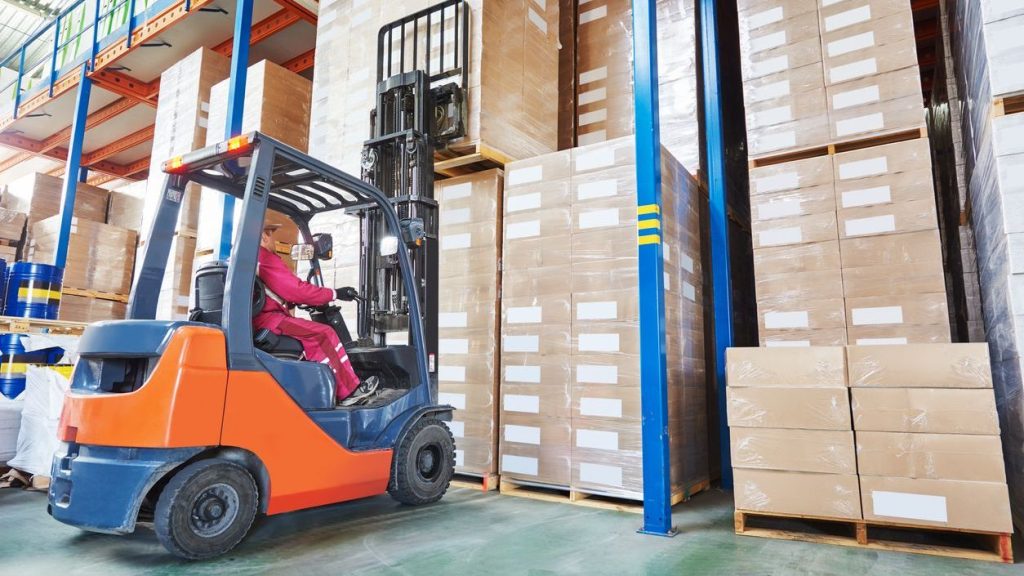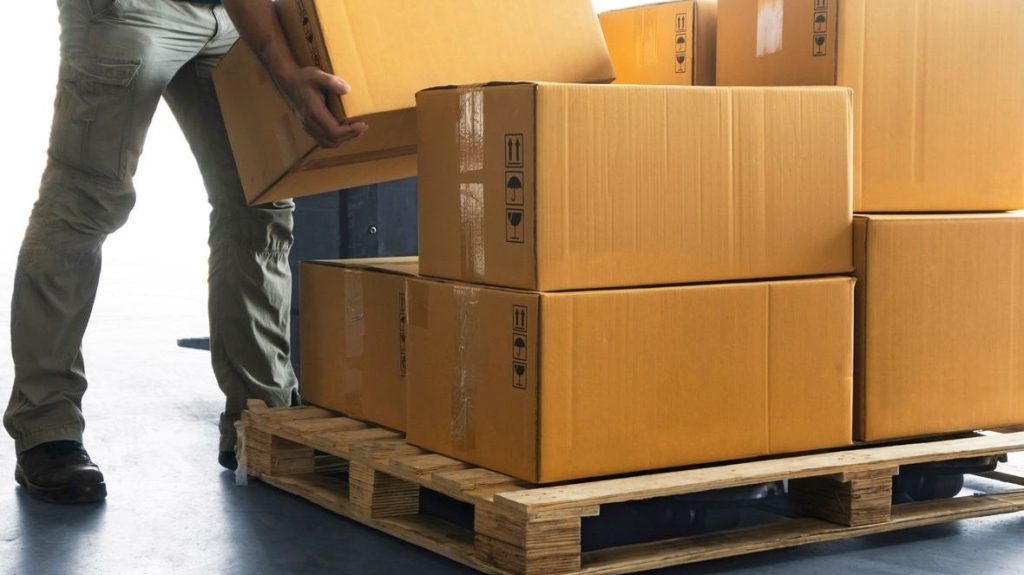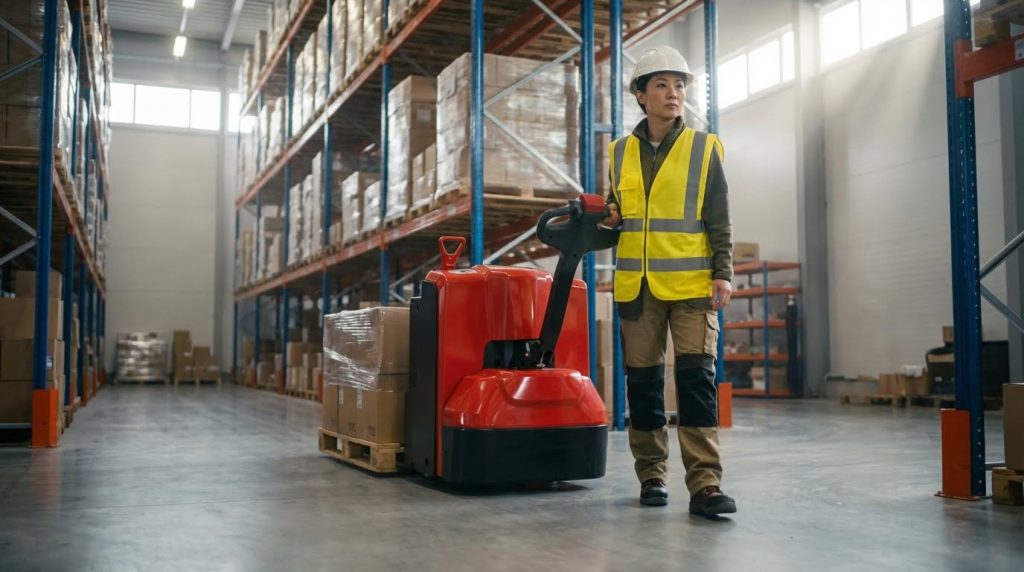
Se você está se perguntando o que movimenta paletes em um armazém, a resposta varia desde simples paleteiras manuais até sistemas totalmente automatizados. Este guia compara como paleteiras manuais, empilhadeiras, empilhadeiras elétricas e AGVs (Veículos Guiados Automaticamente) movimentam paletes em instalações reais. Você verá capacidades típicas, alturas de elevação, limites de segurança e onde cada opção é mais adequada. Use-o para escolher o método de elevação ideal para seus corredores, altura das estantes e metas de produtividade.
Principais maneiras de levantar e movimentar paletes
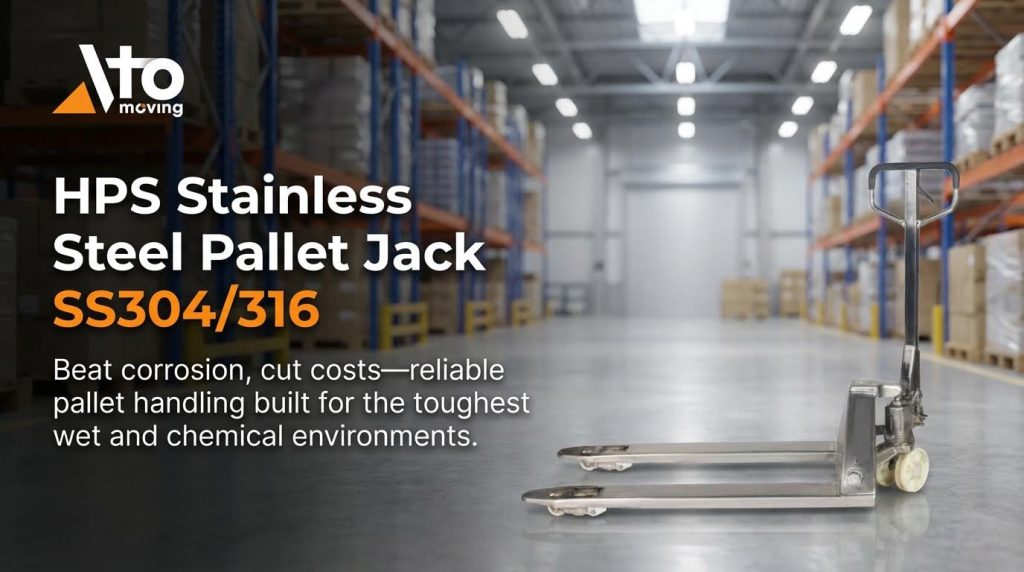
As principais formas de levantar e movimentar paletes em um armazém dependem da altura e da distância a serem percorridas. Se a pergunta for sobre o método mais eficiente para levantar paletes, a resposta varia desde simples paleteiras no nível do solo até empilhadeiras e paleteiras verticais.
Em sua forma mais básica, os paleteiros manuais lidam com o transporte terrestre, enquanto empilhadeiras, paleteiras de plataforma e sistemas automatizados entram em ação quando se necessita de altura, alcance ou alta produtividade.
- Porta-paletes: Elevação ao nível do solo e movimentos horizontais curtos – Menor custo, sem acesso a estantes.
- Empilhadores: Elevação vertical para estantes de baixa a média altura – Aproveite a altura sem precisar comprar uma empilhadeira completa.
- Empilhadeiras e transpaleteiras retráteis: Instalação em grandes alturas e trabalho misto em ambientes internos e externos – Ideal para cargas pesadas e armazéns altos.
- AGVs/AMRs/ASRS: Elevação e armazenamento automatizados de paletes – Para operações de alto volume e baixa intervenção humana.
💡 Nota do Engenheiro de Campo: Ao escolher o equipamento para movimentar paletes no seu armazém, considere a posição mais alta do palete e o corredor mais estreito. Essas duas restrições geralmente eliminam metade das opções de equipamentos inadequados imediatamente.
Como as paleteiras levantam e transportam objetos ao nível do chão
Os porta-paletes elevam paletes ao nível do chão, levantando-os o suficiente para que rolem, normalmente entre 50 e 200 mm, e transportando-os horizontalmente. Esta é a resposta mais simples quando se pergunta o que eleva paletes em movimentações curtas e em níveis baixos no armazém.
Tanto as paleteiras manuais quanto as elétricas utilizam um pequeno circuito hidráulico para levantar os garfos sob o palete, mas diferem em potência, capacidade e ergonomia.
| Característica | Porta-paletes manual | Porta-paletes elétrica | Impacto Operacional |
|---|---|---|---|
| Altura típica do elevador acima do piso | ≈50–200 mm gama de elevadores hidráulicos | Semelhante (≈50–200 mm) | Suficiente para remover irregularidades do piso e passar por cima de plataformas de carga, não para empilhamento. |
| Capacidade típica | 1,000-2,500 kg carga nominal | 2,500-3,500 kg carga nominal | As unidades elétricas manuseiam paletes mais pesados e plataformas de carga mais íngremes. |
| A fonte de alimentação | Empurrar/puxar humano com bomba hidráulica manual | Motores de tração e elevação movidos a bateria acionamento elétrico | A eletricidade reduz o esforço em trajetos longos e turnos de trabalho intensos. |
| Melhor aplicação | <50 movimentações de paletes por dia, curtas distâncias guia de uso | Mais de 50 movimentações de paletes por dia, rotas de média a longa duração. guia de uso | Ajuste a capacidade de processamento para evitar fadiga ou subutilização das baterias. |
| Capacidade de empilhamento | nenhum | nenhum | Transporte apenas ao nível do solo; não pode alimentar estantes altas. |
Mecanicamente, as paleteiras automáticas funcionam levantando paletes através de um cilindro hidráulico compacto. Ao bombear o pedal, o óleo é pressurizado, estendendo o pistão e elevando o conjunto de garfos em alguns centímetros.
Assim que o palete sai do chão, rodas de poliuretano ou nylon suportam toda a carga. Isso transfere o atrito do deslizamento sobre a madeira para o rolamento sobre os rolamentos, reduzindo drasticamente a força de tração e empurrão em concreto nivelado.
- Mantenha a carga ao mínimo: Levante apenas o suficiente para evitar lombadas – Centro de gravidade mais baixo e maior estabilidade.
- Centralize a carga: Mantenha o peso sobre as rodas da suspensão dianteira – Reduz o risco de tombamento lateral nas curvas.
- Inserção completa do garfo: Insira os garfos completamente sob a plataforma do palete – Evita que as tábuas se quebrem e que as cargas caiam.
- Verificar o estado do palete: Rejeitar paletes rachados ou molhados – Evita falhas repentinas sob carga orientações sobre o estado dos paletes.
Como a condição do palete afeta a segurança no içamento
Os porta-paletes concentram a carga nas rodas dos garfos e sob as longarinas. Tábuas rachadas, pregos soltos ou madeira apodrecida podem ceder ao levantar 1,500 a 2,000 kg, portanto, isolar paletes danificados em uma zona demarcada é essencial para a operação segura. Práticas detalhadas sobre a condição dos paletes
- Escolha entre câmbio manual e elétrico: Use a função manual para trabalhos leves e de curta duração; a função elétrica para movimentações pesadas e frequentes. critério de seleção - Equilibra o CAPEX com a saúde do operador.
- Regras de condução segura: Puxe em pisos planos, empurre em declives, evite curvas acentuadas. regras de funcionamento - Impede que o veículo saia desgovernado ou tombe.
- Verificações pré-uso: Inspecione garfos, rodas, sistema hidráulico e freios antes de usar. lista de verificação de inspeção - Reduz as falhas durante o turno de trabalho.
💡 Nota do Engenheiro de Campo: Se os operadores reclamarem de dores nos pulsos, ombros ou costas, o problema raramente se resume apenas ao treinamento. Geralmente, significa que estão usando paleteiras manuais quando uma transpaleteira elétrica ou uma empilhadeira de baixa elevação se justificam pela quantidade de paletes e pela distância percorrida.
Projeto de elevação vertical com empilhadeiras e mastro
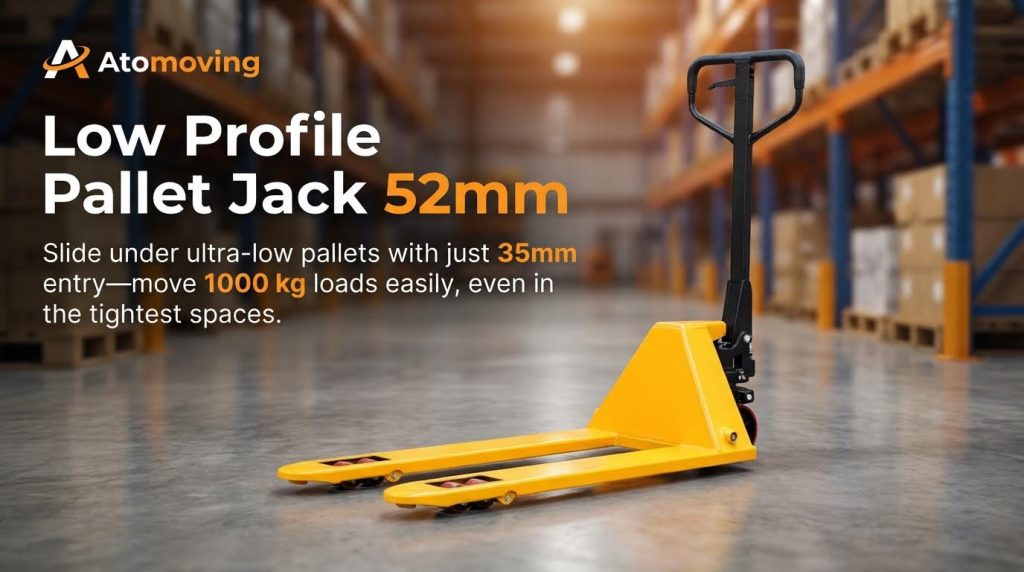
Empilhadeiras elevam paletes verticalmente usando um mastro e um porta-garfos, normalmente até 4 a 6 metros, preenchendo a lacuna entre paleteiras manuais e empilhadeiras convencionais. Quando as pessoas perguntam o que eleva paletes para estantes baixas ou médias sem a necessidade de uma empilhadeira, a resposta geralmente são as empilhadeiras.
Eles utilizam sistemas hidráulicos manuais, semi-elétricos ou totalmente elétricos para elevar a plataforma ao longo de um mastro guia, enquanto estabilizadores ou contrapesos mantêm o caminhão estável.
| Característica | Faixa típica de empilhamento | Comparado com a paleteira | Melhor para… |
|---|---|---|---|
| Altura de elevação | Até 4–6 m altura típica do mastro | Muito maior (em comparação com 50–200 mm) | Alimentação em racks com 2 a 5 níveis de viga de altura. |
| Capacidade de carga | ≈1,000–2,000 kg carga nominal | Semelhante a paleteiras pesadas | Paletes de peso médio a pesado em armazéns pequenos. |
| Tipo de mastro | mastro guiado simples, duplex ou triplex | Nenhum em paleteiras | Escolhendo entre elevação livre e restrições de altura total. |
| Método de estabilidade | Estabilizadores e/ou contrapeso projeto estrutural | Baixa elevação, resultando em uma estrutura mais simples. | Manter o centro de gravidade dentro do triângulo de estabilidade em altura. |
| Ergonomia para os operadores. | Direção hidráulica, controles ajustáveis características ergonômicas | Cabo básico do timão | Reduzir a fadiga em ciclos repetidos de levantar/armazenar. |
Do ponto de vista da engenharia, o mastro de uma empilhadeira converte a força do cilindro hidráulico em movimento vertical do carro por meio de correntes ou cilindros de ação direta. Quanto mais alto você levanta, mais o centro de gravidade do palete se afasta da base, reduzindo a área de estabilidade.
É por isso que as empilhadeiras geralmente são limitadas a 4–6 m e 1,000–2,000 kg, enquanto as empilhadeiras retráteis e contrabalançadas assumem o trabalho em alturas maiores e com cargas mais pesadas.
- Utilização do espaço vertical: Os sistemas de empilhamento permitem usar o volume cúbico, e não apenas a área do piso. comparação de altura de elevação - Ideal para armazéns pequenos com aluguéis caros.
- Melhor estabilidade em altitudes mais elevadas: A estrutura robusta e o contrapeso reduzem o risco de tombamento em altura. características de segurança - Mais seguro do que "levantar peso em excesso" com equipamento improvisado.
- Levantamento ergonômico: O elevador motorizado mantém os operadores fora de zonas de flexão acentuada. orientações ergonômicas - Reduz lesões nas costas e nos ombros.
Por que o design do mastro é importante para a altura do seu edifício?
Se o seu armazém tiver portas baixas ou mezaninos, a altura total do mastro quando totalmente estendido pode ser uma limitação. Os mastros duplex oferecem altura moderada com construção mais simples, enquanto os mastros triplex proporcionam maior elevação em um formato recolhido mais compacto, sendo úteis quando a altura livre é limitada, mas ainda é necessário ter estantes de 4 a 6 metros.
- Sistemas de segurança: Dispositivos antiqueda, anti-tombamento, freios e alarmes são comuns em empilhadeiras modernas. conjunto de recursos de segurança - Proteger as pessoas próximas a cargas elevadas.
- Construção de carga: A distribuição uniforme do peso e a ausência de excesso de peso são cruciais antes do levantamento. regras de construção de carga - Impede a oscilação do mastro e a queda do produto.
- Manutenção preditiva: O monitoramento das correntes do mastro, do sistema hidráulico e dos códigos de erro previne o aprisionamento de cargas em altura. manutenção preditiva - Fundamental para o tempo de atividade em corredores de estantes movimentados.
💡 Nota do Engenheiro de Campo: Ao levantar regularmente paletes acima de 3 m, considere cada palete como um potencial objeto em queda. Pequenos problemas — carga desequilibrada, palete danificado, corrente do mastro desgastada — tornam-se eventos de alto risco, portanto, sua inspeção e disciplina na montagem da carga devem ser muito mais rigorosas do que para trabalhos com paleteiras apenas no solo.
Adequação de equipamentos de elevação para aplicações em armazéns
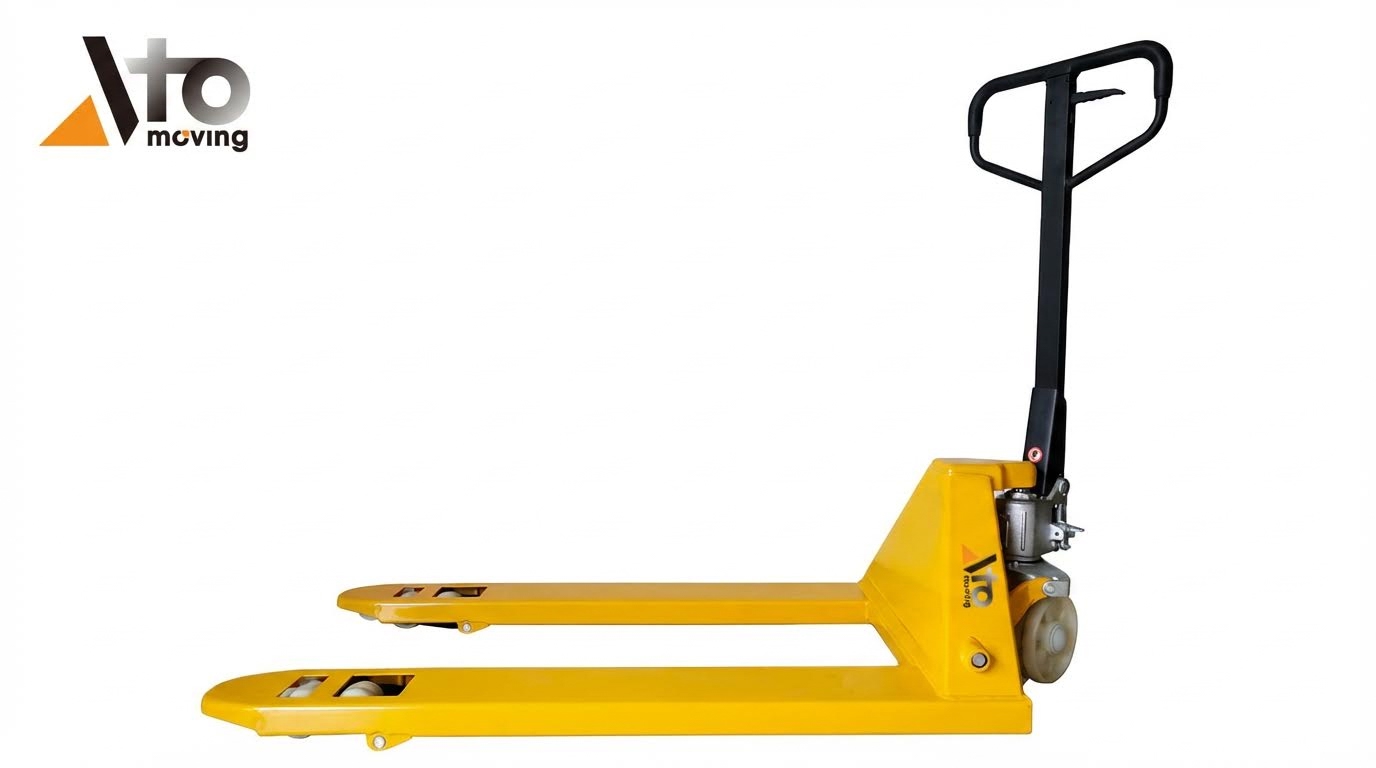
A escolha do equipamento de movimentação de paletes mais adequado para cada tarefa no armazém envolve o equilíbrio entre produtividade, mão de obra e segurança, considerando o custo de capital, o layout dos corredores e a altura das estantes. O objetivo é o menor custo por palete movimentado com segurança ao longo da vida útil do sistema.
Seleção por produtividade, padrão de turnos e custo total de propriedade (TCO).
A produtividade, as horas de operação e o custo total de propriedade (TCO) determinam se você deve manter o sistema manual, optar por equipamentos elétricos ou justificar a automação para o transporte de paletes em seu armazém.
As máquinas manuais funcionam bem para volumes baixos de paletes e turnos curtos. Empilhadeiras e caminhões elétricos são adequados para trabalhos em vários turnos. Os AGVs, AMRs e ASRS só se tornam viáveis quando os volumes de paletes e os custos de mão de obra são suficientemente altos.
| Tipo de Solução | Caso de uso típico | Produtividade por hora/unidade | Banda Capex | Impacto Trabalhista | Impacto Operacional |
|---|---|---|---|---|---|
| Transpaleteira manual | Pequenas lojas, área de estocagem, caminhões | Até aproximadamente 20 paletes (baixa intensidade) | Muito baixo (nível do carrinho de mão) | Sem redução; totalmente manual | Ideal para locais com menos de 50 deslocamentos diários e distâncias curtas entre as viagens. Macacos manuais são adequados para cargas leves e baixa quantidade de paletes por dia.. |
| Paleteira elétrica | Doca, transbordo, longas distâncias | 20 a 40 paletes (dependendo do operador) | Baixo-médio | Reduz o esforço de empurrar/puxar, permitindo ciclos mais longos. | Assim que os deslocamentos diários forem superiores a 50 e as distâncias percorridas forem de média a longa distância. As unidades elétricas são adequadas para manuseio de alta frequência.. |
| Empilhadeira (manual/elétrica) | Compartimento para baías de tamanho baixo a médio, até aproximadamente 4–6 m | 10–25 paletes | Suporte: | Um operador; algum tempo de deslocamento | Boa opção para situações em que é necessário levantar paletes para armazená-los em estantes, mas o volume não justifica o uso de uma empilhadeira completa. Empilhadeiras levantam de 1,000 a 2,000 kg até aproximadamente 4 a 6 metros de altura.. |
| Empilhadeiras (contrabalançadas / retráteis) | Manuseio principal de paletes, todos os turnos. | 25–40 paletes | Médio-alto | Substitui vários operadores manuais. | Ideal para trabalhos mistos em ambientes internos e externos ou para instalação em prateleiras altas. As empilhadeiras contrabalançadas movimentam de 1,500 a mais de 5,000 kg a uma distância de 3 a 8 metros.. |
| AGVs | Fluxos de paletes fixos e de alto volume | 15–30 paletes | ~SGD 400,000–1,200,000 por projeto | Reduzir de 2 a 4 operadores por turno | Ideal para percursos estáveis e repetitivos. Os AGVs seguem trajetórias fixas e se adaptam a fluxos de alto volume e previsíveis.. |
| RAM | Layouts dinâmicos, tráfego misto | 8–20 paletes | ~SGD 350,000–1,000,000 por projeto | Reduzir de 2 a 4 operadores por turno | Adequado para layouts variáveis. Os robôs móveis autônomos (AMRs) se adaptam com SLAM e planejamento de trajetória integrado.. |
| ASRS | Armazenamento de alta densidade e grande altura | 20 a 60 paletes por corredor | ~SGD 800,000–3,000,000 por projeto | Reduzir de 4 a 8 operadores por turno | Para máxima capacidade de armazenamento por m² e operação 24 horas por dia, 7 dias por semana. O sistema ASRS proporciona uma redução de 40 a 60% na área ocupada.. |
- Prioridade à produtividade: Dimensionar o equipamento de acordo com a capacidade máxima de paletes por hora – Isso evita gargalos nas docas e nas frentes de seleção.
- Padrão de turnos: Em um único turno e com baixo volume de produção, o processo pode permanecer manual; já em vários turnos ou com mais de 20 horas diárias, sistemas motorizados ou automatizados são mais indicados. Você evita a fadiga e os custos com horas extras.
- Custo Total de Propriedade (TCO), não preço de tabela: Inclua no custo por palete os custos de energia, manutenção, mão de obra e tempo de inatividade. Isso muitas vezes torna os veículos elétricos ou AGV/AMR mais atraentes do que parecem à primeira vista.
- Escalabilidade: Os AGVs/AMRs escalam adicionando unidades, enquanto os ASRS escalam por corredores – Isso afeta a forma como você planeja o investimento à medida que o volume aumenta. conforme observado para sistemas automatizados.
- Estabilidade da rota: Fluxos fixos e repetitivos são adequados para AGVs; rotas e SKUs variáveis são mais adequados para AMRs. Isso mantém a utilização alta e o tempo ocioso baixo.
Como estimar a produção de paletes por hora e adequar o equipamento às necessidades.
Comece com o número de paletes de entrada, saída e transferência interna por dia. Divida pelo número de horas operacionais efetivas (excluindo pausas e manutenção). Compare o resultado de paletes por hora com as faixas de valores da tabela. Adicione uma margem de segurança de 20 a 30% para picos e crescimento.
💡 Nota do Engenheiro de Campo: Quando se opera em 2 a 3 turnos, o tempo de inatividade da bateria e da manutenção se torna um fator oculto que reduz a capacidade produtiva. Duas empilhadeiras elétricas menores, com carregamento escalonado, geralmente movimentam mais paletes por dia, com um custo total de propriedade (TCO) menor, do que uma unidade grande que fica constantemente aguardando uma bateria ou um técnico.
Segurança, conformidade com as normas e ergonomia do operador.
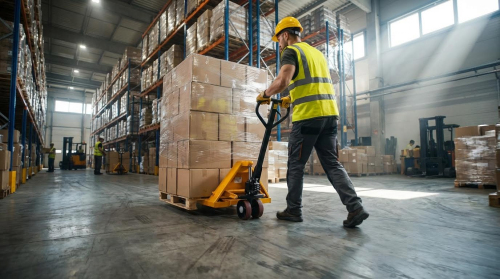
As normas de segurança, o estado dos paletes e a ergonomia determinam se o equipamento de elevação de paletes realmente reduz o risco ou aumenta silenciosamente as taxas de acidentes e os pedidos de indenização.
Mesmo o melhor caminhão falha se os paletes estiverem rachados, as cargas estiverem mal acondicionadas ou os operadores trabalharem além de sua zona de conforto por 8 a 10 horas.
- Estado do palete: Mantenha os paletes limpos, secos e sem rachaduras ou pregos. Isso evita que os garfos fiquem presos e que a carga caia. isolando paletes danificadas para reparo ou descarte..
- Construção de carga: Centralize a carga com o mínimo de saliência possível e os itens pesados na parte inferior e central – Isso reduz o risco de tombamento e falha da embalagem durante a viagem. Conforme recomendado para o manuseio seguro de paletes..
- Escolha do equipamento versus tarefa: Macacos manuais são adequados para cargas leves, curtas distâncias e menos de 50 movimentações por dia; caminhões elétricos são adequados para cargas e ciclos maiores. Isso alinha as exigências físicas com os limites humanos. conforme descrito para a seleção manual versus elétrica.
- Inspeção pré-uso: Verifique os garfos, as rodas, o sistema hidráulico e (no caso de veículos elétricos) as baterias e os dispositivos de parada de emergência. Isso detecta defeitos antes que se tornem acidentes. com unidades defeituosas retiradas de serviço.
- Regras de operação seguras: Insira os garfos completamente, respeite a capacidade nominal, levante-os apenas o suficiente para não encostarem no chão e evite curvas acentuadas. Isso mantém o triângulo de estabilidade intacto durante o movimento. conforme enfatizado para a operação de paleteiras.
- Ergonomia: Mantenha o movimento entre a altura do meio da coxa e a altura do cotovelo e minimize a torção. Isso reduz a tensão nas costas e nos ombros. com empilhadeiras e mesas elevatórias, mantendo a camada superior próxima à altura da cintura..
- Recursos de segurança modernos: Utilize pegas ergonómicas, travões fiáveis, proteção para os pés e controlo de acesso – Isso reduz lesões por esmagamento e o uso por pessoas sem treinamento adequado. conforme recomendado para paleteiras.
- Redução de riscos da automação: Os AGVs e AMRs reduzem o deslocamento manual e os incidentes em 30 a 60% – Essa costuma ser a razão não financeira mais forte para automatizar. de acordo com estudos de ROI de automação.
Integrando segurança, normas e escolha de equipamentos.
Depois de identificar os equipamentos que movimentam paletes em cada zona (paletes, empilhadeiras, paleteiras manuais, AGVs), mapeie-os em relação aos seus procedimentos de segurança e a quaisquer requisitos ISO/OSHA. Em seguida, adicione verificações pré-uso, regras de montagem de carga e limites ergonômicos aos POPs (Procedimentos Operacionais Padrão) e treinamentos para garantir que o equipamento escolhido realmente ofereça o desempenho de segurança esperado.
💡 Nota do Engenheiro de Campo: A maioria dos "problemas com equipamentos" que observei em armazéns eram, na verdade, problemas com paletes e montagem de cargas. Corrigir a qualidade dos paletes, a saliência e a tensão do filme plástico muitas vezes estabilizou as operações mais do que a substituição de um paleteiro manual por uma empilhadeira elétrica.
Considerações finais sobre as opções de equipamentos para elevação de paletes
Transpaleteiras, empilhadeiras, paleteiras manuais e sistemas automatizados obedecem às mesmas leis da física. Carga, altura e geometria estabelecem limites rígidos. Uma boa engenharia utiliza esses limites a seu favor, em vez de lutar contra eles.
Ao nível do solo, elevações baixas e movimentos curtos mantêm o centro de gravidade baixo e os riscos mínimos. À medida que a elevação aumenta, o design do mastro, a distância entre eixos e o contrapeso devem manter o triângulo de estabilidade intacto. Paletes inadequados ou uma má distribuição da carga podem comprometer a estabilidade até mesmo da melhor empilhadeira, especialmente acima de 3 metros.
A escolha certa para movimentar paletes no seu armazém começa com dados, não com catálogos. Mapeie o pico de paletes por hora, a altura das estantes, a largura dos corredores e o padrão de movimentação. Em seguida, selecione a ferramenta mais simples que atenda a essas necessidades com margens de segurança.
As empilhadeiras manuais são adequadas para trabalhos leves, de curta duração e baixo volume. As empilhadeiras de esteira liberam espaço vertical sem o custo total de uma empilhadeira convencional. As empilhadeiras são ideais para tarefas pesadas, em altura e com uso misto. Os AGVs, AMRs e ASRS fazem sentido quando os fluxos de trabalho são estáveis e a mão de obra é escassa.
A melhor prática é clara. Trate a qualidade dos paletes, a montagem da carga e as verificações pré-uso com a mesma seriedade que a compra de equipamentos. Combine engenharia sólida, ergonomia realista e regras de segurança rigorosas. Fazendo isso, qualquer equipamento que movimente paletes em seu armazém aumentará a produtividade e reduzirá os riscos por muitos anos, seja com empilhadeiras básicas ou com as soluções avançadas da Atomoving.
Perguntas frequentes
Qual é o nome daquele equipamento que levanta paletes?
O equipamento comumente usado para levantar paletes é chamado de transpaleteira. Possui garfos, rodas e uma alça, permitindo que você deslize os garfos sob um palete e o levante para movimentá-lo. Uma vez levantado, você pode empurrar ou puxar o palete até o seu destino. Tipos de Transpaleteiras.
Como levantar um palete sem empilhadeira?
Se você não tiver acesso a uma empilhadeira, pode usar um transpalete manual, também conhecido como transpalete elétrico. Essa máquina funciona de forma semelhante a um transpalete elétrico, mas inclui um mastro para elevar os paletes a uma altura maior. É especialmente útil em espaços estreitos ou áreas com circulação de pedestres. Alternativas à empilhadeira.
Quais são as medidas de segurança a serem tomadas ao manusear paletes?
Ao levantar paletes pesados, utilize sempre as técnicas adequadas para evitar lesões. Posicione os pés afastados na largura dos ombros para maior estabilidade, mantenha a parte superior das costas reta e evite curvar a cintura. Além disso, certifique-se de que os paletes estejam empilhados com segurança para evitar deslizamentos ou colapsos, conforme recomendado pelas normas da OSHA. Dicas para Levantamento Seguro.