
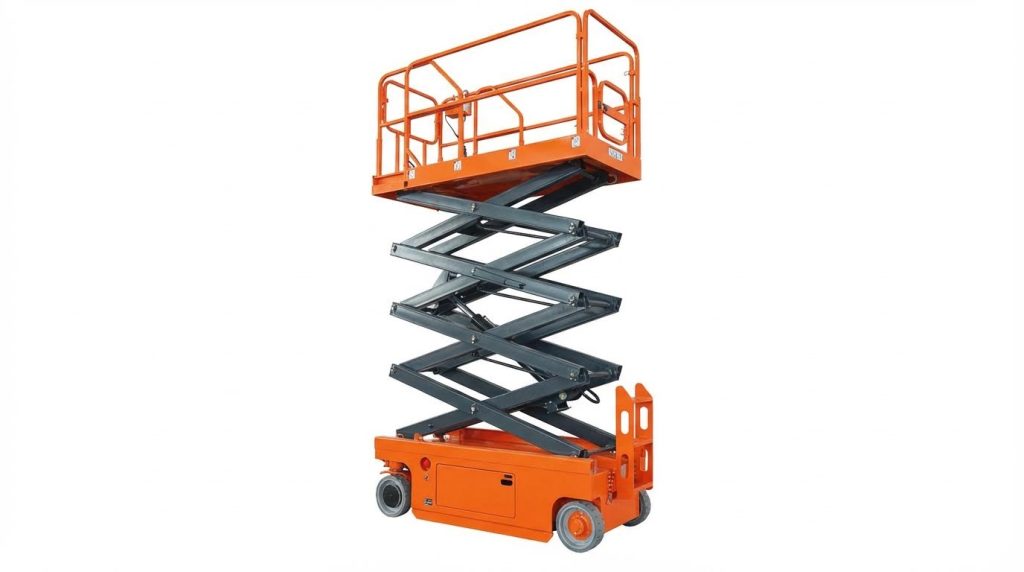
Mobile elevating work platforms are classified by how they move and where the platform sits relative to the machine’s tipping lines. Understanding these MEWP types and groups is critical for safe selection, compliant training, and efficient job planning. In this guide, you will see exactly what characteristic defines a type 1 mobile elevating work platform, how Type 2 and Type 3 differ, and how Groups A and B affect stability and reach. Use this structure to match the right aerial platform to your site conditions, tasks, and safety requirements.
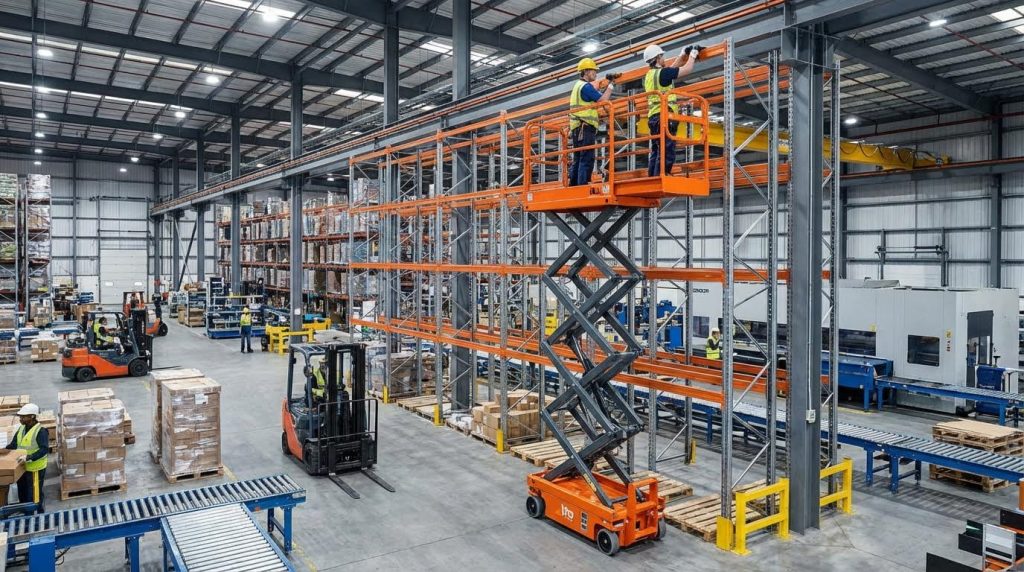
How MEWP Types And Groups Are Defined
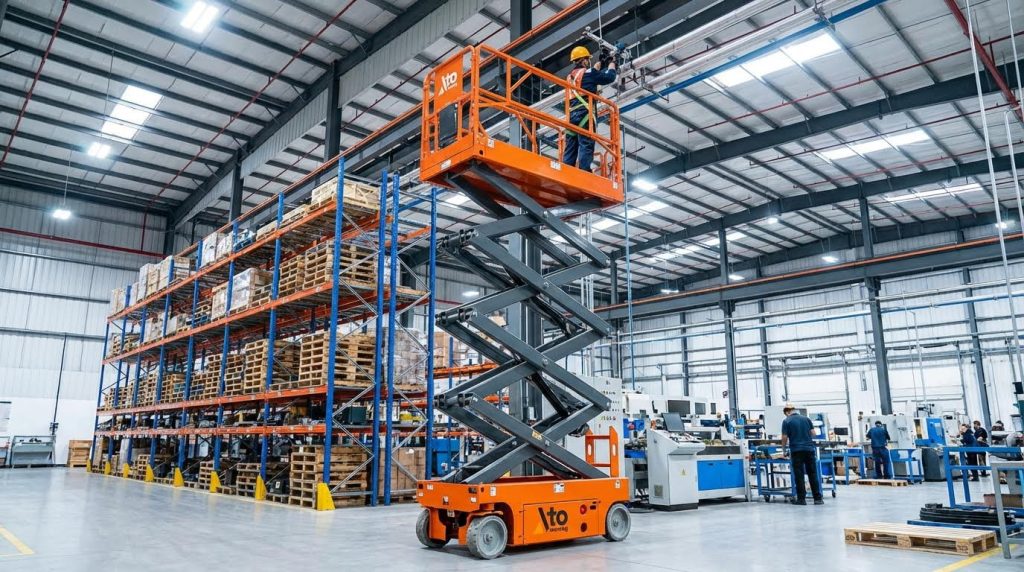
Type 1, Type 2, And Type 3: Core Definitions
MEWPs are classified by how they are allowed to move while doing work at height. Understanding this is essential for answering what characteristic defines a type 1 mobile elevating work platform and for choosing safe equipment for your jobsite. The “Type” number tells you when the machine can travel and where the travel controls are located.
| MEWP Type | Key Movement Characteristic | Control Location During Travel | Typical Use Case |
|---|---|---|---|
| Type 1 | Can only travel with platform fully lowered / stowed | Usually chassis; no travel allowed when elevated | Simple vertical access where repositioning at height is not needed |
| Type 2 | Can travel with platform elevated | Travel controlled from chassis/base only | Jobs where ground-based operator repositions machine at height |
| Type 3 | Can travel with platform elevated | Travel controlled from the work platform | Tasks needing frequent repositioning by the person in the basket |
The defining characteristic of a Type 1 MEWP is that it may only move when the platform is in the stowed position; travel is not permitted with the platform elevated. Type 2 equipment can travel while elevated but must be controlled from the chassis, and Type 3 can travel while elevated with controls on the platform. This type-based behavior directly affects risk, training, and site rules.
Why the Type classification matters for safety
Allowing travel at height increases risk from potholes, gradients, and obstacles. Type 1 limits that risk by forcing the operator to lower the platform before moving. Type 2 and Type 3 require stricter ground condition assessment, better operator training, and tighter traffic management because the machine can be driven while elevated. These differences feed into risk assessments, rescue planning, and supervision requirements. Standards and training guidance highlight these distinctions.
Group A Vs Group B: Platform Position And Tipping Lines
Beyond Type, MEWPs are divided into Group A and Group B. This grouping is based on the platform’s position relative to the machine’s tipping lines, which are defined by the footprint of the wheels or outriggers.
| Group | Platform Position vs Tipping Lines | Typical Geometry | Common Applications |
|---|---|---|---|
| Group A | Platform always stays within the tipping lines (directly above chassis/footprint) | Primarily vertical lift, limited or no horizontal outreach | Indoor maintenance, stock picking, flat-floor industrial work |
| Group B | Platform can extend beyond the tipping lines | Boom-type structures with horizontal outreach | Utility work, building façades, construction, overhead services |
In Group A, the vertical projection of the platform never leaves the area bounded by the wheels or outriggers. This reduces overturning leverage and simplifies stability calculations. Group B includes any MEWP where the platform can move outside those tipping lines, typically boom lifts and other outreach machines. These introduce higher overturning moments and stricter operating envelopes.
- Group A machines are usually the first choice for level, indoor, or tight-aisle work where vertical access is enough.
- Group B machines are used when you must “reach over” obstacles or work away from the chassis position.
- Risk assessments must treat Group B as higher exposure to tipping and entrapment due to outreach and slewing.
Practical link between Type and Group
Type and Group combine to describe real machines. For example, a vertical lift that only travels when stowed would be Type 1, Group A. A self-propelled boom with platform controls that can drive while elevated would be Type 3, Group B. This combined code helps you match MEWP behavior to the site’s ground conditions, obstructions, and rescue plans. aerial platform options like scissor lifts and boom lifts are often categorized under these groups. Additionally, scissor platform models provide versatile solutions for various applications. Equipment such as manual pallet jack tools also play a role in material handling support. Finally, specialized tools like the drum dolly ensure efficient handling of cylindrical loads.
Technical Differences Between Type 1, 2, And 3 MEWPs
Travel And Control Positions At Height
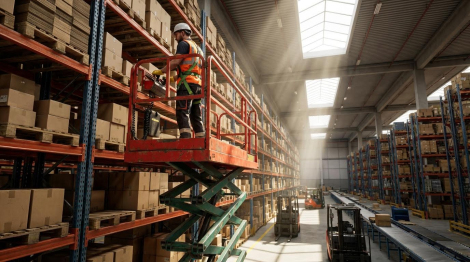
From an engineering and safety standpoint, the core difference between MEWP types is how they are allowed to move when the platform is raised, and where the travel controls are located. This is also the key to answering what characteristic defines a type 1 mobile elevating work platform in practical terms.
| MEWP Type | Travel Allowed When Platform Is Elevated? | Control Location During Travel | Typical Use Case |
|---|---|---|---|
| Type 1 | No – travel only when platform is fully lowered / stowed (platform must be lowered before movement) | Usually from chassis or ground controls while stowed | Simple vertical access where repositioning at height is not required |
| Type 2 | Yes – travel permitted with platform elevated (elevated travel allowed) | Controls located on chassis only while moving elevated (ground-based travel control) | Jobs where a spotter or second person controls movement from the base |
| Type 3 | Yes – travel permitted with platform elevated (elevated travel allowed) | Controls located on the work platform itself during travel | Tasks needing frequent repositioning at height by the operator |
In simple terms, what characteristic defines a type 1 mobile elevating work platform is the prohibition on any travel with the platform elevated. Travel is only allowed when the platform is fully lowered into the stowed position, regardless of group or platform style. Type 2 and Type 3 machines share the ability to move while elevated, but they differ in whether the operator controls that motion from the chassis (Type 2) or from the platform (Type 3). These definitions are standardized across MEWP classifications.
Practical implications for site planning
Type 1 MEWPs require more ground-level repositioning and clear travel paths because all movement must occur with the platform lowered. Type 2 machines require a trained ground operator or spotter at the chassis during elevated travel. Type 3 units give the person at height direct control, which increases productivity but demands tighter control of ground hazards and traffic.
Stability, Load Limits, And Tipping Risk
Stability and tipping risk are driven by the relationship between the platform, the chassis tipping lines, and how the machine is allowed to move. Types 1, 2, and 3 share similar physics, but their permitted movements change how that risk is managed in practice.
- Type 1 MEWPs only travel in the stowed position, so dynamic tipping loads at height from travel are eliminated. This reduces exposure to combined lateral and vertical loads during motion.
- Type 2 and Type 3 MEWPs can travel elevated, so designers and operators must account for extra overturning moment from acceleration, braking, steering, and surface irregularities at height.
- Group A machines keep the platform’s vertical projection within the tipping lines at all times, which inherently improves stability for all three types. Their platforms stay above the chassis footprint.
- Group B machines allow the platform to extend beyond the tipping lines, which increases overturning moment and makes load limits and outrigger deployment more critical. These are typically boom-style units.
| Aspect | Type 1 | Type 2 | Type 3 |
|---|---|---|---|
| Dynamic tipping risk from travel at height | Lowest – no elevated travel allowed | Higher – elevated travel from chassis controls | Higher – elevated travel from platform controls |
| Operator exposure to motion at height | Limited to lift/lower only | Exposed to motion but relies on chassis operator | Directly controls motion while exposed at height |
| Dependence on surface conditions when moving | Critical only at ground-level travel | Critical at both ground and elevated travel | Critical at both ground and elevated travel |
| Load limit sensitivity during movement | Primarily static at height | Dynamic; load shifts and inertia must be controlled | Dynamic; operator can induce faster movements |
For all types and groups, respecting rated load is non‑negotiable, but Types 2 and 3 are less forgiving if operators exceed limits or move too aggressively at height. Group B versions of Type 2 and 3 are the most sensitive combination, because the platform can be outside the tipping lines while the machine is moving.
Engineering note on tipping lines
The tipping line is the boundary defined by the outermost wheels or outriggers. As the platform moves outward, the center of gravity shifts closer to this line. Elevated travel on rough or sloped ground increases the risk that transient loads will push the combined center of gravity past the tipping line, especially with Group B configurations.
Standards, Training, And Inspection Implications
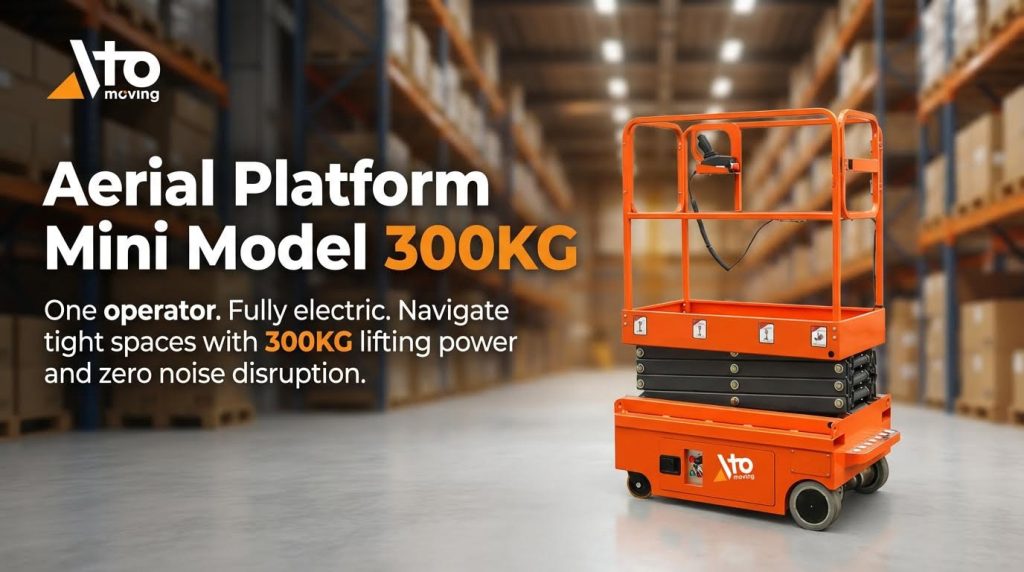
The MEWP type has direct consequences for training depth, supervision, and inspection focus. Updated ANSI standards required more specific familiarization and role-based training for all MEWP types, even though these updates had not yet been fully adopted by OSHA. Operators, supervisors, occupants, and owners all have defined training obligations.
- Training by Type
- Type 1: Emphasis on correct positioning before elevation, safe travel while stowed, and understanding that no travel is permitted with the platform raised. This directly reinforces what characteristic defines a type 1 mobile elevating work platform in the field.
- Type 2: Additional focus on communication between platform occupants and the chassis operator, spotter use, and managing elevated travel paths.
- Type 3: Strong focus on situational awareness at height, ground traffic, and controlling travel speed and direction from the platform.
- Refresher Training Triggers
- Unsafe operation, near-misses, or incidents
- Changes in MEWP type or model on site
- Changes in job conditions or hazards
These triggers were defined in updated MEWP training guidance.
| Role | Key Responsibilities Related To MEWP Type |
|---|---|
| Operator | Understand whether elevated travel is allowed (Type 2/3) or prohibited (Type 1); know control locations and limitations for the specific type in use. |
| Supervisor | Select the correct MEWP type for the task, ensure operators are trained on that type, and verify that elevated travel (if allowed) is planned and controlled. Supervisors must be trained to recognize hazards and safe-use rules. |
| Occupants | Know basic emergency controls and how to stop motion, especially on Type 2 and 3 units where movement can occur at height. They are not routine operators but must be prepared for emergencies. |
Inspection requirements apply to all MEWPs, but elevated travel capability (Types 2 and 3) increases the importance of checking drive, steer, brakes, alarms, and tilt sensors before each shift. Frequent, annual, and pre-start inspections are mandated, and equipment must not be used until confirmed safe. These inspection intervals and responsibilities were clearly defined in MEWP updates.
Rescue and emergency planning by type
All MEWP types require a written rescue plan, but the complexity increases when elevated travel is possible. For Type 1, rescue usually involves vertical retrieval from a static position. For Types 2 and 3, plans must consider the possibility that the machine is stopped mid‑travel, on a slope, or in a traffic path, making self-rescue, assisted rescue, and technical rescue coordination more critical. Rescue methods and planning requirements were formalized in MEWP guidance.
Matching MEWP Type To Application And Site
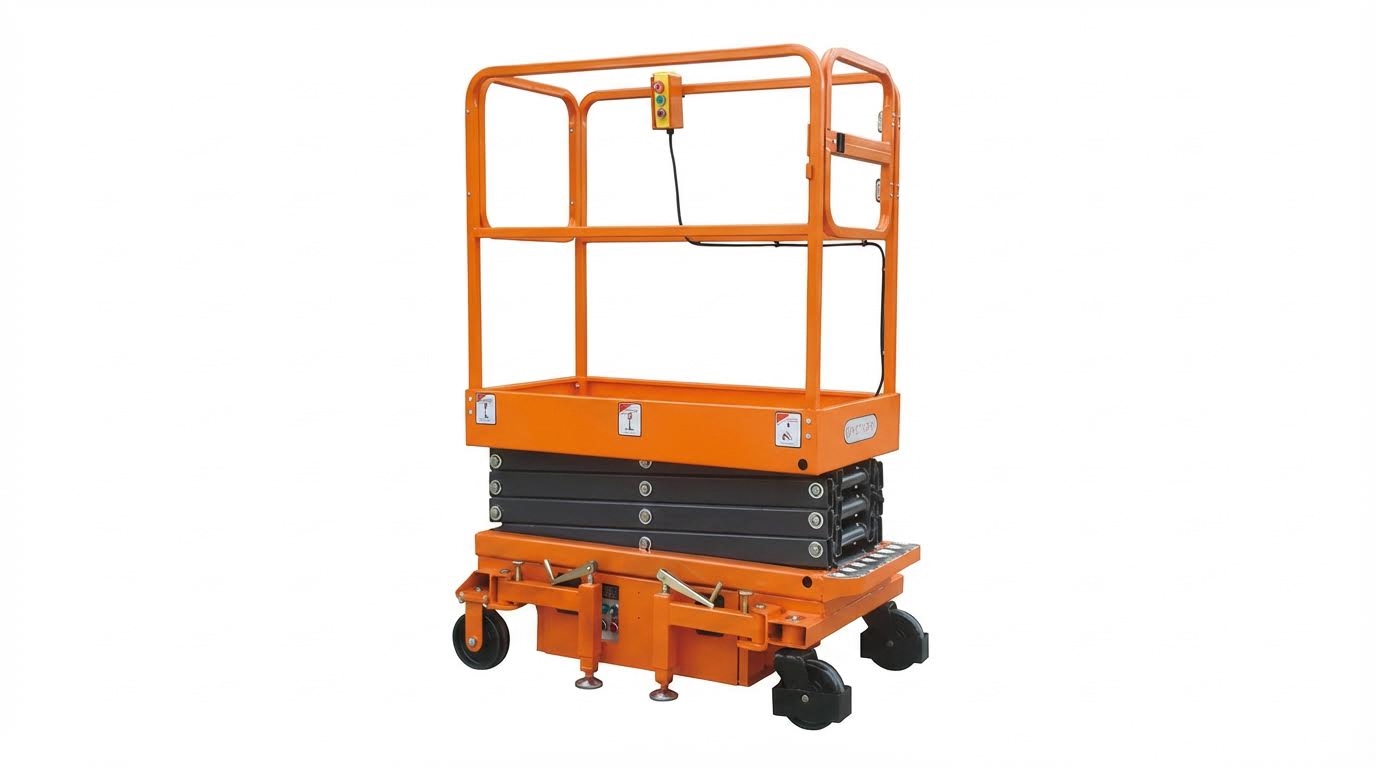
Indoor, Tight Aisles, And Level-Floor Work
For indoor, level floors and tight aisles, you usually want compact Group A MEWPs with simple travel behavior. This is also where understanding what characteristic defines a type 1 mobile elevating work platform helps you avoid over‑specifying equipment. Type 1 units only travel with the platform fully lowered, which improves control in congested spaces. Use the points below to align type/group with typical indoor scenarios.
| Typical Indoor Scenario | Recommended MEWP Group | Recommended Type | Why It Fits |
|---|---|---|---|
| Warehouses with narrow aisles, racking | Group A (vertical, within tipping lines) Group definition | Type 1 or Type 3 | Compact footprint; vertical lift; reduced swing; Type 1 minimizes movement at height in busy aisles. |
| Indoor maintenance on flat factory floors | Group A | Type 1, 2, or 3 (depending on need to travel elevated) | Level floors allow safe elevated travel if procedures support it; Type 1 is simplest where repositioning is infrequent. |
| Retail stores, stock picking, light installation | Group A | Type 1 or 3 | Short travel distances; work usually done near where you can park directly under the task. |
| Indoor atriums with obstacles (columns, fixtures) | Group B (platform may need to reach over obstacles) Typical Group B uses | Type 3 | Operator needs to reposition while elevated to clear obstacles and reach set‑backs. |
How type choice changes indoor workflow
Type 1 MEWPs must be driven only with the platform fully lowered, so every reposition requires stowing, traveling, and re‑elevating. This slows cycle time but reduces the chance of striking racking, sprinklers, or lighting when moving. Type 2 and Type 3 MEWPs allow travel with the platform elevated; Type 2 is controlled from the chassis, and Type 3 from the platform. Type definitions On flat, obstruction‑free floors, elevated travel can be efficient, but in cramped aisles many safety managers still favor Type 1 behavior to limit impact risks.
When you answer “what characteristic defines a type 1 mobile elevating work platform” for an indoor site, the key is this: a Type 1 can only move when the platform is in the stowed position, so all horizontal travel happens with the platform fully lowered. That characteristic makes Type 1 a strong fit where:
- Travel distances are short and infrequent between work positions.
- Aisles are tight and overhead services are dense (ducts, sprinklers, lighting).
- Site rules prioritize eliminating elevated travel inside buildings.
- Tasks are mainly vertical access straight up from a fixed parking spot.
Outdoor, Uneven Ground, And Complex Reach Tasks
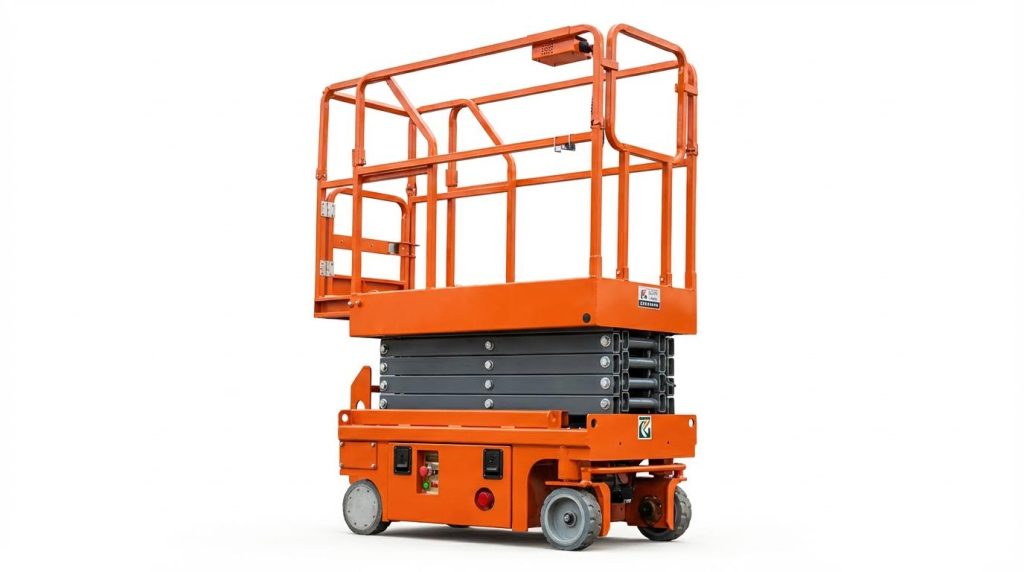
Outdoor work introduces uneven ground, wind, and set‑back obstacles (eaves, pipe racks, utilities). Here, you typically move away from Type 1 behavior and from pure Group A vertical machines. You often need Group B booms and the ability to travel or slew while elevated to reach over or around hazards.
| Outdoor Task / Terrain | Preferred MEWP Group | Preferred Type | Key Selection Reasons |
|---|---|---|---|
| Building facades on firm but sloping ground | Group B (boom reach beyond chassis) Typical Group B work | Type 3 | Operator can fine‑tune outreach and position from the platform while elevated. |
| Utility work, powerline maintenance, tree work | Group B | Type 3 | Frequent repositioning at height; need to work around obstacles and maintain safe clearances. |
| Construction on uneven, unprepared ground | Group A or B with rough‑terrain chassis, outriggers | Type 3 (sometimes Type 2 for specialized truck/chassis controls) | Rough‑terrain features and outriggers manage uneven ground; elevated control improves productivity. Terrain guidance |
| Outdoor flat slabs with repetitive work (e.g., lighting rows) | Group A or B depending on reach needed | Type 3 | Long travel paths at height; elevated driving reduces up‑down cycles and boosts output. |
Outdoors, the defining Type 1 characteristic (no travel with the platform elevated) becomes a limitation in many cases. It can still be acceptable where you have:
- Very short reach and the machine can park directly under the work.
- Prepared, level pads at each work location.
- Strict policies against elevated travel due to ground uncertainty or public interface.
However, for most uneven‑ground or complex‑reach jobs, supervisors usually select Group B, Type 3 MEWPs because they allow controlled elevated movement from the platform while the boom extends beyond the tipping lines. Type and group behavior This combination supports safer positioning around obstacles, provided ground conditions are assessed and the machine’s load and slope limits are respected.
Final Considerations When Specifying MEWP Type
When you choose a MEWP type, you are locking in how the machine can move, how it is controlled, and what risks you must manage. The core question to keep in mind is not only what characteristic defines a type 1 mobile elevating work platform, but also how that characteristic compares with Types 2 and 3 in your real job conditions. Use the points below as a final engineering and safety checklist before you sign off on a specification.
Critical Technical Questions To Confirm Before Selection
Before finalizing a MEWP type, validate these technical points against the site and task. This avoids mismatches between movement capability, reach, and control position.
- Travel-at-height requirement: If the job needs horizontal repositioning while elevated, Type 1 is not acceptable because it can only move with the platform fully stowed and lowered (Type 1 travel restriction).
- Control position at height: Decide if movement at height must be controlled from the chassis (Type 2) or from the platform (Type 3) for productivity and visibility at the work face (Type 2 vs Type 3 definition).
- Group A vs Group B stability envelope: Confirm whether the platform can stay within the tipping lines (Group A) or must reach beyond them (Group B), as this changes stability behavior and setup sensitivity (Group definitions).
- Required working height and outreach: Check that the selected type and group can achieve both vertical height and horizontal reach without overloading or unsafe positioning near edges or obstacles (selection by height and function).
- Ground and support conditions: Confirm whether the surface is level, sloped, or rough, and whether outriggers or rough-terrain features are required for the chosen MEWP type and group (terrain considerations).
Safety, Training, And Compliance Implications
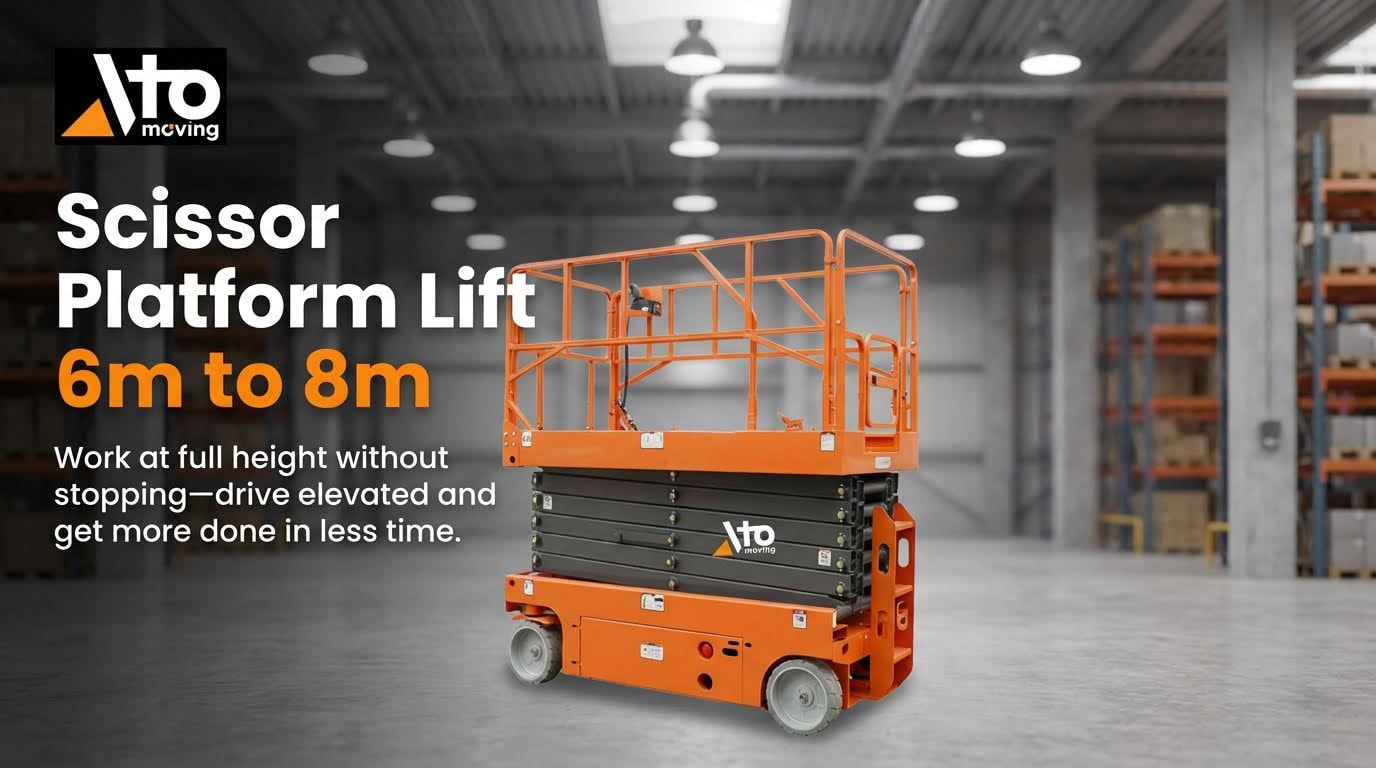
Each MEWP type carries different safety and competency demands. Your specification should explicitly tie the machine choice to training, inspection, and rescue planning.
- Type-specific familiarization: Training now emphasizes familiarization on the exact MEWP model and configuration, not just generic type training (updated ANSI requirements).
- Operator capability: Ensure operators are physically and mentally capable and trained on control functions, limitations, and operating characteristics for the selected type and group (operator training requirements).
- Supervisor competence: Supervisors must understand how MEWP type (1, 2, or 3) and group (A or B) affect hazard profiles and must be able to select appropriate equipment and enforce safe use (supervisor responsibilities).
- Occupant briefing: Occupants should know basic emergency controls so they can lower or secure the platform if the operator becomes incapacitated, especially for Type 3 machines where controls are on the platform (occupant safety protocols).
- Inspection regime fit: Confirm that your maintenance organization can meet pre-start, frequent, and annual inspection requirements for the chosen equipment class before deployment (inspection requirements).
Key Inspection And Rescue Planning Points
Inspections must occur at three levels: pre-start (daily or each shift), frequent (before use or after long downtime), and annual (comprehensive, at least every 12 months, by a qualified person). Equipment must not be put into service until it passes these checks. A written rescue plan is also mandatory, covering self-rescue, assisted rescue by coworkers, and technical rescue by emergency services, tailored to the platform type and expected failure modes (rescue and inspection protocols).
Practical Specification Checklist By MEWP Type
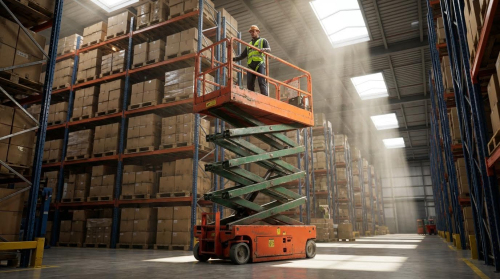
The table below summarizes how the defining movement characteristic of each type, especially what characteristic defines a type 1 mobile elevating work platform, should influence your final specification.
| Item | Type 1 MEWP | Type 2 MEWP | Type 3 MEWP |
|---|---|---|---|
| Defining movement characteristic | Can only travel when platform is fully lowered and stowed; no travel allowed with platform elevated (Type 1 definition) | Can travel with platform elevated, but all travel controls are at the chassis (Type 2 definition) | Can travel with platform elevated, with travel controlled from the work platform itself (Type 3 definition) |
| Best-fit applications | Short, static tasks where the machine can be repositioned only between jobs; simple indoor work on level floors | Tasks where repositioning at height is needed but a ground-based spotter or operator is acceptable (e.g., controlled moves near hazards) | Frequent repositioning at height with best visibility from the platform, complex reach, and productivity focus |
| Key safety focus | Correct setup and repositioning sequence; no attempts to move when elevated; clear ground conditions | Communication between platform and chassis operator; managing swing and clearance while elevated | Operator awareness of surroundings while driving at height; strict adherence to load and outreach limits |
| Training emphasis | Limits on travel and safe stow/elevate cycles | Safe use of chassis controls and signaling while platform is occupied | Platform control use, emergency lowering, and collision avoidance at height |
Final Engineering Takeaways
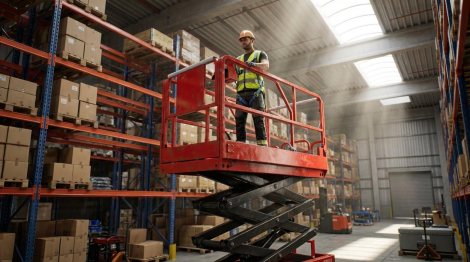
When you specify MEWP type, treat the type and group choice as an engineering control, not a procurement detail. The defining rule for Type 1—that it can only move with the platform fully lowered—makes it inherently simpler but also less flexible than Types 2 and 3, which allow elevated travel with different control positions. Align this movement capability with your access geometry, terrain, and rescue strategy, then lock in matching training and inspection plans so the chosen MEWP type remains safe and efficient over its full service life.
Final Considerations When Specifying MEWP Type
Type and group choices do more than label a MEWP. They fix how forces act through the chassis, how operators move at height, and how close the center of gravity can approach the tipping lines. Type 1 removes dynamic travel loads at height, so it suits short, static, vertical work where you can accept slower repositioning. Types 2 and 3 enable elevated travel, so they demand tighter control of ground conditions, load, and speed, especially in Group B outreach geometries.
Engineering teams should start with geometry and terrain, then match Type 1, 2, or 3 and Group A or B to that envelope. Safety teams must then build training, inspection, and rescue plans around the chosen behavior. Operations should treat Group B, Type 2 and Type 3 units as the highest‑risk combination and apply stricter supervision and exclusion zones.
The best practice is simple. First, decide if you truly need travel at height. Second, decide where travel controls must sit. Third, confirm whether the platform can stay inside the tipping lines. Only then select a specific MEWP or Atomoving aerial platform model and lock in type‑specific training and inspection before work starts.
Frequently Asked Questions
What characteristic defines a Type 1 Mobile Elevating Work Platform (MEWP)?
A Type 1 Mobile Elevating Work Platform (MEWP) is defined by its ability to be self-propelled and controlled from the operator’s station on the work platform. This means it can move independently while lifting workers to elevated positions. Elevating Work Platforms Guide.
Is a scissor lift considered a mobile elevated work platform?
Yes, a scissor lift is considered a type of mobile elevated work platform (MEWP). MEWPs include various devices like scissor lifts, boom lifts, and vertical mast lifts that are designed to elevate workers safely. Types of MEWPs Guide.