
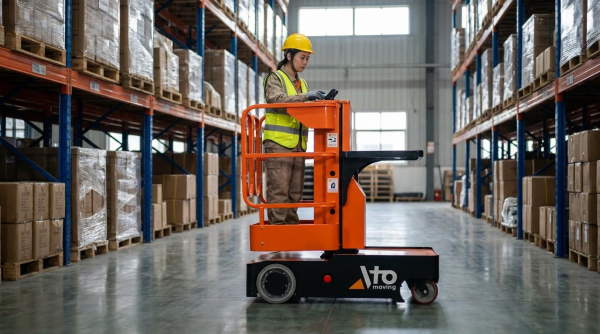
Warehouse order picker lift types are engineered classes of powered industrial trucks that elevate both operator and load, and they are not interchangeable with generic cherry picker access platforms. In real operations this matters because stability limits, aisle widths, rack heights, and OSHA/ANSI classifications are all different, so asking “are all cherry picker machines the same in the warehouse” leads to costly safety and productivity mistakes. This guide explains what makes a order picking machines unique, compares low-, medium-, and high-lift systems, and shows how capacity, battery technology, and duty cycle determine the right machine for your layout. By the end, you will know how to match semi electric order picker types to your racks, aisles, and pick profile instead of treating every elevated work platform as the same “cherry picker.”
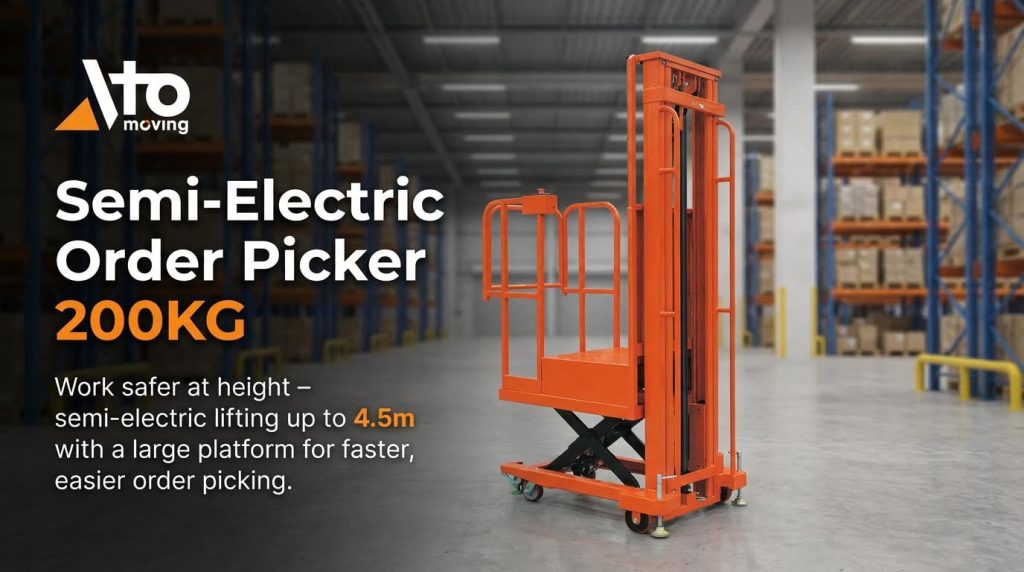
What Makes A Warehouse Order Picker Different?
A warehouse order picker is a powered industrial truck engineered to lift both operator and load inside racking, while generic cherry pickers are aerial access platforms not optimized for pallet handling or aisle geometry. Order pickers are part of the storage system itself: their mast, chassis width, forks, and platform are tuned to your rack heights, aisle widths, and pick profiles. Generic “cherry pickers” (MEWPs) are built mainly for getting a person to height, not for stabilizing a pallet at 10–14 m in a 1,600–1,900 mm aisle. This is why the question “are all cherry picker machines the same in the warehouse” has a clear engineering answer: no, because stability, load handling, and regulatory category differ by design.
💡 Field Engineer’s Note: I routinely see warehouses overspend or create safety risks by treating all elevated work platforms as interchangeable; always match the machine’s stability triangle and fork geometry to your rack layout and load type.
Order pickers vs. generic cherry pickers
Order pickers and generic cherry pickers differ in load handling, aisle fit, and regulatory class, so using them interchangeably in a warehouse can create stability issues, slow picks, and compliance gaps. Order picking machines are designed as Class II electric motor narrow-aisle trucks under OSHA’s powered industrial truck rules, with forks, pallets, and operator platforms integrated into the rack-and-aisle workflow. In contrast, boom and scissor “cherry pickers” are Mobile Elevating Work Platforms (MEWPs), built for access at height, not for fast, repeatable carton and pallet handling in confined aisles.
- Different design intent: Semi electric order picker and other variants are tuned for case and piece picking in racking, with pallets and forks as core elements, while MEWP cherry pickers focus on positioning people and tools at height for work tasks.
- Load handling geometry: Low-, mid-, and high-lift order pickers use pallet-compatible forks and specific load centers for 900–1,500 kg class loads, unlike platform-only or basket-only MEWPs that cannot safely secure pallets at reach. Reference: order picker capacities and design
- Aisle and layout compatibility: Order pickers are dimensioned for narrow or very narrow aisles and racking clearances, often using rail or wire guidance at high lift, while generic cherry pickers need much more floor space to maneuver.
- Regulatory category: Order pickers follow OSHA powered industrial truck rules and ANSI industrial truck standards, whereas boom/scissor cherry pickers follow ANSI/SAIA MEWP standards focused on aerial access, not palletized load stability. Reference: regulatory distinctions
- Operator training and inspection: Order picker operators require powered industrial truck training matched to the specific truck class, while MEWP users follow different aerial lift training and inspection protocols, so “one generic cherry picker license” is not enough. Reference: training requirements
- Energy and duty cycle: Warehouse order pickers use electric drives with regenerative braking and high-efficiency batteries sized for continuous picking shifts, while many self-drive cherry pickers are optimized for intermittent construction or maintenance work patterns. Reference: drive and battery technology
Why “are all cherry picker machines the same in the warehouse” is the wrong question
From an engineering and OSHA standpoint, the real question is whether the machine’s stability, load chart, and standard classification match your use case. A Class II order picker designed for 1,200 kg pallets at 8 m in a 1,800 mm aisle is not equivalent to a MEWP boom lift designed to put a technician and 200 kg of tools on a roofline. Treating them as the same “cherry picker” ignores center-of-gravity movement, derating at height, and the different standards that govern each machine.
Core lift classes: low-, medium-, and high-lift
Core warehouse order picker types—low-lift, medium-lift, and high-lift—are defined by working height, aisle strategy, and stability limits, and each class behaves differently under load as height increases. These classes answer the practical question “are all cherry picker machines the same in the warehouse” with a clear no: a 2.5 m low-lift horizontal picker, a 6 m mid-level picker, and a 14 m very narrow aisle system have completely different mast engineering, derating behavior, and guidance needs. Choosing the wrong class for your rack height or aisle width either wastes capital (over-spec) or creates safety and productivity constraints (under-spec).
| Lift Class | Typical Working Height Range | Typical Capacity Range | Application Focus | Key Stability / Design Traits | Field Impact |
|---|---|---|---|---|---|
| Low-lift horizontal order picker | Up to ~2,500 mm platform height | ≈1,000–1,500 kg | Ground and first-level picking in wide aisles | Short mast or elevating platform, emphasis on travel speed and acceleration | Maximizes pick rates for e-commerce and fast movers without over-investing in tall masts. Reference: low-lift heights and capacities |
| Medium-lift vertical order picker | ≈6,000–6,500 mm operator elevation | ≈900–1,400 kg with derating at height | Mid-level rack beams where carton picks concentrate | Taller mast with strict derating and speed reduction logic at height | Reaches mid-rack SKUs without committing to full high-bay; good balance of reach and stability for standard narrow aisles. Reference: medium-lift heights and capacities |
| High-lift narrow-aisle order picker | Up to ≈14,000–14,500 mm working height | Up to ≈2,500 kg at low heights; heavily derated at maximum height | Very narrow aisles and high-bay storage | Advanced mast engineering, rail or wire guidance, dynamic braking and speed limits | Unlocks high-bay density but demands precise aisle design, guidance infrastructure, and strict adherence to load charts. Reference: high-lift heights and guidance |
Within these classes, there are further variants such as mid-level order pickers lifting up to 1,000 kg to about 2,440 mm, high-level models up to 1,360 kg at roughly 10,210 mm, and turret-style trucks reaching around 17,145 mm in very narrow aisles. Reference: order picker and turret truck variants This spread reinforces that even within “order pickers,” not all machines are the same, and each has a specific design window for height, capacity, and aisle width.
How lift class affects your layout and safety envelope
As you move from low- to high-lift, the combined center of gravity of truck, operator, pallet, and load moves higher and further from the chassis, shrinking the stability polygon. Engineers counter this with heavier counterweights, wider or guided chassis, and electronic speed limits at height. That is why high-lift systems often require rail or wire guidance and reduced travel speed when elevated, while low-lift horizontal pickers can prioritize acceleration and turning agility on flat, open floors.
Key Engineering Differences Between Picker Types
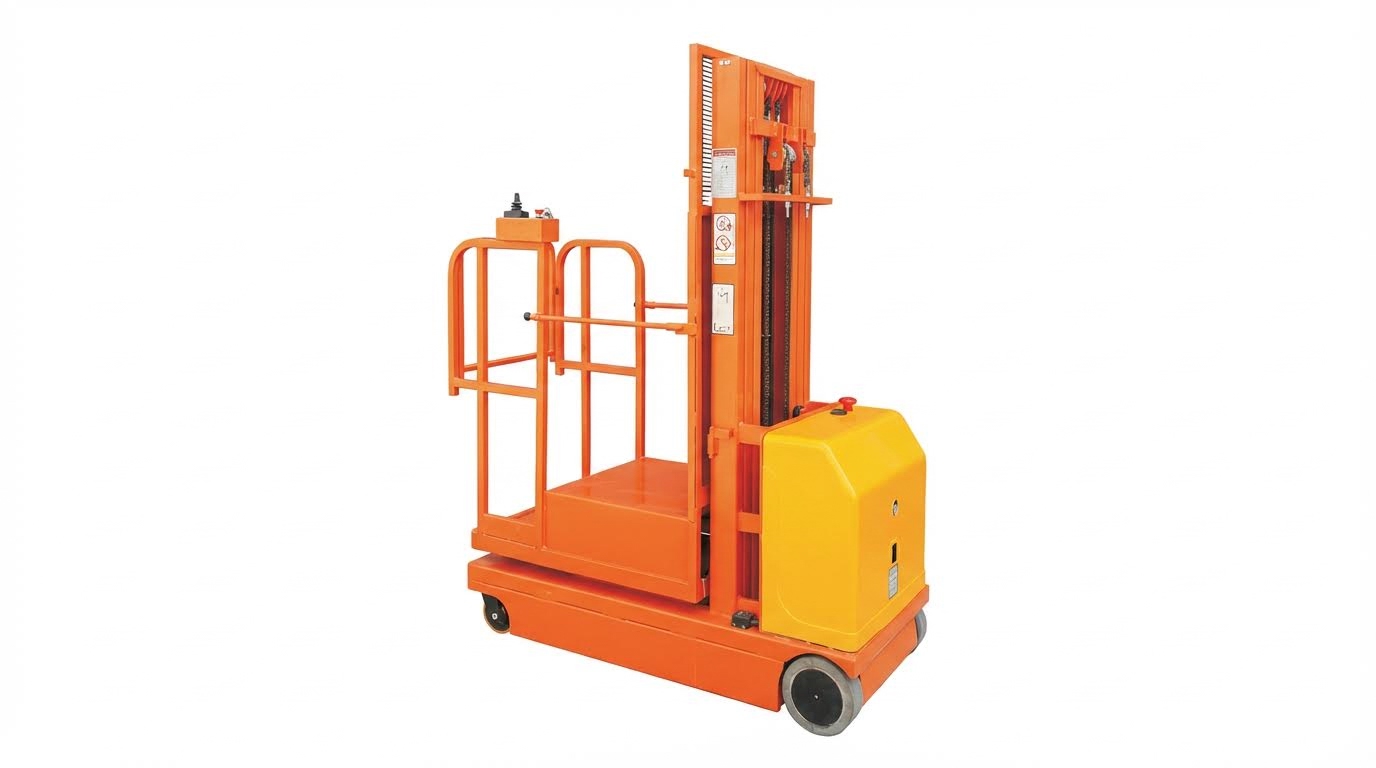
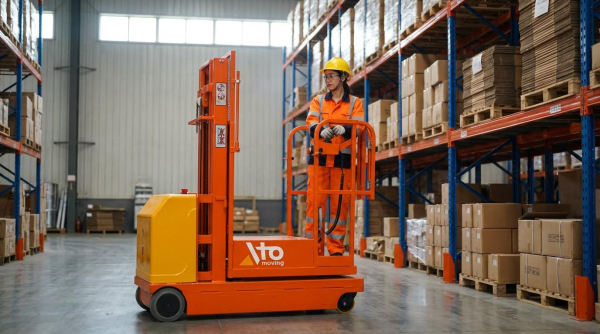
Key engineering differences between picker types explain why the answer to “are all cherry picker machines the same in the warehouse” is no: each class is purpose‑built for height, aisle width, stability, and picking method.
Warehouse order picker split into three main engineering families: low-lift horizontal units, medium-lift vertical systems, and high-lift narrow-aisle machines. Each solves a different combination of reach, capacity, and maneuverability, so treating them as generic “cherry pickers” leads to safety issues and poor productivity.
💡 Field Engineer’s Note: When you mix the wrong picker type with the wrong rack height or aisle width, operators compensate with unsafe habits—overreaching, side‑loading pallets, or driving elevated—to “make it work.” That’s where most tip‑over near‑misses start.
Low-lift horizontal pickers and platform design
Low-lift horizontal order pickers are engineered for fast ground-level picking with platform heights below about 2,500 mm, prioritizing travel speed, operator ergonomics, and pallet interface rather than high vertical reach.
Low-lift order pickers are designed for horizontal case and piece picking in ground and first rack levels, with platforms typically staying under about 2.5 m to keep the operator in a low fall-risk zone. They focus on rapid acceleration, deceleration, and short turning radii for wide-aisle, high-throughput operations, not on reaching upper rack beams. Capacities usually range up to roughly 1,000–1,500 kg depending on fork length and load center for typical models.
| Parameter | Typical Range / Design | Field Impact |
|---|---|---|
| Platform height (max) | ≈ 1,200–2,500 mm | Keeps work at ground/first level; no need for harness in many jurisdictions, faster on/off cycles. |
| Rated capacity | ≈ 1,000–1,500 kg | Supports a full pallet of cartons plus operator without overloading steering or drive units. |
| Primary motion | Horizontal travel, short lifts | Optimizes pick rate along long aisles; not suitable for mid- or high-bay access. |
| Fork & pallet geometry | Integrated forks sized for pallets | Allows picking directly onto the outbound pallet, reducing double handling. |
| Operator platform design | Guardrails, toe-boards, non-slip floor | Reduces slip and fall risk during constant step-on/step-off cycles. |
Unlike construction-style cherry pickers that just provide a basket at height, low-lift warehouse units integrate pallet-compatible forks and a walk-on platform into one machine, so the operator can pick directly into the final shipping unit. This is why asking “are all cherry picker machines the same in the warehouse” misses the point: low-lift pickers are tuned for ground-level productivity, not generic aerial access.
More on platform ergonomics
Because operators step on and off hundreds of times per shift, floor surfaces use non-slip textures and drainage patterns to maintain traction, even in dusty or slightly damp conditions as described in platform design guidance. Guardrails, mid-rails, and toe-boards are standard, with inward-opening or interlocked gates to prevent accidental step-offs while traveling.
💡 Field Engineer’s Note: If your pick face is mostly below 1,800 mm and aisles are ≥ 2.7–3.0 m, low-lift horizontal pickers usually beat any high-lift solution on picks/hour because operators aren’t wasting time going up and down.
Medium-lift vertical systems and stability limits
Medium-lift vertical order pickers elevate operators to roughly 6–6.5 m, so mast stiffness, capacity derating, and platform guarding become the dominant engineering constraints for safe, repeatable mid-level picking.
Medium-lift pickers bridge the gap between ground work and true high-bay storage, giving access to mid-rack beams where a lot of carton and each-pick activity sits. Typical working heights are about 6,000–6,500 mm, with rated capacities in the 900–1,400 kg range for common designs. As the platform and load go higher, the combined center of gravity shifts, so manufacturers strictly derate capacity at height to keep the resultant load within the truck’s stability polygon.
| Design Aspect | Typical Engineering Choice | Field Impact |
|---|---|---|
| Max operator height | ≈ 6,000–6,500 mm | Reaches mid rack levels without the cost/complexity of full high-bay systems. |
| Capacity range | ≈ 900–1,400 kg with derating at height | Safe handling of mixed carton/pallet loads; operator must respect capacity plate at given lift height. |
| Mast design | Stiff, multi-stage upright | Limits sway so operators feel stable when picking at height, improving accuracy. |
| Chassis width & steering | Tuned for narrow aisles | Allows tighter aisles than low-lift trucks while maintaining maneuverability. |
| Speed control at height | Automatic travel speed reduction | Reduces dynamic instability from braking/steering with elevated loads. |
From a safety and compliance standpoint, these trucks fall under OSHA powered industrial truck rules and ANSI industrial truck standards, not the MEWP standards used for boom or scissor lifts that govern many “cherry pickers.” That difference alone shows why you cannot assume all cherry picker machines are the same in the warehouse—operator training, inspection checklists, and capacity plates are written to different standards and physics assumptions.
How stability limits affect operations
Engineers size counterweights, mast sections, and chassis geometry so the combined mass of operator, pallet, and load stays inside the stability triangle as height increases according to stability guidance. At higher elevations, control systems automatically reduce travel speed and may limit certain steering angles to avoid tipping moments from aggressive maneuvers.
💡 Field Engineer’s Note: In real warehouses, “capacity” is rarely the limiting factor—“comfort” is. If the mast sways too much or the truck feels twitchy at 5–6 m, operators slow down or refuse to go to top beam, killing your pick rate.
High-lift narrow-aisle masts and guidance systems
High-lift narrow-aisle order pickers are engineered to reach up to roughly 14–14.5 m in very narrow aisles, relying on sophisticated mast structures, guidance systems, and speed controls to maintain stability and clearance at extreme heights.
High-lift systems operate in very narrow aisle (VNA) environments, often paired with rail or wire guidance to keep clearances to rack upright faces within tens of millimetres. Working heights can reach approximately 14,000–14,500 mm, with capacities peaking around 2.5 tons at lower lift heights and conservative load charts near maximum reach for typical VNA order pickers. At these elevations, control systems enforce travel speed reduction, dynamic braking control, and integrated fall protection to manage risk.
| High-Lift Feature | Typical Spec / Approach | Field Impact |
|---|---|---|
| Max lift height | ≈ 14,000–14,500 mm; some turret trucks ≈ 17,145 mm | Enables true high-bay storage and picking, maximizing cubic utilization. |
| Capacity profile | Up to ≈ 2,500 kg at low height, derated at max height | Supports full pallets low; requires strict adherence to load charts up high. |
| Aisle type | Very narrow aisle with rail or wire guidance | Minimizes aisle width, but truck is essentially “locked” into straight-line paths. |
| Guidance system | Floor rail or embedded wire | Reduces steering corrections, prevents rack impacts, and supports higher travel speeds in-aisle. |
| Fall protection | Harness + lanyard to approved anchor point | Protects operators from severe falls at ≥ 10 m working height. |
These machines are purpose-built for pallet-compatible forks and man-up picking inside dense rack environments, which generic boom or scissor cherry pickers are not. Generic cherry pickers are categorized as MEWPs and optimized for flexible access around buildings or sites, not for threading between racks at 12–14 m with millimetre clearances as regulatory comparisons note. That’s the engineering reality behind why not all cherry picker machines are the same in the warehouse.
Why guidance systems matter at height
At 12–14 m, even a small lateral impact can translate into a large sway at the operator platform. Rail or wire guidance keeps the chassis centered, so steering corrections don’t introduce side loads into the mast. Combined with automatic speed and acceleration limits, this reduces both rack damage and operator fatigue, while maintaining acceptable picks/hour.
💡 Field Engineer’s Note: Before you commit to VNA high-lift systems, survey your floor flatness and joint condition. Any unevenness is magnified at 14 m and can cause mast oscillation, slowdowns, and long-term structural fatigue if not corrected.
Matching Order Picker Types To Your Operation
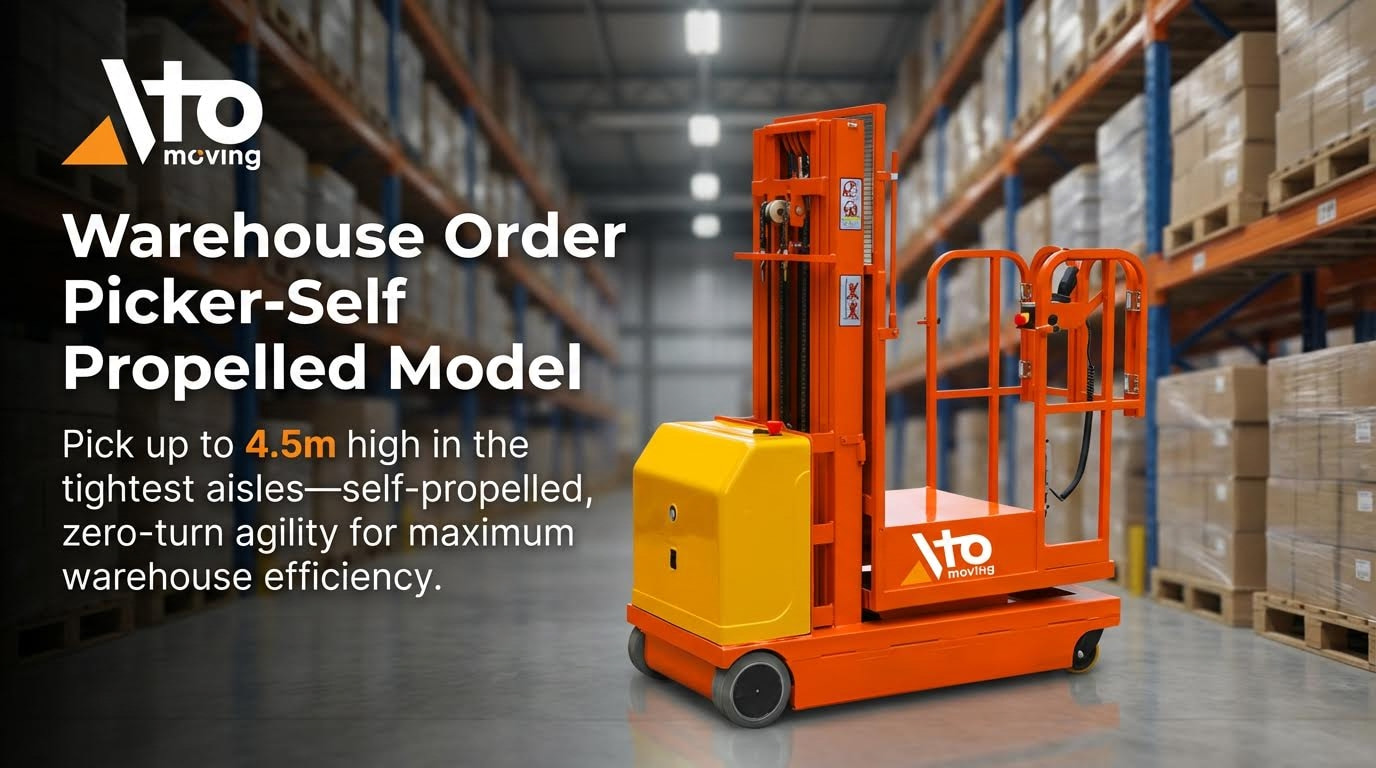
Matching order picker types to your operation means engineering the truck around aisle width, rack height, capacity, and duty-cycle so you answer “are all cherry picker machines the same in the warehouse?” with a clear, data-backed no.
💡 Field Engineer’s Note: I always size the truck to the tightest aisle and highest pick face first; everything else (battery, capacity, guidance) is an optimization problem around those two hard constraints.
Aisle width, rack height, and layout constraints
Aisle width, rack height, and layout dictate whether you can safely deploy low-, medium-, or high-level order pickers, and they prove that not all “cherry pickers” behave the same inside a racking system.
| Design Factor | Typical Range / Option | Best-Fit Picker Type | Field Impact |
|---|---|---|---|
| Aisle width | Wide aisles > 3,0 m | Low-lift horizontal picker | Maximizes travel speed and acceleration for ground/first-level picks, ideal for high-throughput e-commerce zones. Low-lift designs favor horizontal movement. |
| Aisle width | Narrow aisles ≈ 2,0–2,7 m | Medium- to high-lift man-up order picker | Requires tuned chassis and steering geometry for repeatable rack approach in tighter clearances. Narrow-aisle geometry is engineered-in. |
| Aisle width | Very narrow aisles < 2,0 m | High-lift narrow-aisle system / turret | Often uses rail or wire guidance to avoid rack strikes and maintain clearances at up to ≈ 14–17 m working height. Turret trucks and high-level pickers are purpose-built. |
| Rack height | < 2,5 m first beam | Low-lift order picker or WAV | Platform heights below ≈ 2,5 m cover floor and first level, minimizing mast complexity and keeping speeds high. Low-lift units prioritize horizontal flow. |
| Rack height | ≈ 6–6,5 m pick level | Medium-lift vertical picker | Bridges ground work and mid-level carton picking where many SKUs sit, with capacities ≈ 900–1,400 kg and stability derating at height. Derating protects stability margins. |
| Rack height | ≈ 10–14+ m pick level | High-level order picker / turret | Supports high-bay storage with working heights up to ≈ 10–14,5 m and beyond, using conservative load charts and speed reduction at elevation. High-bay designs are tightly engineered. |
| Guidance method | Free-roaming vs. rail / wire guidance | From low-lift to high-lift systems | Guidance choice affects required aisle width, travel speed, and impact risk; high-lift narrow-aisle systems commonly rely on guidance. Guidance stabilizes tall masts. |
These geometry constraints are why you cannot assume are all cherry picker machines the same in the warehouse; a MEWP-style boom that works outdoors often cannot even turn inside a 1,8 m VNA aisle.
How to quickly sanity-check your layout against picker types
Measure clear aisle width between rack uprights in mm, note top pick beam height, and identify any dock slopes or floor transitions. With those three numbers, you can immediately eliminate several incompatible picker classes.
Capacity, battery tech, and duty-cycle considerations
Capacity, battery technology, and duty-cycle define whether a specific warehouse order picker can safely carry your loads all shift long, and they further separate warehouse-optimized trucks from generic cherry picker platforms.
| Selection Factor | Typical Engineering Range | Relevant Picker Classes | Field Impact on Operations |
|---|---|---|---|
| Rated capacity | ≈ 900–1,500 kg for many order pickers; up to ≈ 2,500 kg at lower heights | Low-, mid-, and some high-lift systems | Must cover operator, pallet, and load mass while respecting derating at height to keep the center of gravity inside the stability polygon. Capacity plates encode these limits. |
| High-bay capacity | Up to ≈ 1,360–1,500 kg at high lift; higher at lower elevations | High-level order pickers / turret trucks | Supports full pallet and case picking in tall racking, but operators must follow conservative load charts near maximum height. Charts prevent overloading at elevation. |
| Battery type | Lead-acid, sealed, or lithium-ion with high-frequency chargers | All electric warehouse order pickers | Impacts runtime, opportunity charging, and maintenance; lithium-ion and efficient AC drives with regenerative braking cut downtime and energy cost. Energy-efficient drives favor high-duty cycles. |
| Duty-cycle intensity | Light (single-shift, low picks) to heavy (multi-shift, high picks) | From small WAVs to high-lift man-up trucks | Heavy cycles justify higher-capacity batteries, fast charging, and telematics for utilization tracking and predictive maintenance. Digital twins optimize fleet sizing. |
| Platform & tray capacity | ≈ 90–115 kg on small WAV platforms | Work Assist Vehicles / low-capacity pickers | Suited for light item picking in very narrow aisles, not for full pallets or dense cases. Ideal for light maintenance and small orders. |
| Cycle energy management | Regenerative braking on lowering and deceleration | Medium- and high-lift systems | Recovers energy when lowering loads from height, extending runtime in pick-intensive operations with frequent vertical movements. Helps maintain performance late in the shift. |
- Stability logic at height: High-lift order pickers reduce speed and adjust braking response automatically at elevation to limit dynamic loads and keep the truck stable during steering and stopping. Control systems are height-aware.
- Application-specific variants: Scissor-lift forks, elevating platforms, and different fork geometries allow the same base truck family to handle loads from ≈ 1,080 kg up to ≈ 2,500 kg, depending on your SKU profile. Variants align with load type.
- Regulatory class vs. MEWPs: Warehouse order pickers fall under powered industrial truck rules, while many generic cherry pickers are MEWPs, so training, inspections, and capacity labeling differ even if they look similar. Different standards, different behaviors.
💡 Field Engineer’s Note: When someone asks “are all cherry picker machines the same in the warehouse?”, I show them battery change logs and impact data—mis-matched trucks either die before lunch or keep hitting the same rack bay.
Final Thoughts: Choosing The Right “Cherry Picker” For Your Warehouse
Order pickers are not generic cherry pickers. Engineers design them as part of the racking system, not as standalone access platforms. Mast height, chassis width, fork geometry, and guidance all link directly to your aisle width and rack height. When you ignore this link, operators improvise and risk tip‑overs, rack strikes, and slow picks.
Low-lift units favor horizontal speed at ground and first levels. Medium-lift trucks balance reach and stability in narrow aisles. High-lift VNA systems trade maneuver freedom for extreme height, tight guidance, and strict load charts. Battery choice and duty-cycle then decide whether that truck can hold performance for a full shift.
The practical rule is simple. Start with your tightest aisle and highest pick face. Map required capacity at that height. Then choose the order picker class, guidance, and battery package that fits those numbers and your standards, not what “looks similar” to a cherry picker.
Operations and engineering teams should treat this as an engineering decision, not a catalog choice. Use Atomoving specifications, capacity plates, and layout drawings to validate every truck against your racks before you buy. That is how you protect people, preserve racking, and hit target picks per hour at the same time.
Frequently Asked Questions
Are all cherry picker machines the same in the warehouse?
No, not all cherry picker machines are the same. They vary based on their design, capacity, and specific use cases within a warehouse. Some cherry pickers are designed for narrow aisles, while others may be more suited for heavy loads or higher reach. For example, boom lifts can handle more complex jobs and are generally more expensive than standard cherry pickers. Boom Lifts vs Cherry Pickers.
What types of cherry picker forklifts are there?
There are several types of cherry picker forklifts used in warehouses. These include:
- Narrow aisle cherry pickers: Designed for warehouses with limited space.
- Heavy-duty cherry pickers: Used for handling larger loads.
- Electric cherry pickers: Ideal for indoor use due to zero emissions.
Each type is tailored to specific tasks and environments, ensuring optimal performance and safety. Choosing the Best Cherry Picker.
What kind of training is needed for cherry pickers?
Operating a cherry picker requires proper training and certification. Key components of the training include:
- Safe operation practices
- Pre-shift inspections
- Load handling techniques
A high school diploma or GED is often required, along with a valid certification to operate powered industrial trucks. Cherry Picker Training.