Learning how to get a pallet truck and fork lift certiication means understanding that you must complete formal training, hands‑on evaluation, and documented employer sign‑off under OSHA’s powered industrial truck rules. Proper certification protects workers from high‑energy tip‑overs, struck‑by incidents, and load falls while keeping your site compliant with OSHA 1910.178(l) and related ASME standards. This guide walks you through what counts as a powered industrial truck, the exact training and evaluation steps, refresher and recordkeeping rules, and how engineering and technology factors should shape your training program. By the end, you will know the practical, step‑by‑step path to certify operators safely and efficiently for both pallet trucks and forklifts.
Understanding Certification For Pallet Trucks And Forklifts
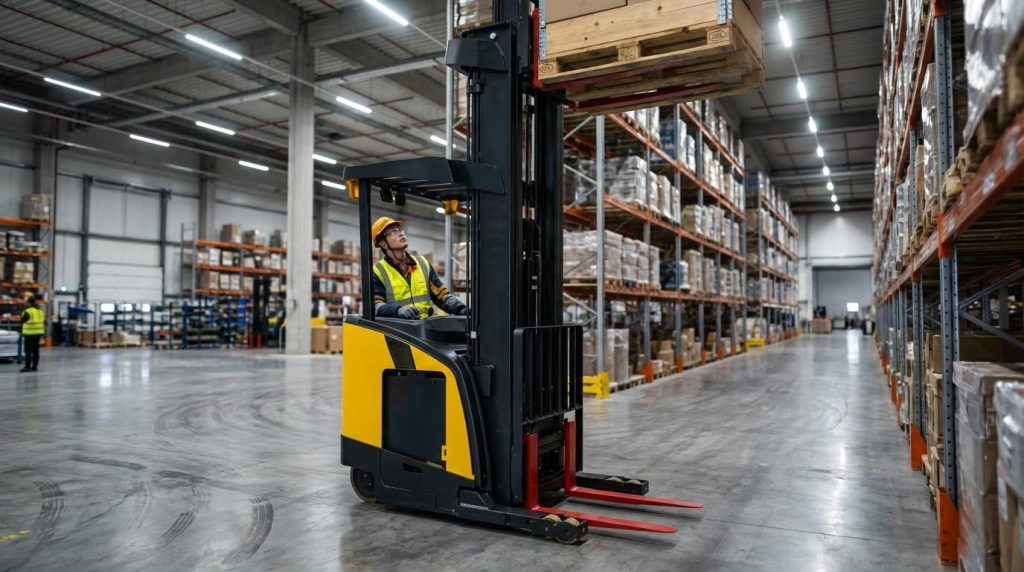
Certification for pallet trucks and forklifts is the formal proof that an operator has received OSHA-compliant training, passed a performance evaluation, and is authorized by their employer to use specific powered industrial trucks safely. When people search how to get a pallet truck and fork lift certiication, they are really asking what counts as a covered truck, which standards apply, and what training boxes must be checked to stay legal. This section explains which machines fall under “powered industrial trucks,” which OSHA and ASME rules control certification, and how those rules shape your training program and documentation. You can use this as the compliance blueprint before you choose courses, trainers, or equipment.
What Counts As A Powered Industrial Truck
A powered industrial truck (PIT) is any mobile, power‑propelled vehicle used to carry, push, pull, lift, stack, or tier materials, which includes most pallet trucks and forklifts but excludes earth‑moving and highway vehicles. Understanding this definition is the first step in how to get a pallet truck and fork lift certiication that actually matches OSHA coverage. In practice, this definition tells you which pieces of equipment trigger the training, evaluation, and recordkeeping rules in 29 CFR 1910.178.
- Power‑propelled vehicle: Uses electric, internal combustion, or other power to move or lift, not pure manual effort. This covers electric pallet jacks, counterbalance forklifts, reach trucks, and order pickers. ASME definition
- Material handling function: Designed to carry, push, pull, lift, stack, or tier loads, which is why most warehouse trucks fall under “powered industrial trucks.” Definition scope
- Included truck types: Class I–VII forklifts, powered pallet jacks, walkie stackers, reach trucks, order pickers, tow tractors, and similar units used in industry and logistics. Class I–VII coverage
- Excluded equipment: Earth‑moving machinery (e.g., loaders, excavators) and over‑the‑road haulage vehicles (e.g., highway trucks) are not treated as PITs under this definition. Exclusions
- Industry coverage: OSHA’s powered industrial truck rules apply across general industry, maritime, and construction, with general industry governed mainly by 29 CFR 1910.178(l). Covered sectors
💡 Field Engineer’s Note: Many sites mistakenly skip powered pallet jacks, assuming they are “just carts.” OSHA treats them as powered industrial trucks, so uncertified operators on walkies are a common hidden compliance gap.
Why the definition matters for your floor layout and risk
The PIT definition is not just legal language; it drives real‑world risk. Any powered truck that can lift or move 1,000–2,000 kg loads can generate enough kinetic energy to crush racking or pedestrians at surprisingly low speeds. By classifying powered pallet trucks and forklifts together, OSHA and ASME ensure operators get the same core training on visibility, stability, and pedestrian interaction, even if the truck is “only” a walk‑behind unit.
Key OSHA And ASME Rules For Certification
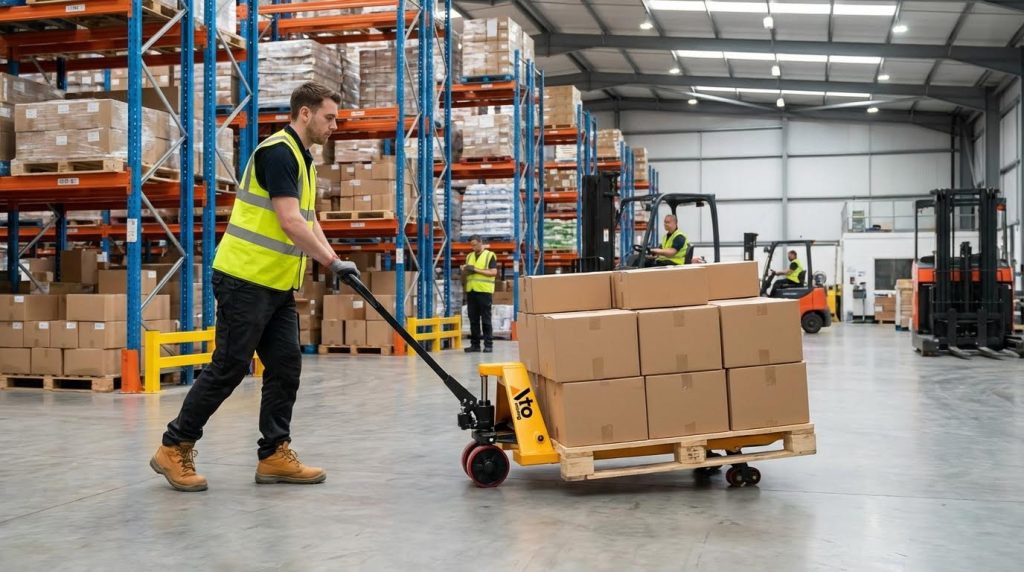
OSHA and ASME rules for certification require that every powered industrial truck operator complete formal instruction, practical training, and an evaluation on the job, with documented records and refresher training at defined triggers and intervals. These rules are the backbone of how to get a pallet truck and fork lift certiication that will stand up to an inspection or post‑accident investigation. They also dictate that training be truck‑type‑specific and tailored to the actual workplace conditions, not just generic theory.
| Requirement | What the Rule Says | Practical Meaning on the Floor | Field Impact |
|---|---|---|---|
| Training components | Operators must receive formal instruction, practical training, and a performance evaluation. OSHA 1910.178(l) | You cannot rely on a quick walk‑through; operators need classroom/online theory plus hands‑on driving and a scored evaluation. | Reduces tip‑overs, collisions, and falling‑load incidents by teaching controls, stability, and hazard recognition before solo operation. |
| Truck‑related topics | Training must cover operating instructions, controls, engine/battery operation, steering, visibility, capacity, stability, inspections, refueling/recharging. Truck topics list | Courses must explain how to read capacity plates, perform pre‑shift checks, and manage line‑of‑sight and blind spots for each truck type. | Improves uptime (fewer breakdowns from missed defects) and lowers error % in load handling. |
| Workplace‑related topics | Training must address surface conditions, load handling, pedestrian traffic, and hazardous environments. Workplace topics | The trainer must walk through your aisles, docks, slopes, and congestion points, not just show generic videos. | Aligns operator behavior with your actual floor grade, dock edges, and pedestrian patterns, cutting collision risk. |
| Type‑specific training | Certification applies only to the type of forklift used during training; new types or attachments require additional training. Type-specific rule | An operator trained on a sit‑down counterbalance is not automatically cleared for reach trucks, order pickers, or powered pallet jacks with platforms. | Prevents “paper certified” operators from using unfamiliar trucks that behave differently in tight aisles or at height. |
| Minimum age | Operators must be at least 18 years old to be certified. Age requirement | No minors on powered pallet jacks or forklifts, even in seemingly low‑risk back‑room tasks. | Reduces liability and ensures operators have basic physical and cognitive maturity for hazard judgment. |
| Certification documentation | Employers must certify training and evaluation with records listing operator name, training date, evaluation date, and trainer/evaluator. Record requirements | You must maintain organized training files or digital records for each operator, not just hand out cards. | Speeds OSHA or insurance audits and proves due diligence after an incident, protecting the business. |
| Evaluation frequency | Operator performance must be evaluated at least once every three years. Three-year evaluation | Plan recurring ride‑alongs or skills checks to confirm safe operation, not just initial onboarding. | Keeps bad habits from becoming normalized and catches unsafe shortcuts early. |
| Refresher training triggers | Required after accidents, near‑misses, unsafe operation, changes in truck type, or significant workplace changes. Refresher rules | Any incident or layout change (new racking, new dock, new truck) should trigger targeted retraining for affected operators. | Directly reduces repeat incidents and adapts operator behavior to new hazards or equipment. |
| Certification validity | Most programs align with OSHA’s three‑year evaluation cycle; certificates are typically treated as valid for three years. Three-year validity | Expect to renew or re‑evaluate every three years, sooner if there are incidents or unsafe acts. | Ensures knowledge stays current with changing equipment, batteries, and site procedures. |
💡 Field Engineer’s Note: From a risk perspective, OSHA’s three‑year maximum is the ceiling, not the target. High‑throughput sites with dense racking and mixed traffic often see measurable accident reduction by doing brief annual checks plus targeted refreshers after any near‑miss.
How online courses fit into OSHA and ASME expectations
Online courses can efficiently deliver the “formal instruction” portion in about 1–2 hours and often cover all seven PIT classes in one module. Course format and duration But OSHA still expects hands‑on practice and an on‑site evaluation on the specific trucks and in the actual workplace. Online alone does not certify an operator; it is one leg of the three‑part requirement (formal instruction, practical training, evaluation).
“”
Engineering, Safety, And Technology Factors In Training
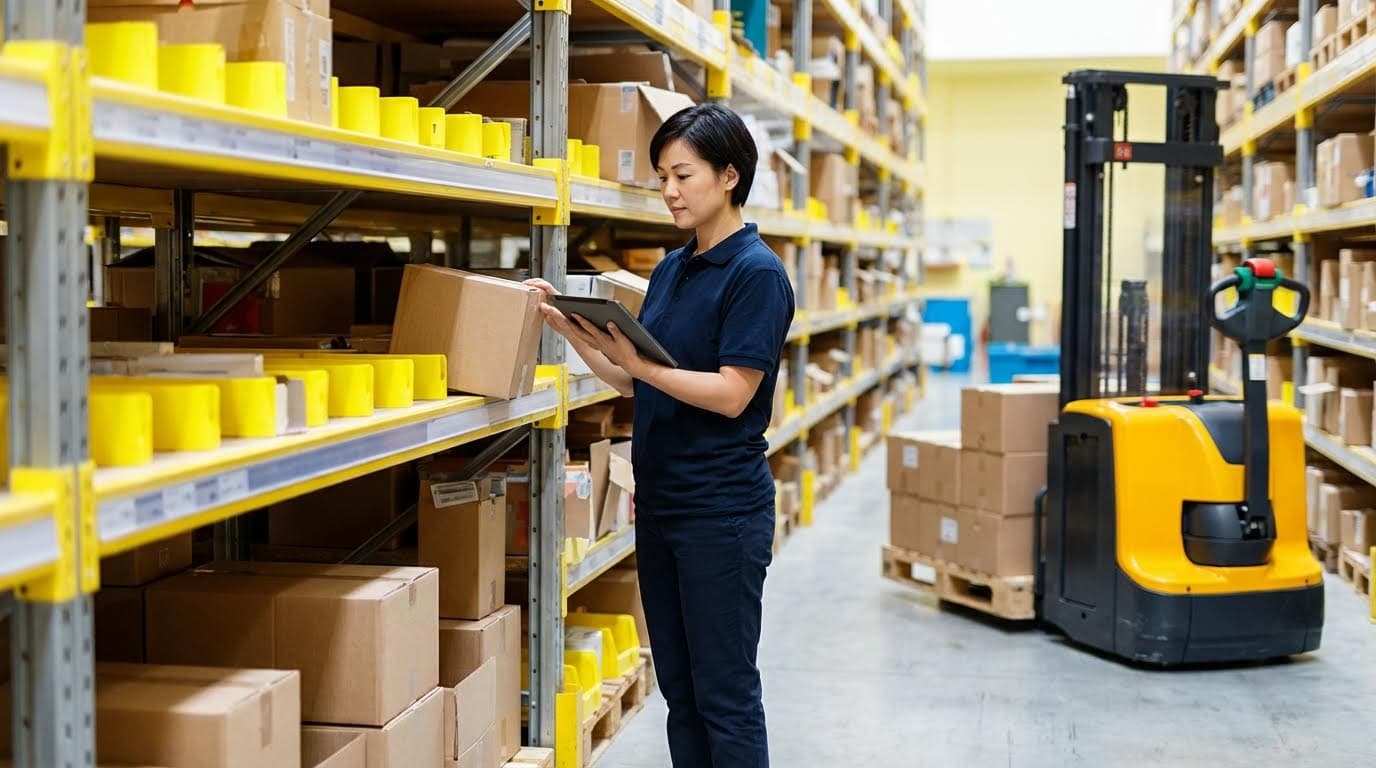
Engineering, safety, and technology factors define what separates checkbox training from a robust, OSHA-compliant program that actually prevents accidents and supports how to get a pallet truck and fork lift certiication in real operations.
Engineering-focused training goes beyond “how to drive” and teaches why trucks behave the way they do under load, on ramps, and around pedestrians. When you align physics, safety rules, and new technology (like telematics and automation), operators make better decisions and your incident rate, damage costs, and downtime all drop.
💡 Field Engineer’s Note: The best-performing sites I audit always teach operators “what the truck is trying to do” (center of gravity, traction, visibility) instead of just “what buttons to press.” That mindset cuts near-misses dramatically.
Stability, Load Handling, And Accident Prevention
Stability and load handling training teaches operators how center of gravity, capacity, and floor conditions interact, which directly prevents tip-overs, falling loads, and collisions that dominate powered industrial truck accident statistics.
OSHA requires that powered industrial truck training cover truck-related topics like capacity, stability, and load manipulation, plus workplace conditions such as surface condition, pedestrian traffic, and hazardous locations for each operator. When you design a course for how to get a pallet jack and fork lift certiication, these engineering topics must be front and center, not an afterthought.
| Stability / Load Factor | What Must Be Trained | Typical Risk If Ignored | Field Impact on Operators |
|---|---|---|---|
| Rated capacity (kg) at load center | Reading nameplates and understanding load center distances | Overloading and tip-over or mast failure | Operators know when a pallet is “too long” or “too heavy” even if it fits on the forks. |
| Combined center of gravity | How truck + load COG moves when lifting, tilting, and turning | Side or forward tip-overs on turns or ramps | Safer cornering and ramp use, fewer near-miss lean events. |
| Floor and surface conditions | Wet, uneven, or sloped surfaces and their effect on traction and braking | Skids, loss of control, or sliding loads | Operators slow down where friction is low, reducing collisions. |
| Stacking and unstacking at height | Approach, mast tilt, and fork positioning in racking | Falling loads or rack impacts | Cleaner put-away and retrieval, less product and rack damage. |
| Visibility and blind spots | Traveling in reverse, horn use, and spotter communication | Pedestrian strikes and truck-to-truck collisions | Operators adopt consistent “see and be seen” habits in aisles. |
| Speed control with and without load | Safe speed limits in congested vs. open areas | Inability to stop in time, especially with top-heavy loads | Lower impact forces, fewer serious injuries when incidents occur. |
Common forklift accidents such as tip-overs, collisions, and falling loads are frequently tied to poor load balancing, excessive speed, and limited visibility according to training providers. Your curriculum should therefore drill stability triangles, capacity plates, and real-world hazard recognition using photos or on-floor walkarounds.
- Pre-operation inspections: Teach operators to find defects that can cause brake failure, mast issues, or steering loss before they move a load, aligning with OSHA’s focus on inspections and safe operation for each shift.
- Travel with and without loads: Practical exercises must include traveling loaded and unloaded, picking up and setting down loads, and parking the truck as part of the evaluation.
- Ramps and grades: Operators need specific practice on slopes, including traveling with the load uphill/downhill and avoiding turning on grades where stability margins shrink.
- Pedestrian interaction: Build in horn use, eye contact, stop lines, and designated walkways so operators internalize a consistent pattern around people.
- Shutdown and parking: Include proper shutdown, lowering forks, and securing the truck to prevent roll-away or unintended use as emphasized in competency standards.
💡 Field Engineer’s Note: When I audit accident histories, a high percentage of “operator error” events trace back to weak training on grades and long, awkward loads. Build a specific module just for those scenarios, not generic driving.
Electric, Li-Ion, And Internal Combustion Truck Skills
Energy-source-specific skills ensure operators can safely charge, fuel, and operate electric, lithium-ion, and internal combustion trucks, which is essential when planning how to get a drum dolly and fork lift certiication that actually matches your fleet.
OSHA requires truck-related training on engine or motor operation, fueling, and battery charging for powered industrial trucks under 1910.178(l). In addition, certification is type-specific, meaning operators must receive extra training when they change to a different class of truck or attachments per certification guidelines.
| Truck / Power Type | Key Skills to Train | Typical Hazards | Field Impact on Operators |
|---|---|---|---|
| Electric pallet trucks (walkie / rider) | Low-speed control, plugging (direction changes), tight-aisle maneuvering, battery charging | Foot crush injuries, pinning in tight spaces, low-visibility impacts | Operators move safely in congested docks and trailers with fewer foot and ankle injuries. |
| Electric counterbalance forklifts (lead-acid) | Battery watering, charging station rules, ventilation, connector handling | Battery acid exposure, hydrogen gas buildup, connector arcing | Reduced corrosion and fewer charging-area incidents; longer battery life. |
| Lithium-ion forklifts / pallet trucks | On-truck charging procedures, BMS alarms, temperature and damage checks | Thermal runaway if damaged or mischarged, unfamiliar alarm codes | Operators respond correctly to alarms and remove damaged packs from service quickly. |
| LPG / gasoline / diesel forklifts | Cylinder changing, leak checks, fueling in designated areas, engine warm-up | Fuel leaks, fire risk, CO exposure in poorly ventilated areas | Safer refueling and better air quality compliance inside buildings. |
| Specialty trucks with attachments | Clamp pressure, fork positioners, rotators, and effect on capacity | Crushed product, dropped loads, unexpected capacity derating | Less product damage and correct speed/height decisions when using attachments. |
- Type-specific evaluations: Practical evaluations must be done on the actual truck types operators will use, and additional training is required when they change truck type or attachments per certification rules.
- Environment-specific focus: Electric trucks in freezers, IC trucks outdoors, and Li-ion in high-throughput docks all behave differently with temperature, traction, and stopping distance.
- Energy safety modules: Include distinct modules on battery charging, cylinder handling, and emergency shutdown so operators can respond to leaks, smoke, or alarms without hesitation.
- Noise and visibility differences: Electric trucks are quiet, which changes how pedestrians perceive them; IC trucks have more vibration and exhaust, affecting operator fatigue and awareness.
💡 Field Engineer’s Note: Many “mystery” damage incidents in warehouses start right after a fleet converts from IC to electric or lead-acid to Li-ion. Always run a short “transition training” block when you change energy types.
Integrating Inspections, Telematics, And Automation

Integrating inspections, telematics, and automation turns training into an ongoing safety system, using digital checklists and data to trigger refresher training and keep certifications compliant over time.
OSHA requires operators to perform inspections and for employers to certify that training and evaluations have been completed, with documentation including operator name, training and evaluation dates, and trainer identity for each operator. In-house training systems increasingly use digital recordkeeping and dashboards to track certifications and expiration dates, simplifying compliance management across locations.
| Technology / Process | Training Focus | Compliance / Safety Benefit | Field Impact on Operators |
|---|---|---|---|
| Digital pre-op inspections (tablet / truck display) | How to complete checklists accurately and report defects | Creates timestamped records of inspections and defects for audits | Operators spend 2–3 minutes capturing issues that maintenance can act on quickly. |
| Telematics access control (badges / PIN) | Only certified operators can log in and use trucks | Helps enforce that only trained, evaluated staff operate PITs | Reduces “borrowed truck” incidents and untrained use on off-shifts. |
| Impact sensors and event logging | Understanding that impacts are recorded and reviewed | Provides objective data for refresher training triggers and investigations | Operators naturally slow down and handle loads more carefully. |
| Utilization and behavior analytics | How data informs coaching (speeding, harsh braking, cornering) | Supports targeted refresher training instead of generic classes | High-risk drivers get focused coaching before accidents occur. |
| Automated reminders / dashboards | Tracking certification expiry and refresher due dates | Ensures evaluations at least every three years and after incidents as OSHA requires | Supervisors see upcoming expirations and schedule training before lapses. |
| Semi-automation / driver-assist features | Limits of automation, pedestrian detection, and slow-down zones | Prevents over-reliance on automation and clarifies operator responsibility | Operators understand assists are aids, not replacements for safe driving. |
- Refresher triggers from data: OSHA calls for refresher training after accidents, near-misses, or unsafe evaluations and at least every three years. Telematics impact events and behavior reports give you objective triggers instead of waiting for a serious incident.
- Digital certificates and cards: Many in-house training systems issue digital certificates, wallet cards, and centralized records, making it easy to prove who is certified on which truck type during audits across multiple sites.
- Integration with HR and onboarding: Linking telematics access to HR status ensures new hires complete training and evaluation before they can operate equipment, aligning with OSHA’s requirement for formal instruction, practical training, and performance evaluation for each operator.
- Automated documentation for audits: When inspectors ask how to get a hydraulic pallet truck and fork lift certiication verified, you can pull a full digital trail: training modules completed, evaluations, refresher dates, and incident-linked coaching.
How inspections and telematics support long-term certification compliance
Because certification is valid for three years unless incidents or unsafe behaviors demand earlier refresher training under common OSHA-aligned programs, you need a system that doesn’t rely on memory or spreadsheets. Digital inspections, telematics alerts, and centralized records create that system and make your training program sustainable rather than a one-time event.
💡 Field
Final Thoughts On Building A Compliant Training Program
Certification for pallet trucks and forklifts is not just an OSHA checkbox. It is a structured way to control high-energy risks in tight, busy spaces. When you tie operator training directly to the engineering of stability, capacity, and surface conditions, you turn abstract rules into clear, repeatable habits on the floor.
A strong program blends three pillars. First, clear coverage of OSHA and ASME rules so you know exactly which trucks, tasks, and records matter. Second, engineering-based skills that teach center of gravity, load handling, and energy-source safety for the exact trucks in your fleet. Third, ongoing controls using inspections, telematics, and digital records to trigger refreshers and block untrained use.
Operations and safety teams should design training around their real layouts, loads, and truck mix, not off-the-shelf slides. Build short, focused modules for ramps, long loads, mixed traffic, and any new technology you add. Use digital tools to keep records tight and audits simple.
The best practice is clear: treat certification as a living system. Review incidents, telematics data, and near-misses, then adjust training. When you do that, you protect people, equipment, and product while keeping every Atomoving pallet truck or forklift in safe, compliant hands.
Frequently Asked Questions
How do I get my pallet jack certification?
To get certified for operating a pallet jack, you need to complete OSHA-approved training. This training includes practical skills, equipment knowledge, risk awareness, and safety procedures. Pallet Truck Training Guide. After training, an assessment is conducted to ensure competency.
Do you need training to use a pallet truck?
Yes, proper training is mandatory to operate a pallet truck safely. Employees must undergo training that covers how to use the equipment, understanding its mechanics, identifying risks, and following safety protocols. Electric Pallet Truck Safety.
Which forklift certificate is best?
The best forklift certificate depends on your work environment. For warehouse operations, a counterbalance forklift license is ideal. In retail or distribution centers, a reach or order picker forklift license may be more suitable. Forklift License Options.