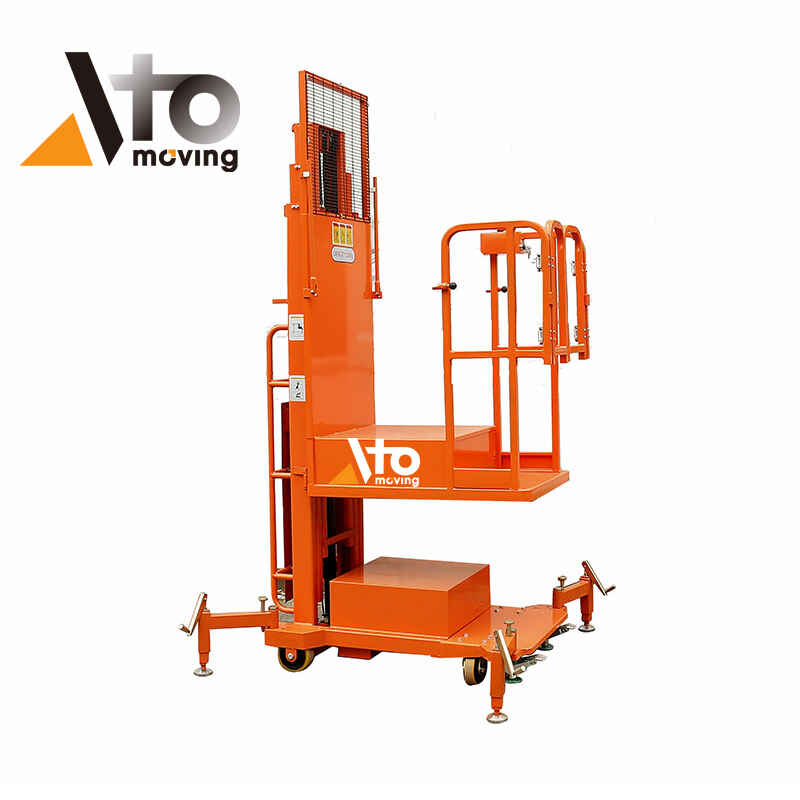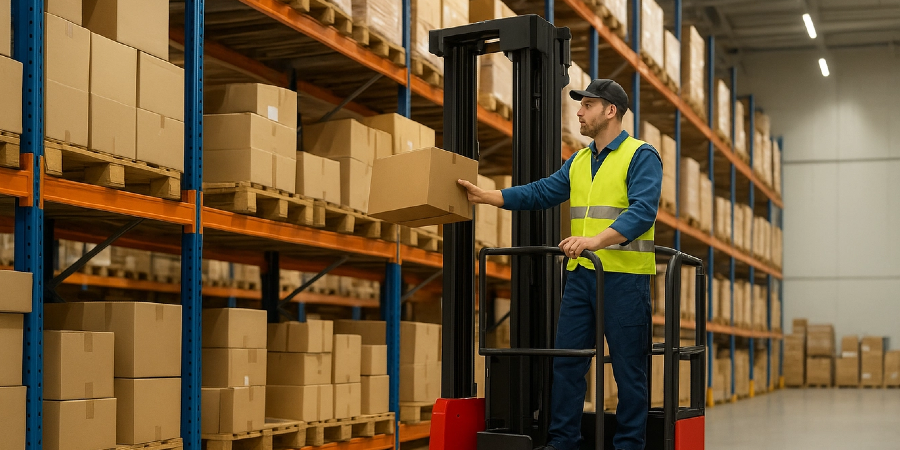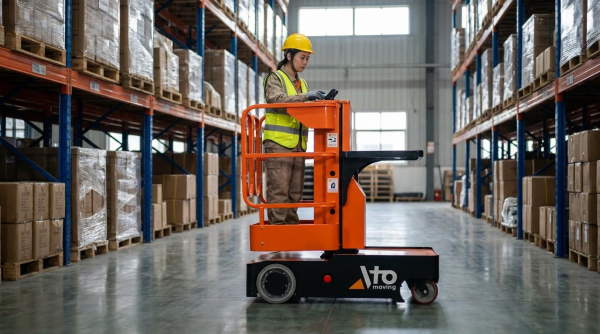
Warehouse cherry pickers are mobile elevating work platforms that lift an operator to rack level so they can pick individual items safely and efficiently at height. If you are asking “what is a cherry picker in a warehouse,” the answer is that it is the core machine for case- and each-picking above normal reach, typically from around 3 m up to high-bay levels. This guide explains what these machines are, how they are built, where they are used, and the safety and regulatory basics you must control. You will see how design, powertrain, capacity, and alternatives like goods-to-person automation all affect throughput, error rates, and long-term ROI in real warehouse operations.
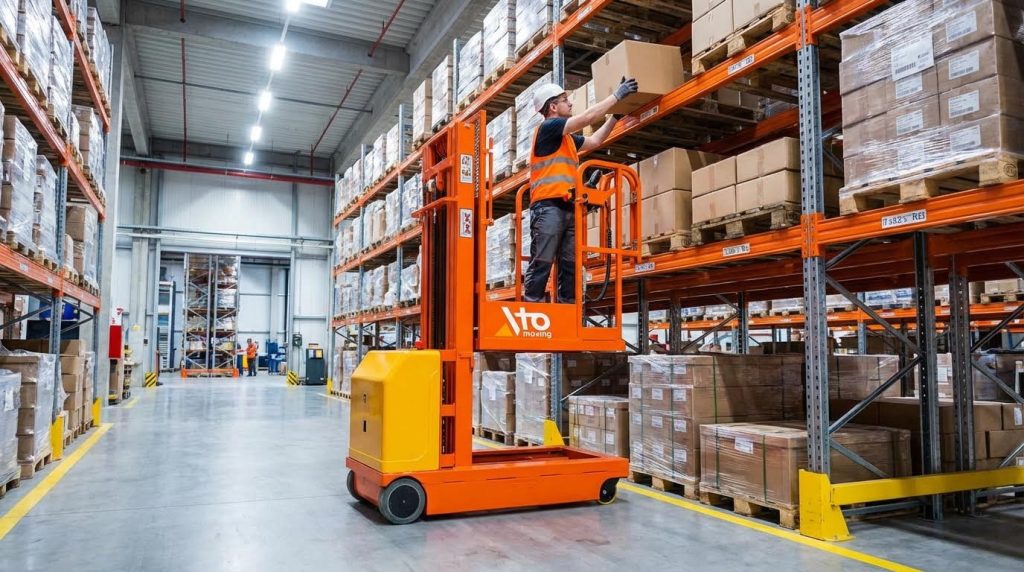
What A Warehouse Cherry Picker Is And How It Works
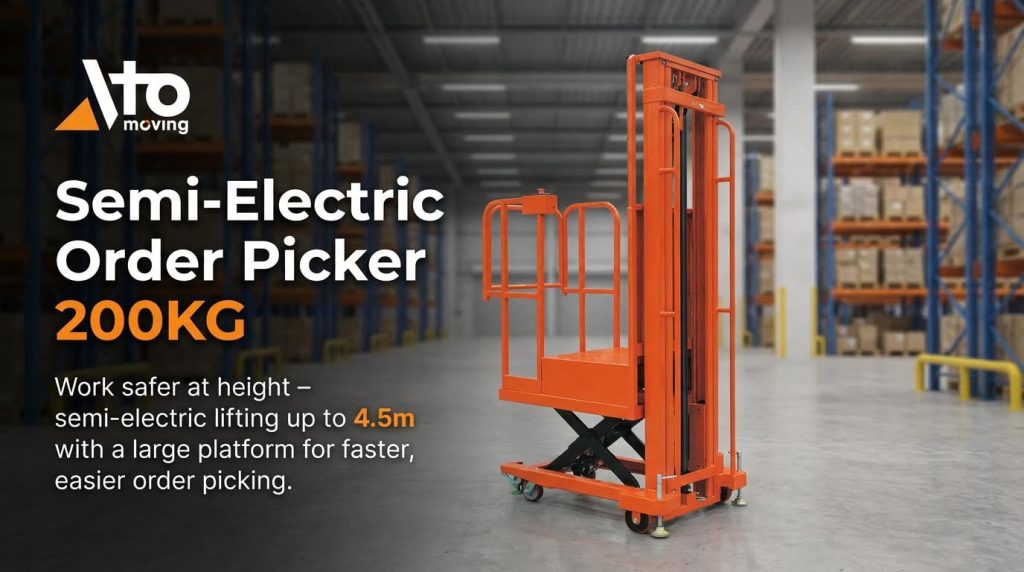
A warehouse cherry picker is a mobile elevating work platform that lifts an operator to rack level so they can pick individual items at height in narrow aisles. When people ask “what is a cherry picker in a warehouse,” they usually mean an electric, stand-on machine that raises both the person and a small load platform to shelf level for carton or each picking. These units operate between roughly 3 m and 12 m, letting you work safely above normal reach while minimizing travel distance in dense storage layouts in typical warehouse racking. They are engineered to combine tight turning circles, stable vertical lifting, and integrated safety systems so operators can repeat short lift cycles all shift with low error rates and controlled risk.
💡 Field Engineer’s Note: In real warehouses, cherry pickers earn their keep when you design aisles and pick faces around their turning radius and lift speed; otherwise operators waste minutes per pallet position just jockeying for position.
Core definition and typical configurations
A cherry picker in a warehouse is a person-lifting order picker that elevates the operator and a small load platform to individual pick locations within racking. In practical terms, when supervisors ask “what is a cherry picker in a warehouse,” they are talking about a powered order picking machines that moves along narrow aisles, stops at a bay, then raises the operator so they can grab cartons or single units directly from shelves without moving whole pallets as defined for stock pickers. These machines are a subset of mobile elevating work platforms, optimized specifically for indoor warehousing rather than outdoor construction or utility work.
They typically work in height bands from about 3 m up to 12 m for standard models, with some high-level variants exceeding that range in very tall racking systems in high-bay warehouses. Operators perform frequent short lift cycles: drive into position, elevate, pick items into a cage or pallet on the platform, then descend and travel to the next location, so acceleration, deceleration, and lift/lower speeds directly affect pick rate (lines per hour).
| Typical configuration | Key characteristics | Field Impact |
|---|---|---|
| Low-level order picker | Electric, operator platform up to ≈2,5 m, often with ground-level pallet handling | Ideal for fast-moving SKUs on first levels; minimizes climbing and manual lifting, improving ergonomics and pick speed. |
| Mid-level cherry picker | Operator platform to ≈6 m, narrow-aisle chassis, small load deck or forks | Serves most conventional racking heights; balances reach with stability for general e‑commerce and spare-parts picking. |
| High-level cherry picker | Operator platform above ≈10–12 m, enhanced guarding and safety controls | Supports very high-bay storage; requires stricter training and slower travel speeds to maintain stability and safety. |
| Mast-type vertical picker | Rigid vertical mast, compact chassis footprint | Excellent for tight aisles; predictable vertical motion simplifies operator positioning at pick faces. |
| Articulated-boom picker | Articulated arm with outreach capability | More flexible reach around obstacles; better for maintenance or non-linear access than for dense pallet racking. |
How a cherry picker differs from a standard forklift
A standard counterbalance or reach forklift primarily lifts pallets, keeping the operator at floor level, while a warehouse cherry picker lifts the operator with the load for piece-level picking. This people-lifting function places the machine under stricter work-at-height and lifting-equipment regulations, requiring additional safety systems and documented inspections under applicable standards.
Key structural components and layouts
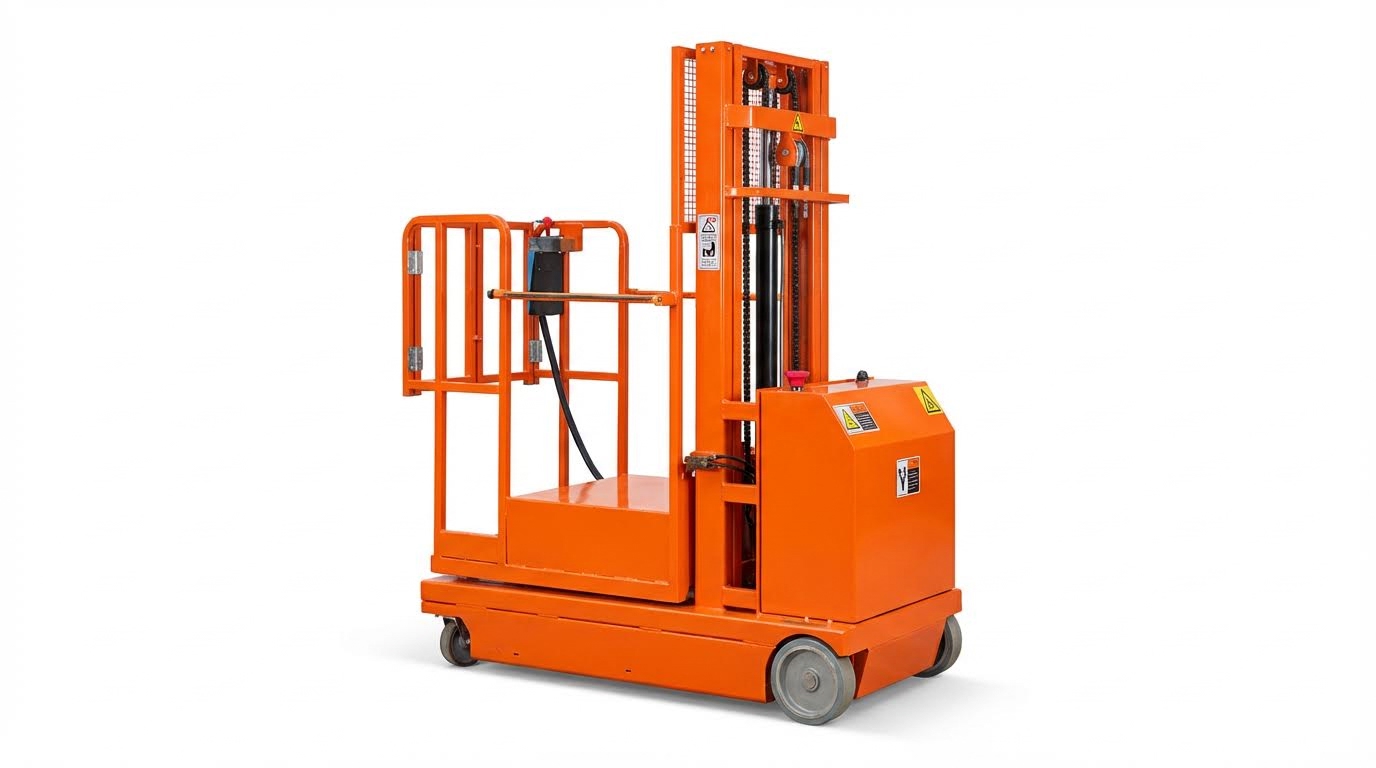
The key structural components of a warehouse cherry picker are the chassis, mast or boom, operator platform, and load-handling area, all integrated with safety and control systems. From an engineering standpoint, these elements form a load path that carries combined mass of the operator, picked goods, and machine structure safely through the mast into the chassis and wheels, while maintaining a stable center of gravity envelope as described for cherry and stock pickers. Layout choices—such as where you place the battery pack, how long the wheelbase is, and whether the operator stands sideways or forward-facing—directly affect turning radius, visibility, and fatigue.
| Component / Layout | Function | Field Impact |
|---|---|---|
| Chassis and wheelbase | Supports all loads, houses drive unit and batteries, defines wheel spacing | Determines minimum aisle width and stability; longer wheelbase improves fore‑aft stability but needs wider transfer aisles. |
| Mast or boom structure | Provides vertical lift via telescopic mast or articulated boom | A stiffer mast reduces sway at 8–12 m, improving operator confidence and pick accuracy at height. |
| Operator platform with guardrails | Standing area for operator, with full-height rails and gates | Guardrail height and gate design directly affect fall protection and how quickly operators can step on/off at ground level. |
| Load deck or forks | Area for pallet, cage, or cartons | Right deck size prevents overhanging loads that could shift center of gravity and compromise stability. |
| Electric drive and steering module | Propels and steers the machine | Precise low-speed control reduces collision risk with racking and improves positioning at pick faces. |
| Hydraulic or electro-hydraulic lift system | Raises and lowers mast and platform | Well-matched pump and valve sizing gives smooth, controlled lifts, reducing sway and motion sickness for operators. |
| Safety subsystems | Interlocks, tilt and overload sensors, limit switches, emergency lowering | Automatically prevent unsafe movements and enable controlled descent if a component fails, supporting compliance with work-at-height rules. |
- Control stations: Intuitive, two-handed controls with deadman functions help keep hands inside the platform and stop motion instantly if the operator releases pressure.
- Non-slip flooring: Textured, non-slip platform surfaces reduce slip risk when operators pivot while carrying cartons, especially if dust or moisture is present.
- Fall-protection anchorage: Built-in anchor points allow attachment of personal fall protection where required by site rules or national regulations.
Why component layout matters for floor loading and ground conditions
Battery placement and wheel spacing change ground pressure on warehouse floors. Concentrated loads over small wheel contact patches can exceed slab design or damage mezzanine decks, especially at expansion joints. Matching machine weight and wheel type to your floor specification avoids cracking or spalling, which later increases vibration, noise, and maintenance on both trucks and racking.
Engineering Design, Powertrain, And Safety Systems
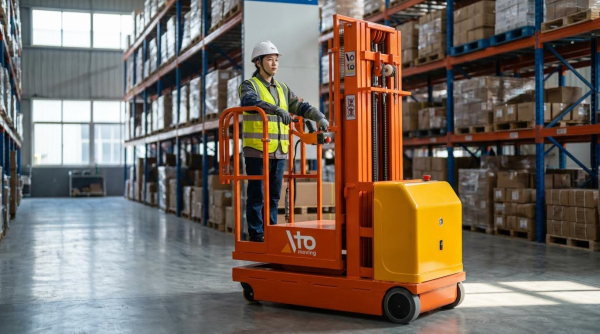
Engineering design for warehouse cherry pickers balances electric powertrain efficiency, hydraulic control, structural stability, and safety systems so that when someone asks “what is a cherry picker in a warehouse,” the answer includes how it actually works safely all shift long.
Cherry pickers in warehouses are engineered as mobile elevating work platforms that lift an operator and a small load to racking levels, typically between 3 m and 12 m, using an electric drive chassis and hydraulic or electro‑hydraulic lifting system. Their design links battery capacity, motor sizing, hydraulic performance, and stability controls so the machine can run full shifts in narrow aisles without breaching work‑at‑height or lifting‑equipment regulations.
💡 Field Engineer’s Note: On real sites, most “mystery breakdowns” trace back to mismatched batteries and chargers or neglected hydraulic oil; both quietly destroy performance long before anyone calls maintenance.
Electric drive, batteries, and hydraulic circuits
Electric drive, batteries, and hydraulic circuits work together so a warehouse cherry picker converts stored electrical energy into controlled lifting, steering, and travel, which directly defines runtime, responsiveness, and safety margins at height.
| Subsystem | Typical Design Features | Operational Impact In The Warehouse |
|---|---|---|
| Electric drive motors | AC or DC traction motors sized to move machine plus rated load through narrow aisles, often with regenerative braking during deceleration or lowering documented for aerial platforms | Determines acceleration, gradeability on ramps, and how smoothly operators can inch into pick positions without jerky motion that destabilizes loads. |
| Battery type | Lead‑acid or lithium‑ion battery packs matched to hydraulic and drive demand over a full shift as outlined for modern cherry pickers | Defines runtime, charging strategy, and maintenance; lithium reduces downtime and watering but requires correct charger and thermal management. |
| Hydraulic pump and circuits | Electric motor drives a hydraulic pump that feeds mast lift, platform elevation, and often steering via control valves and line sizing optimized to minimize throttling losses for electro‑hydraulic systems | Affects lift speed, smoothness, and energy efficiency; poor tuning gives slow or “spongy” lifts and overheated oil during busy picking peaks. |
| Lift and lower control | Proportional valves and flow controls that regulate cylinder speed for mast and platform movement in modern MEWPs | Enables precise positioning at pick faces and soft landings at ground level, reducing product damage and operator fatigue. |
| Energy management | Strategies such as regenerative lowering and braking, optimized pump displacement, and correct line sizing to cut throttling losses described for aerial platforms | Improves effective Ah per shift, allowing more lift cycles before charging and reducing heat build‑up in hydraulic oil and motors. |
| Onboard diagnostics | Controllers log fault codes, operating hours, lift cycles, overload events, and parameters like battery voltage and motor current for analysis in predictive maintenance regimes | Supports predictive maintenance, allowing planned battery, motor, or valve replacements before failures that stop picking. |
Why powertrain matching matters when asking “what is a cherry picker in a warehouse?”
When someone asks what is a cherry picker in a warehouse, they often only picture the platform at height, but engineers focus on the whole power path: battery → motor → pump → cylinder. If those elements are not matched, you either oversize (wasting capital and energy) or undersize (causing voltage sag, slow lifts, and overheating). Proper matching ensures the machine can complete thousands of short lift cycles per shift for e‑commerce or spare‑parts picking as described for warehouse use.
Load capacity, stability, and narrow-aisle design
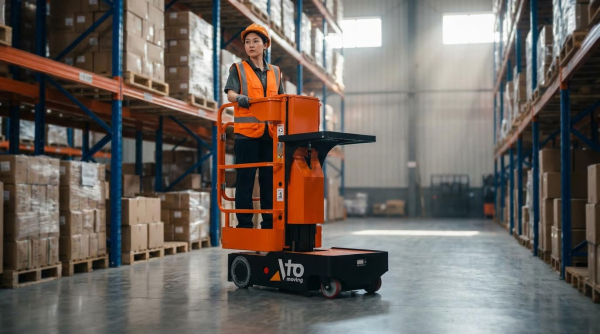
Load capacity, stability, and narrow‑aisle design define how much a warehouse cherry picker can safely lift, how high it can go, and how tightly it can turn between racks without crossing the tipping line or striking infrastructure.
| Design Aspect | Typical Engineering Approach | Field Impact For Warehouse Operations |
|---|---|---|
| Rated load capacity | Manufacturers specify nominal capacity (for example, 1,000 kg) at a given load center, often 600 mm, with a defined maximum platform or fork height for people‑lifting equipment | Determines which SKUs (cartons or small pallets) can be safely picked at height; overloading reduces stability margin and violates lifting regulations. |
| Stability envelope | Engineers model permissible combinations of load, outreach, and elevation before the combined center of gravity approaches the tipping line; dynamic effects like braking are included in stability analysis | Defines safe travel speed and steering angles at different platform heights; exceeding this envelope risks tip‑over during emergency stops or sharp turns. |
| Chassis and wheelbase | Low‑profile chassis with optimized wheelbase and counterweight distribution to keep center of gravity inside the support polygon during elevation and travel | Allows high lifts in narrow aisles without needing outriggers, preserving storage density while maintaining compliance with lifting‑equipment rules. |
| Narrow‑aisle geometry | Machines are designed to operate in aisles sized for order picking, with compact turning radius and mast or boom layouts tailored to racking clearances for warehouse cherry pickers | Enables dense storage layouts where aisles are only slightly wider than the truck, maximizing pallet positions while still allowing safe maneuvering. |
| Speed derating at height | Control systems automatically reduce travel and steering speed as platform height increases to preserve dynamic stability in modern designs | Prevents operators from cornering too fast while elevated, protecting against tip‑over and reducing impact energy if a collision occurs. |
| Floor loading and ground conditions | Designers consider machine mass, wheel loads, and ground pressure to ensure compatibility with warehouse slab thickness and mezzanine ratings | Important for older buildings and mezzanines; excessive point loads can crack concrete or deform decking, creating long‑term structural hazards. |
💡 Field Engineer’s Note: The most common real‑world stability issue is not static overload; it is a sudden brake or direction change on a slightly uneven floor while the operator is reaching sideways with a heavy carton.
How narrow‑aisle design links to “what is a cherry picker in a warehouse?”
When you define what is a cherry picker in a warehouse, you are really describing a machine optimized for narrow‑aisle, case‑level picking instead of bulk pallet moves. That means designers prioritize compact chassis dimensions, high lift with small footprints, and automatic speed limits at height so operators can work close to racking faces without clipping uprights or losing stability as seen in warehouse cherry picker applications.
Integrated safety controls and regulatory compliance
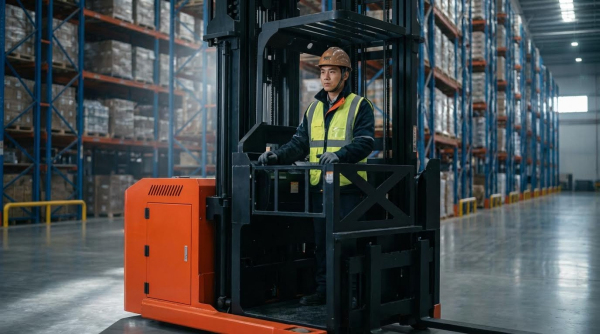
Integrated safety controls and regulatory compliance ensure that every motion of a warehouse cherry picker—lifting, traveling, or stopping—remains within engineered safety limits and meets work‑at‑height and lifting‑equipment laws.
- Interlocks and Deadman controls: Control logic requires deliberate operator input (Deadman pedals or triggers) for movement, and interlocks prevent unsafe combinations of functions, such as traveling at full speed while fully elevated on warehouse platforms. This reduces unintended motion and crush hazards.
- Tilt and overload sensors: Sensors monitor chassis angle and platform load; if a threshold is exceeded, the system may inhibit further elevation, trigger alarms, or permit only safe lowering movements as part of aerial lift safety. This protects against tip‑over when operators misjudge load weight or work on uneven floors.
- Limit switches and travel limits: Mechanical or electronic limit switches cap maximum lift height and can enforce reduced speed zones near racking ends or transfer aisles. This prevents structural contact with ceilings, sprinklers, or overhead services.
- Emergency stop and emergency lowering: Clearly marked emergency stop buttons and independent emergency‑lowering systems allow the platform to be safely brought down if the main control circuit fails on cherry pickers. This is critical for rescuing operators who become incapacitated at height.
- Fall protection and guarding: Guardrails, toe‑boards, non‑slip flooring, and certified fall‑arrest anchorage points are integrated into the platform structure to meet work‑at‑height rules. These features reduce fall risk when operators lean or handle awkward cartons.
- Regulatory framework: In many regions, warehouse cherry pickers fall under work‑at‑height and lifting‑equipment regulations; for example, the UK applies the Health and Safety at Work Act 1974, LOLER 1998, and the Work at Height Regulations 2005 to such equipment for people‑lifting devices. Globally, periodic thorough examinations (often every six months) and documented maintenance are mandatory.
- Operator training and OSHA/ISO alignment: Only trained persons may operate aerial lifts according to OSHA 1910.67(c)(2)(ii), and training covers components, stability, inspections, and hazard recognition for safe MEWP use. Proper training directly reduces incident rates and equipment abuse.
- Pre‑use checks and preventive maintenance: Structured pre‑use inspections and scheduled preventive maintenance on power, drive, chains, hydraulics, and structural members are standard practice for aerial platforms. This keeps failure rates low and preserves the original stability and safety performance.
💡 Field Engineer’s Note: From an operations standpoint, the fastest way to cut cherry‑picker incidents is enforcing pre‑use checks and lockout for any failed safety device—operators quickly learn that bypassing interlocks is a hard stop, not a warning.
How safety systems complete the definition of a warehouse cherry picker
When you answer what is a cherry picker in a warehouse, the definition is incomplete if you only mention height and capacity. The integrated safety stack—interlocks, sensors, emergency systems, guarding, regulations, and operator training—turns a basic lifting machine into compliant people‑lifting equipment suitable for daily use in e‑commerce and parts warehouses under modern safety expectations.
Operational Uses, Selection Criteria, And Alternatives
Warehouse cherry pickers are best used where operators must travel through aisles and work at height frequently, so this section explains real workflows, how to size the machine, and when automation beats manual picking.
💡 Field Engineer’s Note: If your team spends more time driving between aisles than actually picking, your bottleneck is travel, not lift speed—this is usually the trigger point to start evaluating goods-to-person automation.
Common warehouse applications and workflows
Typical cherry picker workflows involve short travel moves, frequent lifts, and carton-level picking from racking between roughly 3 m and 12 m, making them ideal for “each” and case picking above manual reach. Source
When people ask what is a cherry picker in a warehouse, in practice they mean the machine used for person-up picking in narrow aisles where pallets stay in the rack and only items move. The operator drives to the pick face, elevates with a small load platform, picks cartons or pieces, then lowers and travels to the next location, repeating this cycle hundreds of times per shift. Source
- E‑commerce and each picking: Supports high-SKU, low-quantity orders where operators pick individual items from multiple levels of racking between about 3 m and 12 m. Source
- Spare parts and MRO stores: Ideal for dense parts storage where SKUs are small, diverse, and stored at multiple rack levels, enabling direct access without moving full pallets.
- Retail replenishment: Used to pull mixed cartons for store orders from high-bay reserve storage without disturbing bulk pallet positions.
- Cycle counting and audits at height: Lets inventory teams reach upper rack levels safely for counting, label checks, and slotting verification without temporary scaffolding.
- Low-volume, high-mix operations: Efficient where order volumes are moderate but SKU variety is high, making full automation harder to justify economically.
Typical pick cycle pattern with a cherry picker
An average cycle includes: drive to slot, position in aisle, elevate to pick level, secure and place items on platform, lower to travel height, then drive to the next location or consolidation point. Travel and elevation times dominate total cycle time, so slotting fast movers at lower levels significantly boosts pick rates.
Specifying height, capacity, and duty cycle
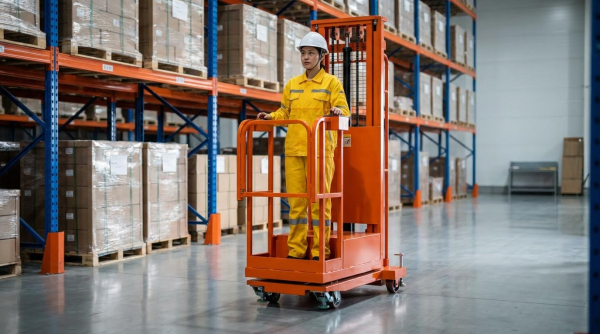
Correct cherry picker sizing depends on three linked parameters—maximum pick height, rated load, and duty cycle—because together they determine whether the machine can safely reach all locations and survive your daily operating hours. Source
Engineering selection always starts from the racking design: top beam height, load weights, and aisle geometry. From there you choose a platform or fork height, nominal capacity at a defined load center (commonly 600 mm), and a battery and hydraulic system sized for the number of lift cycles per shift. Source
| Selection Factor | Typical Engineering Consideration | Field Impact |
|---|---|---|
| Maximum rack / pick height | Cherry pickers commonly work between about 3 m and 12 m platform height. Source | Must exceed your highest pick level with safety margin, otherwise upper SKUs become unreachable or non-compliant for safe access. |
| Rated load capacity | Nominal capacity is defined at a specific load center, often 600 mm, and at a stated lift height. Source | Determines how many cartons or totes you can safely carry per trip without triggering overload alarms or instability. |
| Stability envelope | Permissible combinations of load, outreach, and elevation are limited so the center of gravity stays inside the tipping lines. Source | Sharp braking or turning at height reduces stability; operators must respect speed limits and floor conditions to avoid tip risk. |
| Duty cycle (hours and lift cycles) | Battery and hydraulic systems are sized to expected operating hours, lift frequency, and travel distance per shift. | Undersized batteries cause midday charging and downtime; oversizing raises capex but can support multi-shift operation. |
| Battery chemistry | Lead-acid vs lithium-ion is chosen based on shift length, opportunity charging, and lifecycle cost. Source | Impacts charging infrastructure, downtime, and long-term maintenance; lithium usually favors high-intensity, multi-shift operations. |
| Hydraulic system performance | Electric motor torque-speed curves are matched to pump requirements for efficient lifting and steering. Source | Determines how quickly the platform raises/lowers and how responsive steering feels, especially under full load. |
How to translate duty cycle into battery sizing
List your average lift cycles per hour, travel distance, and total operating hours. Engineers convert this into ampere-hour (Ah) demand using motor and pump efficiencies, then apply a safety factor so the battery is not routinely discharged below recommended depth of discharge, which would shorten its life.
Comparing cherry pickers with automated systems
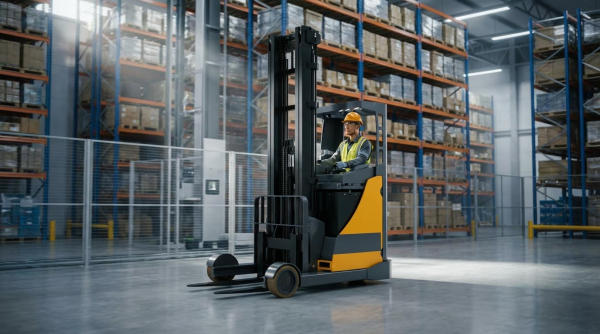
Cherry pickers vs automated systems is a trade-off between flexible, operator-driven picking and goods-to-person automation such as vertical lift modules (VLMs) that drastically cut travel time and floor space at higher capital cost. Source
Order pickers (often called cherry pickers) require operators to drive through aisles, raise and lower the platform, and manually retrieve items, typically achieving around 30–50 lines per hour. Automated VLMs, by contrast, bring trays to a fixed workstation and can reach up to about 300 lines per hour because they eliminate almost all walking and driving. Source
| Aspect | Cherry Picker / Order Picker | Automated System (e.g., VLM, goods-to-person) | Field Impact |
|---|---|---|---|
| Space utilization | Needs aisles (often around 1,7 m–1,8 m wide) and leaves some unused vertical space. Source | Can reduce storage footprint by up to about 90% by stacking vertically in a compact footprint. Source | Automation frees floor space for packing, value-add, or extra inventory without expanding the building. |
| Reachable height | Accesses roughly up to 9–10 m+ depending on model; some high-level units go above 12 m. Source | Can store goods exceeding about 14 m (46 ft) in height in some VLM designs. Source | VLMs exploit building height more fully, which is valuable in high-bay warehouses. |
| Throughput (lines/hour) | Manual travel and lifting typically yield around 30–50 items per hour per operator. Source | Automated goods-to-person can achieve up to about 300 lines per hour. Source | Automation wins where order volumes are high and service-level agreements are tight. |
| Labor intensity | High; operators travel, elevate, and handle loads at height, with associated fatigue and ergonomic risk. Source | Reduces travel and bending; workers stay at an ergonomic station while goods arrive automatically. Source | Lower physical strain improves retention and can reduce injury-related downtime. |
| Safety profile | Risk from working at height and repetitive lifting; requires strict training and fall protection. Source | Automation reduces exposure to falls and overexertion by keeping operators on the ground in neutral postures. Source | Particularly attractive where injury rates or compensation costs are high. |
| Labor reallocation | Most labor is locked into travel and picking tasks. | Goods-to-person can cut picking labor by up to about 66%, freeing staff for quality or customer-facing roles. Source | Improves ROI by moving experienced staff into higher-value activities instead of pure walking and lifting. |
When a cherry picker is still the right choice
Cherry pickers remain optimal when SKU counts are high but order volumes are modest, product dimensions vary widely, or capital budgets are limited. They also offer superior flexibility during layout changes or seasonal peaks, where reconfiguring fixed automation would be slow or costly.
Final Thoughts On Using Cherry Pickers Safely And Efficiently
Warehouse cherry pickers work well when engineering, layout, and training all align with how you actually pick orders. Structural design, powertrain sizing, and stability controls only deliver their benefits if you match them to rack heights, aisle widths, and duty cycles during specification. When you respect rated capacity, stability envelopes, and floor loading, the machine can run full shifts at height with a strong safety margin.
In practice, operations teams should start from the racking drawing and pick profiles, then choose platform height, load rating, and battery type that cover peak lift cycles without abuse. Safety systems, from interlocks to overload sensors, only protect people if you enforce pre-use checks, lock out faults, and train operators to treat limits as hard stops. Where travel time dominates and volumes grow, plan a roadmap toward goods-to-person solutions such as Atomoving automation, using cherry pickers for flexible or overflow work.
The best results come when engineering, maintenance, and supervisors share one rule set: never exceed design limits, keep floors and trucks in good condition, and design aisles around the machine, not the other way round. Do this and cherry pickers stay productive, compliant, and safe for long-term use.
Frequently Asked Questions
What is a cherry picker in a warehouse?
A cherry picker in a warehouse, also known as an order picker or stock picker, is a specialized elevated lift used to retrieve items from high-level shelving. It allows operators to safely and efficiently access hard-to-reach areas in large warehouses and distribution centers. These machines are essential for maintaining productivity in facilities with tall storage racks. Aerial Lift Info.
What are the main differences between a cherry picker and a forklift?
A cherry picker is designed primarily for lifting people to access heights, while a forklift focuses on moving and lifting heavy loads at various levels. Cherry pickers provide a platform for workers to reach items directly, whereas forklifts use forks to carry pallets or equipment. Boom lifts, which are similar to cherry pickers, can handle more complex tasks but often come at a higher cost and require additional training. Boom Lift Comparison.
What safety precautions should be followed when using a cherry picker?
When operating a cherry picker, always ensure the area is clear of obstacles and debris. Operators must wear appropriate personal protective equipment (PPE), such as helmets and harnesses. Additionally, regular maintenance checks on the equipment are crucial to prevent malfunctions. Never exceed the machine’s weight limit, and always follow manufacturer guidelines for safe operation. Warehouse Safety Tips.