Safe stacking practices for drums, barrels, and kegs in warehouses are engineered methods for arranging cylindrical containers so they do not slide, roll, or collapse under load. Poorly controlled stacking drives most drum-related injuries, leaks, and rack or slab failures in bulk-liquid warehouses. This guide explains the physics of drum load paths, how specific gravity and temperature cap stack height, and what to do when stacking drums or barrels on pallets, racks, or floors. You will see how to design pallets and floors, maintain sprinkler clearances, apply OSHA and DOT rules, and run inspections, containment, and FIFO programs that keep both people and product safe.
Engineering Fundamentals Of Drum And Barrel Stacking
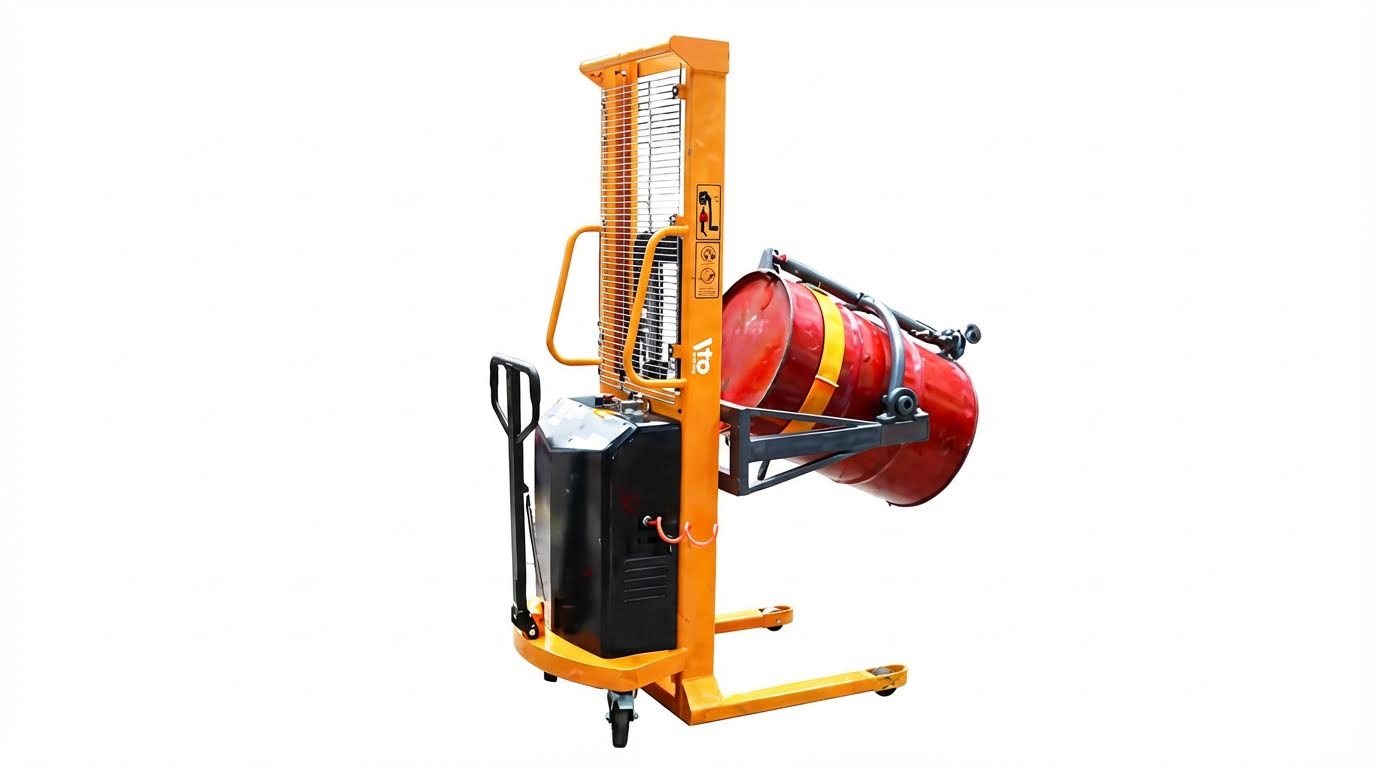
Engineering fundamentals for when stacking drums or barrels focus on how drum type, load path, fill condition, and orientation control stack height, stability, and failure modes, directly affecting safety, floor loading, and fire protection performance.
💡 Field Engineer’s Note: Most drum stack failures I’ve investigated started at one damaged chime or a soft pallet corner, not at the “heaviest” drum—always treat the interface surfaces as critical structural components.
Drum types, load paths, and failure modes
Drum type and load path determine how safely compressive forces travel through stacked tiers and which failure modes—chime buckling, denting, or bulging—will control your maximum safe stack height.
| Drum / Container Type | Typical Capacity & Construction | Primary Load Path When Stacked | Common Failure Modes | Field Impact When Stacking Drums Or Barrels |
|---|---|---|---|---|
| Steel drum with rolling hoops (closed- or open-head) | ≈208 L; steel shell with reinforced chimes and hoops | Axial load through top chime into sidewall hoops, then bottom chime | Chime buckling, sidewall ovalization, local denting at chime contact lines | Best suited for 3–4 high stacks when contents ≤ specific gravity 1.5 and temperatures controlled under DOT stacking tests; reject out‑of‑round or damaged chimes. |
| Plastic drum | ≈200–220 L; HDPE with molded ribs | Distributed through shell; more sensitive to creep and temperature | Creep deformation, bulging, rib cracking, UV embrittlement | Limit stack height, especially in warm or outdoor areas; UV and temperature accelerate deformation and label fading. |
| Fiber drum | ≈200 L; fiber body with metal or plastic chimes | Limited axial capacity through chimes and fiber wall | Chime tearing, wall crushing, moisture-related softening | Generally avoid multi-tier stacking; if stacked, keep heights low and environments dry. |
| Metal kegs / small barrels | 20–60 L; stainless or steel with domed ends | Through domed ends and sidewall; often nested when horizontal | Denting at contact points, rolling/instability if unblocked | Use tight nesting and blocking; stack heights much lower than full-size drums due to smaller footprint. |
| Closed-head vs. open-head drums | Closed-head: fixed top with bungs; Open-head: removable lid with ring | Closed-head has continuous top plate; open-head depends on ring and gasket | For open-head: ring loosening, gasket extrusion under load | Closed-head drums generally tolerate higher stacking loads and internal pressure than open-head designs for hazardous chemicals. |
When stacking drums or barrels in multiple tiers, the engineered load path should run vertically through aligned chimes and robust pallet or dunnage surfaces. Narrow chime contact lines create high local stresses that can dent shells or initiate buckling if loads are eccentric or pallets are damaged along pallet interfaces.
Typical failure modes you must design against include chime buckling, sidewall ovalization, local denting where drums touch, and seam or chime corrosion, especially at pallet contact zones and moisture traps around welds and chimes. Any drum that is out-of-round, heavily dented, or corroded at the chime should be excluded from stacked service.
How load paths interact with pallets and dunnage
Using full-coverage pallets (≈1,220 mm × 1,220 mm) or tight-deck pallets with plywood dunnage spreads chime loads into the deck and reduces point loading. Gaps, broken boards, or protruding fasteners concentrate stresses and can trigger shell denting or sudden instability under dynamic forklift impacts.
Vertical vs. horizontal storage stability
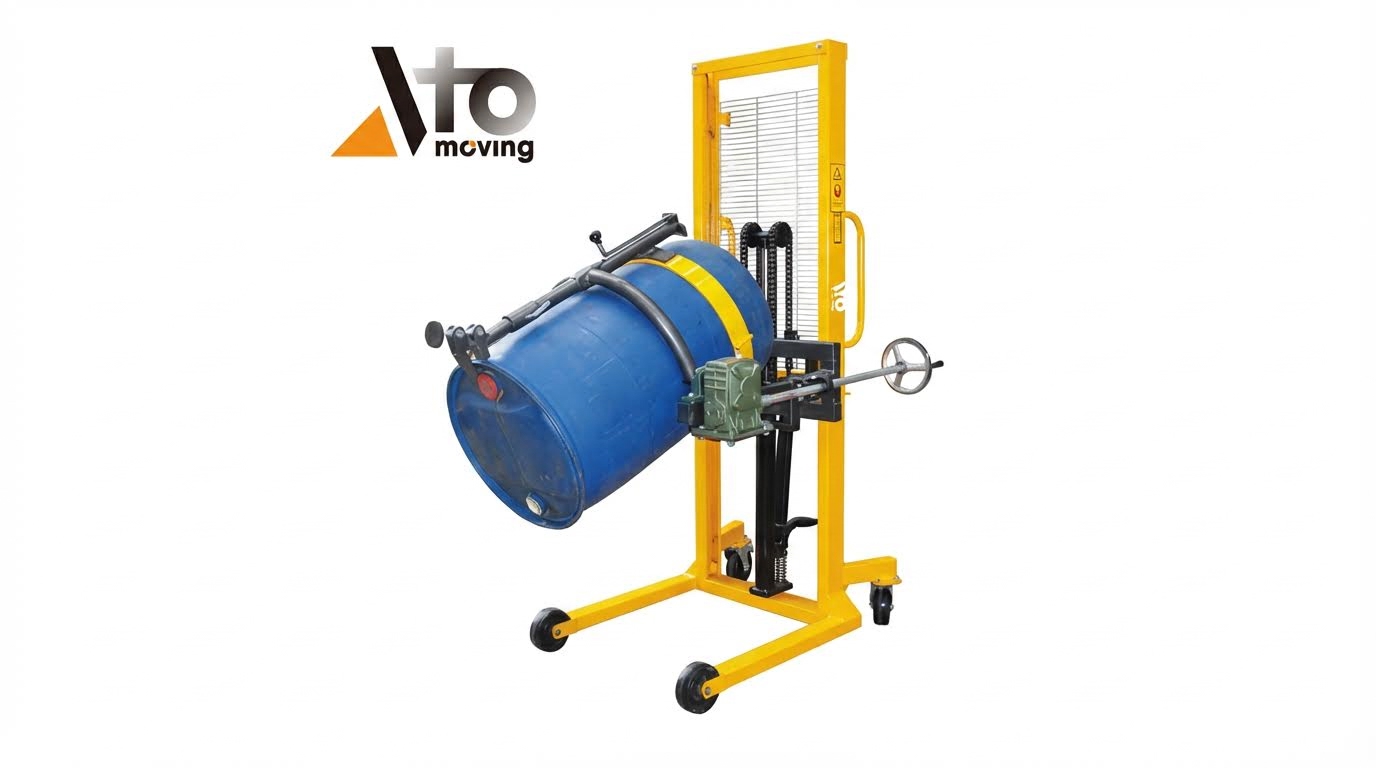
Vertical vs. horizontal drum storage is a stability trade-off: vertical storage maximizes compressive strength and density, while horizontal storage improves access and drainage but demands robust blocking and lower stack heights.
| Storage Orientation | Stability & Load Path | Typical Use Cases | Key Failure / Risk Modes | Field Impact When Stacking Drums Or Barrels |
|---|---|---|---|---|
| Vertical (on end) | Load aligned with drum axis; compressive capacity maximized | General chemical storage, hazardous materials, high-density palletized stacks | Overturning if not chocked, chime buckling at high tier counts | Preferred for hazardous chemicals; steel drums can reach 3–4 tiers when controlled by specific gravity and temperature limits under DOT stacking tests. |
| Horizontal (on side, bung-in or bung-out) | Load carried through curved shell and chimes on lines of contact | Beverage aging, gravity dispensing, short-term staging | Rolling if unblocked, local denting at contact points, rack or block failure | Requires blocking or racking systems; bottom tier must be firmly blocked to prevent rolling in line with OSHA tiered storage rules for stacked materials. |
| Palletized vertical stacks | Drums on pallets with dunnage between tiers | Warehouse racking, bulk storage zones | Pallet breakage, dunnage bowing, eccentric loading | Maintain symmetric four-drum patterns per pallet; use chocks on bottom tier and flat dunnage between tiers for stability. |
| Rack-stored horizontal drums | Each drum supported in cradles or saddles | Dispensing flammables, lube oils, or beverages | Cradle deformation, strap failure, rack overload | Engineering checks must confirm rack capacity and anchorage; stack height usually limited by rack design, not drum strength. |
Vertical storage aligns the compressive load with the strongest axis of the drum, allowing steel drums to be stacked three or four tiers high when specific gravity and temperature are within tested limits under 49 CFR stacking tests. This orientation also keeps labels visible and simplifies chemical segregation and inspection.
Horizontal storage is typically chosen for process reasons—such as bung access or product aging—rather than pure stability. Because the curved shell and chimes now carry load along narrow lines, any failure of blocking, chocks, or rack supports can lead to rolling drums, loss of containment, and rapid domino-type failures, so stack heights must be conservative and blocking systems regularly inspected.
💡 Field Engineer’s Note: If you ever see a vertical stack where drums “walk” sideways when bumped by a forklift, your problem is usually pallet flatness or missing chocks, not the drums themselves—fix the base, not the tier count.
Specific gravity, fill level, and stack height limits
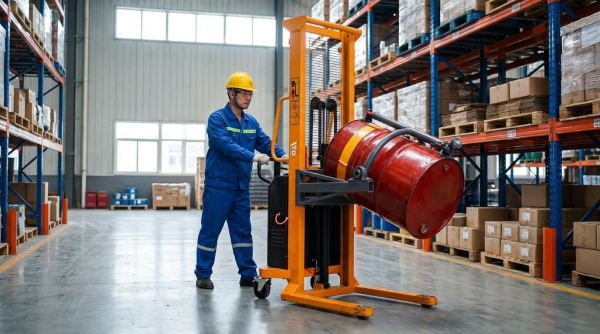
Specific gravity, fill level, and temperature directly control safe stack height because they change drum wall stresses, internal pressure, and stability, so stack limits must be tied to these parameters—not just a generic “3- or 4-high” rule.
| Parameter | Typical Guideline / Effect | Engineering Rationale | Field Impact When Stacking Drums Or Barrels |
|---|---|---|---|
| Specific gravity (SG) of contents | Up to SG 1.5: drums often allowed 4-high; SG > 1.5: limit to 3-high, especially with elevated temperatures under DOT stacking tests. | Higher SG increases mass per drum, raising compressive stresses in sidewalls and chimes and amplifying bulging risks. | Always confirm SG from Safety Data Sheets; adjust maximum tiers and document limits on signage at each storage zone. |
| Ambient temperature | Below ≈30 °C: standard stacking limits apply; above ≈30 °C for long periods: reduce stacks from 4 to 3 tiers to control bulging. | Heat increases internal pressure, especially for volatile liquids, promoting bulging and stressing closures and seams. | In hot climates or non-conditioned warehouses, set seasonal stack limits and monitor for bulging or distorted bungs. |
| Fill level (full vs. partially filled) | Full drums with liquids up to SG 1.5 behave as near-rigid columns; partially filled drums allow sloshing and local denting under impact. | Headspace and sloshing shift dynamic loads during handling, increasing risk of ovalization and chime damage. | Prefer full, properly closed drums in upper tiers; avoid stacking partially filled or “slack” drums more than one or two high. |
| Overall stack height (palletized) | ≈3.0 m for 3-high and ≈4.2 m for 4-high palletized stacks are common practice limits to maintain stability. | Taller stacks raise center of gravity and overturning moment and may interfere with sprinkler spray patterns. | Measure actual stack height, not just tier count; coordinate with fire protection design and sprinkler clearances. |
| Closure torque and integrity | Closures must be installed and tightened to prescribed torque per 49 CFR §178.2(c) for stacking loads. | Proper torque ensures gaskets seal under axial compression and thermal cycling, preventing leaks at higher tiers. | Include bung torque checks in pre-stacking inspections; never stack drums with missing, loose, or distorted closures. |
Industry practice for steel drums is based on DOT/UN performance tests that simulate a 3 m column for 24 hours, which supports policies allowing up to four-high stacks for liquids with specific gravity up to 1.5 under moderate temperatures, and three-high when contents are heavier or ambient temperatures exceed about 30 °C for extended periods per steel drum guidance.
When stacking drums or barrels, you must couple these limits with fire protection and structural constraints: palletized stacks around 3.0 m (three-high) and 4.2 m (four-high) help maintain stability and sprinkler effectiveness, and floor load checks convert drum, pallet, and dunnage mass into kN/m² to verify slab capacity with a safety factor before authorizing taller stacks in multi-story warehouses.
How to set site-specific stack limits
To set engineered limits, pull SG data from Safety Data Sheets, identify worst-case ambient temperatures in each zone, confirm drum type and test markings, then coordinate with your fire engineer on sprinkler clearances and with your structural engineer on floor load capacities. The final limit is the most conservative of these checks, documented in SOPs and posted as maximum tiers per location.
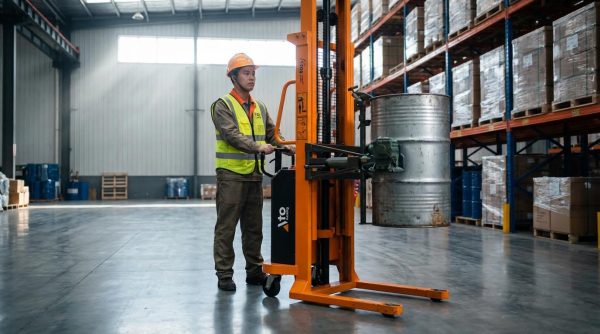
For efficient material handling, consider using equipment like a < “”
Operational Controls, Equipment, And Compliance
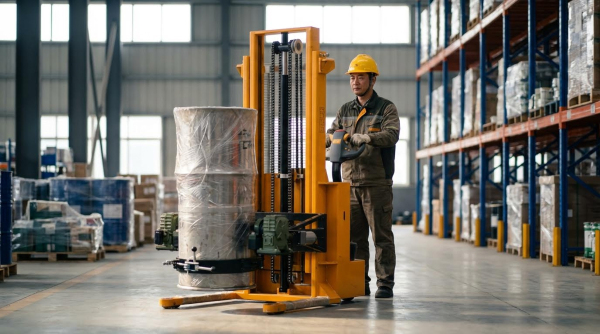
Operational controls for when stacking drums or barrels tie OSHA/DOT rules, handling equipment, and containment into one system that prevents collapses, spills, and chemical reactions while keeping pick rates and inspections efficient.
💡 Field Engineer’s Note: In incident reviews, the root cause is rarely “stack height alone”; it is usually a combo of bad segregation, untrained handling, and weak inspection—treat these controls as one integrated system, not separate checkboxes.
OSHA, DOT, and chemical segregation requirements
Regulatory controls when stacking drums or barrels require OSHA-compliant securing of tiers, DOT-tested containers, and strict segregation of incompatible chemicals so that any leak or collapse cannot escalate into a fire or toxic release.
- OSHA tiered stacking rules: OSHA requires materials in tiers to be stacked, blocked, interlocked, or otherwise secured to prevent sliding, falling, or collapse, per 29 CFR 1910.176(b) and 1926.250(a)(1) for stacked drums and barrels.
- Chocking and blocking of bottom tiers: When stacking two or more tiers high, the bottom tier must be chocked or blocked on both sides to resist lateral movement from impacts, vibration, or sloped floors, keeping stacks from “walking” over time under OSHA material storage rules.
- Symmetric stacking and dunnage use: Drums, barrels, and kegs must be stacked symmetrically with planks, plywood, or pallets between tiers to create a flat bearing surface and avoid point loads that dent chimes or trigger progressive stack lean in multi-tier drum storage.
- DOT stacking performance basis: DOT top-load tests apply a load equivalent to a 3 m stack for 24 h, and closures must be torqued to specified values, forming the engineering basis for policies such as limiting many steel drums with specific gravity ≤1.5 to four-high and heavier fills to three-high in warehouse stacking rules.
- Chemical segregation by hazard class: Incompatible materials such as flammables and oxidizers or acids and bases must be stored separately, using distance, fire-rated barriers, or separate containment cells, so a single leak cannot mix reactive chemicals per chemical segregation guidance.
- Label visibility and orientation: UN markings, DOT labels, and hazard symbols must remain visible and legible on stacked drums, which dictates that labels face outward and stack heights do not bury critical markings behind other tiers for compliance and emergency response.
- Access to Safety Data Sheets (SDS): SDS must be readily available at or near drum storage zones so operators can verify compatibility, PPE, and spill response steps before moving or restacking containers in chemical warehouse operations.
- Clear aisles and egress routes: OSHA requires aisles and passageways to remain clear and unobstructed; this means setting hard limits on encroaching stacks so emergency egress and material-handling paths are never narrowed by bulging or misaligned tiers in drum storage areas.
How DOT tests translate into warehouse stack limits
DOT top-load tests simulate a 3 m high stack for 24 h at ambient temperature, with closures torqued correctly, to verify that drums will not buckle or leak under vertical compression. Facilities then convert this into simple rules—such as “four-high if specific gravity ≤1.5 and temperature ≤30 °C, three-high otherwise”—to keep real-world stacks within tested conditions for steel drum storage policies.
Handling equipment, training, and inspection programs
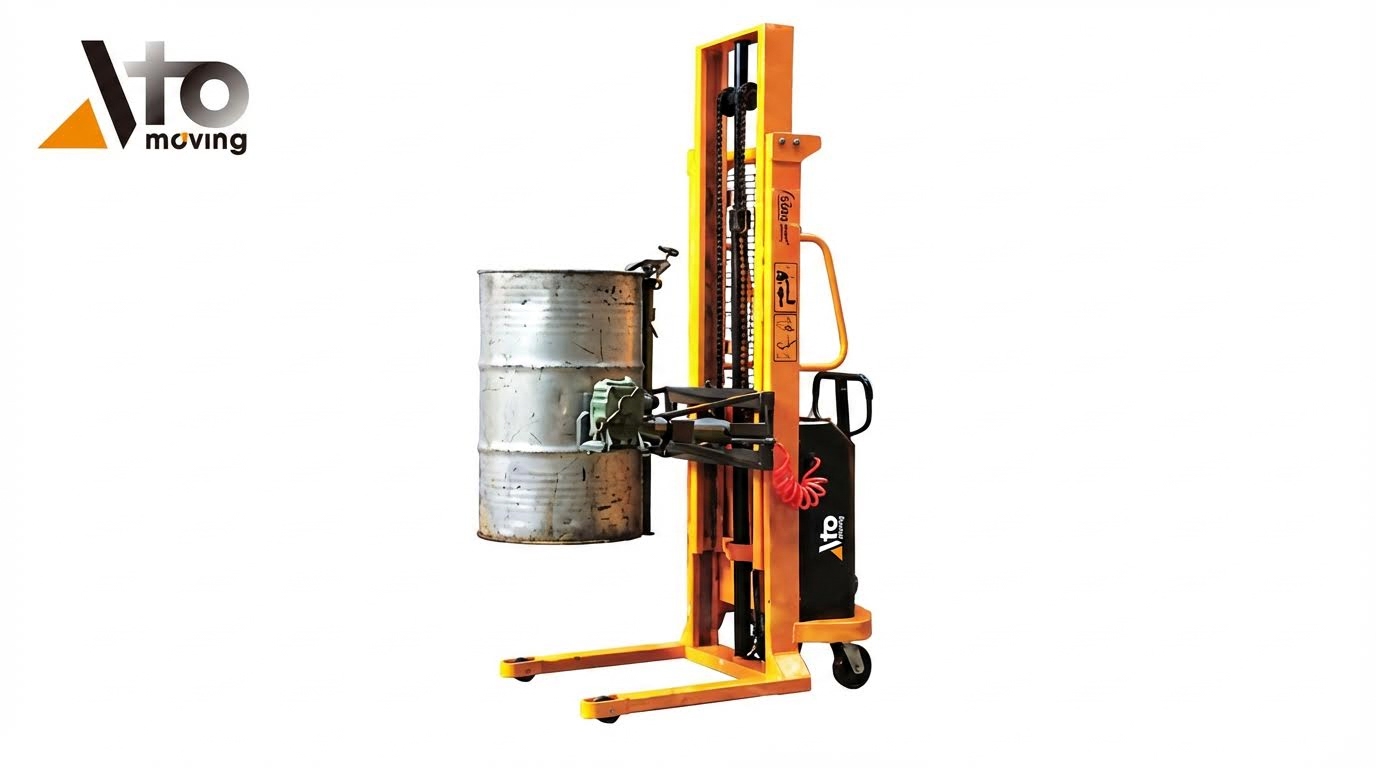
Handling and inspection controls when stacking drums or barrels rely on purpose-built equipment, trained operators, and routine inspections to prevent drops, detect early damage, and enforce FIFO before containers weaken in the stack.
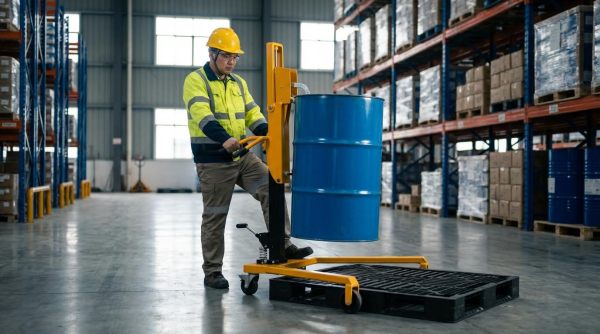
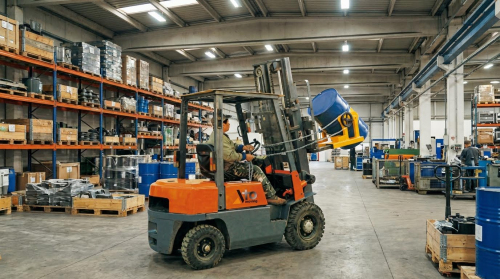
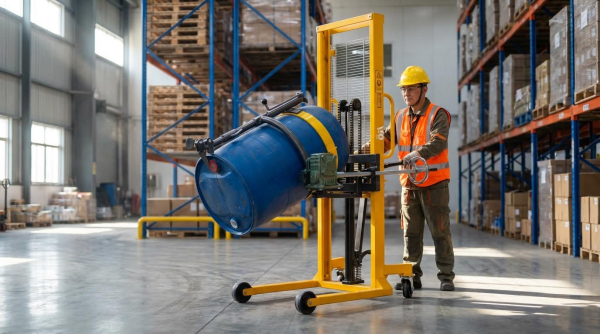
- Select appropriate handling equipment: Use forklifts, drum trolleys, and dedicated drum handlers instead of manual lifting so loads stay controlled and vertical, reducing side impacts that can ovalize shells or kick out bottom-tier chocks during drum movement.
- Verify attachments and forks before use: Perform pre-use checks for fork integrity, hydraulic performance, and secure drum attachments so that grip failures do not drop a 200 kg drum from height into the face of a stack in palletized drum storage.
- Train operators on hazards and segregation: Training must cover hazard recognition, SDS interpretation, segregation rules, spill response, and closure torque requirements so operators understand why a “simple” restack can create compatibility or leak risks in chemical drum warehouses.
- Standardize stacking patterns and heights: Teach and enforce symmetric four-per-pallet patterns, chocking rules, and maximum tiers (for example, three-high vs. four-high based on specific gravity and temperature) so every shift stacks the same way, limiting variation-driven failures across warehouse operations.
- Conduct routine visual inspections: Inspectors check for rust, dents, bulging from internal pressure, distorted bungs or lids, and faded UN or DOT markings; any compromised container is removed from stacked service and moved to a controlled rework or disposal area to prevent stack failures.
- Enforce FIFO rotation: Implement FIFO using clearly marked receipt dates and location codes so older drums leave the stack first, reducing the chance that corroded or embrittled containers remain buried in tall tiers for years in long-term storage.
- Use predictive monitoring and feedback: Track near-misses, dropped drums, and inspection findings to refine allowed stack heights, pallet types, and training focus areas, turning incident data into precise operational rules for each storage zone in continuous improvement programs.
Quick inspection checklist for stacked drums
Inspectors walking a drum aisle should rapidly check: (1) chocks present and tight on bottom tiers, (2) no overhanging drums beyond pallet edges, (3) no visible bulging or leaning of stacks, (4) labels and UN markings readable from the aisle, and (5) no damaged pallets or dunnage. Any deviation triggers a stop-work and restack before the area is released back to operations in drum storage inspections.
Secondary containment, spill control, and FIFO rotation
Containment and rotation controls when stacking drums or barrels ensure that if a drum leaks or fails, liquids stay inside engineered containment, spills are controlled quickly, and older inventory is removed before corrosion or UV damage undermines stack integrity.
| Control Element | Typical Design / Practice | Field Impact When Stacking Drums or Barrels |
|---|---|---|
| Secondary containment volume | Containment sized for at least 35% of total stored volume, often 110% of the largest single container for flammable or toxic liquids in drum storage design. | Ensures a catastrophic leak from one drum or a partial stack does not escape to drains or soil, even under rainfall in outdoor bunds. |
| Containment types | Spill pallets, bunded racks, or bermed areas under entire stacks, with pallets lifting drums off concrete for airflow and corrosion control in chemical drum storage. | Supports safe multi-tier stacking while catching drips at chimes and bungs, preventing slippery floors and hidden under-stack corrosion. |
| Spill response staging | Absorbents, drain covers, and overpack drums positioned near storage zones for immediate deployment if leaks are found during inspections in warehouse spill control. | Reduces response time from minutes to seconds, limiting spread under racks or into aisles when a bung or seam fails in a stack. |
| Environmental protection outdoors | Covers or shelters to limit rain, snow, and direct sun; UV protection for plastic drums; inspection intervals to detect rust and liner degradation in outdoor drum storage. | Prevents water accumulation in bunds and slows corrosion or UV embrittlement that would otherwise reduce safe stack life and height. |
| FIFO rotation method | First-In, First-Out using clearly marked receipt dates and location codes, applied at the pallet or position level in stacked arrays for drum inventories. | Keeps dwell time predictable so you are not stacking new heavy drums on top of old, weakened ones that have sat in the bottom tier for years. |
| Inspection focus inside containment | Checks for standing liquid in bunds, corrosion at pallet contact zones, and distorted bungs or lids indicating internal pressure or liner failure in secondary containment areas. | Identifies early-stage leaks or compromised drums before they reach full failure, allowing safe decanting or overpacking without stack collapse. |
| Integration with stack height limits | Stack heights reduced (e.g., from four-high to three-high) when specific gravity exceeds 1.5 or ambient temperatures exceed about 30 °C for long periods in drum stacking policies. | Controls bulging and closure stress so containment is a backstop, not the primary protection, keeping both structural and environmental risk low. |
Why FIFO and containment belong in the same SOP
FIFO rotation and secondary containment are often written in separate procedures, but they interact: as drums age in the bottom tier, corrosion and internal pressure changes increase leak probability. By enforcing FIFO, you shorten the time any drum spends in the highest-stress positions,
“”
Final Engineering Considerations For Safe Drum Stacking
Safe drum stacking depends on more than a “how high” rule. Engineers must link drum geometry, contents, and environment into one clear limit for each storage zone. Drum type, specific gravity, temperature, and fill level set the true structural capacity. Pallet design, chocking, and dunnage then turn that capacity into a stable stack that can tolerate daily forklift impacts.
Fire protection and structural checks further trim theoretical limits. Stack height must preserve sprinkler spray patterns and keep floor loads within slab design. Secondary containment, spill kits, and outdoor weather protection ensure that when a failure occurs, it stays local and manageable.
Operations teams must turn these engineering rules into simple field standards. Post maximum tiers by zone, standardize pallet patterns, and enforce OSHA blocking and aisle rules. Use purpose-built handlers from Atomoving, train operators on segregation and SDS use, and run routine inspections with FIFO rotation. Treat damaged or suspect drums as unstackable.
The best practice is to choose the most conservative limit from drum tests, structural checks, fire design, and environmental conditions, then lock it into SOPs, training, and audits. When engineering, operations, and containment work as one system, warehouses can run high-density drum storage with low risk and predictable performance.
Frequently Asked Questions
When stacking drums or barrels, what safety measures should be taken?
When stacking drums or barrels two or more tiers high, it’s important to chock the bottom tier on each side to prevent shifting in either direction. If stored on their sides, block the bottom tiers to keep them from rolling. These steps help ensure stability and worker safety. For more details, see Material Stacking Safety Tips.
Is it okay to stack drums or barrels on top of each other?
Yes, drums or barrels can be stacked on top of each other if done correctly. Always place the heaviest items at the bottom to create a stable base. Ensure proper blocking or chocking is used to prevent movement. Avoid stacking in a way that could cause tipping or instability. For general guidance on stacking, refer to Pallet Stacking Patterns.
What are some risks associated with improper stacking of barrels?
Improper stacking of barrels can lead to hazards such as tipping, rolling, or collapsing stacks, which may cause injuries or damage. Standing water in improperly sealed barrels may also attract mosquitoes, posing health risks like West Nile virus. To learn more about material stacking safety, visit Material Stacking Safety Tips.