
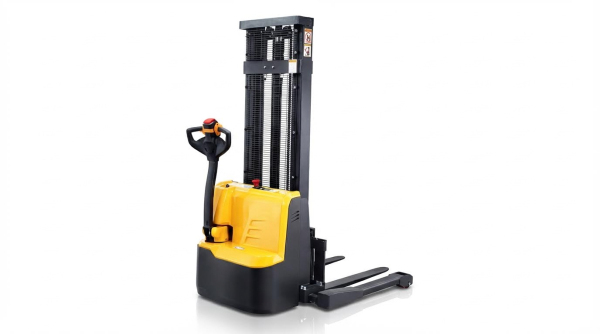
Using a walkie stacker to load a trailer is sometimes feasible, but only when trailer, dock, and floor conditions match the stacker’s design limits. This guide explains when it works, where it fails, and which safer options to consider.
If you are asking “can you load a trailer with a walkie stacker,” you need clear rules on capacity, stability, gradients, and dock hardware. Here you will get engineering-based guidance to reduce tip‑over risk, floor failures, and bottlenecks at the dock.
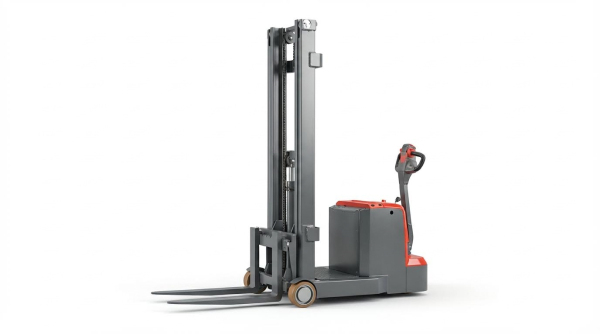
When Trailer Loading With Walkie Stackers Is (and Isn’t) Feasible
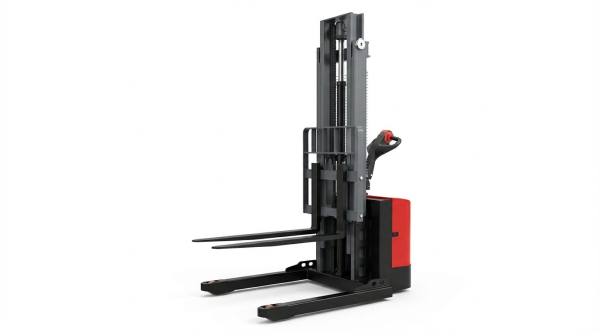
Trailer loading with walkie stackers is only feasible when trailer geometry, dock hardware, floor conditions, and load size all fall within the stacker’s design and stability limits. If any constraint is exceeded, you should switch to different equipment or redesign the dock setup.
If you are asking “can you load a trailer with a walkie stacker,” the correct engineering answer is: sometimes yes, but only after a formal feasibility check. That check must cover equipment capacity, floor and trailer integrity, dock interfaces, slopes, and operator training.
- Feasible Scenario: Short, light pallets on flat, well‑maintained docks – Low risk if procedures and ratings are respected.
- Marginal Scenario: Mixed pallet weights, older trailers, busy docks – Requires strict rules, supervision, and limits.
- Not Feasible: Heavy loads, poor floors, steep ramps, or yard loading – High tip‑over and floor failure risk.
💡 Field Engineer’s Note: Before approving walkie stackers for trailer work, run a short pilot shift with your heaviest pallets and worst trailer. Measure clearances, check dock plate deflection, and log any wheel spin or mast sway.
Core design limits of walkie stackers
Core walkie stacker design limits include rated capacity, load center, lift height, wheel size, and intended flat-floor indoor use, which together restrict where and how safely you can load trailers. Ignoring any of these limits quickly turns “feasible” into “unsafe.”
Walkie stackers are engineered as light-to-medium duty, indoor, flat-floor machines, not as universal trailer loaders. Their compact chassis and small wheels are ideal for tight aisles but unforgiving on broken floors, dock gaps, or trailer deflection under load.
| Design Aspect | Typical Walkie Stacker Range | Trailer-Loading Impact |
|---|---|---|
| Rated capacity | 900–1,800 kg | Limits pallet mass; heavy freight may exceed rating once you include pallet + packaging. |
| Lift height | ≈3.0–4.8 m | Sufficient for most trailer pallets, but capacity drops at higher lift heights. |
| Load center | Typically 600 mm | Long pallets or offset loads move the center forward, reducing safe capacity. |
| Wheel size and type | Small, hard indoor wheels | Sensitive to gaps, dock plate lips, broken boards, and debris. |
| Intended surface | Flat, smooth concrete | Poor performance on slopes, soft asphalt, or flexing trailer beds. |
| Travel speed | Walking speed | Reduces collision energy but can bottleneck busy docks. |
- Capacity Curve: Capacity decreases as the mast rises – High-tier picks in trailers may be under-rated without realizing it.
- Load Stability: Requires intact pallets and tight packaging – Loose or top‑heavy loads can topple when crossing dock plates.
- Visibility: Operator walks beside/behind load – Large pallets can block the view into dark trailers.
- Slope Limit: Recommended under ≈7°
- Duty Cycle: Light-to-medium throughput – Continuous, high-volume dock loading can overwork motors and brakes.
How to quickly check capacity for trailer work
1) Find the truck’s capacity chart. 2) Identify your pallet length and actual load center (often >600 mm for long pallets). 3) Look up the capacity at the required lift height. 4) Compare that value to the measured pallet mass plus packaging. If you are above the curve at that height, trailer loading with that pallet is not permitted.
💡 Field Engineer’s Note: In real docks, the “killer combo” is a marginally heavy pallet, long overhang, and a slightly uphill dock plate. The effective load center shifts forward and uphill, eating into stability even though the nameplate rating looks okay.
Trailer, dock, and floor conditions that must be met
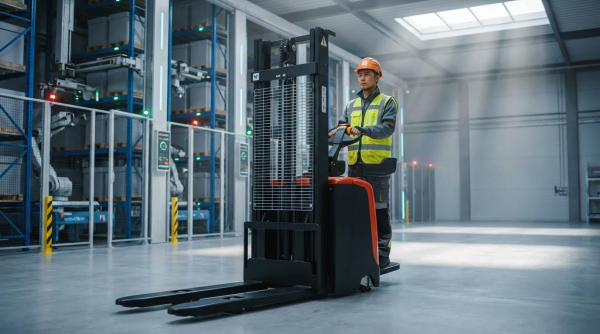
Trailer loading with walkie stackers is only acceptable when trailer structure, dock interface, dock plate rating, and floor conditions are all verified to support the combined truck and load safely. Any weak link here can cause floor collapse, wheel drop, or tip-over.
Even if the walkie stacker is correctly sized, poor trailers or dock hardware can make the operation unsafe. You must treat the trailer and dock as part of the load-bearing system, not as a passive background.
| Element | Engineering Requirement | Operational Impact |
|---|---|---|
| Trailer securing | Parking brake on, wheels chocked, engine off, stabilizers down, vehicle restraint engaged | Prevents trailer creep or “drive-away” while the stacker is inside. |
| Trailer floor | No broken boards, rot, or severe corrosion; adequate cross-member spacing | Reduces risk of wheel punching through under concentrated load. |
| Dock plate/leveler rating | Clearly rated for combined mass of walkie stacker + heaviest pallet | Prevents excessive flex, bottoming out, or plate failure. |
| Dock plate engagement | Full lip contact and secure placement on trailer bed | Minimizes gaps and vertical steps that can stop or unbalance small wheels. |
| Floor condition (dock & trailer) | Clean, dry, free of pallet debris and spills | Maintains traction and prevents sudden jolts from debris. |
| Slopes and gradients | Preferably near level; keep under ≈7° | Higher slopes greatly increase rollback and tip-over risk. |
| Headroom and obstructions | Sufficient ceiling and door height for mast at required lift | Prevents mast strikes on door headers or trailer roofs. |
- Securing Trailers: Always chock wheels and engage restraints – Eliminates trailer creep and surprise gaps at the dock plate.
- Inspecting Floors: Walk the trailer before driving in – Find broken boards and spills when it is still safe to step away.
- Dock Plate Selection: Use powered-truck-rated plates, not pallet-jack plates – Ensures stiffness and strength for dynamic loads.
- Lighting: Provide trailer interior lighting – Improves visibility of pallets, pedestrians, and floor hazards.
Simple trailer/dock pre-use checklist
1) Confirm trailer is restrained and chocked. 2) Open doors fully and secure them. 3) Walk the trailer: check floor, walls, and any internal loading systems. 4) Verify dock plate rating and secure engagement. 5) Check for slopes or height mismatch between dock and trailer. 6) Only then authorize powered entry.
💡 Field Engineer’s Note: Small polyurethane load wheels hate gaps. A 20–30 mm step or broken board edge at the dock plate can stop the truck dead, throwing the operator forward and destabilizing a tall load inside the trailer.
Regulatory and training implications at the dock
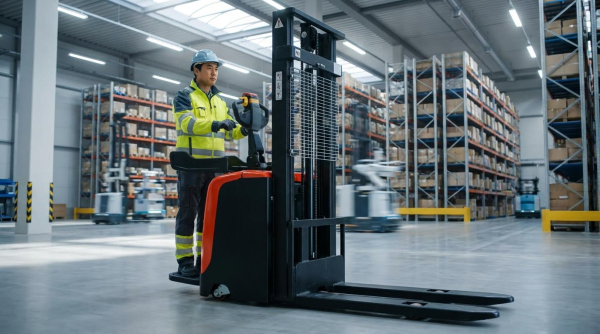
Regulations treat walkie stackers used for trailer loading as powered industrial trucks, so formal operator training, documented procedures, and periodic refresher courses are mandatory. You cannot treat this as “just a pallet jack” job.
From a compliance perspective, the question is not only “can you load a trailer with a walkie stacker” but “can your people do it consistently within regulatory and company rules.” That requires structured training, supervision, and documentation.
- Powered Industrial Truck Status: Walkie stackers are regulated lift trucks – Operators need formal instruction, evaluation, and authorization.
- Training Content: Capacity charts, combined weight, ramps, dock plates, and restraints – Ensures operators understand real dock risks, not just controls.
- Refresher Training: Typically at least every three years or after incidents – Keeps safe habits current and addresses near-miss trends.
- Written Procedures: Standard operating procedures for trailer loading – Creates a consistent, auditable way of working across shifts.
- Supervision & Enforcement: Observations, checklists, and corrective actions – Closes the gap between “paper rules” and real behavior.
Key topics to include in dock-specific training
1) Reading and applying the walkie stacker capacity plate and load center diagram. 2) How to calculate combined mass (truck + load) versus dock plate rating. 3) Correct sequence for securing trailers: brake, chocks, restraint, engine off. 4) Inspection of trailer floors and dock plates before entry. 5) Safe travel practices: forks low, mast slightly back, slow in/out of trailers. 6) Prohibited actions: sharp turns on dock plates, high travel, riding on the truck, or entering unsecured trailers.
💡 Field Engineer’s Note: Most dock incidents I investigated were not due to exotic failures but to simple rule breaks: entering an unrestrained trailer, ignoring a cracked dock plate, or rushing with tall loads. Good training plus visible supervision reduces these dramatically.
Engineering Constraints: Capacity, Stability, and Equipment Comparison

Engineering constraints for trailer loading with counterbalanced stacker center on capacity, load center, stability on dock interfaces, and how these trucks compare to forklifts. These limits decide when the answer to “can you load a trailer with a walkie stacker” is yes, no, or “only in tightly controlled conditions.”
- Capacity Envelope: Walkie stackers suit light-to-medium pallets – typically 900–1,800 kg with lift heights near 3–4.8 m, but usable capacity drops at height.
- Stability Envelope: Stability depends on dock plates, trailer floors, slopes, and load geometry – weak links here turn a “feasible” setup into a tip‑over risk.
- Equipment Fit: Compared with forklifts, walkie stackers trade capacity and floor tolerance for tighter turning and lower cost – this trade‑off is critical inside trailers.
| Key Constraint | Walkie Stacker Typical Range | Operational Impact in Trailers |
|---|---|---|
| Rated capacity | ≈900–1,800 kg | Limits you to light/medium pallets; heavy freight or dense loads may require rider forklifts. |
| Max lift height | ≈3.0–4.8 m | Enough for floor-level trailer work; high stacking inside trailers is rarely practical. |
| Load travel height | 300–400 mm above floor | Keeps center of gravity low; essential for stability on flexible dock plates and trailer floors. |
| Typical slope limit | <7° | Long, steep dock ramps or yard slopes can make trailer access unsafe. |
| Aisle / trailer space | Short wheelbase, tight turning | Favorable for congested docks and tight trailer interiors, but operator walks in the danger zone. |
💡 Field Engineer’s Note: When you push walkie stackers near their capacity at full lift in a trailer, every weakness shows up—soft trailer floors, flexible dock plates, and small wheels. If any link feels “springy,” derate the operation or step up to a heavier truck.
Rated capacity, load center, and lift height in trailers
Rated capacity, load center, and lift height define whether you can load a trailer with a battery-powered stacker without silently overloading the truck. The closer you run to the nameplate, the less margin you have for uneven floors, shifting loads, or sudden stops.
- Rated Capacity: Nameplate capacity is the maximum load the truck can safely handle at a specified load center and lift height – it is not a flat number for all situations.
- Load Center: Load center is the horizontal distance from the fork face to the load’s center of gravity – long pallets or overhanging loads increase this distance and reduce usable capacity.
- Lift Height: As lift height increases, stability decreases – capacity curves drop off at higher mast heights, especially with extended load centers.
| Parameter | Typical Walkie Stacker Value | Operational Impact in Trailer Loading |
|---|---|---|
| Rated capacity at standard load center | ≈900–1,800 kg | Must exceed pallet + packaging mass at the working lift height. |
| Standard load center | Commonly 500 mm | Standard 1,000–1,200 mm pallets fit; longer loads reduce actual capacity. |
| Max lift height (mast) | ≈3.0–4.8 m | More than sufficient for lifting from trailer deck; high lifts increase tip‑over risk. |
| Recommended travel height with load | ≈300–400 mm | Low travel height lowers the center of gravity and stabilizes the truck on uneven interfaces. |
In a trailer, you rarely need to lift more than 0.5–1.0 m, but the rated capacity still matters because the truck often operates on dock plates and flexible trailer floors. Engineering practice is to verify that pallet mass plus packaging sits comfortably below the capacity curve at the intended lift height, not just below the headline rating. During travel, the load should stay low (around 300–400 mm) with the mast slightly tilted back to bring the combined center of gravity closer to the truck and away from the “tip line.” Loosely stacked, partial, or overhanging loads are high risk in trailers because any shift during braking or on a bump moves the center of gravity outward.
How to sanity‑check capacity for trailer loading
First, confirm the nameplate capacity and rated load center on the truck. Second, weigh or estimate the heaviest pallet in the lane. Third, check if the pallet length or load overhang increases the load center beyond the rating. Finally, review the capacity chart (if available) at the actual lift height you plan to use inside the trailer. If any step is uncertain, treat the scenario as non‑compliant and derate or change equipment.
💡 Field Engineer’s Note: The most common “invisible” overload I have seen is a long, light-looking pallet with a high load center. It looks harmless, but the extra 100–150 mm of load center quietly erases a big chunk of rated capacity—especially on compact walkie stackers.
Stability on dock plates, ramps, and trailer floors
Stability on dock plates, ramps, and trailer floors determines whether a electric platform stacker remains upright when you bridge from the building to the vehicle. Walkie stackers have small wheels and short wheelbases, so any flex, slope, or gap is amplified under load.
- Dock Plate Capacity: Dock plates and levelers must be rated for the combined mass of truck plus maximum load – using “pallet jack only” plates with powered trucks is a common and dangerous error.
- Floor Integrity: Trailer floors must be free from rot, broken boards, and soft spots – localized collapse under a loaded drive wheel can cause instant tip‑over.
- Slopes and Ramps: Gradients should be limited to around 7° – beyond this, walkie stacker stability and traction degrade rapidly, especially when turning.
| Element | Engineering Requirement | Operational Impact / Best For… |
|---|---|---|
| Dock plate rating | Exceeds walkie stacker weight + heaviest pallet | Prevents excessive flex and “see‑saw” motion that destabilizes loads. |
| Dock plate surface | Non‑slip, secure engagement to trailer | Reduces wheel slip when entering or leaving trailers. |
| Trailer floor | Structurally sound, no rotten or broken boards | Supports point loads from small‑diameter stacker wheels. |
| Slope / gradient | Preferably <7° | Beyond this, walking control and braking become marginal. |
| Travel direction on ramps | With load: forks uphill; without load: drive wheel leading | Improves traction and braking, reduces runaway risk. |
Because walkie stackers run on small, hard wheels, they do not “average out” floor defects the way larger forklifts do. A broken deck board under a single wheel or a lip gap at the dock plate can create a sharp pitch or roll angle right under the load. On ramps or sloped yards, operations should limit gradients to less than about 7°. With a load, operators should keep the forks uphill and usually travel in reverse to maintain control and visibility; without a load, they travel downhill in reverse so the drive wheel leads for better braking. Sharp turns or hard braking on slopes are prohibited because lateral stability margins are already thin.
Checking your dock plate and trailer interface
Verify the marked capacity on every dock plate or leveler and compare it with the combined mass of the walkie stacker plus your heaviest pallet. Inspect the hinge, lip engagement, and locking system to ensure the plate cannot slip off the trailer bed. Finally, walk the plate and trailer floor to feel for soft spots or excessive flex before authorizing walkie stacker entry.
💡 Field Engineer’s Note: If a loaded walkie stacker makes a dock plate “bounce” or you can see daylight under the plate corners, treat that bay as out of bounds. That flex is turning your dock interface into a moving fulcrum right under the truck’s center of gravity.
Walkie stackers vs forklifts for trailer loading
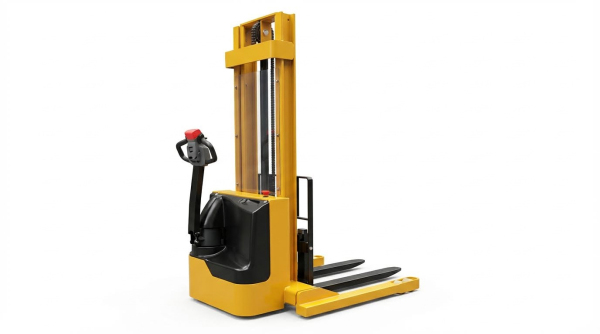
Walkie stackers and forklifts solve different engineering problems, so “can you load a trailer with a walkie stacker” really means “does this trailer, freight, and dock match the walkie stacker’s envelope better than a forklift’s?” The trade‑offs are capacity, stability, maneuverability, and lifecycle cost.
- Capacity and Height: Forklifts offer far higher capacities and lift heights than walkie stackers – they handle heavy or stacked trailer freight that would overload a walkie.
- Maneuverability and Space: Walkie stackers excel in tight spaces and narrow docks – they fit where sit‑down trucks cannot safely turn.
- Floor and Environment: Walkie stackers prefer flat, smooth indoor floors – forklifts tolerate rougher surfaces, outdoor yards, and uneven trailer approaches.
| Aspect | Walkie Stacker | Forklift (Rider / Counterbalance) | Operational Impact for Trailer Loading |
|---|---|---|---|
| Typical capacity | ≈900–1,800 kg | ≈1,500–20,000+ kg | Walkies suit light/medium pallets; forklifts handle heavy freight and dense loads. |
| Typical lift height | ≈3.0–4.8 m | Up to ≈9 m or more | Forklifts can stack higher in staging areas; inside trailers, height rarely the limiter. |
| Aisle / trailer space | Short chassis, tight turning radius | Larger turning circle, longer length | Walkies fit congested docks and tight trailers; forklifts need more maneuvering room. |
| Floor / surface tolerance | Best on flat indoor concrete | Handles uneven floors and some outdoor conditions | Forklifts cope better with worn dock aprons, thresholds, and rough yards. |
| Operator position | Pedestrian, walking beside load | Seated or standing on board | Walkies reduce speed but keep operator close to pinch and crush zones. |
| Speed and collision energy | Walking speed, low kinetic energy | Higher speed, higher impact energy | Walkies lower collision severity; forklifts demand stricter traffic controls. |
| Capex / TCO | Lower purchase price and running cost | Higher capex, higher operating cost (especially IC) | Walkies suit cost‑sensitive, light‑duty trailer work; forklifts justify cost for heavy, mixed operations. |
Walkie stackers are optimized for flat, indoor concrete with modest loads and short shuttle distances. Their compact chassis and walking‑speed operation make them attractive for congested docks, but they depend on good floors and conservative loading practices. Forklifts, especially counterbalance or reach models, bring higher capacity, better performance on imperfect surfaces, and operator protection via overhead guards and enclosed positions, but they require wider aisles and stricter traffic engineering. In many plants, the practical answer is a mixed strategy: use walkie stackers for light pallets and tight staging near the dock, and reserve forklifts for heavy freight, poor trailer floors, or any dock where slopes and surface defects exceed the walkie’s safe envelope.
When to upgrade from walkie stacker to forklift for trailers
Consider moving to rider trucks when: (1) pallet masses approach or exceed 1,200–1,500 kg regularly; (2) trailer floors are visibly worn or uneven; (3) dock plates show noticeable flex under load; (4) you need to maintain high throughput with long shuttle distances; or (5) you must operate on exterior aprons, slopes, or mixed indoor/outdoor routes.
💡 Field Engineer’s Note: If you find yourself writing special “exceptions” into procedures so that walkie stackers can keep working certain trailers, that is your signal. The process is telling you it wants a forklift, not more rules.
Specifying Safer Alternatives and Optimized Dock Setups
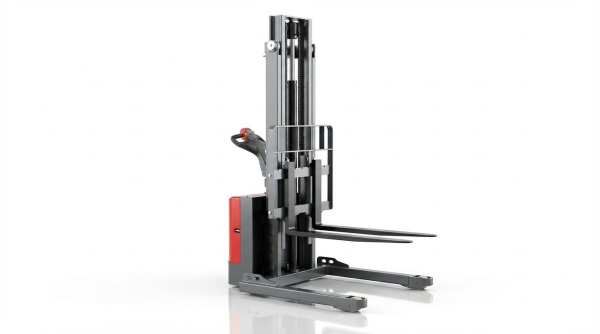
Safer alternatives to loading trailers with walkie stackers focus on using rider or reach trucks where loads, floor conditions, or throughput exceed walkie limits, and on redesigning dock layouts, ramps, and telematics to control risk and congestion.
- Decision Point: Start with the question “can you load a trailer with a walkie stacker safely every shift?” – If not, you specify different trucks and redesign the dock, not just add rules.
- Engineering Basis: Compare capacities, gradients, aisle widths, and trailer mix – This turns a yes/no question into a quantified equipment and layout choice.
When to move up to rider trucks or reach trucks
You move up from walkie stackers to rider or reach trucks when load mass, lift height, gradients, or trailer throughput approach the stability and productivity limits of walkies, especially in busy docks with mixed indoor–outdoor traffic.
Walkie stackers are engineered for light to medium loads, typically about 900–1,800 kg with lift heights near 3 m, on flat indoor concrete floors. Rider counterbalance and reach trucks cover higher capacities, roughly 1,500–20,000 kg with lift heights beyond 9 m, and cope better with uneven or semi-outdoor conditions. This difference becomes critical when you repeatedly enter trailers, deal with heavy pallets, or work across dock yards and ramps.
| Use-Case Factor | Walkie Stacker | Rider / Reach Truck | Best For… |
|---|---|---|---|
| Typical rated capacity | 900–1,800 kg | 1,500–20,000 kg | Rider/reach when pallet + packaging often exceeds ~1,200 kg. |
| Typical lift height | ≈3 m | >9 m possible | Rider/reach for high-bay storage or double-stacking in taller trailers. |
| Floor conditions | Flat, smooth indoor concrete | Handles uneven, mixed indoor/outdoor better | Rider for dock-to-yard moves and rougher trailer floors. |
| Aisle width & turning | Very compact; narrow aisles | Needs wider aisles and staging space | Walkie where space is tight and loads are modest. |
| Operator position | Pedestrian, walking speed | Seated or standing on board | Rider where long travel distances or high cycle counts exist. |
| Collision / kinetic energy | Lower speed, lower impact energy | Higher speed, higher impact energy | Walkie for low-speed, congested pick faces. |
| Typical trailer interface | Best on short, flat dock plates | Better for steeper ramps, heavier dock plates | Rider for mixed-height docks and heavy dock plates. |
- High pallet weights: If pallets frequently approach 1,200–1,800 kg, walkie stackers run near their design envelope – Rider trucks provide more stability margin at the same lift height.
- Frequent trailer entry: Repeated entry into trailers over dock plates and slight slopes amplifies dynamic loads – Rider or reach trucks tolerate these conditions better and keep operators on-board and protected.
- Mixed indoor/outdoor routes: Walkies are optimized for smooth indoor floors – Rider trucks with appropriate tires handle yard breaks, drains, and rough approaches more safely.
- Throughput and travel distance: Long runs from storage to dock with high cycle counts fatigue pedestrian operators – Rider trucks maintain productivity while reducing fatigue-related errors.
- Stacking height in trailers: When you must stack to upper positions or use double-stacking – Reach trucks provide the lift and reach envelope with better visibility.
How to formalize the “upgrade” decision
Define a simple matrix: rows for capacity bands (≤1,000 kg, 1,000–1,500 kg, >1,500 kg), columns for route type (flat indoor, mixed, outdoor). For each cell, assign “Walkie OK,” “Walkie with controls only,” or “Rider/Reach required.” This becomes your equipment selection rule in the dock SOP.
💡 Field Engineer’s Note: When gradients near 7° or trailer floors are visibly uneven, I treat walkie stacker trailer entry as “exception-only.” Even if it looks manageable empty, a slightly off-center 1,200 kg pallet can push the truck past its lateral stability margin during braking.
Dock layout, ramps, and telematics for safer loading
Optimized dock layouts, correctly specified ramps and dock plates, and telematics reduce the risk of using walkie stackers at the dock and often reveal where rider or reach trucks are operationally justified instead.
Even if the answer to “can you load a trailer with a walkie stacker” is technically yes, poor dock geometry, marginal dock-plate capacity, and blind spots can turn a feasible task into a high-risk one. Engineering the dock environment means matching levelers, restraints, traffic flows, and monitoring systems to the trucks you actually deploy.
| Design Element | Key Specification / Practice | Operational Impact |
|---|---|---|
| Dock plate / leveler capacity | Rated for combined mass of truck + heaviest pallet, not just the load. | Prevents excessive flex and plate failure when a loaded rider truck or walkie crosses. |
| Gradient limits | Keep working slopes under ≈7° for powered trucks. | Reduces rollback, wheel slip, and tipping risk on ramps into trailers. |
| Trailer restraint systems | Use mechanical / hydraulic locks plus chocks and parking brakes. | Prevents trailer creep and “dock walk” during repeated loading cycles. |
| Dock approach space | Provide straight-line approach and turning space for the largest truck type. | Minimizes tight reversing, side loading, and blind turns at dock faces. |
| Floor condition management | Routine inspections for broken boards, pallet fragments, and spills. | Improves traction for small walkie wheels and reduces puncture hazards. |
| Pedestrian and truck segregation | Marked walkways, guardrails, and one-way traffic rules. | Cuts collision risk in congested staging zones near dock doors. |
| Telematics data points | Impacts, overloads, travel paths, and peak-time utilization. | Identifies high-risk doors, overloaded trucks, and under-sized fleets. |
- Ramps and gradients: Keep ramp lengths sufficient to stay under about 7° – This allows walkies and riders to climb without aggressive braking or turning on the slope.
- Trailer securing and edge protection: Standardize chocking, restraints, and visual “truck in / truck out” indicators – Operators know when it is safe to enter and avoid unsupported trailers.
- Visibility and line-of-sight: Use mirrors, dock door windows, and lighting – Walkie operators walking beside the load need clear views of pedestrians and trailer edges.
- Telematics-driven redesign: Analyze impact and overload events by dock door – Relocate high-risk SKUs, widen approaches, or upgrade to rider trucks where incidents cluster.
- Lifecycle / TCO review: Compare 7–10 year costs for walkies vs rider trucks at each dock – High-usage doors often justify rider trucks once energy, downtime, and incident costs are included.
Using AI and digital twins for dock changes
Telematics and AI can replay months of travel paths and queue lengths around docks. A digital twin of your dock lets you test new ramp slopes, different truck mixes, or one-way traffic before you cut concrete. This is especially useful if you are moving from walkie-only to a mixed fleet of walkies and rider/reach trucks.
💡 Field Engineer’s Note: When telematics shows repeated impacts or overload alarms at a specific dock, I rarely find a “driver problem.” I usually find an under-rated dock plate, a tight S-curve approach, or walkie stackers being pushed into a job that really needs a rider truck.
Final Thoughts on Using Walkie Stackers for Trailer Loading
Trailer loading with walkie stackers only works when engineering, operations, and training line up around clear limits. Capacity curves, load centers, and lift heights define what each truck can safely carry on flexible trailer floors and dock plates. Dock geometry, plate ratings, gradients, and trailer integrity then decide whether that theoretical capacity is actually usable without flirting with tip‑over or floor failure.
When you respect these limits, walkie stackers give safe, efficient service on light to medium pallets in flat, well‑maintained docks. When you stretch them to heavy freight, worn floors, or steep approaches, the margin vanishes fast and incidents follow. At that point, rider or reach trucks, stronger dock hardware, or a redesigned layout are not upgrades; they are requirements.
The practical best practice is simple. Treat the walkie, dock, and trailer as one structural system. Verify capacity against real pallets, not assumptions. Keep slopes low, floors sound, and procedures written and enforced. Use telematics and incident data to flag doors where walkies are being pushed beyond their envelope and step up to rider equipment there. When in doubt, Atomoving recommends you derate the task or upgrade the truck, not the risk.
Frequently Asked Questions
Can you load a trailer with a walkie stacker?
A walkie stacker, also known as a walk-behind forklift, is a compact and versatile piece of equipment commonly used in warehouses. While it can handle pallets and other materials, loading a trailer typically requires more height and reach than a walkie stacker provides. For this task, consider using a forklift or a boom lift designed for higher elevations. Forklift Types Guide.
What class is a walkie stacker?
A walkie stacker falls under Class III: Electric Motor Hand Trucks or Hand/Rider Trucks. This class includes electric pallet jacks and similar equipment designed for moving and lifting loads over short distances. Industrial Truck Classifications.
Does a walkie stacker count as a forklift?
Yes, a walkie stacker is considered a type of forklift. It is specifically designed for low to mid-level selective racking applications, such as store rooms or small warehouses. Its straddle legs allow for closer pallet stacking when floor stacking is employed. Walkie Stacker Guidelines.