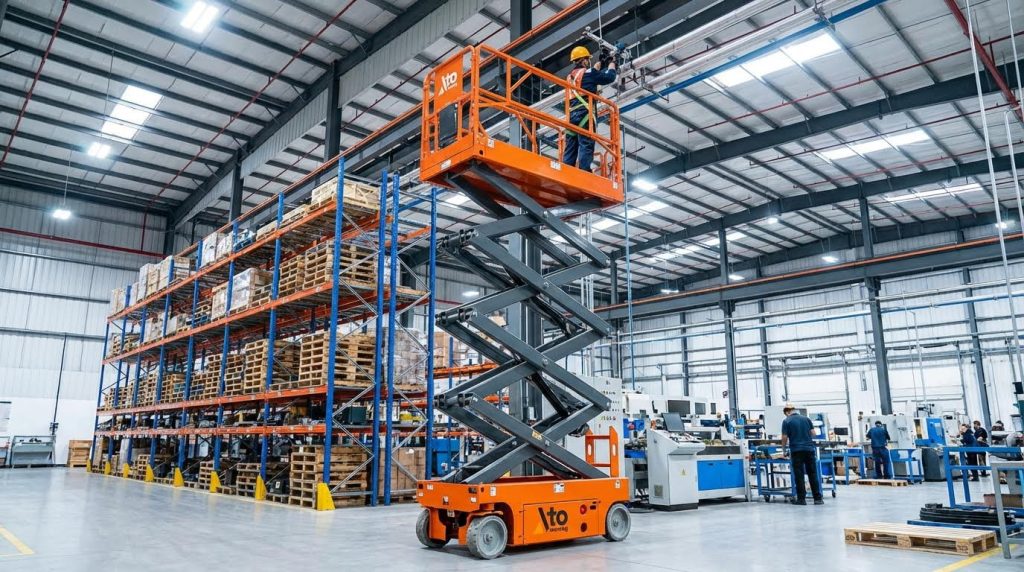
If you want to know how to get aerial work platform operation certificate in a way that actually passes audits and keeps people safe, you need more than a quick checklist. This guide walks you through OSHA-compliant training, hands-on evaluation, documentation, and real-world engineering limits. You will see how regulations, equipment physics, and cost all connect so your AWP program is both legally defensible and operationally efficient.
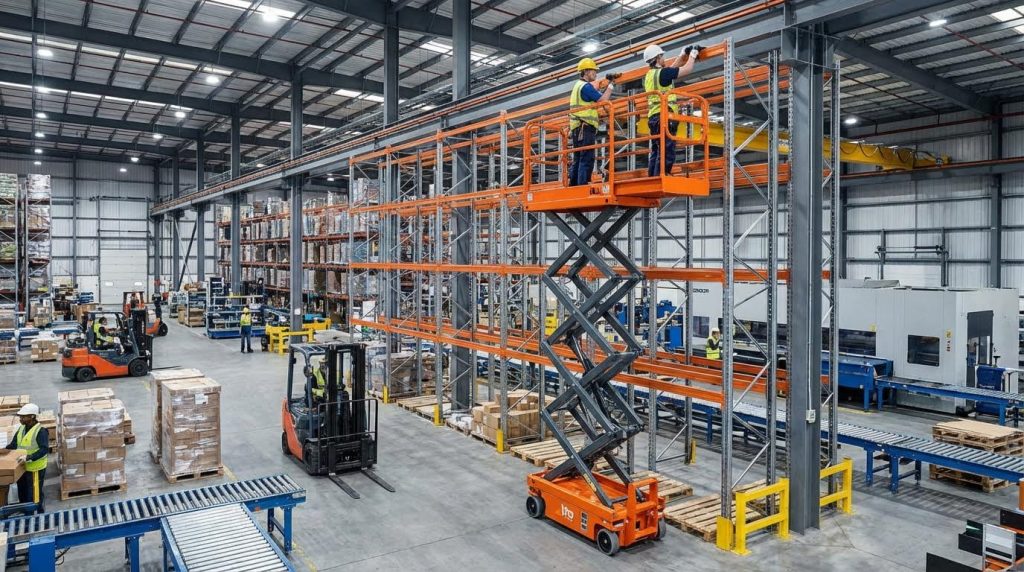
Understanding Aerial Work Platform Certification
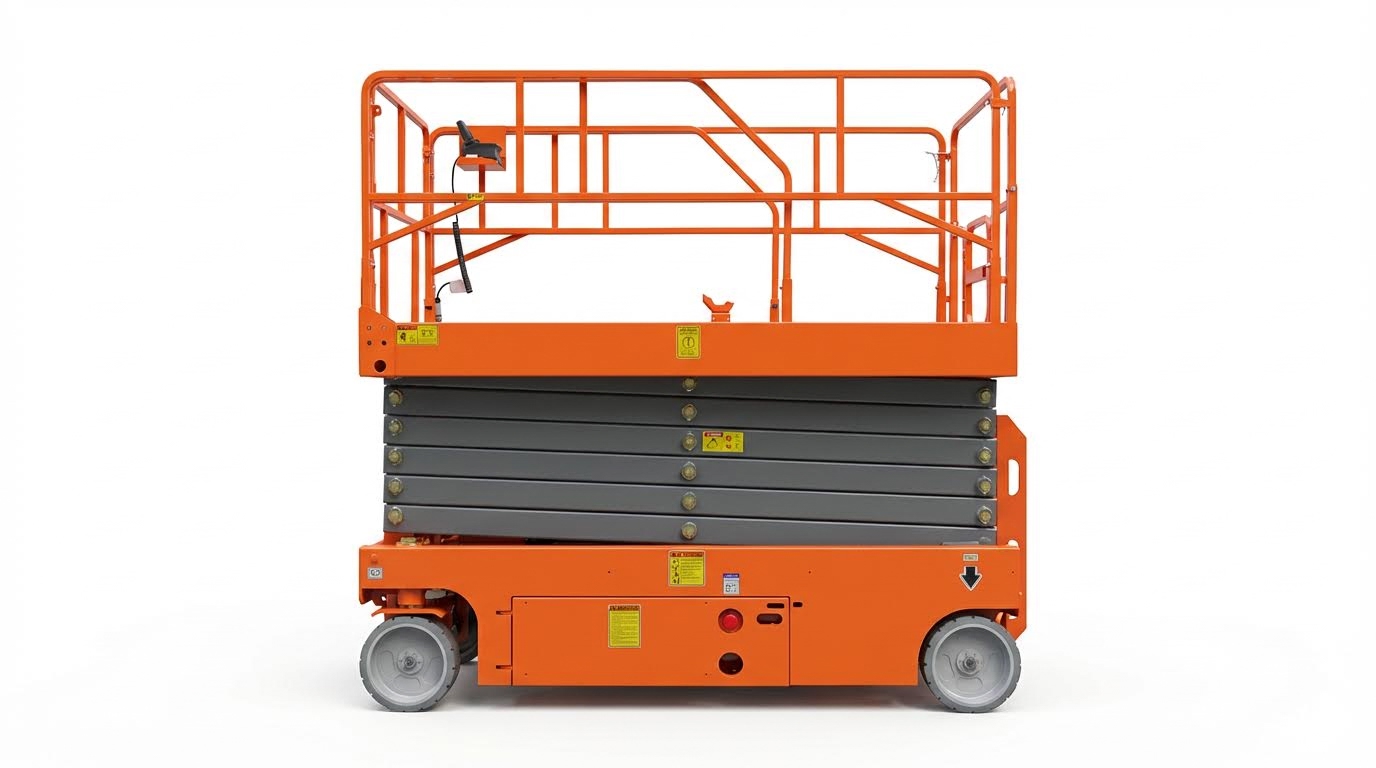
Understanding aerial work platform certification means knowing what training, evaluation, and documentation OSHA expects before anyone goes up in a lift. This section explains how to get aerial platform operation certificate in a way that actually passes audits and keeps people safe.
- Regulatory Baseline: OSHA sets the minimum training and safety rules – you build your certification program on top of these.
- Training + Evaluation: Operators need both classroom theory and hands‑on evaluation – paper training alone does not comply.
- Three‑Year Cycle: Most compliant programs use a 3‑year recertification interval – this aligns with common OSHA interpretations and industry practice.
- Documentation: Employers must keep training and evaluation records – this is what protects you during inspections and after an incident.
💡 Field Engineer’s Note: When customers ask how to get scissor platform operation certificate “fast,” I remind them: incomplete documentation is as bad as no training during an OSHA investigation. Build your paperwork process before you run your first class.
What OSHA And ANSI Actually Require
OSHA does not use the word “license” for aerial lifts, but it effectively requires a certification process: formal instruction, hands‑on practice, and evaluation, all documented and repeated at defined intervals.
In practical terms, if you want to know how to get aerial platform operation certificate that will stand up to OSHA scrutiny, you must design your program around three pillars: OSHA standards, structured training, and solid recordkeeping.
| Requirement Area | What The Rule/Guidance Says | Operational Impact |
|---|---|---|
| OSHA training duty | Employers must instruct workers to recognize and avoid unsafe conditions under 29 CFR 1926.21(b)(2). OSHA 1926.21(b)(2) | You must provide structured safety training before anyone operates an aerial work platform. |
| Authorized operators only | Only personnel approved by the employer may operate aerial lifts per 1926.556(b)(2)(ii). OSHA 1926.556(b)(2)(ii) | You must define who is “authorized” and keep proof of their training and evaluation. |
| Three‑part certification model | OSHA‑compliant programs use formal instruction, practical training, and performance evaluation. Three‑step process | Your “certificate” is valid only if all three steps are completed and documented for each operator. |
| Recertification interval | Re‑training and re‑evaluation typically every 3 years, or sooner after incidents or changes. Recertification guidance | Plan a rolling 3‑year schedule and trigger immediate refreshers after accidents or near‑misses. |
| Hazard‑specific content | Training must address falls, electrocution, tip‑overs, and crushing hazards. Key hazard topics | Your syllabus must go beyond general safety and focus on real aerial lift risks. |
| Documentation | Employers keep detailed records of each operator’s training and certification. Recordkeeping expectations | Without records, you cannot prove compliance during inspections or after an incident. |
- OSHA vs “License”: OSHA focuses on training and authorization, not government‑issued licenses – the employer’s certificate and records are what matter.
- ANSI Alignment: ANSI standards define design, safe use, and training expectations – following them shows you meet industry best practice, not just the legal minimum.
- Trigger Events: Accidents, near‑misses, or equipment changes require earlier retraining – waiting three years after a serious incident will not pass a compliance review.
- Site‑Specific Risks: Training must reflect your actual worksite hazards – classroom‑only, generic content leaves dangerous gaps.
How this translates into a practical certification card
Most employers issue a wallet card or digital record that lists the operator’s name, equipment class, training date, evaluator, and expiration date (often 3 years from evaluation). The card itself is not mandated by OSHA, but it is an efficient way to prove the operator is “authorized” under the standards.
Aerial Lifts Vs. MEWPs: Definitions And Scope
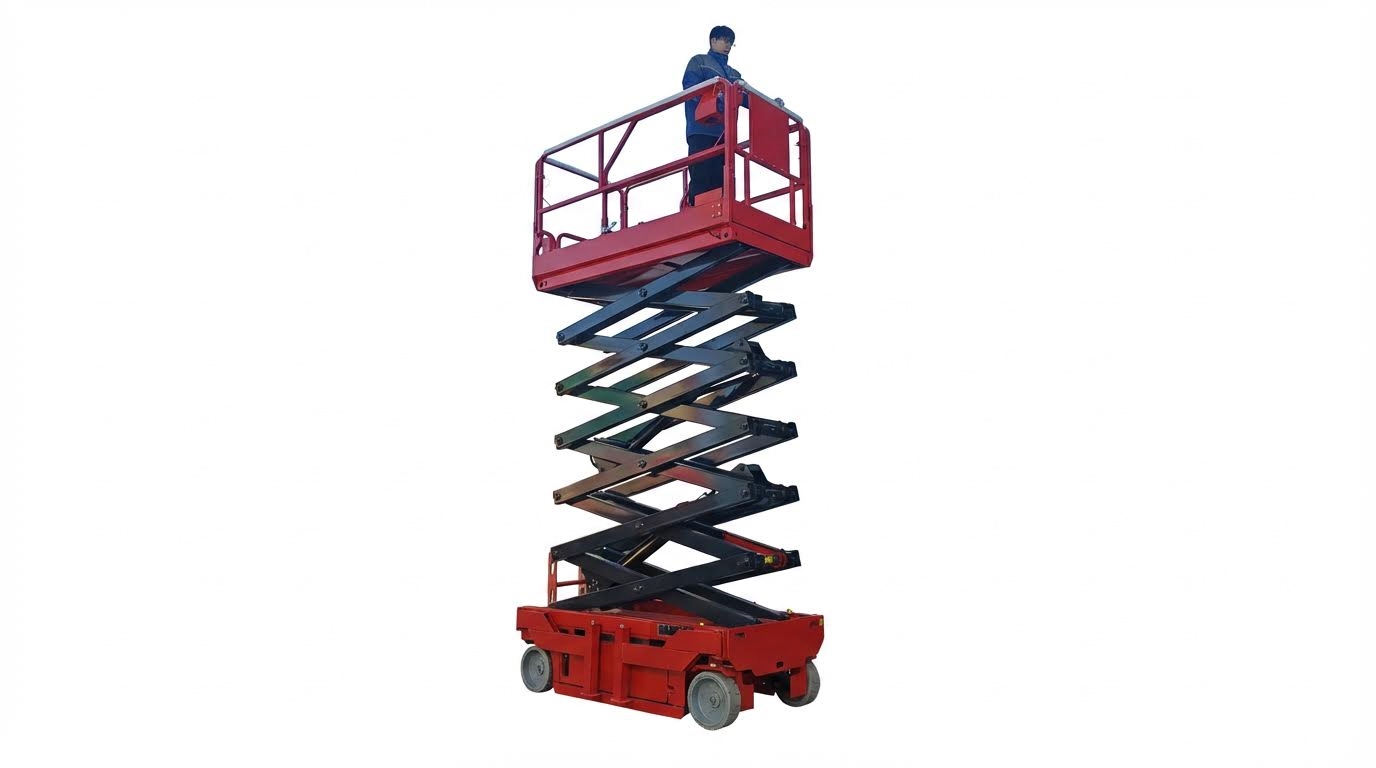
Aerial lifts and MEWPs refer to overlapping but not identical categories: “aerial lifts” is the term used in many OSHA rules, while “MEWP” (mobile elevating work platform) is the newer ANSI/ISO term that classifies equipment by movement and outreach.
Understanding this difference is critical when you plan how to get scissor platform lift operation certificate, because your training must match the specific machine types your operators will use, not just a generic “lift” label.
| Term | Typical Definition / Examples | Training & Certification Scope Impact |
|---|---|---|
| Aerial lift (OSHA usage) | Vehicle‑mounted devices such as extensible boom platforms, aerial ladders, articulating boom platforms, and vertical towers, often used in construction and maintenance. Referenced in 29 CFR 1926.453. | Your program must cover hazards and controls for boom and vertical lifts mounted on mobile chassis or vehicles. |
| MEWP – Mobile Elevating Work Platform (ANSI/ISO usage) | Powered machines with a work platform that can be moved and elevated, including scissor lifts, boom lifts, and vertical mast lifts, classified by group (vertical vs boom) and type (travel capability). | Training should be tailored by MEWP group/type so operators understand limits like outreach, slope ratings, and wind restrictions. |
| Aerial Work Platform (AWP – general term) | Broad, non‑standard term covering any powered platform that lifts people to work at height, including both aerial lifts and MEWPs. | When you say “AWP certification,” you should specify which machine families (e.g., scissor, articulating boom) are covered. |
| Site‑specific examples | Scissor lifts for indoor warehousing, articulating booms for façade work, trailer‑mounted lifts for facilities maintenance. | Operators may need multiple endorsements if they use different families of machines with different stability and control characteristics. |
- Machine‑Specific Training: One generic class is not enough for all platforms – operators must train on the types they actually use.
- Stability Behavior: Scissor lifts move mainly vertically, booms add horizontal outreach – this changes tip‑over risk and load chart reading.
- Worksite Fit: Indoor MEWPs often face tight aisles and smooth floors, outdoor booms face wind and slope – hazard discussions must reflect these realities.
- Policy Wording: Your written program should reference both OSHA “aerial lifts” and ANSI “MEWPs” – this avoids gaps when auditors compare your documents to different standards.
Choosing the right scope for your first certification class
For a new program, start with the platforms you use most (for example, electric scissor lifts up to about 10–12 m platform height). Build modules for additional MEWP types later. This staged approach keeps initial costs down and focuses your training time on the real daily risks your team faces.
Step‑By‑Step Certification Process For AWP Operators
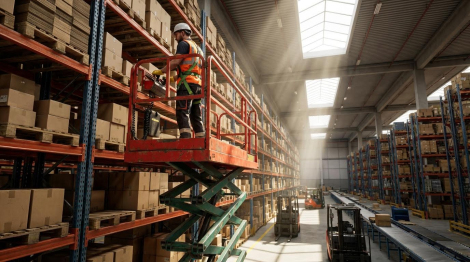
The step‑by‑step certification process for AWP operators follows OSHA’s three‑part model: formal instruction, hands‑on practice, and performance evaluation, repeated at least every three years to stay compliant and safe. This is the core of how to get aerial work platform operation certificate in a legally defensible way.
- Clarify the goal: OSHA‑compliant operator authorization – Gives you a defendable answer when someone asks “who trained this person and when?”
- Follow OSHA’s 3‑step framework: Classroom, practical, evaluation – Aligns with OSHA’s expectations for powered industrial equipment training.
- Document everything: Names, dates, equipment, test scores – Turns training into proof during inspections or incident investigations.
💡 Field Engineer’s Note: Treat operator certification like a safety‑critical process, not a checkbox. In every serious incident I have reviewed, poor or undocumented training made the employer’s legal and financial exposure much worse.
Formal Safety Training And OSHA Compliance
Formal safety training is the classroom or online component that explains OSHA rules, equipment hazards, and safe operating procedures, and it is the first mandatory step in how to get aerial work platform operation certificate that will stand up to an OSHA review.
OSHA standards for aerial lifts sit mainly in 29 CFR 1926.453, 1926.21, and 1926.32, which require employers to instruct workers to recognize and avoid unsafe conditions, and to restrict operation to “authorized” employees only. OSHA clarified that while it did not use the word “certification” for aerial lifts, employers must still train operators adequately, and can be cited under 1926.21(b)(2) if training is missing or ineffective. OSHA interpretation letter
- Concept: OSHA’s training expectation: Train operators to recognize and avoid hazards – Reduces falls, electrocutions, tip‑overs, and struck‑by incidents.
- Concept: Authorized operator: Employer‑approved person allowed to run the AWP – Makes it clear who is and isn’t allowed on the controls.
- Concept: Formal instruction topics: Regulations, load limits, stability, fall protection, and site hazards – Builds a mental model before anyone touches the machine.
- Concept: Delivery methods: Classroom, online modules, or blended – Lets you fit training around shifts while still covering core content.
Industry practice has converged on a three‑step OSHA‑compliant certification process: formal instruction on safety and rules, hands‑on practical training, and a performance evaluation by a qualified trainer, repeated every three years or sooner if there is an accident, unsafe behavior, or significant change in equipment or worksite conditions. Training vs. OSHA certification overview
- Concept: Three‑year cycle: Recertify at least every 3 years – Keeps skills, rules, and site‑specific procedures current.
- Concept: Trigger‑based retraining: After incidents or unsafe use – Closes gaps revealed by near‑misses or accidents.
- Concept: Hazard‑specific focus: Falls, power lines, tip‑overs, crushing – Targets the real killers in aerial work.
💡 Field Engineer’s Note: In cold storage or outdoor winter work, add content on wind, ice, and hydraulic behavior at low temperatures. Oil thickening and slippery decks drastically change stopping distances and platform stability below 0°C.
Typical topics covered in formal AWP training
Most formal courses cover: OSHA and ANSI basics; AWP types and limits; load charts and rated capacity; pre‑use inspections; worksite hazard assessment; safe driving and elevation procedures; fall protection use; emergency lowering; and employer‑specific rules.
Hands‑On Operation, Evaluations, And Recertification
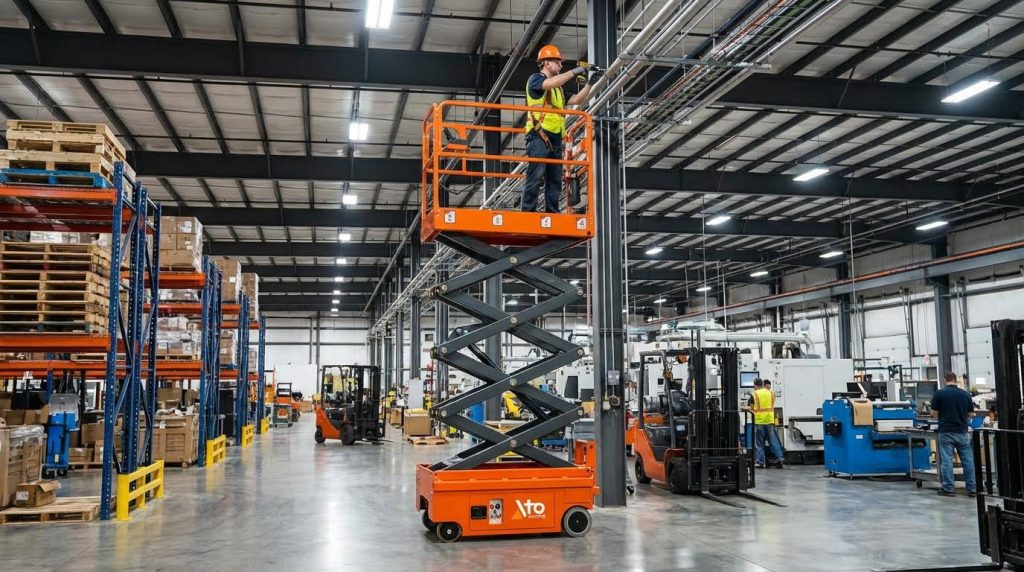
Hands‑on operation and evaluation are the practical parts of how to get aerial work platform operation certificate, where a qualified trainer observes the operator using the actual or similar machine and signs off on their competence, then repeats this at least every three years.
OSHA‑aligned certification models require practical training on the equipment plus a performance evaluation by a qualified trainer, not just a classroom test. The evaluation must verify that the operator can safely maneuver, elevate, position, and stow the platform, and respond to hazards and emergencies. This three‑step process (instruction, practice, evaluation) must be repeated every three years or sooner after accidents, unsafe operation, or major changes in equipment or site conditions. Three‑step certification process
- Concept: Practical drills: Drive, steer, elevate, rotate, and descend under supervision – Builds muscle memory for confined and elevated work.
- Concept: Scenario‑based tasks: Simulate power‑line clearance, overhead obstructions, and narrow aisles – Prepares operators for real‑world constraints.
- Concept: Evaluation checklist: Use a structured scoring sheet – Standardizes pass/fail and reduces subjective judgment.
- Concept: Recertification triggers: Time‑based and event‑based – Ensures retraining after any serious red flag.
Many organizations and rental customers use blended models: online or classroom theory followed by on‑site practical training and direct evaluation at the customer’s facility, sometimes via external trainers referred by rental companies. This lets operators train on the same ground conditions, slopes, and obstructions they will actually face. Rental customer training options
- Concept: On‑site evaluation: Test on actual routes and work areas – Reveals issues like tight turns, slopes, and overhead clashes.
- Concept: Qualified evaluator: Person with knowledge, training, and experience – Makes the sign‑off credible if later challenged.
- Concept: Skill gaps: Use evaluations to identify weak operators – Targets remedial coaching instead of blanket retraining.
💡 Field Engineer’s Note: Manual and smaller electric AWPs struggle on slopes above roughly 2–3%. During evaluations, always include driving and braking on the steepest on‑site grade; many near‑misses happen on short ramps that nobody thought to test.
Example structure of a practical AWP evaluation
An effective evaluation usually includes: pre‑use inspection; function test; driving at low speed; turning in confined space; approaching and working near a simulated edge or obstacle; elevating to full height; using emergency controls; and safe shutdown and parking.
Documentation, Recordkeeping, And Audit Readiness
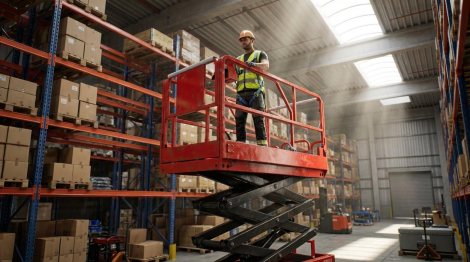
Documentation and recordkeeping turn training activity into legal proof, which is essential for audit readiness and is the final administrative step in how to get aerial work platform operation certificate that will protect the employer if OSHA or an insurer investigates.
Employers are expected to keep detailed records of each operator’s training and certification, including dates, content covered, and evaluation results, and to repeat certification every three years or sooner after unsafe operation, accidents, or significant changes in equipment or worksite conditions. Documentation and recertification requirements
| Record Type | Key Data To Capture | Retention Practice | Operational Impact |
|---|---|---|---|
| Training roster | Names, job titles, date, course ID | Keep for at least one full recert cycle | Proves who attended which formal course. |
| Test results | Written scores, practical pass/fail, evaluator name | Attach to operator file | Shows competence, not just attendance. |
| Equipment covered | AWP type, model, height, drive type | Link to each operator’s authorization | Clarifies what each person is allowed to operate. |
| Recertification log | Dates of refresher, reason (3‑year, incident, change) | Maintain continuously | Demonstrates ongoing compliance and follow‑up. |
| Incident‑driven retraining | Event description, corrective training provided | Attach to incident investigation | Shows you acted after a near‑miss or accident. |
- Concept: Individual operator file: Centralize all records per person – Simplifies audits and internal reviews.
- Concept: Certificate or wallet card: Issue proof of authorization – Lets supervisors check status quickly in the field.
- Concept: Expiry tracking: Use a simple register or software – Prevents operators from quietly going out of date.
Some institutions require a structured, two‑part process with classroom instruction plus a proficiency evaluation, and define a fixed validity period (commonly three years) for each AWP authorization, mirroring OSHA‑aligned best practice. Example institutional AWP program
💡 Field Engineer’s Note: During incident investigations, the fastest way to lose credibility is missing or inconsistent records. Build your documentation system first, then train; otherwise you will never catch up once multiple operators are in the field.
Minimal documentation set for small fleets
For a small site, you can stay audit‑ready with: a master operator list with expiry dates; copies of training materials; signed attendance sheets; evaluation checklists; and a simple log of incidents and any follow‑up retraining.
Engineering, Safety, And Cost Factors In AWP Training
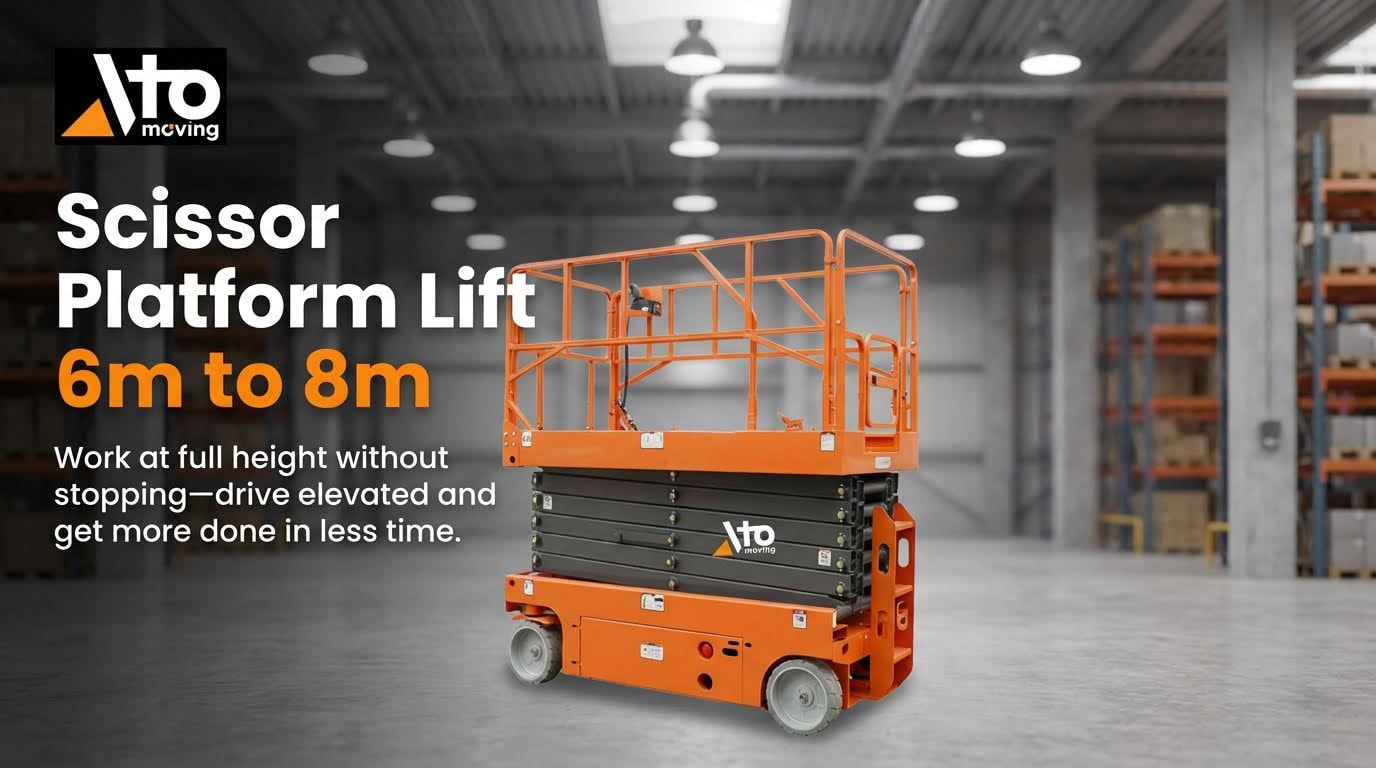
Engineering, safety, and cost factors in AWP training define how to get aerial work platform operation certificate in a way that is compliant, practical, and financially defensible for your site and equipment mix.
- Engineering Factors: Equipment limits and load behavior – Keep operators within safe charts and stability envelopes.
- Safety Factors: Hazards, inspections, and fall protection – Cut falls, tip‑overs, and electrocutions.
- Cost Factors: Direct fees and downtime – Control total cost of ownership of your training program.
When you plan how to get aerial work platform operation certificate for your team, you should design training around the real machines, real jobsites, and real failure modes they will see every day.
Equipment Types, Load Charts, And Stability Limits
Equipment types, load charts, and stability limits matter because they define the safe working envelope of every aerial platform and must be built directly into operator training and evaluations.
Most compliant programs start by matching training content to the exact AWP types on site, then drilling operators on capacity plates, outreach limits, and how wind, slope, and boom position change stability. Operators must know how to read the rated capacity and never overload the platform as a core skill. Source
| Engineering Aspect | Typical Training Focus | Operational Impact |
|---|---|---|
| Equipment type (scissor, boom, vertical mast) | Differences in drive, steering, elevation, and outreach | Ensures operators pick the right AWP for a 6–18 m job height and access pattern |
| Rated capacity | Reading capacity plate before use; counting people + tools + materials | Prevents overload that can cause structural failure or tip‑over when elevated |
| Outreach / boom angle | Effect of horizontal reach on capacity and stability | Helps operators avoid over‑reaching beyond the safe load chart at 8–20 m outreach |
| Wind and weather | Maximum allowable wind speed; avoiding storms | Reduces sway and tip‑over risk on outdoor jobs, especially above 10 m platform height |
| Slope and ground conditions | Reading slope indicators; avoiding voids and soft ground | Prevents side‑slope tip‑overs when traveling or elevating |
Engineering‑driven training also explains how stability is affected by dynamic movements: turning at speed, sudden braking, or swinging a boom quickly. Operators learn to combine the rated capacity with real conditions such as wind, slope, and outreach, instead of treating the plate value as a fixed number.
- Load Chart Use: Operators must locate and interpret the load chart – They learn exactly where capacity drops as outreach increases.
- Center Of Gravity: Trainers explain how adding 50–100 kg at the guardrail shifts the center of gravity – Operators see why standing on rails is banned.
- Dynamic Effects: Sudden stops and swings are covered – Reduces shock loading on structure and chassis.
- Environmental Limits: Wind, ice, and debris are discussed – Operators know when to stop work, not just how to start it.
💡 Field Engineer’s Note: When training on boom lifts outdoors, I always park one unit near a mild 2–3% slope and another on level ground. Let operators feel the difference in sway and leveling response; it drives home why even “small” slopes matter for stability.
How load and stability tie back to certification
During the performance evaluation step of OSHA‑style certification, evaluators typically check whether the operator verifies capacity, considers wind and slope, and positions the platform without exceeding the safe envelope. This connects engineering knowledge directly to pass/fail criteria. Source
Pre‑Use Inspections, Worksite Hazards, And Fall Protection
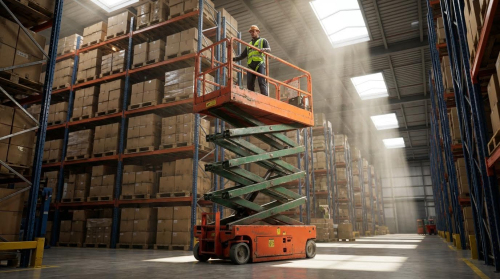
Pre‑use inspections, worksite hazard checks, and fall protection are non‑negotiable modules in any serious AWP course because they directly address the top OSHA‑identified accident causes: falls, electrocutions, and tip‑overs.
To understand how to get aerial work platform operation certificate that actually prevents incidents, your program must require a pre‑operational inspection at the start of each shift using a checklist and a structured work area hazard assessment before elevation. Source
| Safety Element | Key Checks In Training | Operational Impact |
|---|---|---|
| Pre‑use inspection | Fluids, leaks, structural damage, guardrails, controls, emergency systems | Catches defects before a 10–20 m elevation where failures are catastrophic |
| Worksite surface | Slopes, voids, trenches, soft ground | Prevents wheel drop‑in and side‑slope tip‑over during travel and elevation |
| Overhead and side clearances | Beams, pipes, roofs, and pinch points | Reduces crushing and entrapment incidents when raising or driving elevated |
| Electrical hazards | Minimum approach distances to power lines | Mitigates electrocution risk near energized conductors |
| Fall protection | Harness use, lanyard connection to anchor, no climbing on rails | Controls fall risk if the platform jolts, moves, or is struck |
| Ground personnel control | Barricading and exclusion zones | Prevents people from entering the crush or drop zone under the platform |
- Checklist Discipline: Each operator completes a documented pre‑operational check – Creates a record and a habit that auditors can verify.
- Hazard Mapping: Trainees walk the jobsite before operating – They learn to see slopes, voids, and overhead risks before they are in the basket.
- Fall Protection Integration: Harness and anchor training is equipment‑specific – Reduces misuse like tying off to guardrails.
- Crush‑Zone Awareness: Ground workers are trained too – They understand why they must stay out of the machine’s swing and drop zones.
Robust programs also connect this content back to OSHA’s requirement that employers instruct workers to recognize and avoid unsafe conditions, which is the basis for citations when training is missing or ineffective. Source
💡 Field Engineer’s Note: In real projects, many “trained” operators fail on basics like checking for overhead steel or blockwork when repositioning. During evaluations, I always simulate a tight 100–200 mm clearance scenario; if they do not slow down and use a spotter, they are not ready for a real site.
Typical pre‑use inspection flow in training
A standard drill walks operators around the machine clockwise: tyres and chassis, structural members, hydraulic leaks, guardrails, controls, decals, then a function test of lift, drive, steering, and emergency lowering. This becomes muscle memory when repeated at each shift. Source
Training Cost, Downtime, And Total Cost Of Ownership
Training cost, downtime, and total cost of ownership must be planned together so your aerial lift program stays compliant without creating unnecessary schedule or budget pain.
From a financial perspective, understanding how to get aerial work platform operation certificate for every operator means identifying both the visible direct costs and the hidden indirect costs over the full training lifecycle. Direct costs include payments to training providers, instructor fees, and course materials, while indirect costs include the labor hours your employees spend away from productive work. Source
| Cost Component | Type | What It Covers | Operational Impact |
|---|---|---|---|
| Course fees | Direct | External provider or internal instructor costs | Baseline budget per operator for certification and recertification |
| Training materials | Direct | Manuals, e‑learning licenses, checklists | Improves consistency of instruction across multiple sites |
| Travel and venue | Direct | Room hire, travel, and accommodation if off‑site | Can be reduced by using on‑site or blended training models |
| Operator time in class | Indirect | Labor hours during off‑the‑job training | Represents lost production; must be scheduled to minimize impact |
| Equipment downtime | Indirect | AWPs reserved for training instead of work | May delay projects if not planned into the schedule |
| Accident and citation risk | Implicit | Potential OSHA citations and incident costs if training is weak | Strong training mitigates high‑severity, low‑frequency losses |
- Lifecycle View: Plan for initial training plus 3‑year recertification cycles – Smooths budgets and avoids last‑minute mass retraining.
- Blended Delivery: Use online theory plus on‑site practical sessions – Reduces travel and venue costs while staying compliant.
- Scheduling Strategy: Align training with low‑load periods – Minimizes lost output when operators are off the floor.
- Documentation Efficiency: Standardize forms and records – Cuts admin time and improves audit readiness.
Well‑designed programs also factor in that OSHA‑style aerial lift certification typically requires repeating the three‑step cycle of formal instruction, hands‑on practical training, and performance evaluation every three years or sooner after incidents or major changes in equipment or conditions. Source This recertification requirement should be built into your long‑term cost model.
💡 Field Engineer’s Note: The cheapest program on paper is often the most expensive after the first incident. When I help sites budget, we always compare “extra half‑day of hands‑on practice now” versus the cost of one tip‑over: repairs, medical, investigation, and schedule damage.
How cost planning supports compliance audits
When auditors review your aerial lift program, they look for proof that training is ongoing, documented, and aligned with equipment and hazards. A clear costed plan for initial and repeat training shows management commitment and makes it easier to justify the program internally.
Final Thoughts On Building A Compliant AWP Program
A strong AWP program does more than hand out wallet cards. It blends regulations, engineering limits, and site reality into one clear system. OSHA and ANSI define the floor, but your procedures, training depth, and records decide whether you pass an audit after a real accident.
Engineering rules on load charts, stability, wind, and slope must sit at the heart of operator training. Pre‑use inspections, hazard surveys, and fall protection practice then turn those rules into daily habits that prevent tip‑overs, crush injuries, and falls. Hands‑on evaluations close the loop by proving each person can apply this knowledge on the actual machines and terrain.
When you plan costs, treat training as risk control, not overhead. Budget for the full three‑year cycle, including refreshers after incidents or equipment changes. Standard forms, clear scopes by AWP type, and a simple expiry‑tracking system keep the program lean but defensible.
The best practice is clear: build an OSHA‑aligned, engineering‑driven program, document every step, and keep content tied to your real jobsites and Atomoving equipment. Do that, and your AWP “certificate” will mean operators are truly competent, not just checked off on paper.
Frequently Asked Questions
How do I get an aerial work platform (AWP) operation certificate?
To obtain an AWP operation certificate, you must complete a certification program that includes both theoretical training and practical evaluation. First, go through the educational material provided by an accredited organization. Next, pass an assessment to demonstrate your knowledge. Finally, complete an in-person evaluation to validate your ability to operate the equipment safely. AWP Certification Guide.
Is certification required to operate an aerial work platform?
Yes, certification is mandatory to operate or supervise the use of an aerial work platform. The certification ensures that you are trained to use the equipment safely and effectively. This requirement applies regardless of the type of AWP you are working with, such as boom lifts or scissor lifts. AWP Certification Guide.