Diesel forklift fuel consumption per hour typically ranges from about 2 to 10 litres, depending on capacity, load, and duty cycle. This guide explains how much diesel a forklift uses per hour, what drives that number, and how to cut your fuel bill without sacrificing performance or safety.
Understanding Diesel Forklift Fuel Use Per Hour
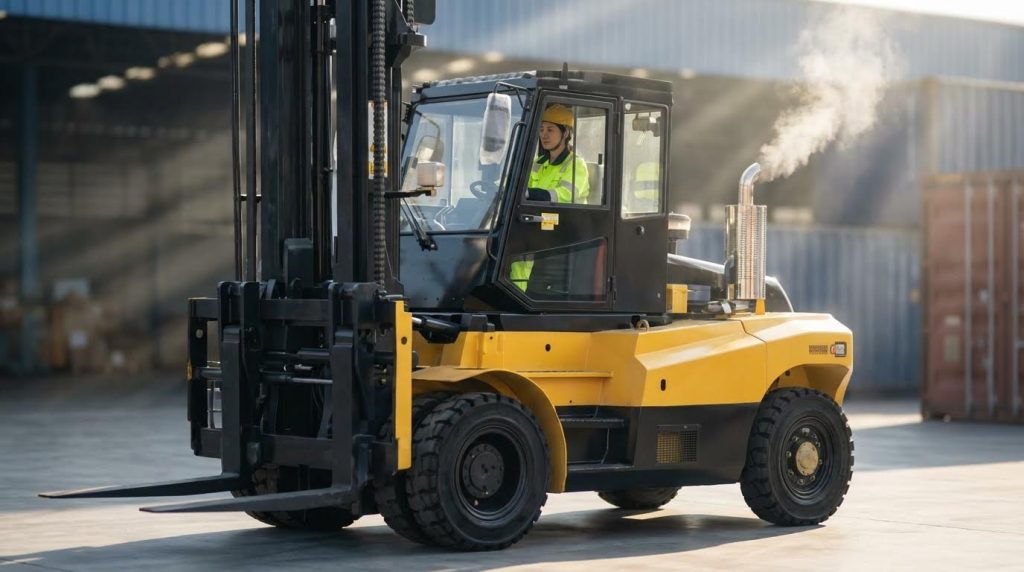
Diesel forklift fuel use per hour typically ranges from about 2–10 litres depending on capacity, load, and duty cycle, so you must treat any “average” as a planning guideline, not a guarantee. If you are asking how much diesel does a forklift use per hour for cost budgeting, you should always match the rate to the truck’s tonnage class and actual workload.
Most real-world fleets see a spread of fuel burn even between identical trucks on the same site. Operator behaviour, idle time, and site layout all shift the litres per hour number more than many buyers expect. The sections below give realistic ranges and show how to convert US gallon figures into litres for global planning.
Typical litres per hour by capacity range
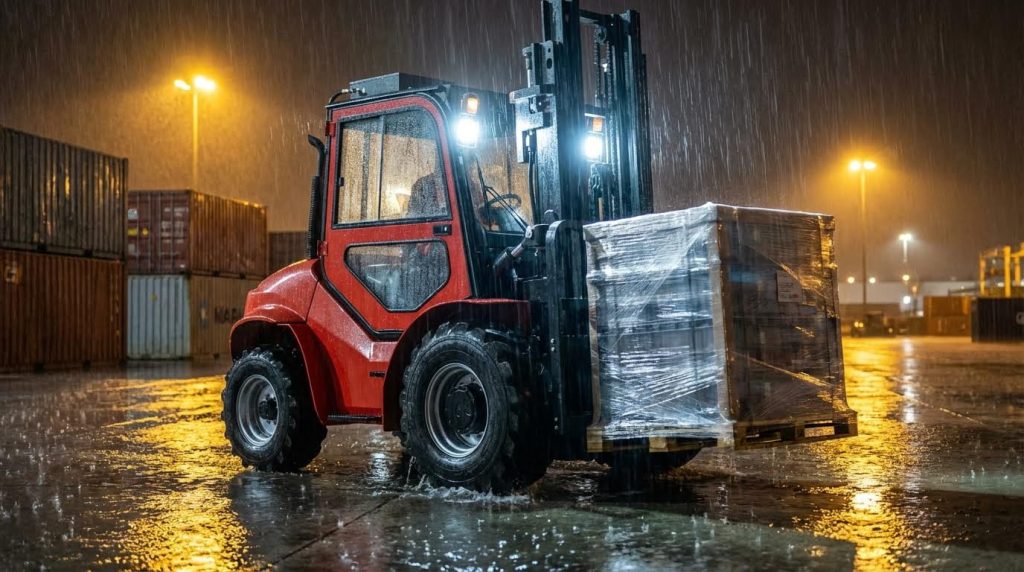
Typical diesel consumption per hour increases with forklift capacity and duty severity, but most trucks fall into predictable bands. The table below converts common “gallons per hour” figures into litres per hour and links them to realistic capacity groups.
| Capacity Class (approx.) | Typical Imperial Rating | Litres per hour (L/h) | Answering “how much diesel does a forklift use per hour” | Operational Impact |
|---|---|---|---|---|
| 1–1.5 ton compact | 0.8–1.5 gal/h compact diesel forklifts | ≈3.0–5.7 L/h | Light warehouse work with partial loads and moderate travel distances. | Suited to small warehouses; a 40 L tank can cover a full shift with reserve. |
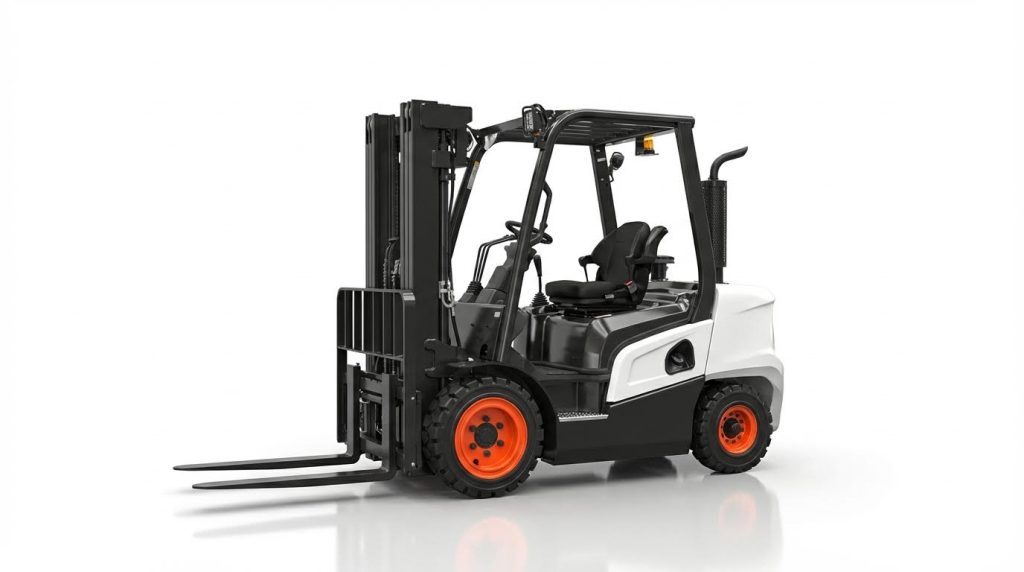
| 2–3 ton light-duty | 2–4 L/h under normal use light-duty diesel forklifts | ≈2–4 L/h | Answers most “standard 2–3 ton forklift” queries about how much diesel per hour. | One 60 L tank often gives 1.5–2 shifts in easy duty, one shift in harder duty. |
| 3–5 ton medium-duty | 4–6 L/h normal operations medium-duty forklifts | ≈4–6 L/h | Typical for 3–5 ton trucks in mixed loading, loading docks, and outdoor yards. | Plan 40–50 L for an 8-hour shift at moderate duty. |
| ≈2.5 ton (5,000 lb) benchmark | 1.0–1.5 gal/h 5,000 lb diesel forklift | ≈3.8–5.7 L/h | Very common reference when people ask how much diesel a “standard” forklift uses per hour. | At this rate and typical diesel prices, fuel becomes a major lifetime cost driver. |
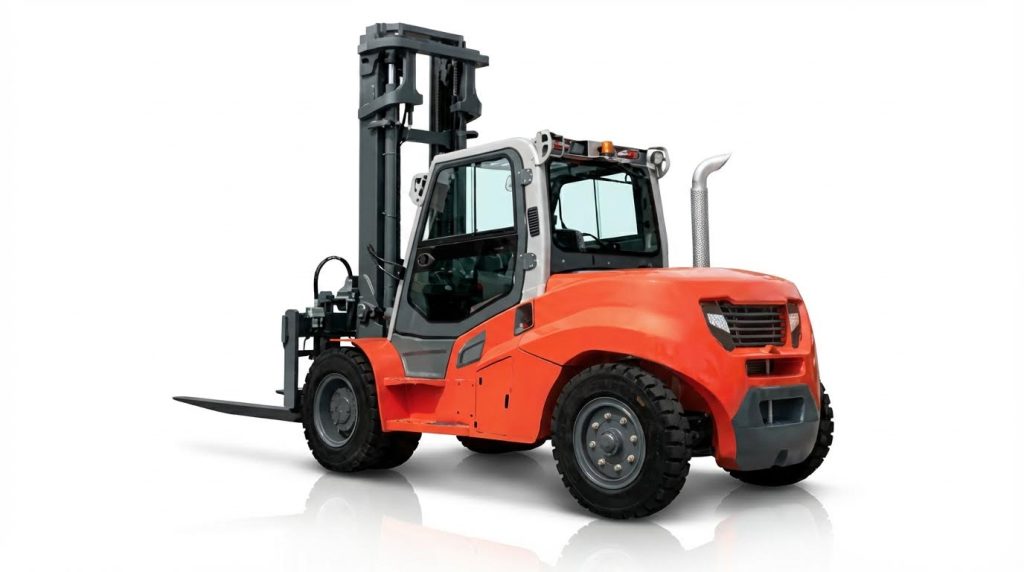
| 5+ ton heavy-duty | 6–10+ L/h under normal conditions heavy-duty forklifts | ≈6–10+ L/h | For steel, timber, and port work where trucks run near rated capacity. | Large on-site fuel storage and tight refuelling control become essential. |
| 8,000+ lb (≈3.5+ ton) heavy | 2.5–4+ gal/h heavy-duty units | ≈9.5–15.1+ L/h | Upper end of how much diesel a forklift can use per hour in severe duty. | Fuel cost dominates TCO; consider duty cycle optimization or alternate power. |
These bands assume “normal” operating conditions, not continuous maximum-capacity lifting or steep ramps. Real sites often push trucks harder, which raises consumption well above the low end of each range.
- Higher load factors: Running close to rated capacity can increase fuel use by 20–40% – the engine works near peak torque more often. Load weight impact
- Rough ground / ramps: Uneven yards or gradients can add 30–50% to hourly fuel use – more rolling resistance and climbing work. drum dolly
- Cycle intensity: Frequent lift/lower and short shuttle runs drive consumption up – hydraulics and acceleration dominate the duty cycle.
💡 Field Engineer’s Note: When you log real fuel data, you usually find two “identical” forklifts on the same shift differing by 15–25% in litres per hour. The culprit is nearly always idle time and operator style, not the spec sheet.
How to use these ranges for budgeting
For a quick budget, take the mid-point of the relevant band, multiply by planned operating hours, then multiply by your local diesel price per litre. For example, a 3–5 ton truck at 5 L/h over 2,000 h/year uses about 10,000 L/year. Multiply this by your local $/L to get annual fuel cost.
Converting gallons per hour to litres per hour
To convert forklift fuel consumption from gallons per hour to litres per hour, multiply by 3.785, because 1 US gallon equals 3.785 litres. This lets you translate US-based “gallons per hour” figures into metric planning numbers for global fleets.
Many online answers to how much diesel does a forklift use per hour are given in gallons, especially for 5,000 lb class trucks. Converting them correctly keeps your fuel and CO₂ calculations consistent across sites.
| Rated Fuel Use | Conversion Factor | Result in Litres per hour | Typical Application |
|---|---|---|---|
| 0.8 gal/h | 0.8 × 3.785 | ≈3.0 L/h | Very light-duty compact diesel in an indoor warehouse. |
| 1.0 gal/h | 1.0 × 3.785 | ≈3.8 L/h | Lower end for a 5,000 lb (≈2.5 ton) truck in light duty. 5,000 lb diesel forklift |
| 1.5 gal/h | 1.5 × 3.785 | ≈5.7 L/h | Upper end for the same 5,000 lb truck in heavier duty. Fuel consumption range |
| 2.5 gal/h | 2.5 × 3.785 | ≈9.5 L/h | Lower bound for large 8,000+ lb capacity trucks. manual pallet jack |
| 4.0 gal/h | 4.0 × 3.785 | ≈15.1 L/h | Upper bound for very heavy, continuous-duty applications. |
- Step 1: Take the published gallons per hour value – for example, 1.2 gal/h from a spec sheet or site test.
- Step 2: Multiply by 3.785 – 1.2 × 3.785 ≈ 4.5 L/h, which you can use in cost and emission models.
- Step 3: Round to one decimal place – this is accurate enough for fleet planning and fuel budgeting.
Why your “real” litres per hour may not match the brochure
Brochure figures often assume warm ambient temperature, level concrete, and a standardized duty cycle. In the field, cold starts, partial warm-up, short runs, and hydraulic-intensive work all push fuel use above the lab number. This is why logging actual refuelling volumes over several weeks gives a more honest litres per hour figure for your site.
💡 Field Engineer’s Note: When comparing diesel to electric options, always convert everything to kWh or litres equivalent per pallet moved, not just litres per truck-hour. A truck that burns more litres per hour but moves 30% more pallets can still be the more efficient machine.
Engineering Factors That Drive Fuel Consumption
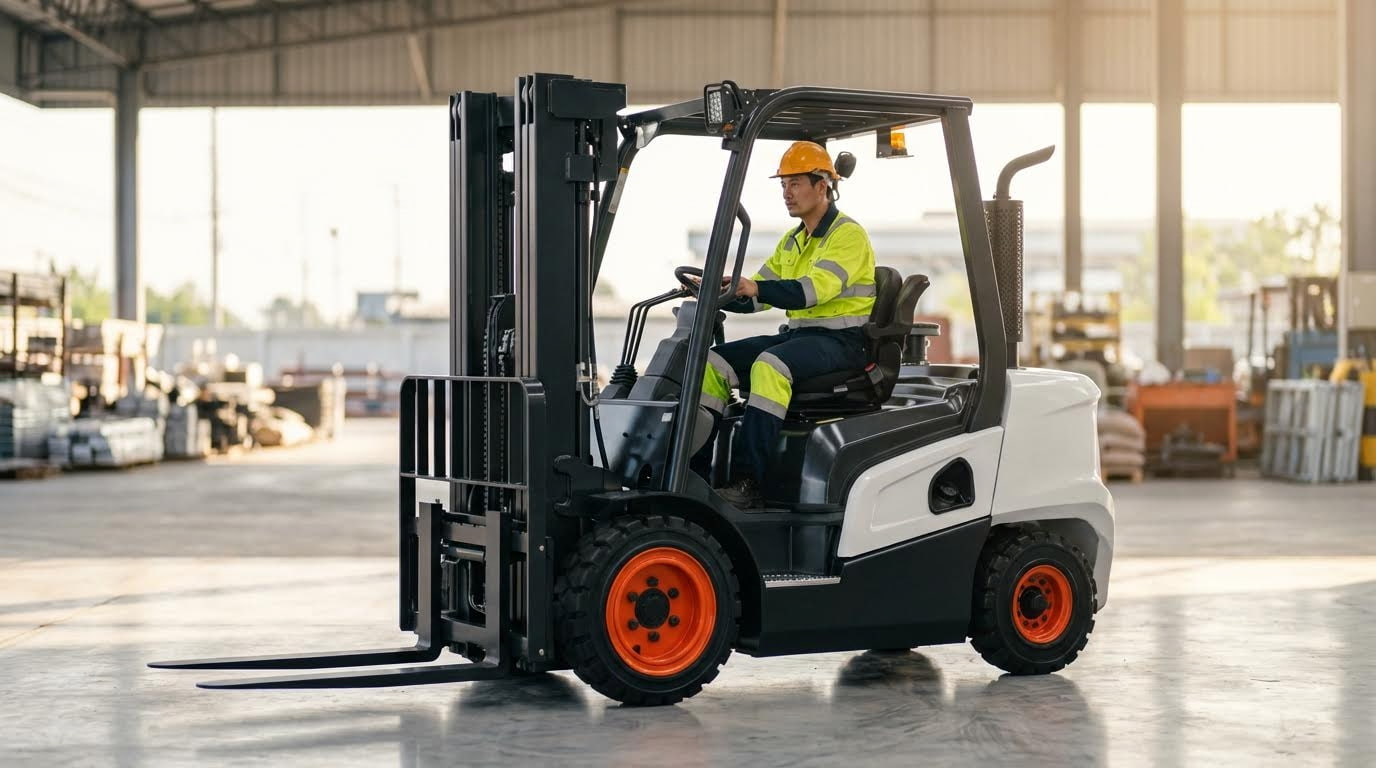
Engineering factors determine how much diesel a forklift uses per hour by controlling how hard the engine works, how efficiently it burns fuel, and how much energy is wasted in the driveline and hydraulics.
When people ask how much diesel does a forklift use per hour, the honest answer is that the nameplate capacity is only half the story. Load profile, duty cycle, engine technology, hydraulics, maintenance, and even ambient temperature can swing fuel use by 30–50% either way. This section breaks those drivers down so you can predict and control real-world litres per hour, not just brochure numbers.
Load, duty cycle, and site conditions
Load, duty cycle, and site conditions directly set the mechanical work the forklift must do, so they are usually the biggest drivers of hourly diesel consumption.
Even for the same truck, fuel use can vary dramatically. Heavier loads, more lift cycles, steeper ramps, and rougher floors all push the engine toward higher throttle and longer high‑rpm operation, which burns more litres per hour.
- Load level vs. capacity: Running close to rated capacity can increase fuel use by around 20–40% compared with light loads – the engine must deliver more torque for every lift and drive cycle. Source
- Duty cycle intensity: Continuous lifting, short travel distances, and frequent direction changes raise consumption compared with intermittent, cruising-type work – hydraulics and drivetrain see fewer “rest” periods at low throttle. Source
- Terrain and gradients: Rough ground or inclines can add roughly 30–50% to fuel use – rolling resistance and gravity both demand more tractive effort from the engine. Source
- Stop‑start vs. steady travel: Stop‑and‑go yard work wastes energy in repeated acceleration, while steady, moderate‑speed travel is more fuel efficient – you lose kinetic energy as heat every time you brake.
- Idle time share: Long idling with hydraulics active but no load moved still burns fuel – you pay for engine friction, parasitic loads, and pump losses without doing productive work.
| Operating Pattern | Typical Change in Fuel Use | Engineering Reason | Operational Impact |
|---|---|---|---|
| Light loads on flat, smooth floor | Baseline (0%) | Low tractive effort and hydraulic pressure | Best case for low L/h; good for benchmarking how much diesel a forklift uses per hour |
| Near‑capacity loads, flat floor | +20–40% | Higher torque demand in lift and drive | Plan extra fuel for peak‑season heavy pallets |
| Medium load on 5–10% ramp | +30–50% | Extra power needed to overcome grade | Short, steep ramps can double yard fuel use |
| Rough outdoor yard, stop‑start | +30–50% vs. indoor smooth | Rolling resistance and repeated acceleration | Outdoor storage yards often show the worst L/h |
| High idle time (waiting at docks) | +10–20% per shift | Fuel burned with no productive work | Low‑hanging fruit: shut down or auto‑idle control |
💡 Field Engineer’s Note: When I audit sites asking how much diesel does a forklift use per hour, I first walk the route and watch gradients and floor condition. A 20 m ramp at 8% and broken paving can add more fuel burn than upgrading to a bigger engine.
How to profile your duty cycle in the field
Time one full “typical” cycle: pick, lift, travel, set down, and return. Count lifts per hour, average load weight, and how often the truck climbs ramps. Combine that with the site map to explain why the fuel bowser empties faster on some shifts than others.
Engine technology, emissions tier, and hydraulics
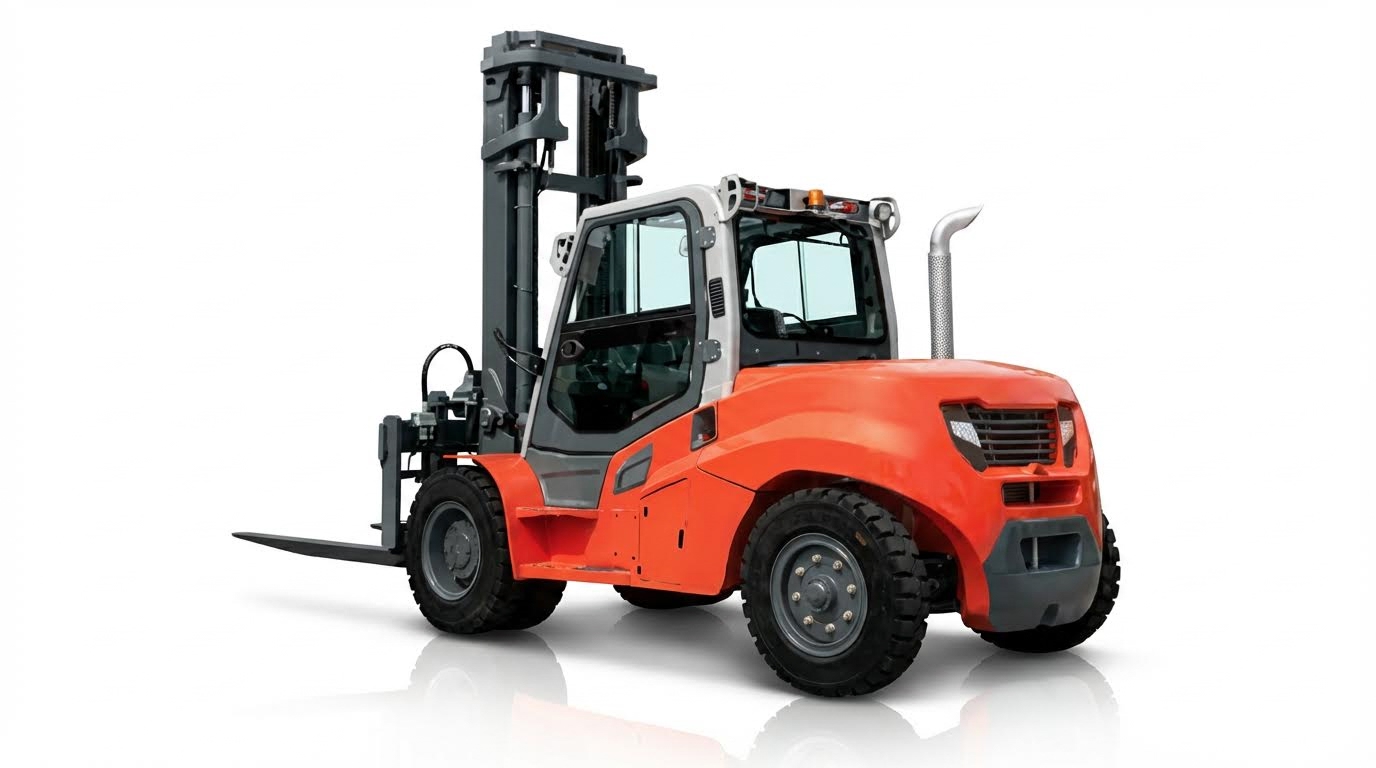
Engine design, emissions technology, and hydraulic architecture control how efficiently diesel energy turns into useful lift and traction work for each litre burned.
Two forklifts with the same capacity can show very different litres per hour because of combustion efficiency, aftertreatment backpressure, and hydraulic system design.
- Engine displacement and tuning: Larger engines inherently use more fuel, but can run at lower load percentage – good for peak performance but often worse at light loads. Source
- Combustion technology: Direct injection, turbocharging, and electronic controls increase combustion efficiency – more of each litre becomes shaft power instead of heat and soot. Source
- Emissions tier (e.g., Tier 4 / Stage V): Aftertreatment (DPF, SCR, EGR) can slightly increase fuel use but cut pollutants – pumps and backpressure add parasitic losses, though modern control strategies minimise this. Source
- Hydraulic pump type: Engine‑driven variable‑displacement piston pumps can deliver high lift speeds at high rpm – excellent productivity but they encourage operators to rev the engine, raising L/h. Source
- Hydraulic circuit efficiency: Poorly sized valves and hoses waste energy as heat – pressure drops translate directly into extra engine load for the same lift speed.
| Design Feature | Effect on Fuel Use | Technical Mechanism | Best For… |
|---|---|---|---|
| Older mechanical injection | Higher L/h | Less precise fuelling, more unburned fuel | Low initial cost, but higher operating cost |
| Modern electronic direct injection | Lower L/h | Optimised timing and quantity per stroke | Sites focused on fuel cost per pallet moved |
| Turbocharged engine | Lower L/h at high load | Improved volumetric efficiency | Heavy lifting, outdoor yards, ramps |
| Tier 4 / Stage V aftertreatment | Slightly higher L/h vs. pre‑tier | DPF regeneration and SCR dosing energy | Compliance‑driven operations, low emissions zones |
| High‑flow variable piston pump | Can raise L/h | High lift speed encourages high‑rpm use | High‑throughput warehouses where time is critical |
💡 Field Engineer’s Note: I often see fleets upgrade to high‑spec engines and then run them at very light loads. Below about 30–40% load, even efficient turbo diesels drift into poor brake‑specific fuel consumption, so litres per hour look high for the work done.
Linking engine size to your real workload
Match engine output so your typical duty cycle uses roughly 40–70% of rated power. Oversized engines run “lazy” and inefficient; undersized engines live at full throttle, burning extra fuel and shortening life. Use telematics load histograms where available to size the next truck correctly.
Maintenance condition and ambient environment
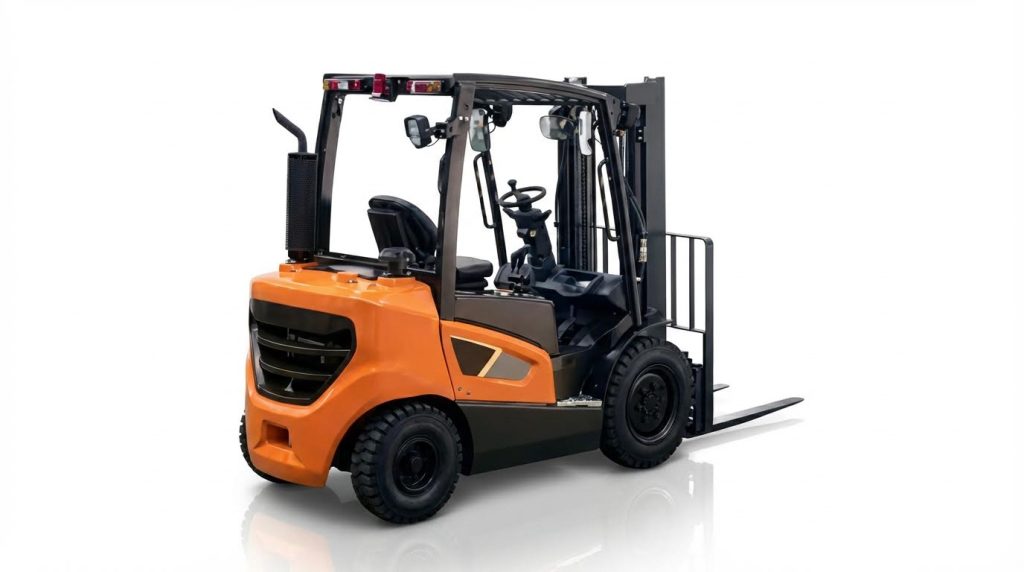
Maintenance condition and ambient environment strongly influence how much diesel a forklift uses per hour by changing internal friction, air and fuel quality, and hydraulic and rolling resistance.
Even the most efficient engine wastes fuel if it breathes through a clogged filter, pushes thick oil, or runs on underinflated tyres across a hot or freezing yard.
- Air filter condition: Clogged air filters can increase fuel consumption by about 10–15% – restricted airflow forces richer mixtures and higher pumping losses. Source
- Engine oil and lubrication: Wrong grade or degraded oil raises internal friction – more of each litre is lost just turning the crankshaft and camshaft. Source
- Hydraulic system health: Worn pumps and leaking cylinders waste energy – the engine must supply flow that never becomes useful lift. Source
- Tyre pressure and condition: Underinflated or damaged tyres increase rolling resistance – you spend extra fuel just deforming rubber instead of moving the load. Source
- Ambient temperature: Cold temperatures increase fuel density and vaporisation energy, while hot temperatures reduce air density and stress the cooling system – both extremes push fuel consumption up. Source
| Condition / Environment Issue | Typical Fuel Penalty | Physical Cause | Operational Impact |
|---|---|---|---|
| Clogged air filter | +10–15% L/h | Restricted intake, richer mixture, pumping loss | Cheap filter change saves significant monthly diesel cost |
| Old, high‑viscosity engine oil | +5–10% L/h | Higher friction in bearings and rings | Stick to OEM oil grade and change intervals |
| Leaking hydraulic circuits | +5–20% L/h | Lost flow and pressure, pump works harder | Watch for slow mast and hot oil as warning signs |
| Underinflated tyres | +3–10% L/h | Increased rolling resistance | Daily tyre checks pay back quickly in fuel saved |
| Cold starts in winter | Higher L/h during warm‑up | Poor atomisation, thick oil, cold combustion chambers | Use block heaters and winter‑grade diesel to reduce penalty |
| High ambient heat | Higher L/h under load | Reduced air density and extra cooling fan load | Plan shorter high‑load runs and clean radiators |
💡 Field Engineer’s Note: When a site complains their 3‑ton truck suddenly “drinks diesel,” I check air filter, tyre pressure, and hydraulic leaks before touching injectors. Those three alone often recover 10–25% of the lost fuel efficiency in under an hour.
Simple maintenance checklist to stabilise L/h
Log air‑filter changes by hours, not just months. Verify engine oil grade versus ambient temperature band. Add tyre‑pressure checks to the pre‑shift inspection. Track litres filled per operating hour in a simple spreadsheet so you can spot step changes early instead of waiting for the fuel bill shock.
Planning, Selection, And Optimization For Lower Fuel Use
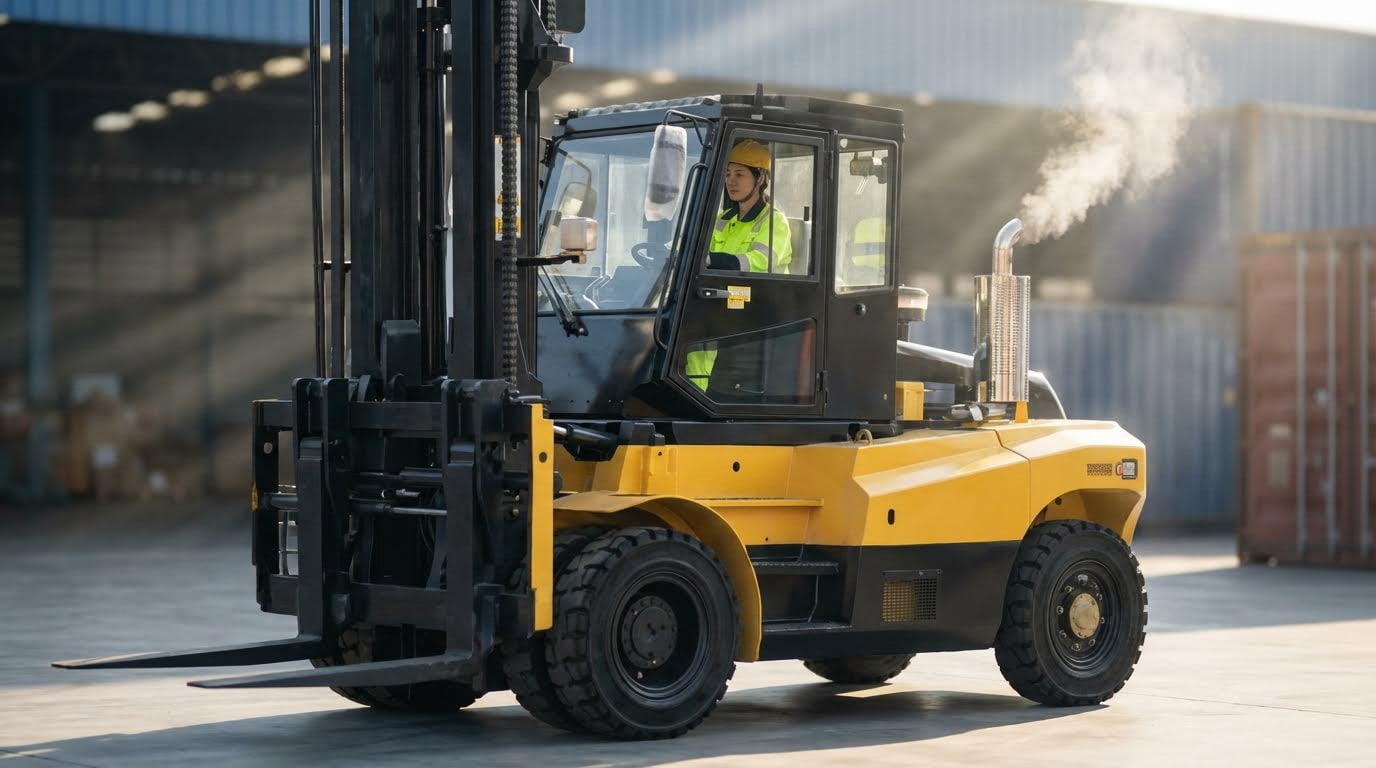
Planning fuel use starts with knowing how much diesel a forklift uses per hour, then engineering your fleet, shifts, and routes to cut litres, not just litres per hour. This section turns raw fuel numbers into budget and optimization decisions.
Calculating hourly, daily, and annual fuel costs
To calculate diesel forklift fuel cost you convert “how much diesel does a forklift use per hour” into litres, multiply by hours, then by your local diesel price. Once you do this by truck and shift, fuel waste becomes visible and actionable.
| Forklift capacity (approx.) | Typical fuel use | Metric conversion | Example hourly fuel cost | Operational impact |
|---|---|---|---|---|
| 2–3 ton (light-duty) | 2–4 L/hour under normal use fuel efficiency data | 2–4 L/hour | At 1.30 €/L: 2.6–5.2 €/hour | Good baseline for indoor warehouses with moderate loads |
| 3–5 ton (medium-duty) | 4–6 L/hour fuel efficiency data | 4–6 L/hour | At 1.30 €/L: 5.2–7.8 €/hour | Typical for 3–3.5 ton counterbalance in mixed indoor/outdoor work |
| 5+ ton (heavy-duty) | 6–10+ L/hour fuel efficiency data | 6–10+ L/hour | At 1.30 €/L: 7.8–13.0+ €/hour | Common for yards, steel, timber, and container handling |
| Approx. 2.5 ton (5,000 lb) | 1.0–1.5 gal/hour diesel usage example | 3.8–5.7 L/hour | At 1.30 €/L: 4.9–7.4 €/hour | Standard warehouse workhorse; good for ROI comparisons with electric |
Use a simple three-step method to go from hourly litres to annual cost:
- Step 1: Determine average hourly consumption – Use telematics or tank-to-tank refuelling records to get real-world L/hour.
- Step 2: Multiply by operating hours – Daily: L/hour × hours/shift; annual: daily litres × working days/year.
- Step 3: Multiply by diesel price – Litres/year × €/L gives your annual fuel budget per truck.
For example, one data set showed a 2.5 ton diesel forklift using about 1.0–1.5 gallons (3.8–5.7 L) per hour, giving an annual fuel spend near $10,000 at 2,000 hours and $4.00/gal diesel vs electric cost comparison. You can apply the same method with your local diesel price in €/L and your actual hours.
Quick formula templates you can reuse
Hourly fuel cost (€/hour) = L/hour × diesel price (€/L).
Daily fuel cost (€/day) = L/hour × hours/shift × diesel price (€/L).
Annual fuel cost (€/year) = L/hour × hours/day × working days/year × diesel price (€/L).
To benchmark how much diesel a forklift uses per hour, compare your L/hour against the typical ranges in the table above. Anything 20–30% higher signals an optimization opportunity.
💡 Field Engineer’s Note: Always separate “productive hours” from “key-on hours” in your calculations. I often find 15–25% of diesel burn is pure idling that never moves a pallet—this is the cheapest fuel to eliminate.
Operator behaviour, telematics, and route optimization
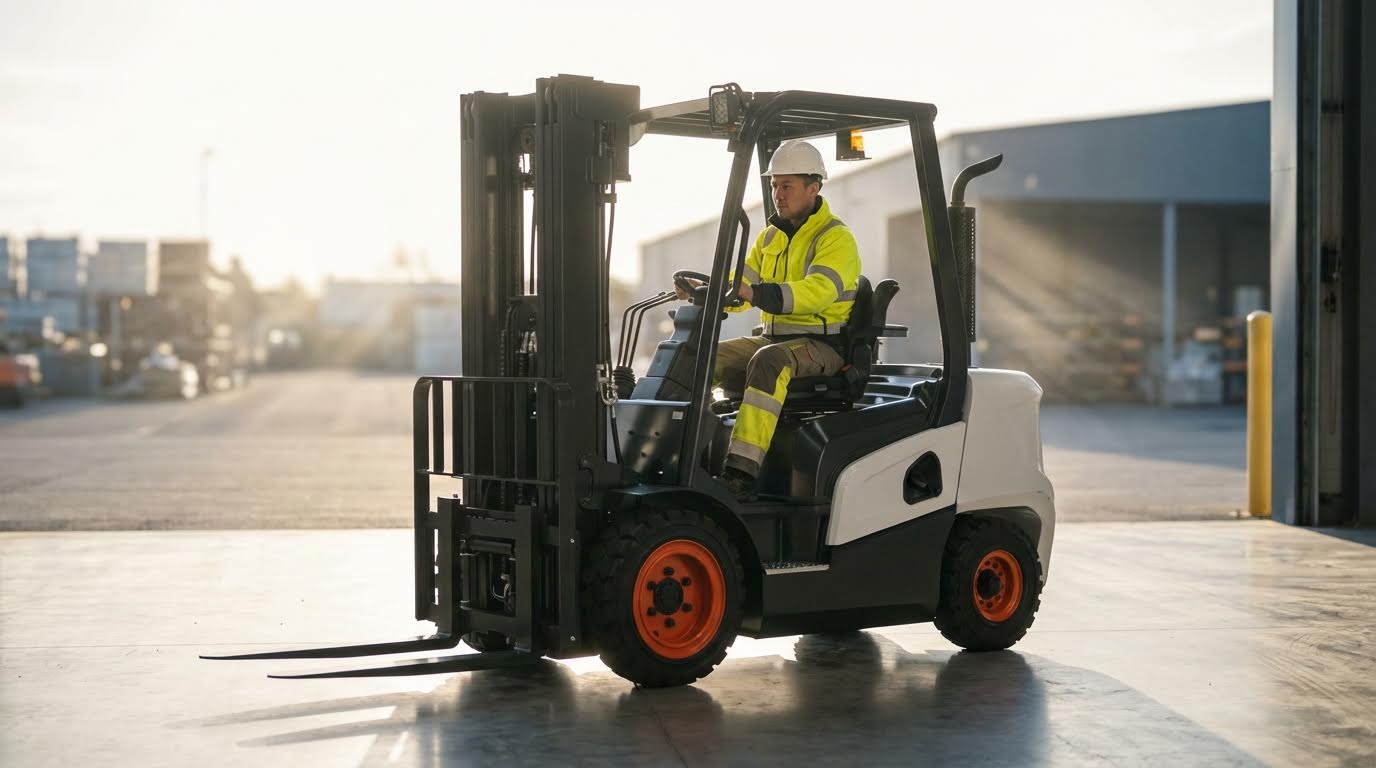
Operator behaviour, telematics data, and route design can easily swing diesel use by 10–30%, even when trucks and loads stay the same. This is where you move from asking how much diesel does a forklift use per hour to asking why it uses that much.
- Smooth driving: Gentle acceleration and braking – Reduces peak engine load and saves 10–20% fuel in stop‑start work. operator behaviour impact
- Idle time control: Engine off during long waits – Every 10 minutes/hour of idle can add 15–20% to L/hour with zero output. idle effect on fuel
- Load handling discipline: Correct mast tilt and fork height – Minimizes unnecessary hydraulic work and engine revs in each cycle. load and cycle impact
- Route optimization: Shortest, flattest, fewest stops – Reduces travel distance and grade climbs, cutting fuel by 10–15% on many sites. fuel efficiency strategies
- Telematics monitoring: Track L/hour, idle %, harsh events – Makes fuel waste visible by operator, shift, and zone so you can target coaching. telematics and monitoring
- Maintenance discipline: Filters, oil, tire pressure – Prevents 10–15% extra fuel burn from clogged air filters and rolling resistance. maintenance impact
How telematics turns L/hour into action
Modern systems log fuel burn, idle time, travel paths, and lift counts. You can compare operators doing the same job and see who moves more pallets per litre. Then you base training and incentives on “litres per pallet” instead of only on damage or productivity. This is the fastest way to cut fleet‑wide fuel use without buying new trucks.
💡 Field Engineer’s Note: When we first switch a site to telematics, I focus on one KPI: idle percentage. Dropping idle from 35% to 20% on a 3–5 ton fleet usually saves enough diesel to fund the system within the first year.
Final Thoughts On Managing Diesel Forklift Fuel Use
Diesel forklift fuel use per hour is not a fixed spec-sheet value. It is the outcome of engineering choices, site conditions, and operator habits working together. Capacity, load, ramps, and floor quality set the mechanical work. Engine design, hydraulics, and maintenance decide how much of each litre becomes useful power instead of heat and losses.
When you treat litres per hour as a controllable engineering parameter, fuel stops being a “given” cost. It becomes a lever. Accurate conversions between gallons and litres, duty-cycle profiling, and telematics let you compare trucks, shifts, and routes on a common, hard-data basis. Then you can target the biggest drivers: idle time, harsh driving, poor filters, leaking hydraulics, and inefficient yard layouts.
The best practice for operations and engineering teams is clear. Size engines and trucks to the real workload, not peak myths. Keep air, oil, tyres, and hydraulics in tight condition. Use telematics to track litres per pallet moved, not just litres per hour. Design routes to be short, flat, and smooth. When you follow this approach, you cut fuel cost and emissions while keeping the productivity and robustness that make diesel forklifts valuable in the first place, especially in demanding Atomoving-style applications.
Frequently Asked Questions
How much diesel does a forklift use per hour?
A typical diesel forklift consumes about 5 to 10 liters of fuel per hour, depending on its size, load, and operating conditions. Factors like engine efficiency, workload, and maintenance can affect fuel consumption. Regular servicing helps optimize fuel usage.
What is the average lifespan of a forklift in hours?
Most forklifts last between 10,000 and 20,000 operational hours. High-quality forklifts may run up to 2,000 hours per year with proper maintenance. Keeping up with regular service extends the equipment’s lifespan significantly Forklift Lifespan Guide.
Is it necessary to replace forklift batteries frequently?
Electric forklift batteries typically last 5 to 7 years or around 1,500 charge cycles if maintained properly. Regularly swapping out old batteries ensures uninterrupted warehouse operations. Proper charging practices can extend battery life Battery Maintenance Tips.