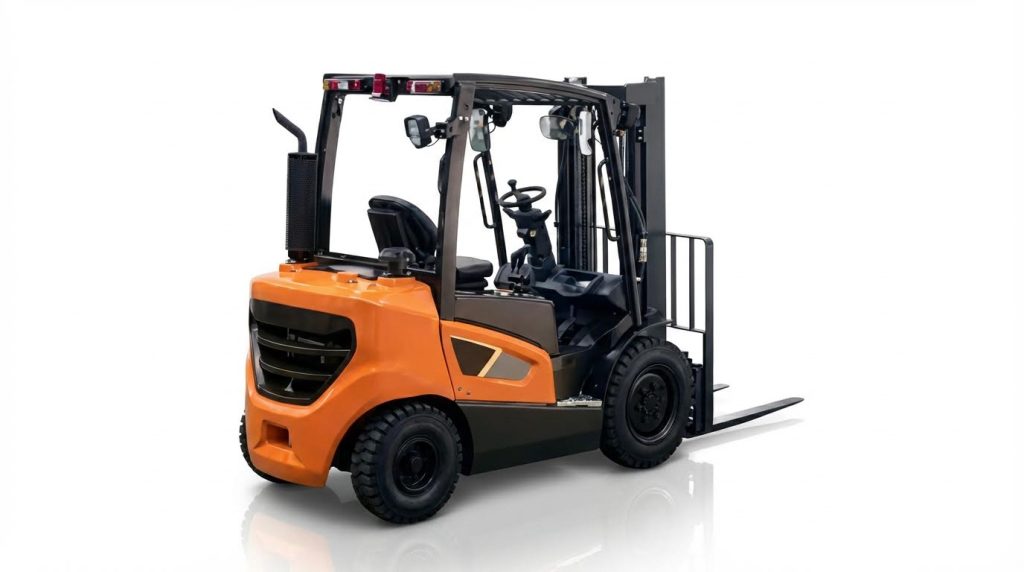
Diesel forklift fuel tank capacity and runtime estimation explains how much diesel in full tank of forklift you can actually use safely, and how long it will run before refueling. This guide translates tank sizes, safe-fill limits, and fuel burn rates into clear, shift-ready runtime numbers so you can plan refueling, size tanks correctly, and avoid mid-shift stoppages in real operations.
Typical Diesel Forklift Tank Sizes And Safe-Fill Limits
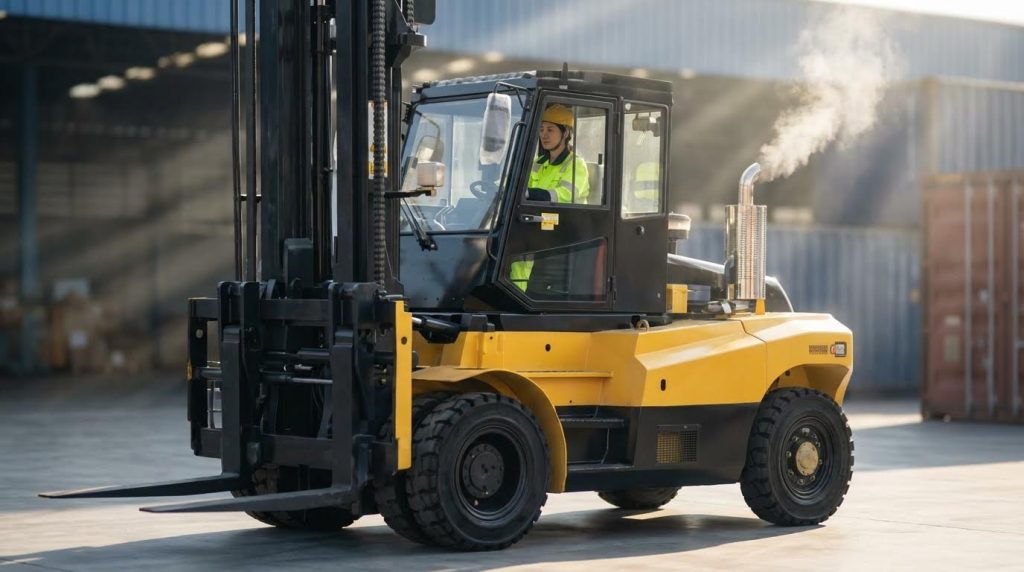
This section explains how much diesel in full tank of forklift you can actually use by linking typical geometric tank sizes to safe-fill limits around 95% of volume. It focuses on real tank ranges by class, weight, and the safety margin you must keep for expansion.
Capacity ranges by class and weight category
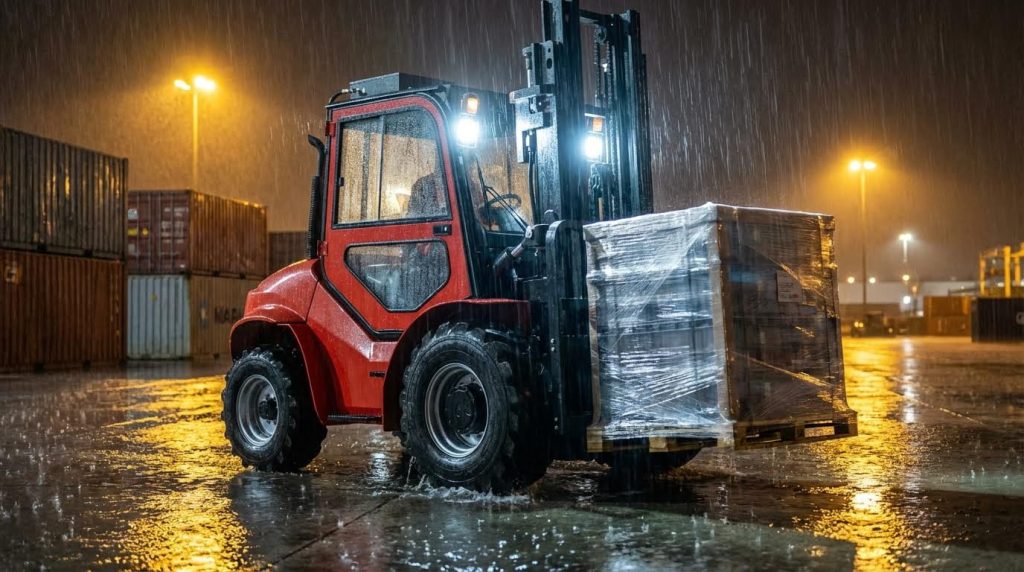
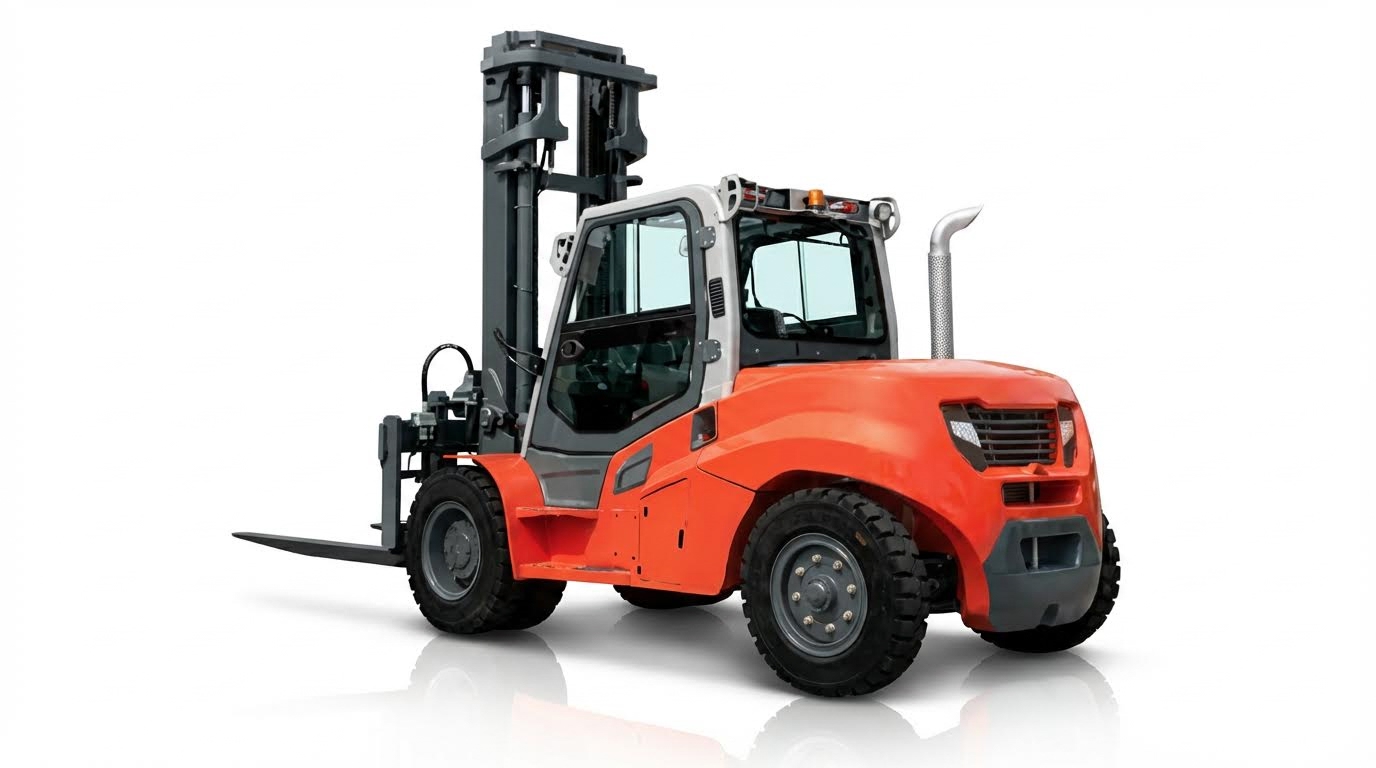
Diesel forklift fuel tanks typically range from about 57–132 liters depending on truck class and lifting capacity, with heavy-duty and rough-terrain machines using even larger tanks for longer runtime between refuels.
| Forklift type / class | Typical lift capacity | Typical diesel tank range (L) | Approx. tank range (gal) | Operational impact / Best for… |
|---|---|---|---|---|
| Light-duty warehouse / yard (small Class V) | 1,350–2,300 kg (3,000–5,000 lb) | 57–76 L | 15–20 gal | Suited to single 8-hour shift with moderate duty before refueling. Source data |
| Medium-duty general industrial (typical Class V) | 2,700–6,800 kg (6,000–15,000 lb) | 76–114 L | 20–30 gal | Covers full shift plus buffer for mixed indoor/outdoor work. Capacity ranges |
| Heavy-duty diesel (large Class V / small Class VII) | >6,800 kg (>15,000 lb) | 114–132+ L | 30–35+ gal | Supports high-load, high-travel duty cycles with fewer refuels. Heavy-duty data |
| Rough-terrain forklift (Class VII) | 3,000–10,000 kg+ | 80–120 L | 21–32 gal | Outdoor yards and construction; long travel distances and rough ground. Class VII range |
| Heavy container handler / large port truck (Class VIII) | Container / 30,000 kg+ handling | 200–450 L | 53–119 gal | Port and intermodal work where long continuous operation is critical. Class VIII data |
Across these classes, most standard diesel forklifts fall in the 57–132 L (15–35 gal) band, which answers how much diesel in full tank of forklift for the majority of warehouse and yard trucks. Larger rough-terrain and container handlers push this higher to secure multi-shift autonomy without refueling interruptions.
- Light-duty (3,000–5,000 lb): 57–76 L – Good for single-shift indoor/outdoor work with moderate loading.
- Medium-duty (6,000–15,000 lb): 76–114 L – Supports longer shifts or higher average load factors.
- Heavy-duty (>15,000 lb): 114–132+ L – Reduces refueling breaks in heavy industrial or steel-mill style duty.
- Rough-terrain / container handlers: 80–450 L – Designed for long travel distances and limited refueling access.
💡 Field Engineer’s Note: When you size tanks for rough-terrain or yard trucks, always check actual site gradients and travel distances. On long 2–3% slopes or soft ground, real fuel burn rises, so undersized tanks quickly destroy your planned shift autonomy.
How these capacity bands relate to runtime
Most diesel forklifts burn about 1.5–3.0 gal/h (≈5.7–11.4 L/h) in typical operation. A 76 L tank at 7.5 L/h gives roughly a full 8-hour shift with some reserve, while a 114 L tank lets the same truck comfortably cover overtime or a higher-intensity duty cycle without mid-shift refueling. Consumption reference
Safe-fill volume versus geometric tank size
Safe-fill volume is usually about 95% of the forklift’s geometric tank size, so the usable diesel is slightly less than “full tank” to allow expansion and reduce spill and overpressure risks.
Engineering and safety standards specify that liquid fuel tanks must not be filled to 100% of geometric volume. A common rule is to cap usable volume at 95% of nominal capacity to provide vapor space for thermal expansion and slosh during operation. Safe-fill rule This is the volume you should use when you calculate runtime and when you answer how much diesel in full tank of forklift in real, usable terms.
| Geometric tank size (nominal) | Safe-fill factor | Safe-fill usable diesel (L) | What this means in practice |
|---|---|---|---|
| 57 L (≈15 gal) | 0.95 | ≈54 L | Light-duty truck: runtime calculations should use 54 L, not 57 L. |
| 76 L (≈20 gal) | 0.95 | ≈72 L | Typical small/medium diesel: covers roughly one 8–10 h shift at moderate burn. |
| 114 L (≈30 gal) | 0.95 | ≈108 L | Medium/heavy-duty: supports long shifts or high-duty outdoor work. |
| 132 L (≈35 gal) | 0.95 | ≈125 L | Heavy-duty industrial: more buffer before hitting low-fuel alarms. |
| 200 L (large rough-terrain) | 0.95 | ≈190 L | Extended autonomy where refueling points are far from work area. |
The same 95% safe-fill principle appears in multiple references and standards, including guidance where a 70 L nominal tank is treated as 66.5 L usable. 70 L example Engineers also use this safe-fill volume explicitly in sizing equations so runtime estimates stay realistic and compliant. Engineering rule
- Geometric volume: Nameplate tank size (e.g., 76 L) – Used for design and catalog specs.
- Safe-fill volume (~95%): What you should actually pump (e.g., 72 L) – Used for runtime and refueling planning.
- Operational full tank: Safe-fill volume minus a small “nozzle cut-off” gap – What operators really get in day-to-day refueling.
So when someone asks how much diesel in full tank of forklift, the precise engineering answer is “about 95% of the nameplate tank size,” because the last 5% is intentionally left empty for safety and compliance with safe-fill rules.
💡 Field Engineer’s Note: In hot climates or trucks parked outside, treat 95% as a hard ceiling and consider backing off to 90–92% during peak summer. Thermal expansion of diesel in a black steel tank can push fuel past vents and caps if you routinely top off to the brim.
Why using safe-fill volume matters for runtime math
Runtime is fundamentally Fuel Time = Fuel Quantity ÷ Consumption Rate. Runtime formula If you use geometric tank size instead of safe-fill volume, you will overestimate shift autonomy by about 5%. That gap is enough to cause trucks to run out of fuel just before shift end, which is exactly when a stalled forklift in the aisle hurts productivity most.
How To Estimate Diesel Forklift Runtime
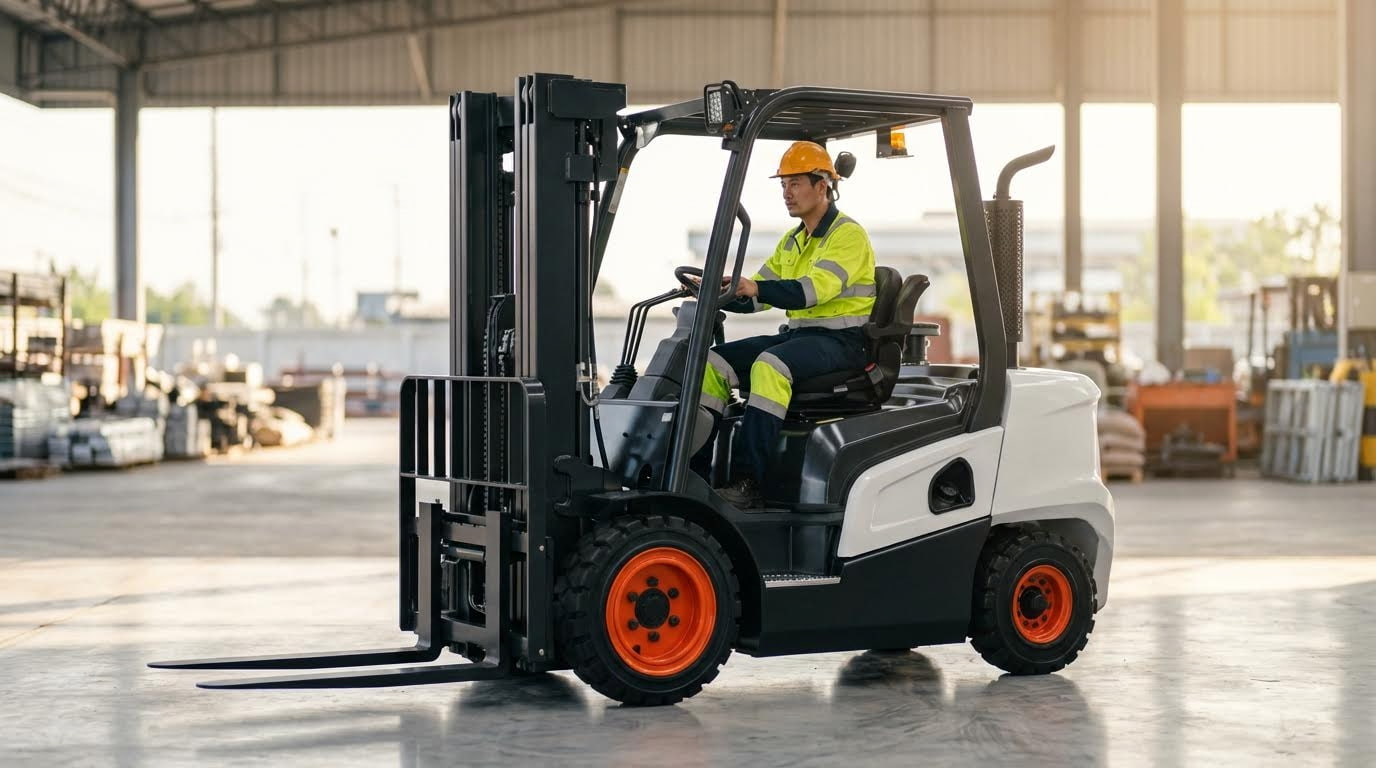
Estimating diesel forklift runtime starts with how much diesel in full tank of forklift, then divides usable liters by average burn rate to predict safe hours between refills. Always base calculations on safe-fill volume, not geometric tank size.
Core runtime and tank sizing formulas
The core runtime and tank sizing formulas convert tank volume and burn rate into real working hours and then back into minimum tank size for a given shift length.
- Runtime from tank size: Fuel Time (h) = Usable Fuel (L) ÷ Consumption (L/h) – Direct way to know how long a full tank will last.
- Usable fuel (safe-fill): Usable Fuel (L) = Geometric Tank Volume (L) × Safe-Fill Ratio – Prevents overfill and expansion spills.
- Design tank size: Tank Volume (L) = (Average Burn (L/h) × Shift Hours × 1.1 Safety Factor) ÷ 0.95 – Ensures one-shift autonomy with reserve.
These relations align with engineering practice that sizes tanks from shift length and average consumption, using a 1.1 safety factor and about 95% safe-fill ratio for diesel tanks as described in industry guidance.
Formula cheat sheet for quick planning
Step 1: Decide target runtime (single shift, double shift, etc.).
Step 2: Estimate average burn rate (L/h).
Step 3: Apply: Tank (L) ≈ Burn (L/h) × Hours × 1.1 ÷ 0.95.
Step 4: Round up to the next standard tank size.
💡 Field Engineer’s Note: Always validate your paper runtime against a real stopwatch test over at least half a shift. Operators often work the truck harder than spec sheets assume, especially on ramps or with high stacking, which can push real burn 15–25% above your initial estimate.
Typical fuel burn rates and duty-cycle factors
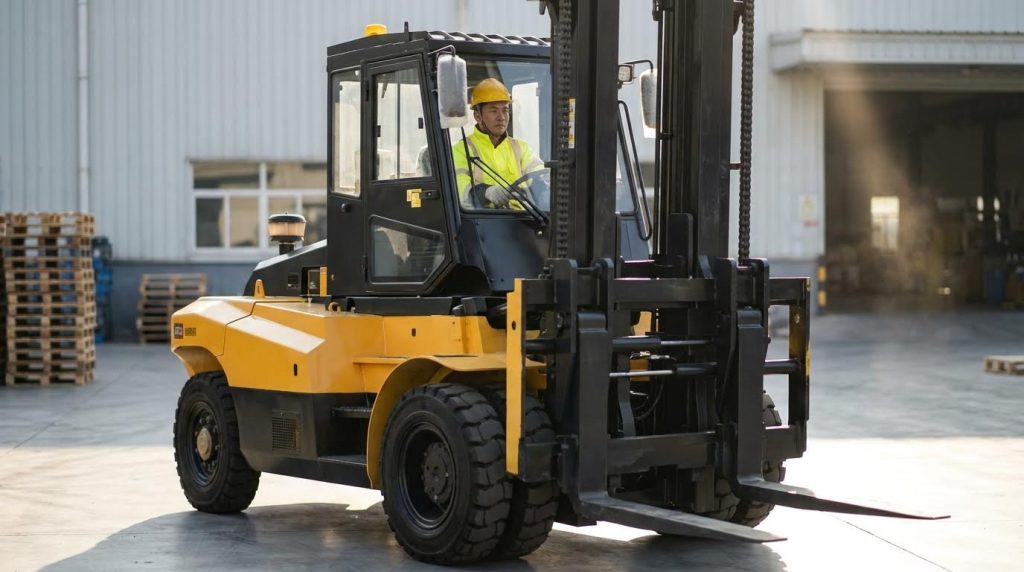
Typical fuel burn rates for diesel forklifts range roughly from 1.5–3.0 gallons per hour (about 5.7–11.4 L/h), but duty cycle can swing this significantly.
Under normal operation, many diesel forklifts consume between 1.5 and 3.0 gallons per hour, so a 20-gallon (≈76 L) tank can deliver about 8–12 hours of runtime at moderate intensity according to field data. That gives a practical baseline before you correct for how the truck is really used.
| Duty Cycle Type | Typical Burn Rate Range | Example Use Case | Operational Impact |
|---|---|---|---|
| Light | ≈ 5.7–7.5 L/h (1.5–2.0 gal/h) | Occasional loading, long idle, light pallets | 20-gal (76 L) tank can exceed a full 8–10 h shift |
| Medium | ≈ 7.5–9.5 L/h (2.0–2.5 gal/h) | Standard warehouse, mix of travel and lifts | 20-gal (76 L) tank gives roughly 8–12 h runtime |
| Heavy | ≈ 9.5–11.4 L/h (2.5–3.0 gal/h) | Rough yard, heavy loads, frequent lifts | 20-gal (76 L) tank may drop to 6–8 h runtime |
- Harsh terrain: Increases rolling resistance – Raises burn rate and shortens runtime.
- Frequent lifting at max height: Uses more hydraulic power – Pushes consumption toward the top of the range.
- Poor maintenance: Dirty filters and mis-tuned engines – Can add 10–20% to fuel use.
- Good driving habits: Smooth acceleration and planning – Pulls burn rate back toward the low end.
💡 Field Engineer’s Note: When you lack accurate telematics, assume the worst credible duty cycle for tank sizing. It is cheaper to carry 10–15 L “extra” diesel than to lose an hour of production because the truck ran dry in the middle of a loading window.
Worked examples for single and multi-shift fleets
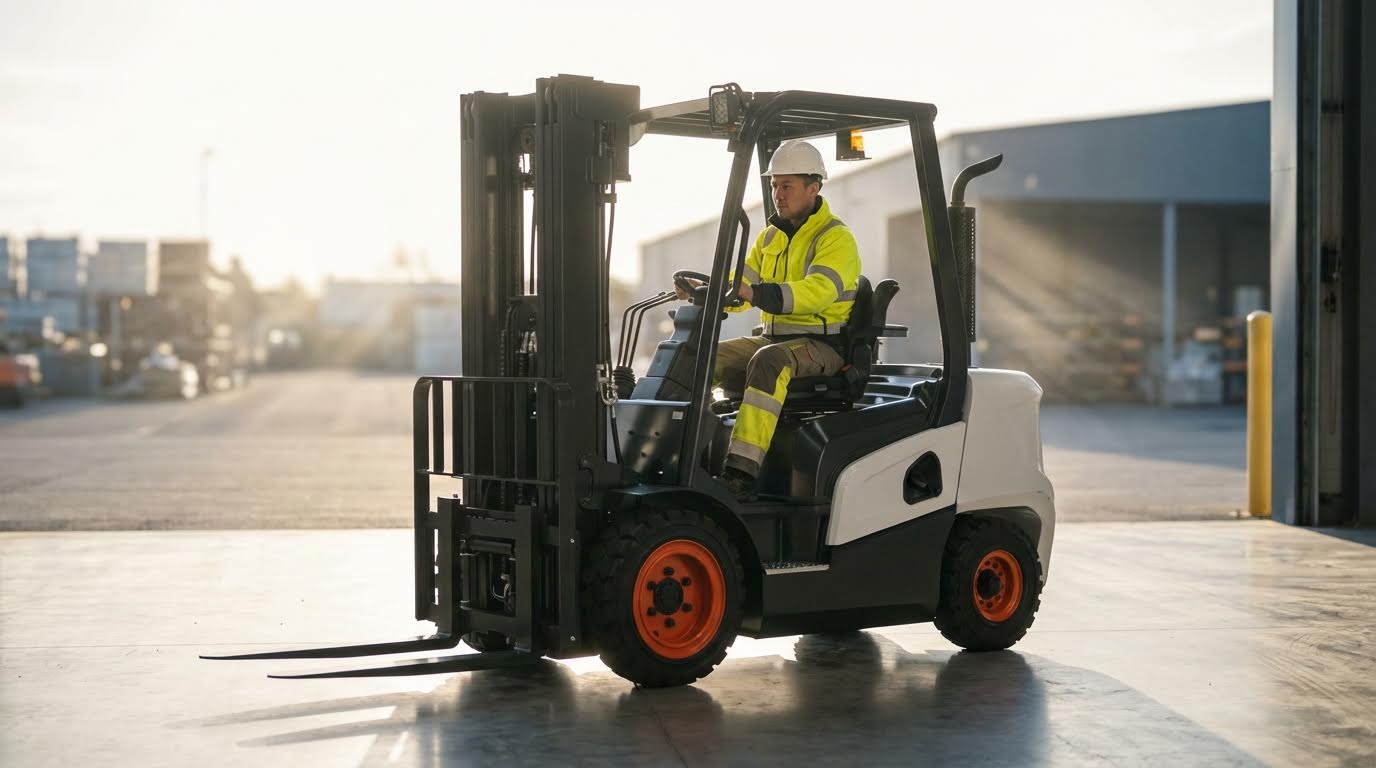
Worked examples show how to turn “how much diesel in full tank of forklift” into concrete runtime hours and refueling plans for single and multi-shift fleets.
The safe-fill concept means engineers rarely use 100% of geometric tank volume; instead, they base runtime on about 95% of tank capacity to leave room for expansion and reduce spill risk manual pallet jack as safety guidance explains. The same 95% factor appears in tank sizing formulas for shift autonomy hydraulic pallet truck used by fleet engineers.
| Example | Key Inputs | Calculation | Result & Operational Takeaway |
|---|---|---|---|
| Single 8-hour shift, known burn | Burn = 2.5 L/h; Shift = 8 h | Fuel needed = 2.5 × 8 = 20 L; typical design example uses ≈18 L for 8 h in light duty low profile pallet jack per published example | Any tank with ≥20 L usable (≈21 L geometric) comfortably covers one shift |
| Design tank for 8 h shift | Burn = 2.5 L/h; Shift = 8 h; Safety = 1.1; Safe-fill = 0.95 | Tank (L) = (2.5 × 8 × 1.1) ÷ 0.95 ≈ 23.2 L | Round up to ~25 L tank to ensure full-shift autonomy with reserve |
| Two 8-hour shifts per day | Burn = 2.2 L/h; Total hours = 16 h; Safety = 1.1; Safe-fill = 0.95 | Tank (L) = (2.2 × 16 × 1.1) ÷ 0.95 ≈ 40.9 L | ≈40–45 L tank lets you run two shifts between fills if refueling windows are tight |
| Real-world refueling interval | 3.5 t truck; 70 L tank; Burn = 2.2 L/h; Safe-fill = 66.5 L drum dolly per documented case | Runtime per fill = 66.5 ÷ 2.2 ≈ 30.2 h | At 16 h/day, refuel about every 1.9 days; upsizing to 110 L stretches this to about 3 days and cuts annual refuel events |
- Daily planning: Use Fuel Time = Fuel Quantity ÷ Consumption – Quickly see if a truck can finish its planned shifts.
- Fleet optimization: Larger tanks reduce refueling events – Lower labor cost but add weight and space.
- Answering capacity questions: Most diesel forklifts carry roughly 57–132 L (15–35 gal) in a full tank drum lifter forklift attachment across light to heavy classes – Use this range as your first sizing bracket.
💡 Field Engineer’s Note: For multi-shift fleets, standardize refueling at fixed times (for example, end of second shift) instead of “run-to-empty.” It simplifies scheduling, avoids tanks sucking sludge at low level, and makes your runtime math match real-world practice.
Engineering Considerations When Selecting Tank Size
Engineering a diesel forklift tank size means balancing runtime, refueling labor, safety rules, and DEF/AdBlue packaging around the simple question: how much diesel in full tank of forklift do you really need day to day.
- Start from runtime, not from catalog size: Use shift hours and burn rate to back-calc tank volume – prevents overspec tanks that add cost and weight.
- Apply safe-fill, not geometric volume: Design around about 95% usable volume – keeps runtime estimates realistic and avoids overfill incidents.
- Include DEF/AdBlue volume: SCR engines need 3–5% extra tank volume for DEF – avoids frequent DEF stops that can immobilize trucks.
- Respect regulatory thresholds: Above some volumes, containment and inspection rules tighten – extra compliance cost can wipe out benefits of a bigger tank.
- Map to duty cycle and site layout: Long travel, outdoor work, and remote yards justify larger tanks – because refueling opportunities are fewer.
💡 Field Engineer’s Note: On multi-truck fleets, I often cap tank size at “1.3 shifts” rather than “2+ shifts.” The saved steel, space, and regulatory burden usually outweigh the occasional mid-week refuel, especially on indoor fleets with easy fuel access.
Matching tank volume to shift patterns and TCO
Matching tank volume to shift patterns and total cost of ownership (TCO) starts from a runtime equation, then layers in labor, compliance, and maintenance costs over the truck’s life.
A practical sizing rule is to derive tank volume from the longest planned shift, average burn rate, and safety factors. Engineers use relationships such as: Tank volume = (average burn rate × longest shift × 1.1 safety factor) ÷ safe-fill ratio, with safe-fill typically 0.95 of geometric volume. This approach appears in engineering guidance for diesel forklifts and ensures tanks meet runtime needs without excessive capacity used for shift-based tank sizing. Diesel forklifts in the light to heavy classes usually carry about 57–132 liters (15–35 gallons) of fuel in a full tank, with smaller indoor/outdoor units at the low end and heavy industrial trucks at the high end reported for typical capacity bands.
| Truck Type / Weight Class | Typical Full Tank Capacity | Typical Consumption | Indicative Single-Shift Runtime (safe-fill) | Operational Impact |
|---|---|---|---|---|
| Light-duty (≈1,350–2,250 kg lift) | 57–76 L (15–20 gal) | ≈5.7–11.4 L/h (1.5–3.0 gal/h) | ≈5–12 h depending on load and duty | Suited to single 8 h shifts with end-of-shift refuel |
| Medium-duty (≈2,700–6,800 kg lift) | 76–114 L (20–30 gal) | Higher end of 5.7–11.4 L/h range | Comfortable 8–12 h; some 2-shift coverage | Good for mixed single/double-shift sites |
| Heavy-duty (>6,800 kg lift) | 114–132+ L (30–35+ gal) | Often closer to 11.4 L/h or above | Full 8 h at high load, margin for idle/road time | Best for ports, steel mills, rough terrain yards |
Fuel consumption for most diesel forklifts sits around 5.7–11.4 liters per hour (1.5–3.0 gal/h) under typical conditions summarized for common duty ranges. That means the simple runtime relationship Fuel time = Fuel quantity ÷ Fuel consumption rate remains the core engineering tool for planning refueling schedules and checking if a proposed tank size meets shift autonomy requirements cited for runtime calculation.
- Single-shift fleets: Aim for 1.1–1.3 × shift runtime at safe-fill – covers peaks without oversizing tanks.
- Two-shift fleets with central fueling: Target 1.5–2 shifts of autonomy – lets you refuel in planned windows.
- Remote yards / rough terrain: Justify higher autonomy – travel time to fuel point is a real cost driver.
How this ties to “how much diesel in full tank of forklift”
When planners ask how much diesel in full tank of forklift they really need, the engineering answer comes from runtime and duty cycle. A tank that holds 76 liters but only 72 liters at safe-fill may run 8–10 hours at 7–9 L/h, while a 114-liter tank might cover two moderate shifts, but could trigger extra regulatory and packaging requirements.
Regulatory, safety, and DEF/AdBlue constraints
Regulatory, safety, and DEF/AdBlue constraints limit how far you can push tank size and often dictate the practical “ceiling” for how much diesel in full tank of forklift makes sense.
Safe-fill is the first constraint. Engineers rarely treat 100% of the geometric tank volume as usable; safe-fill is normally about 95% to leave expansion space and reduce spill risk, and using this safe-fill volume in calculations keeps runtime estimates realistic and improves safety during refueling described as common practice. Guidance on fuel systems for forklifts similarly notes that the safe-fill rule mandates filling liquid fuel tanks only to about 95% of nominal capacity to accommodate fuel expansion and reduce overfill risks illustrated with a 70 L tank example.
- Safe-fill ratio (~95%): Geometric 100 L tank gives ≈95 L usable – design runtime from 95 L, not 100 L.
- Spill and venting design: Larger tanks need better vent routing and spill control – to avoid vapour accumulation and environmental impact.
- Inspection and maintenance burden: Bigger tanks mean more welds, supports, and interfaces – each is a potential leak point that needs inspection.
Regulatory frameworks also influence tank sizing, especially where on-site diesel storage or emissions systems are involved. For example, stationary or bulk diesel tanks over about 227 liters (60 gallons) often must provide 110% secondary containment to comply with rules similar to UL 142 requirements, which can add significant cost to large on-site storage solutions feeding the forklifts noted for bulk tank design. Standards for fuel tanks also call for robustness and leak prevention, with requirements for pressure resistance and secondary containment on certain tank types and sizes summarized for LPG, CNG, and diesel systems.
Modern diesel forklifts that use SCR aftertreatment add another dimension: DEF/AdBlue tank sizing. Industry guidance indicates that AdBlue tanks are typically sized at about 3–5% of the diesel tank volume for SCR systems quoted as a typical range, and similar advice states that diesel forklifts with SCR usually need AdBlue tanks at roughly 3–5% of the diesel tank volume to keep refill intervals aligned reiterated for modern fleets.
| Diesel Tank Size (geometric) | Safe-Fill Usable Volume (≈95%) | Typical DEF/AdBlue Tank (3–5%) | Operational Impact |
|---|---|---|---|
| 60 L | ≈57 L | ≈1.8–3.0 L | DEF refill often aligned with diesel every few shifts |
| 100 L | ≈95 L | ≈3.0–5.0 L | Balanced packaging; DEF topped up weekly on many sites |
| 132 L | ≈125 L | ≈4.0–6.6 L | Long diesel runtime; ensure DEF tank not undersized |
- Too small DEF tank: Forces frequent DEF stops even when diesel is fine – creates unexpected downtime.
- Too large diesel tank with small DEF: Truck may “run out” of DEF first – engine derates or stops despite fuel onboard.
💡 Field Engineer’s Note: When a customer pushes for oversized diesel tanks “to avoid refueling,” I always check DEF tank ratio and on-site containment rules. If a 130 L tank forces larger bunding or misaligns DEF intervals, a 90–100 L tank plus a disciplined refuel schedule usually wins on lifetime cost and compliance risk.
Final Thoughts On Sizing Diesel Forklift Fuel Tanks
Correct diesel tank sizing is a balance between runtime, safety, and total cost over the truck’s life. Geometric capacity alone does not tell you how long a forklift will run. Engineers must work from safe-fill volume, real burn rate, and shift length. The 95% safe-fill rule protects against expansion, spills, and overpressure, and it also keeps runtime estimates honest. Ignoring it builds in a 5% error that often shows up as a truck stopping just before shift end.
Duty cycle and site layout then refine the answer. Harsh yards, long runs, and heavy lifting push burn toward the top of the range and justify larger tanks. Indoor fleets with easy fuel access gain little from oversize tanks that add weight, packaging effort, and regulatory burden. DEF/AdBlue capacity must track diesel volume so SCR systems do not become the new bottleneck.
The best practice is clear. Start from Fuel Time = Fuel Quantity ÷ Consumption. Base Fuel Quantity on safe-fill, not nameplate. Add a modest safety factor, usually 1.1, and cap autonomy around 1.3 shifts unless access or terrain demand more. This approach lets operations teams, fleet managers, and Atomoving engineers size tanks that meet real runtime needs while staying safe, compliant, and cost-effective.
Frequently Asked Questions
How much diesel does a forklift’s full tank hold?
The amount of diesel a forklift can hold depends on the model and manufacturer. On average, most forklifts have fuel tanks that range from 15 to 30 gallons (57 to 114 liters). For example, a Caterpillar 289D has a fuel capacity of approximately 27.7 gallons (105 liters), allowing for extended operation without frequent refueling. Caterpillar 289D Specs.
What factors influence the fuel capacity of a forklift?
Several factors determine the fuel capacity of a forklift:
- Model and Type: Electric forklifts don’t use diesel, while internal combustion models do.
- Operating Hours: Forklifts designed for longer operating hours typically have larger tanks.
- Load Capacity: Heavier lifting often requires more fuel due to increased engine demand.
It’s important to consult the manufacturer’s specifications for precise details on fuel capacity.