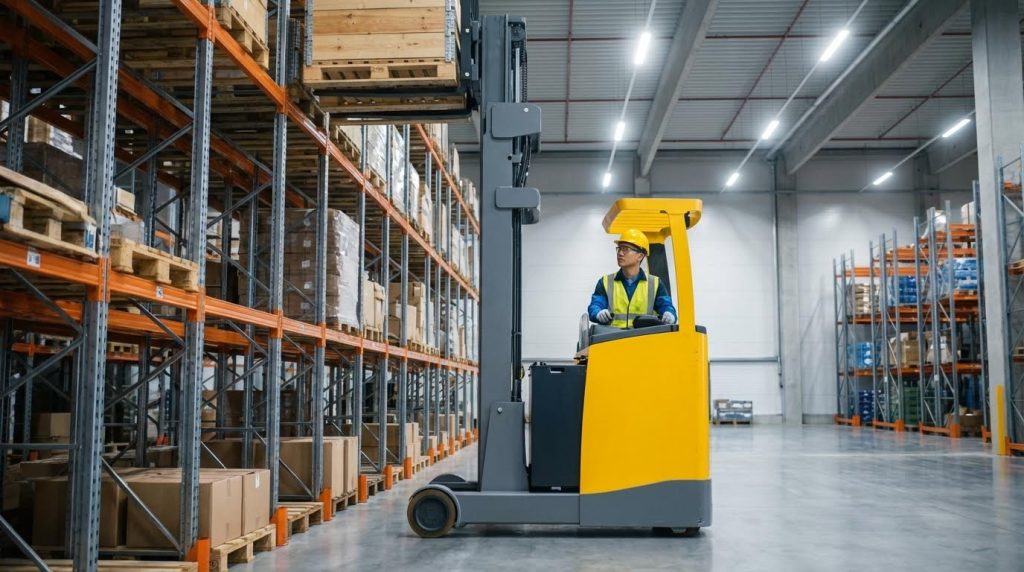
Electric forklifts typically use 3–15 kWh per operating hour, and understanding this range lets you answer “how much electricity does a forklift use” in your own warehouse, in real money terms. This guide explains real-world kWh consumption, how to calculate charging cost, and how better batteries, chargers, and driving practices cut energy use per pallet and total cost of ownership.
Understanding Electric Forklift Energy Use
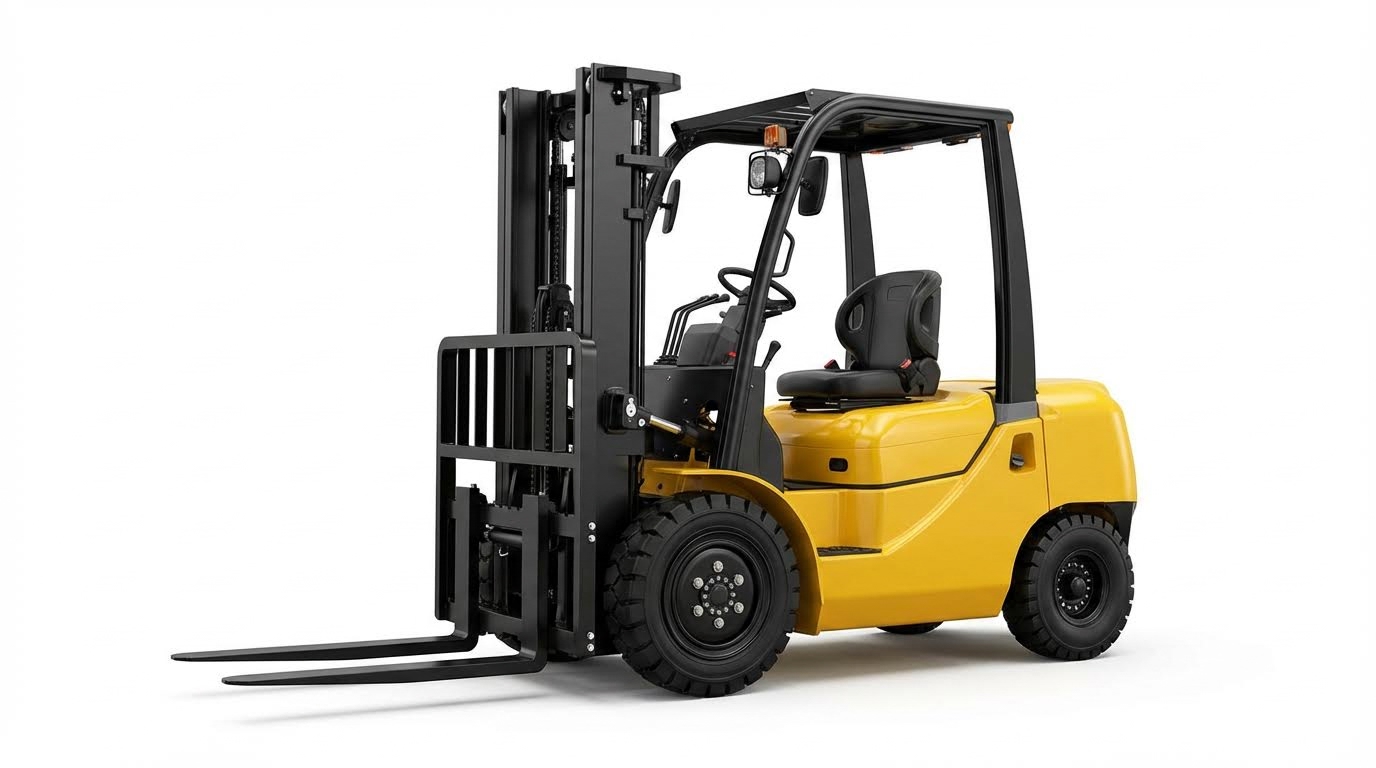
Electric forklift energy use is best understood in kWh per operating hour and per shift, driven mainly by duty cycle, load, and battery/drive efficiency. This section answers “how much electricity does a forklift use” in practical warehouse terms.
Typical kWh Use Per Hour And Per Shift
Typical modern electric forklifts use about 3–15 kWh per operating hour, depending on size, load, and intensity of use. To answer “how much electricity does a forklift use,” you must pin down where your fleet sits inside that band.
| Use Case (1.5–3.5 tonne truck) | Typical kWh per hour | Example Shift (8 h) kWh | Operational Impact / Best For… |
|---|---|---|---|
| Idle / very light handling | 3–6 kWh/h (typical range) | 24–48 kWh | Low-utilisation sites, occasional pallet moves, long idle periods. |
| Moderate warehouse duty | 6–10 kWh/h (typical range) | 48–80 kWh | Standard 8 h shift with mixed driving, lifting to 4–6 m, average loads. |
| Heavy-duty / high-intensity | 10–15 kWh/h (typical range) | 80–120 kWh | Near-rated loads, frequent lifts to high racking, continuous operation. |
| Rule-of-thumb “average forklift” | ≈15 kWh/h stated example (single-point estimate) | ≈120 kWh | Useful as a quick budgeting figure, but high for many light/medium sites. |
| European practical average | 3–7 kWh/h (field experience) | 24–56 kWh | Typical for efficient lithium fleets with intermediate charging. |
To convert this into cost, multiply shift kWh by your electricity rate. For example, 60 kWh per shift at 0.10 $/kWh equals 6 $ per shift in energy.
How to roughly estimate your own hourly kWh
You can estimate consumption from the electrical side using the standard formula: kWh = (Battery voltage × Average current × Operating hours) ÷ 1000. For example, a 48 V system drawing 80 A for one hour uses 3.84 kWh, while 120 A for one hour uses 5.76 kWh/h (calculation example). If you do not have current data, you can back-calculate from charger kWh over a week divided by total truck operating hours.
- Key takeaway: 3–10 kWh/h is common for most warehouses – use 5–7 kWh/h as a first-pass budget unless you know you are heavy-duty.
- Energy metric to track: kWh per pallet moved – this ties electricity use directly to productivity. (metric guidance)
💡 Field Engineer’s Note: When planning battery capacity, do not size only for average kWh/h. High peaks from repeated full-height lifts or ramp work can spike current draw and voltage sag, so keep at least 20–30% buffer in usable battery capacity for an 8 h shift.
Key Factors That Drive Power Consumption
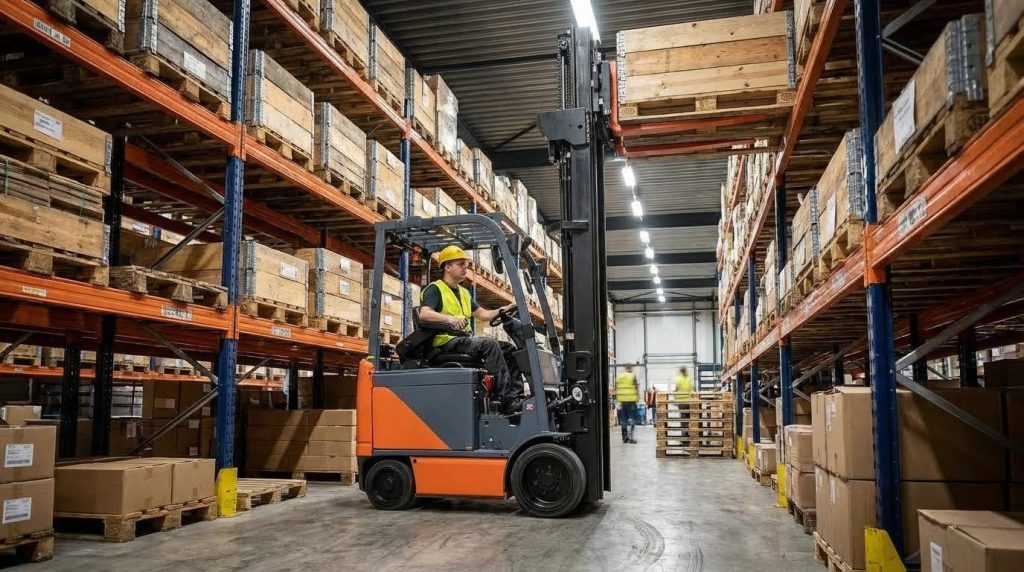
Forklift electricity use is mainly driven by load, lift height, duty cycle, battery and charger efficiency, environment, and operator behaviour. Once you understand these, you can actively control how much electricity a forklift uses in your facility.
| Factor | How it affects kWh use | Operational Impact / What to watch |
|---|---|---|
| Load weight | Heavier loads increase motor torque and hydraulic pressure, raising current draw and kWh/h (load influence). | Running near rated capacity all day can push you toward the 10–15 kWh/h band. |
| Lift height | Raising loads to higher racking increases hydraulic energy demand per cycle (height effect). | Very narrow aisle and high-bay systems (8–12 m) consume noticeably more kWh per pallet. |
| Duty cycle / work intensity | More time lifting and driving loaded, less idling, and faster accelerations increase average current draw (duty cycle). | High-intensity 24/7 operations can see kWh/h 50–100% higher than light-duty sites. |
| Battery type and age | Lithium-ion typically delivers 90–99% charge/discharge efficiency, versus 70–85% for lead-acid, so less grid kWh is wasted as heat (battery efficiency) (Li vs LA). | Old, sulphated lead-acid packs can quietly add 10–20% to your electricity bill for the same work. |
| Charger efficiency | High-frequency chargers reach about 90–96% efficiency, while older types may be 78–86% (charger efficiency). | Poor chargers can waste several kWh every night per truck as heat rather than stored energy. |
| Motor and drive technology | High-torque brushless direct-drive motors remove gearbox losses and can cut energy use about 15% versus older designs (motor tech). | Modern trucks can move the same pallets with fewer kWh and less maintenance. |
| Regenerative braking | Regeneration recovers kinetic energy on deceleration, often reducing net energy use by 15–30% (regen braking). | Stop–start applications (short shuttle runs, VNA) benefit most from well-tuned regen. |
| Ambient temperature | Extreme heat increases internal resistance and cooling loads; cold reduces available capacity and forces higher currents (temperature effects) (environment). | Cold stores often see shorter runtimes and higher kWh per pallet if batteries are not pre-conditioned. |
| Floor and tyre condition | Poor floors and high rolling resistance tyres increase traction effort and kWh/h (tyres & floors). | Cracked floors and underinflated pneumatic tyres can quietly add 5–10% to energy use. |
| Operator behaviour | Aggressive acceleration, hard braking, and idling waste energy, while smooth driving and correct regen use improve efficiency (operator impact). | Training can often cut fleet kWh use by double-digit percentages with zero hardware change. |
- Battery management: Keeping lead-acid discharge within about 20–80% state-of-charge reduces losses and extends life – deep discharges waste energy and destroy batteries early. (best practice)
- Monitoring tools: Battery management systems and fleet software give real-time current, voltage, and temperature – this lets you see exactly how much electricity each forklift uses and why. (BMS & monitoring)
💡 Field Engineer’s Note: When you audit a site and the question is “how much electricity does a forklift use here?”, start by pulling charger kWh logs and matching them to hours and pallets moved. This quickly exposes hidden losses from bad chargers, old batteries, or poor operator habits without touching a multimeter.
Technical Factors: Batteries, Charging, And Controls

Technical choices in batteries, chargers, and controls largely decide how much electricity a forklift uses per hour and per pallet moved. This section turns kWh specs into practical decisions you can use in your next fleet review.
- Core Idea: Battery chemistry, charger efficiency, and motor/control design together set your real kWh/hour – they answer “how much electricity does a forklift use” on your site, not just in a brochure.
💡 Field Engineer’s Note: When two forklifts “feel” equally strong but one runs 60–90 minutes longer per charge, you are usually seeing the combined effect of higher battery + charger + motor efficiency, not just a bigger battery.
Lead-Acid Vs Lithium-Ion Energy Efficiency
Lead-acid and lithium-ion forklifts can do the same work, but lithium usually draws fewer kWh from the wall for each pallet moved. The difference comes from higher charge/discharge efficiency and better tolerance of partial charging.
| Factor | Lead-Acid Battery | Lithium-Ion Battery | Operational Impact |
|---|---|---|---|
| Typical charge/discharge efficiency | 70–85% (battery efficiency range) | 90–99% (battery efficiency range) | Li-ion wastes less energy as heat, so you buy fewer kWh from the grid for the same work. |
| Typical wall-to-battery charging efficiency | ≈80–85% (lead-acid efficiency) | ≈95% (lithium efficiency) | Li-ion pulls less power from the mains to reach the same state of charge. |
| Tolerance to partial / opportunity charging | Low – prefers full cycles; frequent top-ups shorten life (lead-acid practices) | High – designed for frequent short charges without major life loss (opportunity charging) | Li-ion allows top-up during breaks, shrinking the number of spare batteries and chargers. |
| Influence on forklift kWh/hour | More kWh drawn from wall for same task | Fewer kWh drawn for same task | Direct answer to “how much electricity does a forklift use” in your warehouse. |
| Typical lifespan | Baseline | ≈2–3× longer, up to ~10 years in many cases (lithium lifespan) | Fewer replacements lower long-term cost per kWh delivered. |
- Energy Losses: Lead-acid converts more input kWh to heat – you pay for energy that never reaches the drive motor.
- Runtime Stability: Li-ion voltage stays flatter through the shift – less performance drop-off at the end of a long run.
- Temperature Sensitivity: Both chemistries lose efficiency in extreme heat or cold, but Li-ion with good thermal management keeps capacity more stable (environmental impact).
How battery efficiency changes your electricity bill
If two forklifts each need 5 kWh at the battery to do a shift, a lead-acid system at 80% efficiency will draw roughly 6.25 kWh from the wall, while a lithium system at 95% efficiency will draw about 5.26 kWh. Over thousands of hours, that 15–20% gap turns into a visible line item on your energy bill.
Calculating kWh Use And Electricity Cost
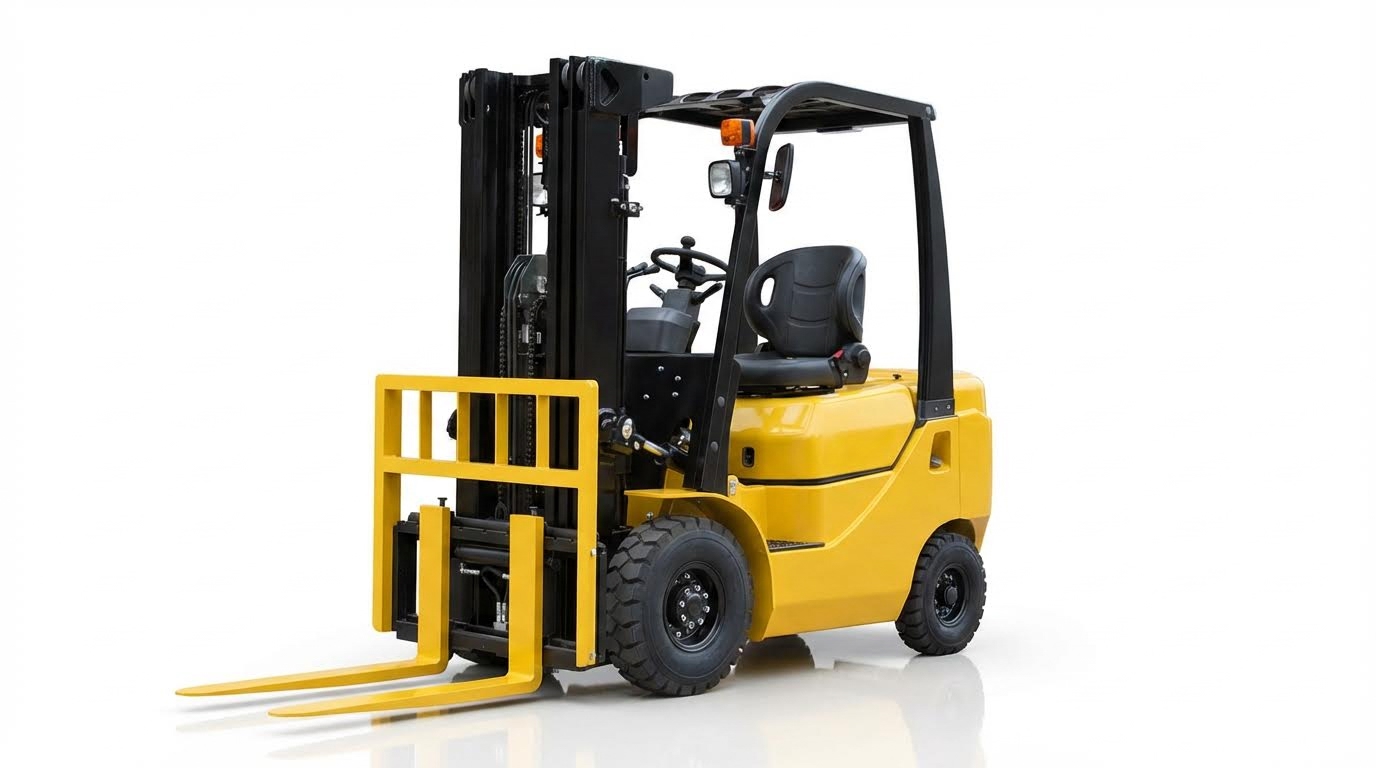
You can estimate how much electricity a forklift uses by combining battery voltage, average current draw, and operating hours, then multiplying by your local kWh price. This turns technical specs into a clear cost per hour and per shift.
- Core Metric: kWh/hour – how many kilowatt-hours the truck actually draws each operating hour.
- Cost Link: kWh/hour × electricity price – your energy cost per operating hour.
The basic engineering formula is: kWh = (Battery voltage × Current × Operating hours) ÷ 1000 (energy calculation formula).
| Example Scenario | Voltage (V) | Average Current (A) | Operating Time (h) | Energy Use (kWh) | Operational Impact |
|---|---|---|---|---|---|
| Light-duty picking, small counterbalance | 48 | 80 | 1 | 3.84 kWh (sample calculation) | At light loads, expect around 3–6 kWh/h for a 1.5–3.5 tonne truck. |
| Moderate warehouse work | 48 | 120 | 1 | 5.76 kWh (sample calculation) | Fits the typical 3–7 kWh/h seen in European operations (practical range). |
| Heavy-duty, high lift, near capacity | 48 | 250 | 1 | 12.0 kWh | Matches upper range of 10–15 kWh/h for intensive cycles (consumption range). |
Some sources quote a “typical” forklift using about 15 kWh per hour (energy consumption estimate), but real sites usually see a band from roughly 3–15 kWh/h depending on load, lift height, and duty cycle (consumption range). That is the honest engineering answer to “how much electricity does a forklift use.”
| Usage Pattern (1.5–3.5 tonne truck) | Typical kWh/hour | If electricity = $0.12/kWh, cost per hour | Best For… |
|---|---|---|---|
| Idle / light load, low lift | ≈3–6 kWh/h (light duty) | ≈$0.36–$0.72/h | Occasional handling, low-intensity shifts. |
| Moderate use | ≈6–10 kWh/h (moderate duty) | ≈$0.72–$1.20/h | Typical warehouse receiving and put-away. |
| Heavy-duty, frequent high lifts | ≈10–15 kWh/h (heavy duty) | ≈$1.20–$1.80/h | High-bay racking, full-capacity work. |
Annual energy cost for a busy electric forklift often lands around $500–$2,000 depending on hours and local tariffs (annual energy costs).
- Key Drivers of Current Draw: Load weight, lift height, work intensity, and temperature all push current up or down (influencing factors).
- Duty Cycle Shape: More time lifting at or near rated capacity increases average current non-linearly as hydraulic pressure and motor torque rise (duty cycles).
💡 Field Engineer’s Note: When you measure real current draw with a logger, the spikes come from fast acceleration, ramp starts, and high lifts near capacity. Smooth driving and staged lifting can cut peak amps by 10–20%, which usually trims kWh/hour enough to see on the bill.
Quick method to estimate your site’s kWh/hour
1) Take the truck’s battery voltage (e.g., 48 V). 2) Ask your dealer or use a data logger to find average current over a typical hour (not peak). 3) Apply kWh = V × A × h ÷ 1000. 4) Multiply by your local $/kWh to get cost per hour. Repeat for light, normal, and peak seasons to see the range.
Chargers, Regeneration, And Motor Technologies
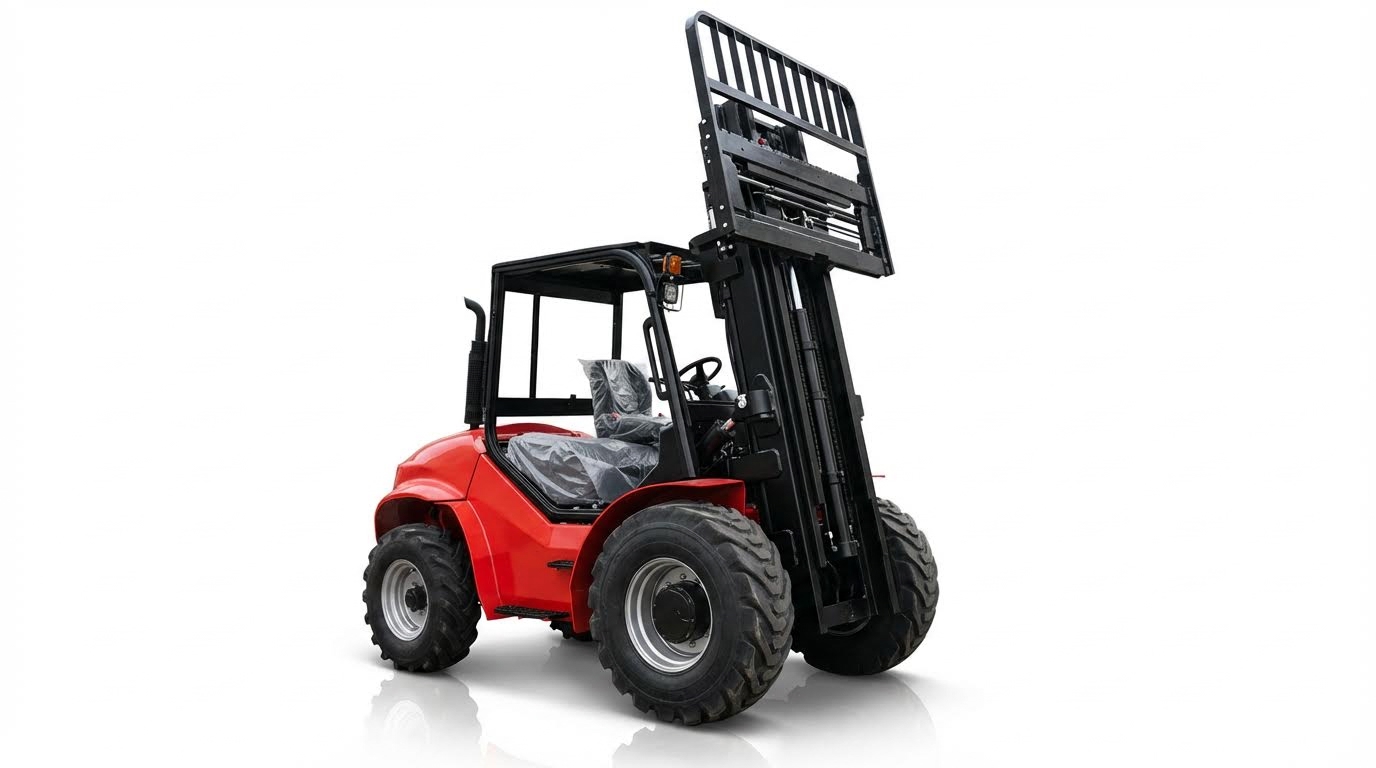
Modern chargers, regenerative braking, and high-efficiency motors can easily swing forklift energy use by 15–30%. These technologies directly reduce how much electricity a forklift uses for the same throughput.
Charger Efficiency And Its Hidden Cost
Charger losses sit between the wall socket and the battery, so they quietly add kWh to your bill without adding any work output. High-frequency chargers usually waste far less energy than older designs.
| Charger Type | Typical Efficiency | Operational Impact | ||||||||||||||||||||||||||||||||||||||||||||||||||||||||||||||
|---|---|---|---|---|---|---|---|---|---|---|---|---|---|---|---|---|---|---|---|---|---|---|---|---|---|---|---|---|---|---|---|---|---|---|---|---|---|---|---|---|---|---|---|---|---|---|---|---|---|---|---|---|---|---|---|---|---|---|---|---|---|---|---|---|
| High-frequency charger | ≈90–96%Specifying And Operating For Lower Energy UseThis section explains how to specify and run electric forklifts so you use fewer kWh per pallet while still hitting throughput targets, directly answering how much electricity does a forklift use in your operation. Matching Forklift Class And Battery To Duty CycleCorrectly matching forklift type and battery chemistry to your duty cycle is the single biggest lever to control how much electricity a forklift uses per pallet moved. Before talking models or prices, you need a clear picture of your duty cycle and environment, because these decide whether you sit near the low end (3-7 kWh/h) or the high end (10-15 kWh/h) of typical electric forklift consumption ranges. Typical usage ranges show how sharply energy demand rises with heavier loads and more aggressive cycles.
When you ask how much electricity does a forklift use, these ranges are only meaningful if the truck class matches the job. Oversizing a truck (too big, too powerful) wastes energy through extra mass and oversized motors; undersizing it forces long, inefficient cycles at high current draw.
How to document your duty cycle before specifyingLog for at least one full week: operating hours per shift, average and peak load (kg), typical lift height (m), drive distance per hour (m), and idle time. Combine this with charger access and temperature conditions to choose class and battery with confidence. Operational Practices To Cut kWh Per PalletOnce the right truck and battery are in place, operator behavior and site layout decide whether you sit at the efficient or wasteful end of the kWh/pallet scale. Energy-efficiency metrics such as kWh per operating hour and kWh per pallet moved are the best way to compare how much electricity a forklift uses between sites or shifts. These indicators show how well you turn electrical energy into productive handling, not just motion and heat.
How to measure kWh per pallet on your site1) Record battery kWh drawn from the charger display or energy meter for a full shift. 2) Count pallets moved in the same period. 3) Divide kWh by pallet count to get kWh/pallet. Repeat across shifts and compare teams or layouts using the same metric.
Final Thoughts On Energy, TCO, And Future TrendsElectric forklift energy use is not a mystery cost. You can predict it, measure it, and actively push it down. The key is to treat kWh as a design and management parameter, not just a by-product of running trucks. Duty cycle, load, and lift height set the base physics. Battery chemistry, charger efficiency, and motor and control technology then decide how much of your purchased kWh reach the wheels and hydraulics. Finally, layout and operator behavior decide whether that energy moves pallets or just heats copper and tyres. Operations and engineering teams should lock in three habits. First, specify correctly: match truck class, capacity, mast, and battery type to real duty data, not guesswork. Second, track the right metrics: kWh per hour and kWh per pallet, pulled from chargers, BMS, or fleet software. Third, act on the findings: upgrade weak chargers, retire tired batteries, fix floors, and coach drivers on smooth, regenerative driving. When you follow this loop, electric fleets deliver low energy cost, strong uptime, and predictable total cost of ownership. Tools and equipment from Atomoving can then slot into a warehouse plan that already treats energy as a controlled variable, not an unpleasant surprise on the power bill. Frequently Asked QuestionsHow much electricity does a forklift use?An electric forklift’s energy consumption depends on factors like its capacity, operating hours, and the tasks performed. On average, an electric forklift consumes about 5 to 10 kilowatt-hours (kWh) of electricity per shift. Forklifts with higher capacities or longer operating hours will consume more energy.
What factors influence the electricity consumption of a forklift?Several factors affect how much electricity a forklift uses:
|