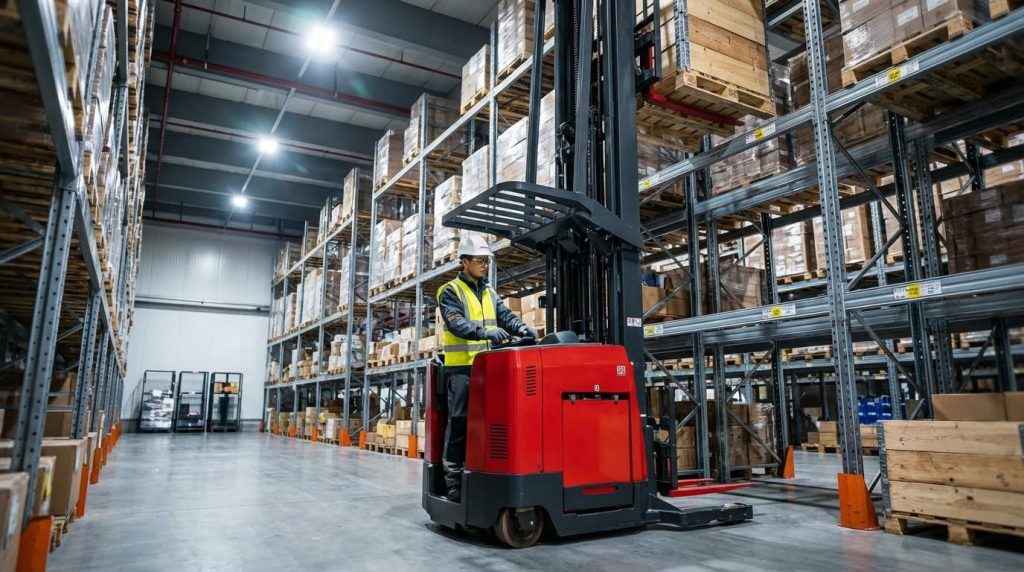
Electric forklift battery life depends on chemistry, depth of discharge, temperature control, and charging discipline, not just ampere‑hours on the nameplate. This guide explains how long an electric forklift battery lasts in real warehouses, and what engineering decisions actually extend runtime, cycle life, and total service years while keeping material‑handling operations safe and predictable.
Understanding Forklift Battery Runtime And Cycle Life
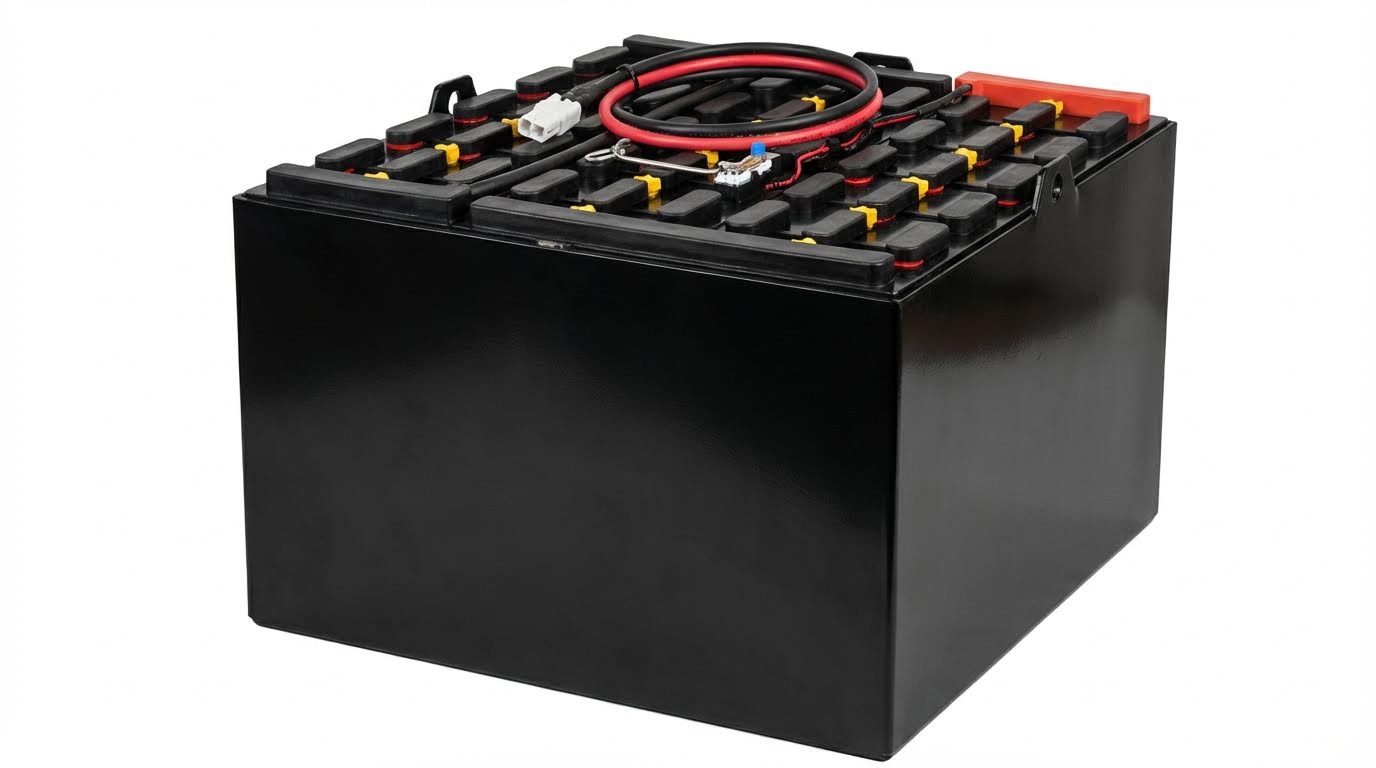
Electric forklift battery life depends on two things: how many hours you get per charge (runtime) and how many full charges the pack survives (cycle life). This section explains both so you can predict costs and plan shifts.
Defining runtime, cycle life, and depth of discharge
Runtime, cycle life, and depth of discharge describe how long a forklift runs per shift and how many charges the battery survives before replacement. Understanding these three terms answers “how long does an electric forklift battery last” in real operations.
- Runtime: The number of operating hours you get from one full charge – directly impacts how many hours a truck can work in a shift.
- Cycle life: The total number of full charge–discharge cycles before the battery falls to about 70–80% of original capacity – defines service life in years.
- Depth of Discharge (DoD): How much of the battery’s usable capacity you remove in one cycle, expressed as a percentage – deeper discharge shortens life, shallow discharge extends it.
How these terms work together in a real warehouse
Imagine a 48 V, 600 Ah pack with about 28.8 kWh usable energy. If your forklift draws an average of 6 kW over a shift, you get roughly 4.5 hours of runtime per full discharge. If you run that pack at 70% DoD each day and it is rated for 2,000 cycles at that DoD, you get around 2,000 working days before noticeable capacity loss. Reducing DoD to 50–60% can push cycle life higher for lead‑acid batteries, while lithium‑ion can tolerate higher DoD with less penalty. Technical guidance on DoD and cycles shows that shallow discharges significantly extend life.
- Lead-acid DoD rule of thumb: Keep DoD at 40–60% for longest life, and avoid going beyond 80% – reduces sulfation and plate damage.
- Lithium-ion DoD rule of thumb: Operating in the 20–80% state-of-charge (SoC) window minimizes stress – improves cycle count and thermal stability.
💡 Field Engineer’s Note: When operators “run to empty” at the end of every shift, DoD quietly creeps above 80%. On lead‑acid packs this shows up months later as sulfation and lost runtime, even though the battery still reaches 100% on the charger.
Typical lifespan of lead‑acid vs lithium‑ion packs
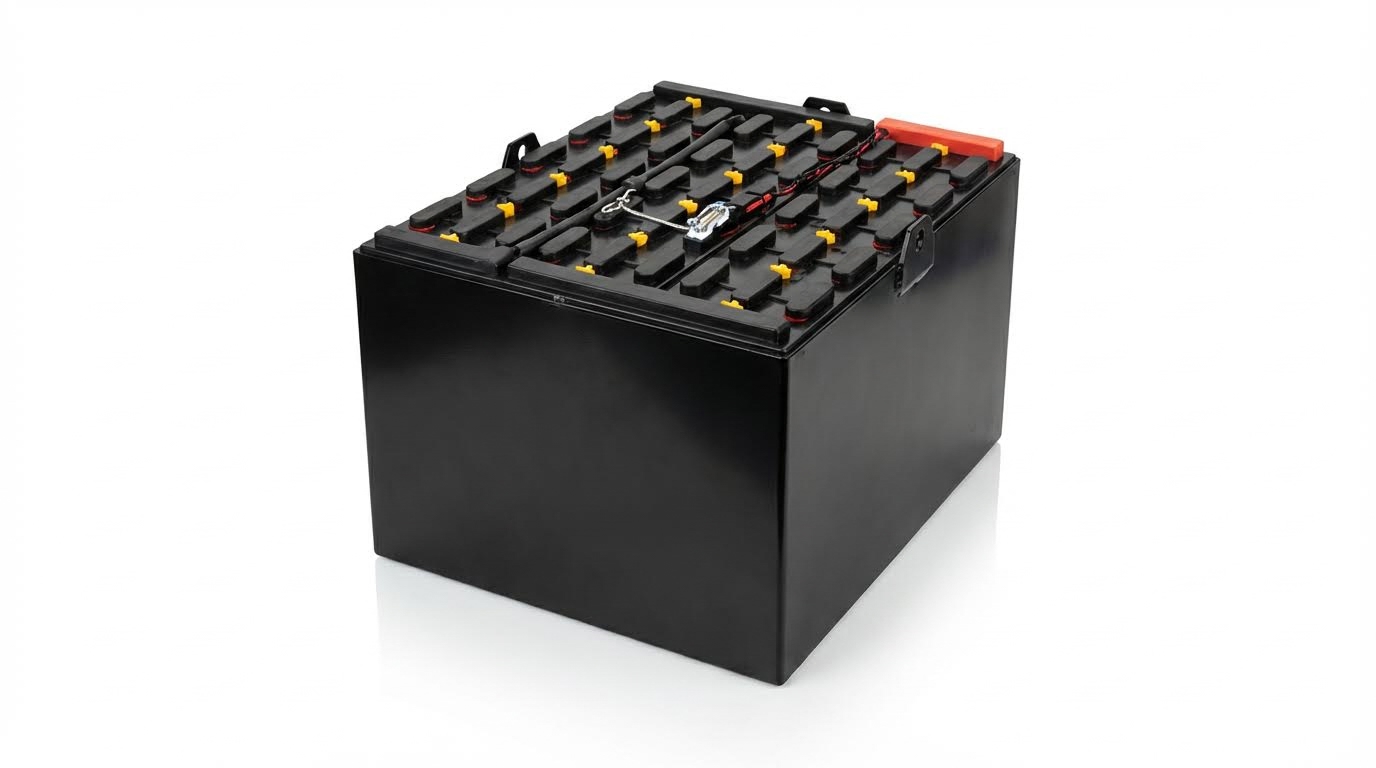
Lead‑acid forklift batteries usually last around 3–6 years, while lithium‑ion packs typically last 8–10 years, depending on depth of discharge, temperature, and charging discipline. The key difference is cycle life and how each chemistry tolerates partial charging.
| Battery Chemistry | Typical Cycle Life (full cycles) | Typical Service Life in Single-Shift Use | Recommended DoD / SoC Window | Operational Impact / Best For… |
|---|---|---|---|---|
| Flooded lead-acid | 1,000–1,500 cycles; some packs 1,500–2,000 with shallow DoD cycle data supporting ranges | ≈3–5 years in single-shift operations service life estimate | Limit to ≤80% DoD; avoid discharge below 20% SoC DoD guidance | Best for low to medium-duty, single-shift sites that can spare 6–8 hours for full charging and regular watering. |
| Standard lithium-ion | 2,000–5,000 cycles under good management cycle range efficiency and cycles | ≈8–10 years in many warehouse applications service life estimate | Operate mainly between 20–80% SoC; tolerate frequent opportunity charging charging strategy | Best for multi-shift, high‑throughput sites that need fast charging (≈1–2 hours) and minimal maintenance. |
| LiFePO4 (lithium iron phosphate) | ≈4,000–5,000 cycles with proper care LiFePO4 cycle data | Often 10+ years in correctly managed fleets, depending on shifts and DoD | Avoid deep discharges below ≈20% SoC; keep temperature ≈20–25°C for storage usage guidance | Best for intensive industrial vehicles and AGVs where long life and high cycle counts justify higher upfront cost. |
In practical terms, when people ask “how long does an electric forklift battery last,” they usually mean years in service and hours per shift. For a single‑shift warehouse:
- Lead‑acid: Expect roughly 5–8 hours runtime per charge on a correctly sized pack, and about 3–5 years before noticeable capacity loss, assuming proper charging and maintenance.
- Lithium-ion / LiFePO4: Expect similar or slightly longer runtime per charge because of higher usable capacity and efficiency, but with 8–10 years of life and far more total cycles when kept in the 20–80% SoC band and within recommended temperatures. Comparative performance data shows lithium-ion packs reach 95% usable energy versus about 75% for lead‑acid.
What shortens or extends real-world battery life?
Several field conditions shift you toward the low or high end of these ranges. High temperatures above 45°C during charging accelerate aging for both chemistries and can cut lithium cycle life by up to 60% if unmanaged. Thermal management data highlights the need to keep cells near 25°C. For lead‑acid, chronic undercharging and missed equalization charges drive sulfation and early failure, while for LiFePO4, repeated deep discharges below 20% and storage in hot areas accelerate wear by 30–50%. LiFePO4 degradation factors explain these effects.
💡 Field Engineer’s Note: When you size batteries so trucks finish a shift at 30–40% SoC instead of “on fumes,” fleets consistently see an extra 1–2 years of life from both lead‑acid and lithium packs, with fewer mid‑shift slowdowns and voltage sag.
Technical Factors That Control Battery Longevity
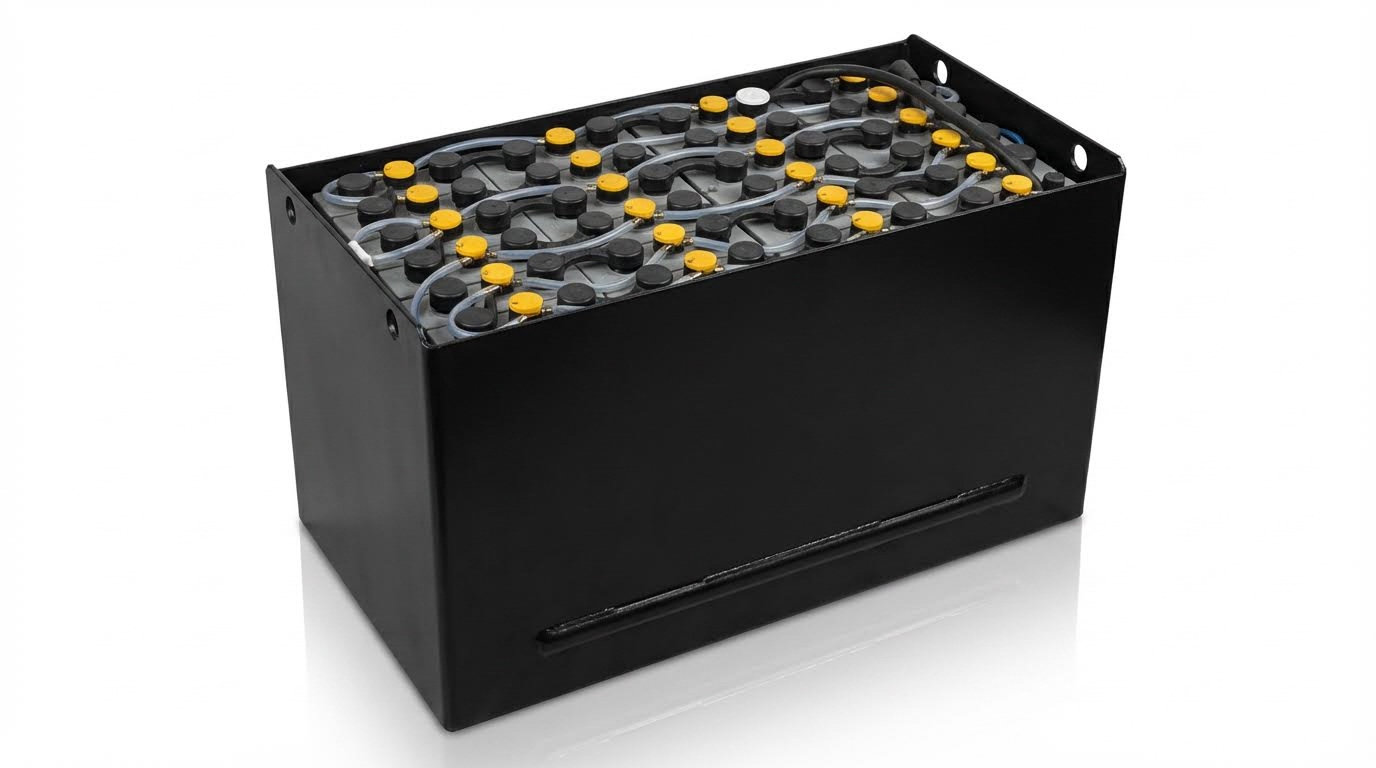
Battery temperature, charging discipline, and maintenance routines are the three main technical levers that decide how long an electric forklift battery lasts in real-world warehouse duty.
These factors directly control cycle life, runtime stability, and safety for both lead‑acid and lithium (especially LiFePO4) packs.
Effects of temperature and thermal management
Temperature control is critical because both lead‑acid and lithium cells age much faster outside roughly 20–25°C.
In a warehouse, that means watching not just room temperature, but also battery temperature during heavy lifting and fast charging.
| Battery Type | Recommended Operating / Charging Temperature | Key Degradation Risks | Operational Impact on “how long does an electric forklift battery last” |
|---|---|---|---|
| Lead‑acid | About 10–25°C for operation; charge ideally near 25°C | High heat accelerates grid corrosion; cold reduces available capacity. | Running hot can cut a 1,000–1,500 cycle expectation down sharply, forcing replacement years earlier. |
| Lithium‑ion / LiFePO4 | Storage around 20–25°C; keep operation and charging below ~45°C | High temperature above 45°C can cut cycle life by up to 60%; below 0°C risks lithium plating | Poor thermal control can turn a 3,000–5,000 cycle LiFePO4 into a 1,500–2,000 cycle pack, halving service life. |
- Stay in the “comfort band”: Aim to keep battery temperature around 20–25°C – this preserves chemistry and slows aging.
- Watch charging heat: Avoid charging above ~45°C – side reactions and gas evolution increase dramatically.
- Cold warehouses: Below 0°C, lithium mobility drops and lithium plating becomes a risk – capacity and safety both suffer.
- Use ventilation or cooling: Fans, ducted air, or integrated cooling plates stabilize cell temperatures – keeps large packs within a narrow temperature spread.
For example, an 80 V, 700 Ah lithium system can use aluminum cooling plates to keep temperature variation under 3°C across the pack during heavy lifts.
Why heat shortens battery life
Every 10°C rise above room temperature roughly doubles many chemical reaction rates. In batteries, that means faster corrosion, gas evolution, and breakdown of active materials, which directly reduces usable cycles and runtime.
💡 Field Engineer’s Note: In real fleets, the batteries that fail first are usually those parked near oven lines or dock doors in summer. Simply relocating the charge area to a cooler corner and adding forced ventilation often recovers 1–2 extra years of service life without changing anything else.
Charging profiles, opportunity charging, and equalizing
Charging discipline is the second big driver of how long an electric forklift battery lasts, because wrong profiles either over‑stress the plates (lead‑acid) or overheat and unbalance cells (lithium/LiFePO4).
The key is to match the chemistry with the right profile and schedule.
| Aspect | Lead‑acid Forklift Batteries | Lithium / LiFePO4 Forklift Batteries | Operational Impact |
|---|---|---|---|
| Typical full charge time | 6–8 hours | 1–2 hours with suitable charger | Determines how easily you can support multi‑shift operation without spare packs. |
| Opportunity charging | Not recommended; frequent partial charges can double effective cycles and halve life | Designed for it; 20–80% SOC window is ideal | Correct use can extend LiFePO4 life by about 50% compared to full cycles. |
| Equalizing | Weekly equalize charge at ~2.35–2.40 V per cell to balance cells and break up sulfate | Not normally required; BMS handles balancing | Skipping equalize on lead‑acid shortens life; unnecessary equalizing on lithium risks overheating. |
| Depth of discharge (DoD) | Avoid below 20% SOC; shallower 40–50% DoD can push life beyond 2,000 cycles | LiFePO4 can handle deeper DoD, but 20–80% SOC maximizes cycle count | Shallower cycles answer the question “how long does an electric forklift battery last” more in years than in months. |
- Lead‑acid: full cycles only: Run the shift, then give a full 6–8 hour charge – prevents sulfation and uneven plates.
- Lead‑acid: weekly equalize: Use the charger’s equalize mode once a week – levels cell voltages and recovers capacity.
- LiFePO4: CC/CV profile: Use a charger with constant‑current/constant‑voltage at about 3.65 V per cell – prevents over‑voltage and thermal stress.
- LiFePO4: partial charges: Plan 20–80% SOC top‑ups during breaks – this can extend cycle life by roughly 50%.
- Limit fast charging: Avoid charging above 1C current whenever possible – reduces heating and preserves lifespan.
Example: Sizing charge rate for a 48 V, 600 Ah pack
A 48 V, 600 Ah forklift battery charged at 300 A is at 0.5C. At this rate, active cooling is recommended to keep cell temperatures under 40°C during charge, which helps maintain long‑term capacity and safety.
💡 Field Engineer’s Note: When we audit short‑lived batteries, the pattern is almost always the same: lead‑acid packs “snacked” on during lunch, or lithium packs hammered with repeated 1C fast charges. Fixing the charge schedule usually adds 1–3 years of usable life without changing the trucks.
Maintenance routines for lead‑acid and LiFePO4 systems
Routine maintenance is the third pillar that controls how long an electric forklift battery lasts, because small daily checks prevent the slow damage that kills packs early.
The routines differ between flooded lead‑acid and sealed LiFePO4, but the goal is the same: keep cells balanced, connections tight, and temperatures under control.
| Task Frequency | Lead‑acid Batteries – Key Tasks | LiFePO4 Batteries – Key Tasks | Best For / Operational Impact |
|---|---|---|---|
| Daily | Check electrolyte levels before first shift; top up with distilled water to just above plates, avoid overfilling. Visual check for leaks and damage. | Pre‑shift visual inspection for swelling, leaks, loose terminals, and abnormal heat. Log SOC and alarms from BMS. | Prevents running with low electrolyte in lead‑acid and catches early mechanical or thermal issues in LiFePO4. |
| Weekly | Perform equalize charge; check and tighten all connections to specified torque to avoid hot spots. | Torque terminal hardware, check for corrosion, confirm BMS data logging. Review any over‑temperature or over‑current events. | Maintains low resistance paths and balanced cells, which protects both runtime and cycle life. |
| Monthly | Measure specific gravity of each cell; readings within ±0.050 indicate healthy balance. Clean case to remove acid films and dust. | Use thermal imaging to identify hot cells or connections; inspect harnesses for abrasion or damage. | Detects weak cells early so you can plan replacement and avoid sudden loss of runtime mid‑shift. |
| Storage | Store fully charged; apply periodic maintenance charge. Keep cool and dry. | Store at ~50% SOC in 20–25°C; check voltage every 3 months and recharge if cells drop below about 3.0 V. | Protects idle batteries from sulfation (lead‑acid) or over‑discharge (LiFePO4), preserving future runtime. |
- Water management (lead‑acid): Check levels after charging and adjust with distilled water – too low exposes plates; too high pushes acid out.
- Cleaning: Monthly cleaning removes conductive acid films and dust – reduces stray currents and corrosion.
- Torque checks: Keep terminals around 10–12 N·m – prevents high‑resistance joints that overheat and waste energy.
- BMS monitoring (LiFePO4): Use the BMS app or CAN data to track temperature, voltage spread, and event logs – enables predictive maintenance instead of reactive swaps.Engineering Battery Choices For Warehouse OperationsEngineering the right battery for warehouse work means matching chemistry, capacity, and charging strategy to shifts and load profiles so you get full-day runtime, long cycle life, and the lowest cost per pallet moved.When teams ask “how long does an electric forklift battery last”, the honest answer is: it depends on how you size and operate it over 10–15 years, not just the nameplate amp‑hours.
💡 Field Engineer’s Note: In most warehouses I audit, batteries fail early not because of “bad cells” but because they were undersized for peak current and then abused with deep discharges to finish shifts. Start with an energy and current budget, then pick chemistry and Ah; never guess from a catalog.
Sizing capacity for shift length and duty cycleTo size capacity for shift length and duty cycle, you calculate daily kWh demand, add a safety buffer, then select Ah and chemistry that deliver that energy within safe depth‑of‑discharge limits.This is the real engineering lever behind how long does an electric forklift battery last in your site, because overshooting or undershooting capacity directly changes cycle life and heat stress.Design Input Typical Range / Example How To Use It Operational Impact Truck traction + hydraulics power 8–15 kW for warehouse forklifts Multiply by operating hours per shift Defines base kWh needed per shift Shift length 6–8 h single shift, 16–24 h multi‑shift Include driving + lifting hours only Longer shifts favor lithium with fast charge Energy per shift ≈ 50–60 kWh measured in studies for typical forklifts Base your battery kWh on this plus buffer Ensures truck finishes shift without deep discharge Recommended buffer +20% kWh above calculated need for real‑world peaks Multiply energy need by 1.2 Prevents routine discharge below 20–30% SOC Lead‑acid usable window ≈ 50–80% depth of discharge Size so daily use stays above 20–30% SOC Staying shallow extends life beyond 1,500–2,000 cycles in practice Li‑ion / LiFePO4 usable window 20–80% SOC for long life Exploit opportunity charging to stay in band Supports 3,000–5,000+ cycles with proper management in industrial vehicles Typical lithium pack example 24 V, 550 Ah ≈ 13.2 kWh Match kWh to pallet moves/day Enough for ≈ 200 pallet moves/day in cold stores per case study
Once you know the daily energy demand in kWh, you convert it to required battery capacity, then check that the discharge window stays within healthy limits for the chemistry.- Step 1: Estimate energy per shift – Multiply truck kW by effective running hours; validate using telematics if available.
- Step 2: Add 20–30% buffer – Covers peak current events and aging; avoids routine deep discharge below 20% SOC.
- Step 3: Convert kWh to Ah – Ah = (Required kWh ÷ System voltage) × 1,000; choose nearest standard size.
- Step 4: Check discharge depth – Verify that a full shift uses no more than 70–80% of nominal capacity.
- Step 5: Validate with duty cycle – Compare against known figures like 50–60 kWh per shift from field data to avoid under‑specifying.
Example: Sizing for a single 8‑hour shift Assume a 12 kW truck running effectively 4 h per 8 h shift (the rest is idle or low load). Energy need ≈ 48 kWh. Add 20% buffer → 57.6 kWh. For an 80 V system, required Ah ≈ (57.6 ÷ 80) × 1,000 ≈ 720 Ah. A lead‑acid pack near 80 V, 750 Ah will usually finish the shift without dropping below ≈ 20% SOC, which directly improves how long an electric forklift battery lasts before replacement.
- Right‑size, don’t oversize: Oversized lead‑acid packs add 300–600 kg – Hurts floor loading and efficiency without big life gains if you already avoid deep discharge.
- Watch peak current: If logs show >250 A draw for >25% of shift as in some studies – Favor lithium with better voltage stability.
- Plan for multi‑shift: For 16–24 h operation – Either double‑battery lead‑acid with swaps or a single lithium pack with structured opportunity charging.
Evaluating TCO and lifecycle cost over 10–15 yearsTo evaluate total cost of ownership (TCO) over 10–15 years, you compare all‑in costs per kWh delivered or per operating hour, not just purchase price, using realistic cycle life and maintenance assumptions.This lens explains why, in many modern warehouses, lithium wins the “how long does an electric forklift battery last economically” question even if the upfront invoice is higher.Factor Lead‑Acid Forklift Battery Lithium‑Ion / LiFePO4 Forklift Battery Operational Impact / Best For… Typical cycle life ≈ 1,000–1,500 full cycles (3–5 years single‑shift) in practice ≈ 2,000–5,000 cycles; LiFePO4 often 4,000–5,000 with proper care for industrial fleets Lithium typically lasts 2–3× more years before replacement. Energy efficiency ≈ 75% usable energy from wall to wheels for lead‑acid ≈ 95% for lithium systems Up to ~20% lower electricity cost per pallet moved. Charging time 6–8 h for full charge; no partial charging recommended to avoid life loss ≈ 1–2 h full charge; supports frequent opportunity charging without penalties Lithium cuts downtime and battery‑swap labor in multi‑shift work. Maintenance workload Watering, equalizing, cleaning, gravity checks weekly/monthly as standard practice Minimal; periodic visual checks and BMS data review for LiFePO4 packs Lithium reduces labor hours and safety exposure around acid. Thermal behavior Heat during charge; sensitive to over‑temperature >45°C which accelerates aging Requires good thermal management; >45°C can cut life by ≈60% if unmanaged Both chemistries need temperature control; lithium often has integrated systems. 15‑year cost case ≈ €104,036 total cost in one study for lead‑acid fleets ≈ €50,000 in same scenario About 51.9% cost saving in favor of lithium over 15 years. Energy density ≈ 50 Wh/kg; bulky and heavy relative to lithium ≈ 150 Wh/kg Allows more kWh in same battery compartment, ideal for high‑duty trucks. - Acquisition vs lifecycle: A cheaper lead‑acid pack that you replace twice in 10–15 years – Often costs more than a single lithium pack that runs the full period.
- Labor and infrastructure: Lead‑acid needs battery rooms, ventilation, watering gear – These hidden costs matter in TCO and safety audits.
- Productivity cost: Every 20–30 min spent swapping or waiting for charge – Is lost truck availability that lithium’s 1–2 h fast charge can avoid.
Simple TCO comparison method you can apply For each option (lead‑acid vs lithium), calculate: (1) Purchase price of batteries + chargers over 10–15 years, including expected replacements based on 1,000–1,500 vs 2,000–5,000 cycles. (2) Electricity cost = (Energy from wall ÷ efficiency) × tariff; use ≈75% for lead‑acid and ≈95% for lithium. (3) Maintenance labor and parts: watering, cleaning, inspections vs quick checks and BMS monitoring. (4) Downtime cost: hours of lost operation from charging and swaps. The option with the lowest cost per operating hour or per pallet moved is the better engineering choice, even if its initial price is higher.
When you put all this together, the practical answer to “how long does an electric forklift battery last” is twofold: technically, lithium packs can deliver 2–3× more cycles than lead‑acid, and economically, they can cut lifecycle energy and maintenance costs by around half over 10–15 years when correctly sized and managed. Final Thoughts On Maximizing Electric Forklift Battery LifeElectric forklift batteries last long when engineering and operations work together, not in isolation. Chemistry choice, depth of discharge, and temperature control set the technical limits. Charging discipline, sizing, and maintenance decide whether you reach those limits or fall short by years.Lead‑acid rewards careful watering, full overnight charges, and shallow discharge. LiFePO4 rewards correct CC/CV charging, tight thermal control, and structured opportunity charging in the 20–80% SoC band. In both cases, you extend life when trucks finish shifts with 30–40% charge left instead of limping home nearly empty.Right‑sizing capacity around measured kWh per shift protects cycle life and cuts voltage sag. Good thermal design and charger selection protect safety by avoiding overheated cells and stressed plates. Over a 10–15 year horizon, these choices often make lithium packs the lower‑cost option, even with higher upfront price.The best practice is clear. Instrument your fleet, calculate real energy demand, and design battery, charger, and duty cycle as one system. Train operators on SoC limits and charge rules. When you do this, your forklifts run longer per shift, batteries reach their rated cycles, and warehouse uptime and safety both improve with Atomoving solutions.Frequently Asked QuestionsHow long does an electric forklift battery last?The lifespan of an electric forklift battery depends on its type, usage, and maintenance. Lead-acid batteries typically last between 5 to 8 years with proper care, while lithium-ion batteries can last longer, often exceeding 10 years. Factors such as charging habits, operating conditions, and regular maintenance play a significant role in determining battery longevity. Forklift Battery Lifespan Guide.What factors influence the lifespan of forklift batteries?Several factors affect how long a forklift battery will last:
- Battery Type: Lithium-ion batteries generally last longer than lead-acid ones.
- Usage Frequency: Heavy daily use can reduce battery life.
- Charging Practices: Avoid partial charges; fully charge and discharge when possible.
- Maintenance: Regular cleaning and proper water levels (for lead-acid) extend battery life.