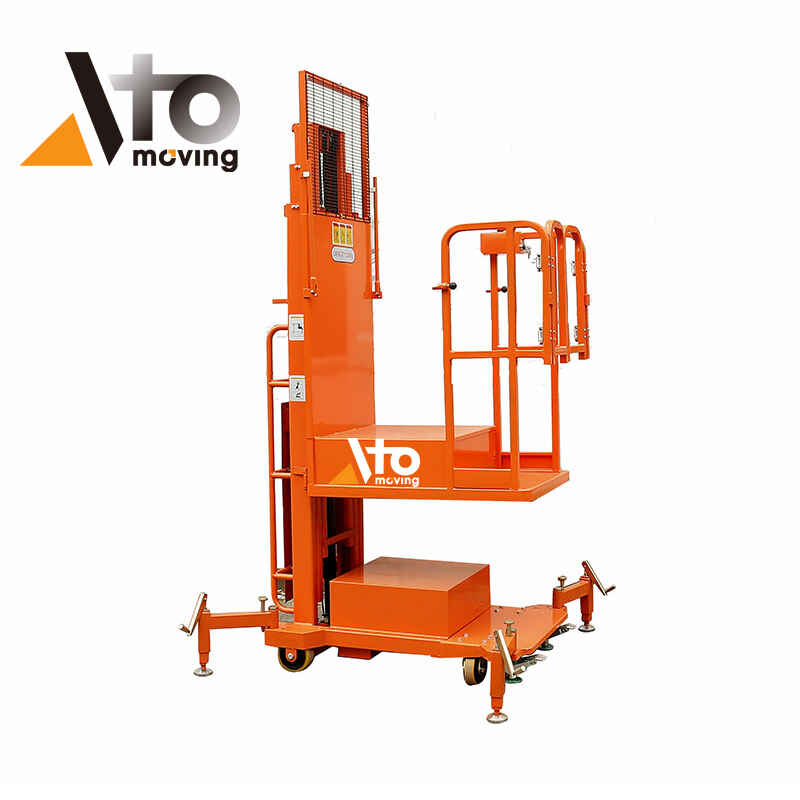
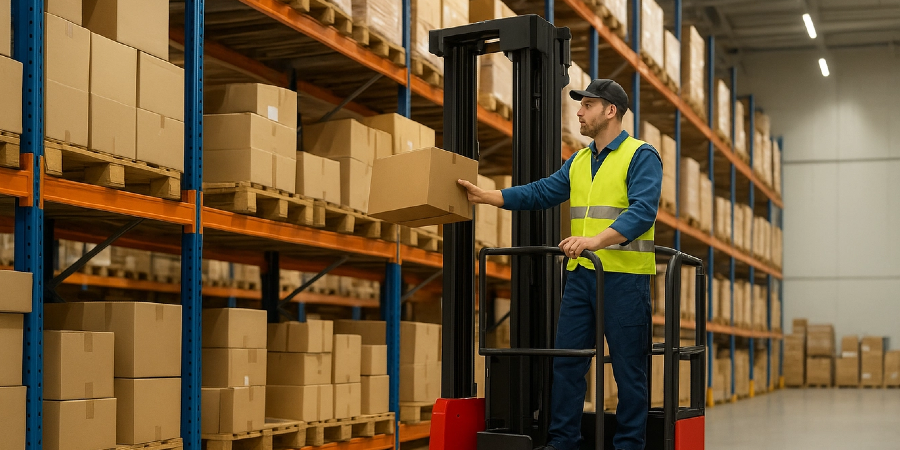
Semi electric order picker technology bridges the gap between manual carts and fully electric order pickers, combining powered lift with manual travel. This guide explains how they work, how they compare on throughput, energy and safety, and when they fit your warehouse best.
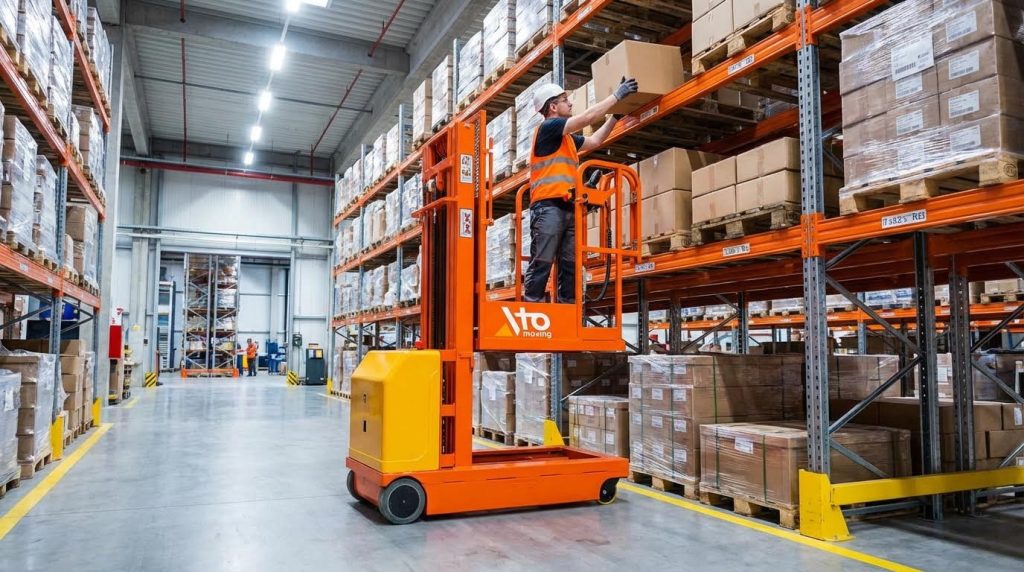
What Semi-Electric Order Pickers Are And How They Work
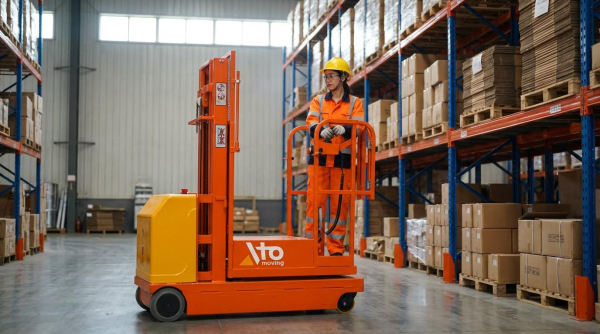
A semi electric order picker is a pedestrian machine where the operator pushes the unit manually but uses an electric lift to raise and lower the platform. This hybrid design cuts vertical lifting effort while keeping cost, weight, and energy use lower than fully electric trucks. It fits operations that have frequent low–mid level picking but do not justify high-capital, drive‑motor machines. Understanding the core design and lift mechanics helps you match performance, safety, and energy use to your warehouse layout and workload.
- Definition: Semi electric order picker – Manual travel, powered lift only, for low–mid rack picking.
- Primary Use Case: Cartons, totes, and partial pallets up to a few hundred kilograms – Ideal for light–medium duty picking.
- Key Trade-Off: Lower cost and energy vs. more operator pushing effort – Best where travel distances are modest.
💡 Field Engineer’s Note: If operators regularly push more than 15–20 m per pick run or work on ramps, a semi electric order picker quickly feels “heavy”; at that point, consider either powered-drive units or layout changes to shorten walking distance.
Core Design And Key Components
A semi electric order picker uses a simple chassis, vertical mast, and small lifting battery to provide safe vertical access while keeping the drive system manual. The design focuses on minimizing moving parts and weight while still complying with fall protection and stability rules.
| Component / Feature | Typical Design In Semi Electric Order Picker | Operational Impact / Best For… |
|---|---|---|
| Chassis & wheels | Compact base frame with steerable front or rear wheels; push‑by‑hand travel | Low cost and easy maintenance; best for flat, smooth floors and short aisles |
| Vertical mast | Single or double mast guiding platform to low–mid rack levels (first 2–3 beam levels) | Access to ~3 m working height without ladders; ideal for carton and tote picking |
| Operator platform / pallet deck | Standing platform, often with small pallet or load deck for cartons and totes | Lets operator ride up with load; reduces climbing and carrying at height |
| Guardrails & gates | Full-height guardrails, toe boards, self-closing interlocked gate | Prevents falls and objects rolling off; required for compliance in elevated work |
| Lift power source | Small lead-acid or lithium battery sized only for lifting | Low energy use and small charger; simple to maintain vs full-drive trucks |
| Lift drive | Electric motor driving hydraulic pump or chain system | Smooth vertical motion with push-button control; reduces strain vs manual cranks |
| Controls | Up/down buttons or tiller-mounted controls plus emergency stop | Fast, intuitive operation; easy training for new staff |
| Safety systems | Emergency lowering, non-slip flooring, interlocks on gates | Mitigates fall and crush risks; improves compliance with elevated work rules |
In most designs, the operator manually positions the semi electric order picker in the aisle, then uses electric controls to raise the platform to the pick level. The small battery and motor only handle vertical motion, so you avoid the complexity of traction motors, gearboxes, and drive controllers found in fully electric trucks. Typical structures and components are described in more detail in industry guidance here.
- Base chassis: Welded steel frame with low step-in height – Reduces trip risk and speeds mounting/dismounting.
- Mast design: Rolled steel sections with lift chains or hydraulic cylinder – Provides stiffness for stability at 2–3 m.
- Battery choice: Lead-acid (~750 cycles) vs lithium (~2,500 cycles) – Trade upfront cost vs life and charging flexibility.
- Controls layout: Chest-height or rail-mounted buttons – Allows fine positioning without awkward reaches.
- Platform surface: Non-slip, clearly marked standing zone – Improves grip, especially with dusty or wet footwear.
How a semi electric order picker differs from a manual unit
A manual picker uses human power for both travel and lifting, often via hand winch or step ladders. A semi electric order picker keeps travel manual but replaces the manual lift with an electric motor and hydraulic or chain system, cutting the hardest ergonomic load: vertical lifting with outstretched arms.
Lift System Mechanics And Performance
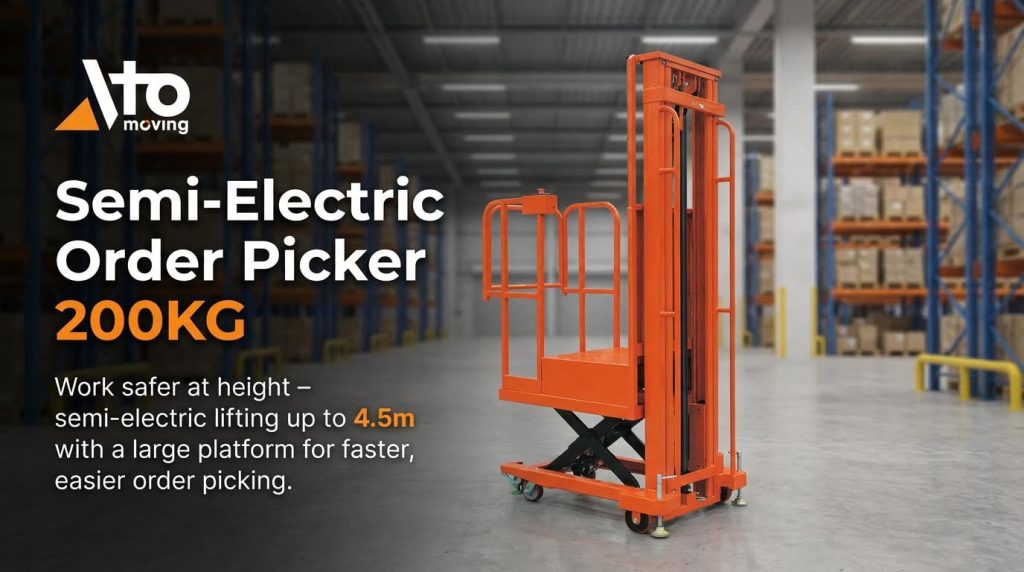
The lift system in a semi electric order picker uses an electric motor and hydraulic pump or chain drive to raise the platform at controlled speed under load. This powered lift delivers predictable cycle times, lower operator fatigue, and safer handling of loads at 2–3 m height.
| Lift Parameter | Typical Semi Electric Value / Range | Operational Impact / Best For… |
|---|---|---|
| Rated load | “Few hundred kg” including operator and load (commonly 200–400 kg) | Cartons, totes, small partial pallets; not for full heavy pallets at height |
| Lift height | Low–mid racking, usually first 2–3 beam levels, up to about 3 m | Picking in standard shelving and low racks without high-bay infrastructure |
| Lift speed | ~80–100 mm/s at full load (source) | Reaches 3 m in ~30–35 s; predictable pick cycle timing |
| Energy per 100 lift cycles | ≈0.3 kWh per 100 lift cycles (source) | Very low electricity cost; roughly one‑third of fully electric units |
| Shift energy use | ≈8–12 kWh per 8‑hour shift (source) | ≈US$1–3/day electricity at common tariffs; easy to supply from standard chargers |
| Duty cycle sweet spot | <50 full-height lifts per day, 100–150 picks/hour (source) | Medium-volume zones and one‑shift operations; avoids overheating and battery abuse |
| Battery life | Lead-acid ≈750 cycles, lithium ≈2,500 cycles (source) | Plan replacement schedules and TCO; lithium suits multi-shift or opportunity charging |
Mechanically, the motor runs only when the operator commands lift or lower, driving a hydraulic pump that pressurizes oil into a cylinder or powering a chain system that moves the platform. Because the semi electric order picker does not power travel, total energy consumption stays low, and heat build-up is limited compared to fully electric trucks that run traction motors continuously (source).
- Hydraulic advantages: High force at low motor power – Lets a small battery lift several hundred kg safely.
- Controlled lowering: Valves meter oil flow – Prevents sudden drops if the operator releases the button.
- Interlocks: Gate and emergency-stop circuits – Stop lift when guards are open or in an emergency.
- Thermal limits: Repeated full-height lifts heat oil and motor – Why duty cycles above ~50 high lifts/day need careful review.
- Maintenance focus: Seals, chains, and oil condition – Directly affect smoothness and noise of the lifting motion.
💡 Field Engineer’s Note: In cold storage or winter docks, hydraulic oil can thicken and slow lift speed; using oil with the correct viscosity grade and letting the semi electric order picker run a few warm-up cycles at the start of shift keeps lift times consistent and avoids cavitation damage.
Daily lift-system checks operators should perform
Before using any semi electric order picker, operators should visually check for hydraulic leaks, damaged lift chains, unusual noises during a short test lift, and correct function of emergency stop and emergency lowering. Any leak, chain rust, or jerky motion is a reason to tag the truck out of service until a technician inspects it, in line with powered industrial truck safety practices.
Technical Comparison: Manual Vs Semi-Electric Vs Full Electric
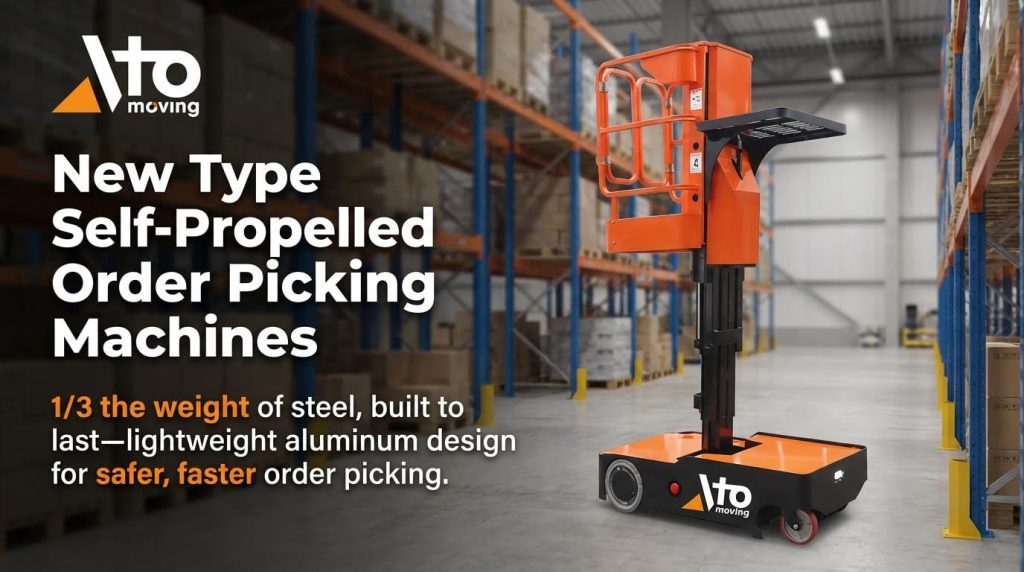
This section compares manual, semi electric order picker, and fully electric machines on throughput, fatigue, energy, maintenance, and safety so you can match the right technology to your duty cycle and risk profile.
| Technology Type | Power For Travel | Power For Lift | Typical Use Case | Operational Impact |
|---|---|---|---|---|
| Manual order picker (cart + ladder / scissor) | Human | Human | Very low-volume, short shifts | Lowest cost, lowest throughput, highest physical strain |
| Semi-electric order picker | Human | Electric (hydraulic or chain) | Medium-volume, low–mid rack levels | Good balance of cost, ergonomics, and productivity |
| Fully electric order picker | Electric drive | Electric | High-volume, multi-shift, long travel | Highest throughput and ergonomics, highest capital cost |
💡 Field Engineer’s Note: When comparing these three, always start from your real pick rate and walking distance per shift; over-specifying to fully electric in a light-duty zone often adds cost without measurable payback.
Throughput, Duty Cycle, And Operator Fatigue
Throughput and fatigue scale directly with how much lifting and pushing the machine removes from the human body, so semi electric order picker units sit between manual and full electric in both speed and strain.
| Technology | Typical Picks / Hour | Vertical Lift Effort | Horizontal Travel Effort | Best Duty Cycle Match | Operational Impact |
|---|---|---|---|---|---|
| Manual | Low (often <80) | 100% human | 100% human | Occasional picking, <1 shift/day | High fatigue, strong dependence on operator fitness |
| Semi-electric order picker | Medium (≈100–150 picks/h) throughput data | Powered lift removes most strain lift system info | Human push / pull | <50 full-height lifts/day, 1–2 light shifts duty cycle | Balanced fatigue; main load is walking and pushing |
| Fully electric | High (>150, often 200+) | Powered | Powered | Continuous multi-shift, long travel | Lowest fatigue, highest sustainable pick rate |
- Manual systems: All motion is human-powered – cheap to buy, expensive in labor and injuries over time.
- Semi-electric order picker: Electric lift with manual travel – cuts shoulder/back strain from lifting while keeping CAPEX low.
- Fully electric units: Electric lift and drive – lets one operator work long high-intensity shifts with minimal fatigue.
How to judge if semi-electric is enough for your duty cycle
If your operators stay under about 50 full-height lifts per day and 100–150 picks per hour, semi-electric usually keeps fatigue within acceptable limits and avoids the cost of full electric.
💡 Field Engineer’s Note: Watch push forces on semi-electric units once loads exceed roughly 250–300 kg; even with powered lift, long 80–100 m aisles can quietly drive up fatigue and soft-tissue injuries.
Energy Use, Batteries, And Maintenance Costs
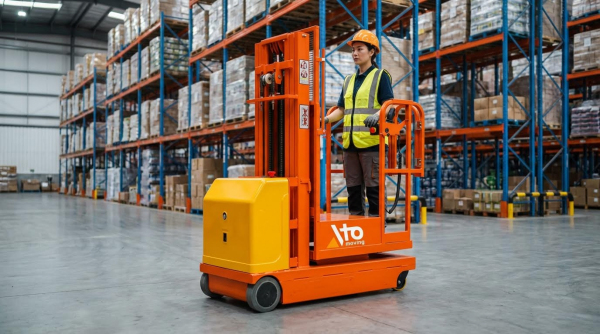
Energy and maintenance costs rise as you move from manual to semi electric order picker to full electric, but cost per pick usually drops because powered units complete more work per kWh and per service hour.
| Technology | Energy Use | Battery / Power Source | Typical Battery Life | Maintenance Focus | Cost Impact |
|---|---|---|---|---|---|
| Manual | No electrical energy | None | Not applicable | Wheels, brakes, ladders, casters | Very low direct cost, high hidden labor cost |
| Semi-electric order picker | ≈8–12 kWh per 8 h shift (lift only) energy data | Small lead-acid or Li-ion pack sized for lifting battery info | Lead-acid ≈750 cycles; Li-ion ≈2,500 cycles cycle life | Hydraulics, lift motor, safety devices, weekly checks, 200–250 h intervals maintenance intervals | Electricity ≈$1–$3/day; annual maintenance ≈10–15% of asset value |
| Fully electric | ≈3× semi-electric per 100 lift+travel cycles comparative energy | Larger traction + lift battery | Similar chemistry, higher daily throughput | Hydraulics, traction system, drive gearbox, steering electronics | Higher service cost but lowest cost per pallet in heavy use |
- Lead-acid on semi-electric: Sensitive to heat with ≈15–20% capacity loss in hot climates – plan for derating in non‑air‑conditioned warehouses. temperature effect
- Li-ion on semi-electric: Higher upfront cost – pays back in longer life (up to ≈2,500 cycles) and faster charging. Li-ion life
- Service intervals: Semi-electric units usually run 200–250 h between planned services – simpler than fully electric machines with complex traction systems. service guidance
Rule-of-thumb: when does energy cost matter?
In most small and medium warehouses, electricity for a semi-electric order picker is under 5% of total ownership cost. Once you operate multiple full-electric units on multi-shift patterns, energy and battery replacement become major cost drivers.
💡 Field Engineer’s Note: In hot regions, I often specify Li-ion on semi-electric units by default; the extra purchase price is usually offset by avoiding premature lead-acid failure and mid-shift voltage sag.
Safety, Stability, And Standards Compliance
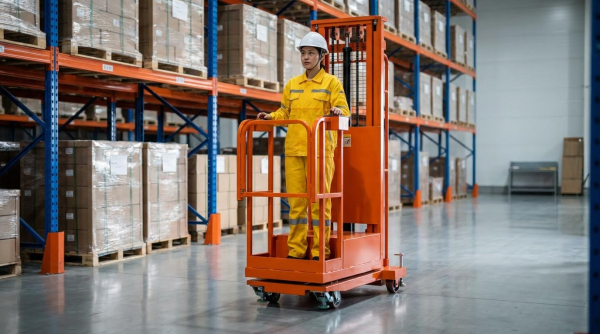
Safety and stability improve significantly as you move from ladders and manual platforms to semi electric order picker and then to fully electric, provided you respect rated capacity, fall protection, and speed limits in narrow aisles.
| Aspect | Manual | Semi-electric order picker | Fully electric order picker | Operational Impact |
|---|---|---|---|---|
| Fall protection | Often none; ladders and steps | Guardrails, interlocked gates, non-slip platforms safety features | Similar, often with more automation | Huge reduction in fall risk versus ladders |
| Load capacity and stability | Limited by ladder/platform; high misuse risk | Rated for several hundred kg; must stay within capacity capacity guidance | Higher capacities with electronic stability aids | Overloading at height is primary tip-over risk |
| Narrow aisle behavior | Manual carts; low height, low kinetic energy | Requires careful tracking; aisles ≈1.5–2.1 m wide aisle data | Often includes automatic speed reduction, scanners | Better control systems reduce rack strikes and tip-over risk |
| Travel and lift speed control | Human-paced | Powered lift with speed appropriate for low–mid heights | Advanced derating at height; speed capped ≈1.1 m/s above 0.9 m platform height speed limits | Prevents instability during elevated travel |
- Guardrails and gates: Platforms should have full-height guardrails, toe boards, and self-closing interlocked gates so the truck cannot elevate with an open gate – this is a must for semi-electric and full electric units. fall prevention
- Fall arrest: Anchor points and harnesses are required at height, with lanyard length limiting free fall to ≤1.2 m – this applies regardless of whether the unit is semi-electric or fully electric. Matching Semi-Electric Pickers To Your Operation
Matching a semi electric order picker to your site means checking aisle width, rack height, load pattern, and shift intensity so the unit’s medium throughput and powered lift actually reduce cost per order, not add bottlenecks.
Aisle Geometry, Rack Heights, And Layout Constraints
Aisle and rack geometry decide if a warehouse order picker will move freely, reach safely, and genuinely increase storage density versus manual ladders or bulkier trucks.
Semi-electric order pickers are built for narrow aisles around 1,500–2,100 mm wide (5–7 ft), which can increase storage density by about 30–40% compared with wider forklift aisles. They also need roughly 0.9–1.5 m (3–5 ft) of clear space above the maximum working height for safe maneuvering and to avoid striking sprinklers or roof steel. Typical aisle compatibility data shows these narrow-aisle advantages.
Design Aspect Typical Range / Requirement What To Measure On Site Operational Impact Aisle width 1,500–2,100 mm Clear rack-to-rack distance at floor level Determines if the picker can track without rack strikes and still allow passing or turning. Turning / transfer zones 2,500–3,000 mm squares Space at aisle ends and cross-aisles Needed for turning into aisles and staging pallets or totes. Rack top beam height (semi-electric) Up to approx. 3,000–4,500 mm for efficient work Highest pick level plus hand reach Ensures the platform can reach first 2–3 beam levels comfortably. Overhead clearance 900–1,500 mm above max platform height Floor to sprinkler/roof or mezzanine underside Prevents impacts with sprinklers, lighting, or bracing when elevated. Floor flatness and slope Preferably ≤2% gradient Check for ramps, dock slopes, and joints Manual pushing effort and stability increase sharply on steeper or uneven floors. Obstructions in aisle Posts, dock doors, conveyors Location and projection into aisle May require local widening or guard rails to prevent impacts. Order picking machines typically work best on low to mid-level racking where lift heights cover the first 2–3 beam levels, often up to about 3 m platform height, rather than high-bay storage where specialized high-level order pickers go to 6.5–12 m. Semi-electric lift systems are optimized for these low–mid rack levels, while high-level machines in narrow aisles often need tighter speed control and stability systems above 6.5 m. OSHA guidance notes that working heights can reach 6.5–12 m on high-level order pickers, with travel speed derated at height for stability.
- Check aisle width vs. spec: Compare your narrowest aisle to the picker’s minimum requirement – prevents expensive rack damage and jammed equipment.
- Verify overhead clearance: Measure from floor to lowest obstruction – avoids collisions with sprinklers, lighting, and bracing when the platform is raised.
- Map “no-go” zones: Mark areas with beams, ducts, or low mezzanines – keeps semi electric order picker routes safe and predictable.
- Align beam heights to lift stroke: Set key pick levels within comfortable reach from the platform – cuts pick time and awkward stretching.
How to quickly survey your aisles for a semi-electric order picker
Walk the intended routes with a tape measure and a simple sketch. Record the tightest aisle width, lowest overhead point, steepest slope, and any pinch points such as columns or dock doors. These four numbers usually decide if a semi-electric unit will run smoothly or fight your layout.
💡 Field Engineer’s Note: On floors with more than about 2% slope, operators push much harder and semi-electric units can “run away” when descending. In those cases, either re-route to flatter paths or step up to powered travel, especially if loads exceed a few hundred kilograms.
Load Profiles, Shift Patterns, And TCO Criteria
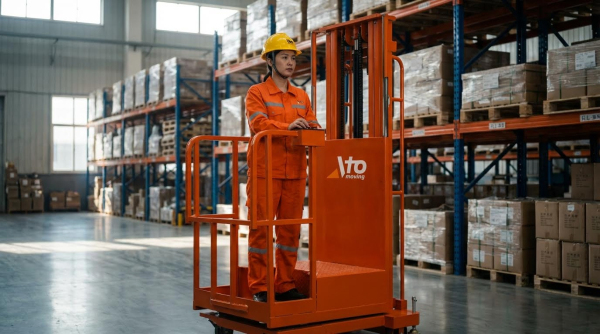
Load mix, daily lift cycles, and shift length determine whether a semi electric order picker delivers the lowest total cost of ownership compared with manual carts or fully electric machines.
Semi-electric order pickers are designed for medium-throughput zones, typically handling about 100–150 picks per hour depending on layout and order mix. They work best where daily cycles stay below roughly 50 full-height lifts and horizontal travel distances are modest. Semi-electric units are recommended for one-shift or light two-shift operations with moderate duty cycles. Powered lift removes most vertical lifting strain, but operators still push the truck, so fatigue remains higher than with fully electric travel.
Operational Factor Typical Semi-Electric Range Manual Equipment Fully Electric Order Picker Best-Fit Scenario Load per pick Up to a few hundred kg (cartons, totes, partial pallets) Best under ~50–80 kg Handles heavier pallets and full-case volume Semi-electric suits carton/tote picking at low–mid levels. Daily full-height lifts < 50 per unit Very limited; operator fatigue high Hundreds of cycles per shift If 10–50 vertical cycles/day, semi-electric is usually the sweet spot. Picks per hour ~100–150 Lower, especially at height Highest, especially over long runs Medium-velocity SKUs in defined zones. Shifts per day 1 to light 2-shift 1 short shift 1–3 heavy shifts Semi-electric for standard warehouse hours without round-the-clock pressure. Energy use ~8–12 kWh per 8 h shift 0 kWh (all human effort) About 3× semi-electric per 100 lift cycles Good where electricity is available but you want low running cost. Battery life Lead-acid ~750 cycles; Li-ion ~2,500 cycles Not applicable Similar or larger packs; more complex Semi-electric minimizes battery size while still cutting manual strain. Annual maintenance ~10–15% of unit value Low but labor fatigue costs are high Higher due to traction and drive systems Semi-electric balances service cost with ergonomic gains. Energy cost for a semi electric order picker is modest because power is only used for lifting; typical consumption is around 8–12 kWh per eight-hour shift, often translating to roughly $1–$3 per day at common tariffs. This is about one-third of the energy per 100 cycles used by fully electric trucks that power both drive and lift. Routine inspections are recommended weekly, with deeper maintenance about every 200–250 operating hours, and annual maintenance costs typically sit around 10–15% of the equipment value. Key tasks include battery checks, wheel and brake inspection, lift chain lubrication, and tightening electrical connections.
- Use semi-electric for medium loads: Cartons and totes up to a few hundred kg – you avoid overspecifying to a full electric truck.
- Target medium duty cycles: Up to about 50 full-height lifts per day – keeps batteries and hydraulics well within design limits.
- Limit travel distances: Use them in defined zones, not for cross-warehouse shuttling – reduces push effort and operator fatigue.
- Choose battery type by shift pattern: Lead-acid for single shift, lithium for heavier or opportunity-charged use – optimizes lifecycle cost.
Simple TCO checklist for a semi electric order picker
When comparing manual, semi-electric, and fully electric options, list: equipment price, expected life in years, annual maintenance (10–15% for semi-electric), energy cost per shift, and labor cost per pick. Semi-electric often wins where labor savings from powered lift outweigh the extra capital cost, but full drive power is not yet necessary.
💡 Field Engineer’s Note: If your operators are already close to 150 picks per hour and walking long distances, fatigue and micro-delays will quietly erode your savings. At that point, either zone your SKUs tighter around each picker or start piloting one fully electric unit in the busiest lane to see if the extra drive power pays back.
When Semi-Electric Order Pickers Make The Most Sense
Semi electric order picker units make the most sense in medium-throughput, narrow-aisle operations that need powered lifting, but cannot justify the cost and complexity of fully electric trucks.
They shine where vertical work is the bottleneck, horizontal distances are modest, and shifts are short to medium instead of heavy multi-shift duty.
Operational Profiles Where Semi-Electric Is The Best Fit
Semi-electric order pickers fit operations with moderate picks per hour, limited lift cycles, and short to medium travel distances.
- Medium pick rates (≈100–150 picks/hour): Throughput is higher than ladders or manual platforms but below full-electric order pickers, ideal for mixed-height, medium-volume zones. Balances speed and investment. Performance data
- Up to ~50 full-height lifts per day: Designed for intermittent lifting, not continuous high-bay duty cycles. Reduces capital cost without over-specifying equipment. Duty cycle reference
- One-shift or light two-shift use: Best in operations running a single 8-hour shift or a light overlap, rather than 24/7. Matches battery capacity and maintenance intervals. Shift suitability
- Moderate horizontal travel distances: Operators still push the truck, so long cross-warehouse runs are not ideal. Best in compact or zone-based layouts. Usage patterns
- Loads of a few hundred kilograms: Typical capacity covers cartons, totes, and partial pallets rather than full heavy pallets. Right-sized for case picking and e‑commerce. Capacity ranges
💡 Field Engineer’s Note: If your operators routinely complain about shoulder or back strain from lifting, but not from walking, a semi electric order picker is usually the sweet spot—powered lift removes the worst ergonomics without adding drive-system complexity.
Facility Types And Layouts That Benefit Most
Semi-electric order pickers are ideal in narrow-aisle, low–mid level racking where space is tight and working heights stay below high-bay levels.
Facility / Zone Type Typical Aisle Width Typical Rack Height Why Semi-Electric Fits Retail back rooms ≈1.5–2.1 m (5–7 ft) Up to 3–4 m Short runs, many light picks; powered lift beats ladders and kick-stools for safety and speed. Narrow-aisle data Mezzanines & pick towers ≈1.5–2.1 m Low–mid beams (2–3 levels) Weight limits and tight geometry favor light, compact units over heavy full-electric trucks. Slow–medium velocity SKU zones ≈1.5–2.1 m First 2–3 beam levels Medium throughput justifies powered lift, but not full-electric investment or high-bay reach. Spare parts & MRO stores ≈1.5–2.4 m 2–3 m working height Intermittent picking, many small items; semi-electric avoids over-capitalizing low-use areas. These environments also benefit from the low overall truck mass and compact chassis, which reduce floor loading on mezzanines and allow tighter turning in constrained aisles.
Clearance and safety allowance at height
Semi-electric order pickers typically need about 0.9–1.5 m (3–5 ft) of free space above maximum platform height for safe maneuvering and to avoid striking sprinklers or roof steel. Vertical clearance guidance
Energy, Cost, And Maintenance Scenarios That Favor Semi-Electric
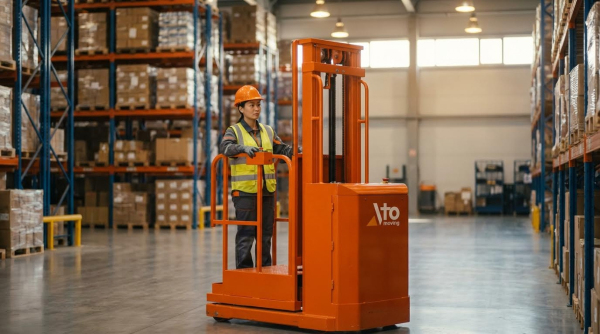
Semi-electric order pickers are most attractive where energy use, maintenance complexity, and capital budget all need to stay low while improving ergonomics over manual methods.
Aspect Semi-Electric Order Picker Operational Impact Energy per 8 h shift ≈8–12 kWh (≈$1–$3/day) Low running cost; about one-third of a full-electric picker’s lift energy per 100 cycles. Energy figures Battery type & life Lead-acid ≈750 cycles; Li-ion ≈2,500 cycles Good for several years in one-shift use; Li-ion suits higher utilization or fast charging. Battery life Maintenance focus Hydraulics, lift motor, safety devices Simpler than full-electric (no traction gearbox), easier to support for smaller sites. Maintenance scope Service interval Every 200–250 operating hours Fits typical weekly checks and quarterly services in low–medium use sites. Service interval Annual maintenance cost ≈10–15% of equipment value Predictable budget; lower than high-spec fully electric fleets in most cases. Cost estimate - Sites with limited electrical infrastructure: Small chargers and low kWh draw reduce strain on existing power. Often avoids costly electrical upgrades.
- Budgets that can’t stretch to full-electric fleets: Semi-electric delivers a large ergonomic gain over manual with a smaller capital outlay. Higher ROI in low–medium volume areas.
- Teams without in-house technicians: Fewer complex drive components mean simpler troubleshooting and less downtime risk. Practical for smaller warehouses.
💡 Field Engineer’s Note: In hot climates, derate lead-acid battery capacity by roughly 15–20% when you size your fleet; if your semi-electric units run close to the limit, lithium-ion often pays back quickly in avoided mid-shift charging and lost picks.
Ergonomics, Safety, And Compliance Sweet Spots
Semi-electric order pickers are ideal when you must move away from ladders and manual lifting to meet safety expectations, but you don’t yet need high-level, high-speed trucks.
- Replacing ladders and step-stools: Guardrailed platforms, interlocked gates, and non-slip floors drastically cut fall risk compared with free-climbing. Helps align with modern safety best practice. Guardrail requirements
- Moderate working heights: Typical semi-electric platforms reach the first 2–3 beam levels (around 3–4 m), avoiding the complexity of very high-level order pickers. Covers most case-pick work in many warehouses. Lift performance
- Improved ergonomics vs manual: Powered lift removes the heaviest part of the job—raising operators and loads—while still keeping equipment simple. Reduces fatigue and injury risk at modest cost. Ergonomic data
- Compliance with fall protection practices: Where harness anchor points, self-closing gates, and toe boards are required, semi-electric platforms integrate these more easily than improvised solutions. Supports adherence to safety standards. Fall protection rules
Quick checklist: When semi-electric is likely your best choice
- Step 1: Confirm aisles are around 1.5–2.1 m wide – If yes, you can exploit narrow-aisle density with compact semi-electric units.
- Step 2: Count daily full-height lifts – If below ≈50 per picker, semi-electric duty cycle is usually sufficient.
- Step 3: Measure typical working height – If most picks are within the first 2–3 beam levels (≈3–4 m), you don’t need high-level order pickers.
- Step 4: Map average travel distance per order – If runs are short and contained in one zone, manual travel will not be the bottleneck.
- Step 5: Review safety incidents and ergonomic complaints – If they cluster around lifting and climbing, powered lift will yield immediate gains.
💡 Field Engineer’s Note: When you evaluate a semi electric order picker on site, watch operators at the end of the shift; if they still move the truck easily and don’t “ride” it to avoid walking, you’ve likely matched the technology to the real fatigue profile correctly.
When Semi-Electric Order Pickers Make The Most Sense
Semi-electric order pickers sit in a clear engineering sweet spot. Powered lift removes the highest-risk task—raising people and loads—while a simple manual chassis keeps weight, energy use, and maintenance low. Geometry, capacity, and duty-cycle limits work together to keep the machine inherently stable. Narrow aisles, controlled lift speeds, and guardrailed platforms reduce fall and tip-over risk as long as you respect rated load and aisle-width rules.
For operations leaders, the key is to design the job around these limits. Keep working heights in the first two or three rack levels. Zone SKUs so horizontal travel stays short. Cap daily full-height lifts near 50 per unit and monitor push forces as loads approach a few hundred kilograms. Choose lead-acid batteries for single-shift sites and lithium where shifts are longer or ambient temperatures are high.
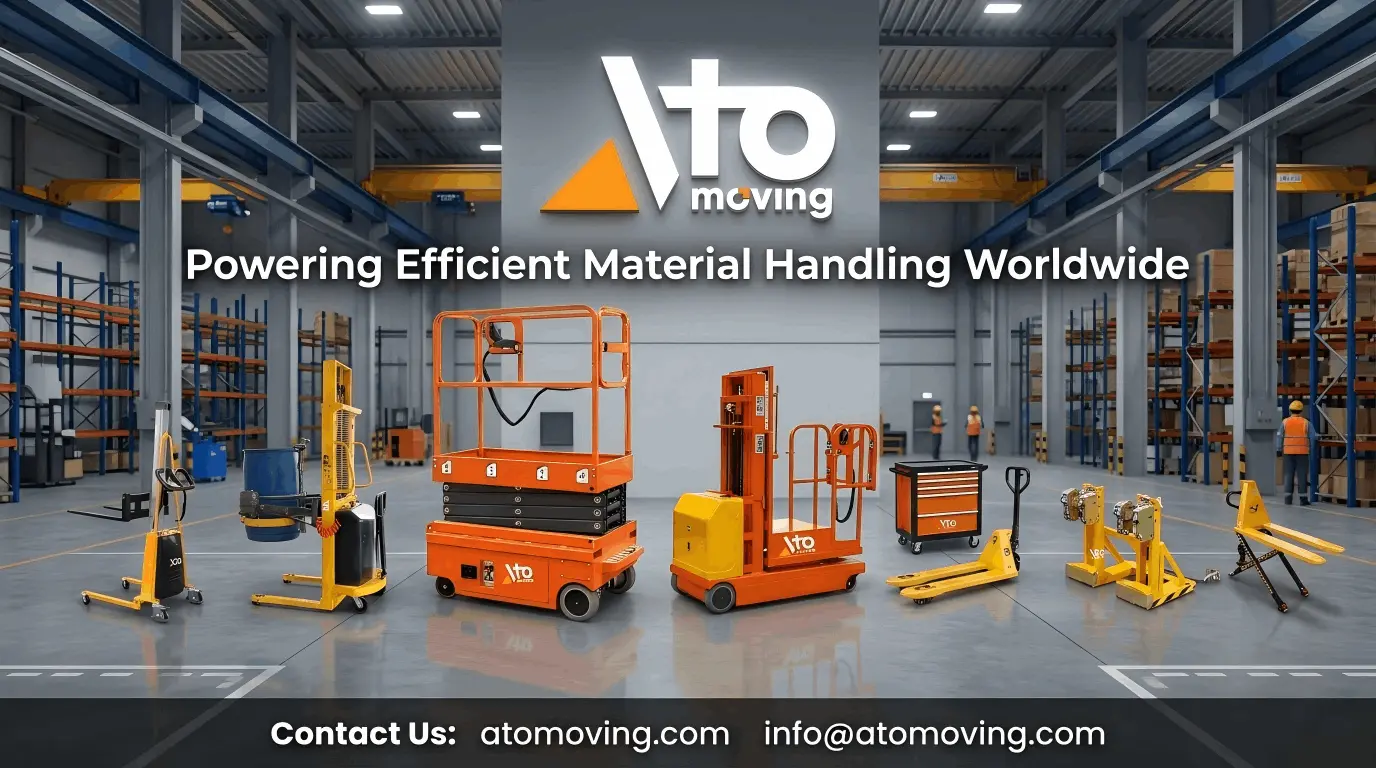
When you follow these rules, semi-electric units deliver low cost per pick, strong ergonomics, and easier compliance than ladders or improvised platforms. They will not replace high-level, high-throughput electric trucks, but they are often the best ROI step up from manual handling. Use Atomoving semi-electric order pickers where vertical work is your main bottleneck and travel distances stay modest, and they will form a safe, efficient backbone for medium-volume zones.
Please provide the `{reference}` array so I can parse and filter the data to generate the FAQ section.