Knowing how to lift a heavy pallet safely starts with choosing the right equipment and understanding its limits. This guide explains practical methods, key specs, and ergonomic rules that reduce injuries and damage while keeping throughput high.
We will compare pallet jacks and forklifts, show how load centers and fork placement affect stability, and link equipment choice to aisle width and floor conditions. Use it as a field-ready checklist to tighten your warehouse’s material handling safety and efficiency.
Core Principles Of Safe Heavy Pallet Lifting
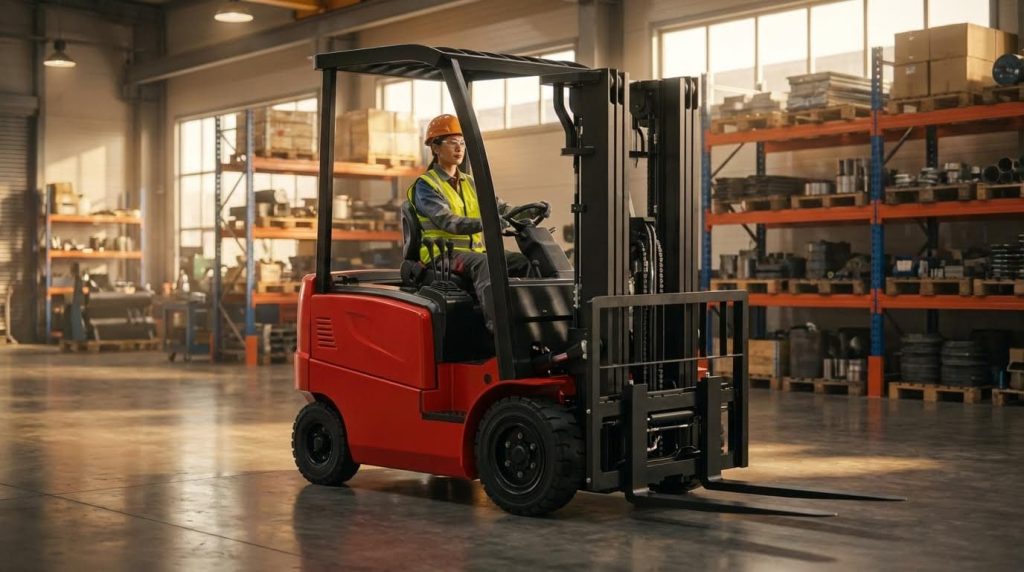
Core principles for safe heavy pallet lifting focus on keeping the load stable, the pallet sound, and the human body within safe force and posture limits. Understanding these basics is the foundation of knowing how to lift a heavy pallet without damage or injury.
- Stability first: Keep the load compact, centered, and secured – prevents tipovers and falling product.
- Sound pallets only: Inspect for broken boards or stringers – avoids sudden collapse under heavy weight.
- Short lever arms: Keep the load close to the body or truck mast – reduces overturning moments.
- Respect limits: Stay within equipment ratings and human handling thresholds – controls structural and musculoskeletal risk.
💡 Field Engineer’s Note: In real warehouses, most “mystery” pallet incidents trace back to hidden pallet damage or unsecured shrink wrap. A 1,000 kg load is usually safe until one bottom board snaps or the top tier shifts mid‑turn.
Load stability, securing, and pallet condition
Load stability, securing, and pallet condition define whether a heavy pallet behaves like a solid block or a loose, collapsing stack. If you want to know how to lift a heavy pallet safely, you start by making the pallet and load act as one rigid, predictable unit.
- Check pallet integrity: Reject pallets with cracked deck boards, loose nails, or crushed blocks – these can fail suddenly under point loads from forks.
- Verify load compactness: Ensure boxes or bags are tightly stacked with minimal gaps – reduces internal shifting when accelerating or braking.
- Secure the load: Use wrap, straps, or bands on unstable or damaged loads – prevents shifting or product falling during transport as recommended for damaged or off‑center loads.
- Center the weight: Place the heaviest side toward the equipment and as low as possible – lowers the center of gravity and improves stability by keeping weight near the front wheels.
- Control load height: Avoid excessively tall, “chimney‑like” stacks – tall loads amplify sway and tipping during turns or mast tilt.
| Check Point | What To Look For | Risk If Ignored | Operational Impact |
|---|---|---|---|
| Pallet deck boards | Cracks, rot, missing or loose boards | Board snaps under fork, load drops | Potential 1,000+ kg collapse while lifting or stacking |
| Stringers/blocks | Crushed, split, or skewed blocks | Pallet leans or collapses on one side | Forklift mast side‑load, risk of tipover |
| Load wrapping/banding | Loose film, broken or missing bands | Boxes slide off during travel or braking | Falling product in aisles and at dock edges |
| Load centering on forks | Off‑center or overhanging load | Unequal fork loading, potential tipover | Requires slower travel and wider turning arcs |
How to quickly assess pallet condition in under 10 seconds
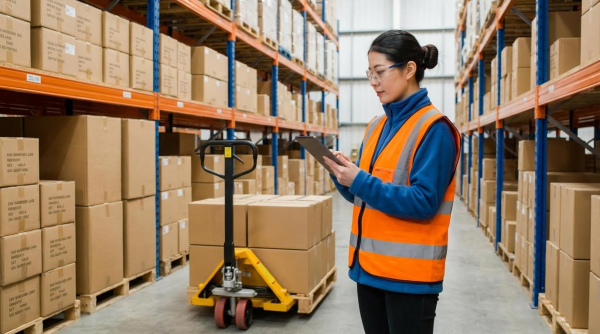
Walk around the pallet once. Look at all four corners for crushed blocks, then scan the top deck for broken boards. Finally, check the bottom tier of boxes for bulging or leaning before inserting forks.
Once the pallet and load are sound, stability depends on how the equipment supports the center of gravity. Forklift capacities assume a rated load center, typically 600 mm from the fork face (converted from 24 inches) as used in standard ratings. If the load center moves further out due to long pallets or overhang, the effective capacity drops and the risk of tipover increases.
- Keep the load center close: Avoid long overhangs beyond the fork tips – reduces overturning moment on the mast.
- Fully support the load: Place forks completely under the pallet and cover at least two‑thirds of its length – prevents the pallet from snapping or tipping forward as recommended for fork placement.
- Adjust fork spacing: Slide forks out to the widest practical setting – spreads the load and improves lateral stability for even weight distribution.
Ergonomic limits and manual handling thresholds
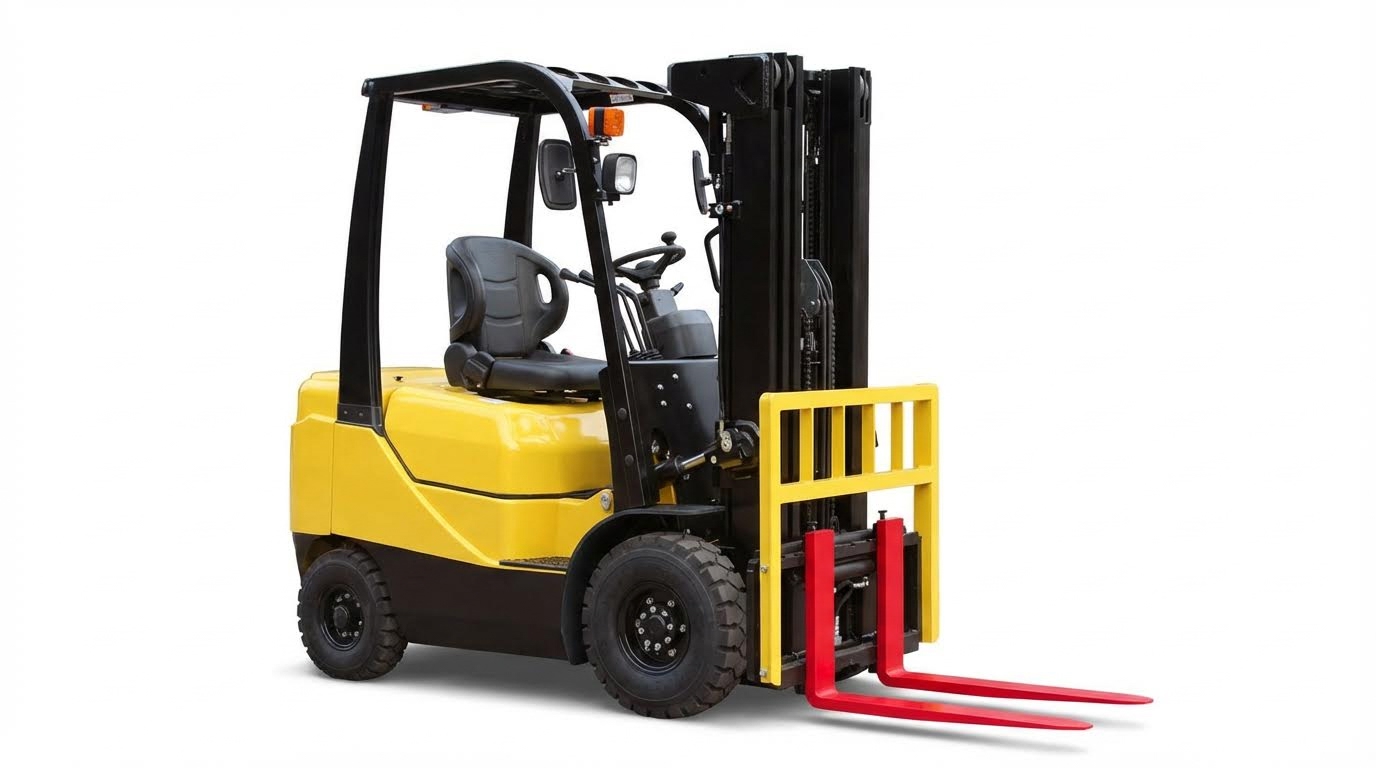
Ergonomic limits and manual handling thresholds define when you must switch from muscle power to mechanical equipment. In practical terms, they tell you when to stop lifting and start using a manual pallet jack or forklift for a heavy pallet.
Manual handling should only cover light, infrequent lifts close to the body. For heavier, repetitive work, you must control load weight, lift height, and reach distance to protect backs and shoulders.
- Lift close to the body: Keep the load as close as possible to the torso – minimizes bending moments on the spine by reducing reaching distance.
- Control pallet stack height: Limit pallet height to around 1,200 mm where possible – reduces shoulder‑height and overhead lifting as suggested for minimizing stressful lifting.
- Raise low work: Use height‑adjustable equipment or stack empty pallets to bring work off the floor – reduces repeated bending to the lowest pallet level which is a known ergonomic hazard.
- Team lifting thresholds: For boxes around or above 20 kg, especially with high daily frequency, use two‑person lifts – splits load and reduces individual strain as recommended for heavy boxes.
- Job rotation: Alternate tasks halfway through the shift – prevents one‑sided, repetitive loading of the same muscle groups to reduce back and arm strain.
- Use anti‑fatigue mats: Place mats where workers palletize in one spot – reduces leg and trunk fatigue during prolonged standing work.
| Task Type | Typical Load / Condition | Recommended Approach | Operational Impact |
|---|---|---|---|
| Building pallets from floor level | Frequent bending to 0–200 mm height | Raise pallet with lift table or stacked empties | Less back bending, higher sustainable pick rate |
| Lifting individual boxes | Up to and above 20 kg, repeated daily | Use two‑person lifts for heavier boxes | Reduces individual strain and injury absence |
| Reaching across pallet | Loads placed deep on pallet | Reduce pallet depth or allow access from both sides | Shorter reach, better posture, faster cycles |
| Standing at fixed palletizing station | Full shift on hard concrete | Install workplace mats and rotate jobs | Lower fatigue, fewer musculoskeletal complaints |
When to switch from manual lifting to equipment for heavy pallets
If a task involves frequent lifts above roughly 15–20 kg, repeated bending to floor level, or reaching far across a pallet, treat the pallet as “equipment‑only.” Use pallet jacks, lift tables, or forklifts instead of manual repositioning of the loaded pallet.
💡 Field Engineer’s Note: In cold stores and long shifts, operators fatigue faster and posture degrades. I recommend designing tasks so the heaviest manual lifts stay well below 15–20 kg and always within arm’s length, then letting powered equipment handle any full pallet movement.
Comparing Key Equipment For Heavy Pallet Lifting
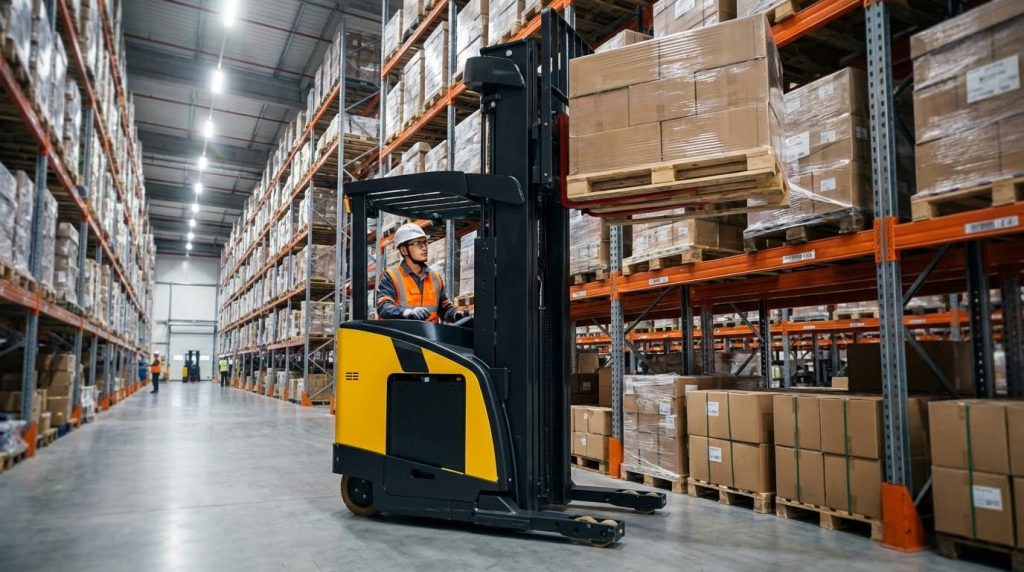
This section explains how to lift a heavy pallet safely by choosing between pallet jacks and forklifts, matching their capacity, lift height, and running costs to your warehouse reality.
When you plan how to lift a heavy pallet, you must match load weight, lift height, aisle width, and operator skill to the right equipment. The wrong choice drives injuries, product damage, and inflated total cost of ownership (TCO).
| Equipment Type | Typical Capacity | Typical Lift Height | Best For… | Operational Impact |
|---|---|---|---|---|
| Manual pallet jack | Up to about 3,500 kg (7,700 lbs) capacity range | Up to about 200 mm (8 in) lift height data | Short moves at floor level on smooth floors | Lowest cost, but no vertical stacking; bending risk if pallets stay at floor level. |
| Electric pallet jack | Similar to manual, around 2,000–3,500 kg | Typically up to 200 mm | Heavier loads and longer runs without manual pushing | Reduces push/pull strain, but still no real racking access. |
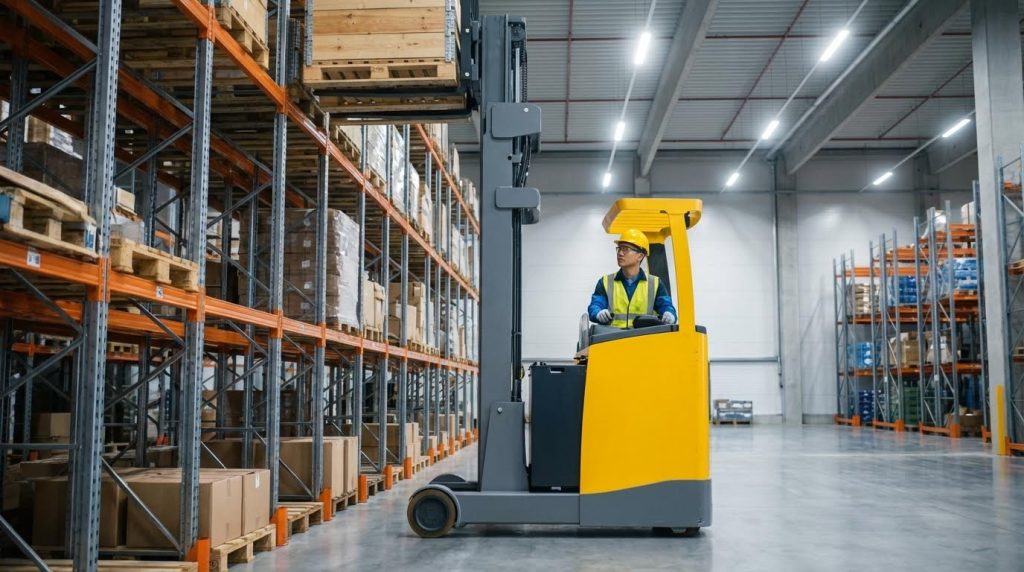
| Counterbalance forklift | About 1,500–22,000 kg (3,000–50,000+ lbs) depending on model capacity range | Over 6–10 m (20–35+ ft) lift height height data | Dock work, high racking, mixed indoor/outdoor | Handles heavy pallets and high bays; needs wider aisles and trained drivers. |
| Warehouse reach / narrow-aisle truck | Roughly 1,000–2,500 kg | Often 8–12 m | Very narrow aisles, high-density storage | Excellent space use, but higher purchase and maintenance cost. |
💡 Field Engineer’s Note: If you are routinely near the top capacity of a pallet jack, step up to powered or forklift solutions; operators will otherwise overload or “double stack” pallets to avoid trips, which quietly drives strain and tip risk.
Pallet jacks vs forklifts: capacity and lift height
Pallet jacks and forklifts both move pallets, but only forklifts safely lift heavy pallets to significant heights; that single fact usually decides your equipment choice.
- Capacity reality: Pallet jacks typically carry up to about 3,500 kg (7,700 lbs) per pallet capacity data – adequate for most standard 1,000–1,500 kg pallets.
- Forklift headroom: Forklifts commonly range from 1,500–22,000 kg (3,000–50,000+ lbs) capacity capacity range – covers everything from grocery pallets to heavy industrial loads.
- Lift height limit of jacks: Pallet jacks only raise pallets around 100–200 mm (up to 8 in) off the floor lift height – enough to travel, not to stack.
- Forklift vertical reach: Many forklifts reach over 6–10 m (20–35+ ft) height data – critical for racking above 2.5–3.0 m.
- Ergonomics at floor level: With pallet jacks, workers often bend to pallet height to pick or place boxes, which increases back risk ergonomic guidance – forklifts or lift tables can raise the working height.
From a “how to lift a heavy pallet” standpoint, use this rule: if you must lift above about 300–400 mm, or if pallet weights regularly exceed 1,500–2,000 kg, you are in forklift territory, not pallet jack territory.
When a pallet jack is enough for heavy pallets
A pallet jack can be acceptable for heavy pallets when: the load is within the rated capacity; travel is short and on smooth, level floors; all handling stays at ground level; and you have controls in place to avoid excessive manual pushing and pulling. Once operators start double-stacking pallets, pulling up slopes, or fighting flat-spotted wheels, you are beyond safe jack usage and should move to powered options.
Load center, fork placement, and mast control
On forklifts, safe heavy pallet lifting depends on respecting load center ratings, getting forks fully under the pallet, and controlling mast tilt to keep the load stable.
- Understand load center: Forklifts are rated at a specific load center, typically 600 mm (24 in) from the fork face load center data – longer pallets or overhang effectively reduce safe capacity.
- Heaviest side toward mast: Place the heaviest part of the load nearest the front wheels/mast distribution guidance – this keeps the center of gravity inside the stability triangle.
- Full fork engagement: Insert forks fully under the pallet, covering at least two‑thirds of the load length fork placement – prevents pallet breakage and tipping.
- Even fork spacing: Adjust forks so they are as wide as possible while still fully under the pallet placement guidance – spreads weight and reduces point loading.
- Secure the load: Wrap or band damaged or loose loads before lifting securing loads – prevents cartons from sliding off at height.
- Mast tilt discipline: Tilt back only enough to stabilize during stacking, and never travel with the mast tilted forward mast rules – forward tilt shifts the center of gravity outward and invites tipovers.
| Control Point | Good Practice | Risk If Ignored | Operational Impact |
|---|---|---|---|
| Load center | Keep pallet COG at or inside rated load center | Reduced effective capacity, higher tip risk | Allows safe use of full nameplate capacity. |
| Fork engagement | Forks ≥ 2/3 of load length under pallet | Pallet snapping, dropped loads | Stabler heavy pallets, less product damage. |
| Fork spacing | Forks as wide as pallet allows | Off-center loading, mast twisting | Smoother lifting and stacking at height. |
| Mast tilt | Slight back tilt when traveling; level when placing | Tipovers, falling pallets | Predictable, repeatable stacking quality. |
💡 Field Engineer’s Note: In real warehouses, many “mystery” pallet breaks come from short-forking long pallets to save a few seconds; enforce a simple rule—if you cannot see fork tips flush or beyond the pallet, you do not lift.
How this links back to “how to lift a heavy pallet”
For any heavy pallet, first confirm the forklift’s rated capacity at the correct load center, then set fork width, drive fully under the pallet, square up to the load, apply minimal back tilt, and only then lift. Skipping any of these steps turns a routine lift into a high-consequence event.
Power sources, TCO, and maintenance strategies
Choosing between pallet jacks and forklifts for heavy pallets also means balancing power source, purchase price, and maintenance cost over the equipment’s full life.
- Purchase cost: Manual pallet jacks cost roughly USD 250–1,000; electric jacks around USD 2,000–5,000; forklifts start near USD 15,000 and can exceed USD 35,000 cost data – big capital jump when you move to forklifts.
- Operating costs: Forklifts add fuel or electricity, servicing, and insurance on top of purchase price, and these ongoing costs are higher than for pallet jacks TCO factors – important when budgeting for multiple shifts.
- Maintenance load: Pallet jacks have few moving parts and need minimal maintenance, while forklifts require regular checks on hydraulics, motors, brakes, and safety systems maintenance comparison – plan technician time and parts.
- Wheel and floor condition: Flat-spotted solid rubber wheels and rough floors increase push forces and destabilize loads on both pallet jacks and forklifts wheel and floor issues – budget for floor repairs and wheel replacement.
- Training and compliance: Pallet jacks need minimal training, especially manual types, while forklifts require formal training and certification under safety rules training requirement – factor in training time and record-keeping.
- Use-case fit: Pallet jacks are ideal for short, ground-level moves in tight spaces, while forklifts are necessary for heavy lifting, vertical stacking, and longer travel distances use cases – choosing the wrong tool inflates time and injury risk.
| Equipment | Upfront Cost (approx.) | Maintenance Intensity | Best TCO Scenario | ||||||||||||||||||||||||||||||||||||||
|---|---|---|---|---|---|---|---|---|---|---|---|---|---|---|---|---|---|---|---|---|---|---|---|---|---|---|---|---|---|---|---|---|---|---|---|---|---|---|---|---|---|
| Manual pallet jack | USD 250–1,000 | Very low | Light to moderate pallet volumes, short distances, single-shift work. | ||||||||||||||||||||||||||||||||||||||
Selecting Equipment For Your Warehouse Application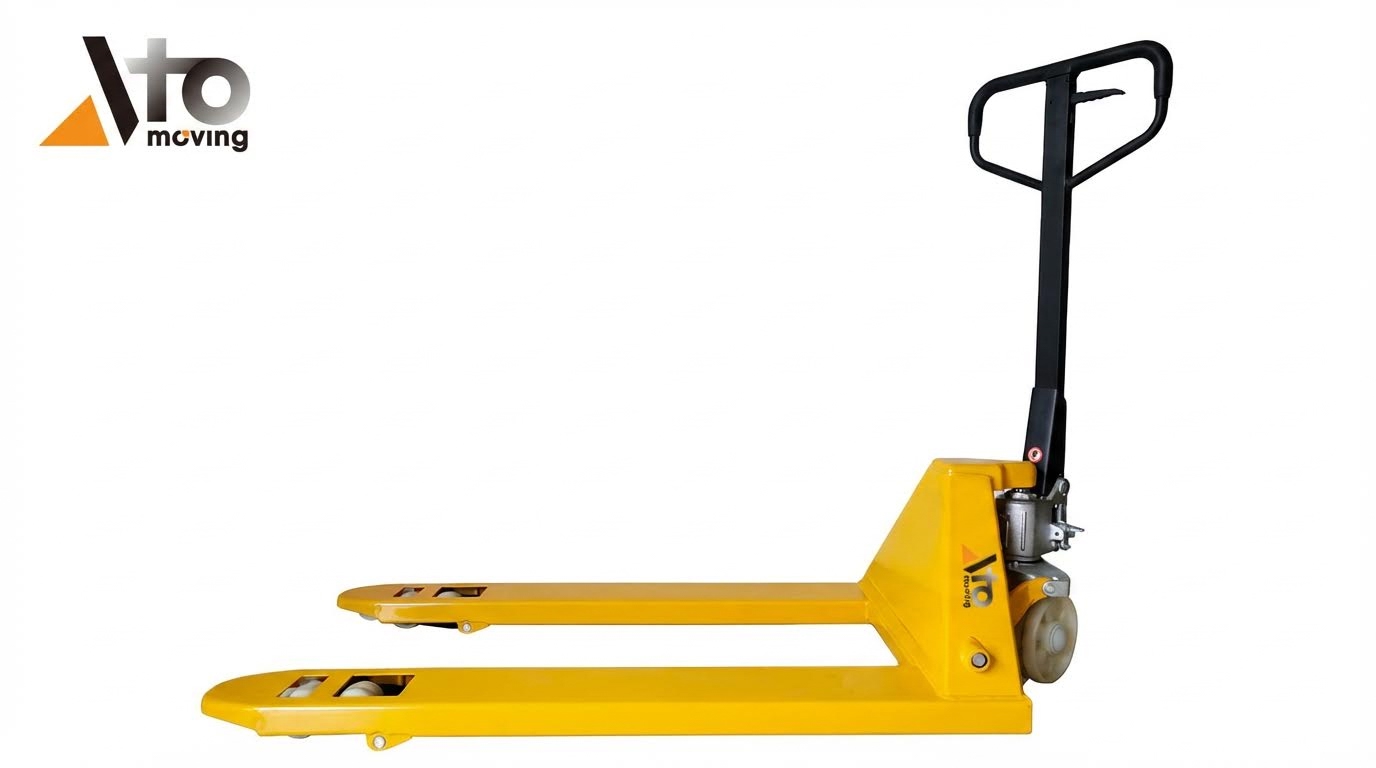 Selecting equipment for your warehouse application means matching pallet jacks or forklifts to aisle width, travel distance, floor quality, and ergonomic limits so staff can focus on how to lift a heavy pallet safely and efficiently. The right choice reduces pushing forces, bending, and reach, while still meeting your throughput targets and storage heights.
Matching equipment to aisle width and travel distanceMatching equipment to aisle width and travel distance ensures you can move heavy pallets without constant three‑point turns, excessive pushing forces, or unsafe speed, which directly affects how to lift a heavy pallet with control instead of strain. Think in terms of geometry first (turning radius and pallet size), then in terms of daily distance and speed requirements.
Pallet jacks typically move pallets across short distances on smooth surfaces and excel in tight spaces due to their compact size and tight turning radius. They are optimal for ground-level movement within confined spaces such as retail stockrooms and small warehouses. Forklifts, by contrast, require wider aisles but handle longer distances and higher lift heights efficiently. They are essential for heavy lifting, vertical stacking, and operations requiring movement over longer distances or higher storage racks.
How to quickly test aisle fit before buying equipmentMark the pallet footprint (typically 1,000–1,200 mm long) and the equipment length on the floor using tape. Simulate a 90° turn inside your narrowest aisle. If you need more than one back‑and‑forth correction with a “virtual load,” a real loaded pallet will be worse, and you should either widen the aisle or choose more compact equipment. Ergonomic design, job rotation, and floor conditions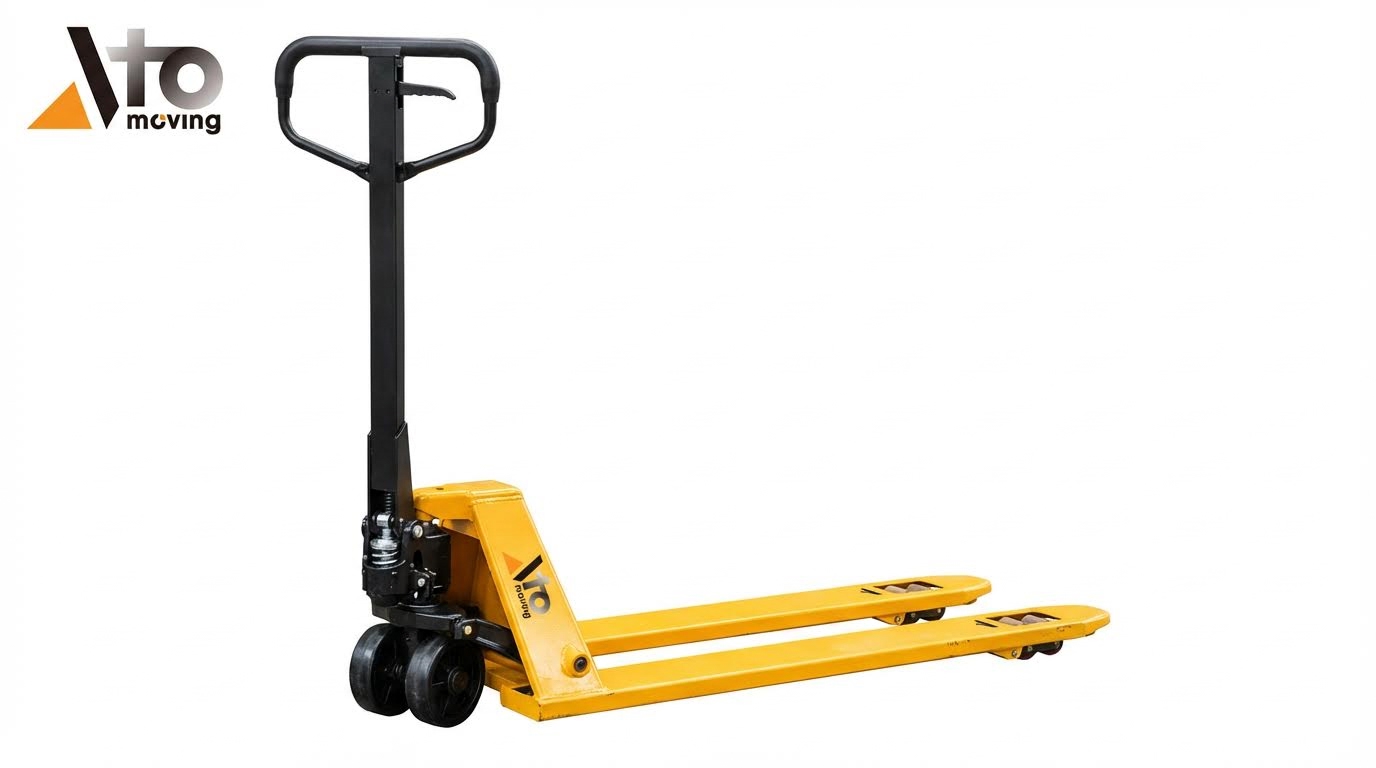 Ergonomic design, job rotation, and good floor conditions reduce bending, pushing forces, and vibration so operators can focus on how to lift a heavy pallet using equipment instead of their backs. The goal is to keep loads near waist height, close to the body, and on smooth rolling paths while varying tasks across the shift.
Reducing pallet stack height to 1.20 m helps minimize stressful lifting above shoulder height, though this may require more storage locations. Lifting and carrying close to the body with minimal reaching distance further reduces physical strain. Where employees repeatedly bend to reach the lowest pallet level, raising the working height with forklifts, height‑adjustable equipment, or stacked empty pallets is recommended. Such solutions can elevate loads by up to about 250 mm compared to standard pallet jacks that raise only 200 mm or less.
Link between ergonomics and equipment choice when planning how to lift a heavy palletIf your process still requires frequent manual lifts from floor level or above shoulder height even after introducing pallet jacks or forklifts, you have not fully solved how to lift a heavy pallet safely. Consider adding lift tables, adjustable pallet stands, or changing rack beam heights so most handling happens between roughly knee and chest level. Pair this with job rotation and good flooring to cut injury risk and keep throughput stable across the shift. “” Final Thoughts On Safe Heavy Pallet HandlingSafe heavy pallet handling comes from treating the pallet, load, equipment, and human body as one system. You stabilize the load, respect equipment ratings, and design tasks around realistic ergonomic limits. When you do this, tipovers, pallet failures, and strain injuries drop sharply, and throughput becomes more consistent. Use pallet jacks for short, ground-level moves on good floors and within clear weight limits. Shift to forklifts when lift heights increase, pallets grow heavier, or travel distances stretch out. Always check load center, fork engagement, and mast tilt before you lift. These simple controls keep the combined center of gravity inside the stability envelope. At the same time, design work so people do not compensate for poor engineering with their backs and shoulders. Keep handling between knee and chest height, limit box weights, rotate high-strain tasks, and maintain floors and wheels. The best practice is clear: let mechanical equipment move full pallets, and let people handle only light, well-positioned items. Build your procedures, training, and equipment purchases around that rule, and review them often. This approach gives you safer shifts, fewer disruptions, and a warehouse that runs to plan. Frequently Asked QuestionsWhat is the best way to lift a heavy pallet?Lifting a heavy pallet requires proper technique and equipment. Use your legs, not your back, to lift. Place your feet shoulder-width apart for stability and keep your upper back straight to avoid injury. If available, use manual pallet jacks or electric pallet jacks for safe and efficient lifting. Pallet Lifting Guide. How can I move a heavy pallet without a forklift?If you don’t have access to a forklift, there are alternatives such as manual pallet jacks, stackers, or carts. These tools allow you to safely move heavy pallets without straining your body. For outdoor use, consider using a tractor with chains or straps to drag the pallet, ensuring multiple straps are used for stability. Forklift Alternatives. What safety precautions should I take when lifting heavy pallets?To prevent injuries while lifting heavy pallets, follow these steps:
|