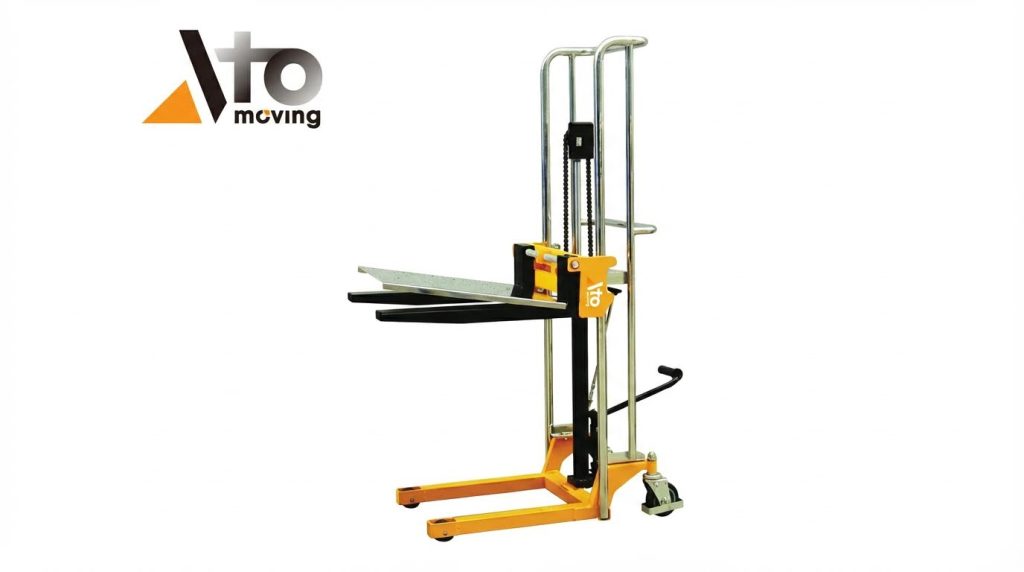
Walkie stacker weight affected structural design, safety margins, and material‑handling efficiency in industrial facilities. Engineers evaluated not only payload but also service weight, shipping weight, and the impact of batteries, masts, and options. OEM data from Toyota, Crown, Raymond, and EP showed wide variation in mass for comparable capacities and lift heights. This article examined how those weight differences influenced floor loading, ramps, stability, transport, specification choices, and long‑term lifecycle performance.
Using real capacity and lift‑height figures, the discussion connected stacker mass with slab design, rack interfaces, aisle layout, and equipment selection. It also reviewed how evolving battery technologies and lighter components changed weight distributions and future design practices. The goal was to give facility and mechanical engineers a structured framework for optimizing walkie stacker weight decisions across design, procurement, and operations.
Defining Walkie Stacker Weight And Key Ranges
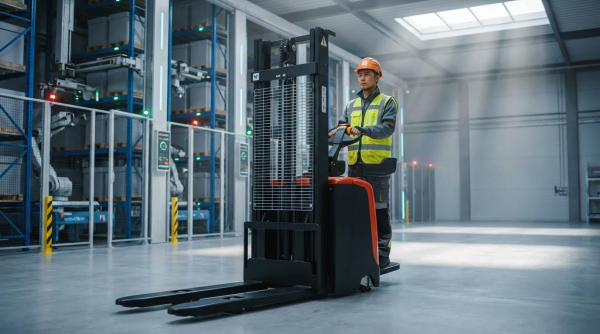
Walkie stacker weight defined the structural and operational envelope for every application. Engineers evaluated not only rated capacity but also the machine’s own mass, its distribution, and how that mass changed with options. This section clarified terminology, outlined realistic weight bands for manual and electric units, and explained how major components drove weight growth. These concepts formed the basis for later checks on floors, docks, transport, and lifecycle performance.
Service Weight vs. Shipping Weight vs. Payload
Service weight described the truck in working configuration, including battery, mast, fluids, and standard attachments. Designers used service weight for floor loading, elevator checks, and transport calculations because it represented the real in-plant condition. Shipping weight was lower, since suppliers often removed the battery or shipped the mast partially disassembled to reduce transport cost and axle loads. Payload or rated capacity referred to the maximum allowable load mass, for example 900 kg for a Crown M Series or 2000 kg for an EP RSC202, at a specified load center and lift height. Engineers always separated truck service weight from payload when checking slab design and racking because both acted together on the support structure.
Typical Weight Ranges: Manual vs. Electric Units
Manual walkie stackers, also called hand stackers, typically weighed between 450 kg and 1000 kg. Their mass stayed relatively low because they lacked traction motors and large traction batteries. Electric walkie stackers, including straddle and reach variants, usually fell between 900 kg and 1800 kg in service weight. Data from manufacturers such as Changxing Qiangsheng showed net weights from 450 kg to about 610 kg for compact electric units, depending on battery fitment. Higher capacity electric pallet stackers around 1.5 tonnes commonly reached service weights near 1050 kg. Heavy industrial reach stackers for containers could reach 62 000 kg, but those machines sat outside the walkie category and required different structural assumptions.
How Batteries, Masts, And Options Add Mass
Batteries contributed a significant fraction of an electric walkie stacker’s service weight. For typical 24 V systems used by Toyota, Raymond, Crown, and EP, lead-acid batteries added several hundred kilograms, while newer lithium iron phosphate packs reduced that by roughly 15%. Mast design also drove mass: higher lift heights, such as 5000 mm on the EP RSC152 or 5400 mm on Crown ES and ET Series, required heavier channels, additional stages, and more chains and rollers. Options such as sideshift carriages, hydraulic fork positioners, and larger capacity batteries could increase total weight by up to 20% compared with a base configuration. Engineers accounted for these increments when verifying floor capacity, ramp ratings, and trailer axle loads, because optional equipment changed both total mass and its center-of-gravity location.
Engineering Impacts Of Stacker Weight In Facilities
Floor Loading, Slab Design, And Racking Interfaces
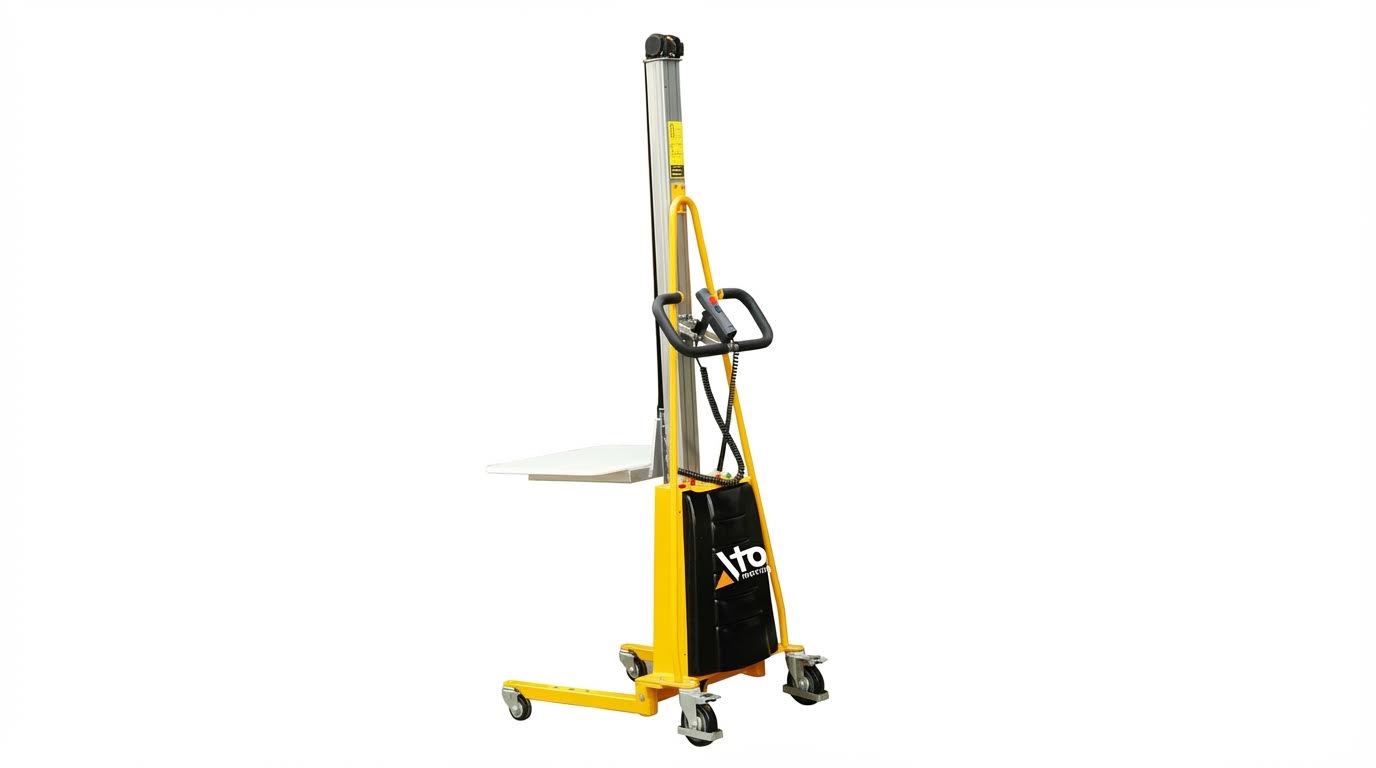
Engineers treated walkie stacker weight as a concentrated mobile load on industrial slabs. Service weight, including battery and options, governed wheel loads and contact pressures. Typical electric walkie stackers weighed between 900 kg and 1 800 kg, but double-pallet or heavy-duty units exceeded this range. Designers converted axle loads into equivalent uniformly distributed loads to check slab bending and punching shear.
Wheel spacing and mast position influenced load transfer into the concrete and subbase. Facilities with high-bay racking checked point loads at rack posts where stackers parked or staged pallets. Heavy stackers with 2 000 kg payloads required verification of slab thickness, reinforcement, and joint detailing. Engineers also coordinated floor flatness and levelness to prevent mast sway at elevated heights up to 5 400 mm.
Ramp, Dock, And Mezzanine Capacity Checks
On ramps and dock levelers, the combined weight of truck, operator, and rated load governed design. Electric walkie stackers with service weights near 1 500 kg, plus 2 000 kg payloads, produced significant reactions on hinges and lip plates. Engineers checked both static and dynamic factors, including braking and start-up on slopes. Codes and manufacturer data limited allowable gradients, typically to 10 % or less for loaded operation.
Mezzanine structures required evaluation of concentrated wheel loads and potential impact at transitions. Lightweight manual stackers reduced demands but still needed compatibility with grating or composite deck capacities. For retrofit projects, engineers compared stacker configurations against existing live-load ratings, often 4 to 7 kN/m², and applied reduction factors for localized traffic aisles. Guardrails and edge protection had to account for the kinetic energy of a moving stacker at low travel speeds.
Stability, Tip Resistance, And Load Chart Limits
Stacker weight directly affected stability margins and tip resistance. Manufacturers defined capacity curves that linked load, lift height, and load centre distance to prevent forward overturning. Heavier chassis and counterbalance masses allowed higher capacities, for example 1 600 kg at 5 400 mm on ES and ET series machines. However, added options such as sideshift carriages or longer forks shifted the centre of gravity forward.
Engineers and safety managers enforced adherence to the published load chart, especially for elevated work near 4 800 mm and above. Floor irregularities, ramps, and braking increased dynamic load factors and reduced effective stability. Training material emphasized that service weight did not equal safe counterweight for any arbitrary load. Instead, the stability triangle and tested configurations defined the allowable operating envelope.
Transport, Trailering, And Elevator Constraints
Service weight drove selection of trailers, dock plates, and elevators used to move walkie stackers between areas. A 1.5-tonne electric pallet stacker with approximately 1 050 kg service weight required trailer axle ratings and tie-down points sized for that mass. Larger reach or counterbalance stackers approached 1 800 kg and demanded higher deck capacities. Shipping weight could be lower when batteries or masts shipped separately, which simplified logistics planning.
Elevator use required comparison of stacker service weight plus any carried load against rated car capacity. Engineers checked wheel loads versus elevator floor plate and threshold design. In multi-level warehouses, total equipment mass also influenced structural vibration and deflection criteria. Clear communication of stacker weights in kilograms and inclusion on equipment nameplates supported safe handling and compliant transport procedures.
Specifying Walkie Stackers By Weight And Capacity
Matching Truck Weight To Load, Height, And Aisle Width
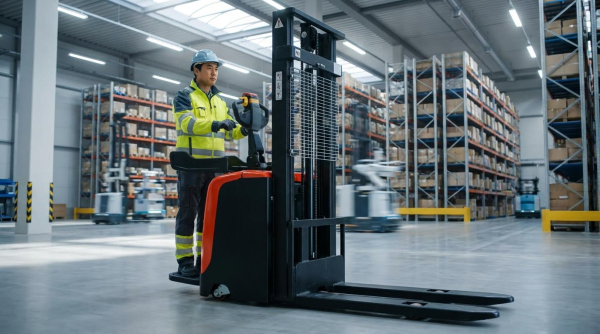
Engineers specified walkie stackers by balancing payload, lift height, and truck mass. Higher rated capacities and lift heights required heavier chassis, counterbalance, and mast sections to maintain stability margins. For example, walkie stackers lifting 2000 kg to 5 m typically operated with service weights near or above 1000 kg. Designers checked dynamic stability using worst‑case combinations of rated load, maximum lift, and braking or cornering forces. In narrow aisles, excessive truck weight increased floor loading and reduced maneuverability, so straddle or fork‑over designs with optimized masts were preferred. Specifiers therefore treated truck weight as a constrained variable, not an outcome, and validated it against floor slab capacity, racking clearances, and turning radius.
Comparing OEM Models: Toyota, Crown, Raymond, EP
Major OEMs offered overlapping capacity bands but different weight and geometry strategies. Toyota walkie stackers, such as the 8BWS10 and 8BWS13, carried 907 kg and 1134 kg (2000 lb and 2500 lb) to 3.63 m, using 24 V AC drive and robust steel structures with electric disc brakes. Crown ranges covered light to heavy duties: M Series up to 900 kg, WF and ES/ET series up to 1600 kg at 5.4 m, and heavy SH/SHR series around 1810 kg at about 4.9 m. Raymond 6210–6510 families handled 907–1814 kg with lift heights up to 4.8 m at 24 V, while the 8530 rider stacker targeted 1134 kg at 1.83 m where operator ride comfort dominated. EP Equipment models spanned 800–2000 kg with lift heights from roughly 2.0–5.0 m and used both 24 V and 48 V architectures. Across these OEMs, higher lift and capacity correlated with heavier masts, larger batteries, and increased service weight, even when nameplate capacities matched.
Battery Technology, Energy Density, And Mass
Battery selection strongly influenced walkie stacker mass and weight distribution. Traditional flooded lead‑acid packs provided low cost and high robustness but added significant mass, often representing 20–30% of service weight. AGM variants improved maintenance characteristics but kept similar gravimetric density, so weight reductions remained marginal. Lithium‑ion chemistries, including LFP, reduced battery mass by roughly 15% compared with equivalent lead‑acid systems while providing higher usable depth of discharge. EP stackers illustrated this shift by offering the same capacity with either lead‑acid or Li‑ion at 24 V, changing truck weight and runtime without altering mast or drive modules. Engineers leveraged heavier batteries as counterweight in counterbalanced designs but favored lighter Li‑ion packs where floor loading, elevator ratings, or manual repositioning constraints dominated.
Lifecycle Cost, Maintenance, And Emerging Technologies
Weight decisions affected lifecycle cost through energy consumption, tire wear, and maintenance. Heavier walkie stackers required more traction energy per meter, increased contact pressures on load wheels, and accelerated wear on floors and dock plates. Lead‑acid batteries demanded periodic watering, equalization, and ventilation infrastructure, while Li‑ion packs reduced maintenance but increased initial capital cost. OEMs such as Raymond and Toyota historically minimized maintenance points by using AC drive motors, transistorized controls, and simplified brake systems, which stabilized service weight while improving reliability. Emerging trends included lighter LFP batteries, more compact SiC‑based inverters, and optimized mast sections that reduced mass without compromising stiffness. Specifiers therefore evaluated not only current truck weight but also future upgrade paths and energy savings over the equipment’s service life.
Summary: Optimizing Walkie Stacker Weight Decisions
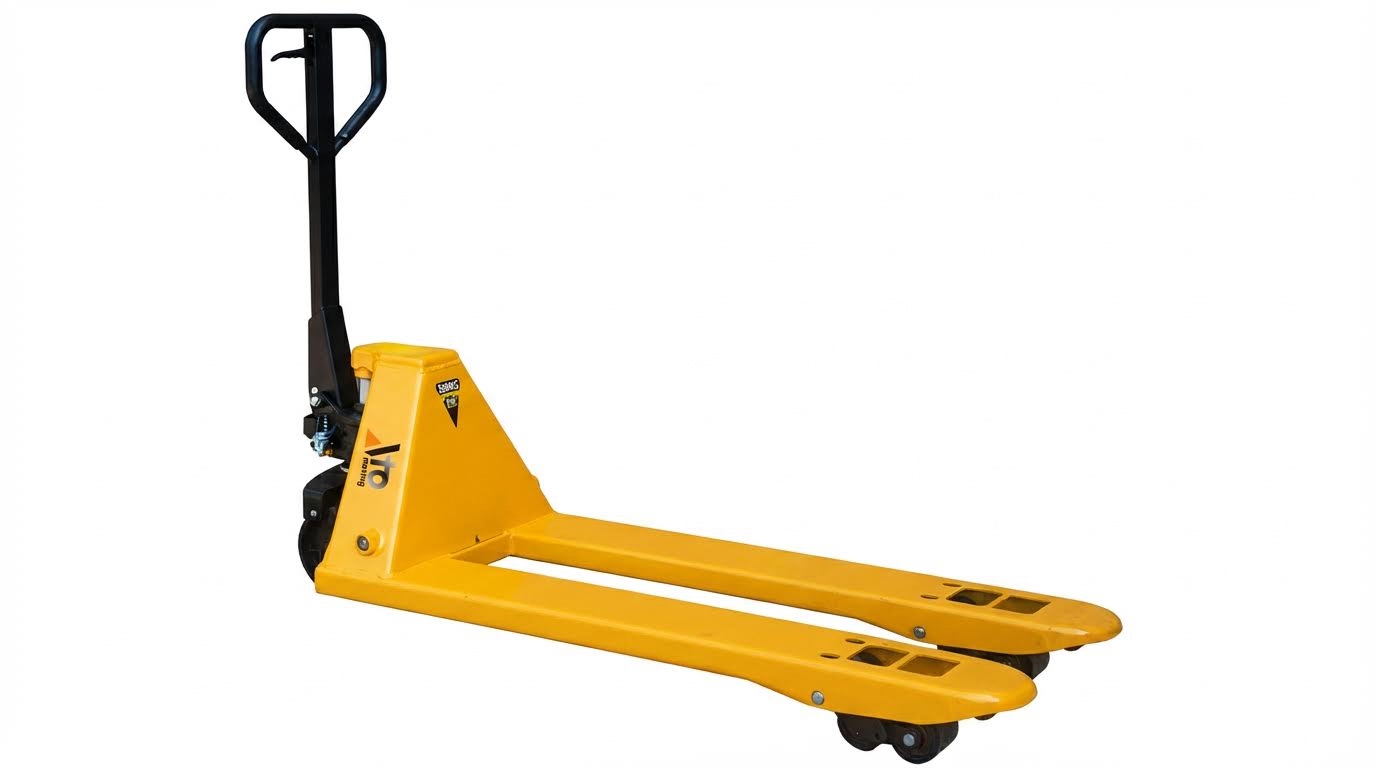
Engineering decisions around walkie stacker weight required a system-level view. Service weight, shipping weight, and payload interacted with slab capacity, racking interfaces, and handling infrastructure. Manual hand stackers typically weighed 450–1000 kg, while electric walkie and straddle stackers often reached 900–1800 kg once batteries and options were included. Heavier reach and counterbalance designs increased service weight further, especially at high lift heights.
Facility engineers needed to verify floor load ratings, mezzanine design, and dock equipment against worst-case wheel loads. A 1.5 tonne electric pallet stacker with approximately 1050 kg service weight imposed very different demands than a compact 800 kg class unit. Options such as sideshift, fork positioners, and higher-capacity batteries could increase mass by up to 20%, pushing trucks close to structural or elevator limits. OEM data sheets and local building codes remained essential references for safe integration.
OEM portfolios from Toyota, Crown, Raymond, and EP Equipment illustrated the trade-off between capacity, lift height, and truck mass. Higher capacities, such as 2000 kg EP RSC202 units or 1814 kg Crown ST/SX stackers, required robust frames and masts, which raised service weight but improved stability margins. Battery technology influenced both runtime and mass. Traditional lead-acid packs were heavier, while Li-ion and LFP variants reduced weight by roughly 10–15% at comparable energy, improving acceleration and reducing floor loading.
Looking forward, lighter high-energy batteries and more efficient drives, such as SiC-based inverters, were expected to lower truck mass and improve maneuverability. However, ultra-light configurations still needed to satisfy stability, tip resistance, and load chart requirements at maximum lift heights up to 5.4 m. Practitioners should balance three factors: structural compatibility of the facility, operational productivity, and lifecycle cost. A disciplined specification process that compared service weight, wheel loads, battery type, and OEM stability data allowed engineers to select walkie stackers that performed efficiently without compromising safety or infrastructure longevity.