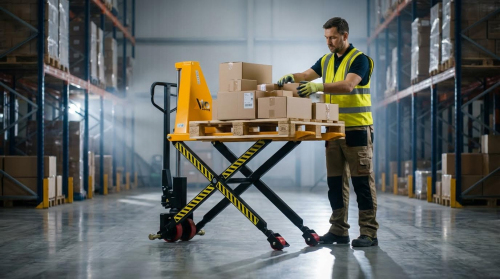
Palletized loading transformed truck freight by standardizing unit loads, but safe, efficient operation still depends on disciplined engineering practice. This article explains the engineering basics of palletized truck loading, including load stability, pallet integrity, and the interface between vehicles, docks, plates, and floors. It then examines practical methods and equipment for loading and unloading, from forklifts and pallet trucks to pallet flow racks, trailer restraints, and handling of abnormal or mixed loads. Subsequent sections connect safety, regulatory compliance, and system design, covering securing standards, strategies for diverse load types, automation technologies, and maintenance and lifecycle cost control. The article concludes with a concise summary of key practices and future directions for safer, more productive palletized truck operations.
Engineering Basics Of Palletized Truck Loading
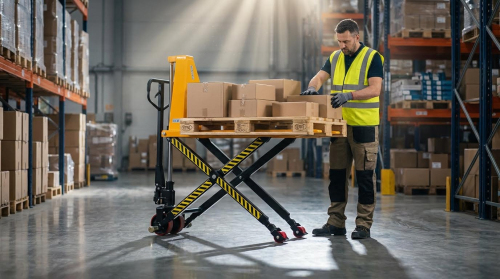
Engineering the pallet–vehicle system correctly created the foundation for safe, efficient loading and unloading. Practitioners needed to understand load stability, pallet performance, and the interface between materials handling equipment, docks, and trailers. These basics influenced restraint design, equipment selection, and maintenance strategies across the full logistics chain.
Load Stability, Center Of Gravity, And Restraint
Engineers treated each pallet load as a rigid body with a defined center of gravity (CoG). They positioned the CoG as low and central as possible on the pallet to reduce overturning moments during braking, cornering, and docking impacts. Operators used friction, positive fit, and mechanical restraint in combination, because guidance required the load to remain stable even if lashings slackened. Chains provided higher stiffness and strength than webbing straps for heavy loads, while wider straps distributed contact pressure and reduced local damage.
Designers calculated required lashing capacity from expected accelerations, typically 0.8 g forward, 0.5 g lateral, and 0.5 g rearward. They avoided attaching more than one lashing to a single anchor point and did not loop lashings through eyelets, because this reduced capacity and changed load paths. Friction matting under pallets increased the friction coefficient and allowed lower pre-tension forces in lashings while maintaining restraint. For wheeled or tracked plant, engineers combined chocks, timbers, and direct lashings so that the vehicle bed or support timbers carried vertical loads and lashings controlled horizontal movement.
Pallet Integrity, Unitization, And Stack Design
Pallet structural integrity directly affected load stability and pallet flow system performance. Operators inspected pallets for broken or missing bottom boards, protruding nails, and damaged stringers before loading, because defective pallets could hang up in gravity lanes or fail under dynamic truck loads. Guidance recommended using new or like-new GMA-style wood pallets, or equivalent, matched to the pallet flow rack design parameters for deck board thickness, spacing, and weight range. Plastic pallets required intact pods and no hanging plastic below rollers to avoid interference with rollers and speed controllers.
Unitization methods such as shrink wrapping, banding, and strapping converted individual items into a single load unit with the pallet. Engineers ensured the load and pallet behaved as one body before loading it into the vehicle. Stack design limited height based on pallet strength, product compressive strength, and vehicle stability; for example, box stacks were not built higher than three layers unless verified by testing. Empty pallet stacks were restricted to a maximum height of four times the pallet base dimension to control tipping risk during handling and transport. For special products like barrels, reels, or bulk bags, designers used frames, nets, or edge protectors so that restraint forces did not damage packaging while still preventing movement.
Vehicle And Trailer Interface: Docks, Plates, And Floors
The interface between forklifts, docks, and trailers governed both structural safety and operational efficiency. Before loading, operators verified trailer brakes were set, wheels chocked, and trailer restraint systems engaged to prevent vehicle creep or drive-away. They confirmed dock plates or levelers had adequate load rating, correct lip engagement, and non-slip surfaces, because concentrated axle loads from forklifts could exceed floor or plate capacity if mis-specified. Surfaces needed to be level, clean, and free of debris to avoid pallet hang-ups and unstable forklift travel.
Engineers checked trailer floor strength, especially for older or repaired vehicles, and ensured sufficient overhead and side clearance for mast and load. Dock edges required clear marking, guardrails, or visual cues to prevent drive-off incidents. For pallet flow racks at docks, designers positioned the truck squarely to the charge end, set fork entry clearances of approximately 50–75 mm above rollers, and controlled fork tilt to place or remove pallets without impacting beams or rollers. When using forklifts in trailers or containers, operators drove slowly, sounded the horn at transitions, and stayed clear of floor edges and weak roof areas. These interface considerations reduced impact loads on racks and trailers, minimized product damage, and supported repeatable, high-throughput loading cycles.
Methods And Equipment For Loading And Unloading

Loading and unloading palletized freight required coordinated use of powered equipment, engineered rack systems, and restraint devices. Each element contributed to load stability, operator safety, and cycle time. Engineering choices depended on vehicle type, floor condition, load geometry, and regulatory constraints. The following subsections describe key equipment groups and their correct application.
Forklifts, Pallet Trucks, And Attachments
Forklifts handled most truck loading where floor conditions and dock geometry allowed powered access. Operators positioned the truck or trailer with brakes applied and wheels chocked, then aligned forks square to the pallet on a clean, level surface. Guidance from manufacturers specified carrying loads approximately 100–150 mm above the ground, with the mast tilted back and the heaviest portion of the load against the carriage. Operators checked that pallets were undamaged, loads were stable, and weight remained within the rated capacity of the truck.
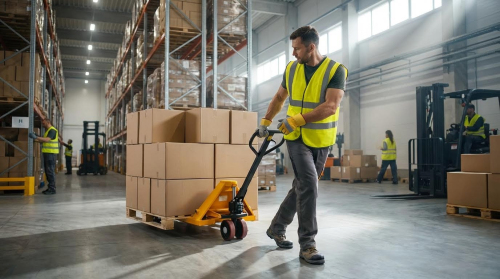
Pallet trucks, both manual and electric, served for short internal transfers and for loading small vehicles at ground level. Safe practice required entering pallets with forks 50–75 mm above the floor, avoiding use of forks as levers, and distributing weight evenly across both forks. Presence detection systems and automatic parking brakes on modern trucks reduced roll-away risks during loading. Attachments such as clamps, rotators, and fork positioners improved handling efficiency for non-palletized or offset loads, but they also reduced residual capacity, which engineers had to account for in equipment selection and racking design.
Procedures for unloading mirrored loading, with additional checks for shifted freight and trailer floor integrity. Operators inspected the trailer interior for damage, debris, and overhead clearance before entry. They sounded horns at trailer thresholds, maintained low travel speeds, and stayed clear of edges and dock gaps. Engineering controls, including clearly marked dock edges and appropriate truck selection for confined spaces or elevator use, further reduced incident probability.
Pallet Flow Racks And Gravity Systems
Pallet flow racks used inclined roller or wheel tracks to move pallets from the charge side to the pick face under gravity. Correct loading required the fork truck to approach square to the lane, enter 50–75 mm above the rollers, and set the pallet down without impacting the entry guides. Pallets with missing or broken bottom boards were not acceptable because they caused hang-ups, uneven loading of rollers, and local overstress of the rack structure. System design specified pallet type, footprint, and mass range, and operators had to keep within these parameters to maintain predictable flow.
Unloading from pallet flow lanes involved lifting the front pallet just high enough to clear the front beam, then withdrawing smoothly while allowing the rear pallets to advance. When pallets failed to flow, a controlled plugging method restored movement: the operator lifted the front pallet about 25 mm above the rollers, pushed the rear row back roughly 100 mm, and then extracted the front pallet while encouraging gradual forward motion of trailing loads. Entering live lanes from the discharge end or climbing into the structure was prohibited due to crush and fall hazards. Facilities instead added a new pallet from the charge side or fully cycled the lane to clear obstructions.
Routine inspections of pallet flow systems were critical to safe truck loading operations. Engineers checked for damaged rollers, bent rails, loose fasteners, and malfunctioning speed controllers. They also reviewed pallet quality, including board thickness, nail protrusions, and plastic pallet pod integrity. Documented inspection regimes, typically within days of commissioning, then at one month, and quarterly thereafter, supported compliance and reduced unplanned downtime. Integration with upper-level palletizers and automated handling equipment required alignment of maintenance schedules and clear lockout procedures.
Trailer Restraints, Chocks, And Dock Safety Systems
Trailer restraints and wheel chocks prevented vehicle movement during loading and unloading, which was a primary control against trailer creep and drive-aways. Typical systems engaged the rear impact guard or wheels and interlocked with dock signals to indicate safe or unsafe conditions. Operators set vehicle brakes, applied chocks, or activated mechanical restraints before any forklift entered the trailer. Facilities used trailer restraint systems where dock height and traffic intensity justified engineered solutions rather than relying solely on manual chocking.
Dock safety systems included dock levelers, dock plates, edge guards, and visual warning devices. Engineers specified levelers to match forklift axle loads and trailer bed heights, ensuring adequate dynamic capacity and minimal slope. Surfaces had to remain clean, dry, and free from damage to maintain friction and prevent wheel slip. Marked dock edges and high-visibility signage reduced fall risks, while lighting systems signaled drivers and loaders regarding restraint engagement and loading status. Regular inspection of dock plates, hinges, and anchorage points formed part
Safety, Compliance, And System Design Choices
Engineering safe pallet loading for trucks required alignment between physics, regulations, and operational practice. Designers needed to treat the pallet, vehicle, and restraint system as a single engineered system. Regulatory frameworks defined minimum performance, while equipment choice and layout determined whether operators could consistently meet those requirements. Robust designs reduced dependence on operator skill and minimized incident rates and lifecycle costs.
Load Securing Standards And Regulatory Duties
Load securing standards specified that loads must withstand accelerations of approximately 0.8 g forward, 0.5 g lateral, and 0.5 g rearward without unacceptable movement. Guidance required loads to remain inherently stable, with lashings and chocks acting as secondary restraint, not primary support. Operators had to avoid attaching more than one lashing to a single anchorage point and avoid looping lashings through the same eye, because this reduced effective capacity and introduced eccentric loading. Where headboards or bulkheads were absent or low, designers had to compensate with additional lashings, preferably chains for high-mass loads, and friction matting to raise the coefficient of friction at the deck–pallet interface.
Duties fell on consignors, vehicle operators, and loaders jointly. They had to plan loading schemes, agree on securing methods, and train staff in lashing selection, tensioning, and inspection. Regulations such as the Carriage of Dangerous Goods rules and road vehicle lighting regulations required additional controls when loads obscured lights or involved hazardous materials. Design engineers therefore needed to provide sufficient rated lashing points, headboard capacity, and clear labeling so that legal requirements could be met without ad‑hoc improvisation at the dock.
Securing Strategies For Diverse Load Types
Securing strategy depended strongly on load geometry, mass, and fragility. Unitized pallet loads, such as boxed goods, benefited from positive fit against headboards, close packing, and frictional lashings using ratchet straps. Stacks typically could not exceed three pallet heights without additional restraint or structural packaging, to avoid column instability. For bulk bags, engineers specified nets or sheets, strapping through lifting eyelets, and at least one lashing per row, with open bags covered to prevent loss of material under vibration.
Construction materials such as bricks or blocks required loading directly against the headboard with one frictional lashing per row, and two lashings where stack height exceeded headboard height. Cylindrical loads like barrels and paper reels needed high-friction deck materials, chocks, or cradles plus transverse and longitudinal straps; reels placed more than 0.3 m from the headboard required additional lashings to control forward surge. Dangerous goods, including gas cylinders, had to travel in caged or closed vehicles, secured upright in racks or individually lashed, segregated by compatibility, and kept away from the driver compartment and ignition sources.
Light but bulky agricultural loads such as hay or straw bales required full deck support and at least one strap per stack, often with wider straps to distribute compressive forces and avoid local damage. Plant and vehicle loads on lowloaders needed combined use of lashings and physical barriers such as chocks and stanchions, with load distribution checked against axle limits. For fragile loads like glass, designers favored dedicated stillages or frames that provided positive fit, combined with edge protectors and bungee sheets to limit vibration-induced chafing.
Integrating Cobots, Sensors, And Digital Twins
System designers increasingly integrated collaborative robots (cobots), sensors, and digital twins to improve pallet loading quality and safety. Cobots could assist with repetitive or high-precision tasks such as placing fragile goods, positioning dunnage, or applying straps to a defined pattern, while human operators supervised exceptions and abnormal loads. Embedded sensors on forklifts, dock levelers, and restraint systems monitored fork height, impact events, lashing tension, and trailer presence, enabling interlocks that prevented unsafe operations such as entering an unsecured trailer.
Digital twins of warehouses and loading docks allowed engineers to simulate pallet patterns, trailer fill, center-of-gravity movement, and securing schemes before implementation. They could model dynamic effects during emergency braking or cornering, then translate results into practical rules for strap count, anchor locations, and pallet sequencing. Data from real operations, including near‑miss impact logs and flow rack hang‑up events, fed back into the twin to refine assumptions and improve future designs. This integration supported continuous improvement, reduced training time, and provided auditable evidence that load securing strategies met or exceeded regulatory performance requirements.
Maintenance, Inspection, And Lifecycle Costs
Summary: Key Practices And Future Directions

Safe, efficient pallet loading and unloading for trucks relied on a disciplined combination of engineering, operations, and regulatory compliance. Stable loads started with sound pallet design, correct stack geometry, and a controlled center of gravity, then continued through correct interface with docks, plates, and trailer floors. Powered industrial trucks, pallet trucks, and gravity or flow systems required standardized procedures for approach, fork positioning, load elevation, and travel, supported by trailer restraints, chocks, and dock safety systems. Abnormal, mixed, and dangerous loads demanded engineered securing schemes using chains, straps, bulkheads, chocks, and high-friction interfaces that met applicable road transport and dangerous goods regulations.
Industry practice increasingly integrated sensors, presence-detection systems, and condition monitoring into forklifts, pallet flow lanes, and dock equipment to reduce human error. Digital tools such as simulation and digital twins supported design of racking, dock layouts, and load-securing patterns before physical deployment, while maintenance programs used scheduled inspections and quantified wear limits to keep palletizers, and flow systems within design performance. Future developments pointed toward higher automation levels, collaborative robots at loading points, and connected safety systems that shared status between vehicles, docks, and warehouse management platforms. Organizations that combined these technologies with robust training, documented procedures, and lifecycle-focused maintenance achieved lower incident rates, reduced product damage, and higher loading productivity, while maintaining compliance with transport and dangerous goods legislation.