Safe drum stacking depended on a combination of sound engineering design, regulatory compliance, and disciplined operations. This article examined core design principles for stacking drums, including drum ratings, specific gravity limits, regulatory bases in 49 CFR, NFPA 30, and OSHA 1915.173, and the role of stacking tests, UN markings, pallets, and floor design.
It then compared palletized and floor stacking patterns, defined allowable heights for three-high and four-high configurations, and linked these to roof height, sprinkler design, and fire protection. The discussion extended to indoor versus outdoor storage, weather protection, and UV and corrosion control. Finally, it addressed segregation of incompatible materials, secondary containment, spill control, inspection and FIFO, handling equipment, and risk-based training to conclude with a concise summary of best practices and compliance priorities.
Core Design Principles For Safe Drum Stacking
Core design principles for safe drum stacking relied on a consistent link between container rating, fill conditions, and storage geometry. Engineers evaluated drum type, specific gravity limits, pallet quality, and floor conditions before defining any stacking pattern. Regulatory frameworks such as 49 CFR, NFPA 30, and OSHA 1915.173 provided boundary conditions for allowable loads, heights, and fire protection. Robust designs integrated these constraints into standard operating procedures and layout plans for warehouses and outdoor yards.
Drum Types, Ratings, And Specific Gravity Limits
Safe stacking design started with the correct drum type and performance rating for the product. Standard 210 litre steel drums for hazardous materials had UN performance markings defining maximum specific gravity and test pressure. Industry practice allowed stacking up to four-high when the contents had a specific gravity not exceeding 1.5 and ambient temperature remained below 30°C. When specific gravity exceeded 1.5 or temperatures stayed above 30°C, designers limited stacks to three-high to reduce compressive stress and buckling risk. Engineers also checked that solids did not exceed the tested gross mass and that closure and bung designs matched pressure relief and venting needs for flammable or hot-filled products.
Regulatory Basis: 49 CFR, NFPA 30, OSHA 1915.173
Title 49 CFR governed drum design, testing, and closure installation for transport and storage of hazardous materials. Section 178.606 defined the stacking test that simulated a 3 metre high stack for 24 hours at ambient temperature based on the intended specific gravity. Section 178.2(c) required closures to be fully installed and tightened to the torque specified by the manufacturer to achieve the certified performance level. NFPA 30 set fire protection and storage configuration criteria for flammable and combustible liquids, including maximum stack heights, ceiling limits, and sprinkler densities. OSHA 1915.173 addressed safe handling and storage, prohibiting pressurizing drums to remove contents, restricting proximity to heat sources, and requiring physical protection and diking for larger containers. Together, these standards formed the minimum design envelope for safe drum stacking systems.
Stacking Tests, UN Markings, And Load Validation
UN performance markings on drums encoded the packaging type, packing group, specific gravity rating, and test regime. Designers used these markings to verify that actual stacked loads did not exceed the tested conditions. The 49 CFR 178.606 stacking test applied a top load equivalent to a 3 metre stack for 24 hours, validating long-term compressive strength and deformation limits. For periodic retesting, dynamic compression or equivalent methods could reproduce the required force based on specific gravity and drum geometry. Engineering calculations then compared real palletized stack heights, drum mass, and environmental factors with the certified test basis. This validation step ensured that three-high or four-high stacks remained within the safety margin throughout the storage life of the product.
Pallet Quality, Floor Conditions, And Layout Design
Pallet and floor performance directly affected load distribution and drum stability. Recommended pallets for four 210 litre drums were 1 220 millimetre by 1 220 millimetre (48 inch by 48 inch) with at least a 1 170 millimetre by 1 170 millimetre minimum footprint and four-way entry. Engineers rejected pallets with broken deck boards, protruding nails, or excessive sag, since these defects introduced point loads into drum chimes and shells. Floors for direct stacking needed a flat, sound surface, preferably concrete, with adequate bearing capacity and drainage. Layout design allowed clear aisles, maintained regulatory clearances from heat or ignition sources, and integrated secondary containment pallets or berms where hazardous liquids were present. For outdoor layouts, designers elevated drums on pallets or racks, provided airflow under drums, and specified covers or shelters to control UV exposure, rain, and ponding water.
Stacking Configurations, Heights, And Clearances
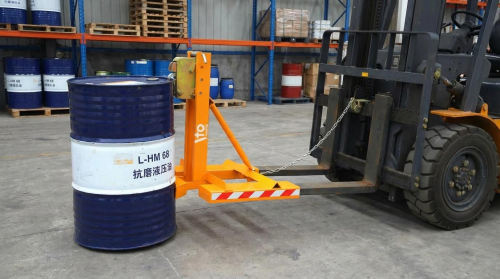
Stacking configuration directly governed stability, regulatory compliance, and usable storage density. Engineers needed to select patterns that maintained drum integrity under long-term compressive loads while preserving access for inspection and emergency response. Height limits depended on specific gravity, pallet geometry, and building fire protection features. Clearances to roofs, sprinklers, and heat sources controlled both mechanical and thermal risks.
Palletized vs. Floor Stacking Patterns
Palletized stacking provided more uniform load distribution and easier mechanical handling than direct floor stacking. For standard 210 litre steel drums, engineers typically used 48 inch by 48 inch four-way entry pallets to support four drums without overhang. Palletized stacks allowed consistent alignment, reduced drum-to-floor point loading, and improved airflow beneath the drums. Floor stacking without pallets required a flat, sound concrete surface and was better suited to single-tier or limited-height arrangements where handling equipment access remained constrained.
When using pallets, operators secured drums with stretch wrap, straps, or banding to prevent lateral movement during handling and seismic events. Pallet condition significantly affected safety; damaged deck boards, protruding nails, or excessive sagging increased local stresses on drum chimes and bottoms. Floor-stacked drums still benefited from timber or plastic bearers, which reduced moisture contact and corrosion at the base. In both configurations, aisles needed to remain wide enough for forklifts and emergency access, typically at least the forklift width plus 0.6 metres clearance.
Three-High vs. Four-High: Height And SG Criteria
Permissible stack height depended strongly on the specific gravity of the contents and ambient temperature. Industry practice indicated that steel drums with contents of specific gravity not exceeding 1.5 could be stacked four-high under controlled indoor conditions. Where specific gravity exceeded 1.5, or where ambient temperatures remained above 30 degrees Celsius for prolonged periods, engineers limited stacks to three-high to reduce compressive stresses and bulging. These limits aligned with stacking test conditions in Title 49 CFR section 178.606, which required drums to withstand a top load equivalent to a 3 metre stack for 24 hours.
Palletized three-high stacks typically did not exceed about 3.0 metres total height, which corresponded to a maximum of roughly 10 feet. Four-high palletized stacks reached approximately 4.2 metres, or about 13 feet 9 inches, and required more rigorous evaluation of pallet stiffness and floor load capacity. Engineers verified that drums carried UN performance markings appropriate to the tested gross mass and stacking load. They also confirmed closures were torqued to manufacturer specifications, since under-torqued bungs or rings reduced the drum’s ability to transmit compressive loads safely through the chimes.
Roof Height, Sprinkler Design, And Fire Protection
Fire protection design constrained maximum storage height for flammable or combustible drum contents. NFPA 30 based its criteria on ceiling height, sprinkler discharge density, and stack height interaction. For steel drum storage of flammable liquids, ceiling or roof height generally did not exceed approximately 10 metres, or about 33 feet. Within that envelope, three-high palletized stacks had a recommended maximum of about 3.0 metres, while four-high stacks were limited to around 4.2 metres. Sprinkler systems for these occupancies used foam-water densities near 0.45 gallons per minute per square foot for three-high stacks and 0.60 gallons per minute per square foot for four-high stacks.
Designers commonly specified pendant extra-large orifice sprinkler heads to achieve adequate foam-water application through the array of drums and pallets. Adequate clearance between the top of the drum stack and sprinkler deflectors was essential to allow spray pattern development and prevent shadowing. Drums containing flammable or combustible liquids required relieving-style plugs in 2 inch and ¾ inch openings to mitigate internal pressure during fire exposure. Layouts also maintained minimum clearances from heaters, process equipment, and electrical gear to avoid localized heating that could raise internal drum pressure or accelerate corrosion.
Indoor vs. Outdoor Stacking And Weather Controls
Indoor stacking provided the most controlled environment for drum integrity and label legibility. Enclosed storage limited exposure to ultraviolet radiation, rain, and temperature cycling that accelerated corrosion and liner degradation. For indoor layouts, engineers still ensured drums were not placed directly on bare concrete where condensation and alkalinity could attack the steel; instead, they used pallets or racking with airflow beneath the drums. Ventilation and temperature control reduced expansion pressures, especially for filled drums stored near their maximum rated temperature range. For hazardous materials, designers integrated indoor stacks with
Safety, Containment, And Operational Controls
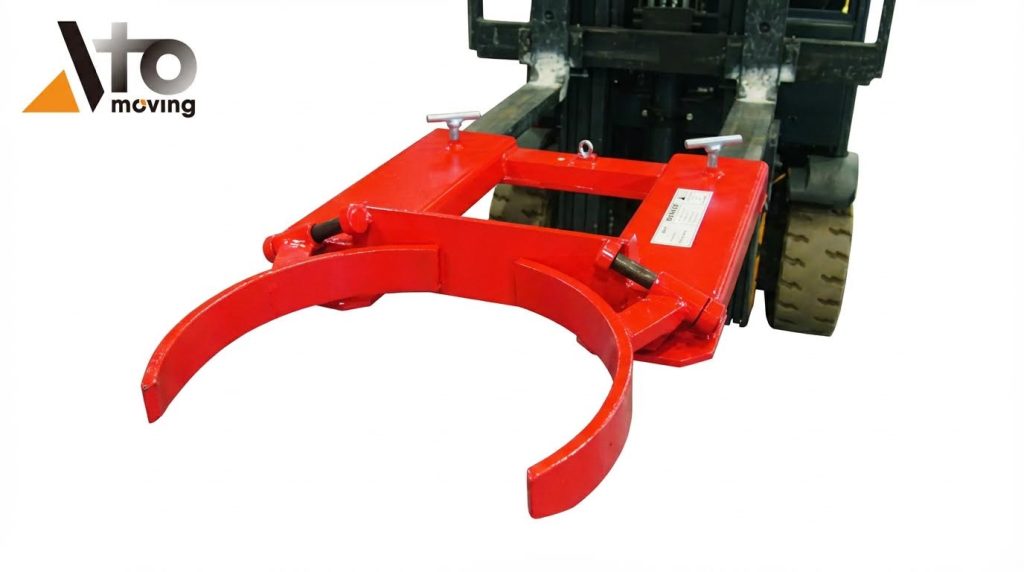
Safety, containment, and operational controls governed safe drum stacking and storage in industrial facilities. Engineering controls, administrative procedures, and operator training worked together to prevent releases, structural failures, and fire escalation. Effective programs integrated segregation of chemicals, compliant secondary containment, systematic inspection, and disciplined handling methods. This section detailed the practical control measures that supported 49 CFR, NFPA 30, and OSHA 1915.173 compliance in drum storage systems.
Segregation Of Incompatibles And Labeling
Segregation of incompatible materials limited the consequences of leaks, fires, or structural failures in stacked drums. Facilities separated flammables from oxidizers, and stored acids away from bases, following EPA guidance and OSHA 1910/1915.173 intent. Engineers typically defined storage zones by chemical class, with clear physical separation, dedicated pallets, and directional flow paths to avoid cross-traffic. Accurate, durable labeling underpinned segregation: each drum carried legible product identification, hazard class, UN number, and handling warnings. UV exposure, dirt, and abrasion could fade markings, so operators inspected labels routinely and replaced damaged ones. Clear labeling also supported emergency response, allowing responders to identify contents quickly and select correct containment and extinguishing strategies.
Secondary Containment, Berms, And Spill Control
Secondary containment captured leaks from individual drums and catastrophic failures of stacked arrays. Bunded storage, spill pallets, or concrete berms with chemically compatible coatings were common engineering solutions. For drums ≥55 gallons (≈210 litres) with flammable or toxic liquids, OSHA 1915.173 required diking that enclosed at least 35% of the total stored volume. Designers often sized containment to 110% of the largest single container to align with environmental best practice. Spill pallets under each drum group minimized spread and simplified cleanup. Facilities positioned absorbents, drain covers, and overpack drums near storage zones to enable rapid containment. Floor slopes, thresholds, and door sills directed spills away from exits and critical equipment. When drums were stored outdoors, pallets and berms also prevented submersion in stormwater, which could mobilize contaminants and undermine drum bases.
Inspection, Reconditioning, And FIFO Management
Regular inspection programs detected degradation before it compromised stacking stability or containment. Operators checked for rust, dents, bulging from internal pressure, damaged bungs or lids, and weakened seams. Faded UN or DOT markings indicated that drums might no longer meet transport or stacking test requirements under 49 CFR §178.606. Suspect drums were removed from high stacks, isolated, and either reconditioned by qualified vendors or decommissioned for recycling. FIFO (First-In, First-Out) inventory management reduced the time drums remained in storage, limiting corrosion and label deterioration. Facilities tracked receipt dates and contents electronically or with durable tags, then prioritized older inventory for use. This approach maintained container integrity, reduced waste from out-of-date products, and simplified compliance documentation during audits.
Handling Equipment, Training, And Risk Assessment
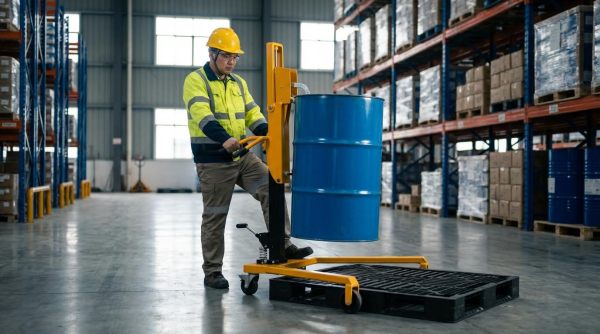
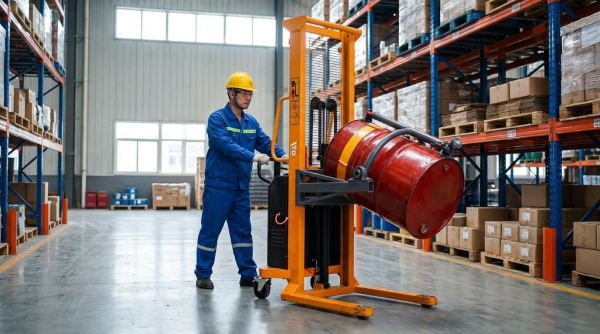
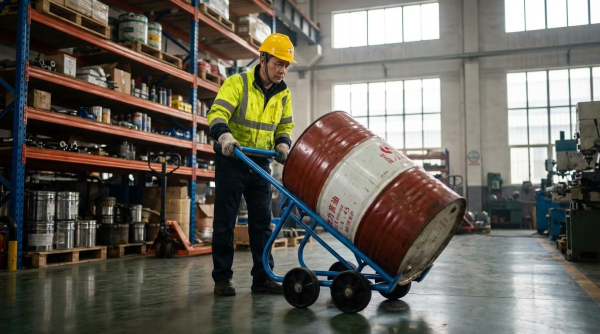
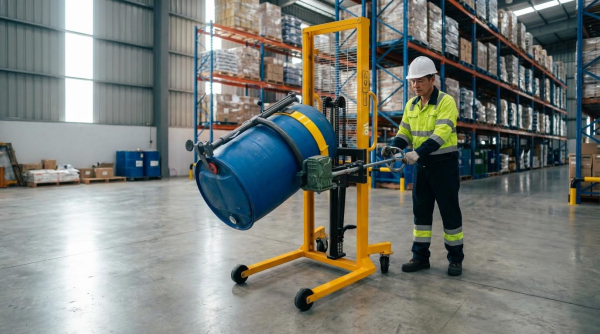
Safe drum stacking depended heavily on appropriate handling equipment and trained personnel. Facilities used forklifts, drum trolleys, and dedicated drum handlers instead of manual lifting, because a standard 210-litre steel drum could weigh several hundred kilograms when full. Only licensed or formally authorized operators moved drums within bunded and racked storage, reducing collision and drop risks. Pre-use equipment checks focused on fork integrity, hydraulic performance, and attachment security. Risk assessments of storage areas considered load paths, travel aisles, turning radii, and interaction with pedestrians. Engineers evaluated worst-case scenarios such as stack collapse, fire, and simultaneous leakage from multiple drums, then specified controls like exclusion zones, impact barriers, and emergency egress routes. Training programs covered hazard recognition, SDS interpretation, segregation rules, spill response, and torque requirements for drum closures under 49 CFR §178.2(c). Periodic drills validated that personnel could execute emergency plans effectively under realistic conditions.
Summary Of Best Practices And Compliance Priorities
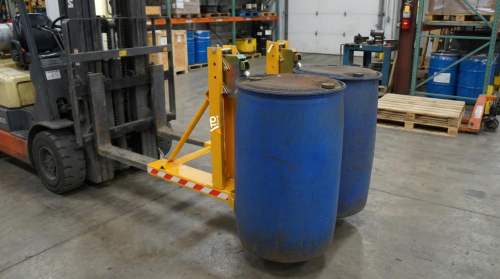
Safe drum storage stacking relied on integrating mechanical limits of drums, regulatory requirements, and site-specific risk controls. Engineers needed to treat drum type, specific gravity, and test ratings as primary design inputs, then overlay NFPA 30, 49 CFR, and OSHA 1915.173 constraints. A disciplined approach started with selecting drums that passed 49 CFR §178.606 stacking tests for the intended product density, installing closures to the torque values in §178.2(c), and verifying UN and DOT markings remained legible for the full service life.
Designers then defined stacking configurations and heights based on specific gravity and temperature envelope: typically up to four-high for SG ≤1.5, but only three-high for SG >1.5 or where ambient temperatures exceeded about 30 °C. They controlled palletized stack heights to within roughly 3–4 m, maintained ceiling heights below 10 m, and ensured adequate aisle clearances and access for inspection and emergency response. Fire protection design followed NFPA 30: appropriate ceiling height limits, foam-water sprinklers with discharge densities scaled to stack height, and use of relieving-style plugs on flammable or combustible contents to manage internal pressure.
Operationally, facilities minimized risk by segregating incompatibles, maintaining clear labeling and current Safety Data Sheets, and implementing secondary containment sized to regulatory volume fractions. Routine inspections identified corrosion, deformation, or closure damage early, triggering reconditioning or drum removal. FIFO inventory management reduced container aging and lining degradation, while documented training ensured only competent personnel handled drums with suitable mechanical aids. Looking ahead, tighter enforcement, digital inventory tracking, and wider use of engineered containment and monitoring systems were likely to increase, but the core engineering priorities remained: respect tested load limits, maintain environmental and fire protection margins, and keep operational controls aligned with evolving codes.