Electric forklifts reshaped material handling by trading combustion engines for electric drivetrains, batteries, and charging infrastructure. This article examines their core engineering advantages, including lower operating costs, reduced maintenance, zero local emissions, and improved indoor ergonomics. It then analyzes technical limits such as load capacity, duty cycle, battery logistics, and environmental constraints that affect deployment. Finally, it links design and selection decisions to emerging technologies, telematics, and regulatory pressures to support a structured choice between electric and internal combustion fleets.
Core Advantages Of Electric Forklift Systems
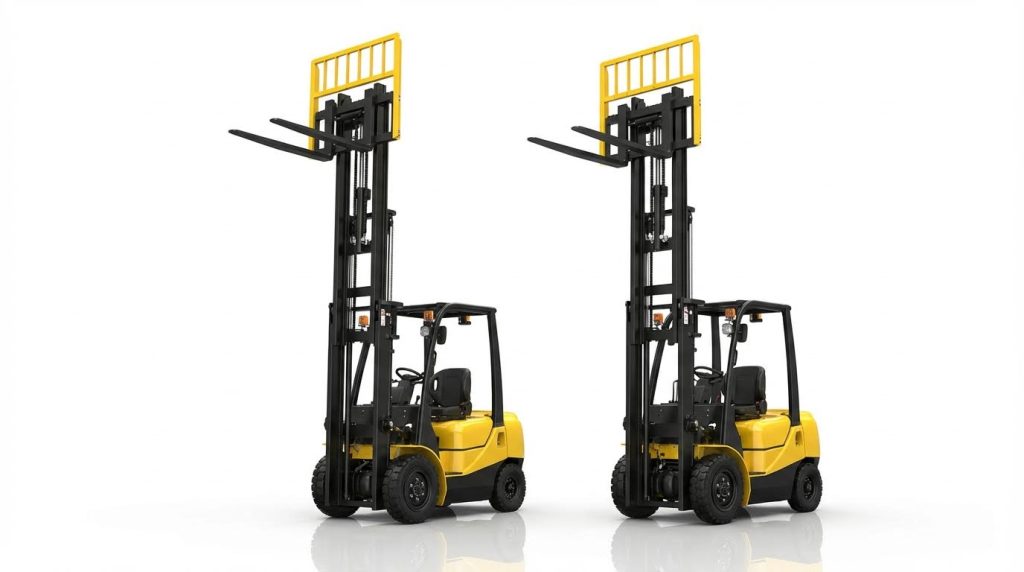
Electric forklifts offered a compelling mix of cost, environmental, and safety advantages for indoor material handling. Their benefits centered on lower energy spend, reduced maintenance, and better alignment with clean-operations policies. They also integrated well with digital fleet tools and supported tighter aisle geometries than typical internal combustion (IC) machines.
Lower Operating Costs And TCO Drivers
Electric forklifts reduced operating costs primarily through cheaper energy and simplified service. Charging a traction battery generally cost significantly less per kilowatt-hour of work than refueling with LPG or diesel, especially in multi-shift operations. Operators avoided recurring purchases of engine oil, filters, coolant, and emission-system consumables, which lowered scheduled-maintenance budgets. Total Cost of Ownership (TCO) analyses typically favored electric units when annual hours exceeded a single light-duty shift, because energy savings and reduced downtime offset higher capital cost. For engineering evaluations, it was critical to model site-specific electricity tariffs, shift patterns, and utilization rates rather than rely on generic payback assumptions.
Reduced Maintenance From Simplified Powertrain
Electric drive systems used far fewer moving parts than IC powertrains, which reduced failure modes and service frequency. Traction motors did not require oil changes, fuel-system cleaning, spark plug replacement, or exhaust after-treatment maintenance. Lead-acid batteries did require periodic watering, cleaning, and equalization charging, but these tasks were predictable and schedulable. Lithium-ion packs nearly eliminated routine battery maintenance and supported opportunity charging without memory effects. Cleaner operation also reduced wear on brakes and hydraulics, because regenerative braking absorbed part of the deceleration work. As a result, fleets typically experienced fewer unplanned stoppages and longer component life compared with equivalently utilized IC trucks.
Zero Emissions And Indoor Air Quality Benefits
Electric forklifts produced zero emissions at the point of use, which directly improved indoor air quality. They eliminated carbon monoxide, nitrogen oxides, and particulate matter that IC trucks emitted and that required powerful ventilation systems. This characteristic aligned with hygiene-critical sectors such as food, pharmaceutical, and electronics manufacturing, where contamination limits and regulatory audits were strict. Facilities could reduce or resize exhaust systems, simplify air monitoring strategies, and improve compliance with occupational exposure limits. From a sustainability perspective, electric fleets supported corporate carbon-reduction targets, while upstream emissions depended on the regional power mix and any on-site renewable generation.
Noise, Ergonomics, And Operator Fatigue
Electric forklifts operated with low acoustic emissions, apart from mandatory backup alarms and hydraulic noise. This quieter profile improved communication between operators and ground staff and reduced long-term hearing-stress risk. Smooth torque delivery and fine low-speed control improved precision in racking, tight aisles, and loading docks, which reduced operator cognitive load and product damage. Lower vibration and heat at the operator station, compared with IC trucks, decreased physical fatigue over long shifts. Many modern electric models integrated ergonomic cabins, adjustable controls, and stability or assistance systems, which together enhanced safety performance and helped maintain productivity across multi-shift operations.
Technical Limitations And Application Constraints
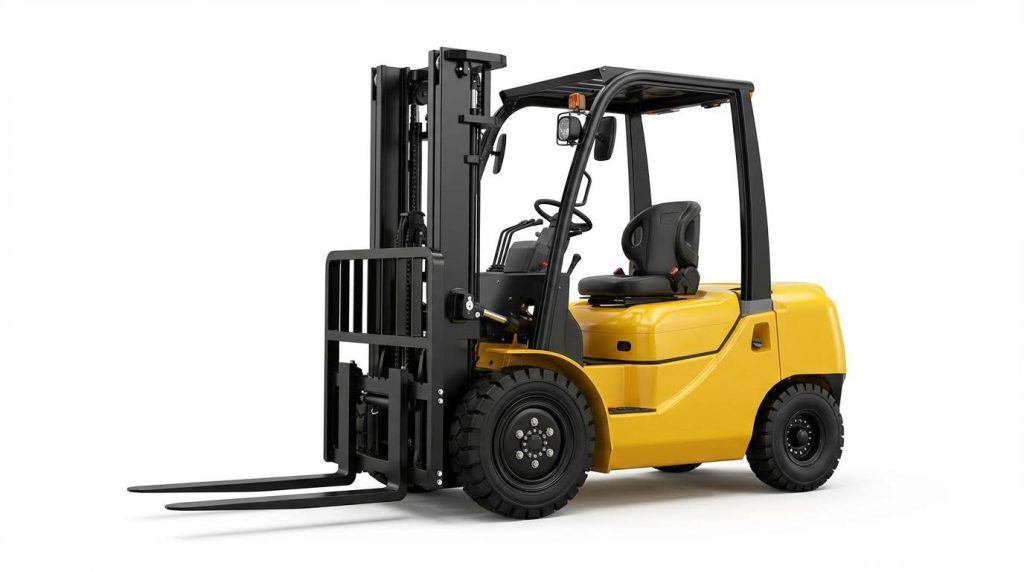
Electric forklifts operated with clear technical boundaries that engineers needed to respect. Their constraints centered on load capacity, energy storage, charging logistics, and environmental conditions. Understanding these limits allowed specifiers to avoid misapplication and unplanned downtime. The following subsections detailed the main engineering constraints that shaped electric forklift deployment.
Load Capacity And Duty Cycle Limitations
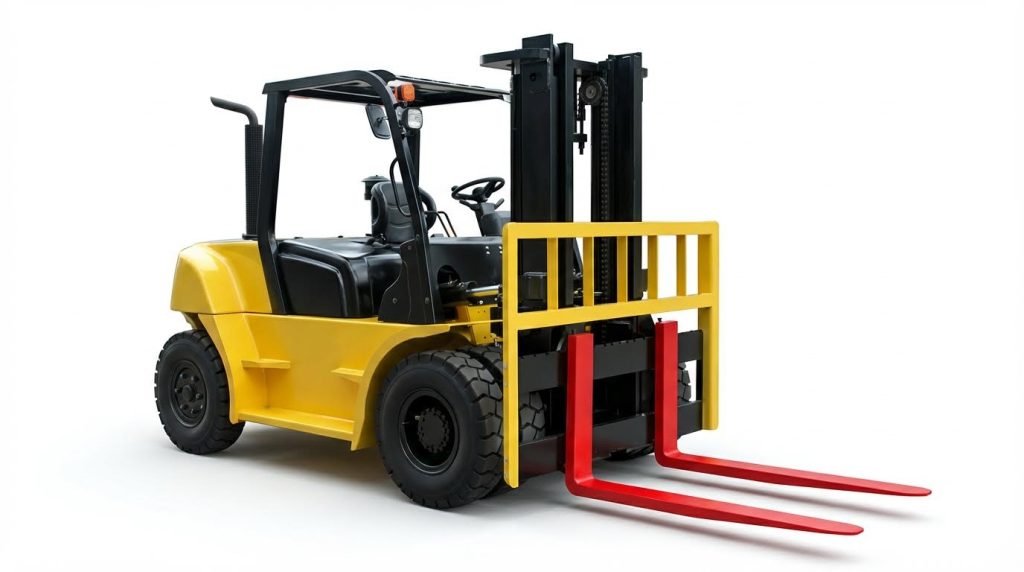
Electric forklifts historically offered lower maximum capacities than internal combustion (IC) units. Typical warehouse-class electric trucks handled up to about 5 400 kg, while heavy IC models reached 25 000 kg or more. This gap constrained electric units in steel, timber, and port operations that required very high static and dynamic loads. Engineers also needed to consider duty cycle: high-hour, multi-shift operation with frequent lifting at or near rated capacity increased battery discharge rates and thermal loading. In practice, electric forklifts fit best in medium-load, high-frequency handling with well-defined shift patterns. For heavier or highly variable loads, hybrid fleets with IC units still provided necessary peak capacity and robustness.
Battery Technology, Charging, And Swap Logistics
Battery characteristics defined the usable work window for electric forklifts. Lead-acid batteries required 6–8 hours of charging plus cooling, which limited them to single-shift use unless operators implemented battery swap programs. Swap systems demanded standardized battery sizes, overhead cranes or dedicated lifts, and trained staff to manage electrolyte safety. Lithium-ion batteries reduced maintenance and supported opportunity charging, but they increased capital cost and required compatible chargers and battery management systems. Recharging a pack typically took 10–14 hours for conventional lead-acid and less for fast-charged lithium-ion, so engineers had to schedule charging around production. Poor planning led to mid-shift outages, reduced travel speeds under low state of charge, and accelerated battery degradation.
Infrastructure, Ventilation, And Code Compliance
Charging infrastructure introduced additional constraints that facilities needed to address during design. High-capacity chargers imposed significant electrical loads, which older buildings sometimes could not support without service upgrades. Lead-acid charging generated hydrogen and oxygen, so standards required dedicated charging areas with adequate ventilation and explosion protection measures. Facilities also needed compliant cable routing, impact protection for chargers, and clear demarcation of battery service zones. Local electrical codes and occupational safety regulations governed earthing, emergency disconnects, and eyewash or spill-response provisions. Failure to integrate these requirements at the layout stage increased retrofit costs and limited fleet scaling. As a result, infrastructure readiness often became the gating factor for large electric fleets.
Outdoor, Heavy-Duty, And Harsh Environment Limits
Electric forklifts performed best on smooth, dry, and relatively clean surfaces. Their enclosures and connectors were more sensitive to water ingress, conductive dust, and corrosive atmospheres than ruggedized IC machines. Continuous outdoor operation on rough yards, construction sites, or docks challenged traction, ground clearance, and suspension durability. Low ambient temperatures in outdoor or freezer applications reduced available battery capacity and increased internal resistance, shortening run time without thermal management. Conversely, high ambient temperatures stressed power electronics and shortened battery life. IC forklifts still dominated in extreme-duty applications involving steep gradients, long travel distances, and heavy attachments. Engineers therefore often specified electric units for indoor or mixed-light outdoor use, while reserving IC machines for the harshest environments and longest routes.
Design, Selection, And Technology Trends
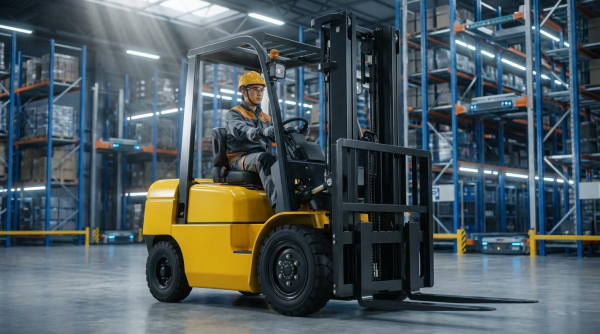
Designers and fleet engineers evaluated electric forklift technology across three main axes: energy storage, fleet architecture, and digital integration. Lead-acid and lithium-ion batteries defined performance envelopes for runtime, charging strategy, and maintenance load. At the same time, telematics, safety automation, and regulatory pressure shaped selection criteria beyond simple purchase price. These trends collectively shifted decision-making toward life-cycle cost, uptime, and environmental performance rather than pure capital expenditure.
Lead-Acid Vs. Lithium-Ion For Industrial Fleets
Lead-acid batteries dominated legacy fleets because of low upfront cost and mature supply chains. However, they required strict watering, equalization charging, and periodic cleaning to avoid sulfation and premature capacity loss. Typical charge times ranged from 6 to 8 hours plus cooling, which forced multi-shift fleets to maintain spare batteries and dedicated change-out areas. Lithium-ion packs, by contrast, supported opportunity charging without memory effects, almost eliminated routine battery maintenance, and reduced ventilation requirements at the charging area.
Lithium-ion systems also improved energy efficiency and reduced heat generation, which benefited cold storage and cleanroom applications. Their higher capital cost shifted evaluation toward total cost of ownership, where lower labor, lower downtime, and lower energy losses often compensated the premium over a 5–10 year horizon. Engineers also considered mass distribution: heavy lead-acid batteries contributed to counterweighting, while lighter lithium-ion packs sometimes required chassis re-optimization. Selection therefore balanced acquisition budget, shift structure, ambient conditions, and maintenance capability.
Fleet Right-Sizing And Multi-Shift Duty Planning
Right-sizing an electric forklift fleet required detailed analysis of duty cycles, peak throughput, and aisle geometry. Engineers modeled energy consumption per shift based on load mass, lift height, travel distance, and acceleration profiles. For lead-acid fleets, planners typically allocated one battery per shift plus a spare to cover charging and cooling windows. For lithium-ion fleets, they instead optimized opportunity-charging windows during breaks and shift changes to avoid battery swaps entirely.
Multi-shift operations benefited most from electric forklifts when planners minimized idle time and unplanned charging. Telematics data allowed calculation of actual ampere-hour draw versus nameplate capacity, exposing underutilized trucks and overspecified capacities. Right-sizing often reduced total truck count by aligning capacity with real peaks rather than worst-case assumptions. This approach lowered capital expenditure and improved utilization rates while still meeting service-level requirements for loading docks and high-bay storage.
Telematics, AI Maintenance, And Safety Systems
Telematics systems on electric forklifts tracked usage patterns, state-of-charge, impact events, and fault codes in real time. Fleet managers used this data to schedule preventive maintenance based on actual operating hours and load profiles instead of fixed calendar intervals. Electric drivetrains, with fewer moving parts, paired well with predictive analytics, because anomalies in current draw or temperature trends indicated bearing wear or hydraulic issues early. This reduced unplanned downtime and allowed smaller on-site spare capacity.
Advanced safety packages integrated stability control, speed limiting by zone, and proximity sensors. Electric architectures simplified integration of these systems because high-voltage buses and onboard controllers already existed for traction and hydraulics. Some fleets deployed AI-based behavior analysis that flagged harsh braking, overspeed in corners, or repeated overload attempts. These tools improved compliance with internal safety policies and external standards while reducing collision-related damage to racking and inventory.
Sustainability Targets And Regulatory Pressures
Corporate sustainability targets and tightening emissions regulations pushed logistics operators toward electric forklifts. Zero tailpipe emissions allowed facilities to meet indoor air quality limits without extensive ventilation or exhaust treatment. This was critical in food, pharmaceutical, and electronics sectors, where airborne contaminants and combustion byproducts were unacceptable. Lifecycle assessments often showed lower greenhouse gas emissions for electric fleets, especially when facilities purchased low-carbon electricity.
Regulators increasingly restricted internal combustion forklifts in enclosed spaces and imposed stricter exposure limits for carbon monoxide and nitrogen oxides. Environmental, social, and governance (ESG) reporting frameworks also favored electric fleets because they reduced Scope 1 emissions. Engineers therefore incorporated electrification into long-term material-handling master plans, aligning truck replacement cycles with infrastructure upgrades. Selection criteria expanded to include not only performance and cost, but also contribution to corporate decarbonization roadmaps and compliance with
Summary: Choosing Electric Vs. IC Forklifts
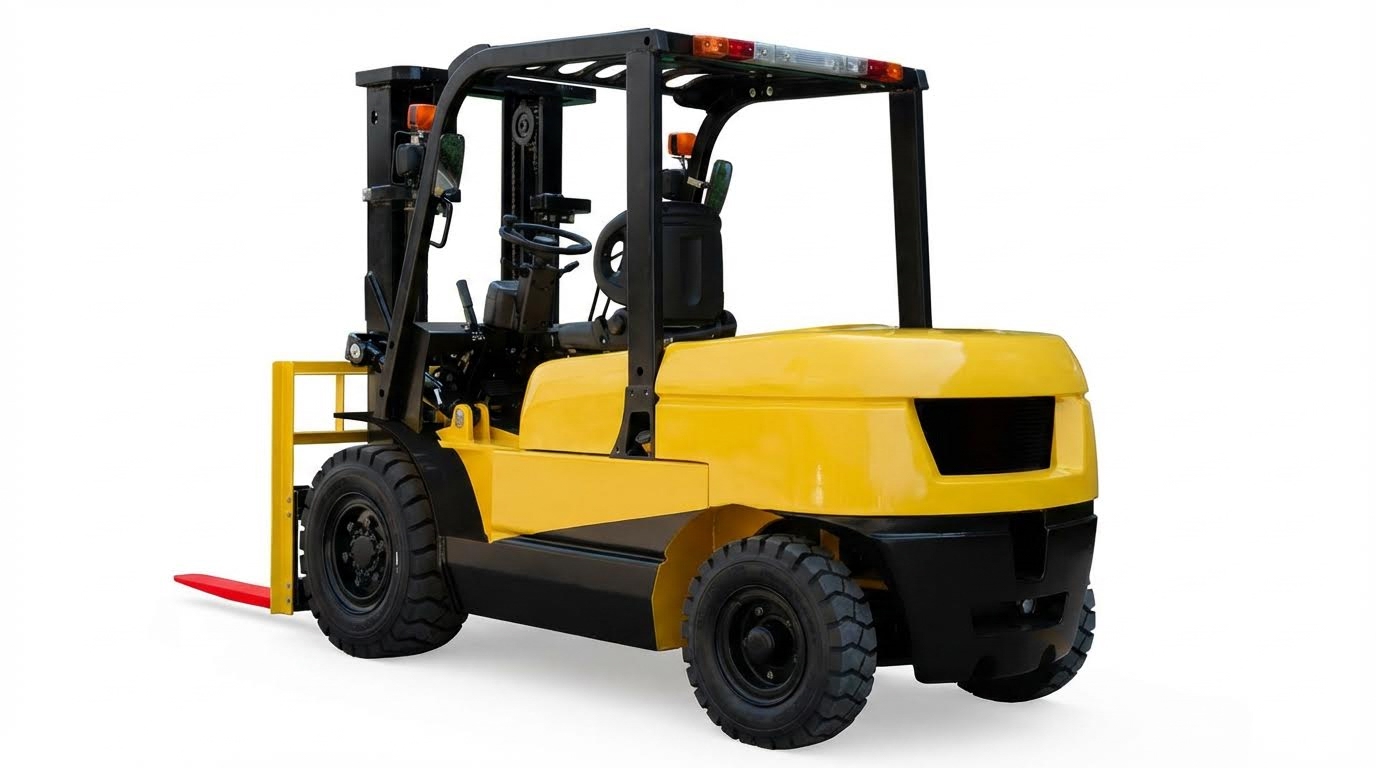
Engineering teams evaluated electric forklifts as strong candidates for indoor, high-utilization fleets where air quality, noise, and lifecycle cost dominated the specification. Zero point-of-use emissions, smaller turning radii around 2.7–2.9 m, low noise, and fewer moving parts reduced both indirect health impacts and direct maintenance costs. Total cost of ownership analyses consistently favored electric drives in multi-shift warehouse and manufacturing operations, especially when lithium-ion batteries and opportunity charging reduced downtime. Telematics and integrated safety systems further improved controllability, incident traceability, and compliance with tightening environmental regulations.
However, internal combustion forklifts still matched or exceeded requirements in heavy-duty, outdoor, and remote applications. Diesel and LPG units delivered higher lift capacities, up to 55,000 lb and beyond, and enabled rapid refueling without charging infrastructure. Facilities with intermittent use, harsh weather exposure, unpaved yards, or extreme load envelopes often justified IC fleets despite higher fuel and maintenance costs. Engineers had to account for emissions control, ventilation, and more frequent service of oil, filters, and exhaust after-treatment when specifying IC units.
In practice, the most robust strategy often used a mixed fleet. Electric forklifts handled indoor, repetitive material flows, particularly in food, pharma, and electronics plants, while IC units supported yard work, construction supply, or oversized loads. Future trends pointed toward broader adoption of electric platforms as battery energy density improved, charging times shortened, and regulatory pressure on combustion emissions intensified. Yet IC forklifts remained technically relevant where infrastructure constraints, extreme duty cycles, or very high capacities made current electric offerings non-viable. Decision frameworks therefore needed to quantify load spectra, duty cycles, infrastructure upgrades, and compliance risks rather than relying on a single “one-size-fits-all” powertrain choice.