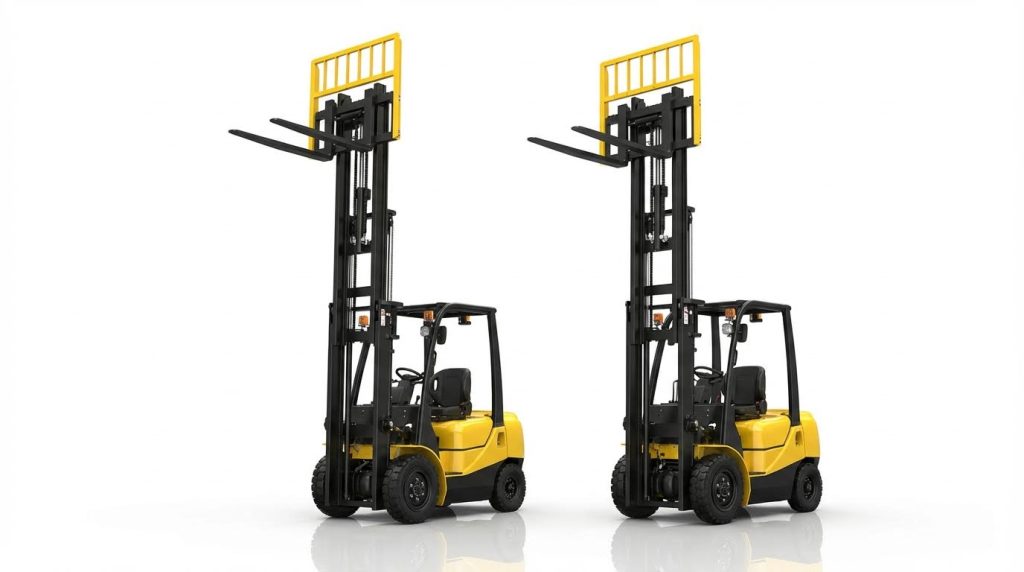
Forklift fleets represented a major capital asset in industrial plants, where service life, reliability, and safety directly affected unit logistics costs. Understanding useful life in operating hours, how those hours translated into years, and how duty cycles and environments accelerated wear allowed engineers to plan fleets rationally. This article examined typical life ranges by powertrain and truck class, engineering factors such as load spectrum, environment, and operator behavior, and maintenance strategies from daily checks to 500-hour services and refurbishments. It concluded with guidance on aligning forklift life expectations and replacement timing with broader plant productivity, safety, and total cost of ownership objectives.
Defining Forklift Useful Life And Duty Profiles
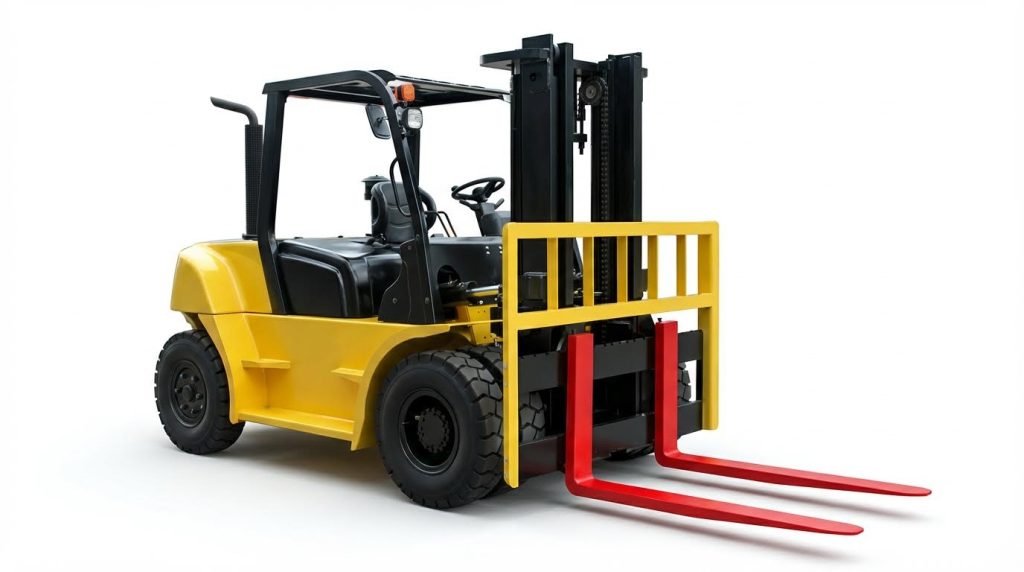
Forklift useful life in industrial operations depended on accumulated operating hours under a defined duty profile. Engineers evaluated life not only by calendar years but by how intensively the truck operated, in which environment, and with what maintenance regime. Distinguishing between powertrain types, ISO truck classes, and usage severity allowed plants to forecast replacement timing and total cost of ownership with higher accuracy. This section framed service life in terms of hours, years, and economic triggers rather than purely mechanical failure.
Typical Hour Ranges By Powertrain And Class
Industry benchmarks placed the useful life of most forklifts between 10 000 and 20 000 operating hours under typical conditions. Internal combustion (IC) trucks in Class IV–V often reached 8 000–12 000 hours before major economic rebuilds, although robust diesel units in well-managed fleets sometimes exceeded this range. Electric Class I–III trucks usually achieved 10 000–20 000 hours due to fewer moving parts and lower vibration, provided that batteries and chargers received proper care. High-quality units, maintained preventively and operated in clean indoor environments, occasionally ran beyond 20 000 hours while still meeting safety and performance requirements.
Engineers adjusted these ranges by application class and load spectrum. Trucks working in continuous multi-shift warehousing with frequent lifting near rated capacity accumulated fatigue faster than units in light manufacturing support roles. Rough-terrain or outdoor yard trucks experienced higher structural and driveline stress, effectively lowering practical hour targets. Fleet policies therefore often defined different retirement bands by truck class, fuel type, and application, rather than using a single global hour limit.
Translating Operating Hours Into Years Of Service
Converting hours to years required an accurate estimate of annual utilization. A forklift running 8 hours per day, 5 days per week, accumulated roughly 2 000 hours per year in a single-shift operation. Under this assumption, a 10 000-hour target corresponded to about 5 years of service, while 20 000 hours aligned with approximately 10 years. Multi-shift plants with 16–24 hours of daily operation reached the same hour totals in half or one-third of the calendar time.
Engineers used actual hour-meter data from telematics or manual logs rather than nominal schedules, because idle time and partial loading affected wear patterns. They also considered that components aged differently: traction systems might still perform acceptably while masts, chains, and hydraulic circuits approached end of life. As a result, lifecycle planning often combined an overall hour threshold with component-specific inspections and cost tracking to define realistic service years for each truck.
Normal Vs Heavy-Duty Usage Profiles
Normal-duty profiles typically involved single-shift operation on smooth floors, moderate lift heights, and loads well below rated capacity. In these conditions, thermal loads, structural fatigue, and hydraulic pressures stayed within conservative design margins, allowing trucks to reach the upper end of the 10 000–20 000-hour range. Heavy-duty profiles, by contrast, featured continuous multi-shift use, frequent operation at or near rated load, high lift cycles, and aggressive acceleration or braking. Such patterns increased heat, shock loading, and fatigue, shortening practical life even if calendar years remained low.
Environmental severity further differentiated duty classes. Operation on rough terrain, in cold storage, or in areas with dust, moisture, or corrosive chemicals accelerated wear on bearings, seals, electrical connectors, and structural welds. Plants often codified these differences by assigning usage categories—light, standard, heavy, or severe—and applying derating factors to expected life. This structured approach supported realistic budgeting for replacement and clarified why two visually similar trucks could justifiably have very different retirement targets.
Economic Life, Residual Value, And Replacement Triggers
Economic life ended when marginal operating and maintenance costs rose faster than the value of keeping the truck in service. Frequent breakdowns, increasing repair hours, and higher fuel or energy consumption signaled that a forklift had moved beyond its most economical phase, even if it still operated. Fleet managers tracked cost per operating hour, unplanned downtime, and safety nonconformities to determine when further investment no longer delivered acceptable returns. At this point, selling, redeploying to lighter duty, or refurbishing became the main options.
Residual value depended on total hours, maintenance history, and technology relevance. Well-documented service records,
Engineering Factors That Drive Forklift Lifespan
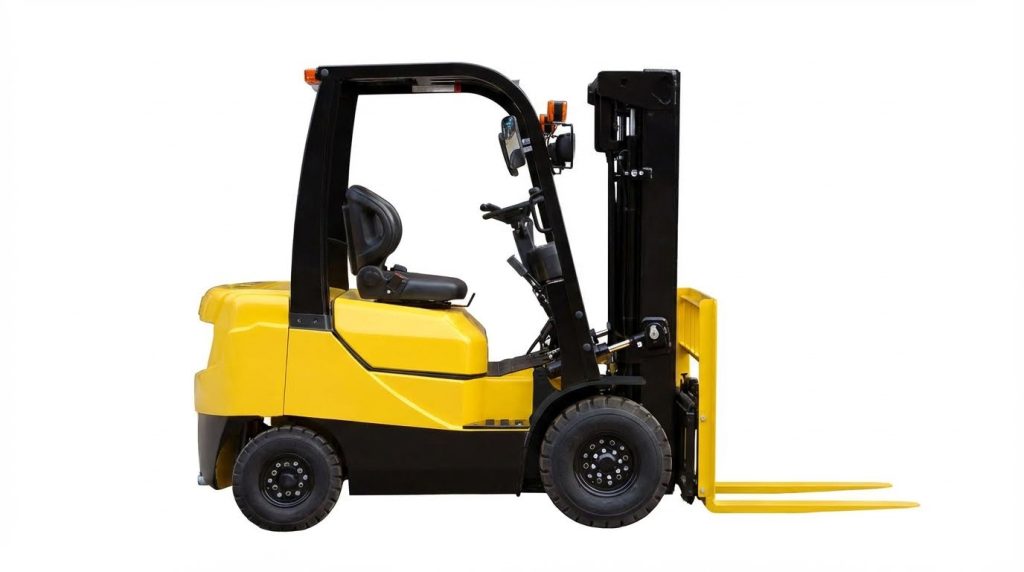
Engineering factors defined the true service life of forklifts beyond nameplate ratings. Environment, load spectrum, and duty severity determined baseline mechanical and structural fatigue. Powertrain type, especially electric versus internal combustion (IC), set different dominant wear mechanisms and maintenance priorities. Battery technology, charging strategy, and power management governed electric truck availability and long-term cost. Operator behavior and safety compliance linked directly to impact frequency, overload events, and unplanned downtime.
Environment, Load Spectrum, And Duty Cycle Severity
Harsh environments historically shortened forklift life by accelerating corrosion, contamination, and thermal stress. Operations with dust, abrasive particles, chemicals, or frequent wash-down exposed mast rails, chains, pins, and electrical enclosures to accelerated wear. Rough terrain, uneven floors, and dock plates created high shock loads into the mast, steer axle, and chassis welds. Load spectrum mattered as much as nominal capacity; frequent operation near rated capacity, high lift heights, and dynamic handling increased fatigue damage in forks, mast channels, and tilt cylinders. Continuous multi-shift duty with limited cool-down raised drivetrain and hydraulic temperatures, reducing oil life and sealing performance. Engineering teams therefore specified higher protection levels, derated capacities, or shorter replacement intervals in severe-duty applications.
Electric Vs IC Trucks: Wear Mechanisms And Limits
Electric forklifts historically achieved 15,000–20,000 operating hours because they had fewer moving parts and no combustion process. Their limiting factors were traction and pump motors, power electronics, and structural elements rather than engines or transmissions. Internal combustion trucks typically reached 8,000–12,000 hours under normal duty, constrained by engine wear, transmission degradation, and thermal cycling of exhaust and cooling systems. Diesel units in heavy applications could exceed these ranges when maintained rigorously, but fuel system and emission-control components added complexity. Electric trucks experienced failure modes such as bearing fatigue in motors, contactor erosion, and controller overheating if cooling or cleanliness lapsed. IC trucks instead faced oil-related wear, valve-train fatigue, and clutch or torque-converter deterioration under aggressive driving and heavy towing. These distinct wear mechanisms drove different maintenance plans, component inspection intervals, and economic replacement thresholds.
Battery Life, Charge Cycles, And Power Management
Battery systems governed the practical life and availability of electric forklifts. Traditional flooded lead-acid batteries usually provided about five years of service when operators avoided deep discharges below roughly 30% state of charge. Typical life corresponded to a limited number of full charge cycles; improper opportunity charging, chronic under-watering, and high temperatures could cut life significantly. Weekly watering, equalization charges, and clean terminals reduced sulfation and corrosion at intercell connectors. Lithium-ion batteries historically offered more than 3,000 cycles and service lives above 10 years, with higher tolerance to partial charging and reduced maintenance. Smart chargers and fleet energy management limited overcharge, managed temperature, and balanced usage across trucks, protecting both batteries and power electronics. Plants that aligned charging windows with shift patterns and ventilation requirements reduced downtime and extended overall truck life.
Impact Of Operator Behavior And Safety Compliance
Operator behavior strongly influenced the gap between theoretical and actual forklift lifespan. Aggressive driving, rapid acceleration, hard braking, and sharp turns imposed high dynamic loads on mast assemblies, steer axles, and tires. Repeated impacts with racking, dock edges, and obstacles caused misalignment, cracked welds, and bent forks, often triggering early economic retirement despite remaining drivetrain life. Overloading or lifting off-center loads overstressed mast rails, chains, and tilt cylinders, and increased risk of tip-over events. Well-trained operators who followed speed limits, adhered to load charts, and executed smooth hydraulic movements reduced structural fatigue and hydraulic shock. Daily pre-shift inspections, as required by safety standards, identified leaks, tire damage, and brake issues before they escalated into failures. Plants that enforced safety rules and used telematics to monitor impacts and overloading typically doubled effective service life compared with reactive, low-discipline operations.
Maintenance Strategies To Extend Forklift Life
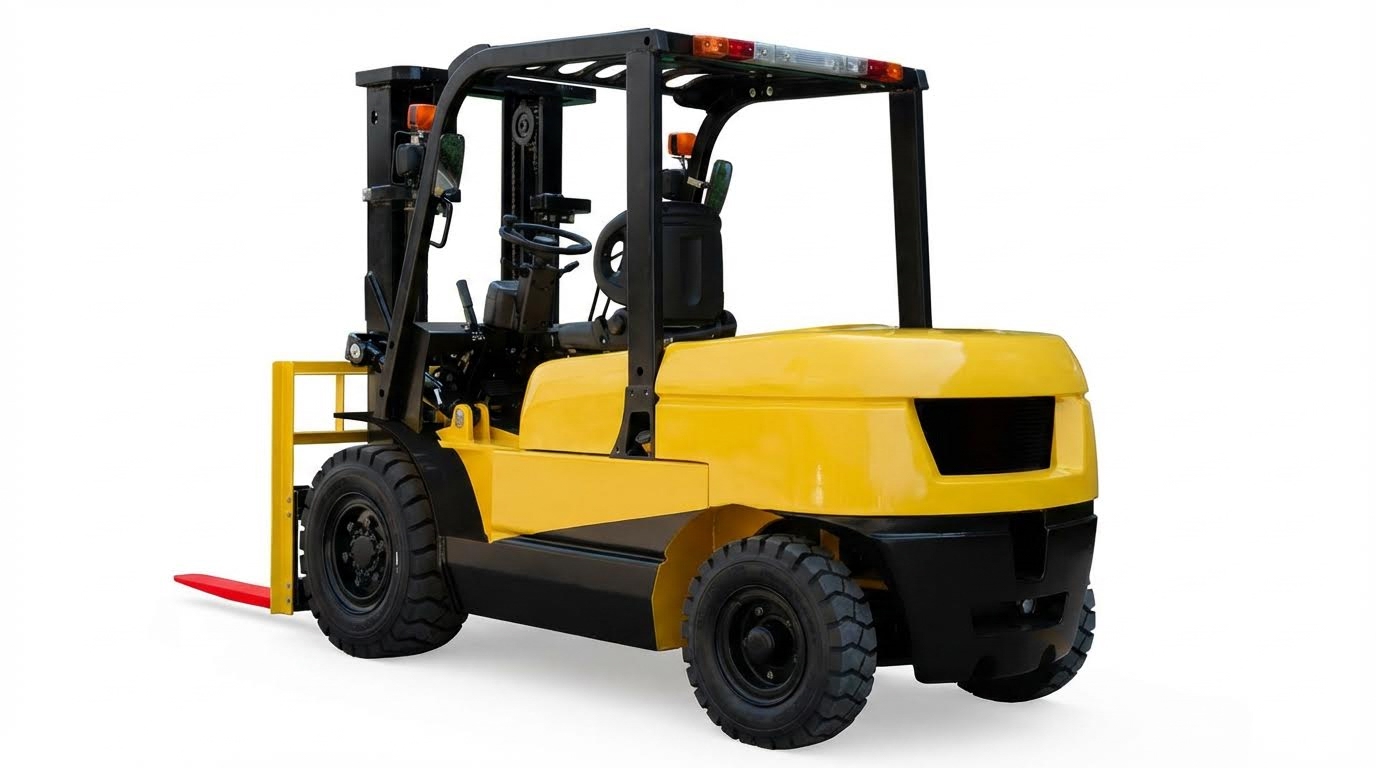
Maintenance strategy directly determined whether forklifts reached 8,000 hours or exceeded 20,000 hours of useful life. Plants that treated maintenance as an engineered process, not a cost center, typically doubled service life compared with purely reactive approaches. The following subsections describe structured programs, inspection intervals, and component-specific controls that supported long, safe, and economically viable operation.
Preventive, Predictive, And Telematics-Based Programs
Preventive maintenance relied on fixed-time or fixed-hour tasks such as oil changes, filter replacement, lubrication, and safety inspections. Industry practice aligned quarterly or 90-day services with 100-hour or 250–500-hour intervals, depending on duty severity and manufacturer guidance. Predictive maintenance added condition data such as temperature trends, vibration, hydraulic leak rates, and error codes to anticipate failures before they caused downtime. Telematics and fleet management systems captured operating hours, impact events, overload incidents, and charging behavior, enabling data-driven scheduling and compliance tracking.
Plants used telematics to flag trucks that exceeded recommended lift heights, load capacities, or travel speeds, then targeted coaching or lockouts. Integrated digital checklists supported regulatory compliance by enforcing daily pre-use inspections and storing results in a central database. Predictive analytics on fault histories and component replacements helped define realistic economic life thresholds for each truck type and duty profile. This layered strategy reduced unplanned stoppages, stabilized lifecycle cost per operating hour, and improved residual value at end of service.
Daily To 500-Hour Inspection And Service Intervals
Daily inspections after each shift focused on safety-critical items: brakes, steering response, mast chains, forks, hydraulic hoses, and visible leaks. Operators checked horn, lights, alarms, tires, seat restraints, and load backrests while also verifying fluid levels and obvious damage. First-level maintenance around 90 days or 100 hours typically included engine or motor checks, transmission function, brake performance, and cooling system verification. Plants aligned these tasks with OEM recommendations to keep warranties valid and meet safety regulations.
Second-level work in the 250–500-hour band involved deeper cleaning, oil and filter changes, torque checks on wheel nuts and structural fasteners, and calibration of sensors. For IC trucks, technicians inspected exhaust, fuel, and ignition systems, while electric units received detailed battery, connector, and charger checks. Facilities operating in dusty or corrosive environments shortened intervals to compensate for accelerated contamination and wear. Documented maintenance histories at each interval allowed engineers to compare actual failure patterns against design expectations and refine service plans.
Tires, Hydraulics, And Structural Integrity Checks
Tires acted as primary suspension elements, so their condition strongly influenced component loads and operator safety. Technicians inspected for chunking, cracking, flat spots, and tread loss, replacing tires before they reached legal or OEM wear limits. Incorrect tire type or pressure altered ground clearance and stability, which affected mast loading and tip-over risk. Plants standardized tire specifications by application to maintain predictable handling.
Hydraulic systems required close monitoring of hoses, cylinders, seals, and fittings for abrasion, bulging, leaks, or temperature-related degradation. Early hose replacement at the first sign of stress avoided sudden line bursts that could drop loads or contaminate floors. Structural inspections covered mast welds, carriage plates, overhead guards, and chassis members, checking for deformation, corrosion, and crack initiation. Measured fork wear, heel thickness, and bend tolerance ensured forks stayed within ISO and manufacturer limits, preventing brittle failures during high-load lifts.
Refurbishment, Component Overhaul, And Life Extension
When trucks approached 10,000–15,000 hours, plants often evaluated refurbishment versus replacement on a cost-per-hour basis. Refurbishment programs typically included engine or motor overhauls, transmission rebuilds, new hydraulic hoses, mast chain replacement, and full tire sets. Electric forklifts frequently received new or upgraded batteries and contactors, which restored performance and extended life by several thousand hours. Structural repairs, repainting, and updated safety decals also improved corrosion resistance and audit readiness.
Engineers used service records and telematics data to identify candidates where the frame, mast, and driveline remained fundamentally sound. In those cases, a targeted overhaul cost less than acquiring new equipment while preserving familiar controls and attachments. However, if units exhibited recurring failures, obsolete electronics, or significant structural fatigue, replacement often provided better lifecycle economics and safety margins. Clear refurbishment
Summary: Aligning Forklift Life With Plant Objectives
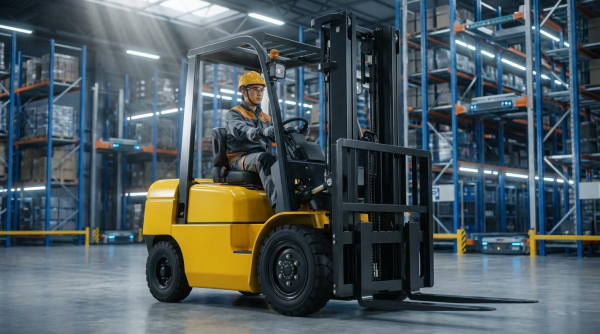
Forklift useful life in industrial operations historically ranged between 10,000 and 20,000 operating hours, depending on powertrain, environment, and maintenance quality. Electric trucks often reached the upper end of this band, while internal combustion units typically achieved 8,000 to 12,000 hours unless operators and maintainers applied best practices rigorously. Engineering factors such as load spectrum, duty cycle severity, exposure to contaminants, and battery or fuel system management directly defined whether a truck reached its technical limit or failed early. In parallel, plants usually treated forklifts as economic assets whose replacement points depended on lifecycle cost, safety risk, and alignment with evolving production strategies.
Across sources, proactive maintenance emerged as the single strongest lever to extend service life, with structured programs ranging from daily checks to 500-hour overhauls. Plants that implemented preventive schedules, standardized inspection checklists, and disciplined battery care routinely doubled useful life compared with purely reactive approaches. Telematics and fleet-management systems allowed engineers to match truck class and specification to real duty cycles, monitor abuse events, and trigger condition-based service rather than relying on calendar time alone. This data-driven approach supported better decisions on refurbishment, component overhaul, and timing of replacement to avoid the cost inflection point where breakdowns, energy use, and safety incidents escalated.
For implementation, industrial sites benefited from integrating forklift lifecycle planning into broader asset-management and OEE frameworks. That meant defining target life in hours and years by truck type, specifying acceptable downtime and maintenance cost per hour, and linking operator training, traffic design, and housekeeping standards to those targets. Future trends pointed toward higher penetration of electric and lithium-ion platforms, deeper telematics integration, and more modular designs that supported mid-life rebuilds rather than full replacement. Plants that treated forklifts as engineered systems instead of consumables could balance technology upgrades with maximum value extraction from existing fleets, maintaining safety and reliability while controlling total cost of ownership.