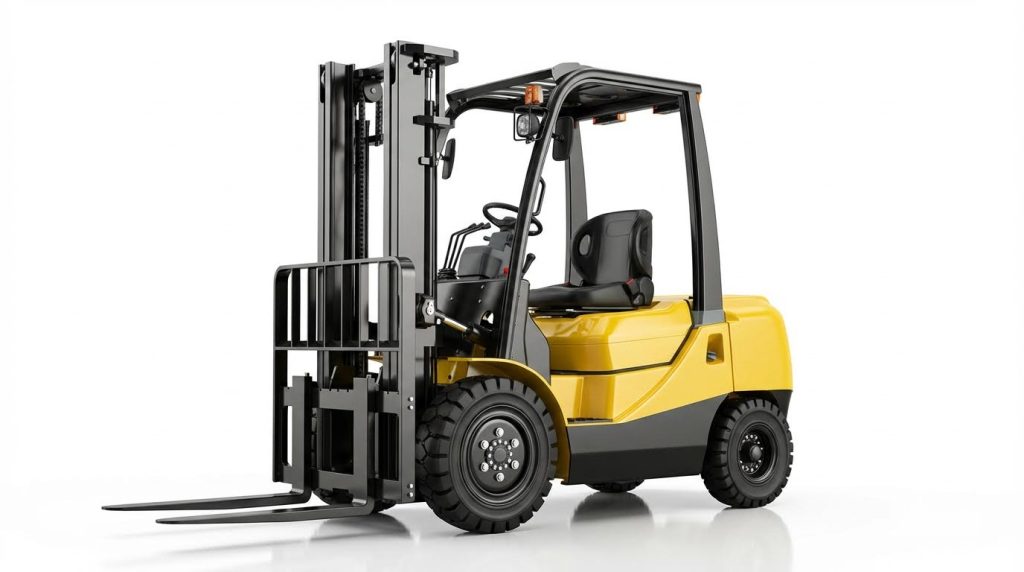
Electric forklifts relied on rigorous engineering, testing, and maintenance regimes to deliver predictable performance in demanding material-handling environments. This article examined how manufacturers defined and validated key performance metrics, including traction, gradeability, load stability, travel speed, and battery behavior across temperature extremes. It then explored the control architectures and safety systems that governed speed, cornering, and operator protection, as well as tunable parameters for hydraulics and regenerative braking. Finally, it discussed reliability testing, crash and environmental qualification, maintenance strategies, and how these factors guided the selection of high-performance electric forklifts for industrial fleets.
Key Performance Metrics For Electric Forklifts
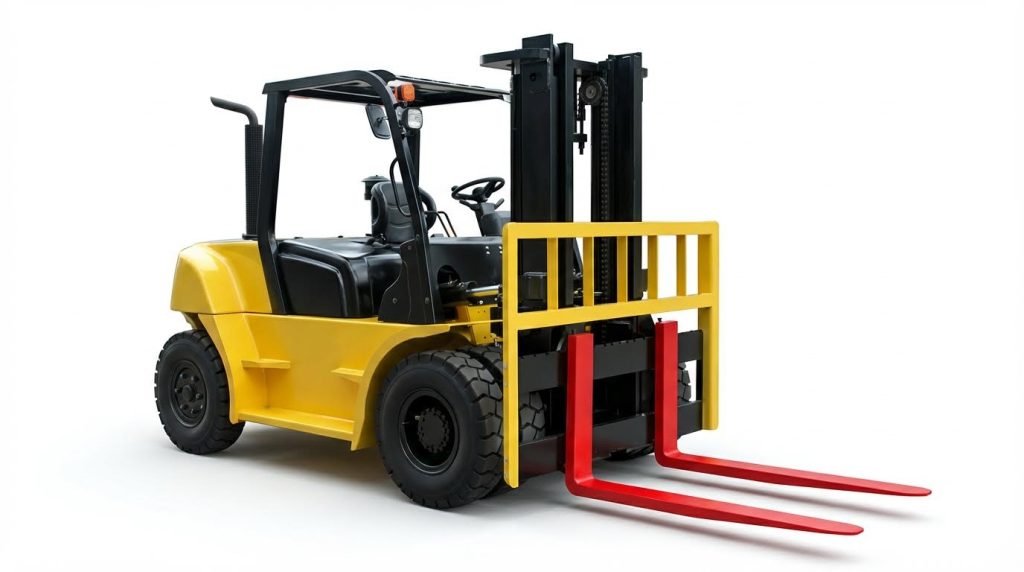
Key performance metrics for electric forklifts focused on how effectively trucks converted electrical energy into tractive effort, lifting work, and safe maneuvering under load. Engineers and fleet managers evaluated traction, gradeability, stability, and dynamic speed behavior using standardized tests and site-specific duty cycles. Battery behavior across temperature and altitude ranges also played a decisive role, because voltage sag and thermal limits constrained sustained performance. Together, these metrics defined whether an electric forklift could replace or outperform an internal combustion unit in demanding industrial environments.
Traction, Gradeability, And Slope Performance
Traction and gradeability determined whether an electric forklift operated safely on ramps, loading docks, and outdoor yards. By 2025, typical warehouse electrics achieved gradeability near 10% on small models and about 15% on 2 tonne trucks, with premium designs sustaining a 15% grade laden using 96 V lithium packs and water‑cooled motors. OEMs validated these claims on instrumented test ramps and high-altitude slopes, such as 2 500 m mountain roads, to capture torque limits, battery voltage sag, and motor thermal behavior. Future traction-motor and in‑wheel technologies were projected to push practical gradeability toward 20% between 2026 and 2028, narrowing the gap to diesel units.
Load Capacity, Stability, And ISO 22915 Compliance
Load capacity and stability metrics ensured that forklifts lifted rated loads without tipping or structural overload. Manufacturers verified rated capacities on tilt tables and dynamic test tracks, measuring mast deflection, center-of-gravity migration, and wheel load distribution. ISO 22915 stability tests required trucks to remain upright with the mast vertical and load at full height on a 13% tilt, so OEMs usually derated real-world grade limits to roughly 80% of that angle for safety. Additional testing under bumpy, ridged circular tracks and impact scenarios validated fork carriages, overhead guards, and battery compartments against fatigue and crash loads while keeping deformation and permanent set within allowable limits.
Speed, Acceleration, And Cycle Time Impacts
Speed and acceleration metrics directly influenced handling cycle times and throughput per shift. Modern electric forklifts used programmable travel speed limits, acceleration ramps, and regenerative deceleration profiles to balance productivity with safety requirements. Engineers measured loaded and unloaded acceleration, time to target speed, and stop distances under different parameter sets and assistance functions such as automatic cornering speed reduction and rollback control. Fleet managers translated these measurements into pallet‑moves‑per‑hour benchmarks, then tuned performance parameters to match aisle width, pedestrian density, and site speed policies without exceeding overspeed alarm thresholds or regulatory guidance.
Battery Performance Across Temperature Extremes
Battery performance across temperature extremes constrained how consistently electric forklifts delivered rated traction and lift. Test programs cycled trucks between about −20 °C and 45 °C, monitoring voltage sag, internal resistance growth, and thermal limits at high discharge rates. At low temperatures, lithium‑ion packs still delivered full performance when paired with appropriate heating or management, but hydraulic oil viscosity and seal stiffness required attention to avoid sluggish lift or cavitation. At high ambient temperatures and high altitudes, engineers validated that cooling systems maintained cell and motor temperatures within design envelopes, while control software limited current to prevent accelerated degradation, thereby preserving capacity retention and calendar life targets.
Engineering Design For Speed Control And Safety
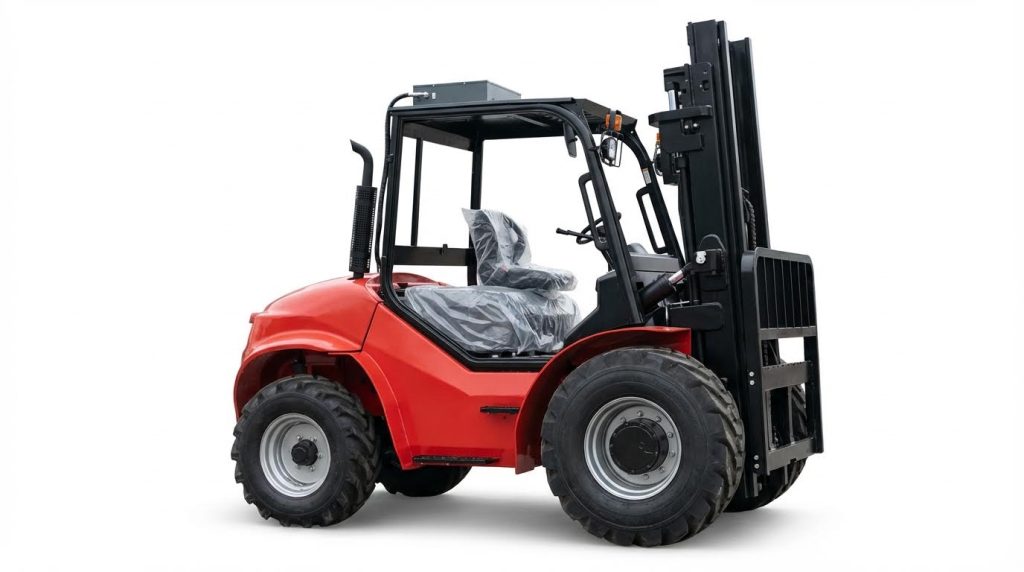
Engineering teams designed electric forklifts with integrated electronic controls to manage speed, traction, and operator safety. They implemented layered control strategies that combined hardware interlocks, software parameters, and environmental sensing. These systems allowed fleets to tailor truck behavior to site rules while maintaining regulatory compliance and productivity.
Electronic Speed Limiting And Zone Control
Electronic speed limiting used real-time speed monitoring and throttle mapping to cap maximum travel velocity. Controllers compared wheel speed sensor data with configured thresholds and then derated motor torque when the truck approached the limit. Overspeed controllers in 2025 models typically applied multi-stage alerts at 8 km/h, 10 km/h, and 12 km/h with strobes, buzzers, and voice prompts. Zone speed limiting extended this concept by linking speed caps to geofenced areas inside plants or warehouses. Fixed readers or beacons triggered the truck controller to enforce, for example, 10 km/h in yard areas and 5 km/h in congested workshops. This architecture supported consistent speed discipline without relying solely on operator judgment.
Cornering, Deceleration, And Rollback Management
Cornering control logic reduced speed automatically when the steering angle exceeded a calibrated threshold. The control unit interpreted high steering angles as turning maneuvers and ramped down drive current to limit centrifugal forces and tip risk. Automatic cornering deceleration worked together with regenerative braking to slow the truck smoothly as the operator released the accelerator. Engineers tuned deceleration rates to maintain stability on low-friction floors and in narrow aisles. Rollback control addressed operation on ramps and docks by limiting reverse acceleration on slopes. The controller detected backward motion and gradient, then held or slowly modulated torque so the truck did not surge downhill. These functions significantly improved controllability for less experienced operators.
Operator Presence And Smart Environment Sensing
Operator Presence Systems (OPS) relied on seat switches, belt sensors, and sometimes standing-platform sensors. When the operator left the seat or unlatched the belt, the system disabled traction and hydraulic functions, preventing unintended movement. Engineers integrated these interlocks with ignition logic to reduce unauthorized use during breaks or shift changes. Smart environment sensing, such as SEnS and SEnS+ systems, added object and pedestrian detection around the truck. Configurable detection distances and warning modes allowed plants to tune sensitivity for different aisle widths and traffic densities. When the sensors detected a person or obstacle within a defined zone, the forklift issued visual and audible alerts and could automatically limit speed. Together, OPS and smart sensing formed a dual layer of protection for both operators and pedestrians.
Tunable Drive, Hydraulic, And Regenerative Settings
Modern electric forklifts offered dozens of adjustable parameters for drive and hydraulic performance. Technicians could set travel speed ceilings, acceleration ramps, and accelerator pedal response curves to match skill levels and application needs. High-precision work required softer pedal response and lower peak speeds, while cross-dock operations used more aggressive settings to cut cycle times. Hydraulic tuning covered lift, lower, tilt, and attachment speeds, enabling energy savings where full-speed hydraulics were unnecessary. Regenerative braking strength was also configurable for both straight-line travel and directional changes. Stronger regeneration reduced service brake wear and recovered more energy but required careful tuning to avoid abrupt deceleration on slippery floors. These tunable settings allowed fleets to standardize behavior across trucks while optimizing safety, comfort, and throughput.
Reliability, Testing Protocols, And Maintenance
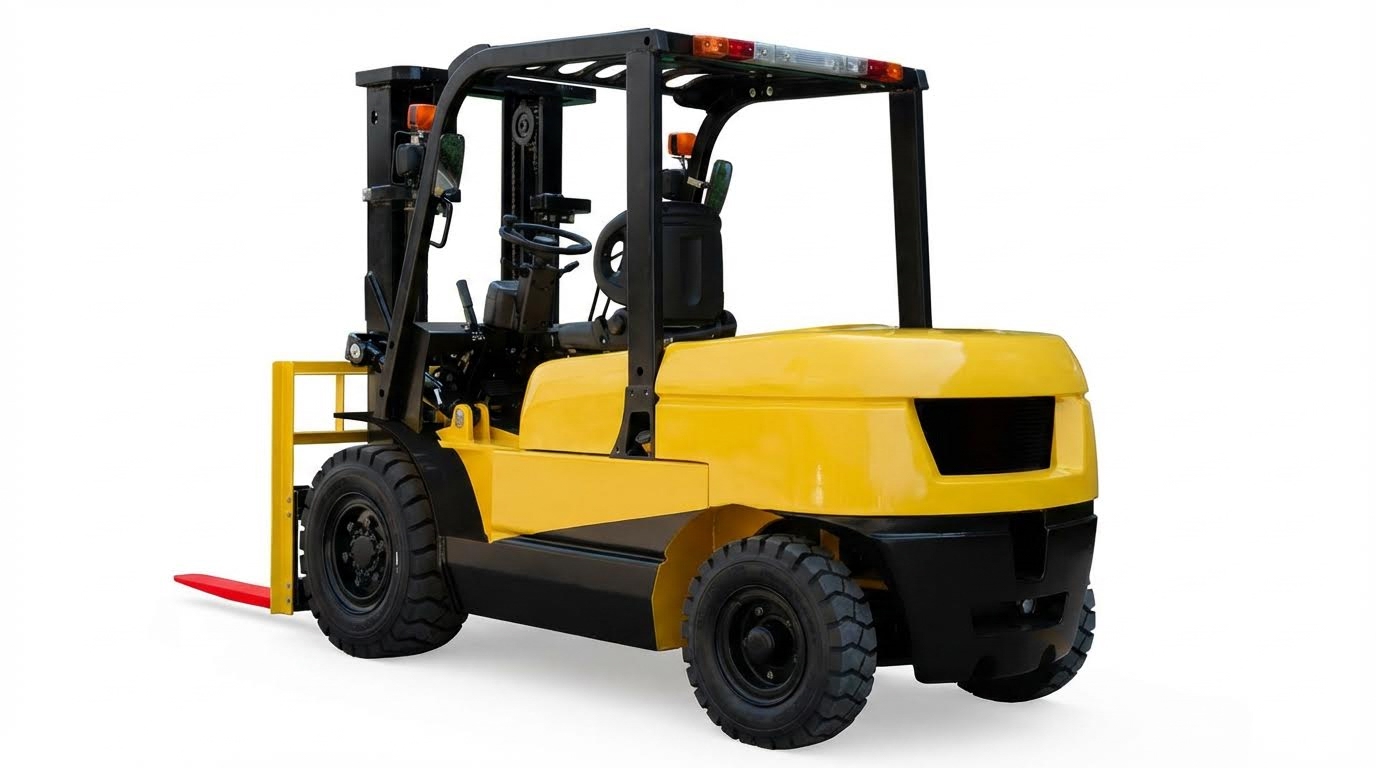
Reliability for electric forklifts depended on structured validation and disciplined maintenance throughout the life cycle. OEMs validated designs with endurance, crash, and environmental tests that pushed structures, drivetrains, and batteries to failure margins. Operators then sustained this reliability through battery care, smart charging strategies, and condition-based maintenance. Integrated digital tools, including simulations and IoT monitoring, closed the loop between design assumptions and field performance.
Endurance, Crash, And Environmental Stress Testing
Electric forklifts underwent endurance testing on circular tracks with ridges to replicate long-term operation on uneven floors. Test cycles ran for thousands of laps to expose fatigue in frames, masts, axles, and steering linkages. OEMs also performed crash tests, including impacts from 24-tonne trucks into smaller forklifts, to verify that battery compartments resisted deformation and avoided sparks. Environmental chambers and outdoor trials validated operation from approximately −20°C to 45°C, while high-altitude tests around 2,500 meters checked power electronics and cooling performance in thin air.
Digital Twins, Simulation, And Design Validation
Digital twins and simulations supported design validation before physical prototypes existed. Engineers modeled traction motors, converters, and lithium-ion packs to predict thermal behavior under peak load and continuous grade operation. Virtual tilt-table and stability simulations helped designers meet ISO 22915 criteria while optimizing counterweight geometry and mast stiffness. These models allowed rapid iteration on frame weld layouts and battery enclosure structures, then physical tests confirmed or refined simulation assumptions. The combined approach reduced prototype count, shortened development cycles, and improved correlation between catalog specifications and in-field performance.
Battery Care, Smart Charging, And Life Extension
Battery reliability relied on controlled charging strategies and regular condition checks. Operators avoided opportunity charging throughout the shift and instead performed a full charge once per day for duty cycles exceeding four hours. For idle fleets, maintenance teams recharged at least every seven days to prevent deep discharge below roughly 20% state of charge. Lead–acid systems required post-charge watering with deionized or distilled water and corrosion checks at terminals, while smart chargers and equalization cycles balanced cell voltages. Lithium-ion packs benefited from BMS-controlled charge profiles and temperature monitoring, which limited overheating and extended service life.
Predictive Maintenance, Inspections, And Service
Predictive maintenance used IoT sensors and digital logs to track usage hours, fault codes, and component temperatures. Fleet managers analyzed this data to schedule service before failures, reducing unplanned downtime by up to roughly 30%. Daily inspections covered brakes, steering, lights, forks, and mast chains, while OSHA-compliant pre-shift checks included motor and charger condition. Periodic service intervals typically included hydraulic fluid replacement every 1,000 hours, cylinder overhauls near 5,000 hours, and structural crack inspections using dye penetrant or ultrasonic methods. For a 10-truck fleet, comprehensive programs often delivered annual savings in the tens of thousands of dollars through fewer breakdowns and extended component life.
Summary: Selecting High-Performance Electric Forklifts
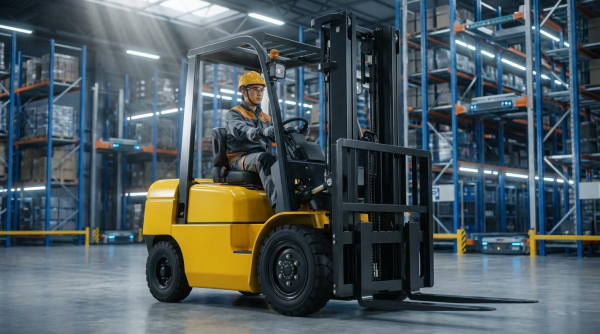
Specifying a high-performance electric forklift required a balanced view of traction capability, speed control, and verified reliability. OEM test data on gradeability, stability to ISO 22915, and temperature performance provided objective benchmarks instead of relying on nominal catalog values. Engineers evaluated whether trucks maintained rated capacity on 10–15% slopes, sustained duty at 45°C, and operated reliably down to −20°C without hydraulic or battery failures. Attention to lithium-ion battery crashworthiness and long-duration converter tests improved risk management for high-throughput or safety‑critical sites.
Speed and safety engineering shaped real productivity in warehouses and yards. Adjustable travel and acceleration parameters, electronic speed limiting, zone-based speed control, and multi-stage overspeed alerts allowed fleets to tune performance to aisle width, pedestrian density, and regulatory requirements. Cornering speed reduction, automatic deceleration, rollback control, and reverse assistance reduced tip-over and collision probability while preserving acceptable cycle times. Operator Presence Systems and smart environment sensors, such as SEnS/SEnS+, added additional layers of protection by enforcing safe behavior and detecting obstacles.
Reliability decisions extended beyond initial specification into test evidence and maintenance strategy. Endurance, crash, and environmental stress testing, supported by digital twins and simulation, indicated which platforms would withstand thousands of operating hours with minimal unplanned downtime. Battery care protocols, smart charging, and temperature-appropriate fluids sustained performance over the full life cycle. Predictive maintenance, condition-based inspections, and structured service intervals every 200–1,000 hours reduced failures and operating cost, with case studies showing annual savings up to roughly USD 45,000 for 10‑truck fleets.
From an industry perspective, the technology trajectory pointed toward higher practical gradeability, dynamic stability control, and deeper IoT integration. Future fleets would likely exploit variable-torque traction systems, advanced diagnostics, and adaptive safety envelopes to recover performance margins while still complying with ISO and OSHA requirements. Practitioners selecting electric forklifts therefore benefited from requesting detailed test reports, verifying parameter tunability, and aligning maintenance capabilities with the sophistication of on-board electronics. This approach created a balanced, future-ready fleet that delivered quantifiable gains in throughput, safety, and total cost of ownership.