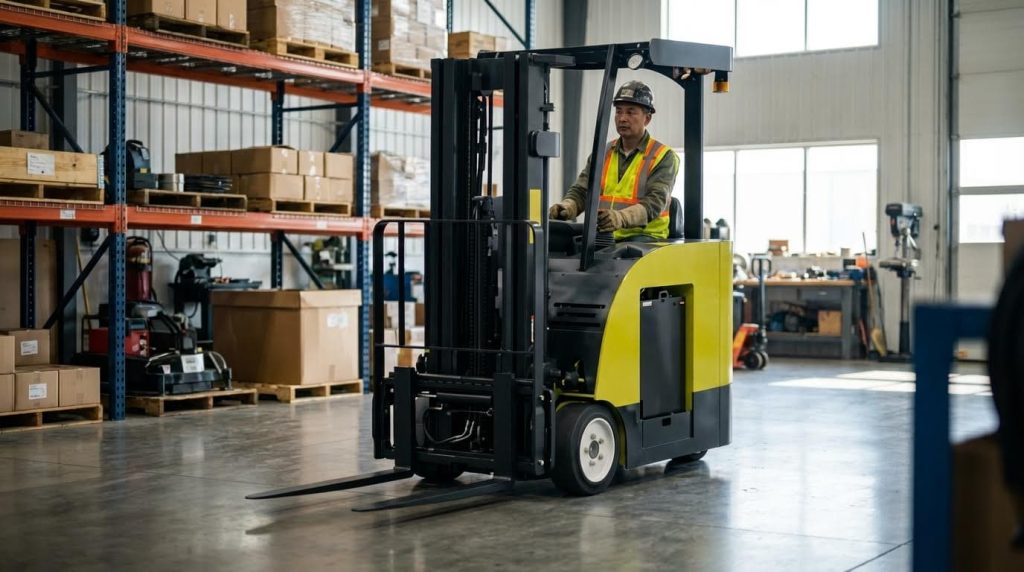
Stand-up forklifts played a central role in high-throughput warehouses, manufacturing plants, and distribution centers. This guide covered their core specifications, including capacity, weight, and critical dimensions that influenced aisle design and stability. It also examined cost drivers across purchase options, energy use, and lifecycle maintenance to support realistic total cost of ownership models. Finally, it addressed design, safety, and technology considerations, then concluded with a practical selection checklist to align technical choices with operational and safety requirements.
Core Specs: Capacity, Weight, And Dimensions
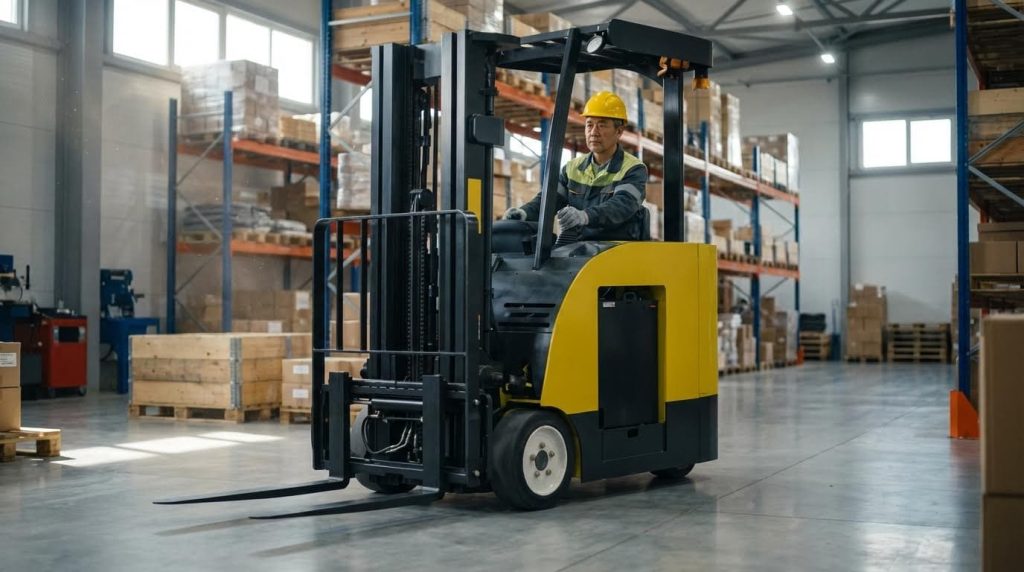
Core specifications defined the safe operating envelope of a stand-up forklift. Engineers and fleet managers relied on quantified limits for capacity, weight, and geometry to match trucks to specific warehouse layouts and load profiles.
Typical Load Capacities And Use Cases
Stand-up forklifts typically offered rated capacities between 1,360 kg and 3,630 kg. High-capacity stand-up rider units handled up to 3,630 kg at standard load centers. Typical lift heights ranged from low-level 235 mm pallet handling to high-reach masts around 6,860 mm. Operators used lower-capacity units for dock work, cross-docking, and frequent short-shuttle moves. Higher-capacity, higher-lift models supported dense racking, double-deep storage, and mixed pallet sizes in distribution centers. Engineers always selected capacity based on load weight, load center distance, and required lift height from the manufacturer’s data plate.
Overall Truck Weight And Stability Basics
Overall truck weight included the chassis, mast, counterweight, battery, and any attachments. This dead weight acted as the counterbalance that resisted overturning when the truck lifted rated loads. Heavier stand-up forklifts improved longitudinal stability but increased floor loading and energy consumption. Stability depended on the combined center of gravity of truck and load staying inside the stability triangle defined by the wheelbase. Overloading, high lift heights, or dynamic maneuvers shifted this center of gravity toward the triangle boundary and risked tipping. Engineers checked floor slab design, rack anchorage, and dock leveler ratings against the maximum truck weight plus rated load.
Key Dimensional Ranges For Aisle Design
Typical stand-up rider forklifts had an overall width between 1,040 mm and 1,170 mm. Length to fork face often ranged from about 1,685 mm to 1,995 mm depending on battery compartment and counterweight design. These dimensions drove the minimum right-angle stacking aisle, which usually fell between 2,700 mm and 3,200 mm for standard pallets. Designers also considered maximum mast height, collapsed mast height, and overhead guard height when checking building clearances. Turning radius and rear-end swing dictated safe clearances at rack ends, dock doors, and intersections. Warehouse planners used manufacturer CAD data or templates to validate aisle widths and transfer aisles before committing to racking layouts.
Impact Of Attachments On Weight And Capacity
Attachments such as side shifters, fork positioners, clamps, or extended forks added mass ahead of the mast. This extra weight shifted the combined center of gravity forward and effectively increased the load center distance. As a result, the rated lifting capacity at a given height decreased relative to the base truck specification. Engineers obtained an updated capacity plate from the manufacturer or qualified engineer whenever they fitted or changed attachments. The new plate reflected reduced capacity at specific lift heights and load centers. Ignoring these deratings risked structural overload of the mast, forks, or carriage and compromised stability. Proper specification balanced attachment functionality with required residual capacity for the heaviest routine loads.
Cost Drivers: Purchase, Energy, And Lifecycle
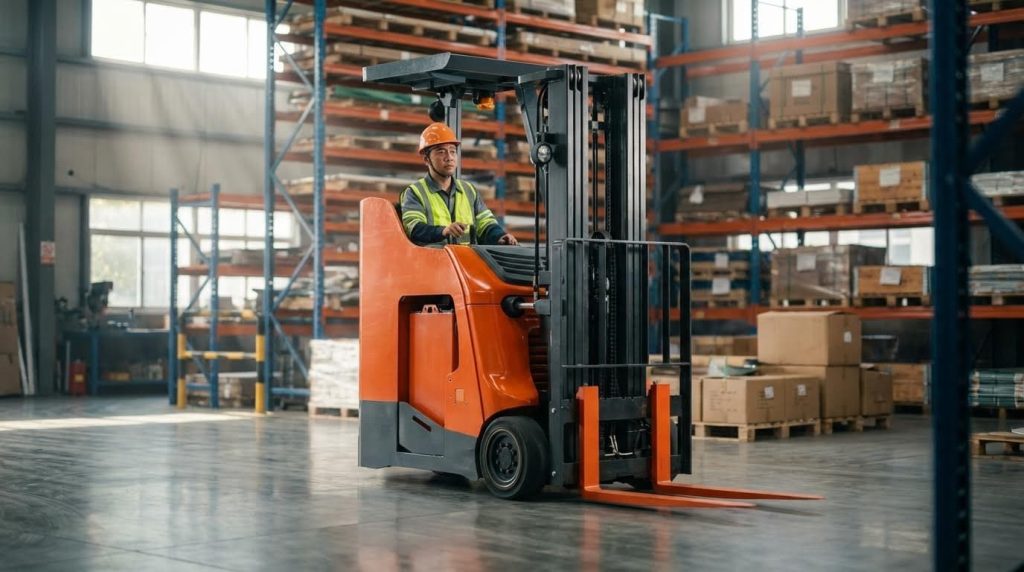
Cost analysis for stand-up forklifts required a full lifecycle view. Engineers and managers evaluated purchase price, energy use, maintenance, and residual value together. This section broke down each driver into quantifiable elements. It supported specification and budgeting decisions for warehouses and manufacturing plants.
New Versus Used Stand-Up Forklift Pricing
New stand-up forklifts typically commanded higher capital cost but offered full warranty coverage and current safety features. Price bands depended on capacity, lift height, and electronics; high-spec electric units with tall masts and advanced controls sat at the upper range. Used units reduced upfront expense but introduced variability in battery health, structural fatigue, and control system wear. Engineers therefore considered verified service history, hour meter readings, and independent inspection reports before accepting used equipment into critical duty cycles.
Residual value also influenced the new-versus-used decision. Fleets that followed strict maintenance schedules and hour limits often achieved predictable resale prices, which lowered effective ownership cost per operating hour. In contrast, heavily cycled or poorly maintained trucks lost value quickly and risked unplanned downtime. Financial models usually compared 5–7 year ownership scenarios, including expected overhaul or battery replacement events, to identify the lowest net present cost.
Battery, Charging, And Energy Cost Factors
Electric stand-up forklifts typically used 24 V or 36 V traction battery systems, with capacity sized to duty cycle and shift patterns. Energy cost calculations multiplied average current draw, operating hours, and local electricity tariffs, then adjusted for charger efficiency. Proper charging discipline, such as recharging after an eight-hour shift or at roughly 70% depth of discharge, extended battery life and reduced replacement frequency. High-frequency or smart chargers improved energy efficiency and reduced heat, which further protected battery plates and cabling.
Battery replacement formed a major mid-life cost component. Budgeting practices usually assumed one full battery replacement within a multi-year ownership window for intensive applications. Opportunity charging strategies, if unmanaged, sometimes shortened battery life despite improving availability. Facilities designers also considered ventilation, cable management, and protection for charging areas, because damage to connectors and cables increased both safety risk and maintenance expense.
Maintenance Intervals And Service Cost Ranges
Maintenance costs depended strongly on adherence to structured intervals. Typical programs combined daily operator checks, 90-day or 100-hour inspections, and annual comprehensive services. Daily lists included forks, mast chains, tires, brakes, steering, hydraulic leaks, and warning systems, allowing early detection of wear. Scheduled technician visits covered hydraulic hose inspection, lubrication, brake adjustment, electrical diagnostics, and software parameter verification for AC control systems.
Ignoring intervals increased the likelihood of failures in high-stress components such as tires, hoses, and contactors. Tire wear affected stability and traction; operators replaced tires at visible chunking, cracking, or flat-spotting. Cleanliness also played a direct role in cost, because dust accumulation on radiators, motors, and hydraulic lines accelerated thermal and mechanical degradation. Accurate maintenance records supported failure trend analysis and helped forecast spare parts and labor budgets more reliably.
Total Cost Of Ownership And ROI Modeling
Total cost of ownership models combined acquisition price, financing, energy, maintenance, labor, and residual value. Engineers often normalized these costs to a per-hour or per-pallet-handled figure for direct comparison between models and powertrains. The models also incorporated utilization rates, expected duty severity, and planned replacement age. Sensitivity analyses examined how variations in energy tariffs, labor rates, or maintenance discipline shifted the optimal replacement point.
ROI calculations frequently compared electric stand-up forklifts against alternative equipment classes, such as walkie pallet trucks or sit-down counterbalance trucks. Electric stand-up units often showed favorable returns in high-throughput, short-aisle environments where maneuverability and fast cycle times mattered. However, the models penalized operations that lacked charging infrastructure or consistent operator training, because these gaps increased downtime and repair frequency. A robust ROI study therefore paired technical specification work with operational process assessment and training plans.
Design, Safety, And Technology Considerations
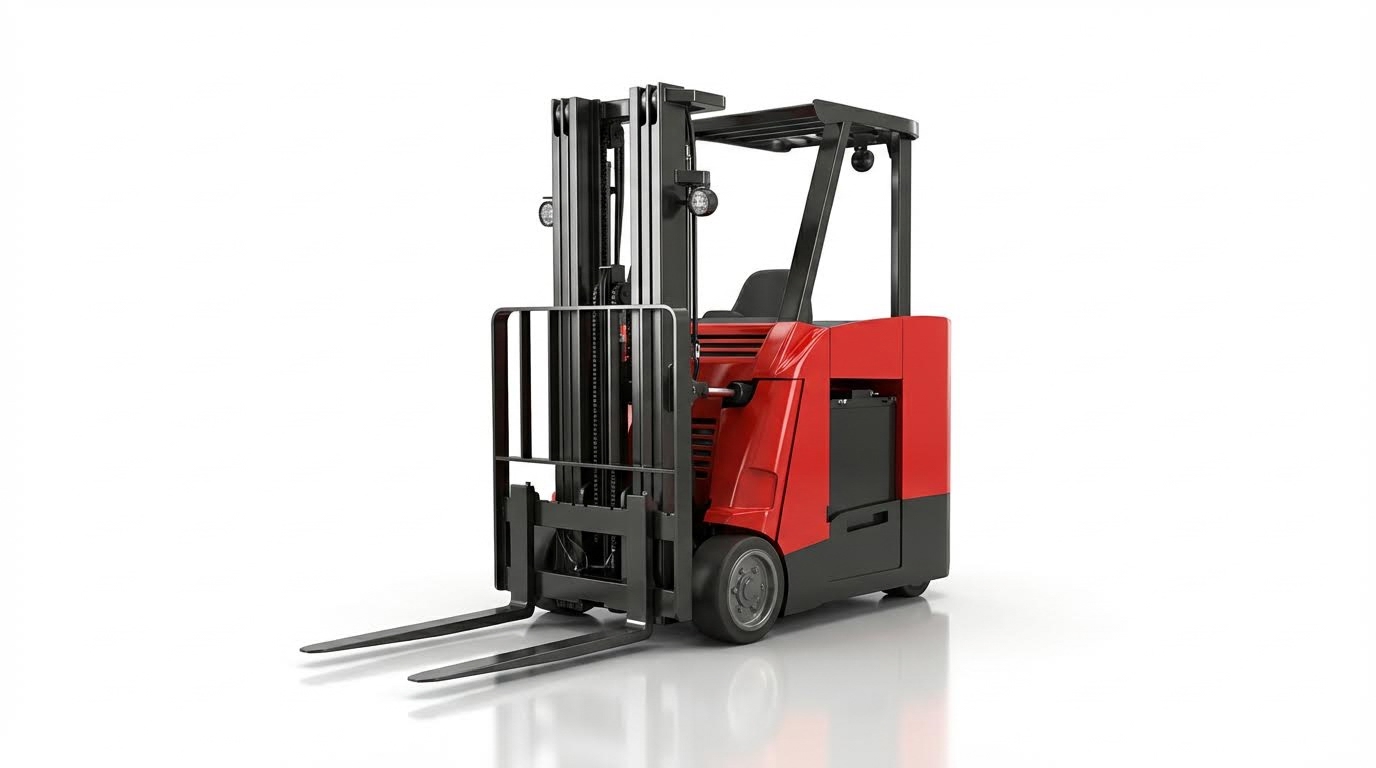
Design, safety, and technology choices defined the performance envelope of stand-up forklifts. Engineers balanced power electronics, structural stability, and human factors to meet demanding warehouse duty cycles. Modern stand-up trucks integrated advanced controls, sensors, and connectivity to reduce incidents and lifecycle cost. Understanding these aspects helped specifiers match truck configurations to aisle geometry, load profiles, and regulatory constraints.
Electrical Systems, Motors, And Drive Controls
Stand-up forklifts typically used 36 V traction systems, although a few compact units operated on 24 V. AC transistor control systems managed independent lift, steer, and auxiliary motors for precise torque delivery. Regenerative braking and hydrostatic steering reduced net energy draw by feeding current back into the battery during deceleration and steering corrections. Engineers sized conductors, fusing, and heat sinks to handle peak current during acceleration and full-load lifts while maintaining compliance with electrical safety standards. Drive controllers allowed configurable acceleration ramps and speed limits to adapt trucks to tight-aisle or high-throughput environments.
Stability, Load Charts, And Safe Operation
Stand-up forklift stability depended on the combined center of gravity of truck and load relative to the stability triangle. Rated capacities, typically 1,360 kg to 3,630 kg, assumed a defined load center and mast height specified on the capacity chart. As lift height increased toward 6.9 m and beyond, the allowable load decreased to keep the resultant center of gravity within the stability polygon. Operators had to keep forks 300 mm to 400 mm above the floor with a slight rear mast tilt while traveling to maintain a low center of gravity. Safe practice required avoiding overloads, uneven surfaces, and turning on ramps, and mandated daily checks of tires, brakes, hydraulics, and electrical circuits to prevent mechanical failures.
Ergonomics, Operator Presence, And Visibility
Stand-up trucks relied on compartment design to reduce operator fatigue over long shifts. Suspended floorboards isolated the operator from vibration and impacts, while integrated presence sensors in dual pedals ensured the truck only moved under deliberate control. Side-entry compartments with padded backrests and logically grouped controls improved posture and reduced repetitive strain. Visibility depended on mast window geometry, overhead guard design, and mirror or optional camera placement, especially in high-rack applications. Presence detection systems, such as entry bar safety switches, stopped travel or hydraulic functions when the operator left the designated stance area.
Telematics, Automation, And Predictive Maintenance
Telematics modules captured run hours, impact events, travel profiles, and battery state-of-charge for fleet optimization. Managers used this data to schedule maintenance based on actual duty cycles rather than fixed intervals, reducing unplanned downtime. Some stand-up trucks integrated access control and pre-shift checklist prompts through onboard displays, improving regulatory compliance and inspection quality. Advanced systems supported remote diagnostics and over-the-air parameter adjustments for speed limits or acceleration curves. In higher-automation environments, stand-up platforms served as the basis for semi electric order picker or automated guided variants, with sensors and control logic handling repeatable routes and reducing operator touch time.
Sustainability, Noise, And Material Choices
Electric stand-up forklifts inherently reduced local emissions and noise compared with internal combustion units. Engineers optimized motor efficiency, regenerative braking strategies, and low-rolling-resistance tires to extend runtime and cut energy consumption. Frames and masts used high-strength steel for durability, while forks relied on heat-treated steel to resist distortion under repeated high loads. Indoor-focused designs favored solid tires and polyurethane load wheels to minimize rolling noise and floor damage. Manufacturers increasingly considered recyclable materials, low-VOC finishes, and long-life components to reduce environmental impact over the truck’s service life.
Summary And Practical Selection Checklist
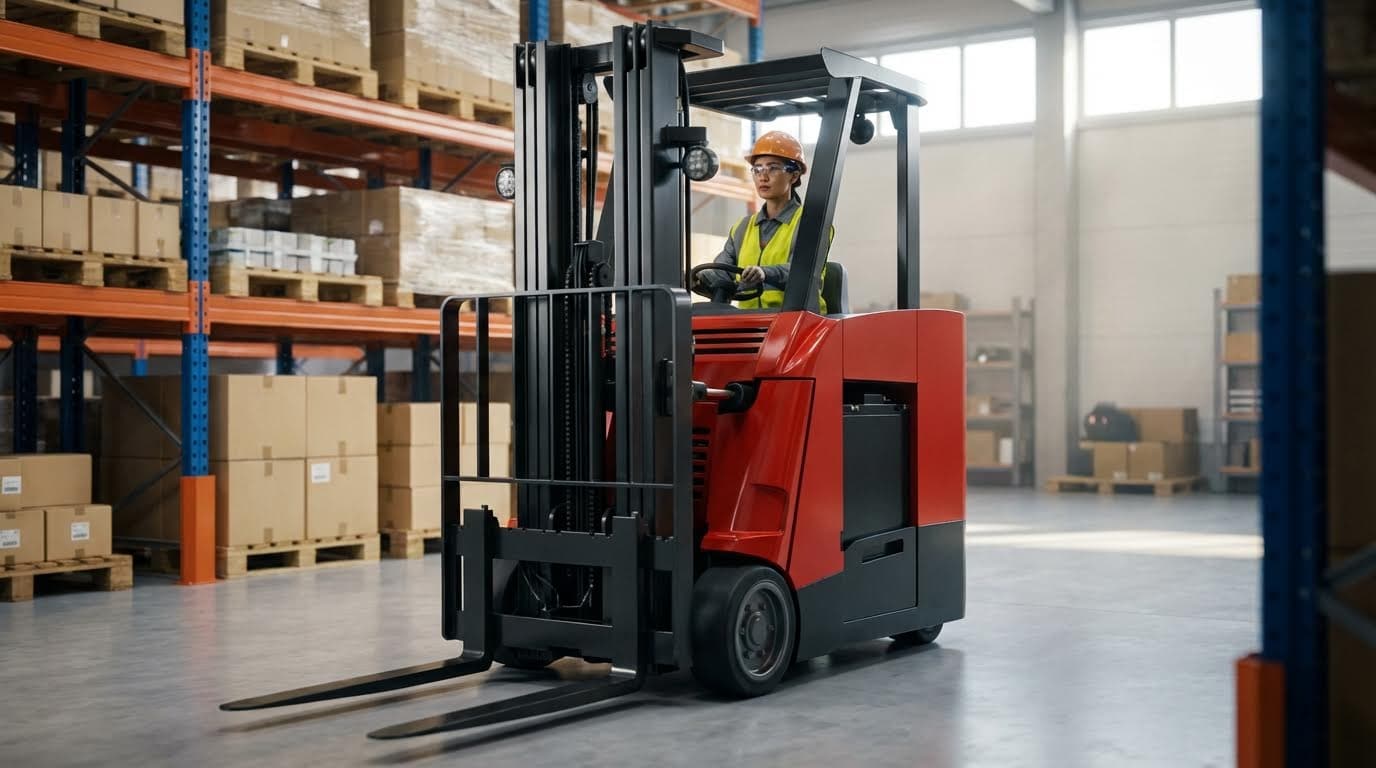
Stand-up forklifts offered compact dimensions, capacities between roughly 1,350 kg and 3,600 kg, and lift heights up to about 6.9 m. Typical trucks used 24 V or 36 V electric systems, AC transistor controls, hydrostatic or electric steering, and regenerative or e-braking for efficiency. Frames and masts relied on steel structures, with heat-treated steel forks and application-specific tires or load wheels. Proper load chart use, low travel fork height, and strict adherence to maintenance schedules determined both safety and lifecycle cost.
These machines influenced warehouse layout through aisle width, turning radius, and fork face length, which affected storage density and routing. Lifecycle economics depended on initial price, energy consumption, planned maintenance, and residual value. Telematics, automation interfaces, and predictive maintenance tools improved utilization and reduced unplanned downtime. Electric drive, low-noise operation, and cleaner materials supported corporate sustainability and regulatory compliance.
When selecting a stand-up forklift, buyers should define maximum load, lift height, and aisle constraints in SI units, then match them to rated capacity and dimensional envelopes. They should compare battery chemistry, charger type, and duty-cycle energy use, and request clear maintenance schedules with costed service plans. Safety and ergonomics require evaluation of operator presence systems, visibility, platform layout, and control feel during a practical trial. Finally, decision makers should consider data integration, upgrade paths, and environmental performance to balance current needs with future automation and sustainability targets. For specific applications like order picking, equipment such as semi electric order picker, warehouse order picker, and order picking machines can be considered to enhance operational efficiency.