Telehandlers bridged the gap between forklifts and cranes and forced regulators to rethink licensing boundaries. Modern rules distinguished between powered industrial trucks, mobile cranes, and elevating work platforms, with overlapping but not identical training frameworks. This article examined how major standards bodies and regulators classified telehandlers, when forklift certification legitimately extended to Class VII rough‑terrain machines, and where dedicated telehandler licences and Gold Card or crane-class HRW credentials became mandatory. It then aligned these requirements with risk-based training content, including stability, boom control, and new technologies, so safety managers could match operator qualifications to both legislation and real-world operating hazards.
Telehandlers vs Forklifts: Regulatory Definitions
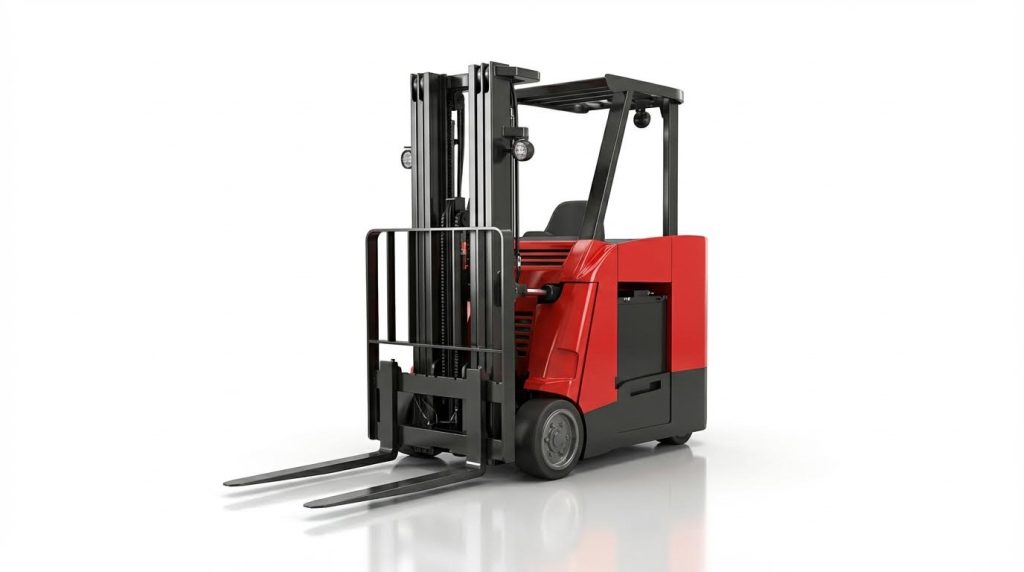
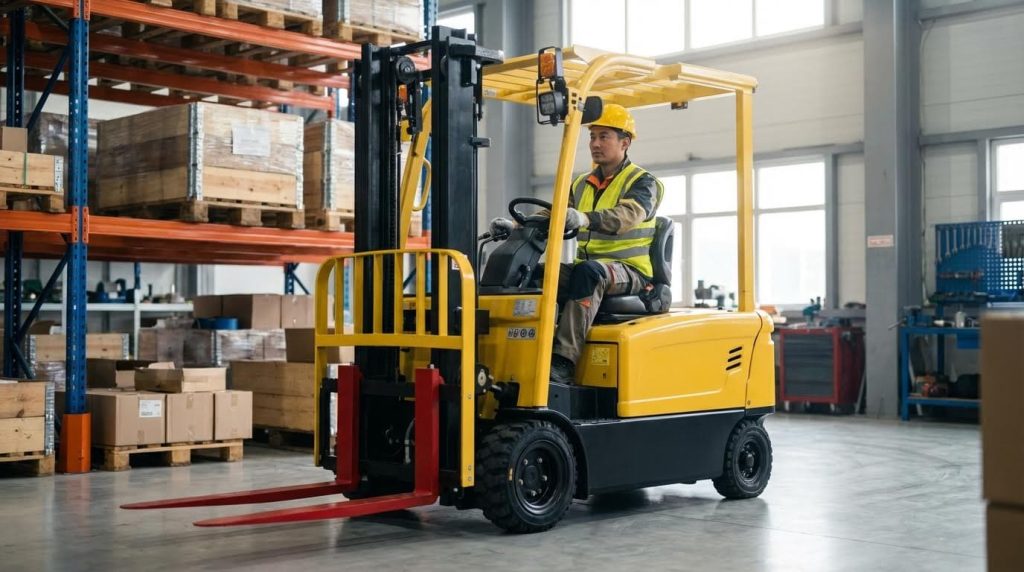
Regulators distinguished telehandlers from forklifts because of the boom structure, reach, and attachment versatility. This distinction affected licence classes, applicable standards, and training depth. Understanding these definitions helped safety managers decide when forklift credentials were sufficient and when telehandler‑specific licensing applied. It also reduced compliance gaps when operators moved between warehouse order pickers, rough‑terrain units, and telescopic handlers.
How Standards Classify Telehandlers And Forklifts
Standards and regulators classified conventional forklifts as vertical‑mast, counterbalanced, or order‑picking trucks, usually with fixed masts and limited reach. Telehandlers, by contrast, fell into telescopic rough‑terrain categories, with extendable booms and higher lift heights that changed load centres dynamically. In the United States, telehandlers sat within powered industrial truck frameworks but were identified as Class VII rough‑terrain forklift trucks, separate from typical warehouse units. This classification reflected off‑road use, variable geometry, and reliance on load charts, which increased stability complexity compared with standard forklifts. Consequently, operator training had to address boom extension effects, attachment factors, and terrain influences that did not apply to basic counterbalanced stackers.
OSHA, ANSI, CSA And TSHA Scope Differences
OSHA’s Powered Industrial Trucks Standard 1910.178 governed telehandlers and forklifts used in general industry and influenced construction practices. It defined training, evaluation, and refresher requirements but did not create separate federal licence classes for telehandlers. ANSI/ITSDF B56.6 complemented OSHA by specifying design and operator training guidance for rough‑terrain and telescopic trucks, including truck‑specific and workplace‑specific instruction. In Canada, CSA B335 and related standards covered powered industrial trucks and aligned telehandler training with hazard‑based content and practical assessment. In Australia, the Australian Telescopic Handler Association promoted the Telehandler Gold Card as an industry training benchmark, while statutory High Risk Work licence classes addressed crane‑type telehandler use. These overlapping scopes meant employers had to map their fleet and tasks against multiple frameworks rather than rely on a single universal credential.
Mobile Crane Versus Powered Industrial Truck Status
Regulators often treated telehandlers as mobile cranes when operators used hooks, jibs, or other lifting attachments instead of forks. SafeWork guidance in Australia, for example, placed many telehandlers in the mobile crane category unless configured as elevating work platforms above specified outreach thresholds. Under those conditions, operators required appropriate High Risk Work crane licence classes, such as CN or higher, depending on capacity and slew capability. When used strictly as rough‑terrain forklifts, telehandlers remained within powered industrial truck rules, and forklift‑style training formed the baseline. This dual status created a decision point for safety managers, who had to assess each attachment and task to determine whether crane‑type licensing applied. It also reinforced the need for clear site procedures that defined when a telehandler changed regulatory “role” from forklift‑equivalent to mobile crane.
When Forklift Certification Covers Telehandler Use
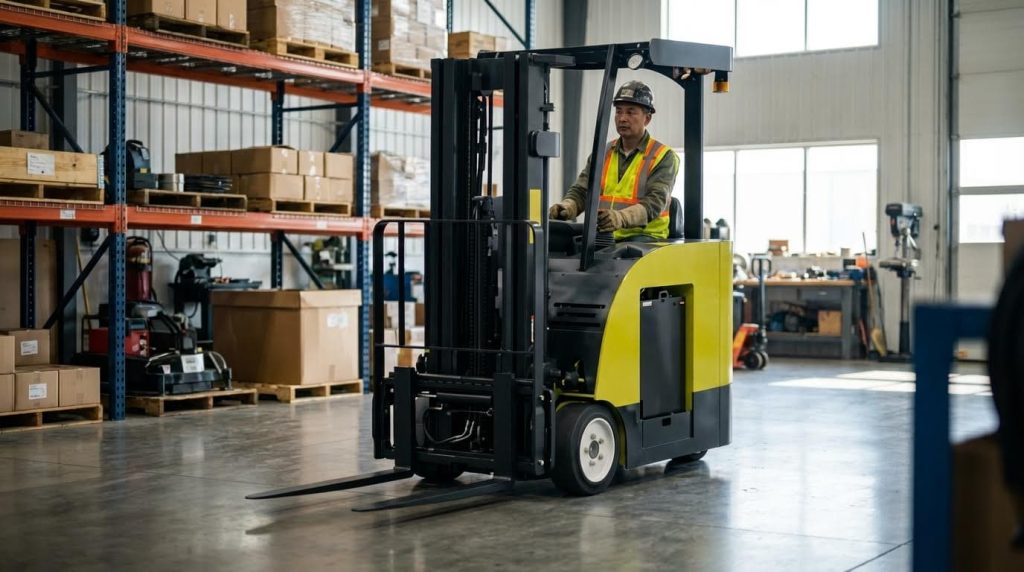
Forklift certification could partially cover telehandler use when regulations treat the machine as a powered industrial truck. However, operators still needed additional, machine‑specific training because telehandlers used telescopic booms and complex load charts. Employers had to align operator competency with both legal requirements and the actual risk profile of each task. The following subtopics clarified when existing forklift qualifications were sufficient and when they were not.
Overlap With OSHA Class VII Rough Terrain Forklifts
OSHA classified telehandlers as Class VII rough terrain forklift trucks within the powered industrial trucks framework. This meant that the core OSHA 1910.178(l) training requirements for forklifts also applied to telehandlers. An operator already certified on powered industrial trucks met the baseline OSHA requirement, but only for the specific truck types and conditions covered during training and evaluation. If the prior training included rough terrain operation, load handling on slopes, and stability principles, employers could build on that foundation with telehandler‑specific modules. Certification still had to document that the operator demonstrated safe use of the actual telehandler model in representative workplace conditions.
Site-Specific And Truck-Specific Training Requirements
OSHA and ANSI/ITSDF B56.1 required training that was both truck‑specific and workplace‑specific. A generic forklift course did not automatically qualify an operator for a different truck type, especially a telescopic handler with boom functions. Employers had to provide familiarization on controls, attachments, rated capacity, and stability characteristics of each telehandler model. They also needed to address site hazards such as uneven ground, restricted clearances, overhead power lines, and traffic patterns. Refresher or supplemental training became mandatory when operators moved to a new jobsite, encountered significantly different conditions, or switched to a substantially different powered industrial truck.
Limits Of Forklift Licences Under Australian HRW Rules
In Australia, a High Risk Work forklift licence (classes LF and LO) only authorised operation of forklifts, not telehandlers. Regulators treated telehandlers mainly under mobile crane or telescopic handler frameworks, depending on capacity and attachments. Operators often required either Duty of Care training, such as a telehandler Gold Card, or a High Risk Work crane licence. Crane licence classes like CN and higher covered non‑slewing or slewing telehandlers with most attachments, excluding large elevating work platform baskets. Therefore, holding an LF or LO licence did not remove the obligation to obtain telehandler‑specific training and, where applicable, the correct crane or telehandler endorsement.
Transitioning Operators Between Forklifts And Telehandlers
Transitioning a certified forklift operator to telehandler duties required a structured gap‑training approach. Employers first had to verify the operator’s existing competency in core topics such as load handling, visibility, pedestrian interaction, and general stability. Training then focused on telehandler‑unique aspects: boom extension effects on load charts, dynamic stability on rough terrain, attachment selection, and emergency lowering procedures. Practical assessments needed to include representative tasks like lifting to height, handling offset loads, and operating on gradients. Documentation had to show that the operator received additional instruction, passed evaluations on the telehandler type, and understood site‑specific controls and limitations before independent operation.
When Dedicated Telehandler Licensing Is Required
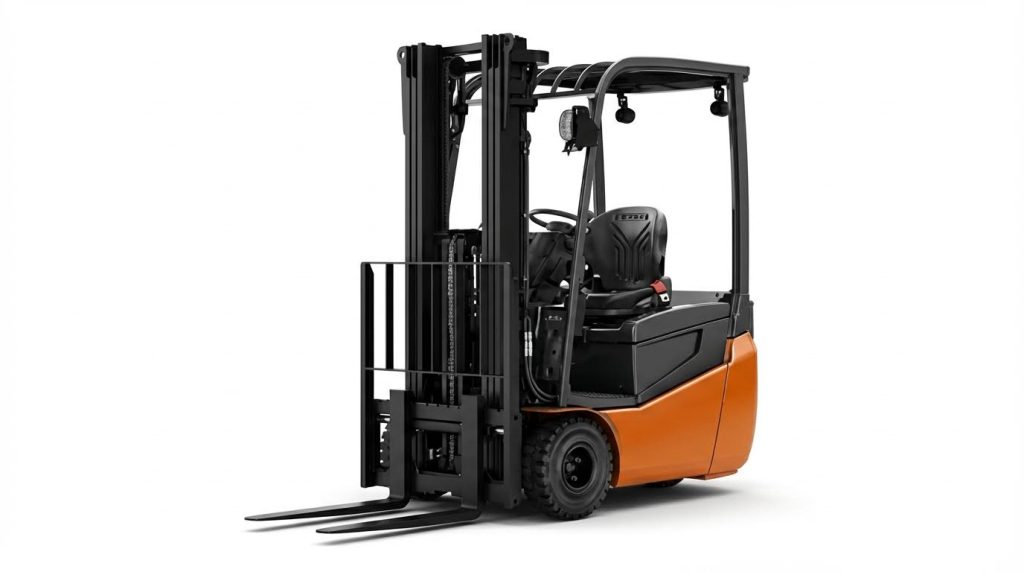
Dedicated telehandler licensing became necessary whenever risk, reach, or configuration exceeded the assumptions behind basic forklift training. Regulators in Australia, North America, and the Gulf states increasingly separated telehandler requirements from general powered industrial truck rules. Employers had to match licence type, training depth, and assessment method to the specific telehandler class, its attachments, and the work environment. Failure to do so exposed projects to enforcement action, insurance disputes, and elevated incident rates.
Gold Card, HRW Crane Classes And Regional Rules
In Australia, telehandler operation sat under a mix of High Risk Work (HRW) crane licences and industry schemes such as the Telescopic Handler Gold Card. The TSHA Gold Card documented that an operator had completed telehandler-specific training aligned with attachment types and typical applications, and project owners widely requested it as a minimum benchmark. HRW Crane licence classes such as CN, C2, C6, C1, and C0 covered slewing and non-slewing telehandlers where they were treated as mobile cranes, especially for higher capacities or complex lifts. Regional regulators, including WorkSafe WA under the Work Health and Safety Act 2020, enforced these distinctions and could require both an HRW class and telehandler-specific proof of competency.
Attachments, Load Charts And Capacity-Based Licensing
Licensing thresholds often depended on the rated capacity, boom configuration, and attachment in use. A telehandler working purely with pallet forks at modest heights could fall under powered industrial truck rules, while the same machine with a crane jib, hook, or scissor platform lift triggered mobile crane or elevating work platform requirements. SafeWork guidance treated telehandlers as mobile cranes unless fitted with an EWP basket above a defined dimension, which then required a WP class HRW licence. Operators therefore needed training on reading manufacturer load charts for each attachment, understanding de-rated capacities with boom extension and slew, and recognising when a change of attachment pushed the job into a different licensing category.
Public Road Use, Driver’s Licences And Duty Of Care
Telehandler licensing for on-site work differed from requirements for travel on public roads. OSHA guidance in the United States allowed certified telehandler operators to work on private jobsites without a state driver’s licence, provided they held project-level certification that met 1910.178 criteria. However, once the machine travelled between sites or used public roadways, a valid motor vehicle driver’s licence became mandatory under traffic law. In Australia and the Gulf, duty-of-care provisions required employers to verify both telehandler competency and legal authority to drive where public interfaces existed, and to implement route planning, escorting, and speed control when moving large rough-terrain units.
Training Content: Stability, Boom Control And New Tech
Dedicated telehandler licensing relied on training content that went beyond standard forklift modules. Courses covered boom dynamics, including how radius, boom angle, and extension affected longitudinal and lateral stability. Operators learned to interpret complex load charts, apply capacity reductions on slopes or with side-shift, and manage stabilisers or outriggers where fitted. Modern programs also addressed advanced control systems, telematics, and semi-autonomous features, ensuring operators could use stability aids, envelope control, and load moment indicators correctly. Regulators and standards such as OSHA 1910.178, ANSI B56.6, and CSA B335 required blended theory and practical assessment, with refresher or re-evaluation after incidents, unsafe operation, or significant technology changes.
Summary: Align Telehandler Training With Risk And Law

Telehandler licensing frameworks historically evolved from both forklift and mobile crane regulations, which created overlaps and gaps. Modern rules in regions such as Australia, the United States, Canada, and the Gulf states increasingly treated telehandlers as distinct equipment classes. Authorities linked licensing obligations to risk factors such as boom reach, attachment type, capacity, terrain, and work environment rather than to a generic “forklift ticket.” This shift required operators and employers to look beyond basic forklift certification and verify telehandler‑specific legal duties.
From an industry perspective, the key technical finding was that forklift training alone rarely satisfied all telehandler requirements. OSHA classified telehandlers as Class VII powered industrial trucks yet demanded truck‑specific and workplace‑specific training, including boom operation and complex load charts. Australian HRW rules separated LF/LO forklift licences from telehandler coverage, pushing operators toward Gold Card or crane‑class HRW licences depending on configuration and capacity. Similar patterns appeared elsewhere, where regulators tied licence type to crane‑like operation, order picking machines, or road travel.
In practice, organizations needed a structured competence strategy. They typically started with a compliant powered industrial truck or crane licence where required, then added telehandler‑specific theory and practical assessment covering stability, attachments, uneven ground, and emergency procedures. Site induction and periodic refresher training closed the loop, especially after incidents, technology upgrades, or jobsite changes. A balanced approach treated telehandlers neither as oversized forklifts nor as full mobile cranes in every case, but aligned training depth and licensing to demonstrable risk. This risk‑based alignment reduced incidents, simplified audits, and positioned fleets to adopt new technologies, such as advanced stability controls and telematics, without falling behind regulatory expectations. Additionally, some organizations integrated tools like scissor platform lift and manual pallet jack solutions to enhance operational efficiency.