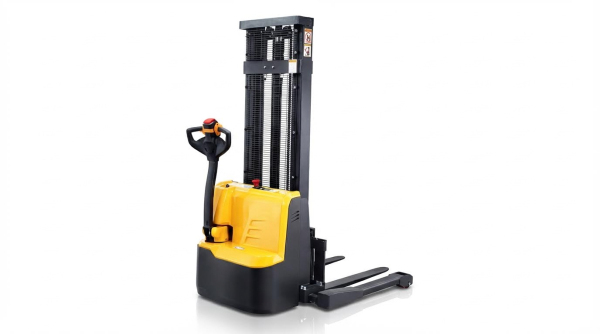
Walkie stacker battery condition directly governed uptime, safety, and lifecycle cost in industrial operations. This article examined how to recognize early operational symptoms, apply structured diagnostic tests, and interpret results correctly. It also compared options for repair, regeneration, or full replacement while respecting battery weight and safety constraints. Finally, it summarized best-practice maintenance and monitoring strategies to keep electric material handling fleets reliable and compliant.
The sections that followed moved from observable runtime issues and power anomalies, through multimeter, hydrometer, and standardized capacity testing, to strategic decisions on refurbishment versus renewal. Throughout, the focus remained on technically sound, field-ready methods that maintenance teams could integrate into planned inspections and predictive maintenance programs.
Key Operational Symptoms Of A Failing Battery
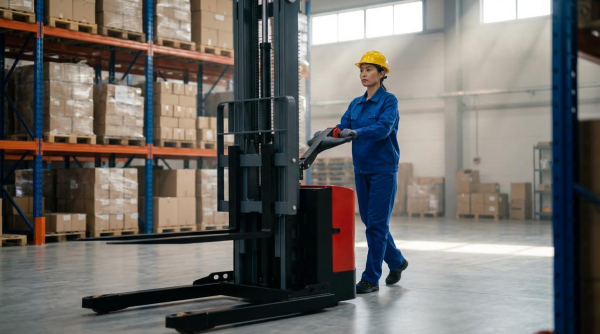
Operators usually noticed battery degradation first in day-to-day runtime and charging behavior. Clear operational symptoms allowed maintenance teams to intervene before failures created unsafe conditions or unplanned downtime. The following subsections described the most relevant in-service indicators that a walkie stacker battery approached functional or economic end-of-life.
Reduced Runtime And Frequent Mid-Shift Charging
A healthy traction battery supported a predictable runtime, often close to a full shift at nominal duty. A reduction of usable time by roughly 30% or more indicated significant capacity loss and justified detailed testing. Operators who needed interim charges every four hours instead of eight experienced classic signs of sulfation or plate wear. This behavior usually followed repeated deep discharges below about 20% state of charge or chronic undercharging. Capacity tests under standardized conditions, such as EN 60254-1 discharge procedures, confirmed whether the battery still met the required ampere-hour rating. Once measured capacity fell far below specification, continued use increased heat generation and accelerated aging.
Trouble Powering Up, Intermittent Power Loss
Difficult start-up, where the walkie stacker did not power on reliably, often pointed to low battery voltage or high internal resistance. Intermittent power loss during travel or lifting indicated unstable voltage under load, sometimes caused by dead cells or damaged interconnects. Technicians checked for loose or corroded terminals, frayed cables, or connector damage, because these faults caused voltage drops that mimicked battery failure. Measuring pack and individual cell voltages while the traction or lift motor ran helped distinguish wiring issues from true cell degradation. Persistent electronic fault codes related to undervoltage, despite correct charger operation and clean connections, usually confirmed a failing battery.
Overheating, Odors, And Visible Corrosion
Excessive battery temperature during charging or heavy operation signaled increased internal resistance and inefficient energy conversion. Overheating often coincided with gas formation, audible bubbling, or hissing, especially in lead-acid systems under overcharge conditions. Technicians treated sulfur-like odors as a warning of electrolyte leakage or severe overtemperature, which could damage adjacent components and insulation. White or greenish deposits around posts, connectors, and trays indicated acid leakage and corrosion that increased contact resistance and reduced available current. If corrosion progressed despite cleaning and correct torque on terminals, underlying case cracks, seal failures, or chronic overfill of electrolyte typically required repair or replacement.
Impact Of Environment And Duty Cycle On Battery Life
Ambient temperature and operating profile strongly influenced how quickly walkie stacker batteries degraded. Continuous use in hot warehouses above roughly 30°C accelerated water loss, plate corrosion, and sulfation, which shortened runtime over months of service. Cold environments reduced instantaneous capacity and increased internal resistance, so batteries appeared weak even when fully charged. High-duty cycles with frequent lifting, long travel distances, and minimal rest periods stressed cells through repeated high-current peaks and partial charging. Facilities that combined harsh temperatures with aggressive duty cycles needed tighter inspection intervals, more conservative depth-of-discharge limits, and charging strategies matched to the actual usage pattern.
Practical Diagnostic Tests For Walkie Stacker Batteries
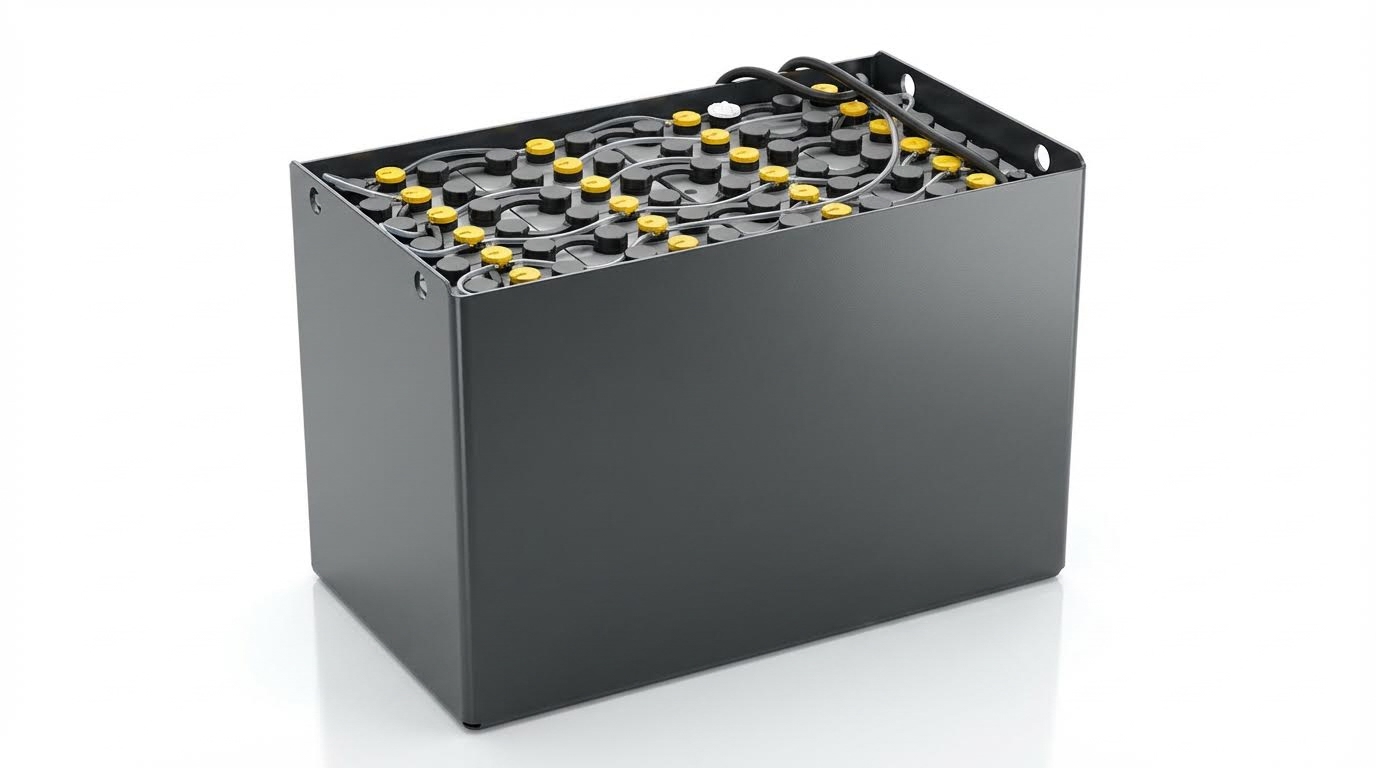
Systematic diagnostic tests allowed maintenance teams to separate battery problems from charger or truck faults. A structured approach reduced unplanned downtime and prevented unsafe operation. Technicians typically started with basic visual and electrical checks, then progressed to standardized capacity and resistance tests. Each step built on the previous one to confirm whether the battery was serviceable, recoverable, or at end of life.
Preparing The Battery: Charge, Inspect, And Isolate
Technicians always fully charged the battery before testing to stabilize voltage and state of charge. They verified that the charger completed a normal cycle and indicated full charge, usually via a green status light. After charging, they inspected the case, covers, and tray for cracks, leaks, bulging, or acid residue. They cleaned terminals and intercell connectors, removed corrosion, and tightened loose hardware to minimize contact resistance. The battery was electrically isolated from the walkie stacker by unplugging the DC connector and switching off any auxiliary loads. This isolation prevented truck electronics from influencing measurements and avoided accidental truck movement during tests.
Voltage, Load, And Cell Testing With A Multimeter
Technicians used a calibrated digital multimeter to measure open-circuit pack voltage first and compared it with nominal system voltage. They then performed load voltage checks under a defined current draw, for example around 0.2 times the C20 capacity, to observe dynamic behavior. A healthy traction battery maintained voltage within expected limits; a rapid drop indicated high internal resistance or capacity loss. Individual cell or monobloc voltages were measured while the traction motor or hydraulic pump operated. Cells that showed 1–2 volts lower than the others under load were flagged as having dead or severely weakened cells. Persistent imbalance between blocks suggested aging or internal damage and guided further decisions on regeneration or replacement.
Using A Hydrometer And Electrolyte Level Checks
For flooded lead-acid batteries, technicians checked electrolyte levels after charging and topping up only with deionized or distilled water. Plates had to remain fully submerged but not overfilled to avoid overflow during gassing. They used a temperature-compensated hydrometer to measure specific gravity in each cell, which indicated state of charge and uniformity. A cell reading at least 50 points (0.050) lower than the pack average typically indicated a failing or sulfated cell. Large variations between cells pointed to stratification, sulfation, or overcharge damage. Combined with voltage readings, hydrometer data helped distinguish reversible issues from irreversible plate damage. Any signs of discoloration, sediment, or cloudy electrolyte were documented for further analysis.
Capacity, Internal Resistance, And Standardized Tests
When basic checks indicated significant degradation, technicians performed controlled capacity tests according to standards such as EN or DIN EN 60254-1. They fully charged the battery, then discharged it at a specified current and temperature until it reached the defined end-of-discharge voltage. Measured ampere-hours were compared with the rated C20 capacity; losses above about 30% usually justified replacement or intensive regeneration. Internal resistance was evaluated using specialized testers or by analyzing voltage drop under known load. Increased resistance correlated with sulfation, grid corrosion, or dried plates. Standardized test programs also assessed charge retention, high-current performance, and cyclic durability. These results supported compliance documentation and informed decisions on whether to continue operating, regenerate, or retire the traction battery safely.
When To Repair, Regenerate, Or Replace The Battery
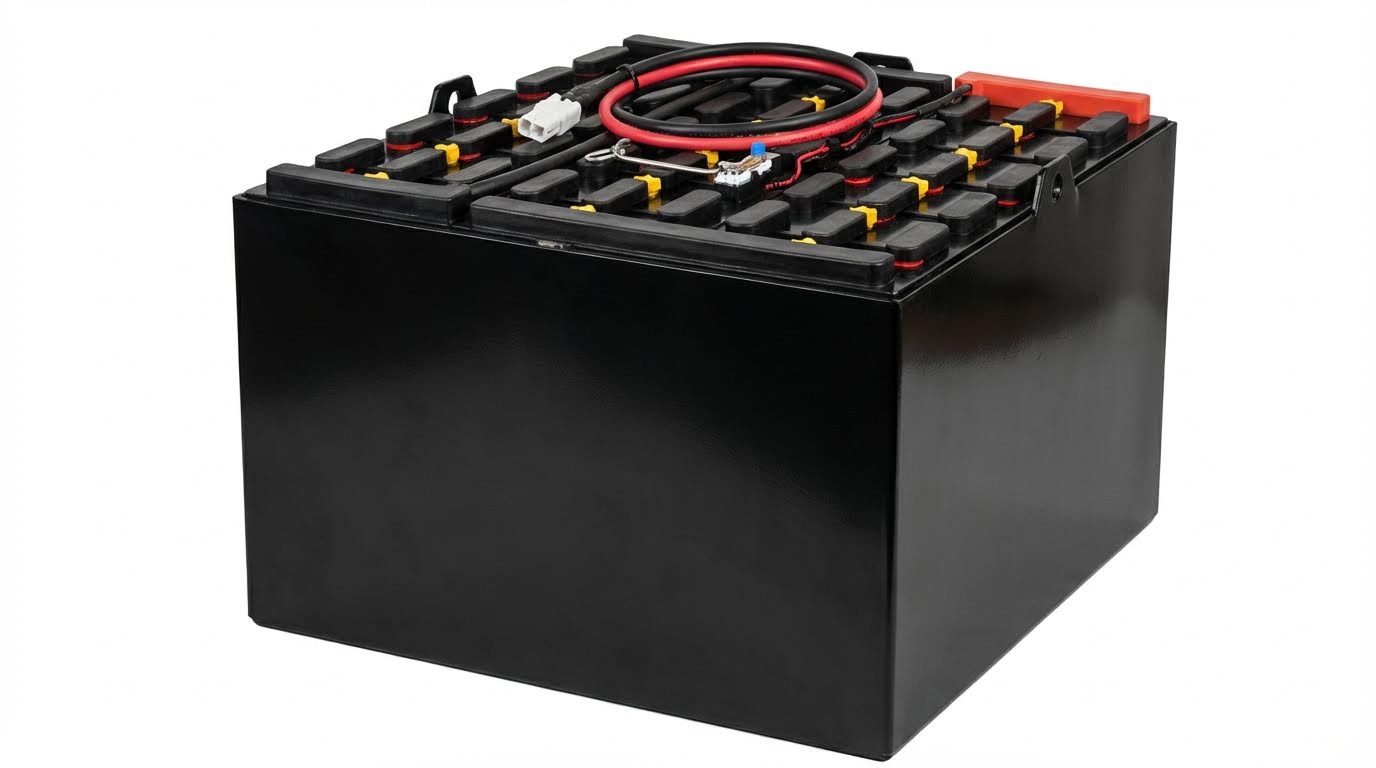
Walkie stacker batteries degraded over time due to cycling, temperature, and maintenance quality. Deciding between repair, regeneration, or full replacement required objective diagnostic data, not operator perception alone. Clear thresholds for runtime loss, cell imbalance, and safety indicators helped define the economic break‑even point. A structured decision process minimized downtime, avoided premature scrapping, and reduced electrical risk during industrial operation.
Distinguishing Reversible Issues From End-Of-Life
Technicians first verified that the battery was fully charged and that all connections were clean and tight. Reversible issues typically included moderate sulfation, dirty or loose terminals, slightly low electrolyte levels, or minor imbalance between cells. These conditions often appeared as a 20–30% runtime loss, small voltage deviations under load, or mild temperature rise during charging. End‑of‑life indicators included repeated deep discharges, capacity losses above roughly 30%, cells reading 1–2 V lower than others under load, or specific gravity deviations above 50 points. Physical damage, severe corrosion, bulging cases, or persistent overheating during normal charging generally justified replacement rather than repair.
Regeneration, Desulfation, And Cell-Level Repairs
Regeneration focused on reversing sulfation and restoring active material where plate structure remained intact. Technicians applied controlled desulfation chargers or pulsed currents to break down hardened lead sulfate crystals and reduce internal resistance. Under suitable conditions, such processes restored approximately 70–95% of original capacity, especially when degradation resulted from partial charging or long idle periods. Cell‑level repairs, such as replacing individual defective cells or equalizing electrolyte levels, were viable only when the remaining cells showed comparable voltage, specific gravity, and internal resistance. Strict adherence to traction battery standards and insulation clearances was essential to avoid thermal runaway or uneven current distribution after repair.
Full Pack Replacement, Weight, And Safety Constraints
Full pack replacement became the preferred option when multiple cells failed, capacity dropped below about 70% of nominal, or the battery age exceeded one to two intensive service years. Replacing only one unit in an older multi‑battery system often created imbalance, because the new unit charged and discharged differently from aged neighbors. Industrial trucks specified minimum and maximum battery mass to maintain center‑of‑gravity limits and rated lifting capacity. Any alternative configuration, such as series‑connected deep‑cycle batteries, had to match nominal voltage, capacity, and weight envelope defined by the truck manufacturer. Technicians also verified that short‑circuit current, cable sizing, and connector ratings complied with applicable electrical and safety regulations.
Maintenance Routines And AI-Based Predictive Monitoring
Structured maintenance routines extended battery life and reduced unplanned failures. Weekly checks typically included visual inspection, terminal cleaning, electrolyte level verification, and quick voltage scans at rest. Monthly or quarterly routines added load tests, hydrometer readings, and temperature trend reviews to detect early sulfation or cell imbalance. AI‑based predictive monitoring used logged data such as charge duration, discharge depth, voltage curves, and temperature profiles to forecast remaining useful life. These models flagged anomalous behavior, like accelerated runtime loss or rising internal resistance, before operators noticed performance issues. Integrating such analytics with maintenance planning allowed just‑in‑time regeneration or replacement, improving fleet availability and total cost of ownership.
Summary And Best Practices For Safe, Reliable Power
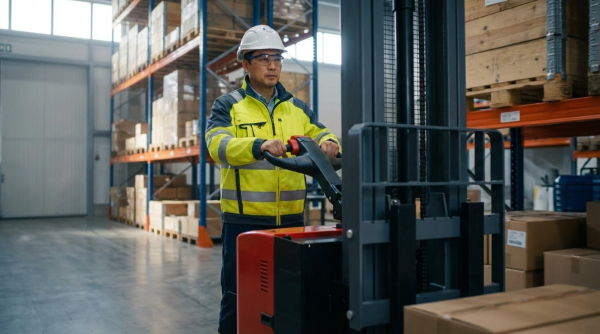
Industrial walkie stacker batteries operated reliably when users combined symptom-based observation with structured diagnostic testing. Reduced runtime, intermittent power, overheating, and corrosion served as early warning indicators that guided further investigation with multimeters, hydrometers, and standardized capacity tests. Systematic checks of individual cell voltage, electrolyte condition, and internal resistance allowed maintenance teams to distinguish reversible degradation, such as sulfation, from irreversible end-of-life failures.
From an industry perspective, battery management directly influenced fleet availability, energy cost, and safety compliance. Plants that adopted scheduled inspections, EN 60254-1 style capacity assessments, and clear replacement thresholds typically reduced unplanned downtime and extended traction battery life. Future trends pointed toward increased use of data logging, smart chargers, and AI-based predictive analytics that correlated temperature, depth of discharge, and charge history with failure probability, enabling condition-based interventions instead of fixed-interval maintenance.
Practical implementation required disciplined routines: always charge fully before testing, avoid deep discharges below roughly 20% state of charge, maintain electrolyte within marked levels using distilled water, and keep terminals clean and tight. Technicians needed training to interpret voltage under load, specific gravity spreads between cells, and alarm codes, and to recognize when complex electrical or mechanical issues warranted professional service. A balanced approach combined regeneration or desulfation where technically justified with timely full-pack replacement when capacity loss, cell imbalance, or safety risks exceeded acceptable limits. This strategy supported safe, reliable power while controlling lifecycle cost across demanding industrial operations.