Walkie stackers played a critical role in modern warehouses, manufacturing plants, and logistics hubs, bridging the gap between manual handling and ride-on lift trucks. This article examined how legislation classified walkie stackers, when high-risk work licences applied, and how employer duty of care shaped training expectations. It also detailed competency standards, training content, safe operating practices, and the impact of emerging technologies such as telematics and predictive maintenance. The goal was to give safety managers, supervisors, and engineers a clear, practical framework to manage licensing, training, and operational risk for walkie stacker fleets.
Legal Requirements To Operate A Walkie Stacker
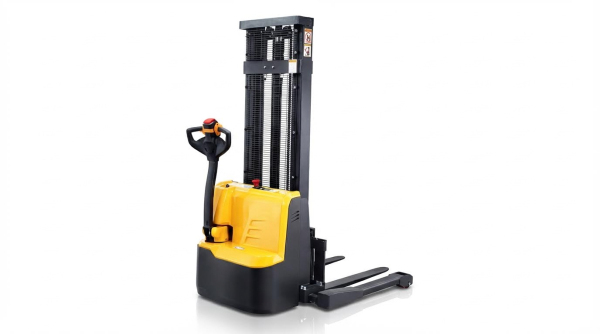
Walkie stackers sat in a regulatory niche between powered industrial trucks and high-risk plant. Regulators classified them as pedestrian-operated lift trucks rather than ride-on forklifts. This classification shaped licensing, training, and documentation expectations on industrial sites.
How Walkie Stackers Are Classified In Regulation
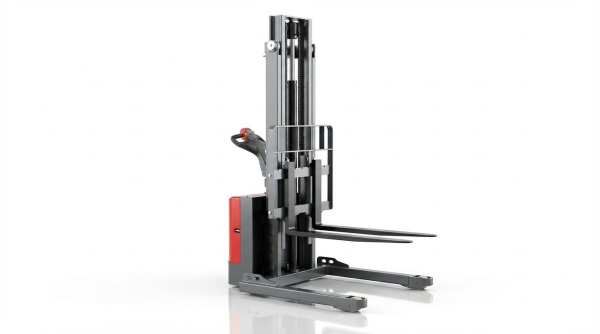
Regulators classified walkie stackers as pedestrian-operated lift trucks because the operator walked beside the unit. The operator did not occupy a seated driving position, which differentiated the equipment from conventional forklifts. Safety frameworks grouped walkie stackers with powered pedestrian trucks, pallet movers, and similar low-level lifting devices. Standards such as AS 2359.2 defined technical and operational expectations for this category, including braking performance, stability, and control layout. In parallel, occupational health and safety regulations treated them as powered mobile plant but not as high-risk work plant. This meant duty holders had to manage risks through training, procedures, and engineering controls, even without a formal licence regime.
When A High-Risk Work Licence Is Not Required
National high-risk work licence schemes covered forklifts, cranes, hoists, and similar equipment, but not walkie stackers. Authorities confirmed that operating a walkie stacker did not trigger a forklift high-risk work licence unit such as TLILIC0003. The key distinction lay in design and operation: the operator walked with the machine and did not use a driver’s seat or overhead guard. Regulators still required that operators received task-specific instruction and supervision under general workplace safety laws. In several jurisdictions, exemptions also applied when powered plant was used privately on non-commercial property or when a person travelled as a passenger only. However, industrial operators could not rely on these exemptions and still had to demonstrate systematic risk control.
Site Rules, Insurance, And Employer Duty Of Care
Even without a statutory licence requirement, employers carried a clear duty of care for lift stacker use. Insurers and auditors often expected documented training, competency assessments, and written safe operating procedures. Site rules typically specified age limits, PPE requirements, speed limits, exclusion zones, and traffic segregation for pedestrian-operated trucks. Many facilities restricted operation to named personnel who had completed structured training and a verification of competency process. Insurers could impose higher premiums or exclusions if incidents involved untrained or unauthorised operators. In serious events, regulators assessed whether the employer had implemented reasonably practicable controls, including induction, supervision, maintenance, and periodic refresher training. As a result, robust internal licensing and permitting systems functioned as both a risk control and a compliance safeguard.
Competency, Training Standards, And Documentation
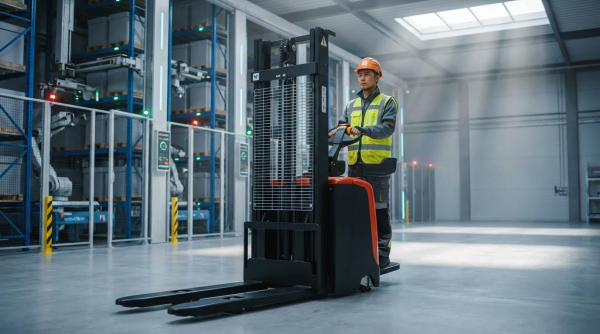
Competency for walkie stacker operation relied on structured training aligned with recognized industrial truck standards. Regulators did not require a high-risk work licence, but they expected evidence-based training and assessment. Employers had to document operator skills, monitor refresher needs, and integrate training into broader safety management systems. Robust documentation supported legal defence, insurance compliance, and continuous improvement of material handling safety.
AS 2359.2 And Other Relevant Safety Standards
AS 2359.2 defined requirements for the safe operation of powered industrial trucks, including pedestrian-operated units. It addressed operator competence, pre-use checks, operating procedures, and maintenance interfaces. Training providers structured lift stacker courses to align with these clauses, translating standard requirements into practical site tasks. In some jurisdictions, operators and employers also referenced standards such as CSA B335-15 and local occupational health and safety regulations. These documents covered hazard identification, risk assessment, and control measures for powered lift trucks. Alignment with such standards helped demonstrate that training content met contemporary regulatory expectations and industry good practice.
Core Training Content And Assessment Methods
Manual platform stacker training programs typically combined classroom theory with supervised practical operation. Core content covered hazard recognition, pedestrian interaction, stability principles, and the consequences of overloading or poor load placement. Operators learned routine inspection steps, including structural checks, control function tests, and battery or charger verification. Courses also addressed route planning, traffic management rules, parking procedures, and emergency responses such as isolating power after a control failure. Assessment usually consisted of a written theory evaluation plus a practical driving test against defined performance criteria. Trainers verified that operators could apply procedures consistently, not just recall them, before issuing any certificate of completion.
Verification Of Competency, Records, And Refreshers
Verification of Competency (VOC) processes allowed employers to confirm that operators remained capable over time and on specific equipment types. After initial training, operators completed VOC assessments when they changed roles, encountered new equipment, or after incidents. Employers maintained records of training dates, VOC outcomes, and any restrictions or corrective actions. These records supported internal audits, incident investigations, and insurer or regulator inspections. Many organizations scheduled refresher training at intervals of 1–3 years, or sooner if risk levels were high. Refresher programs focused on critical risk topics, observed bad habits, and updates to standards or site rules.
Online Vs. On-Site Training For Walkie Stackers
Online training modules offered flexible, cost-efficient delivery of theory content such as legislation, hazard awareness, and operating principles. They allowed operators to complete learning at varied times and provided automatic tracking of quiz results. However, online formats could not replace the need for supervised hands-on assessment on the actual walkie stacker type. On-site practical training enabled instructors to address site-specific traffic layouts, floor conditions, and interaction with other plant. Blended models combined e-learning for theory with structured on-site practical sessions and VOC checks. Employers selected the mix based on fleet size, shift patterns, and their safety management system maturity, while ensuring practical competence remained demonstrably verified.
Safe Operation, Engineering Controls, And Technology

Safe walkie stacker operation relied on a combination of trained operators, robust engineering controls, and suitable technology. Organisations integrated procedural controls, such as traffic rules and PPE, with equipment design features like interlocks and emergency stops. Battery technology, telematics, and digital maintenance tools increasingly supported safer, more efficient fleets. This section linked day‑to‑day operating practices with engineering and technological measures that reduced risk and lifecycle cost.
Pre-Operation Checks And Preventive Maintenance
Operators performed pre-operation checks at the start of each shift to detect defects before use. Typical inspections included visual checks for structural damage, fork distortion, hydraulic leaks, and loose fasteners. Operators verified control functions, braking performance, horn, emergency stop, and any warning lights. They checked battery charge level, connector integrity, and cable insulation, and confirmed correct tyre condition and inflation for relevant designs. Preventive maintenance followed manufacturer schedules and site procedures, covering lubrication, hydraulic oil changes, brake adjustment, and electrical system inspection. Organisations documented both daily checks and scheduled maintenance to demonstrate compliance and support incident investigations.
Load Handling Limits, Stability, And Traffic Control
Safe load handling started with respecting the rated capacity shown on the data plate for a defined load centre. Operators assessed load mass and geometry, ensuring stable, uniformly distributed loads without overhang that compromised visibility or stability. During travel with a load, guidance recommended fork height around 300–400 millimetres and mast tilted back within design limits for stability. Operators maintained low speeds, avoided sudden braking or sharp turns, and kept clear of slopes exceeding specified gradients, such as 5 degrees longitudinally. Site traffic management plans defined pedestrian exclusion zones, one-way systems, and speed limits. Rules prohibited persons within at least a one-metre radius of the forks during lifting or lowering to prevent crush injuries.
Battery Systems, Charging Safety, And Energy Use
Walkie stackers typically used traction batteries that required controlled charging practices to maintain capacity and safety. Operators avoided deep discharge and connected only chargers matched to the battery’s voltage and capacity. Charging areas needed ventilation, clear signage, and protection from ignition sources due to possible hydrogen evolution from lead-acid batteries. Procedures specified isolating the truck, switching off the charger before disconnecting, and inspecting connectors and cables for overheating or damage. Operators wore appropriate PPE, such as eye protection and gloves, when handling electrolyte or battery components. Energy management practices, including opportunity charging and scheduled rotation of units, increased uptime and prolonged battery life. Regular battery inspections formed part of preventive maintenance to prevent sudden failures during operation.
Digital Tools, Telematics, And Predictive Maintenance
Digital tools increasingly supported safer and more efficient walkie stacker operation. Telematics modules recorded utilisation, impacts, travel paths, and fault codes, enabling supervisors to identify high-risk behaviours and congested areas. Access control systems restricted operation to authorised personnel, often integrating with verification-of-competency records. Predictive maintenance platforms analysed sensor and event data to forecast component wear, such as drive motors, brakes, and hydraulic pumps. This approach reduced unplanned downtime and allowed maintenance tasks to be scheduled outside peak production windows. Digital checklists replaced paper pre-start forms, improving data accuracy and traceability. Integration with broader warehouse management or safety systems provided a consolidated view of fleet performance, incident trends, and compliance status.
Summary Of Licensing, Training, And Safety Priorities
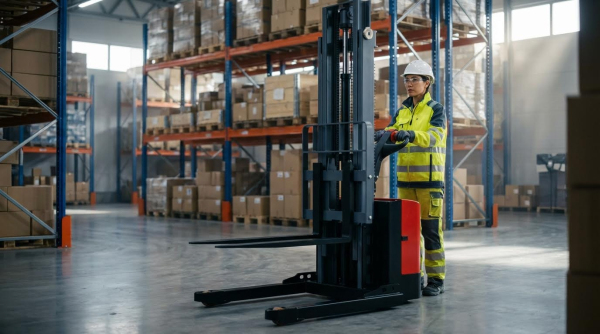
Walkie stackers were classified as pedestrian-operated lift trucks and sat outside formal high-risk work licensing frameworks. Regulators did not require a National HRW Licence to operate them, unlike ride-on forklifts covered by units such as TLILIC0003. However, employers still carried a clear duty of care to verify competence, maintain safe systems of work, and document training outcomes. This meant that the absence of a licence requirement never removed the obligation to manage risk to an acceptable level.
Industry practice therefore focused on structured, standard-based training aligned with AS 2359.2 and comparable international guidance. Programs typically combined theory and practical assessment, covering pre-use inspections, load assessment, safe travel, parking, and battery charging. Operators needed adequate language, literacy, and numeracy skills, and received in-house certificates or Verification of Competence rather than nationally recognised tickets. Regular refresher training and re-assessment supported continuous compliance, especially when site layouts, processes, or equipment changed.
From a safety engineering perspective, critical priorities included enforcing load limits, controlling pedestrian interaction zones, and maintaining braking, steering, and lifting systems. Pre-operation checks and planned maintenance reduced the likelihood of mechanical failure, while clear site rules addressed speed, visibility, and exclusion distances around raised loads. Emerging digital tools, including telematics and condition monitoring, started to support these controls with real-time usage and fault data. Over time, the sector moved toward integrating licensing policy, competency-based training, and technology-driven oversight into a single, risk-based management approach for lift stacker operations.