If you are asking “how can I move full 55 gallon drums by myself,” you are dealing with loads that routinely exceeded 180 kg and often approached 360 kg in industrial settings. This article outlined why solo movement of full drums created high injury risk, then mapped the equipment families that allowed one person to move, tilt, rack, and pour drums with mechanical assistance instead of raw force. It also walked through engineering criteria for matching drum handler to contents, floors, and workflows, including when to step up to automation or Atomoving solutions. The closing section tied these elements into a practical safety framework so facilities could reduce manual handling, remain compliant, and still move full 55-gallon drums efficiently.
Why Moving Full Drums Alone Is High-Risk
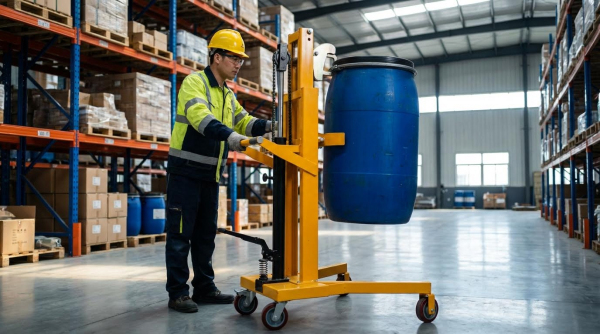
Understanding why moving full 55-gallon drums alone is high-risk is the first step to answering “how can I move full 55 gallon drums by myself” safely. The combination of high mass, awkward geometry, and potentially hazardous contents creates a narrow margin for error. Risk rises further when facilities lack purpose-built drum handling equipment or when operators improvise with general material handling tools. This section explains the physics, injury mechanisms, and regulatory context that must guide any one-person drum handling strategy.
Typical Drum Weights And Load Calculations
A standard 55-gallon steel or plastic drum had an empty mass of roughly 18–25 kg. When filled with water-like liquids at about 1,000 kg/m³, a 55-gallon (≈208 L) drum weighed in the range of 230–250 kg. Higher-density contents such as oils with solids, slurries, or metal-bearing waste pushed drum weights toward and beyond 350 kg, with specialized process drums occasionally exceeding 900 kg. Anyone asking “how can I move full 55 gallon drums by myself” must treat every unknown drum as if it sits at the upper end of this range until the contents are verified.
Load calculations started with contents density, drum volume, and tare mass. Engineers typically calculated load as m = ρ × V + mdrum, then applied a safety factor of at least 1.5 for handling equipment. For example, a 55-gallon drum filled with a 1.3 g/cm³ chemical resulted in a load near 300 kg, so equipment was selected for ≥450 kg rated capacity. Drum handling attachments for forklifts or skid steers, below-hook lifters, and mobile drum handlers were all sized this way. This approach reduced the risk of structural failure, tipping, or uncontrolled motion when one person operated the system.
Common Injury Modes And Failure Scenarios
Manual attempts to move full 55-gallon drums alone historically produced a high incidence of musculoskeletal injuries. Operators who tried to “walk” or rock a drum by hand often exceeded safe spinal compression limits, leading to acute back strain, disc injuries, and hernias. The cylindrical geometry and high center of mass also promoted sudden tipping if the drum crossed a floor joint, hose, or small obstruction. When a drum tipped, the operator’s instinctive reaction to “catch” it frequently caused shoulder injuries and fractures.
Crush injuries to feet and hands were another frequent failure mode. When drums slipped off improvised dollies, pallet jacks without proper cradles, or makeshift sling arrangements, the 200–400 kg load could land on toes or trap fingers between the drum and a fixed object. In facilities handling hazardous or corrosive materials, any impact that deformed the shell or loosened bungs increased the likelihood of leaks. That introduced secondary risks: chemical exposure, inhalation of vapors, environmental contamination, and slip hazards from spilled liquids. In confined layouts, a dropped or rolling drum could also strike adjacent equipment, pipework, or other drums, creating multi-drum domino failures.
Regulatory And Safety Standard Considerations
Regulations and consensus standards treated full drum handling as a high-risk activity, especially for lone workers. Occupational safety rules in many jurisdictions required employers to minimize manual handling of high-mass loads and to provide suitable mechanical aids for drums above defined weight thresholds. Guidance documents specifically discouraged single-person manual lifting or upending of full 55-gallon drums, recommending mechanical drum trucks, drum dollies, hoists, and engineered attachments instead. For hazardous contents, chemical safety regulations mandated that drums be inspected, labeled, and handled using procedures consistent with the Safety Data Sheet.
Environmental regulations addressed spill prevention and secondary containment for stored drums, which affected how drums could be stacked, moved, and staged. Requirements for spill containment sumps, limits on stack height, and clear access for inspection all constrained how “how can I move full 55 gallon drums by myself” could be implemented in practice. Where cranes, hoists, or below-hook drum lifters were used, applicable lifting standards governed design factors of safety, inspection intervals, and operator training. Collectively, these rules meant that safe, compliant one-person handling of full drums relied on correctly rated equipment, documented procedures, and formal training rather than physical strength or improvisation.
Essential Equipment For One-Person Drum Handling
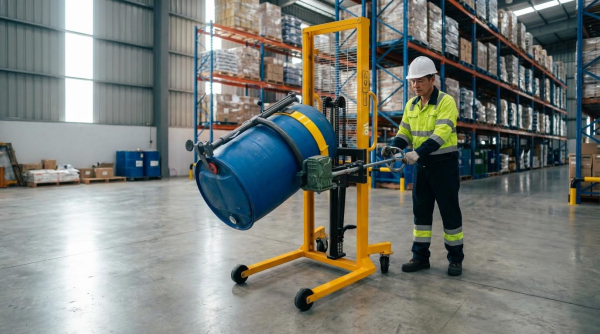
Understanding how can i move full 55 gallon drums by myself starts with selecting purpose-built mechanical aids. Full drums often weigh between 180 kilograms and 360 kilograms, so solo handling must rely on engineered equipment rather than raw strength. The following categories cover typical solutions that allow one trained operator to move, tilt, and position drums while controlling ergonomic loads and containing risk. Choosing between them depends on task type, floor conditions, and the hazard profile of the drum contents.
Drum Trucks, Dollies, And Mobile Drum Handlers
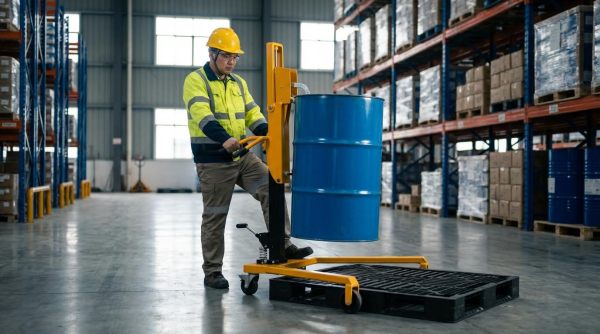
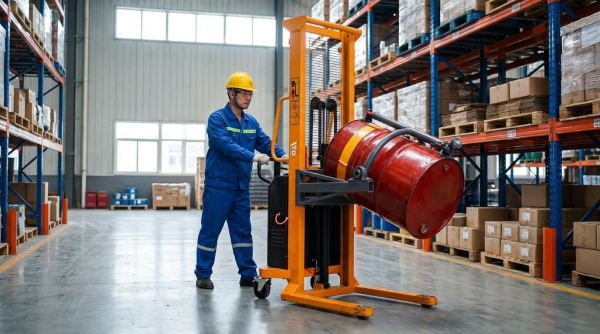
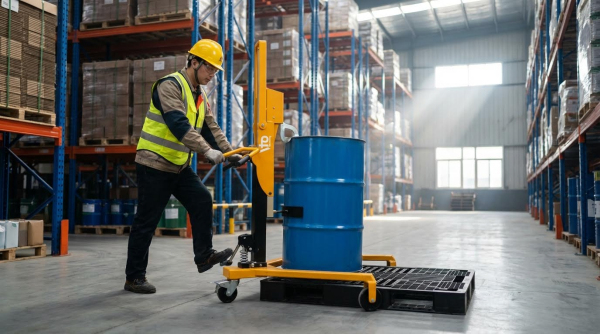
Drum trucks and dollies provide the baseline answer to how can i move full 55 gallon drums by myself on level floors. Drum dollies support the drum base on a low-profile wheeled ring, often with capacities up to 450 kilograms and stainless or spark-resistant options for corrosive or flammable contents. They minimize lifting but require the drum to be already upright and are best for short horizontal moves on smooth, clean concrete. Drum trucks add a lever action frame with two or four wheels that grip the drum at the chime, allowing one operator to tip and roll a full 55-gallon drum while keeping the center of gravity within the wheelbase. Mobile drum handlers go further by integrating clamps, lift mechanisms, and sometimes powered tilt so a single person can pick, move, raise, and pour drums into process vessels or shelving. These units reduce manual push forces, control drum rotation, and are suitable where frequent handling cycles and ergonomic limits are critical.
Forklift And Skid Steer Drum Attachments
Forklift and skid steer attachments are effective when you ask how can i move full 55 gallon drums by myself over longer distances or uneven yards. Fork-mounted drum handlers use grip-and-go jaws or band clamps that automatically engage the drum as the truck advances, then secure it for transport, stacking, or racking with capacities typically exceeding 450 kilograms. Some designs offer powered lift and 360-degree rotation, enabling controlled pouring into hoppers without manual handling at height. Skid steer drum attachments with rotating bases allow up to about 350 degrees of rotation, split to either side, which supports precise dumping or positioning in tight outdoor work areas. These attachments often handle both steel and plastic drums using lined arms with anti-static rubber to prevent slippage and reduce ignition risk when flammable vapors may be present. Using such attachments converts existing mobile equipment into dedicated drum movers, provided the operator is trained and the site enforces exclusion zones and traffic control.
Below-Hook Lifters, Cranes, And Hoists
Where vertical movement dominates the workflow, below-hook drum lifters used with cranes or hoists provide a controlled method for how can i move full 55 gallon drums by myself in congested plants. These devices attach to an overhead hook and clamp around the drum body or chime, allowing a single operator at a pendant or radio control to raise, lower, and traverse loads without pushing or pulling at floor level. Many models incorporate manual or powered rotation and pour mechanisms, so the operator can accurately decant liquids into reactors, mixers, or elevated storage without climbing ladders. Optional spark-resistant components and corrosion-resistant finishes support hazardous or chemically aggressive environments. In tight aisles or mezzanine structures, a suspended drum system reduces floor traffic and allows precise placement into secondary containment, racks, or sumps while keeping the operator outside spill or pinch zones. Correct sling angles, rated hardware, and compliance with relevant crane and hoist standards remain essential.
Drum Cradles, Tilting Stands, And Rackers
Drum cradles and tilting stands address a different aspect of how can i move full 55 gallon drums by myself, focusing on controlled rotation between vertical and horizontal positions. A drum cradle typically lets one person tip a drum from upright onto a wheeled cradle using a built-in tipping lever, with rated capacities often around 300 kilograms to 320 kilograms. Once in the cradle, the drum can be rolled short distances and positioned for dispensing through a bung without repeated manual up-ending. Tilting stands support the drum in either vertical or horizontal orientation and allow progressive tilting as the liquid level drops, maintaining flow while minimizing operator strain. Drum rackers interface directly with storage racks, lifting a vertical drum, rotating it to horizontal, and placing it onto rack beams so one trained worker can build multi-level storage safely. These devices reduce the need to manually roll drums on their chimes, lower the risk of uncontrolled tipping, and improve access for inspection and leak detection in drum storage areas.
Selection Criteria And Integration In Your Facility
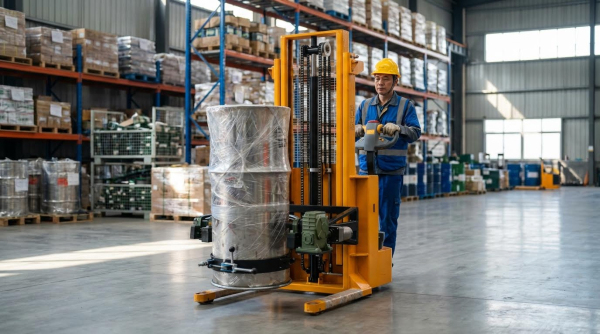
When you ask “how can I move full 55 gallon drums by myself,” the correct answer starts with equipment selection and integration, not strength. A full 55‑gallon drum often exceeds 180 kg, so facility conditions, drum contents, and operator capability must drive the choice of trucks, dollies, below‑hook lifters, or skid steer and forklift attachments. Proper integration also covers traffic routes, floor ratings, spill control, and training. This section explains how to match handling systems to your drums, your hazards, and your plant layout so one person can move drums while controlling risk.
Matching Equipment To Drum Contents And Hazards
Start by classifying each drum by contents: non-hazardous, flammable, corrosive, toxic, or reactive. A full 55‑gallon drum with dense liquids may approach or exceed 800 lb, so verify rated capacity of any drum truck, dolly, or attachment with at least a 25% safety margin. For flammable or combustible liquids, specify spark-resistant features such as bronze or aluminum contact elements and anti-static rubber linings in gripping arms to reduce ignition risk and prevent slippage. Corrosive or oxidizing contents justify stainless steel frames, chemically resistant wheels, and sealed bearings to avoid rapid degradation. Where drums contain unknown or mixed hazardous waste, prefer fully captured handling solutions such as enclosed mobile drum handlers, rackers, or below-hook lifters that clamp the drum body and allow controlled rotation and pouring without manual tilting. Always integrate spill pallets or sumps sized to regulatory criteria near transfer points so an operator working alone does not face uncontrolled releases.
Floor Conditions, Clearances, And Layout Constraints
Assess floor flatness, surface type, and load rating before deciding how you can move full 55‑gallon drums by yourself. Drum dollies or 2‑wheel drum trucks work best on smooth, crack-free concrete with minimal slopes; on rough or damaged floors, specify large diameter pneumatic or polyurethane wheels and avoid small casters that can stop abruptly and destabilize the load. In narrow aisles or low headroom areas, compact mobile drum handlers or low-profile palletizing trucks integrate better than tall mast equipment or overhead cranes. Where you already use skid steers or forklifts, consider drum attachments with defined dimensions, such as units around 1.5 m long and 1.25 m wide, and verify turning radii against your aisle widths and door openings. If you install 350° rotating skid steer or forklift drum attachments, confirm there is sufficient clearance for full rotation without striking racks, piping, or sprinklers. Map drum routes from storage to process points, eliminate tight corners, and mark dedicated drum lanes so a single operator can travel without reversing blindly or crossing pedestrian paths.
Ergonomics, Training, And Maintenance Requirements
Ergonomic performance is critical when one person handles full drums repeatedly. Choose equipment that minimizes manual tilting, pushing force, and awkward postures, such as powered lift and rotate drum handlers or hydraulic barrel dumpers with lift heights from roughly 0.9 m to 3 m. Evaluate handle heights, control placement, and required push/pull forces; aim to keep sustained forces below commonly referenced ergonomic limits, especially on inclines. Training should cover hazard recognition, center-of-gravity behavior of full and partially filled drums, correct attachment engagement, and emergency procedures for leaks or dropped loads. Operators must learn to verify that gripping jaws or band clamps fully engage the drum chime before lifting. Maintenance planning is equally important; create inspection checklists for wheels, casters, hydraulic hoses, welds, and locking pins, and schedule periodic load tests for below-hook lifters and crane/hoist systems to meet applicable standards. Well-maintained equipment reduces unexpected failures that could injure a solo operator or cause spills.
When To Use Automation Or Atomoving Solutions
Automation becomes attractive when drum volumes are high, travel paths are long, or hazards are severe. If you routinely ask “how can I move full 55 gallon drums by myself” for dozens of moves per shift, manual or semi-manual systems can drive cumulative musculoskeletal strain, even when they meet rating limits. Automated or powered drum palletizers, transporters, and rackers can take over repetitive loading of drums onto pallets, truck beds, or multi-level racking, keeping the operator in a supervisory role. Where process lines require frequent mixing of closed drums, drum rollers or tumblers with timed control packages allow push-start and walk-away operation, reducing manual handling and exposure to contents. In congested or hazardous zones, consider automated guided vehicles or walkie pallet truck-based solutions that interface with drum clamps or custom grippers sized for 55‑gallon drums. Integration should include interlocks with spill containment, area guarding, and emergency stop circuits, ensuring that automation does not introduce new struck-by or pinch hazards while enabling one-person control of heavy drum movements.
Practical Summary And Key Safety Conclusions
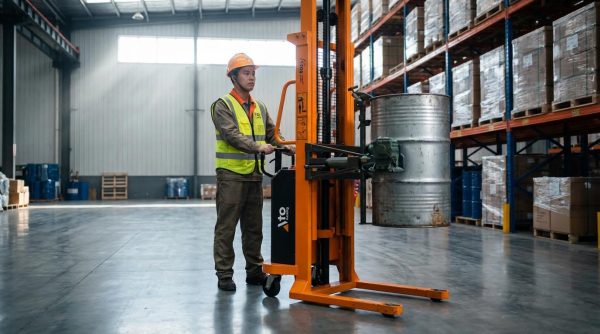
Full 55-gallon drums typically weighed 180–360 kilograms, and sometimes more, so solo manual lifting was never acceptable. Anyone asking “how can I move full 55 gallon drums by myself” needed to understand that “by myself” meant using engineered equipment, not raw physical effort. The safest approach combined pre-job assessment, appropriate drum handling devices, and strict adherence to regulatory and chemical safety requirements.
Operators first verified contents, weight, and hazard class from labels and Safety Data Sheets, then inspected drums for corrosion, deformation, bulging, or leaks. They selected equipment that kept the drum under positive control through the entire move. Options included drum dollies and trucks for short horizontal moves, mobile drum handlers and palletizers for lifting and pallet loading, and forklift or skid steer attachments when higher capacities or stacking were required. Skid steer and forklift drum attachments with controlled rotation up to about 350 degrees and capacities around 540 kilograms allowed one person to clamp, lift, rotate, and place drums without manual handling, while anti-slip and anti-static features reduced drop and ignition risks.
Where vertical lift or precise positioning was necessary, below-hook drum lifters used with cranes or hoists provided secure lifting, controlled pouring, and integration with spill containment systems. Drum cradles, tilting stands, and rackers enabled one worker to tip, rack, or horizontally store drums while keeping forces within ergonomic limits. Across all solutions, facilities needed to account for floor conditions, aisle width, overhead clearance, and racking geometry, and to limit stacking height to maintain inspection access and stability.
From an industry perspective, the trend moved steadily toward greater mechanization and partial automation of drum handling to reduce musculoskeletal disorders and chemical exposure. Future systems were likely to integrate powered clamping, programmable rotation, and sensor-based overload and mis-clamp detection, along with automated time-controlled tumbling and mixing. For practical implementation, facilities defined clear rules: no manual lifting of full drums, mandatory use of purpose-built drum equipment, documented training, PPE matched to drum contents, and emergency and spill-response planning. This balanced approach recognized that one person could move a full 55-gallon drum safely only when supported by the right engineered devices, procedures, and safeguards, not by physical strength alone.