Engineers in warehouses, workshops, and construction sites often need to move pallets where forklifts or manual pallet jack are unavailable or impractical. This article examines how to evaluate loads and environments, then apply low‑tech, semi‑mechanical, and automated solutions to move or lift pallets safely. It explains how to answer questions like “how do you lift a pallet without a jack” using roller crowbars, dollies, conveyors, hoists, and ergonomic aids. Finally, it compares options so you can select safe, efficient non‑forklift methods that match your technical, budget, and regulatory constraints.
Engineering Considerations Before Moving A Pallet
Before deciding how do you lift a pallet without a jack, engineers should evaluate the load, the supporting pallet, and the path of travel. These factors determine whether low-tech methods, semi-mechanical aids, or full automation are necessary. A structured engineering review reduces musculoskeletal risk, prevents pallet or floor failure, and keeps operations compliant with safety standards. The following subsections outline the key checks to complete before any non-forklift pallet move.
Load, Center Of Gravity, And Pallet Integrity
Start by confirming the pallet mass and distribution. Typical industrial pallets carried between 1,500 kg and 3,000 kg, which exceeded manual handling limits. When asking how do you lift a pallet without a jack, the center of gravity (CoG) position became critical. An off-center load increased tipping risk when using crowbars, pipes, or improvised platforms. Engineers should estimate CoG location in plan view, verify that lever points sit close to stringers or blocks, and avoid lifting from only one weak corner. Inspect deck boards, stringers, and fasteners for cracks, rot, or pulled nails. A damaged pallet under bending from a roller crowbar or pipe rollers could fail suddenly, dropping the load and injuring operators.
Floor Conditions, Route Planning, And Clearances
Non-jack methods relied heavily on floor quality. Smooth, level concrete supported pipes, skates, or dollies, while cracked or sloped floors increased rolling resistance and instability. Before deciding how do you lift a pallet without a jack, map the route from origin to destination. Check for thresholds, drains, expansion joints, and tight turns that could stop pipes or snag sheets. Measure door widths, aisle clearances, and low overhead structures against pallet footprint and load height. Engineers should define safe stopping points and rest locations, especially on inclines. For outdoor moves, evaluate surface bearing capacity and friction; dragging a pallet on a sheet across asphalt or gravel required significantly higher tractive effort and created more ergonomic risk.
Manual Handling Limits And Ergonomic Risk
Any method that answered how do you lift a pallet without a jack still had to respect human capability. Standards and guidance values from regulators and ergonomics bodies limited recommended push-pull forces and lift weights. Dragging a pallet with ropes or a sheet often required two or three people for loads above approximately 200 kg, depending on friction. Engineers should calculate estimated push or pull force using load mass and coefficient of friction, then compare it with acceptable limits for the workforce. Repetitive actions, awkward postures when using long crowbars, and twisting while guiding a sliding pallet all increased musculoskeletal disorder risk. Where calculated forces exceeded safe values, the design should incorporate aids such as walkie pallet truck, skates, or hoists instead of pure manual effort.
Compliance With Safety Standards And Company Policy
Engineering decisions on how do you lift a pallet without a jack must align with national regulations and internal procedures. Occupational safety rules typically required risk assessments, method statements, and training for non-standard handling operations. Company policies might prohibit dragging loads beyond defined mass limits or ban improvised devices that lacked rated capacities. All chosen tools, including pipes, crowbars, or DIY caster platforms, should have documented load ratings or conservative engineering justifications. Personal protective equipment such as gloves and safety footwear should match the assessed hazards, including crush and shear risks. Finally, supervisors should verify that emergency access routes remain clear during the move and that incident reporting processes exist if pallet damage or near-miss events occur.
Low-Tech Methods For Occasional Or Emergency Moves
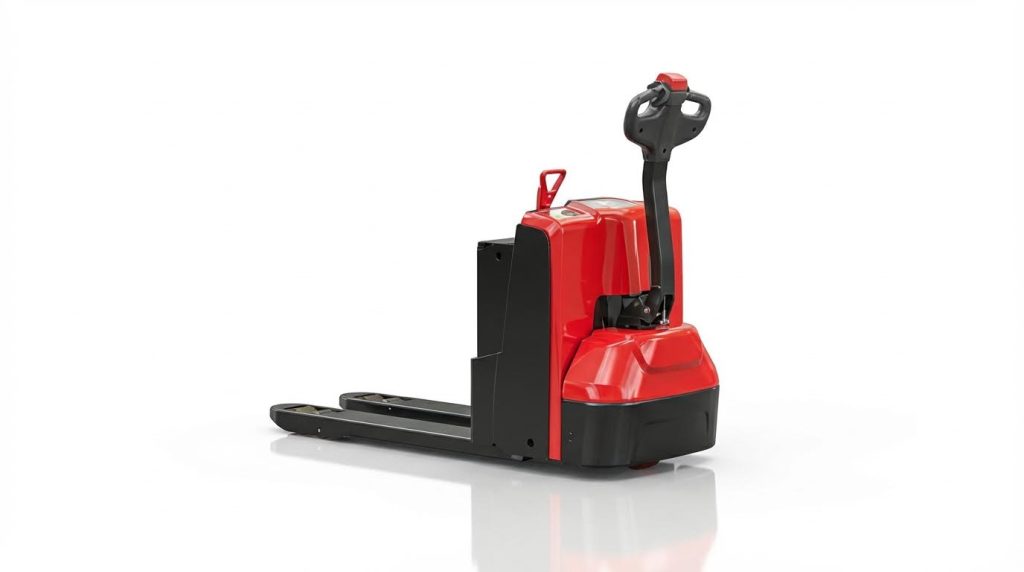
Low-tech options answer a common question in small facilities: how do you lift a pallet without a jack. These methods rely on basic mechanics, low-cost hardware, and careful risk control. Engineers should match each technique to pallet mass, floor conditions, and available manpower. The following subsections describe practical options for short, infrequent moves when forklifts and manual pallet jack are unavailable.
Roller Crowbars, Pipes, And Sliding Techniques
Roller crowbars use a long lever with a small wheel set near the toe. The operator inserts the toe under one pallet edge, then pushes down on the handle to raise one side by several millimetres. Once lifted, the wheel carries part of the load, allowing the pallet to roll short distances on smooth, level floors. For heavier pallets, workers can progressively lift and block each corner, then insert steel pipes or rigid rollers under the pallet deck. The pallet then moves by rolling or sliding it along these pipes, repositioning them as the load advances. Engineers must verify pipe strength, surface hardness, and deflection limits against pallet mass, which often ranges from 1,500 kg to 3,000 kg. Sliding directly on the floor is only acceptable for low-friction surfaces and short distances because it increases push forces and pallet damage risk.
Dollies, Skates, And DIY Caster Platforms
Dollies and machinery skates provide a direct answer to how do you lift a pallet without a jack in tight spaces. The pallet is first lifted slightly using a lever bar or roller crowbar, then a pair of rated dollies or skates is placed under the stringers or blocks. This configuration converts the pallet into a wheeled load that can roll through narrow aisles or doorways, provided the floor is flat and free of steps. Load ratings must exceed the pallet mass with a suitable safety factor, and wheel materials should match the floor type to avoid point loading or surface damage. A DIY caster platform uses a thick plywood or steel plate with bolted caster wheels at the corners and sometimes mid-span. Workers lever the pallet onto this platform and then push it like a low cart. This method introduces extra lifting and fabrication effort but can be valuable for one-off moves or constrained budgets, provided the platform stiffness and caster capacity are properly calculated.
Ropes, Sheets, And Manual Off-Loading By Hand
Ropes and sheets represent the lowest-tech response to how do you lift a pallet without a jack, and they carry the highest ergonomic risk. A strong rope can be tied through pallet openings or around the perimeter to drag the pallet across a smooth floor. This technique suits lighter pallets over short distances and usually requires at least two people to keep pull forces within manual handling limits. Alternatively, workers can pull the pallet onto a robust sheet or tarp and then drag the sheet, which reduces friction slightly and distributes contact pressure. Both approaches demand gloves, stable footwear, and pre-planned routes with no steps or sharp edges that could snag the sheet. If no handling tools exist and the pallet mass or floor conditions make dragging unsafe, the only remaining option is to off-load items by hand. In that case, engineers should specify task rotation, weight limits per item, and use of smaller containers to keep individual lifts within accepted ergonomic guidelines.
Semi-Mechanical And Automated Pallet Handling Options
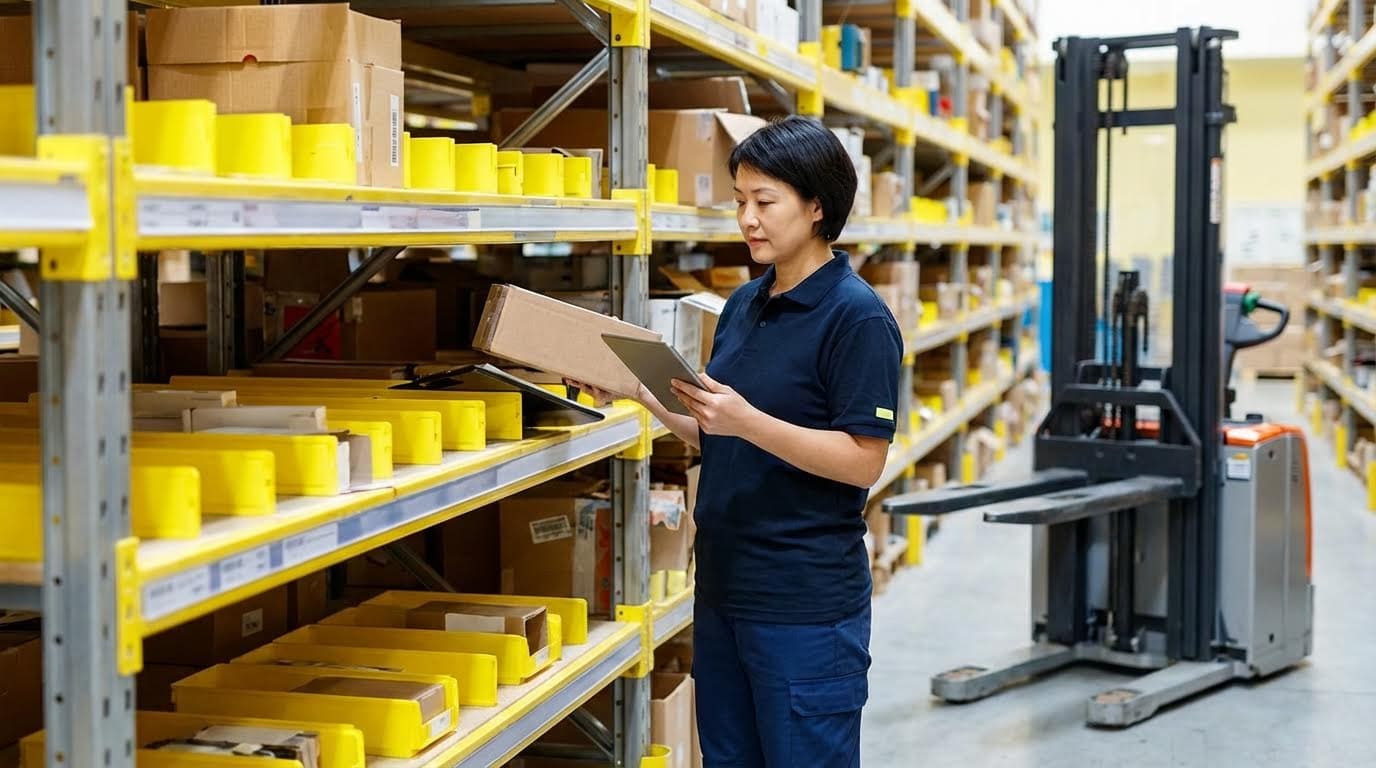
Semi-mechanical and automated systems answer the question “how do you lift a pallet without a jack” when loads, frequency, or ergonomics exceed low-tech methods. These solutions reduce manual force, improve vertical reach, and control load trajectories while avoiding full forklift deployment. Selecting the right option depends on pallet mass, required lift height, travel distance, floor conditions, and integration with existing workflows.
Stackers, Lift Tables, And Vertical Handling
Stackers and lift tables provided controlled vertical handling when users needed to lift a pallet without a jack or forklift. Manual and powered stackers raised pallets using hydraulic masts, typically up to 1,000–1,500 kg, to racking or work heights. Operators positioned the pallet on low-profile forks, then elevated it using a pump handle or electric drive, which reduced bending and overhead lifting. Scissor lift tables worked as static or mobile platforms, elevating pallets to 800–1,200 mm for picking, packing, or assembly tasks. Engineers evaluated center of gravity, platform size, and lift stroke to avoid tipping and ensured safety features such as mechanical locks, toe guards, and overload valves met local regulations.
Pallet Carts, Gravity Rollers, And Simple Conveyors
Pallet carts and gravity conveyors allowed users to move pallets horizontally without a traditional pallet jack. Towable pallet carts carried single or multiple pallets on wheeled frames, sometimes forming tugger trains to replace forklifts on repetitive routes. Designers matched wheel diameter, bearing type, and frame stiffness to floor quality and pallet weight, often in the 500–2,000 kg range. Gravity roller conveyors used a slight slope so pallets rolled under their own weight, which suited order picking, staging, and dock interfaces. Engineers controlled speed and impact with end-stops, brakes, and roller pitch, and verified that deckboards or pallet runners aligned correctly with roller spacing to prevent hang-ups. These systems worked best on straight, predictable paths where the question “how do you lift a pallet without a jack” shifted toward “how do you move it efficiently once supported.”
Vacuum Lifters, Hoists, And Cobots For Ergonomics
Vacuum lifters and hoists addressed ergonomic risk when operators needed to unload or reorient palletized goods rather than simply drag a whole pallet. Vacuum systems used suction pads on cartons, bags, or even the pallet top, allowing vertical lifting with fingertip control and minimal spinal load. Wire rope or chain hoists equipped with pallet forks or custom grippers lifted loads up to several hundred kilograms, often from floor level to mezzanines or trucks. Collaborative robots, or cobots, supported repetitive case picking, depalletizing, and layer handling, integrating vision systems to locate items accurately. These technologies reduced manual handling cycles, answered “how do you lift a pallet without a jack” at the item or layer level, and required risk assessments under machinery and collaborative robot safety standards.
Digital Twins, Maintenance, And Lifecycle Cost Control
Digital twins and structured maintenance strategies optimized the lifecycle cost of non-forklift pallet systems. Engineers modeled stackers, conveyors, and hoists in simulation tools to predict throughput, queue lengths, and failure modes before physical installation. This approach helped justify whether semi-mechanical carts or automated conveyors best solved a given “how do you lift a pallet without a jack” scenario at scale. Condition-based maintenance used sensor data on cycles, loads, and temperatures to schedule inspections for hydraulics, bearings, and lifting chains, extending service life and reducing unplanned downtime. Lifecycle costing captured energy use, spare parts, operator training, and safety upgrades, allowing comparison with forklift or manual-jack alternatives over 5–10 year horizons.
Summary: Choosing Safe, Efficient Non-Forklift Solutions
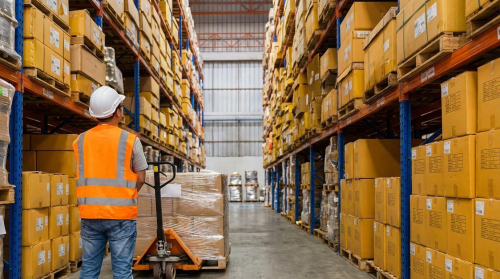
Non-forklift pallet handling solutions allowed facilities to answer a common question: how do you lift a pallet without a jack while still controlling risk, cost, and productivity. Engineering assessments of load, center of gravity, pallet integrity, and floor conditions remained the starting point before selecting any method. Low-tech approaches such as roller crowbars, pipes, dollies, ropes, sheets, and manual off-loading supported rare or emergency moves but required strict ergonomic and team-based controls. Semi-mechanical options, including stackers, lift tables, pallet carts, gravity rollers, vacuum lifters, hoists, and cobots, improved ergonomics and throughput, especially when combined with digital twins and lifecycle cost tracking.
For loads above roughly 25–30 kg per person, direct manual lifting of the entire pallet was not acceptable under modern ergonomic guidelines. Instead, engineers either broke down the load and handled items individually or used leverage, rolling, or lifting aids sized to the pallet mass, typically 1,500–3,000 kg for full loads. Facilities that moved pallets only occasionally could justify low-cost tools and simple DIY platforms, provided they verified weight limits, fastener strengths, and caster ratings against the worst-case pallet mass. High-throughput sites, in contrast, benefited from standardized carts, conveyors, and automated transfer systems that reduced cycle time and musculoskeletal risk.
Future trends pointed toward wider use of digital twins and condition-based maintenance to monitor rollers, casters, hoists, and ergonomic aids. These tools supported data-driven decisions on when to replace components, re-route flows, or upgrade to more automated solutions. A balanced strategy combined low-tech techniques for exceptional situations with engineered semi-mechanical or automated systems for routine work. In every case, the technically correct answer to how do you lift a pallet without a jack depended on matching method to load, route, frequency, and workforce capability while complying with safety standards and company policy. Additionally, some facilities opted for walkie pallet truck solutions to enhance efficiency further.