Forklift and pallet truck certification linked directly to OSHA 1910.178 requirements has remained critical for reducing industrial incidents and downtime. This article explains regulatory basics, core training components, and engineering best practices that shape compliant operator programs. It also examines how technologies such as telematics and VR improved training quality and safety KPIs in modern facilities. Finally, it summarizes practical steps facilities should follow to achieve compliant, efficient, and safe certification workflows for all powered industrial truck operators.
Regulatory Basics For Forklift And Pallet Truck Training
Understanding regulatory basics is the first step in learning how to get a pallet truck and fork lift certiication. OSHA rules defined clear expectations for employers and operators, from initial training to periodic evaluations. These requirements covered powered industrial trucks such as forklifts and electric pallet trucks and linked training quality directly to incident reduction. A compliant program combined formal instruction, hands‑on practice, and documented performance evaluation.
OSHA 1910.178: What The Standard Really Requires
OSHA 29 CFR 1910.178 required employers to ensure that every powered industrial truck operator was competent to operate the equipment safely. Competence came from a program that included formal instruction, practical training, and an evaluation of performance in the workplace. The standard listed mandatory topics such as operating instructions, load handling, stability, rated capacity, refueling or charging, and site‑specific hazards. It also required pre‑operation inspections and removal of unsafe equipment from service until qualified personnel repaired it. The regulation placed responsibility on the employer, not the training vendor, to verify that operators met these requirements. For anyone researching how to get a pallet truck and fork lift certiication, OSHA 1910.178 formed the core rule set that every course needed to satisfy.
Equipment Classes: Forklifts, Pallet Trucks, And Scope
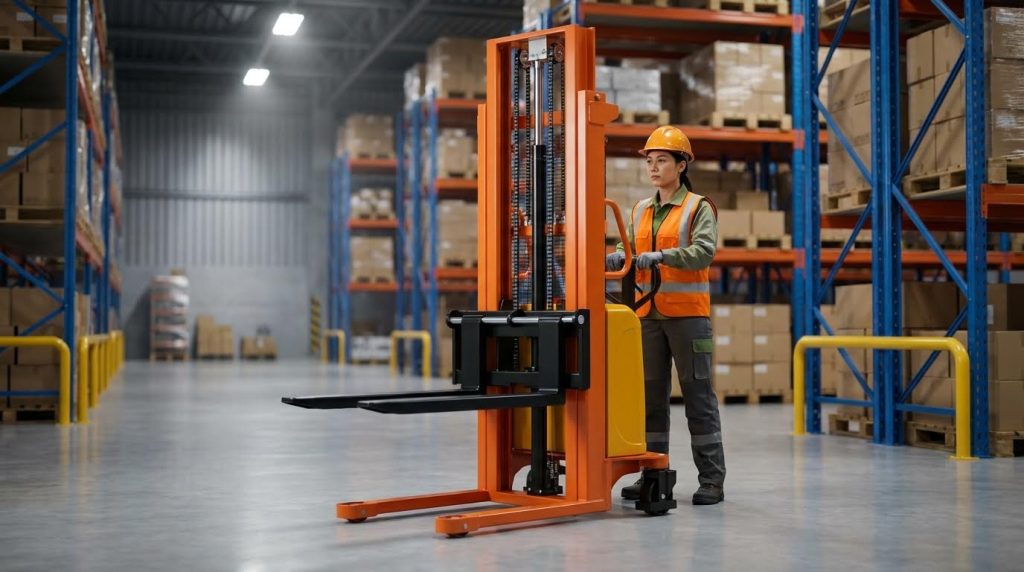
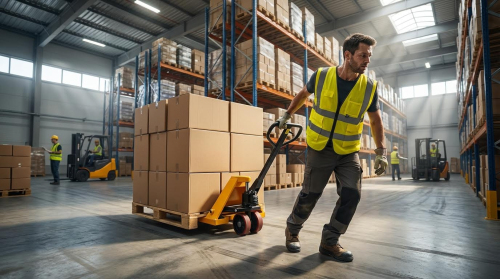
OSHA classified powered industrial trucks into several truck classes, including electric rider trucks, internal combustion trucks, narrow‑aisle trucks, and pallet or platform trucks. Forklifts such as counterbalance and reach trucks fell into different classes than electric pallet trucks, but all were covered when powered. Electric pallet jacks and walkie stackers counted as powered industrial trucks and therefore required certification. Manual pallet trucks did not fall under 1910.178 certification rules, although employers still needed to train workers on safe handling and ergonomics. When planning how to get a pallet truck and fork lift certiication, operators had to match training content and evaluation to the exact truck class and attachment types used on site.
Who Needs Certification And Who Is Exempt
Any employee who operated a powered industrial truck in a workplace needed certification under OSHA rules. This included full‑time operators, temporary workers, and supervisors who occasionally drove a forklift or electric pallet truck. Age restrictions applied: operators of powered trucks in general industry needed to be at least 18 years old. Manual pallet truck users were exempt from formal certification, because those devices were not powered industrial trucks, but employers still had a duty to train them on hazards such as unstable loads, pinch points, and pedestrian traffic. Visitors and pedestrians who never operated the truck did not require certification, but facilities still had to protect them through traffic management and signage. Understanding these boundaries helped companies avoid gaps when deciding how to get a pallet truck and fork lift certiication program fully compliant.
Validity Periods, Retraining Triggers, And Records
Under OSHA 1910.178, operator evaluations had to occur at least once every three years. Certification did not expire automatically by calendar date, but employers needed to re‑evaluate performance within that three‑year window and whenever specific triggers occurred. Retraining and re‑evaluation became mandatory after an accident or near miss, after unsafe operation was observed, when workplace conditions changed significantly, or when the operator switched to a different truck type. Employers had to maintain written records of training and evaluations, typically including operator name, training dates, evaluation dates, and the identity of the person performing the evaluation. Keeping accurate records supported incident investigations, internal audits, and regulatory inspections, and it demonstrated that the company followed a structured process for how to get a pallet truck and fork lift certiication aligned with OSHA expectations.
Core Training Components And Certification Workflow
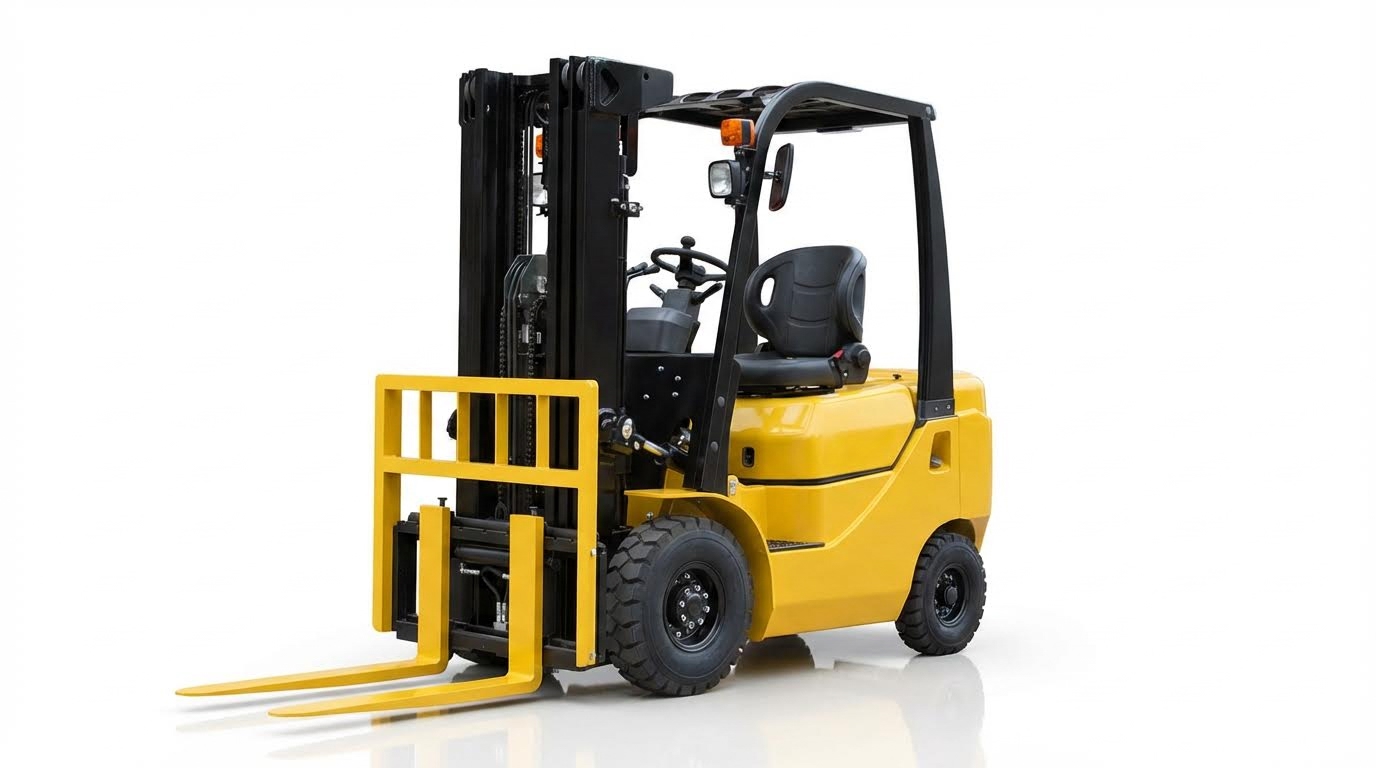
Core training elements determine how to get a pallet truck and fork lift certiication that meets OSHA and industry expectations. A compliant workflow links formal theory, supervised practice, and documented evaluation into one traceable process. Engineering teams should align this workflow with site hazards, traffic patterns, and load characteristics to reduce incident rates and maintenance costs.
Formal Instruction: Classroom, Online, And Blended Options
Formal instruction built the foundation for compliant forklift and pallet truck certification. OSHA recognized classroom, online, and blended formats as long as content matched 29 CFR 1910.178 topics. Core modules covered truck classes, stability triangle, capacity plates, load centers, refueling or charging, and pedestrian interaction. Quality programs also addressed case studies of rollovers, struck-by incidents, and hydraulic failures to make hazards concrete. Online courses typically took two to three hours and used quizzes after each module to validate learning. Passing thresholds usually ranged from 70% to 80% to ensure operators retained critical safety concepts. A blended model paired this theory with on-site demonstrations, which reduced downtime and allowed facility-specific examples. From an SEO perspective, detailed descriptions of these options help users searching how to get a pallet truck and fork lift certiication compare pathways and timelines.
Hands-On Training And Site-Specific Skill Development
Hands-on training translated theory into repeatable, safe maneuvers. Qualified trainers demonstrated pre-use inspections, controlled starts and stops, turning in confined aisles, and operating on ramps. Trainees then practiced under close supervision using the same truck types they would operate in production. Site-specific modules addressed local hazards such as dock edges, mezzanine openings, drive-in racking, cold rooms, or mixed traffic with pedestrians and AGVs. Instructors varied loads by mass, geometry, and center of gravity to teach stability limits and mast tilt control. For electric pallet trucks, exercises included tight pallet extraction, staging in trailers, and parking with forks lowered and controls neutralized. Structured practice logs documented hours, tasks covered, and any corrective coaching. This record helped prove that how to get a pallet truck and fork lift certiication at the site included genuine skills development, not only online theory.
Performance Evaluation, Testing, And Operator Cards
Performance evaluation closed the loop between instruction and legal compliance. Programs typically required a written test plus a practical skills test, both administered by a competent evaluator. Written exams checked knowledge of load charts, speed limits, right-of-way rules, and inspection checklists. Practical evaluations used standardized scoring sheets that rated pre-shift checks, travel behavior, load handling, stacking, and parking. Evaluators recorded unsafe acts such as traveling with elevated loads, sharp cornering, or bypassing warning devices. Candidates needed a passing score, often at least 70%, without critical safety violations. After successful completion, employers issued operator cards and certificates listing operator name, truck type or class, evaluation date, and evaluator identity. Cards usually remained valid for three years, with earlier retraining after incidents, near misses, or equipment changes. Clear description of this workflow helps searchers understand how to get a pallet truck and fork lift certiication that stands up to audits.
Customizing Training To Facility Layout And Load Types
Customizing content to the facility made training directly relevant and more effective. Safety teams began with a route and process analysis, mapping travel paths, intersections, blind spots, slopes, and congestion points. They then built training exercises that forced operators to navigate those exact conditions under supervision. Load-specific modules addressed common unit loads such as tall pallets, unwrapped stacks, liquid containers, or offset center-of-gravity items. For pallet trucks, training emphasized fork positioning, pallet entry and exit, and clearances in trailers or containers. For counterbalance forklifts, scenarios included loading and unloading racks at maximum rated height with varying load masses. Engineering input ensured that training reflected rack design limits, floor bearing capacity, and equipment stability envelopes. Instructors also incorporated site rules for speed, horn use, parking zones, and pedestrian exclusion areas. This customization ensured that how to get a pallet truck and fork lift certiication at a given site meant competency in that specific risk profile, not just generic truck operation.
Engineering Best Practices And Technology In Training
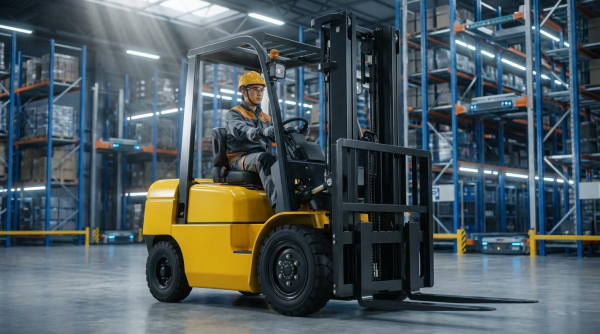
Engineering-driven training design strongly improves outcomes for anyone researching how to get a pallet truck and fork lift certification. Modern programs link operator behavior, maintenance quality, and digital monitoring into one integrated system. This section explains how to embed maintenance checks, use telematics and VR, track safety KPIs, and build a safety-first culture into the certification workflow.
Integrating Maintenance Checks Into Operator Training
Engineers should embed structured maintenance content into every forklift and pallet truck certification path. Training must teach operators how to complete OSHA 1910.178(q)(7) pre-use checks, not just that checks are required. In practice, this means step-by-step inspection of tyres, forks, hydraulics, brakes, steering, warning devices, and fluid levels before each shift. Effective courses demonstrate defect thresholds visually, so operators know when to tag out equipment instead of continuing use. Programs that simulate real defect scenarios help candidates link inspection findings to mechanical failure modes and accident risks. This approach directly supports lower lifecycle costs and fewer breakdowns after operators get certified. It also prepares operators to communicate with maintenance teams using consistent terminology and accurate fault descriptions.
Using Telematics, Sensors, And VR To Reduce Incidents
Telematics and on‑truck sensors have become standard tools in advanced lift truck training. Data from impact sensors, speed monitoring, and access control systems can feed into operator coaching during and after certification. Instructors can review hard braking, cornering speed, and near-miss records to show how behavior affects stability and component wear. Proximity sensors and pedestrian detection systems support scenario-based drills that teach spacing, line-of-sight management, and traffic discipline. Virtual reality simulators allow candidates to practice load handling, racking approaches, and emergency maneuvers without real-world risk. When organizations design a certification path, they should align VR scenarios and telematics metrics with the same hazards covered in OSHA-compliant theory modules. This alignment ensures technology reinforces, rather than distracts from, core safety principles.
Measuring Training Effectiveness With Safety KPIs
Engineering best practice treats forklift and pallet truck training as a measurable control, not a one-time event. Facilities should define key performance indicators before operators start the “how to get a pallet truck and fork lift certification” process. Typical KPIs include incident and near-miss rates per 1,000 operating hours, avoidable damage cost per truck per year, and unplanned downtime linked to operator error. Additional metrics track pre-use inspection completion rates and defect reporting accuracy. Data from telematics systems, maintenance logs, and safety reports should feed into quarterly reviews of the training program. If impact frequency or racking damage rises after certification, content and coaching methods need adjustment. This closed-loop approach keeps training relevant as equipment, layouts, and load profiles change.
Building A Safety-First Culture Around Lift Truck Use
Certification alone does not create safe forklift and pallet truck operations. Organizations must build a culture where trained operators feel responsible for both safety and asset condition. Supervisors should reinforce pre-operation checks, speed limits, and pedestrian right-of-way rules during daily toolbox talks. Safety teams can review accident and near-miss investigations in open forums, focusing on system improvements instead of blame. Recognition programs that highlight clean inspection records, zero-impact months, and accurate hazard reporting encourage sustained safe behavior. Engineering staff should participate in walk-throughs to explain why certain rules exist, linking them to stability calculations, stopping distances, and structural load limits. When operators understand the engineering rationale behind procedures, compliance rates rise and certification delivers lasting risk reduction.
Summary: Key Steps To Compliant, Safe Certification
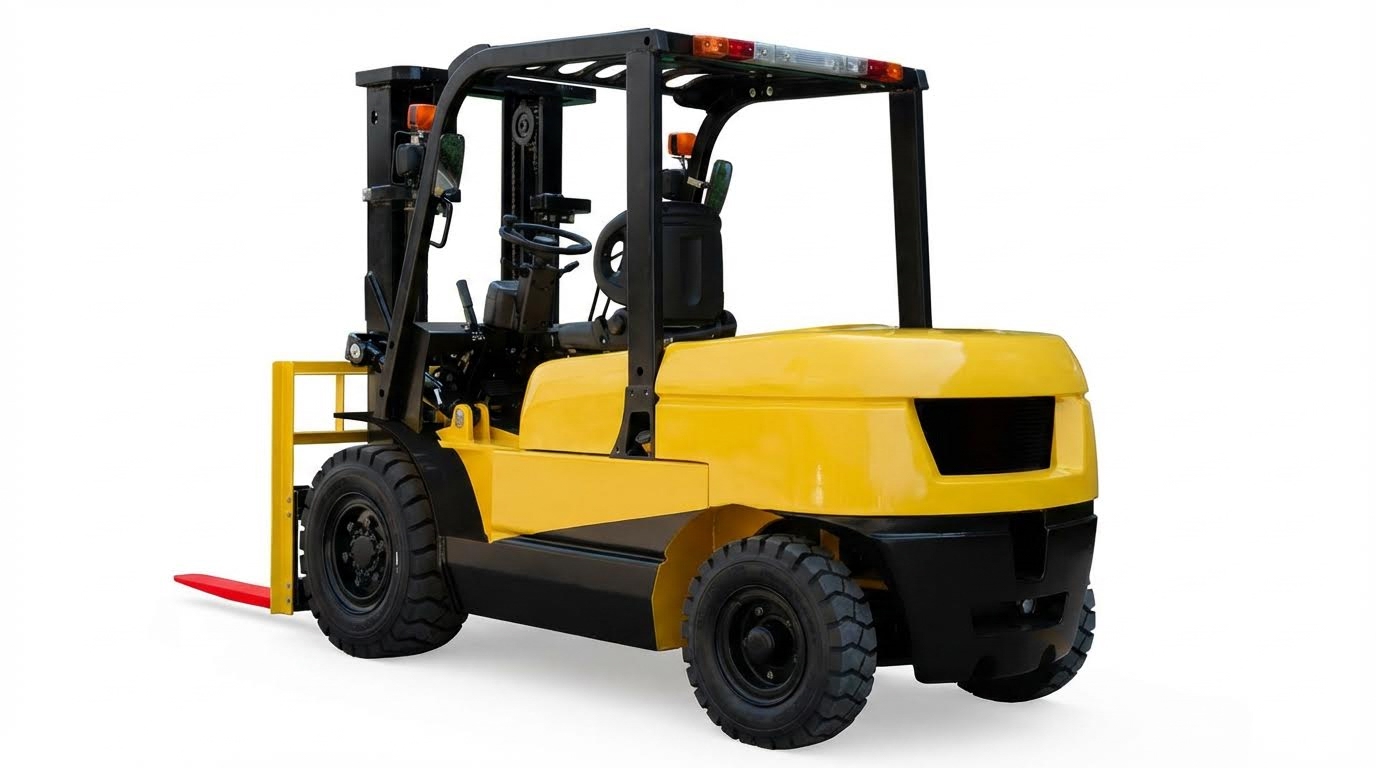
Organizations that want to know how to get a pallet truck and fork lift certiication needed a structured, compliant process. The essential steps started with understanding OSHA 1910.178 obligations, then aligning internal policies, training, and records with that standard. A compliant program combined formal theory, supervised practice on the exact truck types, and documented evaluations at defined intervals. When executed consistently, this approach reduced incident rates, extended equipment life, and supported lower lifecycle costs.
Technically, the path to compliant forklift and powered pallet truck certification began with scoping. Safety teams identified which powered industrial truck classes operated on site and which roles required certification, excluding manual pallet jacks. They then selected OSHA-aligned courses that covered load charts, stability, visibility, traffic management, and energy systems, followed by site-specific hands-on drills. Written and practical tests established competence, while operator cards and evaluation forms provided proof during audits.
Future trends pointed toward greater integration of telematics, sensors, and VR simulators into the certification workflow. Facilities increasingly used impact data, near-miss analytics, and access control logs to trigger targeted refresher training rather than relying only on three-year cycles. Practical implementation required robust documentation, clear retraining triggers after incidents or equipment changes, and integration with maintenance regimes, including daily checks mandated by OSHA 1910.178(q)(7). A balanced program treated technology as an enabler, not a replacement, for engineering judgment, supervisor oversight, and a safety-first culture around walkie pallet truck operations.