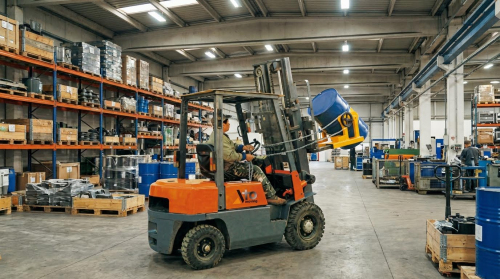
Determining how many 55 gallon drums a pallet rack can hold safely requires more than counting drum footprints. Engineers must evaluate drum weights, rack geometry, beam and frame capacity, and accessories such as cradles or flow rails across the entire system. This article explains the fundamentals of 55-gallon drum rack design, methods to calculate safe drum loads per level and per bay, and the safety and compliance practices that govern chemical and hazardous material storage. By the end, you will understand how to establish safe pallet rack capacity for 55-gallon drums in real facilities, not just on paper.
Fundamentals Of 55-Gallon Drum Rack Design
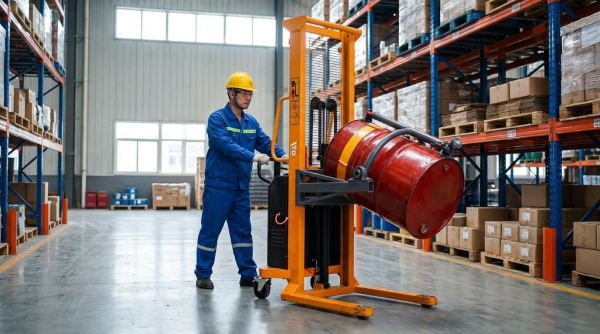
Designing pallet racks for 55-gallon drums starts with understanding drum geometry, typical fill weights, and how loads transfer into beams and frames. These fundamentals directly affect how many 55 gallon drums can a pallet rack hold without overstressing components or violating safety margins. Engineers must also integrate containment, spill control, and handling clearances into the layout, not just static load capacity. Proper design reduces risk of leaks, rack failure, and non-compliance in chemical and industrial facilities.
Typical Weights And Drum Types To Consider
A standard 55-gallon steel drum typically weighed 400–500 kilograms when filled, depending on product density. Water-like liquids produced about 208 liters per drum and roughly 420–450 kilograms total mass including the drum shell. Higher-density chemicals could push drum weight above 500 kilograms, which sharply increased rack demand. Engineers also considered drum construction: steel, stainless, plastic, and composite drums had different diameters, stiffness, and compatibility with cradles or flow rails. When estimating how many 55 gallon drums can a pallet rack hold, designs used the heaviest credible drum weight, not an average, then applied a safety factor aligned with local racking and building codes.
Vertical Vs Horizontal Drum Storage On Racks
Vertical storage placed drums standing on their ends, usually on pallets or decked beams, with bungs on top. This orientation simplified containment, labeling visibility, and chemical segregation, and it worked well with standard selective pallet racking. Horizontal storage supported drums on saddles or cradles, often two or three drums deep per level, to allow gravity dispensing through a lower bung. Horizontal drums generated line loads on beams and concentrated reactions at cradle contact points, which changed how many 55 gallon drums can a pallet rack hold safely. Vertical layouts usually allowed higher drum counts per bay, while horizontal layouts traded capacity for better dispensing ergonomics and lower manual handling risk.
Drum Cradles, Flow Rails, And Rack Accessories
Drum cradles converted standard pallet rack beams into shaped supports that prevented rolling and distributed loads over a larger contact area. Typical cradle capacities were about 360 kilograms per drum, so engineers checked that cradle rating exceeded the maximum filled drum weight plus impact allowances. Pallet flow rails and full-roller drum flow lanes enabled first-in-first-out storage, using a slight pitch of roughly 3–4 millimeters per 300 millimeters to control drum speed. These accessories added system weight and changed load paths into beams and frames, which affected how many 55 gallon drums can a pallet rack hold per level. Design checks therefore combined drum weight, accessory weight, and dynamic effects from loading, braking, and occasional impacts from forklifts or semi electric order picker.
Secondary Containment And Spill Control Needs
Secondary containment under drum racks captured leaks, weeps from bungs, and catastrophic drum failures. Typical solutions included integrated drip pans, under-rack spill pallets, or concrete sumps sized to hold at least 110% of the volume of the largest single drum or 25% of the total stored volume, whichever was greater, depending on jurisdiction. These systems added dead load to the rack or slab and sometimes raised the drum elevation, which affected forklift tine clearances and overall bay height. When calculating how many 55 gallon drums can a pallet rack hold, engineers deducted space for containment, toe-boards, and fire-code-required flue spaces from the theoretical drum count. Correctly sized containment ensured environmental compliance while keeping the rack’s structural utilization within allowable limits.
Calculating Safe Drum Loads Per Rack Level
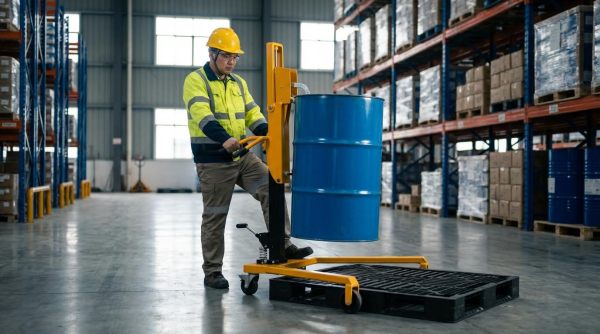
Engineers must treat 55-gallon drum storage as a structural loading problem, not a guess. The safe number of drums per pallet rack level depends on drum mass, beam capacity, frame capacity, and geometry. This section explains how to convert drum data into load per position, check beams and frames, and translate those results into safe drum counts per level and per bay. It also helps answer the search question “how many 55 gallon drums can a pallet rack hold” with an engineering-based method instead of a generic rule of thumb.
Determining Drum Weight And Load Per Position
A standard 55-gallon steel drum typically weighed 180–225 kilograms when filled, which equaled roughly 400–500 pounds. Heavier contents such as high-density chemicals or solids could push drum weight higher, so engineers had to use the maximum possible fill weight, not the nominal value. The first step was to define the “load per position,” meaning the design weight assigned to each drum location on a rack level. For example, if a drum position could accept either water-based or heavier solvent-based product, designers usually set the design load at 250 kilograms per drum to include a margin. The total design load per level then equaled drum design weight multiplied by the number of drum positions on that level. This total had to remain below both the rated beam capacity and the rated frame capacity after applying code-compliant safety factors.
Beam Capacity, Deflection, And Safety Factors
Rack beams carried the transverse load from drums and transferred it to the uprights, so their capacity governed how many 55-gallon drums a pallet rack could hold per level. Catalog data often listed a maximum uniformly distributed load per pair of beams, such as 2,200 kilograms or 4,000 kilograms, based on controlled test conditions and a specified maximum mid-span deflection limit. Engineers compared the required drum load per level to this rated beam capacity and maintained a safety factor, typically between 1.5 and 2.0 for static storage. For example, a beam pair rated for 4,000 kilograms at standard deflection might be limited to roughly 2,000–2,700 kilograms of design drum load in a conservative chemical warehouse. Uneven loading also mattered. If drums sat on cradles or flow rails, the load path might not be perfectly uniform, so designers checked localized beam bending and torsion, especially for point loads near mid-span.
Frame Capacity, Bay Height, And Beam Spacing
Upright frames determined how much total drum weight each bay could support over its full height. Manufacturers published frame capacities as a function of vertical beam spacing and total bay height, for example 9,000 kilograms for standard-duty frames, 15,000 kilograms for medium-duty, and 20,000 kilograms for heavy-duty. Closer beam spacing increased frame capacity because it reduced the unbraced length of the uprights and limited slenderness. Engineers summed the design loads from all levels in a bay and verified that this total remained below the frame rating divided by the chosen safety factor. They also checked that the heaviest drum levels sat low in the bay to reduce overturning demand and base plate loading. In practice, a bay storing multiple levels of 55-gallon drums vertically might use heavy-duty frames with reduced level count or shorter bays in high seismic regions to maintain stability, even if beam strength alone appeared adequate.
Example: How Many Drums Per Level, Per Bay
To estimate how many 55-gallon drums a pallet rack could safely hold, engineers worked through a structured example. Assume a selective rack level with a beam pair rated at 4,825 pounds (2,188 kilograms), similar to published drum pallet rack data, and a design drum weight of 500 pounds (227 kilograms). Dividing 4,825 pounds by 500 pounds yielded a theoretical maximum of 9.6 drums per level, which engineers rounded down to 8 drums to maintain a safety factor and allow for non-uniform loading. If the bay used three such levels, the design drum load per bay equaled 8 drums × 3 levels × 500 pounds, or 12,000 pounds (5,443 kilograms). This value then had to be checked against the upright frame capacity; for example, a frame rated near 9 tonnes allowed this configuration with margin. Purpose-built drum stacker racks in the market supported 12–16 drums per bay with total capacities around 14,475–19,300 pounds, which aligned with these calculations. The key was to base drum counts on verified beam and frame ratings, not just available space, and to document the resulting maximum drums per level and per bay on load signs for operators. Additionally, equipment like a forklift drum grabber or a drum dolly could assist in safe handling during storage operations.
Safety, Compliance, And Design Best Practices
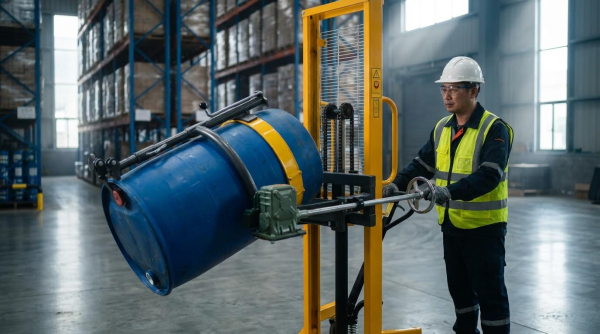
Safety and compliance determine how many 55 gallon drums a pallet rack can hold in real operations. Engineers must coordinate regulatory limits, impact protection, and handling interfaces, not just structural capacity. This section explains how codes, stability design, and modern monitoring shape safe drum counts per level and per bay.
OSHA, EPA, Fire Code, And Chemical Segregation
Regulatory limits often control how many 55 gallon drums a pallet rack can hold before structural capacity does. OSHA requirements focused on material handling safety historically addressed clear aisles, secure stacking, and safe access for manual and powered equipment. EPA rules for hazardous and universal waste required secondary containment sized for the largest drum or 10% of the total volume, whichever was greater. Fire codes such as NFPA 30 limited quantities of flammable and combustible liquids per control area, per rack level, and sometimes per bay. Designers therefore divided racks into control zones and limited drum counts by chemical class, not only by beam rating in kilograms. Chemical segregation practices kept oxidizers, flammables, acids, and bases on separate rack segments or levels with physical barriers or spacing. Labels and Safety Data Sheets stayed visible from the aisle so operators could verify compatibility before deciding how many drums to place on a given level.
Stability, Seismic, And Impact Protection Design
Stability design defined practical limits on how many 55 gallon drums a pallet rack could hold without unacceptable risk. Engineers checked upright frame capacity, base plate anchorage, and beam deflection under concentrated drum loads, typically 180–225 kilograms per full drum. In seismic regions, codes required anchoring, bracing, and sometimes reduced allowable load per level to control sway and prevent drum ejection. Designers shortened beam spans or reduced drum positions per level to keep deflection within serviceability limits and maintain drum seating in cradles or on pallets. Column guards, end-of-aisle protectors, and rack-mounted rub rails reduced damage from forklift impacts, which historically caused many pallet rack collapses. Where impact exposure was high, facilities often left one drum position empty near main travel paths, trading theoretical capacity for robustness.
Forklift, AGV, And Cobot Interface With Racks
The handling method strongly influenced how many 55 gallon drums a pallet rack could hold while remaining operable. Forklift handling required adequate beam elevation, vertical clearances, and drum spacing so operators could place and remove drums without striking uprights or adjacent containers. Engineers coordinated fork pocket dimensions, pallet type, and rack depth to ensure stable support for 400–500 pound drums. With AGVs, designers standardized pallet sizes and entry directions and often reduced drum positions per level to create generous tolerances for automated navigation. Collaborative robots that handled individual drums needed consistent cradle geometry and fixed drum spacing to grip safely, which again limited theoretical drum density. In all cases, safe rack capacity considered dynamic effects from handling, not only static load; sudden stops or misaligned placement could amplify stresses on beams and connectors.
Inspections, AI Monitoring, And Digital Twins
Ongoing inspections determined whether a pallet rack could still safely hold its design number of 55 gallon drums. Trained inspectors checked for bent uprights, damaged beams, loose anchors, and corrosion, especially in chemical or outdoor environments. Facilities documented maximum allowable drums per level and per bay on load plaques and verified actual loading during audits. AI-enabled camera systems and sensor networks started to track deflection, impact events, and occupancy in real time, alerting staff when a level approached its rated drum count. Digital twins of rack systems allowed engineers to simulate different loading patterns, seismic events, and impact scenarios before changing drum configurations. When monitoring revealed recurring overloads or damage, engineers often derated allowable drum counts per level or added bracing, effectively resetting how many 55 gallon drums each pallet rack could safely hold.
Summary: Determining Safe Drum Counts Per Rack
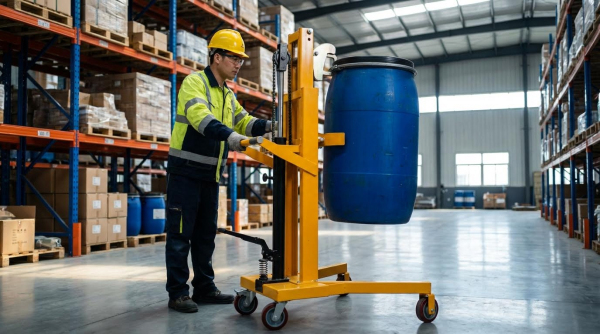
Safe pallet rack capacity for 55-gallon drum storage depended on drum weight, rack component ratings, and layout. The key control variable was always total load per beam level and per frame bay, not just the count of drums. Typical full 55-gallon drums weighed 400–500 lb, so four drums on a level often approached 1,600–2,000 lb. Drum-specific rack models in the market showed level capacities around 2,400–4,825 lb and total bay capacities above 14,000 lb, but engineers still verified every design from first principles.
To answer the core question “how many 55 gallon drums can a pallet rack hold,” practitioners first established the maximum drum weight by contents, then multiplied by the proposed drum count per level. They compared this demand to the published beam pair capacity at the actual beam spacing, including required safety factors and deflection limits. Next, they checked the frame capacity against the total weight of all levels plus the rack self-weight, considering bay height, seismic loads, and impact risks from forklifts, AGVs, or cobots. Only when both beam and frame checks passed did the proposed drum count qualify as safe.
Industry practice favored conservative drum counts, often three or four drums per level, even when catalog capacities suggested higher theoretical limits. Future use of AI monitoring and digital twins would likely refine allowable load envelopes in real time, but regulatory expectations from OSHA, EPA, and fire codes still required clear posted capacities and chemical segregation. For practical implementation, facilities documented the maximum number of 55-gallon drums per level and per bay, trained operators accordingly, and integrated accessories such as cradles, flow rails, and spill containment. This balanced approach aligned structural engineering, safety compliance, and operational efficiency when determining safe drum counts per pallet rack.