A straddle stacker is a powered pedestrian truck that lifted and stacked palletized loads using outrigged “straddle” legs for stability. This article explained what a straddle stacker is, how its mast, forks, drive, and control systems worked, and why straddle legs mattered for pallets with bottom boards. You saw how to size and select a unit by capacity, lift height, aisle width, and battery duty cycle, and when straddle legs outperformed counterbalanced stacker or reach configurations. The final sections connected design choices to safety, lifecycle cost, and reliability so engineers and facility managers could specify stackers that matched their floor conditions and throughput targets.
Core Design And Operating Principles
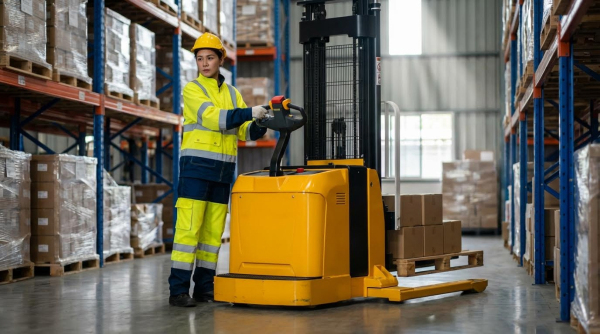
Engineers who ask “what is a straddle stacker” usually focus on how its core architecture differs from counterbalanced stacker and reach trucks. The answer lies in the interaction between straddle legs and pallets, the mast and fork layout, and the integrated electric drive, lift, and braking systems. These elements work together to deliver stable vertical handling of bottom‑board pallets in tight warehouse envelopes while maintaining operator visibility, ergonomics, and low noise.
Straddle Leg Geometry And Pallet Interface
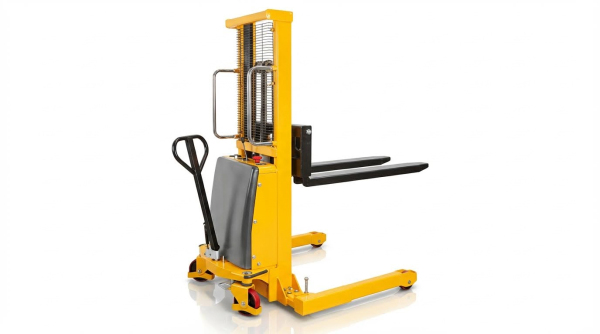
A straddle stacker uses two low baselegs that run parallel to the forks and sit outside the pallet footprint. These straddle legs typically adjust between about 0.97 m and 1.27 m in overall width to accommodate different pallet sizes and load bases. The geometry allows the legs to bypass the bottom deck boards and support the load from the floor, while the forks engage only the top deck. This configuration reduces damage risk to bottom boards and improves load stability, especially for heavier pallets up to roughly 1,800 kg. Engineers must match leg inner width, leg height, and wheel positions to pallet dimensions and racking clearances to avoid pallet interference and to maintain a sufficient stability triangle during lifting.
Mast, Forks, And Visibility Considerations
Straddle stackers usually employ a single or narrow duplex mast to maximise forward visibility. A single-beam mast reduces obstruction in the operator’s line of sight to the fork tips and ground, which is critical when positioning loads at heights between about 1.5 m and 2.9 m. Fork length and adjustable fork spread must align with common pallet sizes, while keeping the load centre within the rated capacity envelope, typically 500 mm. Structural design uses rolled steel channels and thick inner rails to control mast deflection and retain capacity at maximum lift height. Designers also consider hose routing, chain placement, and carriage design to minimise blind spots, especially in pedestrian walk‑behind configurations where the operator walks slightly offset from the mast.
Drive, Lift, And Braking System Design
Modern straddle stackers answer “what is a straddle stacker” by integrating electric traction, hydraulic lift, and controlled braking into a compact chassis. AC drive motors provide high torque at low speed, stable travel speeds around 1.5–1.8 m/s, and consistent performance across the battery discharge curve. The hydraulic system delivers lift speeds near 0.12–0.18 m/s and controlled lowering between 0.12–0.16 m/s, which supports precise stacking at upper beam levels. Regenerative braking increasingly replaces purely friction-based brakes, extending component life and reducing adjustment intervals. Safety functions such as automatic parking brake engagement at neutral, ramp‑hold logic, and emergency stop circuits on the tiller and chassis form the core of the braking and control architecture.
Ergonomics, Noise, And Operator Controls
Because most straddle stackers operate in light‑duty warehouses and retail back‑of‑store areas, designers prioritised low operator effort and low noise. Tiller heads incorporate variable speed thumb or rocker controls, lift and lower pushbuttons, and direction selection within a small hand envelope to minimise wrist deviation. Polyurethane drive and load wheels reduce rolling resistance and keep sound levels at the operator’s ear within EN 12053 limits, which improves comfort in long shifts. Control software limits acceleration and deceleration ramps to reduce jerk, especially when handling fragile loads such as beverages. Emergency reversing or “belly” switches on the tiller, combined with clear status indicators and battery discharge displays, support safe pedestrian operation in congested aisles.
Performance Specs, Sizing, And Selection
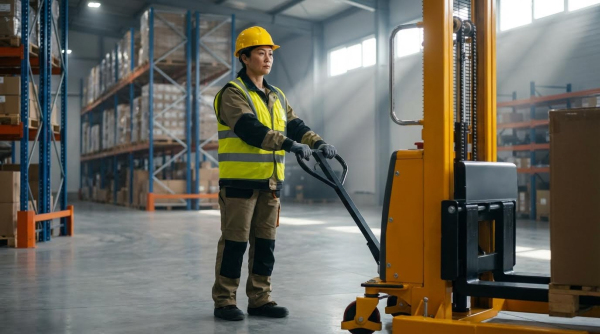
Engineers who ask “what is a straddle stacker” usually need hard numbers, not vague descriptions. Performance specifications, geometric sizing, and duty profile determine whether a straddle design fits a given warehouse, pallet mix, and shift pattern. This section focuses on load capacity, lift height, baseleg and fork adjustability, aisle requirements, and power systems so you can match stacker configuration to real facility constraints.
Capacity, Lift Height, And Stability Limits
A straddle stacker is a pedestrian or ride-on lift truck with outrigging legs that straddle the load. Typical rated capacities ranged from 450 kg to 1 800 kg, depending on mast and chassis design. Engineers had to treat these ratings as valid only at a defined load center, often 600 mm from the fork heel. Increasing fork extension or using long pallets shifted the center of gravity forward and reduced residual capacity. Standard lift heights covered roughly 1 530 mm to 2 070 mm, with extended masts reaching about 2 870 mm. Higher masts increased overturning moment, so manufacturers used wider straddle legs, reinforced masts, and sometimes higher counterweight mass to maintain longitudinal and lateral stability. Operators needed to respect de-rated capacity at maximum lift and avoid side loads, off-center pallets, or dynamic maneuvers such as turning with the load raised. Compliance with EN ISO 3691 and related stability test procedures ensured that production units met minimum safety margins against tip-over under defined test conditions.
Adjustable Fork Spread And Baseleg Range
When defining what is a straddle stacker for a mixed-pallet facility, adjustable geometry became a core advantage. Fork spread adjustment allowed operators to handle euro pallets, industrial pallets, and custom skids without changing equipment. Typical fork widths adjusted to match pallet stringer spacing while maintaining adequate clearance to bottom boards. Straddle baselegs usually offered an adjustment range around 965 mm to 1 270 mm overall width, equivalent to roughly 38 inches to 50 inches. This range let the legs pass outside closed pallets or bins while still fitting within common aisle widths. Engineers had to confirm that leg inner clear width exceeded pallet outer width plus a safety margin, usually 50 mm to 75 mm per side. At the same time, excessive base width could conflict with racking uprights or dock edges. Selection therefore required mapping actual pallet footprints, overhangs, and rack beam spacing, then checking against the manufacturer’s baseleg range chart. Correct adjustment also influenced stability; narrower leg settings reduced lateral stability, so operators needed procedures that locked leg positions appropriate to the heaviest pallet types in use.
Maneuverability In Narrow Aisle Layouts
Straddle stackers answered the question “what is a straddle stacker good at” primarily with compactness and tight turning. Typical overall lengths around 1 800 mm and turning radii near 1 400 mm allowed operation in aisles narrower than those required by counterbalanced stacker. However, the effective aisle width depended on pallet length, approach angle, and whether operators used 90-degree or angle-stacking patterns. Engineers usually calculated required aisle width as pallet length plus truck length plus clearance, often adding at least 200 mm at each end. Short wheelbases improved turning but could reduce ride comfort and longitudinal stability on uneven floors. Polyurethane drive and load wheels reduced rolling resistance and allowed precise creeping speeds while remaining non-marking. Variable-speed tiller controls and proportional lift functions supported millimeter-level positioning at rack faces. For very tight layouts, designers sometimes specified low-profile masts to pass under mezzanines while accepting reduced maximum lift. CAD-based aisle simulations helped verify that the selected straddle geometry cleared rack uprights, dock doors, and structural columns during real maneuvering paths.
Power, Battery Systems, And Duty Cycles
From an energy standpoint, what is a straddle stacker if not a compact electric lifting platform with integrated traction drive. Typical configurations used 24 V systems with battery capacities in the 85 Ah to 200 Ah range, sized to the duty cycle. Light-duty, single-shift applications in retail back rooms or small warehouses could operate with smaller onboard batteries and plug-in chargers. Higher-intensity manufacturing or cross-dock operations required larger traction batteries or opportunity charging strategies to avoid mid-shift downtime. AC drive motors provided higher torque and more stable travel speeds across the discharge curve than older DC designs, while regenerative braking reduced mechanical brake wear and slightly extended runtime. Lifting speeds of roughly 0.12 m/s to 0.18 m/s and lowering speeds between 0.12 m/s and 0.16 m/s defined vertical throughput; engineers could estimate energy consumption by combining lift mass, lift height, and cycle frequency. Battery enclosures needed mechanical protection and compliance with electrical safety and EMC standards. When selecting a straddle stacker, specifiers matched ampere-hour capacity to calculated daily ampere-hour draw, then applied safety factors for temperature, floor gradients, and aging to ensure reliable operation across the planned service life.
When To Use Straddle Legs In Your Facility
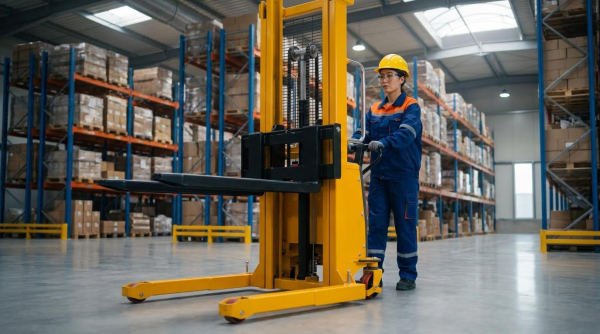
Facility managers who ask “what is a straddle stacker” usually want to know when straddle legs offer a real advantage over other stacker types. The decision depends on pallet design, aisle geometry, floor quality, and lifecycle economics. This section explains how straddle legs interact with pallet bottom boards, compares them with counterbalanced stacker and reach concepts, and links floor conditions and maintenance to long-term reliability and safety.
Pallet Types, Bottom Boards, And Load Support
A straddle stacker used straddle legs that run outside the pallet footprint instead of underneath it. This geometry protected bottom boards on closed or perimeter-base pallets because the legs never contacted the lower deck. Facilities handling block pallets, CHEP-style units, or plastic pallets with full perimeter bases benefited most. The adjustable baseleg width allowed the operator to set a clearance window that captured the pallet while avoiding sidewall or product contact. Straddle stackers worked best where loads had predictable footprints and rigid bases so the forks could support the mass without deflection. When managers evaluated what is a straddle stacker for their fleet, they typically matched leg range and fork length to their dominant pallet size and overhang policy.
Comparing Straddle, Counterbalance, And Reach
Straddle stackers traded some front clearance for higher stability at lower truck weight. Counterbalance stackers carried a heavy rear counterweight and kept their front profile clear, which allowed them to work with closed-front racks or block stacks but required wider aisles and stronger floors due to higher axle loads. Reach stackers extended the mast or pantograph into the rack, ideal for deep storage, but added complexity, mast deflection, and higher purchase cost. Where the question was what is a straddle stacker good at, the answer centered on short- to medium-lift pallet handling in narrow aisles with moderate capacities. Straddle legs delivered a wide stability triangle without the mass of a counterweight, so they suited light-duty warehouses, retail back rooms, and manufacturing cells that did not justify a full reach truck.
Floor Conditions, Safety, And Compliance
Straddle legs required reasonably flat, crack-free floors because each leg carried significant load through small polyurethane wheels. Uneven joints, potholes, or steep ramps could shift load distribution and reduce stability. Before deploying straddle stackers, safety teams typically verified floor flatness, checked for embedded rails or drains, and mapped travel routes that avoided steep transitions. Compliance with standards such as EN 12053 for noise and applicable local machinery directives supported safe operation, but site rules remained critical. Operators needed clear walkways, marked pedestrian zones, and speed limits because compact chassis and low noise levels reduced audible warning. Pre-use inspections of legs, wheels, and brakes, along with adherence to rated capacity and lift height, helped prevent tip-over and falling-load incidents.
Lifecycle Cost, Maintenance, And Reliability
Straddle stackers usually offered lower acquisition cost and energy consumption than counterbalance or reach trucks of similar capacity. However, lifecycle cost depended on disciplined maintenance of hydraulic systems, batteries, and running gear. Legs and load wheels experienced concentrated stresses at turns and transitions; routine checks for flat spots, bearing wear, and bent leg structures preserved tracking accuracy. Electric drive and lift systems required battery care, including correct charging windows and periodic inspections of cables, connectors, and electrolyte levels where applicable. Facilities asking what is a straddle stacker from a financial viewpoint often found that light-duty duty cycles, short travel distances, and moderate lift heights produced favorable cost per pallet moved. Reliability stayed high when technicians logged faults, monitored recurring issues like oil leaks or contactor wear, and aligned preventive maintenance intervals with actual operating hours rather than calendar time.
Summary: Key Takeaways For Stackers And Straddle Legs
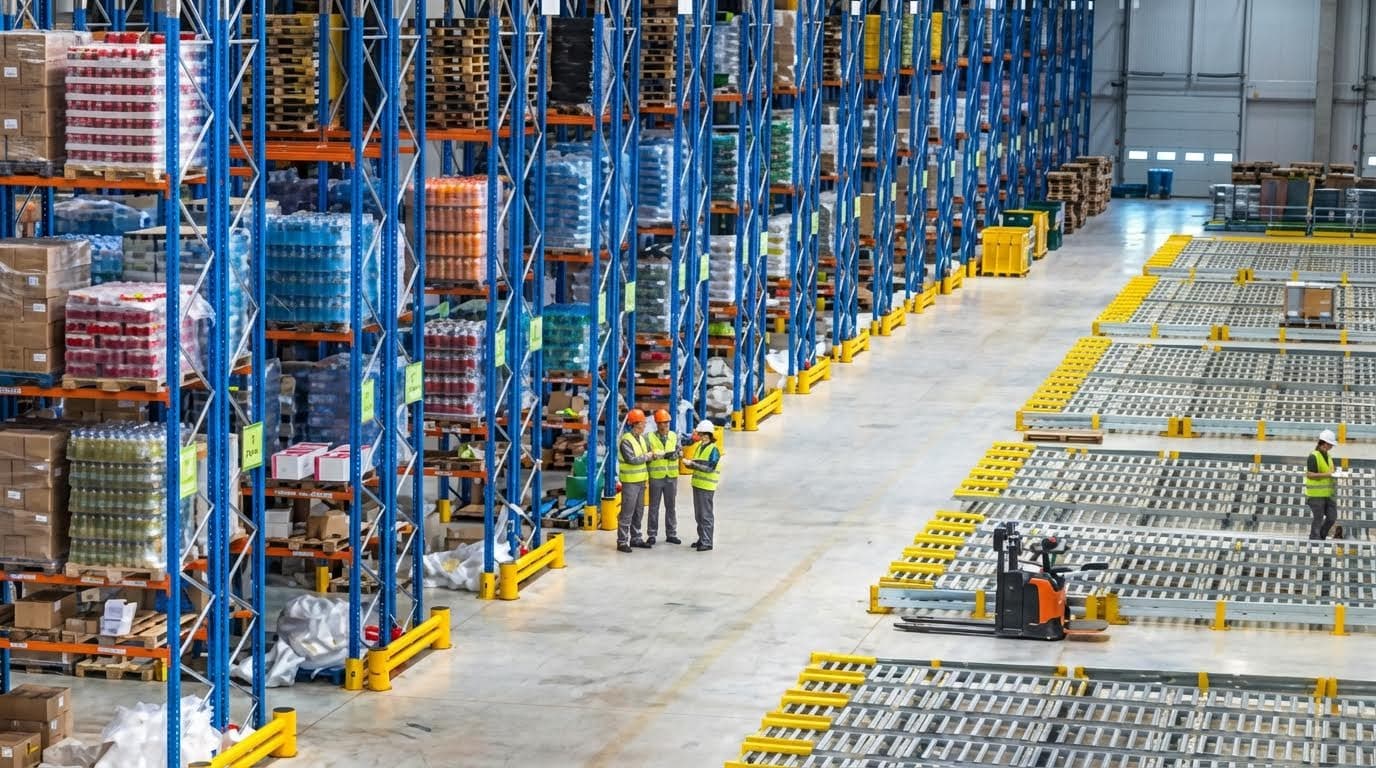
When engineers or facility managers ask “what is a straddle stacker,” the answer spans design, performance, and application. A straddle stacker used straddle legs that ran outside the pallet footprint, so it handled bottom‑board pallets without crushing them. Its electric drive and lift systems delivered controlled acceleration, typical lift speeds around 0.12–0.18 m/s, and precise stacking up to roughly 2.9 m. Adjustable fork spread and baseleg width let one truck interface with mixed pallet sizes, while compact chassis and tight turning radii supported narrow‑aisle layouts.
From a performance standpoint, typical rated capacities lay between 450 kg and 1,800 kg, with clear capacity derating at higher lift heights to preserve stability. Polyurethane wheels, compliant sound levels at the operator’s ear, and ergonomic tiller heads with variable speed controls reduced fatigue and noise exposure. Modern AC drive systems, regenerative braking, and robust mast sections improved energy efficiency, braking consistency, and long‑term structural integrity. Correct sizing of battery voltage, amp‑hour rating, and duty cycle remained critical for multi‑shift operations.
Facilities chose straddle legs when handling closed‑deck or bottom‑board pallets, when floor capacity limited counterbalanced stacker, or when aisles were too narrow for sit‑down forklifts. Safe operation required strict adherence to rated capacity, routine pre‑use inspections, and a documented maintenance regime covering hydraulics, brakes, electrical systems, and structural components. Over the lifecycle, disciplined maintenance and operator training reduced unplanned downtime and protected mast, chain, and hydraulic components from overload damage. Looking ahead, higher‑efficiency batteries, improved diagnostic electronics, and tighter noise and safety regulations would continue to shape lift stacker design, but the core engineering trade‑offs around stability, visibility, and pallet interface would remain fundamentally the same.