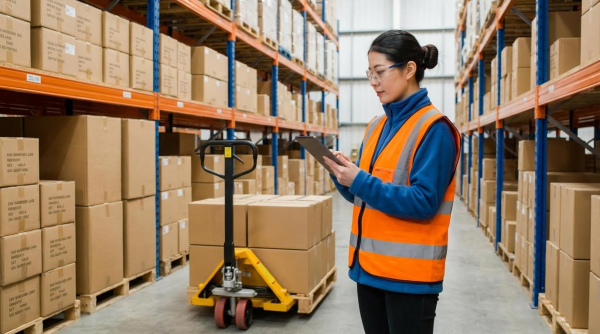
Warehouse operations relied on a broad family of machines that answered a simple question: what lifts pallets efficiently, safely, and cost‑effectively. This guide mapped the core equipment categories, from manual pallet jacks to high‑capacity forklifts and specialized load pushers. It then connected real applications to sizing, aisle geometry, ergonomics, power choices, and energy efficiency so engineers could specify the right solution. Finally, it examined lifecycle cost, maintenance, and emerging technologies such as sensors, telematics, and digital twins, before closing with practical guidance for buyers and design engineers.
Core Categories Of Pallet Lifting Equipment
Engineers evaluating what lifts pallets in a warehouse must understand how equipment categories differ in capacity, ergonomics, and suitability for specific workflows. The core families range from simple manual pallet jacks to high-capacity forklifts and specialized tuggers or load pushers. Each group targets a distinct combination of load rating, lift height, aisle geometry, and duty cycle. Correct categorization forms the basis for safe specification, standards compliance, and lifecycle cost control.
Manual Pallet Jacks And High-Lift Trucks
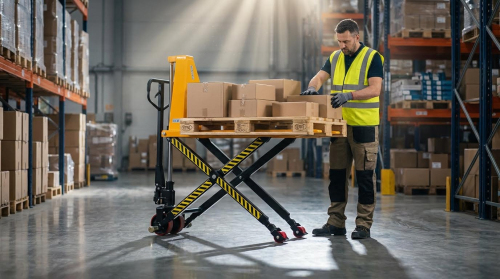
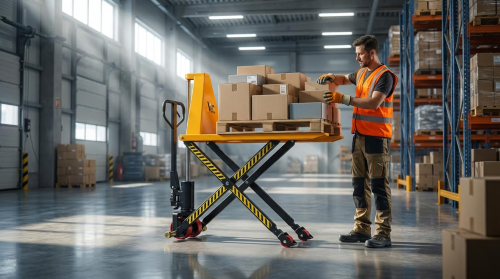
Manual pallet jacks represented the most basic answer to the question of what lifts pallets for short horizontal moves. Typical units handled up to about 5,000 lb (≈2,270 kg) and lifted only enough to clear the floor, which suited loading, unloading, and low-level order picking. Operators generated hydraulic pressure via a pump handle, so these trucks fit low duty cycles and short travel distances. Manual high-lift pallet jacks extended this concept by raising loads to ergonomic work heights, often up to waist level, with capacities around 2,200 lb (≈1,000 kg). High-lift designs supported use as adjustable work platforms at packing benches or light assembly cells. Some models used powered lift functions while still relying on manual propulsion to keep cost and complexity low. Engineers usually specified these when vertical ergonomics mattered more than travel distance or throughput.
Electric Pallet Jacks And Walkie Riders
Electric pallet jacks addressed applications where operators needed powered travel and lift for higher throughput. Compact electric units typically supported around 3,300 lb (≈1,500 kg) and worked well on docks, lift-gate deliveries, and bulk storage runs. Standard electric pallet jacks increased capacity to roughly 4,500 lb (≈2,040 kg) and used ergonomic tiller controls to reduce operator strain and cycle time. Heavy-duty electric pallet jacks pushed capacities to about 8,000 lb (≈3,630 kg), which allowed efficient handling of dense palletized loads in cross-dock and bulk storage zones. Walkie pallet truck and end-control walkie riders combined standing platforms with powered travel so operators could ride rather than walk, maintaining similar capacities up to 8,000 lb. Center-control rider pallet trucks offered comparable ratings but optimized operator position for long-haul transport and order picking. Low-level order picker pallet trucks, typically up to 6,000 lb (≈2,720 kg), specialized in frequent pallet engagement and short shuttles between pick faces and staging areas.
Stackers, Reach Units, And Mast Trucks
Stackers and mast-equipped pallet trucks answered what lifts pallets when vertical storage and tight aisles dominated the design brief. Electric pallet stackers generally covered 2,000–4,000 lb (≈900–1,800 kg) and lifted to heights suitable for racking in compact facilities. Their small chassis and straddle legs allowed operation where conventional counterbalance forklifts lacked maneuvering clearance. Walkie reach stackers, usually 2,000–3,000 lb (≈900–1,360 kg), incorporated pantograph or moving masts to reach into racking while keeping truck length short. Walkie high-lift stackers, often 2,500–4,000 lb, supported dock work and higher bay stacking while maintaining walk-behind control. Light-duty walkie stackers at about 3,000 lb targeted intermittent stacking rather than continuous high-cycle use. Pallet trucks with masts, around 2,600 lb capacity and lift heights up to roughly 4,300 mm, bridged the gap between low-lift pallet trucks and full reach trucks. Walkie counterbalanced stackers removed straddle legs so operators could handle closed pallets or odd-sized loads while keeping the rear counterweight within narrow aisle envelopes.
Forklifts, Tuggers, And Load Pushers
Forklifts provided the broadest answer to what lifts pallets across manufacturing and logistics sites. Capacities ranged from about 1,000 lb to 100,000 lb (≈450–45,000 kg), covering light warehouse duties through heavy industrial loads such as steel coils or large machinery. Engineers selected among counterbalance, straddle, narrow-aisle, and order-picking configurations depending on racking geometry and surface conditions. Power pallet trucks, typically 4,000–30,000 lb, filled roles that required horizontal transport of very heavy palletized loads without full mast functionality. Tow tractors, capable of pulling around 10,000 lb (≈4,540 kg) on carts, shifted the focus from lifting to towing but still formed part of integrated pallet and container flows. Load pushers addressed extremely heavy, often non-palletized loads, with capacities up to 50,000 lb (≈22,700 kg). These units used powered push frames and specialized attachments rather than forks, relying on robust steel frames, multi-stage battery systems, and safety interlocks such as belly switches and kill switches. Together, forklifts, tuggers, and load pushers covered high-mass, long-distance, or specialized handling tasks that exceeded the capabilities of walk-behind pallet equipment.
Application-Driven Selection And Sizing
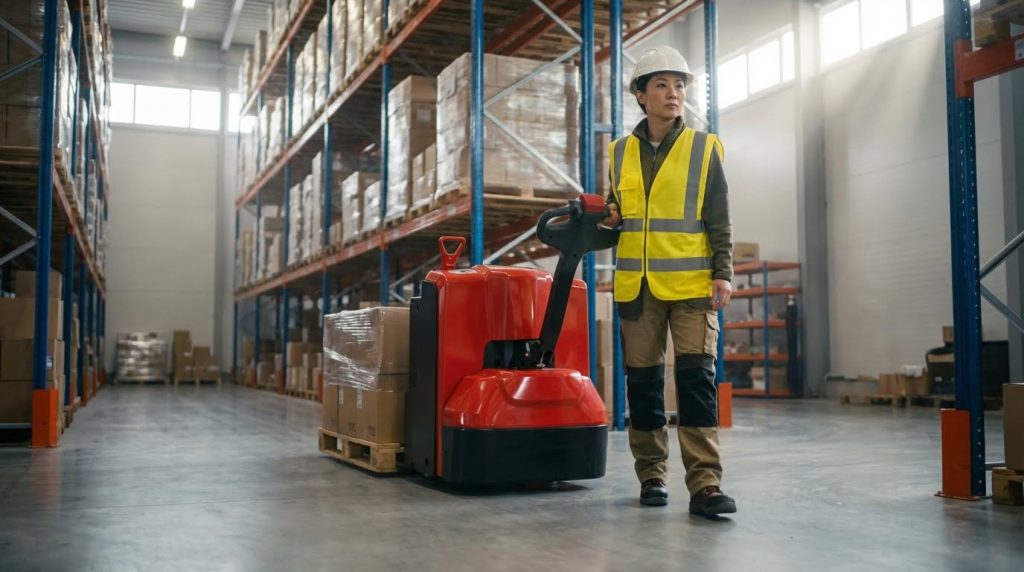
Engineers who ask “what lifts pallets most efficiently” must start from the application, not the catalog. Application-driven selection aligns capacity, geometry, and power with real duty cycles and safety constraints. This approach reduces damage, improves throughput, and extends the service life of pallet lifting equipment.
Matching Capacity, Duty Cycle, And Throughput
The first sizing step is defining what lifts pallets within safe capacity margins. Convert all load data to kilograms and include pallet mass, packaging, and fixtures. Manual pallet jacks typically lift pallets up to about 2,200 kg, while compact electric units handle roughly 1,500 kg. Heavy-duty electric pallet jacks, rider trucks, and power pallet trucks extend usable capacity up to about 13,600 kg, and forklifts can exceed 45,000 kg in specialized roles. Select rated capacity at least 10–20% above the maximum realistic load to account for variation and dynamic forces. Duty cycle matters as much as peak weight: low-shift, intermittent handling can justify manual pallet jacks or light-duty walkie stackers, while multi-shift dock work or high-throughput order picking requires electric pallet jacks, walkie riders, or tow tractors. Estimate pallets per hour, average travel distance, and lift cycles per shift. If operators consistently exceed 60–80 lifts per hour or walk more than several kilometers per shift, powered equipment that lifts pallets becomes economically and ergonomically preferable. Aligning capacity and duty cycle prevents chronic overloading, hydraulic overheating, and premature structural fatigue.
Aisle Width, Lift Height, And Layout Constraints
Warehouse geometry strongly influences what lifts pallets effectively. Start with clear aisle width, measured rack-to-rack at the narrowest point, and required turning radii at cross aisles and dock doors. Manual and compact electric pallet jacks typically operate in aisles around 1.8–2.1 m, while walkie stackers and reach units can work in narrower aisles than counterbalanced forklifts for the same lift height. Required lift height determines whether low-lift pallet trucks are sufficient or if stackers, reach units, or forklifts are needed. Standard stackers and walkie reach units commonly lift pallets to about 4.3 m, while mast-equipped pallet trucks can reach similar heights with lower capacities. For high-bay racking above this range, specialized reach trucks or forklifts become necessary. Evaluate floor flatness, dock levelers, and transitions between zones because short wheelbase pallet jacks handle uneven surfaces differently than longer mast trucks. In cramped backrooms or small production cells, compact walkie stackers or high-lift pallet jacks provide vertical handling without the clearance required for sit-down forklifts. Always verify that equipment that lifts pallets can enter trailers, containers, and elevators with adequate overhead and side clearances.
Ergonomics, Safety, And Operator Skill Level
Choosing what lifts pallets safely requires matching equipment complexity to operator skill and ergonomic limits. Manual pallet jacks expose operators to push–pull forces that rise steeply with heavier loads or poor floor conditions; these forces should remain within accepted ergonomic guidelines to avoid musculoskeletal injuries. For frequent moves above roughly 1,800–2,000 kg or long travel distances, powered pallet jacks and walkie riders reduce strain and improve consistency. Equipment with tiller-based controls, low step heights, and intuitive braking supports a broader operator base and shorter training times. According to safety regulations, powered industrial trucks require formal training, evaluation, and periodic recertification; this applies to electric pallet jacks, stackers, reach units, and forklifts that lift pallets. Pre-operation inspections, load stability checks, and adherence to rated capacity are mandatory to control tip-over and collision risks. Facilities with mixed experience levels benefit from speed-limited modes, creep-speed functions, and automatic braking. Clear operating procedures for slopes, dock edges, and congested aisles should accompany any deployment of equipment that lifts pallets.
Power Sources, Charging, And Energy Efficiency
Power strategy is central when deciding what lifts pallets over multiple shifts. Manual pallet jacks require no external power but increase human energy expenditure. Electric pallet jacks, stackers, and reach units typically use lead–acid or lithium-ion batteries. Lead–acid batteries suit single-shift or planned charging windows, with recommended recharging after roughly one full shift or about 70% depth of discharge. They require watering, ventilation, and dedicated charging areas. Lithium-ion batteries support opportunity charging, faster recharge, and reduced maintenance, which benefits high-throughput or multi-shift operations. Energy efficiency improves when operators avoid short, frequent partial moves and plan routes to minimize empty travel. Correct tire selection, well-maintained bearings, and clean running surfaces also reduce energy demand for equipment that lifts pallets. Plan charger locations near high-traffic zones but outside main travel paths to avoid congestion. For facilities with sustainability targets, compare total energy consumption per pallet moved across different equipment types and power options, then integrate that metric into the selection process.
Lifecycle Cost, Maintenance, And Technology
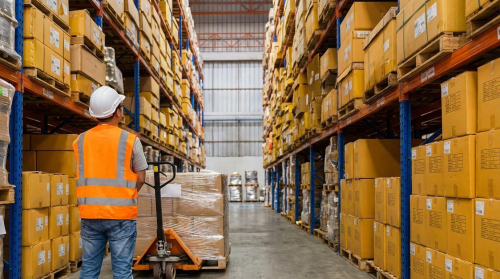
Lifecycle management defined what lifts pallets efficiently over years, not months. Engineers and buyers needed to consider maintenance regimes, energy systems, and digital technologies together. This section focused on how preventive care, batteries, sensing, and simulation shaped total cost of ownership for pallet jacks, stackers, reach units, and forklifts.
Preventive Maintenance And OSHA Compliance
Preventive maintenance kept equipment that lifts pallets within design performance and OSHA expectations. Forklifts typically followed a manufacturer schedule, often at intervals near 90 days or 100 operating hours, with additional daily inspections. Technicians checked hydraulic hoses for cracks, leaks, and abrasion, since low fluid levels degraded lifting capacity and could cause uncontrolled load descent. Tire condition also affected stability; chunking, flat spots, or cracking reduced contact area and increased stopping distance, especially under rated loads from 1,000 kilograms up to heavy-capacity units. OSHA required that powered industrial truck operators complete pre-shift inspections and maintain documentation, which electronic checklists supported efficiently. In practice, facilities integrated these checklists with maintenance management systems to trigger work orders when operators recorded anomalies, such as unusual noises, sluggish lift, or steering play. Cleanliness mattered as well; blowing out radiators, replacing filters, and removing debris from mast channels and undercarriages reduced overheating and wear in dock and bulk storage applications.
Battery Care, Charging Strategy, And Uptime
Battery strategy strongly influenced uptime for electric pallet jacks, stackers, and rider trucks that lifted pallets daily. Lead-acid batteries performed best when operators recharged after a full shift or when discharge exceeded about 30%, rather than frequent opportunity charging without temperature control. Over-discharging shortened plate life and reduced available ampere-hours, which directly limited how many pallets operators could move per shift. Regular cleaning of terminals minimized corrosion that increased resistance and caused voltage drops under high current draw during lifting. Facilities stored equipment in cool, dry areas, since elevated temperatures accelerated capacity fade while low temperatures reduced instantaneous power output. Lithium battery systems, when installed, supported faster charging and easier pack swaps, reducing downtime for high-throughput dock work. Engineers specified charger power, ventilation, and electrical infrastructure to match fleet size and duty cycle, ensuring that every unit which lifted pallets could complete its route without mid-shift failures.
Sensors, Telematics, And Predictive Maintenance
Sensors and telematics transformed how operations monitored equipment that lifts pallets. Modern forklifts and powered pallet trucks integrated load sensors, travel speed encoders, and mast position feedback to capture detailed duty-cycle data. Telematics modules transmitted run hours, impact events, battery state of charge, and fault codes to central platforms. Maintenance teams used this data to shift from time-based service to condition-based interventions, such as scheduling hydraulic seal replacement when lift cylinder cycles approached known wear thresholds. Vibration and temperature monitoring on drive motors and pump motors supported predictive algorithms that flagged bearings or brushes nearing failure. Access control through badges or PINs tied specific operators to events, reinforcing OSHA training compliance and reducing misuse. From an engineering perspective, this data also helped right-size fleets and match equipment types to tasks, for example distinguishing where compact electric pallet jacks sufficed versus where higher-capacity rider trucks or forklifts were justified.
Digital Twins, Simulation, And System Integration
Digital twins and simulation tools allowed engineers to model how different combinations of equipment that lifts pallets performed over the full lifecycle. Virtual layouts incorporated aisle widths, rack heights, and throughput targets to test manual pallet jacks, walkie stackers, reach units, and counterbalanced forklifts under realistic traffic patterns. By simulating duty cycles, designers estimated energy consumption, battery swap frequency, and maintenance load for each asset class. Integration with warehouse management and maintenance systems linked real telematics data back into the twin, refining models over time. This feedback loop improved capital planning, such as predicting when to replace high-hour units or when to introduce higher-lift stackers to exploit unused vertical storage. System-level analysis also highlighted ergonomic and safety impacts, including congestion points where high-speed rider trucks might increase collision risk. As these tools evolved, buyers and engineers gained a more objective basis for comparing technologies on lifecycle cost, uptime, and compatibility with future automation initiatives involving what lifts pallets in mixed fleets.
Summary: Practical Guidance For Buyers And Engineers

Warehouse decision‑makers evaluating what lifts pallets should combine application data, operator constraints, and lifecycle economics. Manual pallet jacks, high‑lift trucks, electric pallet jacks, stackers, reach units, forklifts, tuggers, and load pushers each occupied a defined performance envelope for capacity, lift height, and duty cycle. Typical ranges ran from about 900 kg for compact high‑lift units up to 45,000 kg for heavy load pushers and 45,000 kg to 45,000+ kg for specialized forklifts, with stackers and walkie reach units filling the 900–1,800 kg band for vertical storage in tight aisles. Engineers needed to translate throughput, aisle width, and rack geometry into concrete specifications such as minimum turning radius, required residual capacity at maximum lift height, and compatible pallet types.
From a lifecycle view, the best pallet lifting solution minimized cost per pallet moved rather than purchase price. Preventive maintenance aligned with OSHA expectations, documented pre‑shift inspections, and structured battery charging programs kept electric pallet trucks, stackers, and lift trucks available while reducing unplanned failures. Battery strategy, including whether to standardize on flooded lead‑acid, AGM, or lithium, strongly influenced uptime and shift flexibility. Telematics, sensor packages, and digital monitoring enabled predictive maintenance, helping maintenance teams detect hydraulic leaks, tire degradation, and battery issues before they stopped production.
Looking ahead, buyers and engineers could expect tighter integration between what lifts pallets and warehouse management or automation systems. Digital twins and simulation tools already allowed engineers to model congestion, assess alternative truck classes, and validate aisle width and rack height choices before capital approval. The industry trajectory pointed toward higher energy efficiency, more precise speed and acceleration control, and richer safety interlocks, while manual equipment retained a role in low‑throughput and mobile delivery use cases. A balanced fleet often combined low‑cost manual units, compact electrics for dock and route work, and higher‑reach stackers or forklifts for dense storage, all selected through a consistent engineering framework that tied equipment performance to quantified operational requirements. Additionally, solutions like the walkie pallet truck provided versatility for specific material handling needs.