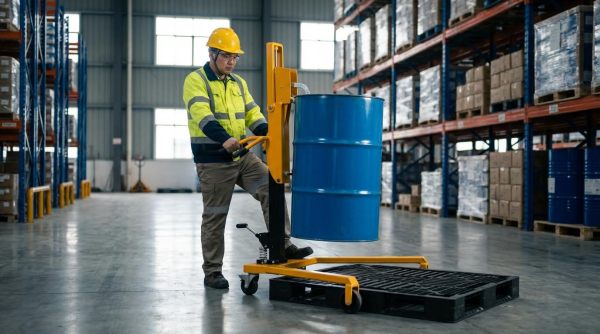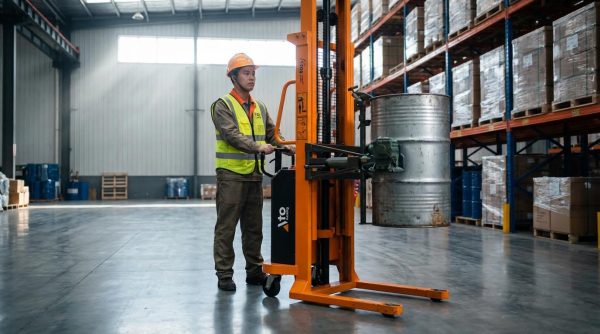
Handling 55-gallon drums safely and efficiently requires a lifecycle approach from receipt, internal transport, and storage through final recycling or disposal. This article explains how to handle 55 gallon drums by combining risk assessment, regulatory compliance, and engineered controls for drum movement and containment systems. It covers typical drum weights, hazards, OSHA and EPA expectations, equipment selection, and modern tools such as AI monitoring and automated handling. The final sections address compliant storage design, spill control, and end-of-life drum recycling and disposal so facilities can minimize injuries, releases, and downtime.
Risk Assessment And Regulatory Basics For Drums
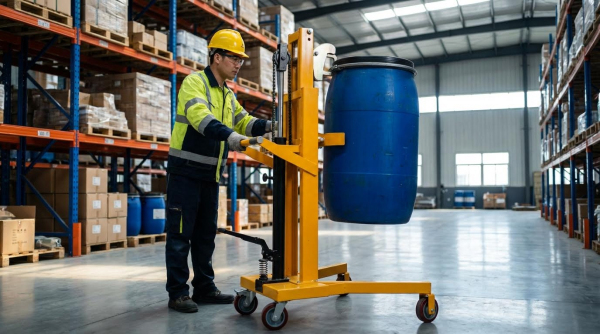
Understanding how to handle 55 gallon drums safely starts with a structured risk assessment and knowledge of the regulatory context. Engineers and EHS managers must quantify loads, identify failure modes, and align procedures with OSHA, EPA, FM, and local rules. Correct interpretation of labels, Safety Data Sheets (SDS), and hazard classes underpins every handling and storage decision. Zoning, access control, and targeted training then convert this information into consistent, compliant field practice.
Typical Drum Weights, Hazards, And Failure Modes
A standard 55-gallon (≈208 L) drum typically weighed 400–800 lb (≈180–360 kg), depending on density of contents. This mass created significant crush, impact, and ergonomic risks during manual or mechanical handling. Common hazards included back sprains, smashed toes or fingers, and chemical exposure from leaks or ruptures. Typical failure modes involved corroded shells, dented chimes, damaged weld seams, failed bungs, and bulging lids from internal pressure or reactions. Risk assessments for how to handle 55 gallon drums should consider weight estimation uncertainty, center-of-gravity shifts during tilting, and dynamic loads during transport. Engineers should specify inspection criteria for rust, dents, bulging, and missing closures, with clear red-tag rules for suspect containers. Where contents were unknown or labels were missing, best practice treated the drum as hazardous until characterization.
OSHA, EPA, FM, And Local Regulatory Framework
OSHA regulations defined requirements for manual material handling, powered industrial trucks, and hazardous chemical communication. These rules influenced acceptable lifting limits, guarding, drum attachment design, and emergency procedures. EPA regulations governed hazardous waste identification, storage, and spill containment for 55-gallon drums and other containers. Factory Mutual (FM) approval standards guided fire protection, spacing, and secondary containment design, including sump capacity criteria. Local fire codes and building codes added constraints on occupancy classifications, maximum allowable quantities, ventilation, and separation distances. When developing procedures for how to handle 55 gallon drums, facilities needed a compliance matrix linking each handling step to the applicable OSHA, EPA, FM, and local clauses. Documentation had to show that equipment selection, containment volumes, and storage layouts met the most stringent overlapping requirement.
Reading Labels, SDS, And Hazard Classification
Safe handling of 55-gallon drums depended on correct interpretation of labels and SDS before any movement. Personnel had to identify hazard classes such as flammable liquids, corrosives, toxics, oxidizers, or reactive materials using GHS pictograms and signal words. The SDS provided key properties including density, vapor pressure, flash point, incompatibilities, and required personal protective equipment (PPE). This information drove engineering controls such as ventilation, bonding and grounding, segregation, and temperature control. If a drum lacked a legible label, procedures should classify it as unknown hazardous until analysis or documentation confirmed contents. Workers needed training to cross-check label information with SDS sections on handling, storage, and emergency response. For SEO-focused users researching how to handle 55 gallon drums, a critical takeaway is that no drum should move until label and SDS review confirms both hazard class and required controls.
Zoning, Access Control, And Training Requirements
Risk assessments for drum operations should define zones based on hazard level, such as flammable liquid areas, corrosive storage, and general non-hazardous storage. Each zone required specific construction features, spill containment, ventilation, and fire protection aligned with regulatory codes. Access control limited entry to trained, authorized personnel, reducing the probability of unsafe manual handling or incorrect equipment use. Training programs had to cover weight estimation, mechanical aids, PPE selection, and recognition of abnormal conditions such as bulging lids or leaks. Scenario-based drills reinforced emergency response steps for spills, exposures, or fires involving 55-gallon drums. Facilities also needed documented procedures that explain how to handle 55 gallon drums from receipt to disposal, and periodic competency assessments to verify retention. Clear signage, floor markings, and barrier systems then translated zoning and access rules into an intuitive, enforceable layout on the shop floor.
Safe Drum Handling From Receipt Through Internal Transport
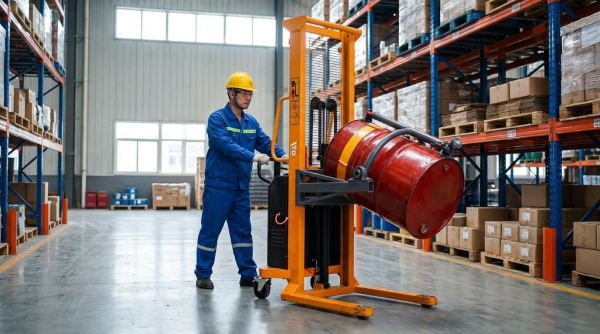
Knowing how to handle 55 gallon drums safely from receipt to internal transport reduces injury risk and prevents chemical releases. This section focuses on inspection, ergonomics, equipment selection, and the role of data-driven monitoring across the full in-plant handling cycle.
Pre-Handling Inspection, Leak Checks, And Bung Integrity
When planning how to handle 55 gallon drums, start with a structured pre-handling inspection. A typical 55-gallon drum weighed between 180 kg and 360 kg, so any structural weakness created significant risk. Visually check the chimes, body, and bottom for dents, corrosion, or impact damage that could compromise strength during lifting or rolling. Scan for staining, wet spots, or crystallization that might indicate slow leaks around seams or fittings.
Verify that both bungs or the lid were present, undamaged, and fully tightened with compatible tools. A missing or loose bung could allow product slosh, vapor release, or loss of containment when the drum tilted. Inspect gaskets for cracking or flattening and replace doubtful seals before movement. If the lid appeared bulged or distorted, treat the drum as potentially over-pressurized due to internal reaction or heating and escalate to engineering or EHS rather than moving it.
Always cross-check the label and Safety Data Sheet before handling. If labeling was missing or unreadable, classify the drum as unknown and hazardous until properly identified. Mark suspect drums, isolate them from normal traffic, and prohibit movement until a competent person completed assessment. Documented checklists and photo records supported traceability and regulatory defense during audits.
Manual Handling Limits, Ergonomics, And PPE Selection
Manual movement of full 55-gallon drums was rarely acceptable due to mass and instability. Typical ergonomic guidelines limited individual lifts to well below the 180–360 kg range of a filled drum, so workers should not attempt to dead-lift or bear-hug drums. If a drum on its side required upending, operators used a crouched stance, knees apart, hands on opposing chimes, and leg-driven motion while keeping the spine neutral. Even this technique suited only empty or lightly loaded drums under site-specific limits.
Ergonomic planning considered floor conditions, slope, and required travel distance. Pushing drum handling equipment instead of pulling reduced spinal loading and improved visibility. Facilities should define clear trigger points for team handling and for switching from manual methods to mechanical aids based on estimated drum mass and content type. Routine job safety analyses helped identify pinch points, toe-crush zones, and awkward reaches around pallets and containment curbs.
PPE selection followed hazard classification from the SDS and label. For non-hazardous contents, baseline PPE usually included safety footwear with toe protection and durable gloves with good grip. For corrosive, toxic, or flammable materials, add chemical-resistant gloves, splash goggles or face shields, and chemical aprons or suits as required. Respiratory protection depended on vapor and dust data; any respirator use had to comply with fit-testing and training requirements. PPE policies should explicitly cover emergency scenarios such as small leaks detected during movement.
Selecting Forklifts, Dollies, Cranes, And Attachments
Choosing the right equipment was central to any program on how to handle 55 gallon drums safely. For horizontal transport over moderate distances, drum dollies, hand trucks with curved backs, or dedicated drum carts minimized manual strain and improved control. Specify rated capacity above the maximum drum mass, include chime clamps or straps, and ensure wheels suited the floor material and any ramps. Low rolling resistance reduced push forces and fatigue.
Forklifts remained common for palletized drums. Use only drum-rated pallets in good condition and verify that forklift capacity exceeded combined load plus attachment mass with a safety margin. Side-shift and tilt functions improved precise placement but required trained operators and clear line-of-sight. Dedicated drum handling attachments, such as clamping jaws or rim-grip devices, increased stability when lifting single drums off pallets or from containment areas. All attachments needed manufacturer rating plates and inclusion in the truck’s derated capacity calculations.
Where floor access was constrained, overhead solutions such as hoists or jib cranes with forklift drum grabber allowed vertical lifts into process platforms or containment sumps. Engineers had to check that beams, columns, and anchorage systems supported worst-case dynamic loads with adequate factors of safety. For flammable atmospheres, select equipment with suitable electrical and mechanical protection levels. Standard operating procedures should define travel paths, speed limits, and exclusion zones around moving loads to avoid impact with pedestrians or other drums.
AI Monitoring, Digital Twins, And Predictive Maintenance
Advanced facilities increasingly used AI and digital tools to refine how to handle 55 gallon drums over their internal lifecycle. Fixed and mobile sensors tracked drum location, temperature, and sometimes vibration or tilt, feeding data into site management systems. Algorithms could flag abnormal patterns such as repeated impacts on specific transfer points, frequent near-tilt events, or temperature deviations that suggested reaction risk. Video analytics supported behavioral observation, detecting unsafe manual rolling or bypassing of designated routes.
Digital twins of drum handling systems modeled conveyors, forklifts, storage racks, and containment areas as a single integrated environment. Engineers used these models to simulate new routes, different pallet configurations, or revised rack layouts before physical changes. The twin could estimate contact forces, tip-over probabilities, and energy consumption under varying throughput. This helped justify investments in new attachments, barriers, or automation by quantifying risk reduction.
Predictive maintenance analytics applied to handling equipment reduced failure-induced incidents. Vibration, current draw, and hydraulic pressure trends on forklifts, hoists, and automated movers indicated emerging issues such as bearing wear or mast misalignment. Early intervention prevented in-service breakdowns while carrying heavy drums, which could otherwise cause dropped loads or emergency stops. Integrating maintenance data with incident reports and near-miss logs created a feedback loop, continuously improving procedures, training content, and equipment selection for drum handling operations.
Engineering Drum Storage And Spill Containment Systems

Engineering storage and containment correctly is central to how to handle 55 gallon drums safely over their full life cycle. Design choices for rack geometry, ventilation, segregation, and sump capacity directly affect worker safety, regulatory compliance, and inspection efficiency. Robust layouts let operators keep drums accessible for inspection while limiting spill consequences and fire escalation. Modern facilities also integrate sensing and automation so that mechanical systems support, rather than undermine, safe drum handling practices.
Stack Height, Layout, And Structural Design Of Racks
When planning how to handle 55 gallon drums in storage, engineers must start with realistic weight assumptions. A typical 55-gallon drum weighed 400–800 kg depending on liquid density, so rack beams, columns, and anchors needed conservative design loads and safety factors. Industry practice limited floor-stacked rows to a maximum of two drums high and two drums wide to keep internal drums visible and avoid ladder use during inspections. Stacks higher than two drums increased instability because container strength, corrosion state, and pallet patterns varied, which could cause progressive collapse under impact or vibration. Pallet rack systems for drums required verified load ratings, bracing against seismic and impact loads, and decking or cradles that prevented point loading on chimes that could deform shells or compromise bungs.
Ventilation, Segregation, And Fire/Explosion Controls
Storage rooms for chemical drums needed engineered ventilation to control vapors and heat. Designers typically located air inlets low and exhaust points high to capture heavier-than-air solvents and lighter gases while maintaining air change rates that matched the hazard class defined in Safety Data Sheets. Effective segregation grouped incompatible materials in separate bays or containment cells so that a leak in one group could not react violently with another. Fire and explosion controls included non-sparking surfaces, rated electrical equipment in classified zones, and adequate separation distances between drum arrays and ignition sources or exterior boundaries. Fixed fire protection, such as sprinklers or foam systems sized for hydrocarbon pools, had to consider worst-case spill areas under racks and within sumps so that suppression water did not simply spread contamination beyond the contained zone.
Sump Sizing To EPA And FM Requirements
Proper sump design was a critical element of how to handle 55 gallon drums in bulk storage while remaining compliant. EPA guidance required spill containment capacity of at least 10% of the total stored liquid volume or 100% of the largest single container, whichever was greater. Factory Mutual standards were more conservative and specified 25% of total volume or the largest container, whichever was greater, so designers usually sized sumps to meet the stricter FM criterion when both applied. For drum storage, engineers converted drum counts into total volume, then added freeboard for firewater, foam, and rainfall in outdoor applications. Structural design of sumps had to resist hydrostatic pressure, forklift impact on curbs, and chemical attack from stored products, while sloped floors, sumps, and pump-out points simplified cleanup and reduced personnel exposure during spill response.
Integrating Sensors, Cobots, And Automated Handling
Modern facilities used automation to improve both throughput and safety in how to handle 55 gallon drums. Load cells, level sensors, and leak detectors embedded in racks or sumps could alert operators to slow leaks or bulging drums before visible failure occurred. Vision systems and AI analytics monitored stacking patterns, aisle clearances, and blocked exits, flagging conditions that violated engineered rules for drum height or inspection access. Collaborative robots and automated guided vehicles moved drums using purpose-designed grippers or clamps, reducing manual handling and associated musculoskeletal injuries, while interlocks ensured humans did not enter active transfer zones. Digital twins of the storage area allowed engineers to model spill scenarios, rack failures, or layout changes in advance, so they could optimize rack spacing, sump capacity, and evacuation routes without trial-and-error in the live facility. Facilities often relied on specialized equipment like forklift drum grabber, hydraulic drum stacker, and drum dolly to ensure safe and efficient handling.
Drum Recycling, Disposal, And Practical Conclusions
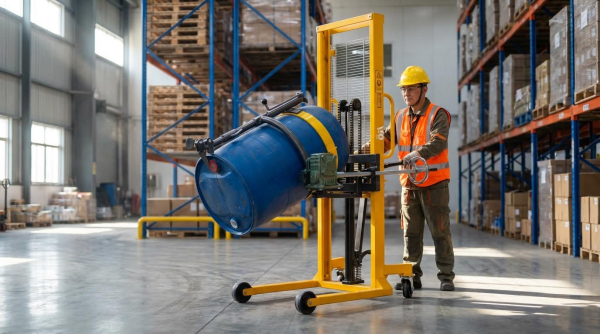
Safe, efficient strategies for how to handle 55 gallon drums must extend through end-of-life management. Recycling and disposal decisions influence worker safety, environmental risk, and long-term operating cost. Engineering controls, compliant procedures, and trained operators together determine whether drum operations meet regulatory and corporate standards. This section links handling practices with recycling and disposal pathways and summarizes practical conclusions for industrial facilities.
Recycling or disposal starts with correct classification of each drum and its contents. Facilities should confirm whether residues are hazardous under local, national, or regional rules before selecting a treatment path. Operators must verify labels and Safety Data Sheets, or treat unlabeled containers as hazardous until characterization testing closes any data gaps. This risk-based approach reduces the chance of routing incompatible or reactive materials into standard recycling streams.
Clean, non-hazardous 55-gallon drums can often enter reuse or material-recycling loops. Steel drums may be reconditioned or scrapped as metal after documented cleaning, while high-density polyethylene drums are typically shredded, washed, and reprocessed into products such as drainage pipe, pallets, or tanks. Regulators in several jurisdictions required triple-rinsing, puncturing at multiple heights, and label removal before acceptance at waste centers or plastics recyclers. These steps demonstrate that residues were removed and that the container cannot be illicitly refilled.
Where drums contained hazardous chemicals, fuels, or regulated waste, disposal had to follow stricter transport and treatment rules. Some regions required licensed waste transporters once load mass or hazard category exceeded defined thresholds. Waste centers often rejected drums with free liquids unless the contents were solidified or over-packed in larger certified containers, for example an 85-gallon salvage drum. Documentation needed to prove cleaning methods, original contents, and hazard classification, including SDS references and generator details.
From a mechanical handling perspective, end-of-life drums must still be treated as heavy, potentially unstable loads. A full 55-gallon drum could weigh 400–800 kilograms depending on density, so facilities should continue using forklift barrel grabber, drum trucks, or cranes instead of manual rolling or tipping. Damaged or corroded drums require conservative handling plans, including use of spill pallets and containment sumps during loading and staging. Operators should avoid stacking questionable drums and instead segregate them for rapid removal from the process area.
Spill containment engineering remains relevant up to the point of off-site transfer. Sumps sized to at least 10% of total stored volume or the largest drum volume, and in some frameworks 25%, reduce the probability of uncontrolled releases during consolidation and loading. Ventilation, segregation of incompatibles, and clear egress routes are still mandatory while full or partially emptied drums await pickup. Emergency response plans should explicitly address leaks during loading, transport vehicle incidents, and rejected loads returning to the site.
Across regions, regulators consistently favored recycling over landfill disposal when cleaning and documentation requirements were met. Programs dedicated to agricultural and industrial chemicals demonstrated that high recycling rates were achievable when generators prepared drums correctly and booked scheduled collections. These schemes reduced plastic and steel entering landfills, cut greenhouse gas emissions associated with virgin material production, and created secondary raw-material streams for construction and packaging industries.
For facilities optimizing how to handle 55 gallon drums, the practical conclusion is that handling, storage, recycling, and disposal form a single lifecycle system. Engineering controls for lifting, stacking, and containment should align with regulatory frameworks governing waste classification, transport, and treatment. Investments in operator training, labeling discipline, and standardized decontamination procedures usually deliver rapid payback through lower incident rates and fewer rejected loads. As sensing, automation, and data analytics mature, sites can expect more predictive oversight of drum condition and inventory, along with tighter traceability from receipt to final recycling or disposal.