Operations teams that ask what is a warehouse stock picker usually face tight aisles, fast order cycles, and rising labor costs. This article explains how warehouse stock pickers are engineered to let operators travel with the load, pick items at height, and navigate narrow storage lanes safely and efficiently.
You will see how core functions, mechanical design, and performance limits shape where stock pickers fit inside a warehouse alongside forklifts, reach trucks, and other lifts. The sections on safety engineering and maintenance outline required controls, inspections, and digital tools that keep uptime high and incidents low. A comparison section then contrasts stock pickers with alternative lift types using criteria such as aisle width, throughput, and lifecycle cost. The final summary converts these insights into practical selection guidelines so engineers, warehouse managers, and EHS leaders can specify the right stock picker configuration for their facilities.
Core Functions And Design Of Warehouse Stock Pickers
Engineers who ask what is a warehouse stock picker usually want clear design and use details. This section explains how stock pickers support person-up order picking in narrow aisles and high-bay storage. It covers typical operating environments, main mechanical systems, performance limits, and power options. The goal is to link real warehouse constraints to the engineering choices behind modern stock picker designs.
Definition, Typical Use Cases, And Operating Environments
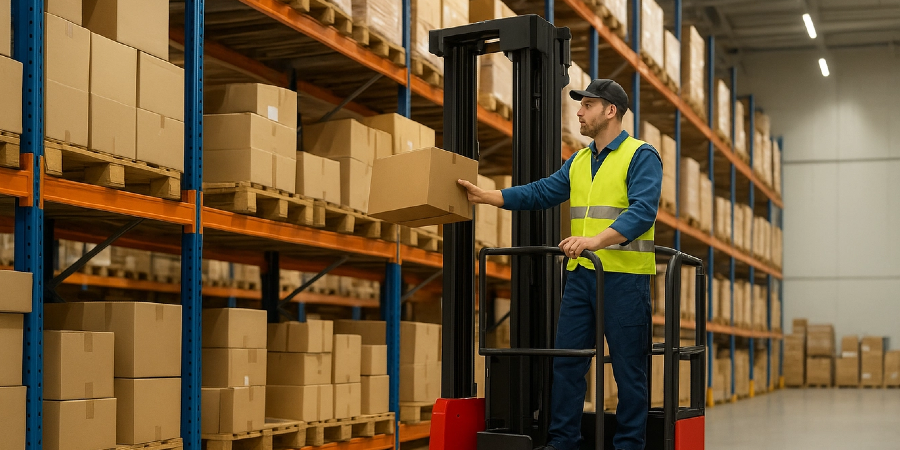
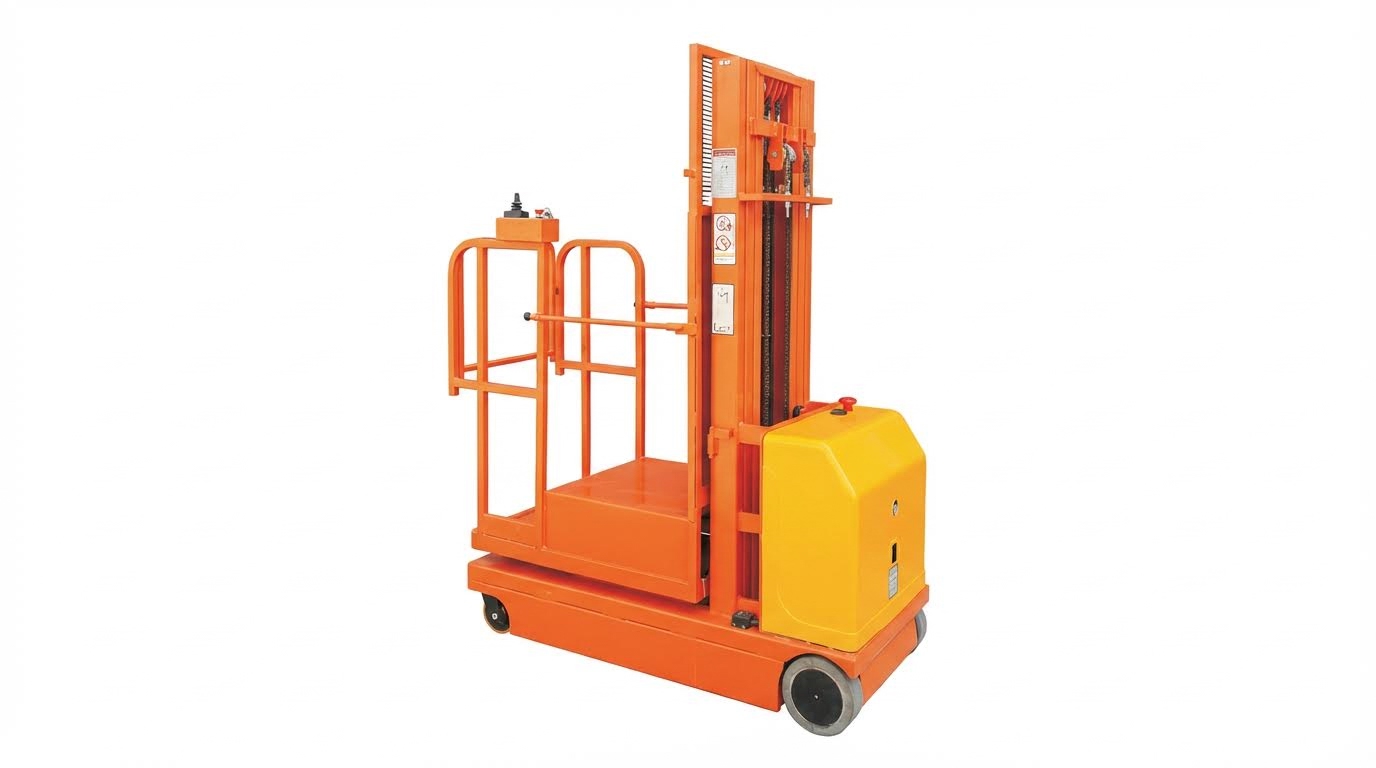
A warehouse stock picker is a person-up lift truck for case or item picking. The operator platform and load platform rise together to the pick level. The machine supports direct picking from racking instead of moving full pallets.
Typical use cases include:
- Piece picking for e-commerce fulfillment
- Case picking in distribution centers
- Replenishing fast-moving pick faces
- Inventory checks and cycle counting
Most units work indoors on flat, smooth concrete. They run in narrow aisles and high-density racking, where forklifts cannot maneuver safely. Designers favor compact chassis and tight turning radii to reduce aisle width needs and increase storage density.
Key Mechanical Components And Drive Systems
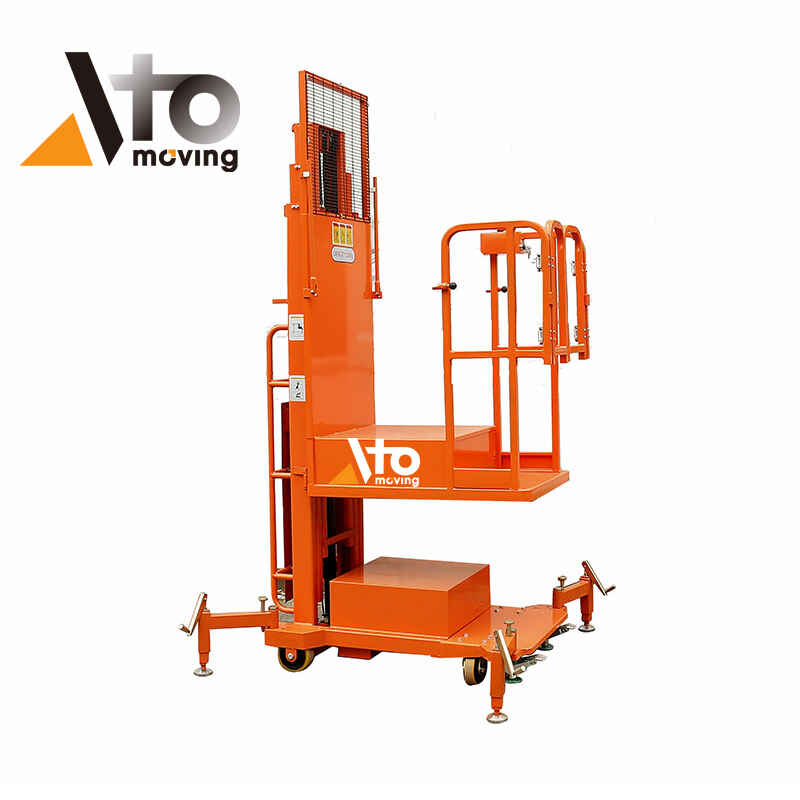
Core mechanical systems answer the practical question: what is a warehouse stock picker built from. A typical machine includes a rigid chassis, steer axle, drive axle, mast or lifting column, operator platform, and load deck or cargo platform.
The lifting system usually uses an electric motor driving a hydraulic pump or an electromechanical actuator. The platform rides on mast rails or telescopic columns with chain or direct drive. Guardrails and interlocking gates surround the platform to form a protected work area.
Drive systems are often two-wheel drive with electric traction motors. Steering uses either conventional steer axles or zero-turn arrangements for very tight spaces. Many designs add fork pockets in the chassis so another lift truck can relocate the stock picker for service or transport. On-board control panels group drive, lift, and steering functions and often include diagnostic displays.
Performance Envelope: Height, Capacity, And Duty Cycle
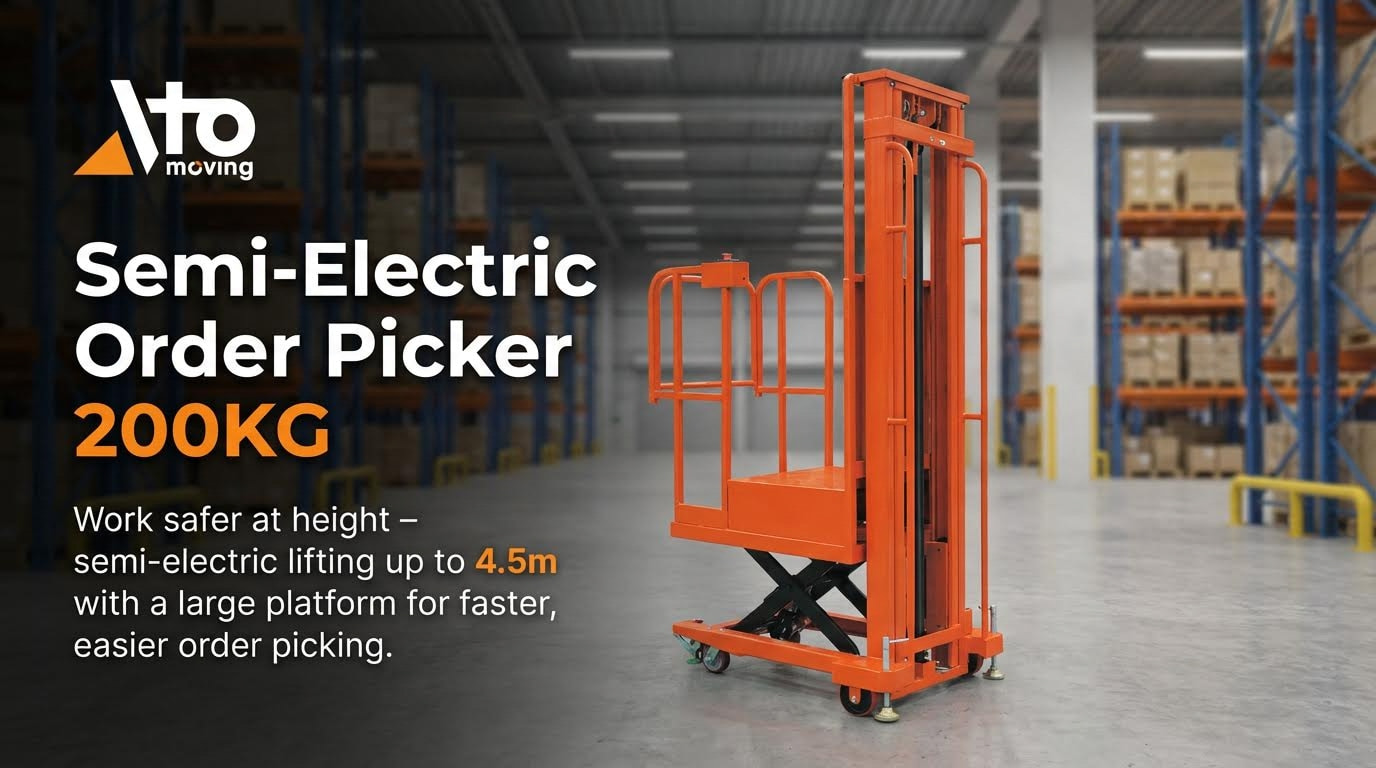
The performance envelope defines where the machine can work safely. Typical maximum platform heights range from about 2.7 metres to 4.5 metres. This gives working heights of roughly 4.7 metres to 6.5 metres, depending on operator reach.
Rated load capacity is often up to 300 kilograms including load, tools, and sometimes operator allowance. Engineers must consider combined centre of gravity shift at full height. Stability calculations drive mast design, wheelbase length, and counterweight placement.
Travel speed changes with platform height to manage risk. A common pattern is about 4 kilometres per hour with the platform lowered and roughly 1.6 kilometres per hour when raised. Duty cycle depends on pick density and lift frequency. Electric drive and lift systems suit stop‑start cycles well and limit local emissions in enclosed warehouses.
| Parameter | Typical range |
|---|---|
| Platform height | 2.7–4.5 m |
| Working height | 4.7–6.5 m |
| Rated load | Up to 300 kg |
| Travel speed (lowered) | ≈4 km/h |
| Travel speed (raised) | ≈1.6 km/h |
| Climbing ability | ≈15–20 % on ramps |
Power Options, Charging, And Energy Efficiency
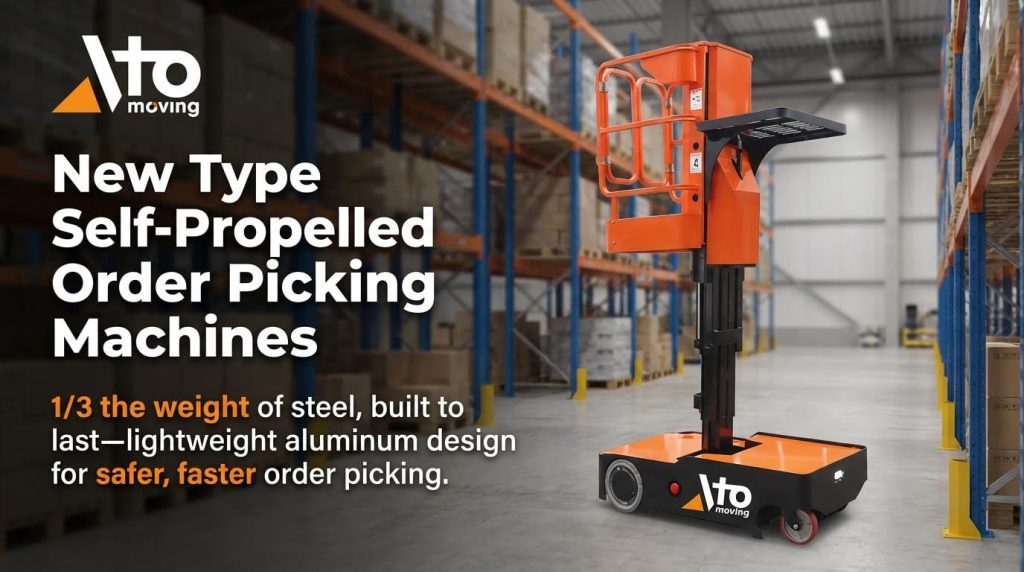
Most stock pickers use electric power. Common designs use maintenance-free traction batteries with relatively high capacity. These packs support full-shift operation in typical warehouse duty cycles.
Charging concepts include centralized charging rooms, distributed wall chargers, or on-board smart chargers. Modern units often integrate charge protection, temperature monitoring, and interlocks that prevent drive during charging. Energy recovery during lowering is possible in some designs but depends on the lift system architecture.
Electric drive trains offer low noise and zero point-of-use emissions. This suits food, beverage, pharmaceutical, and IT storage, especially where hydraulic oil-free lifts reduce contamination risk. Engineers size batteries based on average current draw, peak lift demand, and required runtime, then match charger power to planned turnaround windows.
Energy-efficient control logic can limit acceleration, optimize lift speed, and manage standby consumption. Fleet managers often monitor battery state-of-charge and charge cycles to extend battery life and keep uptime high.
Safety Engineering, Compliance, And Maintenance
Safety design defines what is a warehouse stock picker in real operations. Engineering controls, training, and maintenance keep these machines reliable at height. This section explains how built-in systems, operator behavior, and digital tools work together to manage risk and uptime.
Built-In Safety Systems And Control Logic
Modern stock pickers use layered safety systems to protect operators at height. Typical features include guardrails, interlocking gates, emergency stop circuits, tilt alarms, and motion alarms. Control logic usually prevents travel or lift if gates are open, platforms overloaded, or tilt exceeds a set angle.
Speed limiting is critical. Travel speed often drops from about 4 kilometres per hour with the platform lowered to about 1.6 kilometres per hour when elevated. This reduces kinetic energy and stopping distance near racking. Controllers also smooth acceleration and deceleration to limit sway and reduce dropped item risk.
Many machines include anti-collision sensors at chassis or platform level. These sensors slow or stop travel when they detect racking, pedestrians, or obstacles. Charging protection systems monitor battery temperature and voltage. They disconnect charging if values exceed limits and reduce fire risk.
On-board diagnostics support safe logic. The system records fault codes for items such as encoder errors, brake faults, or tilt sensor failures. Technicians can see these codes on the display and lock out the machine until repair. This avoids unsafe workarounds and keeps the safety chain intact.
Operator Training, PPE, And Safe-Use Protocols
Clear training is as important as hardware when asking what is a warehouse stock picker in safety terms. Operators must understand that they move with the load, unlike with most forklifts. This creates direct fall and crush hazards if procedures are weak.
Structured training should cover at least:
- Reading capacity plates and never exceeding platform and load ratings.
- Pre-use checks of brakes, steering, gates, guardrails, and emergency stop.
- Safe driving in narrow aisles, including reduced speed and horn use at crossings.
- Correct parking, key control, and isolation after use.
PPE policies should match site risk. Typical equipment includes hard hats, high-visibility vests, safety shoes with non-slip soles, and safety glasses. In cold stores or noisy zones, thermal gear or hearing protection may be needed.
Safe-use rules should forbid leaning outside guardrails, climbing on racking, or riding on forks or pallets. Supervisors should enforce one-person-per-platform rules and ban passengers. Clear ground markings and pedestrian lanes reduce impact risk. Written procedures for emergency descent and platform evacuation complete the safety framework.
Inspection, Preventive Maintenance, And Uptime
Regular inspection keeps stock pickers safe and available. Daily checks by operators catch visible issues. Scheduled preventive maintenance by technicians deals with hidden wear and age-related failures.
Daily walk-around checks should confirm:
- No leaks from hydraulic circuits or battery areas.
- Tyres, wheels, and castors free from damage or embedded debris.
- Guardrails, gates, and platforms intact with no deformation.
- Controls, horn, and emergency stop working correctly.
Preventive maintenance intervals usually follow operating hours. Common tasks include lubricating mast rails and chains, checking bolt torque on critical joints, inspecting steering and brake linkages, and testing tilt and motion alarms. Battery systems need electrolyte or terminal checks, depending on type, plus inspection of cables and connectors for heat damage.
Well-planned maintenance improves uptime and lifecycle cost. A simple matrix that links hours used per week to service intervals helps planners. Coordinating maintenance with low-demand shifts reduces impact on throughput. Documented inspections also support legal compliance and insurance audits, especially where work at height regulations apply.
AI Diagnostics, Digital Twins, And Predictive Care
Digital tools now change how teams maintain and define what is a warehouse stock picker fleet. On-board diagnostics have evolved into connected systems that stream operating data. Typical signals include drive motor current, lift motor run time, battery state of charge, error codes, and impact events.
AI-based analytics can detect patterns that point to future failures. Examples include rising current draw at constant load, which suggests bearing or gearbox wear, or frequent tilt alarms in one aisle, which suggests floor or racking issues. Maintenance teams can schedule targeted inspections before breakdowns stop operations.
Digital twin models go further. They mirror each machine’s configuration, duty cycle, and fault history in software. Engineers can test parameter changes, such as speed limits in a new aisle layout, before updating live controllers. They can also compare identical units across sites to see which settings or environments reduce failures.
Predictive care reduces unplanned downtime and extends component life. It also supports safer work. Fewer in-shift breakdowns mean fewer emergency rescues from height and less pressure on operators to bypass safety devices. When combined with clear training and solid mechanical design, these digital tools create a closed loop of continuous safety improvement.
Comparing Stock Pickers To Other Lift Equipment
Engineers who ask what is a warehouse stock picker also need to compare it with other lifts. The right comparison framework looks at load type, aisle width, lift height, and operator role. This section explains how stock pickers differ from forklifts, reach trucks, pallet jacks, scissor lifts, mast lifts, and layer pickers. It also links those differences to cost, integration, and sustainability decisions.
Stock Pickers Vs Forklifts, Reach Trucks, And Pallet Jacks
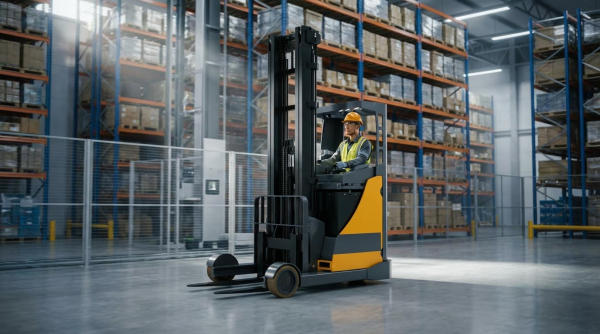
A warehouse stock picker lifts the operator and the load together. The operator picks cases or items directly from racking. A forklift lifts full pallets only and keeps the operator at floor level. Reach trucks extend forks into deep racks, while pallet jacks only move pallets near the floor.
| Aspect | Stock picker | Forklift / reach truck / pallet jack |
|---|---|---|
| Main task | Item or case picking at height | Pallet handling and transfer |
| Typical lift height | About 4.7–6.5 m working height | Up to higher levels for reach trucks, lower for pallet jacks |
| Load profile | Up to about 300 kg on platform | Higher pallet loads |
| Aisle width | Very narrow aisles | Standard or wide aisles |
Stock pickers answer what is a warehouse stock picker by their role in order fulfillment. They support high pick accuracy and direct shelf access. Forklifts and reach trucks support bulk movement, dock work, and pallet put-away. Pallet jacks support short horizontal moves and low-level picking.
Stock Pickers Vs Scissor Lifts, Mast Lifts, And Layer Pickers
Scissor and mast lifts mainly provide access, not order picking. They lift people and tools for tasks like maintenance or installation. They usually do not carry palletized goods or have integrated picking platforms. Travel speeds are also lower, and maneuvering in narrow aisles is harder.
Layer pickers answer a different need. They remove one or more product layers from a pallet using clamps or vacuum heads. They build mixed-SKU pallets at high speed. The operator typically stays at ground level while the device handles full layers.
- Stock picker: item or case picking in racking, narrow aisles, operator elevated.
- Scissor / mast lift: vertical access for work at height, limited material handling.
- Layer picker: high-throughput pallet layer handling, often semi- or fully-automated.
In dense warehouses, stock pickers replace scissor lifts for inventory tasks. They combine safe elevation with integrated load handling. Layer pickers often sit in a separate pallet-building zone, feeding outbound staging.
Selection Criteria: Aisle Width, Throughput, And Load Profile
When engineers ask what is a warehouse stock picker in practical terms, they focus on fit to layout and flow. Aisle width is the first filter. Stock pickers work in very narrow aisles that typical forklifts cannot enter. Some models have a very small or even zero turning radius, which helps in tight spots.
Throughput is the second filter. Stock pickers suit medium to high order lines per hour where picks are spread across levels. Forklifts suit high pallet flow between docks, buffers, and bulk storage. Layer pickers suit very high case volumes where mixed pallets are standard.
Load profile is the third filter. Use stock pickers when:
- Loads are light to medium, under about 300 kg per pick position.
- Orders require frequent single-SKU or few-SKU picks at height.
- Inventory turns justify dedicated man-up equipment.
Use forklifts or reach trucks when pallet weights are high or when racking is deep. Use scissor or mast lifts for work-at-height tasks unrelated to order picking.
Lifecycle Cost, Integration, And Sustainability Factors
Lifecycle cost depends on duty cycle, maintenance, and energy use. Electric stock pickers use battery packs and avoid exhaust emissions. They fit clean indoor operations and support low noise levels. This lowers ventilation needs compared with internal combustion forklifts.
From an integration view, stock pickers work best with slotting plans that bring fast movers to ergonomic heights. They interface well with warehouse management systems that drive pick paths and task queues. Layer pickers and reach trucks often share data with the same systems but handle different flows.
Sustainability factors include energy efficiency, battery technology, and floor utilization. Stock pickers enable higher racking in narrow aisles, which improves storage density per square metre. Electric drives reduce local pollution and support cleaner industries like food and pharmaceuticals. When engineers evaluate what is a warehouse stock picker, they should weigh these long-term density and energy gains against the higher unit cost compared with simple pallet jacks.
Summary And Practical Selection Guidelines
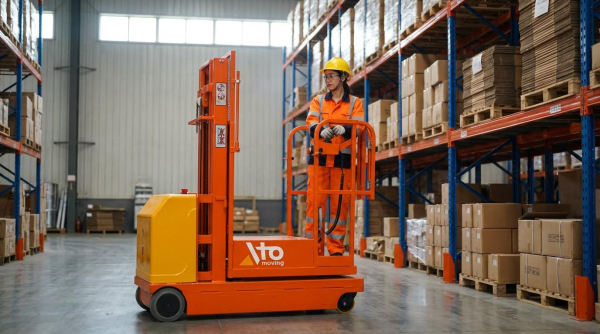
Decision makers who ask what is a warehouse stock picker need a clear, practical view. A stock picker is a compact, electric lift that raises both operator and load for case or item picking in narrow aisles. Typical working heights reach about 4.7–6.5 metres with platform capacities up to about 300 kilograms. These machines fill the gap between ground handling tools and high-capacity pallet movers.
From a technical view, stock pickers suit operations where order lines are small, access levels are high, and aisles are tight. Forklifts or reach trucks fit full-pallet moves and higher masses. Scissor and mast lifts fit maintenance work where travel distance is low and picking density is minor. Layer pickers fit pallet-layer handling and high-volume mixing tasks.
Use the checklist below to guide selection and specification decisions:
- Define main task: item, case, layer, or pallet handling.
- Measure aisle width, turning spaces, and door openings.
- Set required pick height and typical load mass.
- Match duty cycle to battery size, charger type, and shift pattern.
- Check safety features, training needs, and local rules.
- Compare lifecycle cost, not only purchase price.
Future stock pickers will likely add more onboard diagnostics, energy-efficient drives, and tighter links to warehouse software. However, sound engineering basics will still drive safe choices. Match equipment to layout, load profile, and throughput, then enforce training, inspection, and preventive care. This approach gives reliable uptime and stable total cost over the full service life.
Frequently Asked Questions
What is a Warehouse Stock Picker?
A warehouse stock picker is a type of Material Handling Equipment (MHE) designed to help operators retrieve items from high shelves in a warehouse. These machines are essential for efficient inventory management, allowing workers to access stock quickly and safely without using ladders or scaffolding.
- Stock pickers typically have a platform that elevates the operator to the required height.
- They are commonly used in warehouses with tall shelving systems.
- Modern stock pickers may include features like automated guidance systems for improved efficiency.
What Are the Key Responsibilities of a Stock Picker Operator?
The role of a stock picker operator involves retrieving and organizing inventory in a warehouse. This job requires physical stamina, as operators often walk long distances and lift heavy loads throughout their shift. Tasks typically include:
- Picking items from warehouse shelves based on order lists.
- Ensuring picked items are accurately labeled and delivered to the correct location.
- Operating the stock picker equipment safely and efficiently.
Warehouse work can be physically demanding, with operators walking 6 to 10 miles per day on hard surfaces while lifting heavy items. Warehouse Challenges.
What Factors Influence the Salary of a Warehouse Stock Picker?
The salary of a warehouse stock picker depends on factors such as location, experience, and the size of the warehouse operation. While specific figures vary by region, salaries generally reflect the physically demanding nature of the job. Key factors include:
- Geographical location and local labor market conditions.
- Level of experience and certifications held by the operator.
- The complexity of the warehouse’s inventory system.