
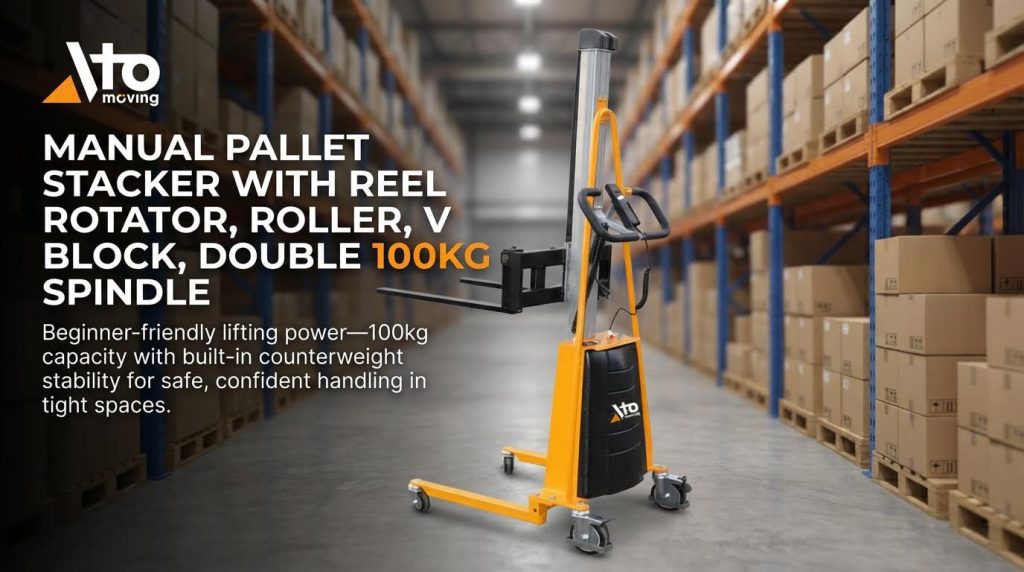
FBA sellers who ask “is it worth it to buy pallet stacker for FBA” face a mix of technical, economic, and space constraints. This article walks through how pallet stackers fit into typical FBA material flows, and compares them with forklifts and outsourced services across different throughput levels.
You will see how manual and electric stackers differ in load capacity, lift height, duty cycle, and total cost of ownership, and when it makes sense to move up to automation or Atomoving systems. Safety, compliance, and maintenance demands are also covered so FBA operators can balance ROI against training, inspection, and downtime risks.
The final section turns these factors into a clear decision framework that helps FBA businesses judge if a pallet stacker is a smart, scalable investment for their specific SKU mix, floor plan, and growth plans.
FBA Use Cases: When A Pallet Stacker Adds Value
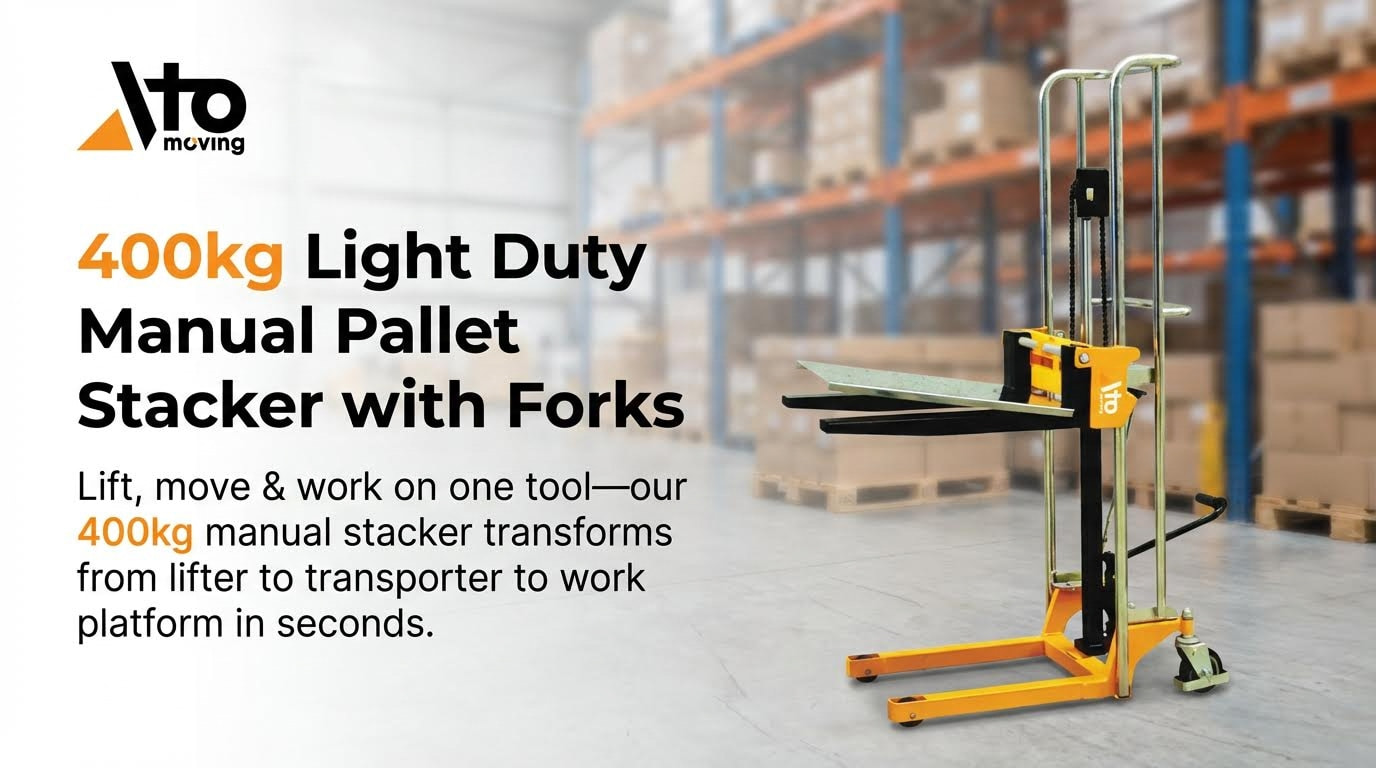
FBA sellers often ask a direct question: is it worth it to buy pallet stacker for FBA. The answer depends on material flow patterns, space limits, and target throughput. This section explains where stackers fit, how they compare with forklifts and services, and how volume level changes the business case.
Typical FBA Material Flows And Pain Points
FBA operations followed a repeatable pattern. Inbound pallets arrived from suppliers, got broken down, stored, then rebuilt as outbound pallets for Amazon receive centers. Each step involved multiple touches and short moves in tight zones.
Without a pallet stacker, operators often used pallet jacks and manual lifting. That raised three main issues. First, slow cycle times between dock, prep, and storage. Second, high physical strain when stacking cartons above shoulder height. Third, poor vertical space use because staff avoided higher rack levels.
A pallet stacker reduced touches in these flows. It lifted full pallets directly to buffer racks near prep benches. It also allowed denser staging near outbound lanes. For sellers, the key question “is it worth it to buy pallet stacker for FBA” linked to how much non‑value time existed in these repeated moves.
Comparing Stackers, Forklifts, And Third-Party Services
FBA sellers usually had three options for pallet handling. Own a pallet stacker, own or rent a forklift, or outsource handling to a third party. Each option changed cost structure and control.
| Aspect | Stacker | Forklift | Third-party service |
|---|---|---|---|
| Typical purchase cost | Lower than forklift | Higher capex | No asset cost |
| Aisle width need | Narrow | Wider | Depends on provider |
| Licensing and training | Internal training | Often formal license | Handled by provider |
| Control of service level | High | High | Medium |
| Best fit | Indoor, medium height | Heavy, high lift | Low‑volume or remote |
Forklifts offered higher lift and travel speed but at higher acquisition and operating cost. They also often needed wider aisles and stricter regulation. Third‑party services shifted capex into variable fees. That worked for low or seasonal volume, but reduced flexibility for fast changes.
For typical FBA heights and narrow aisles, a pallet stacker often delivered most needed function at lower total cost of ownership. In those cases, the answer to “is it worth it to buy pallet stacker for FBA” tended to be yes.
Space Constraints, Aisle Width, And Racking Heights
Space was usually the main design driver in FBA prep centers. Rent per square metre stayed high near major Amazon hubs. Sellers needed to push storage density without hurting safety or speed.
Pallet stackers worked well in narrow aisles where forklifts struggled. Many models operated in aisles close to the width of a standard pallet plus clearance. That allowed more rack runs in the same building footprint. In contrast, counterbalance forklifts often needed a much larger turning radius.
Stackers also matched typical FBA rack heights. Most small and mid‑size sellers used racking below high‑bay range. They needed reliable lifting to 3–5 levels, not full high‑rise. A stacker could cover these levels while keeping machine weight and energy use moderate.
In space‑constrained layouts, the question “is it worth it to buy pallet stacker for FBA” linked to floor space return. If a stacker enabled an extra rack row or extra beam level, the payback often came from added storage capacity alone.
Throughput Profiles: Low, Medium, And High Volume Sellers
The business case for a pallet stacker changed with daily pallet count. FBA sellers with low volume, for example fewer than a handful of pallets per day, often managed with pallet jacks and manual stacking. Capital payback from a stacker stayed slow in that case.
Medium‑volume sellers handled steady flows. They moved tens of pallets per day between inbound, prep, and outbound zones. Here a stacker cut handling time per pallet and reduced fatigue. That improved reliability during peak days and lowered overtime risk.
High‑volume sellers that approached continuous flows needed powered solutions and often considered electric stackers or even automation. For them, the question was not “is it worth it to buy pallet stacker for FBA” but which level of mechanization matched forecast growth.
Across all profiles, engineers evaluated three metrics. Pallets moved per labour hour, cost per handled pallet, and storage density. A pallet stacker became a smart investment when it improved at least two of these metrics in a measurable way over a realistic horizon.
Manual Vs. Electric Stackers: Technical And Economic Tradeoffs
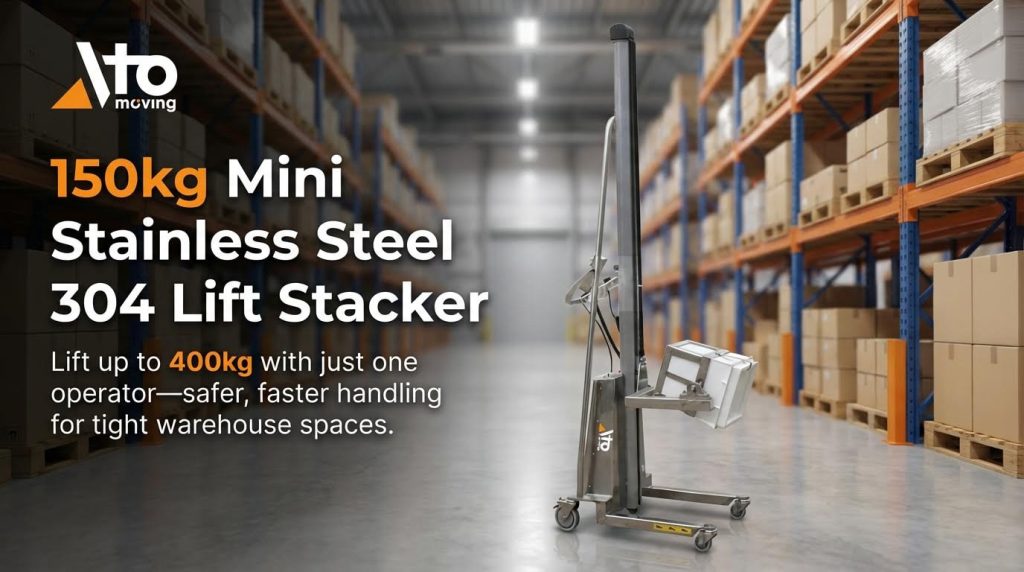
FBA sellers who ask “is it worth it to buy pallet stacker for FBA” need a clear view of manual and electric options. The right choice depends on load profile, shift pattern, and how fast units must move in and out of Amazon prep areas. This section explains how capacity, ergonomics, and total cost of ownership interact so you can match stacker type to your actual FBA workflow.
Load Capacity, Lift Height, And Duty Cycle Selection
Start with pallet mass and target locations. Typical FBA inbound pallets range from light carton loads to dense mixed SKUs, often between 300 kg and 1 000 kg. Manual stackers usually cover low to mid capacities and moderate lift heights suited to ground and first rack levels. Electric stackers support higher capacities and frequent lifts to upper beam levels in dense racking.
Duty cycle matters as much as rated capacity. If you handle a few pallets per hour in short shifts, manual units can cope. For continuous picking, cross-docking, or multi-shift FBA prep, electric drives keep cycle times short and operator fatigue low. A simple rule is to count daily lift-move cycles and peak hour demand, then size the stacker for that peak with 20–30% performance margin.
Manual Stackers: Capex, Limits, And Labor Intensity
Manual pallet stackers use hand or foot pumps and simple hydraulics. They have low purchase prices, often around half or less of electric units. For a small FBA seller with a single inbound lane and limited SKUs, this can answer the question “is it worth it to buy pallet stacker for FBA” with a cautious yes.
However, every lift depends on human effort. As daily pallet counts rise, push forces, pumping effort, and maneuvering in tight prep areas increase strain. This slows cycle times and raises risk of fatigue-related errors. Manual units also struggle with frequent lifts to higher racking, especially when operators repeat these motions across a full shift. In practice, manual stackers fit low-volume, single-shift FBA operations where labor cost per pallet is not critical.
Electric Stackers: Performance, Batteries, And TCO
Electric pallet stackers power both traction and lift. They move and raise loads faster and with less effort, which suits growing FBA accounts that push more cartons through the same floor space. Higher upfront cost offsets through lower labor minutes per pallet and better use of narrow aisles compared with forklifts.
Total cost of ownership includes energy, tires, and service, plus batteries and chargers. Modern electric stackers often used sealed lead-acid or lithium batteries, which supported partial charging and long life when maintained correctly. For FBA sellers running long shifts, consistent speed and reduced strain help cut overtime and injury risk. Over several years, electric units usually delivered better cost per handled pallet than manual units in medium and high volume operations.
When To Step Up To Automation Or Atomoving Systems
As FBA volume grows, even electric walk-behind stackers can become a bottleneck. Signs include constant queueing at docks, frequent congestion in staging lanes, and operators walking long distances with empty forks. At this point, sellers often ask not only “is it worth it to buy pallet stacker for FBA” but also whether to jump to higher automation.
Automated or semi-automated pallet handling, including Atomoving systems, reduces manual travel and lifting. These solutions integrate with conveyors, palletising cells, or storage systems to run more hours at stable speeds. They suit FBA sellers with high and predictable throughput where labor availability is tight. The step up makes sense when the combined cost of operators, overtime, and missed shipping cutoffs exceeds the annualized cost of automated equipment and its maintenance.
Safety, Compliance, And Maintenance For FBA Sellers
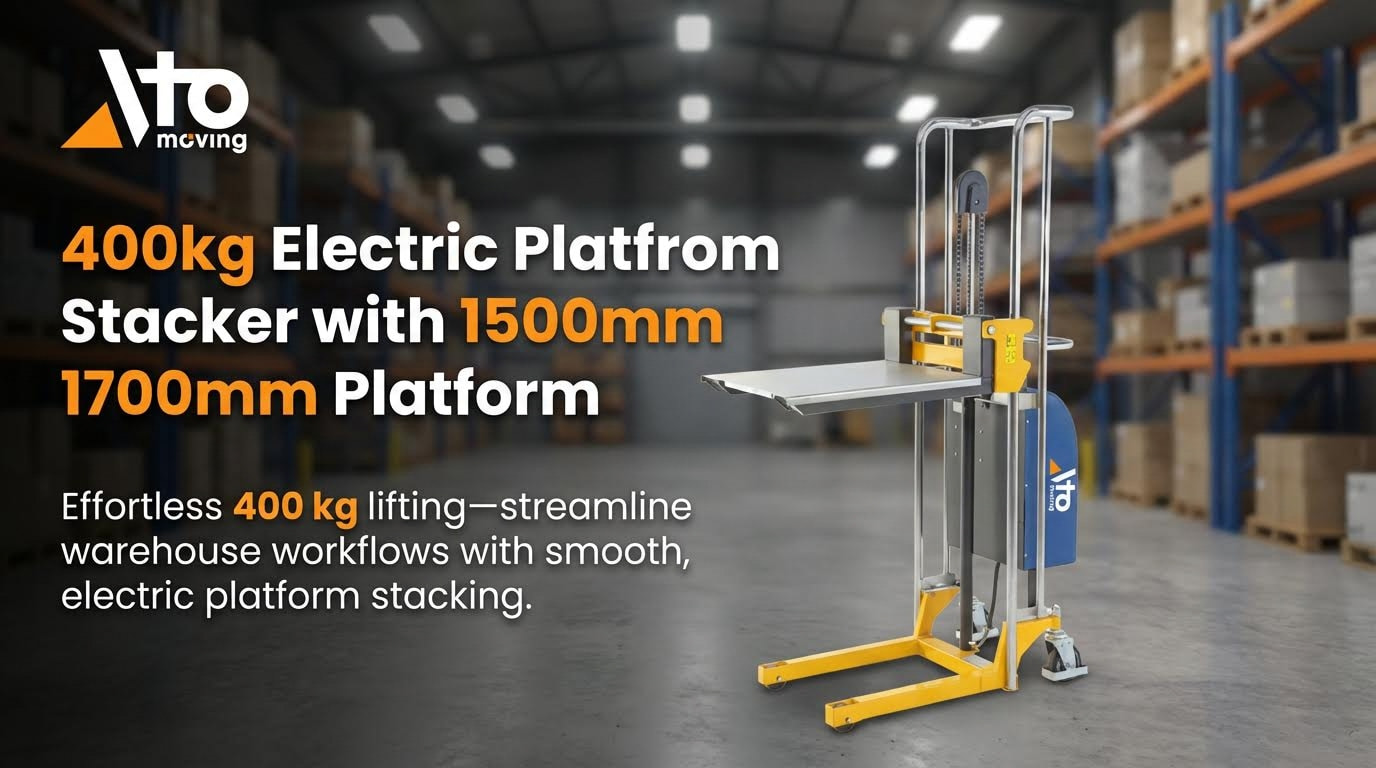
FBA operators who ask “is it worth it to buy pallet stacker for FBA” must factor in safety, compliance, and upkeep, not just price and throughput. A stacker that cuts labor cost but raises incident risk or downtime will not deliver real ROI. This section explains how training, ergonomics, maintenance discipline, and data tools protect both operators and the investment.
Operator Training, Ergonomics, And Risk Reduction
Stackers reduce manual lifting, but they also introduce new risks. FBA sellers need a simple, repeatable training program that fits high staff turnover. Internal certification usually covers pre-use checks, rated capacity, load center limits, and safe travel speeds in narrow aisles.
Ergonomics strongly affects the answer to “is it worth it to buy pallet stacker for FBA.” Manual units increase push and pump effort as load rises. Electric units reduce strain but need discipline on speed and cornering. Safer layouts use marked pedestrian lanes, one-way traffic in tight zones, and clear pallet staging points.
Key risk controls often include:
- Speed limits in FBA pick modules and prep areas
- No ride-on behavior for walkie stackers
- Strict rules for stacking height and pallet condition
Lower strain and fewer minor injuries support better uptime and help justify the investment.
Preventive Maintenance Intervals And Checklists
Regular maintenance keeps stackers safe and productive across Amazon peaks. A simple tiered schedule works well for most FBA sites.
Typical structure:
- Daily: Visual walk-around, forks and mast damage, wheels, horn, emergency stop, hydraulic oil level, battery charge.
- Weekly: Check for hydraulic leaks and unusual noise, inspect electrical connectors, lubricate key pivots.
- Monthly: Full functional test of tiller, brakes, steering, fasteners, hoses, cylinders, switches, contactors, wiring, and motors.
- Quarterly / bi‑monthly: Repeat monthly checks, adjust brakes, inspect carbon brushes, clean dust, tighten bolts, check gearbox noise and wheel wear.
Some manufacturers specified brake clearance in the 0.2–0.8 millimetre range and hydraulic oil volumes that increased with lift height. FBA managers should follow the exact manual values, not guess. Documented checklists support audits and help answer “is it worth it to buy pallet stacker for FBA” from a lifecycle cost view.
Common Failure Modes, Troubleshooting, And Downtime
Common faults fall into a few repeat patterns. Many directly affect safety, so fast diagnosis matters.
Typical issues include:
- No travel: blown fuses, worn key switches, bad main contactors, or loose battery cables.
- Only forward or only reverse: burned contactor tips or a failed control board.
- No stopping: sticking contactor that holds closed; operators must use emergency stop and isolate power.
- No lift or weak lift: overload, low hydraulic pressure, worn cylinder seals, low oil, low battery voltage, or failed pump motor.
Clear fault trees and spare parts kits shorten repair time. For FBA, even one hour of lost receiving or replenishment during a sale event can cost more than a year of preventive maintenance. When sellers ask “is it worth it to buy pallet stacker for FBA,” realistic downtime assumptions are critical in the payback model.
Using Data, IoT, And Predictive Tools To Cut Lifecycle Cost
Connected stackers help FBA operators move from reactive repairs to data-driven maintenance. Modern systems log key metrics such as operating hours, lift cycles, fault codes, and battery health trends.
Useful applications include:
- Scheduling service by true hours instead of calendar time.
- Flagging overload events that shorten mast and hydraulic life.
- Tracking impacts and harsh braking to coach operators.
- Monitoring battery charge patterns to avoid deep discharge damage.
Predictive tools can signal contactor wear, motor issues, or hydraulic leaks before a breakdown. This reduces unplanned downtime and supports smaller spare fleets. For sellers comparing manual and electric units and asking “is it worth it to buy pallet stacker for FBA,” a data-enabled electric stacker often delivers lower cost per handled pallet over its life, even with higher purchase price.
Conclusion: Decision Framework For FBA Stacker Investment
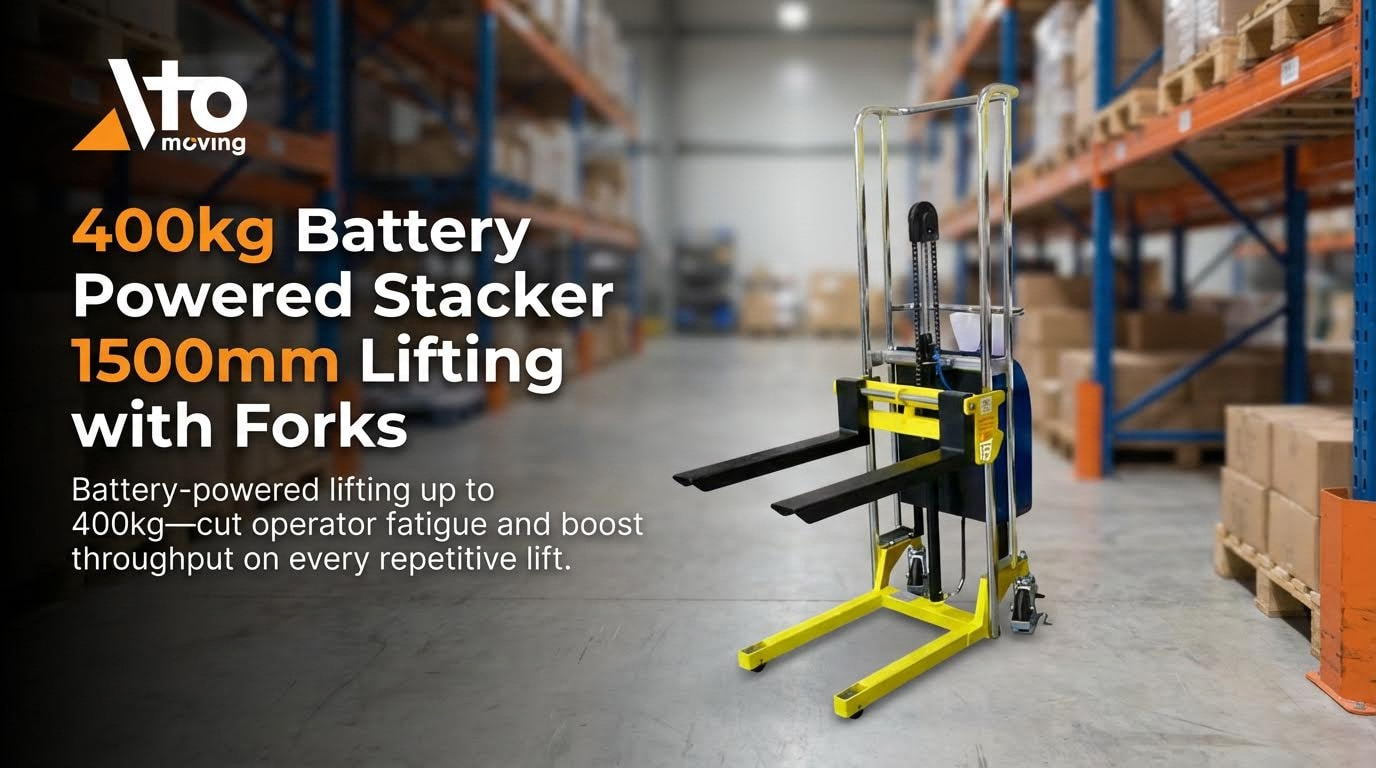
FBA operators asking “is it worth it to buy pallet stacker for FBA” need a structured view. The decision depends on volume, layout, labor cost, and growth plans. Manual and electric units both lift pallets, but they change cost and risk in different ways. A clear framework helps avoid both under‑spec and over‑invest.
From a technical view, a pallet stacker makes sense when you regularly move palletized inbound or prep-heavy SKUs. Manual units fit low daily pallet counts, short shifts, and modest lift heights. Electric units fit tighter cut-off times, higher bays, and continuous picks where fatigue would slow staff. In narrow aisles where forklifts do not fit, stackers usually give better space utilization and lower total cost of ownership.
Economically, the key drivers are labor hours saved per day, avoided third‑party handling fees, and reduced damage or injury risk. Manual stackers cost less and need simple maintenance, but they add physical strain and cap throughput. Electric stackers cost more upfront and need battery care, but they cut handling time and operator fatigue and can support automation later.
Looking ahead, more FBA-style operations will link stackers with data, IoT, and semi‑automated or Atomoving systems. That trend favors electric platforms with stable power, sensors, and predictable duty cycles. Still, not every seller needs that path. For micro and low‑volume FBA accounts, shared equipment or manual stackers may stay rational.
The balanced answer to “is it worth it to buy pallet stacker for FBA” is conditional. If you run steady pallet moves, operate in tight aisles, and pay rising labor rates, a well‑sized stacker often pays back through throughput and safety. If your pallet touches are rare or fully outsourced, ownership may not beat flexible services. The smart move is to model real flows, test one unit, track data, and then scale your stacker strategy in line with FBA growth.
,
Frequently Asked Questions
Is it worth it to buy a pallet stacker for FBA?
A pallet stacker can be a worthwhile investment for FBA (Fulfillment by Amazon) operations, especially if you handle a high volume of palletized goods. Electric pallet stackers are versatile and efficient for unloading deliveries, moving loads, and stacking pallets in warehouses. They come in both rider and walk-behind models, making them suitable for various workflows. For more details on forklift types, check out this forklift guide.
Do you need training to use a pallet stacker?
Yes, proper training is required to operate a pallet stacker safely. While certificates do not expire, refresher courses are recommended every 3–5 years. Training ensures compliance with workplace safety standards and reduces the risk of accidents. For more information on training requirements, visit pallet stacker training.
How high can you legally stack pallets?
The legal height for stacking pallets depends on stability and safety considerations. OSHA guidelines recommend limiting stack height to ensure security against sliding or collapse. Typically, stacks should not exceed 15 feet unless otherwise specified by regulations. Learn more about stacking rules in this OSHA stacking guide.
Can a pallet stacker unload a truck?
Yes, a pallet stacker can be used to unload a truck, but its effectiveness depends on the type of stacker and the unloading requirements. Electric pallet stackers are ideal for handling pallets over short distances and lifting them to low heights. For specific guidance, refer to this forklift usage article.