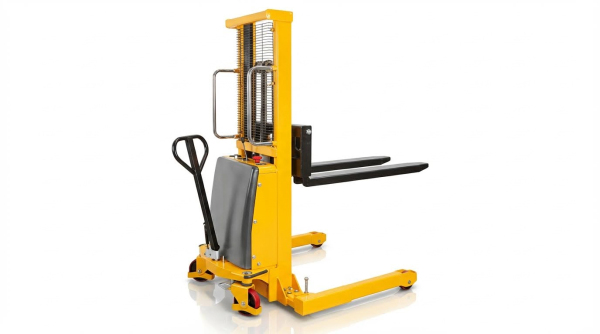
Operations that ask whether a straddle stacker can run on asphalt must consider both pavement engineering and equipment limits. This article explains how asphalt structure, flatness, and drainage affect straddle stacker stability, wheel loads, and long-term rutting risk across indoor, yard, and hardstand applications.
You will see how traction, moisture, and surface durability interact with stacker design, from wheel type to hydraulic performance, and how engineered hardstands extend asphalt life. The article then links these surface factors to maintenance and operational controls so engineering, safety, and logistics teams can select, operate, and maintain stackers on asphalt with predictable performance.
Assessing Asphalt Suitability For Straddle Stackers
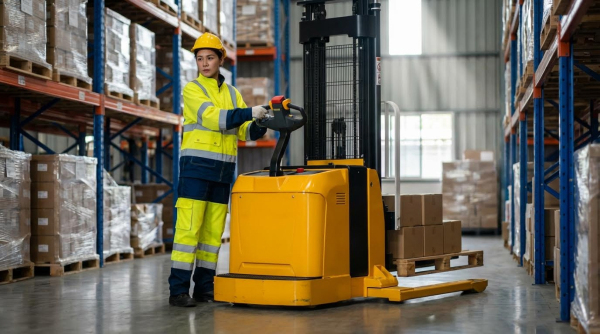
Engineers who ask can straddle stacker run on asphalt must treat the surface as a load‑bearing component. Asphalt stiffness, temperature, and subgrade support all control rutting, stability, and braking distance. This section explains how asphalt differs from concrete, how wheel contact pressure drives damage, and which flatness and gradient limits keep lifting stable. It then links these factors to indoor, yard, and hardstand layouts so selection and risk assessments stay consistent.
Asphalt Vs. Concrete: Structural Differences
Asphalt acted as a flexible pavement. Concrete acted as a rigid slab. That difference drives how each surface carried straddle stacker wheel loads.
Concrete spread wheel loads over a wide area because of its high stiffness and slab action. Deflection stayed low when the subbase was sound. Cracking was the dominant failure mode, not rutting. This made concrete ideal for very high axle loads and repeated traffic.
Asphalt relied more on the combined stiffness of surface, base, and subgrade. It deformed more under the same wheel load, especially at high temperatures. Failure usually showed as rutting, shoving, and surface cracking. For straddle stackers, this meant asphalt design had to control vertical strain in the subgrade and shear strain in the asphalt layer.
In practice, engineers often used thicker asphalt layers, stiffer binders, or stabilized bases under heavy industrial yards. These measures helped asphalt behave closer to a semi‑rigid system. When done correctly, a straddle stacker could run on asphalt with controlled long‑term deformation.
Load, Wheel Contact Pressure, And Rutting Risk
Rutting risk depended more on wheel contact pressure than on rated truck capacity alone. A compact electric straddle stacker with 2,000 kg capacity could still overload soft asphalt if wheel footprints were small.
Key engineering checks usually included:
- Calculate static wheel load at maximum rated capacity plus truck self‑weight.
- Estimate contact area from wheel width and effective contact length.
- Derive contact pressure and compare with design bearing capacity of the asphalt system.
Polyurethane or hard rubber wheels produced higher contact pressures than pneumatic tires. This increased the chance of local rutting, especially near turning points, ramps, and transfer areas. Hot weather further reduced asphalt stiffness and accelerated permanent deformation under repeated passes.
To keep rutting under control, designers often specified thicker asphalt, stiffer mixes, or load‑spreading hardstand pads at high‑traffic nodes. Wheel size and material selection also mattered. Wider wheels or dual‑wheel sets reduced pressure and helped asphalt yards support repeated stacking cycles.
Flatness, Gradients, And Surface Tolerances
Flatness and gradient limits on asphalt for straddle stackers were similar to those used for concrete warehouse floors. The goal was stable mast behavior and even load sharing between wheels.
Typical engineering practice used:
- Flatness tolerance about ±3–5 mm per 1 m in travel direction.
- Joint or step differences not more than about 2 mm where asphalt met concrete or drains.
- Longitudinal and transverse gradients usually within 2–3% for indoor or covered areas.
Excessive unevenness caused vibration, pitch, and roll. That increased the risk of pallet shift and mast sway, especially at higher lift heights. Local depressions collected water, which reduced friction and hid surface defects.
Engineers used straightedge checks, laser level surveys, and rolling deflection tests to verify tolerances. Where asphalt could not meet tight flatness, operating rules often limited travel speed and lift height in that zone. This allowed a straddle stacker to run on asphalt while managing tipping and load stability risk.
Indoor, Yard, And Hardstand Use Cases
Use case strongly influenced how suitable asphalt was for straddle stackers. Indoors, concrete still dominated because it supported racking, anchors, and very tight flatness classes. Asphalt appeared more in semi‑covered docks, cross‑docks, and retrofit spaces where a flexible surface already existed.
In outdoor yards, standard road‑grade asphalt was rarely enough near high‑traffic stacking lanes. Engineers often upgraded to industrial hardstands. These used thicker asphalt, stronger aggregates, and well‑compacted subgrades. Crossfalls and drainage infrastructure removed water and preserved skid resistance.
Hardstands for heavy container straddle carriers usually required reinforced concrete because machine tare weights reached tens of tonnes. In contrast, compact walkie or electric straddle stackers with capacities around 1,800–2,000 kg could operate on well‑designed asphalt hardstands. The table below summarizes typical patterns.
| Application | Typical Surface | Reason |
|---|---|---|
| Indoor warehouse with racking | Reinforced concrete | Tight flatness, anchor capacity |
| Semi‑covered loading dock | Concrete or asphalt hardstand | Moderate wheel loads, frequent turning |
| Light pallet yard, walkie stackers | Engineered asphalt hardstand | Flexible surface, controlled rutting |
| Container terminal straddle carriers | Reinforced concrete | Very high wheel loads, fatigue control |
When planners asked can straddle stacker run on asphalt, the correct answer depended on this context. Light electric stackers worked well on engineered asphalt hardstands. Heavy container carriers still needed concrete to maintain long‑term structural performance.
Surface Engineering: Traction, Drainage, And Durability
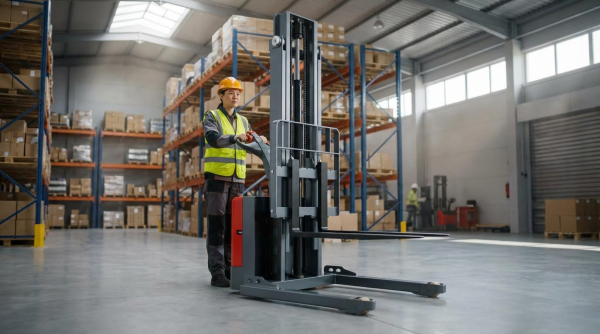
Engineers who ask can straddle stacker run on asphalt must treat the surface as a critical system component. Asphalt can support walkie and electric straddle stackers when traction, drainage, and durability are engineered, not assumed. This section explains how skid resistance, moisture control, and hardstand design link directly to wheel loads and stability. It also shows how structured inspection and preventive maintenance keep asphalt yards safe over the full life of the pavement.
Skid Resistance, Texture, And Coefficient Of Friction
Skid resistance on asphalt controls whether a straddle stacker can accelerate, brake, and steer safely. Engineers focus on the coefficient of friction, surface texture, and contamination. For powered stackers, a static friction coefficient between about 0.4 and 0.6 is generally considered acceptable for flat, dry floors.
Asphalt offers natural macrotexture and microtexture, which help keep friction in this range. Macrotexture channels water away from the wheel contact patch. Microtexture at the aggregate surface maintains grip under low speeds and moderate loads.
Key design and maintenance options include:
- Use dense-graded or high-friction asphalt mixes in main travel lanes.
- Add light texturing or grooving in braking zones and on short ramps.
- Avoid polished, over-rolled surfaces that reduce microtexture.
- Control oil, dust, and loose fines with scheduled cleaning.
Engineers can verify friction using pendulum testers or trailer-based friction devices. Where readings fall below target, thin high-friction overlays, micro-surfacing, or chip seals can restore texture. These upgrades directly reduce wheel slip, steering corrections, and stopping distance for loaded stackers.
Managing Moisture, Drainage, And Ambient Humidity
Moisture affects both asphalt strength and stacker traction. Water on the surface lowers friction, while trapped water in the structure weakens the base and accelerates rutting under repeated wheel loads. Good drainage is therefore a core answer when evaluating can straddle stacker run on asphalt for yard duty.
Effective layouts use small crossfalls and longitudinal slopes to move water off traffic lanes. Typical practice keeps gradients mild, often around 1% to 2%, to balance drainage with stacker stability. Local depressions that pond water should be removed by patching or profile milling.
Ambient humidity also matters for electric stackers. Higher humidity increases condensation risk on electronic controls and connectors. A moderate range, often about 40% to 70% relative humidity, supports reliable electronics and reduces static issues.
Practical measures include sealed joints, edge drains, and well-placed inlets near loading areas. Routine sweeping keeps channels open. Where operations use wash-down or where rainfall is high, non-slip surface treatments and clear drainage paths help keep friction consistent during wet periods.
Surface Prep, Reinforcement, And Hardstand Design
When engineers design an asphalt yard for straddle stackers, the structure below the surface is as important as the wearing course. A typical hardstand system includes compacted subgrade, one or more aggregate base layers, and one or several asphalt lifts. Each layer must carry concentrated wheel loads without excessive deflection or rutting.
Designers classify traffic and wheel loads, then select layer thicknesses accordingly. Walkie and electric straddle stackers usually impose lower axle loads than container straddle carriers, so they can run on asphalt hardstands that do not need the same thickness as heavy container terminals. However, repeated passes along narrow travel paths still create high equivalent load repetitions.
Useful engineering options include:
- Stabilized subgrade under main lanes using cement or lime treatment.
- Crushed aggregate base with good interlock and drainage.
- Thicker or higher-modulus asphalt in wheel tracks and turning zones.
- Geogrids or geotextiles where subgrade support is low.
Table: Design focus by zone
| Zone | Main risk | Typical response |
|---|---|---|
| Straight travel lanes | Rutting | Thicker asphalt, strong base |
| Turning areas | Shear and scuffing | High-stability mixes, extra thickness |
| Loading spots | Static deformation | Local reinforcement, concrete pads if required |
Correct surface prep and layered design allow asphalt hardstands to support straddle stackers over years, not months, with controlled deformation and predictable maintenance.
Inspection, Testing, And Preventive Floor Maintenance
Once operations start, inspection and preventive maintenance decide how long an asphalt yard remains suitable for straddle stackers. Engineers should track three main aspects: flatness, texture, and structural condition. Flatness affects mast stability and load tilt. Texture controls friction. Structural condition governs rut depth and crack growth.
Regular walk-throughs can flag early defects. Typical items include shallow ruts in wheel paths, reflective cracks from joints below, surface polishing, and small potholes. Where ruts deepen, wheel contact pressure concentrates and the risk of water ponding increases, which further reduces friction.
A structured program often combines:
- Scheduled friction checks in key braking and turning areas.
- Rut depth and surface evenness surveys along main routes.
- Crack mapping and timely sealing to block water ingress.
- Local patching or thin overlays before defects spread.
Engineers can align inspection intervals with stacker maintenance cycles to minimize downtime. When they plan resurfacing, they should preserve or improve existing slopes and drainage paths. This keeps the upgraded surface compatible with safe stacker operation and protects the underlying structure from renewed moisture damage. With this approach, asphalt yards remain a viable and safe answer when users evaluate whether a straddle stacker can run on asphalt for the long term.
Stackers, Maintenance, And Operational Controls
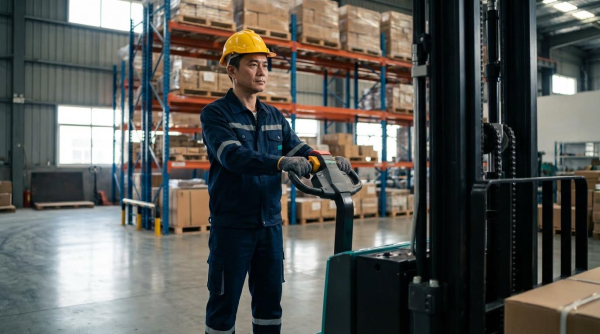
Engineers who ask can straddle stacker run on asphalt must align machine limits with pavement capacity. This section links straddle stacker specifications, asphalt condition, and maintenance so operators can run safely without rutting, skidding, or unplanned downtime.
Matching Straddle Stacker Specs To Asphalt Limits
Straddle stackers could run on asphalt when ground bearing pressure stays below the pavement design limit. Asphalt hardstands usually carry light industrial traffic, not the extreme loads of straddle carriers or reach stackers. Engineers must therefore translate stacker data into wheel contact pressure.
Key checks before running a straddle stacker on asphalt include:
- Rated capacity versus typical load mass and lift height
- Wheel type and footprint area under static and dynamic load
- Turning radius and steering geometry in tight yards
- Surface flatness, gradient, and drainage conditions
Walkie straddle stackers with capacities around 1,800–2,000 kg and modest lift heights had good compatibility with asphalt and bitumen. They ran at relatively low speeds and used wide polyurethane or rubber wheels, which spread loads. In contrast, large straddle carriers weighing tens of tonnes when empty needed reinforced concrete, because their wheel loads and dynamic impacts exceeded typical asphalt design.
To keep asphalt deformation within acceptable limits, engineers should limit axle loads, avoid tight turning under full load on hot days, and confine the heaviest traffic to reinforced hardstands. When in doubt, a pavement engineer should verify subgrade strength, asphalt thickness, and expected equivalent axle load repetitions.
Daily And Periodic Maintenance For Asphalt Service
Running a straddle stacker on asphalt increased the need for structured maintenance. Fine aggregate, bitumen dust, and surface debris accelerated wear on wheels, bearings, and moving joints. Daily checks reduced the risk of sudden failures in busy yards.
Daily tasks should include:
- Visual inspection of forks, mast, and chassis for cracks or distortion
- Check for hydraulic oil leaks at cylinders, hoses, and fittings
- Inspect wheels and casters for cuts, flat spots, or embedded stones
- Test all controls, brakes, and safety interlocks
- Verify battery charge state and cable condition on electric units
Periodic maintenance at 3–12 month intervals should cover hydraulic oil and filter changes, tightening of structural fasteners, and inspection of motors and gearboxes on electric drives. Cleaning routines matter on asphalt yards. Operators should remove stuck aggregate from wheel treads and underguards to protect the pavement and improve traction. Mast chains and rollers also needed inspection because surface vibration on imperfect asphalt accelerated wear compared with smooth indoor concrete.
Wheel, Brake, And Hydraulic Care On Paved Yards
Wheel condition strongly influenced whether a straddle stacker could run on asphalt without damage. Hard, small-diameter wheels created high contact pressure and increased rutting risk. Softer or larger wheels spread the load and improved ride comfort over minor surface defects.
On asphalt, engineers should focus on three systems:
- Wheels and tires: Check tread wear, chunking, and flat spots. Replace damaged wheels quickly to avoid gouging or scuffing the pavement.
- Brakes: Inspect braking response, lining thickness, and hydraulic or electric brake actuation. Abrupt braking on polished asphalt increased skid risk, so smooth modulation was important.
- Hydraulics: Verify oil level with forks fully lowered. Look for leaks that could contaminate asphalt and reduce skid resistance.
Asphalt yards often had small stones and loose grit. These particles could wedge into wheel treads and increase rolling resistance or vibration. Regular cleaning and greasing of bearings reduced friction and heat build-up from this contamination. Mast chains and rollers also needed inspection because surface vibration on imperfect asphalt accelerated wear compared with smooth indoor concrete.
Digital Monitoring, Predictive And Remote Diagnostics
Digital tools made it easier to answer can straddle stacker run on asphalt in a controlled way. Telematics and remote diagnostics tracked how the machine actually operated on the pavement. Engineers could compare planned versus real loads, speeds, and travel distances on outdoor lanes.
Useful digital functions include:
- Logging travel paths and speeds to identify high-stress zones on asphalt
- Recording overload events and emergency braking that might damage the surface
- Monitoring battery health, motor temperatures, and hydraulic pressures
- Scheduling maintenance based on operating hours and fault codes
Predictive analytics used this data to flag early signs of wheel, brake, or hydraulic problems. For example, rising drive current at constant speed could indicate increased rolling resistance from rutting or surface contamination. Remote diagnostics allowed technicians to review fault histories before visiting the site, which reduced downtime. Integrated with pavement inspection records, these digital systems supported a closed loop. Operators adjusted driving practices, maintenance teams refined schedules, and engineers updated yard,
Frequently Asked Questions
Can a straddle stacker run on asphalt?
A straddle stacker can operate on asphalt, but the surface must be designed to handle the equipment’s weight. Commercial asphalt surfaces typically support around 8,000 pounds per axle, while heavy-duty industrial lots can handle 12,000 pounds per axle or more. For safe operation, ensure the asphalt is thick enough—about 7.5 inches for heavy-duty use. Asphalt Weight Guide.
What should you check before operating a straddle stacker?
Before using a straddle stacker, conduct thorough pre-operation safety checks. Inspect the equipment for damages, verify fluid levels, and confirm that all safety features are functioning properly. These steps help prevent accidents and ensure smooth operation. Straddle Stacker Safety Tips.