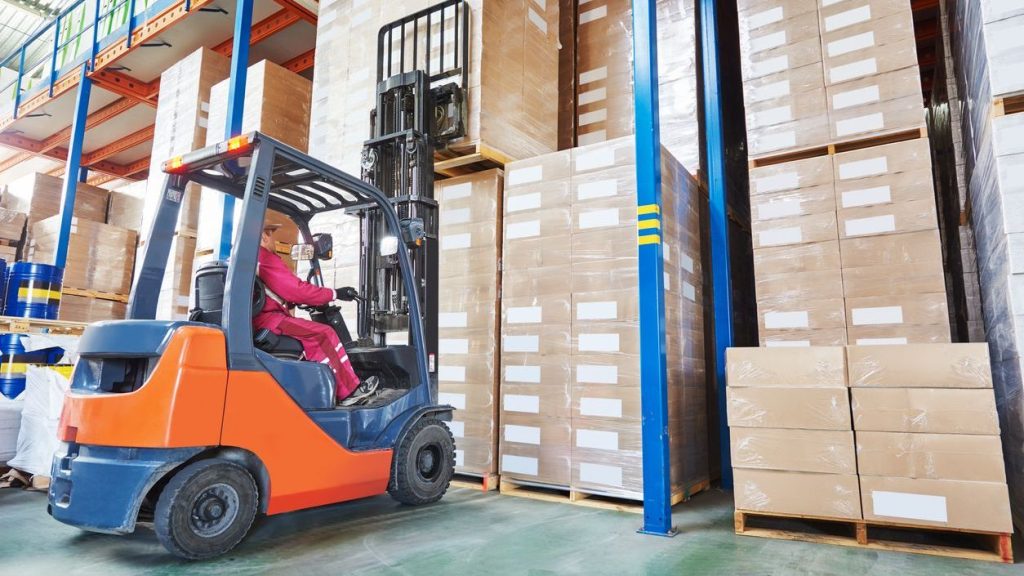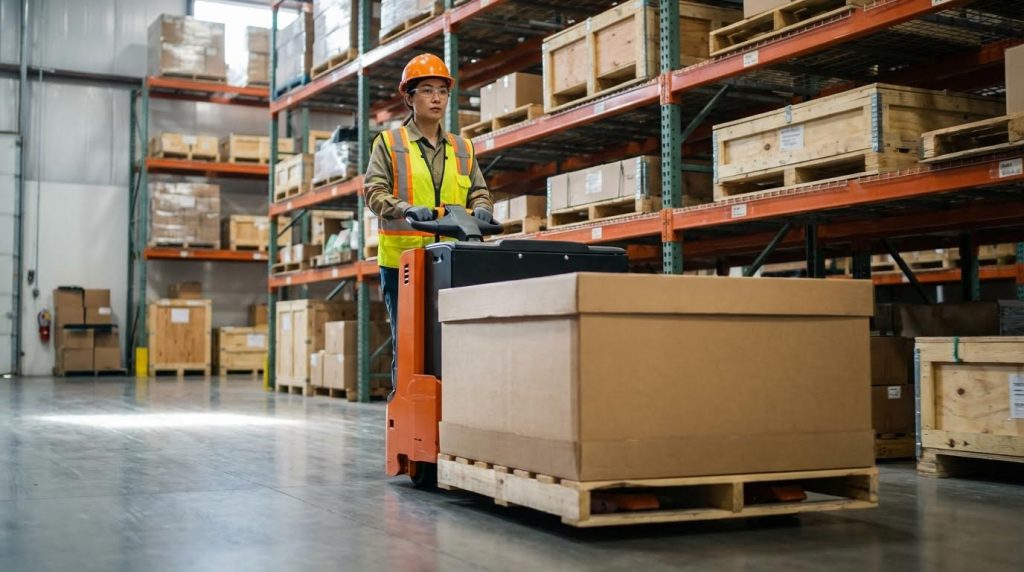
If you work around pallets, you have probably asked yourself how much can a pallet jack lift and move without risking damage or injury. This guide explains how pallet jack capacity really works, from nameplate ratings and load centers to pallet strength and floor conditions. You will see the engineering limits that control safe weight, plus practical tips to match the right jack to your application. Use it as a quick reference to improve safety, reduce equipment damage, and keep your material handling compliant and efficient.
Understanding Pallet Jack Load Ratings
What “capacity” means on a pallet jack tag
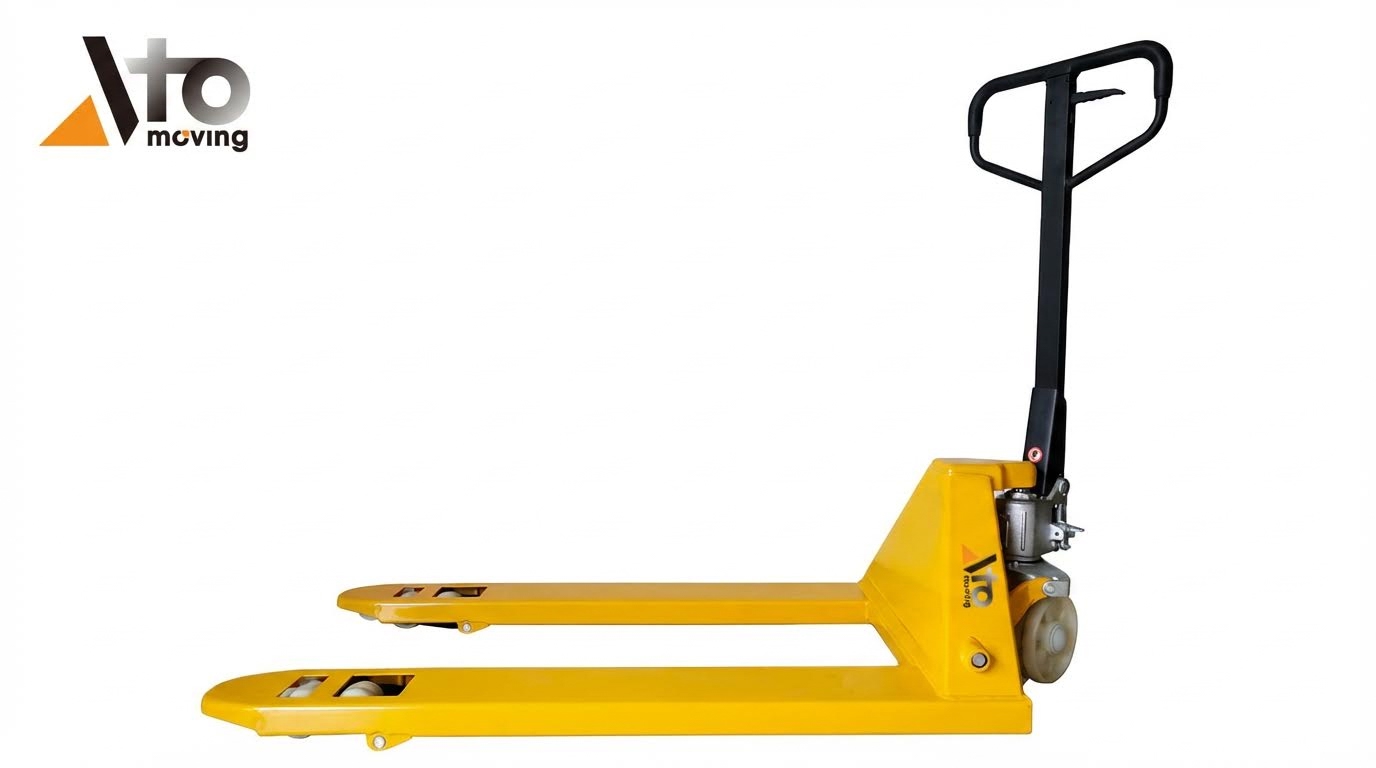
When people ask how much can a pallet jack lift, they are really asking about its rated load capacity. The capacity on the nameplate is the maximum weight the jack can safely lift and move when used under specified conditions. It is usually shown in pounds and kilograms, for example many standard manual pallet jacks are rated around 5,500 lb (2,500 kg), with heavy‑duty units up to about 6,600 lb (3,000 kg), and narrow or specialty units often in the 3,000–4,400 lb range. Typical pallet jack capacity ranges The tag normally assumes: a standard fork height, the specified fork length, and a defined load center. If any of these change (longer load, off‑center weight, damaged pallet, poor floor), the real safe capacity is lower than the number on the tag. For safe operation, operators should always:
- Read the capacity and units (lb / kg) on the identification tag.
- Confirm the load weight from documentation or scales, not guesswork.
- Stay below the rated capacity to allow a safety margin.
- Refuse loads on damaged or undersized pallets, even if the weight is “within” the rating.
Load center, fork size, and stability basics
The capacity tag also assumes a specific load center, which is the horizontal distance from the vertical face of the fork heel to the load’s center of gravity. A typical rating might be stated as 4,400 lb at a 20 in load center, meaning the jack can safely carry that weight only if the center of gravity is 20 in from the fork heel. Example of rated load at a defined load center As loads get longer, the load center increases and effective capacity drops sharply; for example, one test set showed capacity falling from 5,500 lb at a 20 in load center to about 2,640 lb at 39.5 in. Effect of increasing load center on capacity
Fork size (length and width across forks) also affects how much can a pallet jack lift in real conditions because it controls where the wheels support the load. Standard fork lengths are typically around 1,150–1,220 mm on many manual and electric pallet trucks, with some electric units extending up to about 2,400 mm for long loads. Typical fork length ranges Longer forks allow you to pick up longer pallets, but if the load is not fully supported across both forks and over the front load wheels, the center of gravity shifts and stability decreases.
For good stability and to stay within the real usable capacity:
- Keep the load centered side‑to‑side and positioned so the heaviest part is over the front wheels.
- Use fork lengths that match the pallet so the forks extend close to, but not excessively beyond, the pallet end.
- Avoid very tall or uneven loads that raise the center of gravity and increase tip‑over risk.
- Ensure pallets are sound; weak or damaged boards reduce the safe load well below both pallet and jack ratings. Impact of pallet condition and environment on pallet load capacity
Understanding how load center, fork geometry, and pallet condition interact with the nameplate rating is essential to answer how much can a pallet jack lift safely in your facility, not just in theory.
Engineering Factors That Limit Weight Capacity
Rated load vs. real-world usable capacity
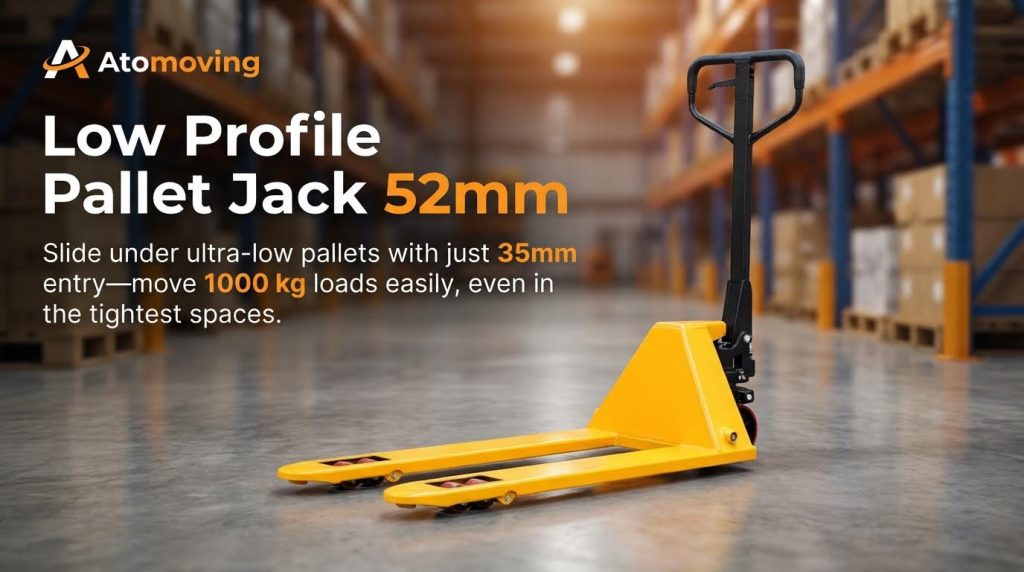
When operators ask how much can a pallet jack lift, they usually refer to the number on the nameplate. That rated load assumes a standard fork height, a specified load center, and a structurally sound pallet on a flat, level surface. For example, a unit rated at 4,400 lb with a 20 in load center can safely carry that weight only if the load’s center of gravity stays 20 in from the fork heel. A longer or uneven load increases the load center and reduces usable capacity. In practice, floor slopes, tight turns, and dynamic forces during starting and stopping all eat into the margin between the rated load and what is actually safe to move.
Rated vs. typical capacities
Standard manual pallet jacks commonly list capacities around 5,500 lb, and heavy-duty units up to about 6,600 lb. Narrow or specialty models often fall in the 3,000–4,400 lb range. These limits assume correct loading and good floor conditions, so supervisors should set internal rules below the nameplate rating where conditions are less than ideal.
Load distribution and pallet integrity
Weight distribution across the forks is a major limiter on how much can a pallet jack lift safely. Even if the total weight is below the rated capacity, a load stacked high, offset to one side, or concentrated at the fork tips can create overturning moments and overload individual wheels. Best practice is to keep the center of gravity low, centered between the forks, and positioned over the front load wheels. Guidance recommends inserting the forks fully and spreading the weight evenly along their length to avoid local overstress.
Pallet integrity is just as critical as the truck itself. Cracked deck boards, missing blocks, or rot reduce the pallet’s own load capacity and can cause sudden failure under otherwise acceptable weights. Environmental factors such as moisture, chemicals, and temperature cycling gradually weaken wood and some plastic pallets. Industry standards like ISO 6780 define pallet load ratings under controlled test conditions, but field conditions are rarely perfect, so operators should derate when pallets show visible damage or degradation.
Quick checklist: load and pallet
- Forks fully inserted, load centered between forks.
- Weight roughly even from heel to tip, not all at the tips.
- No broken, cracked, or heavily warped pallet components.
- No signs of rot, chemical attack, or severe moisture damage.
Overload failure modes and inspection points
Overloading does not only answer how much can a pallet jack lift; it defines how it might fail. Excess weight or poor distribution can bend forks, deform the frame, or overstress the steering and load wheels. Hydraulic components are also at risk: overload can cause hydraulic leaks, loss of lift, and reduced stability. In extreme cases, tipping or loss of braking force during manual handling can lead to serious injury.
Regular inspections help catch these issues before they become failures. Operators should look daily for fork cracks, permanent bends, and rust streaks at welds or the pump rod. Wheels and rollers need checks for flat spots, cracks, or embedded debris that increase rolling resistance and stress. Maintenance guidance also calls for monitoring hydraulic leaks and verifying smooth lift and lowering. If any of these signs appear, the safe working capacity is already compromised and the unit should be tagged out until repaired.
| Component | Typical overload symptom | Key inspection point |
|---|---|---|
| Forks | Permanent bend, tip sag, surface cracks | Straightness along length, weld areas, fork tips |
| Frame & handle | Twist, misalignment, loose connections | Joints, pivot pins, mounting bolts |
| Hydraulics | Oil leaks, jerky lifting, loss of height | Pump seals, cylinder rod, hose connections |
| Wheels/rollers | Flat spots, cracks, high push force | Tread surface, bearings, axle fasteners |
Choosing The Right Pallet Jack For Your Application
Manual vs. electric: capacity, duty cycle, and TCO
When you compare manual and electric pallet jacks, the first filter is how much can a pallet jack lift in your operation and how often it needs to do it. Manual units typically cover about 2.0–3.0 tons, while electric models range from 1.2–3.5 tons, with rider versions up to 4.5 tons in rated capacity. In low-volume stockrooms with light loads and short travel distances, manual jacks are usually sufficient and keep capital expenditure roughly 40% lower than electric options on initial purchase. Electric pallet jacks become more cost-effective when duty cycles increase; operators can move around 60–70 pallets per hour with electric walkies versus about 30 with manual units, which can save roughly $8,970 per operator per year in labor at moderate-throughput sites based on typical productivity data. For three-shift or high-frequency operations, this labor reduction of up to about 65% makes the 5–8 month payback period on many electric models realistic when you factor in reduced injuries and higher throughput for powered units.
Quick comparison: manual vs. electric fit
| Criterion | Manual pallet jack | Electric pallet jack |
|---|---|---|
| Typical capacity band | ~2.0–3.0 t | ~1.2–3.5 t (up to 4.5 t rider) |
| Best for | <50 pallets/day, short runs | >50 pallets/day, long runs |
| Upfront cost | Low (≈40% less) | Higher CAPEX |
| Labor & ergonomics | Higher strain, slower | Lower strain, faster |
| Payback window | N/A | ≈5–8 months typical |
Battery technology also affects total cost of ownership (TCO) for electric units. Lead-acid batteries have lower upfront cost but need daily maintenance and 6–8 hour charge times, while lithium-ion batteries charge in about 2–3 hours, offer three to four times the life cycle, and allow opportunity charging with no routine maintenance according to common battery comparisons. When you size capacity for an electric jack, you must consider not just how much can a pallet jack lift per trip, but also how many lifts per shift the battery can support without deep discharges that shorten life. In power-restricted or hazardous zones where electric equipment is limited, manual pallet jacks remain the default choice even if duty cycles are moderate because they require no external power.
Matching capacity to aisle width, floor, and environment
When selecting capacity, start from your heaviest pallet and then check how much can a pallet jack lift at the actual load center and in your real aisles. Manual jacks can maneuver in aisles around 1.8 m wide, while many electric units are optimized for about 2.2 m standard aisles based on typical turning-radius data. If your racking layout is very tight, a compact manual jack or short-fork electric walkie may be necessary to keep clearances safe during turns under full load. Standard manual forks are usually around 1150–1220 mm long, while electric models can extend up to about 2400 mm, which allows longer loads but increases the turning envelope for powered pallet trucks.
Floor and environment strongly influence the practical capacity you can use. On smooth indoor concrete, both manual and electric pallet jacks operate near their rated load, but on ramps the push/pull forces for manual units rise quickly, while electric trucks provide power-assisted anti-roll-back features to maintain control on grades. In cold storage, manual jacks with freeze-resistant hydraulics can operate down to about -25°C, while electric units usually rely on insulated battery systems for continuous work near -15°C in low-temperature applications. Rough outdoor surfaces reduce effective capacity for manual jacks due to rolling resistance and shock loads, whereas some electric models with industrial drive wheels are engineered to handle these conditions at or near their rated load on uneven terrain.
Environment vs. recommended pallet jack type
- Smooth indoor, <50 pallets/day, standard loads: manual jack, capacity just above your heaviest pallet.
- High-volume cross-dock or long runs: electric walkie or rider, sized for peak pallet weight and travel distance.
- Cold store with long aisles: electric unit with suitable IP rating and battery insulation, or manual for short tasks.
- Power-restricted or hazardous zones: manual jack with conservative capacity margin.
Key Takeaways For Safe, Compliant Use
Safe pallet jack use depends on how geometry, structure, and environment work together, not just the tag number. The rated capacity assumes a specific load center, fork size, sound pallet, and flat floor. Once loads get longer, higher, or offset, the effective capacity drops and tip‑over risk rises fast. Weak pallets or rough floors reduce the safe limit even further.
Engineering controls this through stability and stress. Keeping the center of gravity low, centered, and over the front wheels limits bending in the forks and frame. Correct fork length and full insertion spread forces into the pallet and wheels. Regular inspections catch early signs of overload, like bent forks, frame twist, wheel damage, or hydraulic leaks, before they cause sudden failure.
Operations teams should set internal capacity rules below nameplate ratings, based on their worst‑case pallet, aisle, and floor conditions. Choose manual or electric jacks by real duty cycle and environment, not price alone. In all cases, train operators to confirm load weight, reject damaged pallets, and tag out suspect equipment. This approach lets you use Atomoving pallet jacks close to their true engineering limits while keeping people, product, and equipment safe and compliant.
Frequently Asked Questions
How much weight can a pallet jack lift?
A standard pallet jack typically has a lifting capacity ranging from 5,000 to 5,500 pounds (approximately 2,268 to 2,495 kilograms). However, the exact capacity depends on the model and manufacturer. For more details, you can refer to Pallet Jack Weight Capacity Guide.
Can a pallet jack lift objects other than pallets, like a car or shed?
Pallet jacks are designed primarily for lifting pallets and similar loads. While technically possible in some cases, using a pallet jack to lift unconventional objects like cars or sheds is not recommended due to safety risks and potential damage to the equipment. Pallet jacks generally have weight limitations ranging from 2,000 to 6,000 pounds (approximately 907 to 2,722 kilograms), so matching the load to the jack’s capacity is critical. For safe material handling practices, see Forklift vs. Pallet Jack Safety.