Facility managers and safety leaders often ask how long should inspections on aerial platform be kept to satisfy regulators, insurers, and internal risk policies. This article explains the regulatory basis for record retention, the engineering logic behind different timeframes, and how to design a practical system for daily through annual logs. You will see how retention periods link to failure modes, liability exposure, and asset life so you can justify your policy to auditors and management. The goal is to give you clear, defensible retention rules that improve safety, simplify compliance, and support long-term fleet management.
Regulatory Basis For Aerial Platform Record Retention
OSHA, ANSI, And CE Marking Requirements
OSHA focuses on what information aerial platform inspection records must contain rather than stating an explicit, universal retention period. Certification records must document the inspection date, the inspector’s signature, and clear identification of the aerial platform inspected. These records were designed to minimize paperwork while still proving compliance. For facility operators asking how long should inspections on aerial platforms be kept, OSHA’s position implies records must be available long enough to demonstrate that required inspections were performed for the period under review.
ANSI standards provide more concrete guidance on retention time for aerial platform inspections. Annual inspection records for aerial work platforms are typically required to be retained for at least four to five years, and must include deficiencies found, corrective actions taken, and identification of the personnel who performed inspections and repairs. Some ANSI-based guidance specifies a minimum of four years, while other interpretations recommend five years to support accident investigations and audits. This five‑year window aligns with broader inspection record practices in manufacturing and warehousing.
For CE-marked aerial platforms, European regulatory practice emphasizes a complete documentation package that must be available throughout the operating life of the machine. Required documents typically include:
- EC Declaration of Conformity and instruction manual
- Booklet of periodic checks or First Check Report
- Control register or inspection logbook
- Operator training and license documentation
These documents are expected to follow the platform for its entire service life and be presented during periodic verifications. In practice, this means that for CE-marked units, the safest answer to how long should inspections on aerial platforms be kept is “for as long as the equipment remains in service,” especially for commissioning and periodic verification records.
Types Of Aerial Platform Inspection Records
A compliant recordkeeping system for aerial platforms usually contains several layers of inspection and verification documents. At the most frequent level, daily and pre-shift inspection logs verify that the unit is safe to use at the start of each work period. These logs typically cover checks of fluid levels, brakes, lights, safety devices, boom and turret functions, and platform controls. Documented daily checks help prove that the platform was inspected immediately before use, which is critical evidence after any incident.
Weekly and monthly inspection records provide a deeper technical view of equipment condition. Weekly logs often address functional systems such as batteries, winch or brake operation, pumps, PTO, and driveline performance. Monthly inspections go further into structural and safety-critical components, including cylinders, valves, welds, pins, placards, decals, capacity labels, and boom wear pads. Keeping these records allows maintenance teams to track degradation trends and demonstrate proactive care, which directly supports regulatory compliance and asset life management.
Annual inspection certificates and major periodic verification reports form the top tier of documentation. These inspections must be completed by a qualified mechanic familiar with the specific aerial platform type, typically at intervals not exceeding 13 months. Annual inspection records must capture findings, corrective actions, and technician identification. For CE-marked platforms, additional documents such as periodic check booklets, EC conformity declarations, and inspection logbooks are also part of the inspection record set. These records together form the traceable history of the machine’s safety status over time, and determine in practice how long inspections on aerial platforms should be kept to satisfy both regulators and insurers.
Engineering Rationale Behind Retention Periods
Daily, Weekly, Monthly, And Annual Inspection Logs
Record retention starts with understanding why the logs exist in the first place. Daily and weekly logs focus on operational readiness and immediate safety, while monthly and annual inspections focus on structural integrity and regulatory compliance. When you ask how long should inspections on aerial platforms be kept, you are really balancing day‑to‑day risk control with long‑term traceability.
- Daily inspection logs typically cover items such as engine and hydraulic oil levels, parking brake function, lights, safety devices, boom and turret operation, and platform controls. These checks confirm that the aerial platform is safe to use at the start of each shift and that no obvious defect has appeared since the last use. Because they relate to individual shifts and operators, facilities often retain them for at least one full regulatory cycle or audit window, so they can show that pre‑use checks were actually performed. Detailed daily logs for aerial work platforms have been shown to focus on these readiness items during routine operation.
- Weekly inspection logs usually address components that do not change every shift but can drift over several days, such as battery function, winch brake operation, pump performance, PTO (power take‑off), and driveline function as part of preventive checks. Retaining weekly records over multiple months allows maintenance teams to see trends, such as gradual performance loss or repeated minor defects on the same unit.
- Monthly inspection logs focus on structural and safety‑critical elements: cylinders, valves, welds, pins, control placards, safety decals, capacity markings, and boom wear pad fasteners in a more detailed review. Because these findings relate to fatigue, corrosion, and long‑term damage, keeping monthly records over several years supports engineering analysis of failure modes and helps justify overhaul or replacement decisions.
- Annual inspections are formal, comprehensive examinations carried out by a qualified mechanic familiar with the equipment type, and they must occur at least every 13 months to comply with inspection requirements. From an engineering and legal standpoint, these are the core documents that prove the platform was structurally sound and properly maintained at defined intervals. This is why ANSI‑aligned guidance requires that annual inspection records be retained for at least four to five years, including deficiencies, corrective actions, and identification of the personnel who performed the work for aerial platforms and similar equipment.
In practice, the more the inspection relates to structural integrity or long‑term safety, the longer the record should be kept. That logic underpins most internal policies on how long should inspections on aerial platforms be kept, even where regulations do not spell out exact durations.
Failure Modes, Liability, And Asset Life Considerations
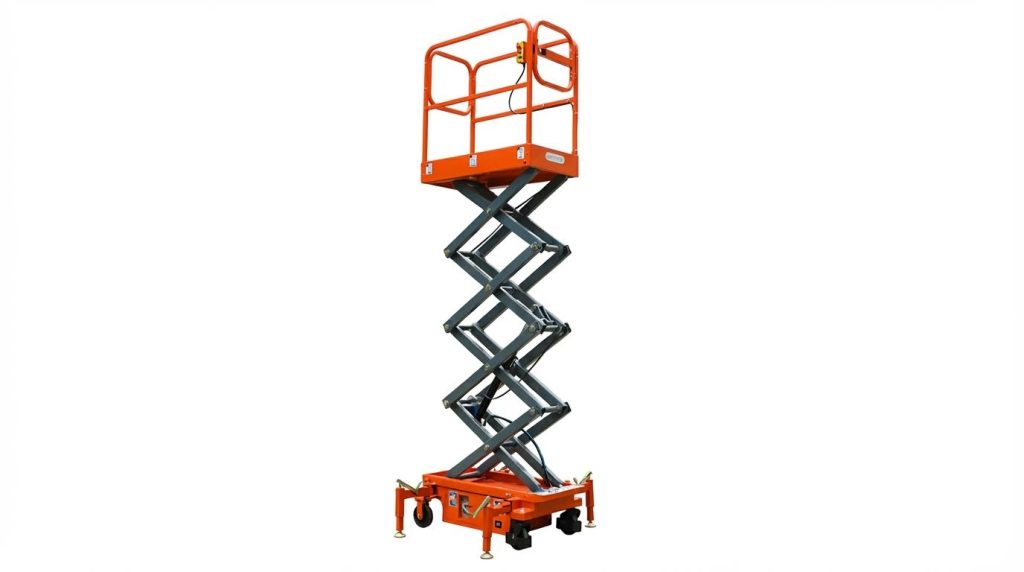
The engineering rationale for record retention is tied directly to how scissor platform lifts fail and how long those failure mechanisms take to develop. Many critical failure modes, such as fatigue cracking in welds, corrosion of structural members, hydraulic cylinder leakage, or wear in pivot pins and bushings, evolve over years of service rather than days or weeks. For that reason, short‑term logs alone are not enough; you need a multi‑year history to see patterns, correlate failures with duty cycles, and refine maintenance intervals.
- Failure mode tracking: Monthly and annual inspection records show when cracks, leaks, or deformation were first detected and how they progressed. If a boom weld eventually fails, engineers and investigators can review several years of reports to see whether early warning signs were present and whether corrective actions were taken in time. This is why annual inspection documents are expected to capture deficiencies found and repairs performed for each aerial platform.
- Liability and legal exposure: After any incident, investigators look for evidence that inspections were done, defects were documented, and hazards were corrected. Retaining inspection records for at least one full statute‑of‑limitations window in your jurisdiction helps demonstrate due diligence. ANSI guidance that annual inspection records be kept for four to five years reflects this need to bridge multiple years of potential claims and audits for aerial work platforms. Broader safety practice in other sectors often uses a three‑to‑seven‑year range for inspection records, with higher‑risk assets kept at the longer end or for the life of the asset depending on industry.
- Asset life and residual value: Scissor platforms often remain in service for 10–20 years or more, depending on environment and utilization. Long‑term inspection histories support decisions on major component replacement, structural overhaul, or retirement. They also help preserve resale value, because buyers can verify that annual inspections were completed at intervals not exceeding 13 months by qualified technicians. For high‑use or high‑risk applications, some operators choose to retain key inspection and repair records for the full life of the machine.
- Aligning retention with risk: When setting policy for how long should inspections on manual pallet jacks be kept, many facilities align shorter retention (for daily/weekly logs) with internal audit cycles, and longer retention (for monthly/annual inspections and major repairs) with asset life and legal requirements. This risk‑based approach mirrors practices in other regulated industries where critical inspection records are often kept for five years or more, or even permanently for certain safety‑critical systems to support investigations and compliance.
Digital Vs. Paper Records And System Design

Whether you store inspection records digitally or on paper changes how easy it is to meet retention goals, but the engineering and legal expectations remain the same. Regulations and standards focus on what the records contain—date, inspector identity, platform identification, and findings—rather than the medium. For drum dollys, certification and inspection records are expected to document the date of the inspection, the signature or identification of the inspector, and the identity of the equipment inspected to demonstrate compliance.
- Paper systems: Paper logbooks and inspection forms are simple to implement and satisfy many regulatory expectations if they are complete and legible. However, they are vulnerable to loss, damage, and misfiling over the multi‑year periods that standards and best practice recommend. As retention periods extend to four, five, or more years for annual inspections, storage and retrieval of paper records can become a bottleneck, especially across multiple sites.
- Digital systems: Electronic recordkeeping makes it easier to enforce minimum data fields (such as date, inspector, and unit ID) and to store large volumes of information over long periods. Digital platforms also support search, trend analysis, and backup strategies that align well with multi‑year retention requirements seen in safety‑critical industries, where inspection records are commonly kept for three to seven years or longer depending on risk. For hydraulic pallet trucks, digital systems make it practical to retain all annual inspections for at least the four‑to‑five‑year ANSI window and often beyond, without physical storage issues.
- Hybrid and redundancy considerations: Some operators use a hybrid approach: daily and weekly checks remain on paper near the equipment, while monthly and annual inspections are scanned or entered into a central digital system. This provides redundancy for high‑value records while limiting the change impact on operators. From an engineering risk perspective, the key is that the system—paper, digital, or hybrid—can reliably produce the full inspection history for a given platform when an incident, audit, or engineering review demands it.
- Designing for the core question: When designing your system around how long should inspections on semi electric order pickers be kept, start from the longest required or desired retention (often four to five years for annual inspections, and potentially longer for major repairs and structural findings) and work backward. Ensure your chosen medium can preserve legibility and accessibility for at least that long, with backups or off‑site storage where appropriate. This engineering‑driven design approach ensures that recordkeeping supports actual safety performance, not just minimum paperwork compliance.
Practical Retention Strategy For Facility Operators
Recommended Retention Periods By Use Case
When facility managers ask how long should inspections on aerial platforms be kept, the answer depends on inspection type, risk profile, and governing standards. ANSI-based guidance requires that annual aerial platform inspection records be retained for at least four years, with some interpretations and industry guidance recommending five years to ensure documentation is available for incident investigations and audits. Annual inspection records for aerial platforms must be retained for a minimum of four years according to ANSI and other safety sources recommend a five‑year minimum for annual inspections to provide a stronger compliance buffer. Annual aerial work platform inspection records should be retained for five years to support audits and accident investigations so most facilities standardize on five years for critical inspection documentation.
| Inspection / Document Type | Typical Retention Strategy | Rationale |
|---|---|---|
| Daily and pre‑use checklists | 1–2 years (rolling) | Demonstrate routine diligence; low per‑record value but high aggregate value during investigations. |
| Weekly and monthly inspection logs | 3–5 years | Show trend data and maintenance response over time; useful in liability cases. |
| Annual inspections and major repairs | Minimum 4 years; preferably 5+ years | Directly referenced in standards and often requested during regulatory or insurance audits. |
| Commissioning, structural modifications, load tests | Life of the asset + several years | Support engineering traceability and end‑of‑life or resale decisions. |
Cross‑industry benchmarks also support multi‑year retention for safety‑critical inspection records. General safety and compliance guidance recommends keeping inspection records between three and seven years, with construction inspections at least three years and manufacturing and warehousing inspections around five years. Inspection records for safety and compliance are typically retained for 3–7 years, with 5 years common in manufacturing and warehousing so adopting a five‑year standard for scissor platform inspections aligns well with broader industrial practice.
Practical retention rules of thumb
- Keep all annual inspections and major repair records for at least five years.
- Retain daily and pre‑use checklists for one to two years, then archive or securely dispose.
- Store commissioning, structural, and modification documents for the life of the platform.
- When in doubt, align with the longest applicable corporate, insurance, or legal requirement.
Structuring A Recordkeeping System For Compliance
A practical recordkeeping system must make it easy to prove what was inspected, when, by whom, and on which scissor platform lift. OSHA and related regulations require that certification records at least include the date of the inspection, the signature (or unique identifier) of the inspector, and the identity of the equipment inspected. Certification records must capture the inspection date, inspector’s signature, and the identity of the aerial platform inspected so each record should be tied to a unique asset ID or serial number. The system should handle daily, weekly, monthly, and annual inspections in a consistent structure so that auditors can quickly navigate from high‑level asset history down to individual checklists.
- Core data fields per record
- Equipment ID (model, serial, internal asset number).
- Inspection type (daily, monthly, annual, post‑repair, etc.).
- Date and time of inspection.
- Inspector identity and qualification.
- Checklist used (revision/date) and pass/fail status.
- Defects found and risk rating.
- Corrective actions, work order references, and completion dates.
- Folder and indexing structure
- Top level by site or facility.
- Second level by equipment group (e.g., scissor lifts, booms, vehicle‑mounted platforms).
- Asset‑level folders with subfolders for “Daily/Pre‑Use,” “Periodic (Weekly/Monthly),” “Annual,” and “Repairs & Modifications.”
Whether the system is digital or paper‑based, retention rules should be embedded into the process rather than handled ad hoc. For digital systems, this means configuring role‑based access, time‑stamped entries, and automated retention policies that archive or lock records after the defined period instead of deleting them prematurely. For paper systems, it means using standardized logbooks and archive boxes labeled with destruction dates based on the chosen retention period. When management asks how long should inspections on aerial platforms be kept, the system should be able to answer automatically by inspection type, using pre‑defined rules that match corporate policy and applicable standards.
Design tips for a robust recordkeeping system
- Use the same inspection templates across all similar platforms to simplify training and audits.
- Link inspection records to work orders so you can prove that defects were closed out.
- Back up digital records in at least two locations and test restore procedures.
- Document the retention policy itself and keep it accessible to supervisors and safety staff.
“”
Key Takeaways On Inspection Record Retention
Aerial platform inspection records do more than satisfy auditors. They prove that you controlled risk over the full life of the machine. Short‑cycle checklists protect operators day to day, while monthly, annual, and commissioning records protect the business when failures or claims arise.
Engineering logic and standards point in the same direction. The closer an inspection is to structural integrity or long‑term safety, the longer you should keep it. That is why best practice holds annual inspections and major repair records for at least five years, and key structural, load test, and commissioning documents for the life of the asset. Daily and weekly logs can follow shorter, audit‑driven cycles, provided you still cover the full review period.
The strongest strategy is simple and consistent. Define retention by inspection type, build those rules into your paper or digital system, and tie every record to a unique asset ID. Then verify that you can pull a complete history quickly for any platform. Facilities that follow this approach with Atomoving and similar equipment gain safer fleets, clearer liability protection, and easier compliance across changing standards and audits.
Frequently Asked Questions
How long should inspection records for aerial platforms be retained?
Inspection records for aerial platforms must generally be kept for at least one year or until the work is repeated or superseded, according to industry standards. However, certain critical records, such as total time in service and the status of life-limited parts, may need to be retained indefinitely and transferred with the equipment when sold. For specific guidance, always refer to applicable regulations like OSHA or ANSI standards. FAA Recordkeeping Rules.
Does OSHA require annual inspections of aerial lifts?
Yes, OSHA requires that aerial lifts undergo a thorough annual inspection to ensure safety and compliance. Additionally, inspections should be conducted more frequently under heavy usage conditions or after any event that could affect the lift’s safety, such as modifications or accidents. Regular inspections help prevent equipment failure and ensure worker safety. OSHA Aerial Lift Guidelines.