Knowing how to lift a 55-gallon drum safely is critical because a single drum can weigh 400–800 pounds, putting workers, equipment, and product at risk if handled incorrectly. This guide walks through drum weight basics, regulations, and engineered handling options so you can choose the right method for your facility. You will see practical, step-by-step techniques for manual handling, trucks, trolleys, and overhead systems, along with layout and storage tips that reduce strain and incidents. Use these proven techniques to build a consistent, compliant procedure for every drum movement in your operation. Consider using tools like a drum palletizer, drum cart, or forklift drum grabber double grips to improve safety and efficiency.
Fundamentals Of 55-Gallon Drum Safety
Typical drum weights and risk assessment
When planning how to lift 55 gallon drum loads, always start with weight and stability. A standard 55-gallon drum typically weighs about 400–800 lb when full, depending on the product density and drum material 400–800 pounds. This weight is far beyond safe manual lifting limits for a single person, so mechanical aids or team handling are required. You must also consider the drum’s condition: dents, bulges, rust, or warped chimes increase the risk of loss of control during rolling or tilting.
- Confirm if the drum is full, partial, or empty; partial fill can cause liquid surge and instability.
- Inspect for leaks, wet surfaces, or product on the drum that could reduce grip and cause slips drum inspection items.
- Check for sharp burrs on chimes that can cut hands during rolling or tipping.
- Evaluate the route: floor condition, slopes, thresholds, and congestion all affect risk level.
Based on this assessment, choose the correct method for how to lift 55 gallon drum safely: rolling on the chime, using a drum cart, or using powered or overhead lifting equipment. For storage, keep rows to a maximum of two drums high and two wide to reduce collapse risk and maintain inspection access two-high, two-wide guidance. If the risk assessment identifies hazardous contents, damaged containers, or tight spaces, upgrade controls: better equipment, more people, or alternative handling methods.
Regulatory and SDS checks before lifting
Before any lift, confirm exactly what is inside the drum and which rules apply. Read the label and hazard symbols to identify corrosive, toxic, or flammable contents; if the drum is unlabeled, treat it as hazardous until verified and the correct Safety Data Sheet (SDS) is reviewed label and SDS checks. The SDS will define required personal protective equipment (PPE), incompatibilities, and any temperature or ignition controls needed during handling. This information directly influences how to lift 55 gallon drum units, where you can move them, and what emergency measures must be in place.
- Verify bungs and lids are present and tight before movement to prevent leaks or spills bung and lid checks.
- Ensure drums with flammable or toxic liquids are not stored near open flames, hot metal, or other heat sources OSHA drum storage requirements.
- For larger storage areas, provide containment (dikes or pans) sized to at least a portion of total drum volume and ensure suitable fire extinguishers are immediately available containment and fire protection.
- Confirm that no one plans to pressurize drums to remove contents, as this is prohibited and can cause rupture no pressurization rule.
Finally, match PPE to the worst credible exposure from the SDS: safety shoes, gloves, eye/face protection, and aprons are common for drum work PPE guidance. Combine these regulatory and SDS checks with your site’s permit-to-work or authorization process, so no one starts lifting or moving a drum until the hazards, controls, and route are fully defined.
Engineered Methods For Lifting And Moving Drums
Manual techniques and ergonomic limits
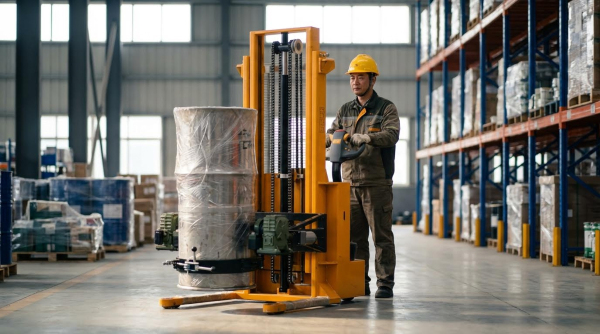
When planning how to lift 55 gallon drum units manually, treat the task as high-risk because a full drum typically weighs about 400–800 lb (200–360 kg). That weight is well beyond safe single-person lifting limits, so manual methods should focus on controlled tipping, rolling, and repositioning rather than free lifting. Operators must wear suitable PPE (safety shoes, gloves, and eye/face protection) matched to the drum contents as recommended in drum handling guidelines. Before any movement, inspect the drum for leaks, warping, sharp burrs, loose bungs, and slippery residues that could reduce grip or stability as part of a pre-move checklist.
- Upending and righting: To manually upend a drum, the operator should crouch close to the drum with knees apart, grasp the chime on both sides, and use leg muscles while keeping the back straight to bring the drum onto its lower chime, then shift grip to ease it upright. This technique reduces bending stress and helps keep the load close to the body for better control per manual drum handling procedures.
- Rolling: For short moves on good floors, rolling on the bottom chime is often the least strenuous option. One hand should be high and the other low on the chime, feet apart with side steps, staying slightly ahead of the drum and lifting to reposition hands rather than sliding them to avoid cuts and burns as outlined in rolling procedures.
- Initial movement methods: Depending on space, operators can use pull, push, drag/pull, or push/pull methods to break the drum free from its standing position. Each method relies on staggered foot positions and firm chime grips to maintain balance and avoid sudden tipping, especially when drums are close together or beside walls according to safe handling guidance.
Ergonomic limits and when to stop manual handling
From an ergonomic standpoint, most facilities should treat any lift above roughly 50–70 lb by a single worker as requiring assistance or equipment. Since even partially filled 55-gallon drums often exceed this, manual handling should be limited to guided tipping and rolling, with mechanical aids used for vertical lifting, long distances, or uneven surfaces.
Drum trucks, trolleys, and hydraulic lifters
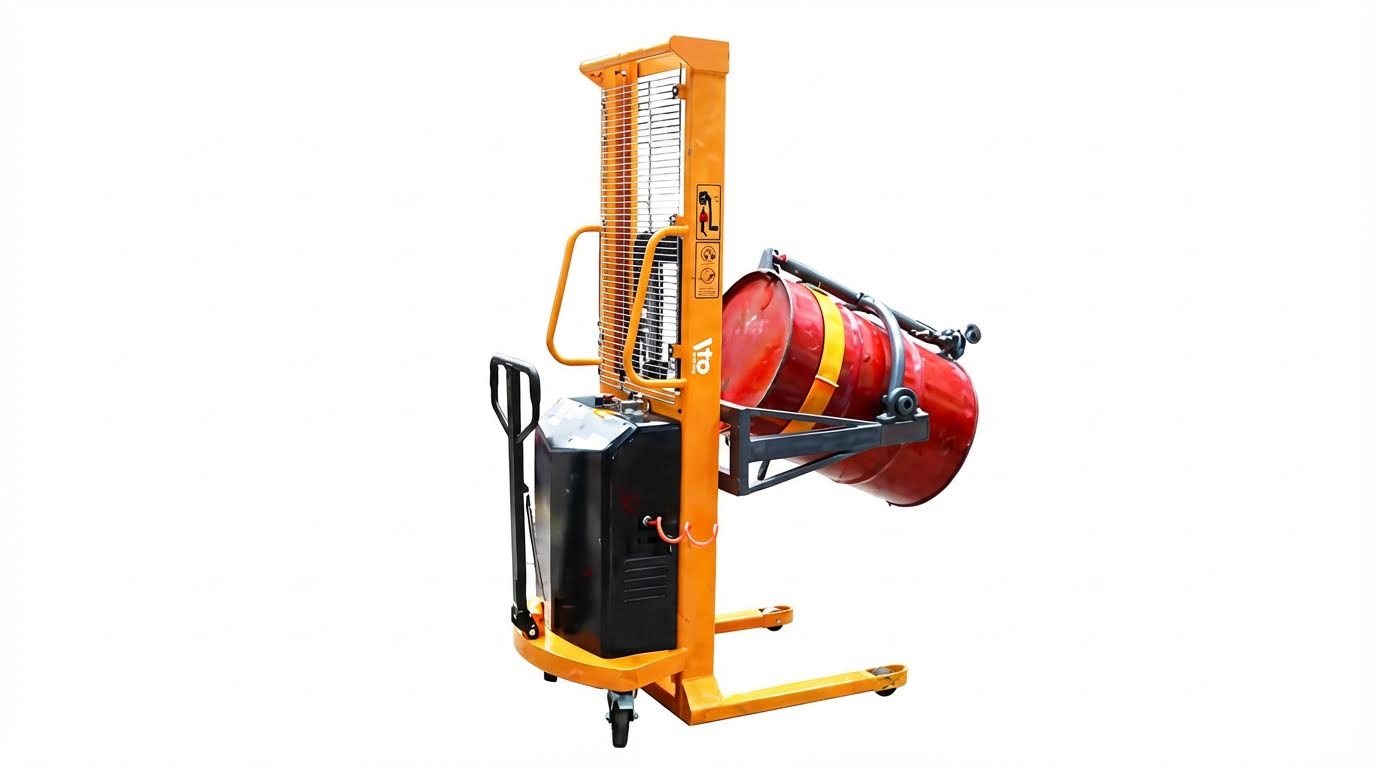
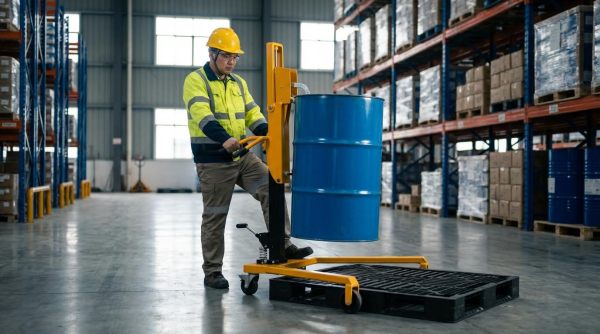
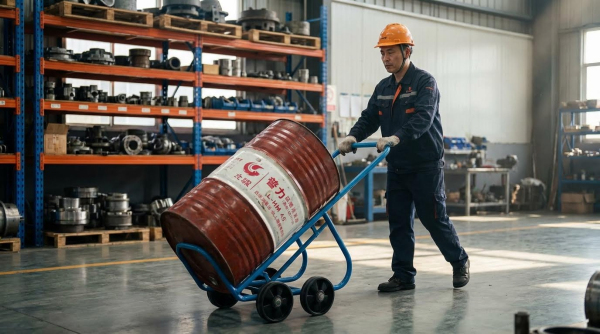
Engineered drum trucks and trolleys are the primary answer to how to lift 55 gallon drum units safely at floor level. A drum handler trolley is designed to lift, tilt, transport, and empty standard 210 L (55-gallon) steel or plastic drums, typically up to about 300 kg capacity based on common drum handler specs. These trolleys use leverage and wheel geometry to keep operator push forces low while maintaining three- or four-point ground contact for stability. Solid rubber or polyurethane wheels with swivel castors improve maneuverability in tight industrial aisles and resist damage from rough floors as used on typical drum handler trolleys.
- Drum trucks and trolleys: These devices clamp around the drum body or chime, then pivot the drum onto wheels so the operator only manages balance and direction. Optional tilt-and-pour features allow controlled decanting without removing the drum from the trolley, which is especially useful for repetitive transfer tasks.
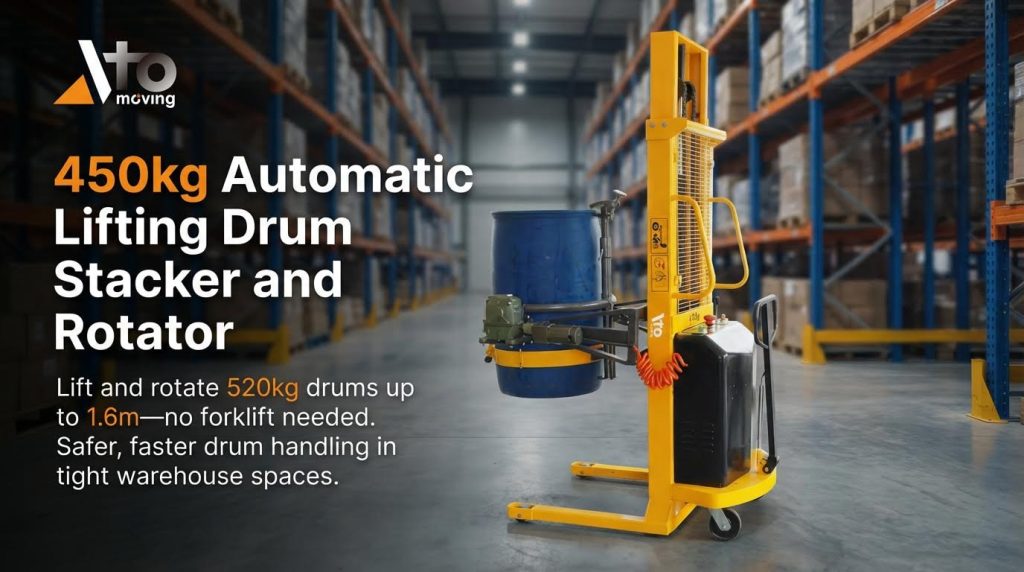
- Hydraulic drum lifter/tilter: Manual hydraulic drum lifter–cum–tilter units combine vertical lifting, horizontal transport, and controlled rotation in one frame. A hydraulic pump raises the drum, while a gear-assisted mechanism provides up to about 180° of controlled tilt for pouring and draining operations per typical lifter–tilter designs.
- Chassis and safety features: Four-wheel chassis with locking castors keep the center of gravity inside the wheelbase during lifting and rotation. Locking clamps and automatic latching mechanisms prevent the drum from slipping out of the cradle during movement or tilting, which is critical when handling liquids or hazardous materials as reflected in standard drum lifter designs.
| Equipment type | Typical function | Best use case |
|---|---|---|
| Drum truck / trolley | Lift edge, move on wheels, optional tilt | Short moves, frequent handling at floor level |
| Hydraulic lifter–tilter | Vertical lift plus controlled rotation | Pouring into vessels, elevated racks, or machines |
Inspection and operating checks
Before use, operators should inspect trucks and hydraulic lifters for worn wheels, damaged clamps, hydraulic leaks, or loose fasteners, and confirm the unit sits on a level surface. The drum must be correctly seated in the cradle and the locking mechanism fully engaged before lifting, as recommended in safe operating instructions for drum pourers and similar devices for drum pouring equipment.
Overhead lifting with clamps, hoists, and cranes
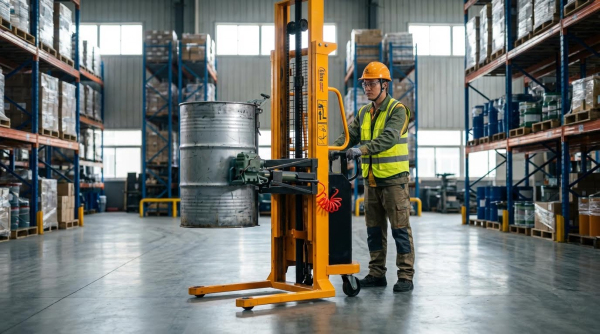
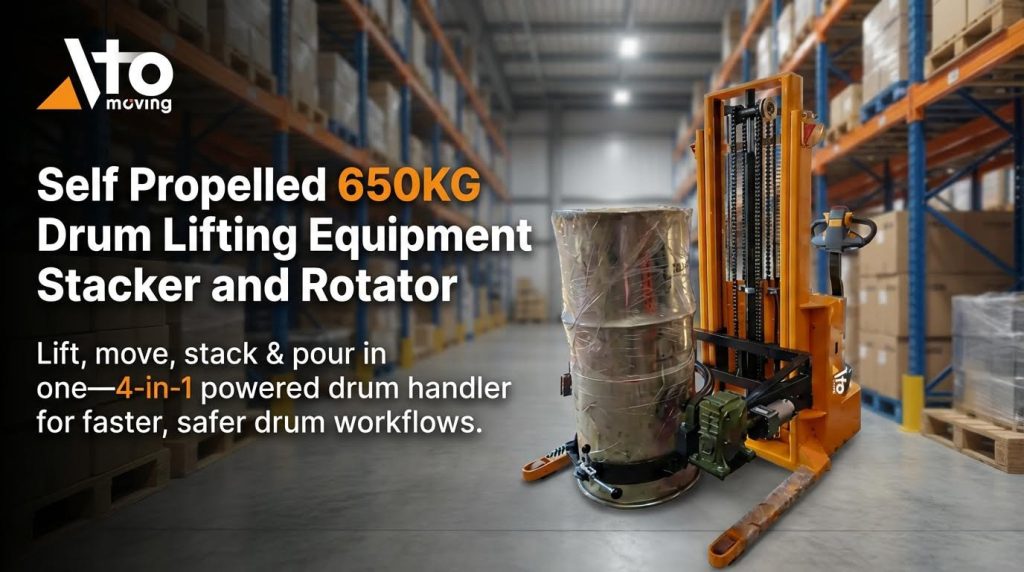
For vertical handling, overhead systems using clamps, hoists, or cranes provide controlled lifting of 55-gallon drums when floor space is limited or when drums must be placed on platforms, mezzanines, or into process vessels. A typical drum lifter is engineered for vertical lifting of 200–210 L steel or plastic drums using a chain block, hoist, or crane, and can be configured for straight vertical lift or for tilting and pouring according to drum lifter specifications. Automatic locking clamps, belt-and-jaw, or chain-type gripping mechanisms engage under load so that the clamping force increases with drum weight, reducing the risk of accidental release during hoisting as used in common drum lifter designs. These devices are often used with jib cranes, overhead traveling cranes, or monorails to move drums between storage, mixers, and reactors in a single lift path.
- Overhead clamp selection: The clamp or lifter must match drum diameter, material (steel or plastic), and whether the top is open or closed. Using the wrong style can cause slippage or crushing, especially on thin-wall plastic drums.
- Integration with hoists and cranes: The combined system (crane, hoist, and drum lifter) must be rated above the maximum drum weight plus any dynamic factors from starting, stopping, or swinging. Operators should keep the drum as low as practical, avoid side pulls, and control swing with tag lines when necessary.
- Tilting and pouring overhead: Some overhead drum lifters incorporate a tilting arm or gearbox that allows controlled rotation while suspended, enabling direct transfer into tanks or hoppers. These units rely on fail-safe locking and positive engagement so that the drum cannot rotate or slip unexpectedly during lifting or pouring as reflected in lifter–tilter safety features.
Overhead lifting safety notes
Before any overhead lift, confirm that the drum is not pressurized, that bungs are tight, and that the travel path is clear of people and obstructions. For drums containing flammable or toxic liquids, ensure the area has suitable fire protection and that drums are not moved near open flames or hot surfaces, in line with relevant safety regulations for drum storage and handling on drums and containers.
Selecting Drum Handling Systems For Your Facility
Matching equipment to drum type and contents
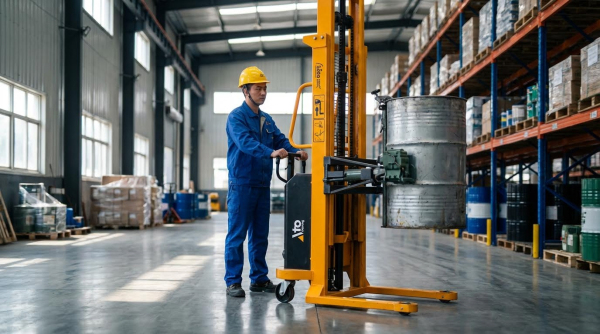
When you plan how to lift 55 gallon drum loads in a facility, start with the drum itself. Steel vs plastic, open-top vs closed-head, and MS vs HDPE construction all affect which lifters, trolleys, or pourers will grip safely and without damage. Many drum lifters are engineered for vertical lifting of 200–210 L (55-gallon) MS or HDPE drums using a chain block, crane, or hoist, and they use automatic locking clamps, belts, jaws, or chain mechanisms to secure the drum during the lift designed for 200–210 liter MS or HDPE drums with automatic locking clamps. If you need to lift and pour, a hydraulic drum lifter–cum–tilter with a rugged hydraulic pump and 180° rotation provides controlled decanting of both steel and plastic drums while keeping the drum locked in place manual hydraulic system with 180° controlled tilt. For frequent short moves and occasional emptying, a manually operated drum dolly that can lift, tilt, transport, and empty 210 L drums up to about 300 kg offers a good balance of ergonomics and cost trolley capacity of up to 300 kg for 210L drums.
- For hazardous, corrosive, or flammable contents, give priority to equipment that fully captures the drum, uses positive locking, and allows controlled pouring from a distance, combined with PPE and SDS-based precautions inspection of labels, leaks, and PPE selection based on contents.
- For general non-hazardous liquids, simpler lifters or trolleys may be acceptable, but they must still be rated above the typical 400–800 lb weight of a full 55-gallon drum 55-gallon drum typically weighs between 400-800 pounds.
- Where overhead lifting is required, pair drum lifters with cranes or hoists and ensure the gripping mechanism matches drum chime geometry and material so it does not slip or crush the shell vertical lifting using chain block, crane, or electric hoist.
Quick selection checklist by drum and contents
- Steel, flammable contents: use fully locking lifter or trolley plus containment and fire protection as required for flammable liquids storage and handling requirements for containers with flammable or toxic liquids.
- Plastic/HDPE, corrosive contents: choose non-damaging grip (belt or cradle) and verify chemical compatibility of contact surfaces.
- Open-top drums for batching: prefer tilter/pourer systems with secure clamping and controlled tilt for repeatable dosing controlled tilt using a hand crank or wheel.
Layout, traffic flow, and storage configuration
The right drum handling system must also fit your plant layout and traffic patterns. Before deciding how to lift 55 gallon drum loads, map drum locations, travel distances, aisle widths, and door clearances. Drum handler trolleys with solid rubber or polyurethane wheels and swivel castors are well suited to tight indoor spaces and short runs because they maneuver easily and need only a level floor trolley with solid rubber or polyurethane wheels and swivel castors. For fixed transfer points to mezzanines, mixers, or raised platforms, overhead drum lifters used with cranes or hoists reduce floor congestion and free up aisle space lifting drums using EOT or jib cranes and chain pulleys.
Storage design is a core part of system selection. Rows of 55-gallon drums should be limited to no more than two drums high and two drums wide to keep stacks stable and allow inspection for leaks or deterioration without excessive rehandling rows no more than two drums high and two drums wide. This spacing also dictates turning room for trolleys, pallet jacks, or forklifts, so you should size aisles to allow the chosen equipment to approach, grip, tilt, and withdraw a drum without twisting the operator or risking impact damage. Where drums contain flammable or toxic liquids, include containment (such as dikes or pans sized for a percentage of total volume) and keep them away from heat sources, then confirm your handling route does not cross ignition sources or high-traffic pedestrian areas requirements for containment, location, and protection of drums.
- In high-throughput areas, use dedicated drum lanes and one-way traffic patterns so drum trolleys and forklifts do not conflict with each other.
- At pour or decant stations, install drum pourers on level, reinforced floors and keep clear zones around the equipment to avoid collisions during tilt operations operate on level surfaces and maintain a clear work area.
- For remote or confined zones, select compact drum lifters or trolleys specifically described as suitable for confined or hazardous areas and verify they can turn within the available envelope handling drums in confined or hazardous zones.
“”
Key Takeaways For Safe Drum Lifting Operations
Safe 55-gallon drum handling depends on one clear rule: never fight the weight. Treat every drum as a heavy, unstable load and plan the lift before anyone moves it. Start with a structured risk assessment that checks weight, fill level, drum condition, contents, and route. Then select equipment that keeps the drum under control and the operator outside the danger zone.
Use manual methods only for short, low-risk moves and controlled tipping. For routine work, rely on drum trucks, trolleys, hydraulic lifters, and overhead clamps that keep the center of gravity inside a stable wheelbase or under a rated crane. Always match clamps and cradles to drum material and chime geometry, and keep storage to stable, inspectable stacks.
Regulatory and SDS checks must sit inside your standard operating procedure, not as an afterthought. Lock in PPE, containment, and fire protection based on worst credible hazards. Finally, standardize routes, traffic flow, and inspection routines, and train operators on one consistent method per task. When in doubt, upgrade to purpose-built drum handling solutions from Atomoving so your system design, not operator strength, carries the risk.
Frequently Asked Questions
How do you lift a 55-gallon drum safely?
Lifting a 55-gallon drum requires proper equipment and technique to avoid injury. Use a drum lifter rated for the drum’s weight, which can be over 200 kg when full. Position the lifter around the drum’s center of gravity, typically at the upper third. Engage the lifting mechanism fully before raising the drum. Move slowly and maintain good posture during the lift. Drum Lifting Equipment Guide.
How heavy is a full 55-gallon drum?
The weight of a full 55-gallon drum depends on its contents. A drum filled with water weighs approximately 220 kg, while one filled with concrete can weigh up to 520 kg. Always verify the weight before attempting to lift or move the drum to ensure proper equipment is used. Drum Weight Calculation.