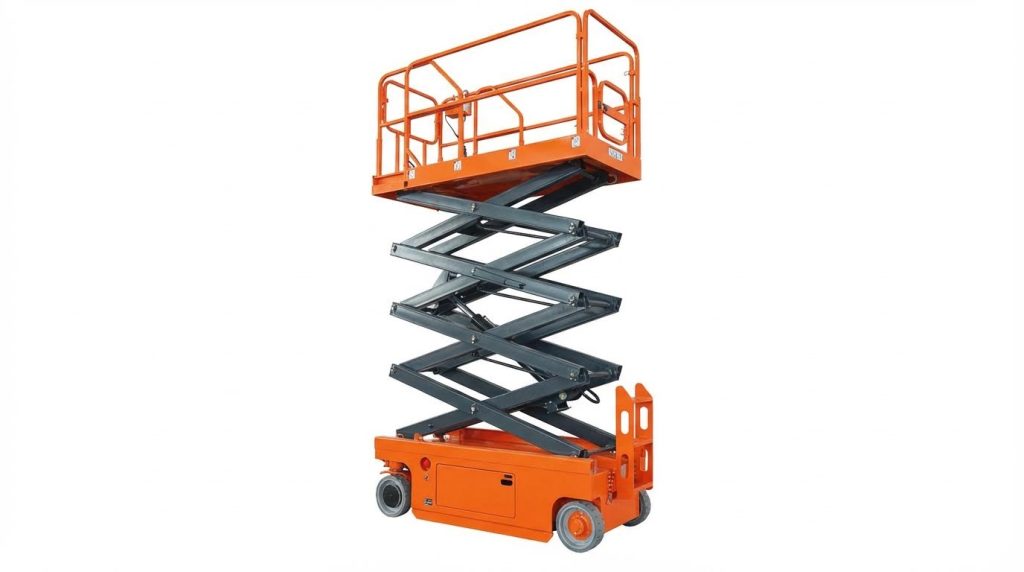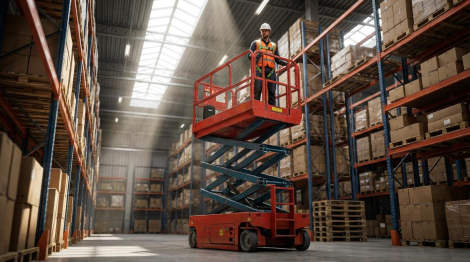
Scissor lift fall protection rules can be confusing, especially when trying to decide if guardrails alone are acceptable or if a personal fall arrest system is mandatory. This article explains how OSHA and ANSI treat scissor platform, when guardrails provide primary protection, and when tie-off becomes a hard requirement. You will see how these rules compare to boom lifts, and how to apply them through risk assessment, training, and rescue planning on real jobsites. Use it as a practical field guide to reduce fall risk while keeping your operations efficient and compliant.
Defining Fall Protection On Scissor Lifts
How OSHA And ANSI Classify Scissor Lifts
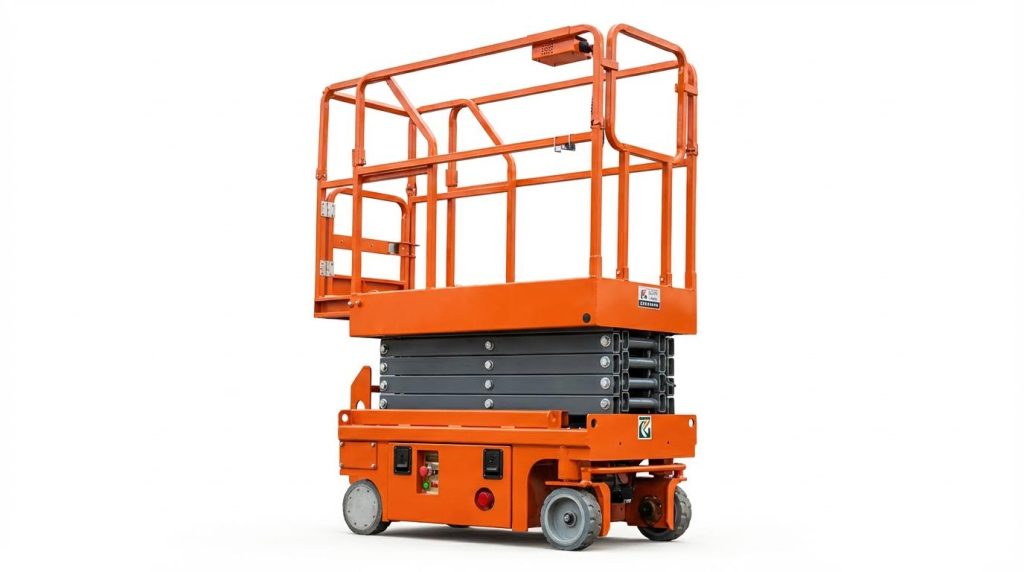
For scissor lift fall protection, it helps to start with how the standards classify the equipment. OSHA treats scissor lifts as a type of mobile scaffold, so the platform guardrail system is the primary means of fall protection, not a harness by default. ANSI A92.6 (for self-propelled elevating work platforms) set design and test requirements for the platform, guardrails, and stability; OSHA then uses compliance with those provisions to decide when a personal fall arrest system (PFAS) is needed. If the lift meets the ANSI design intent and workers stay on the floor of the platform with guardrails in place, OSHA considers the guardrail system adequate fall protection for most tasks. When guardrails are missing, altered, or workers use ladders or planks on the platform, the lift is no longer in its intended configuration and additional fall protection rules apply. OSHA has stated that PFAS is required if the scissor lift does not comply with ANSI/SIA A92.6 provisions.
Why classification matters on the jobsite
Because OSHA treats scissor lifts as scaffolds, many employers over‑apply boom lift rules and require tie‑off at all times. Understanding the scaffold classification allows you to align site rules with actual engineering controls: guardrails, platform geometry, and stability testing built into the machine.
Guardrails As Primary Fall Protection
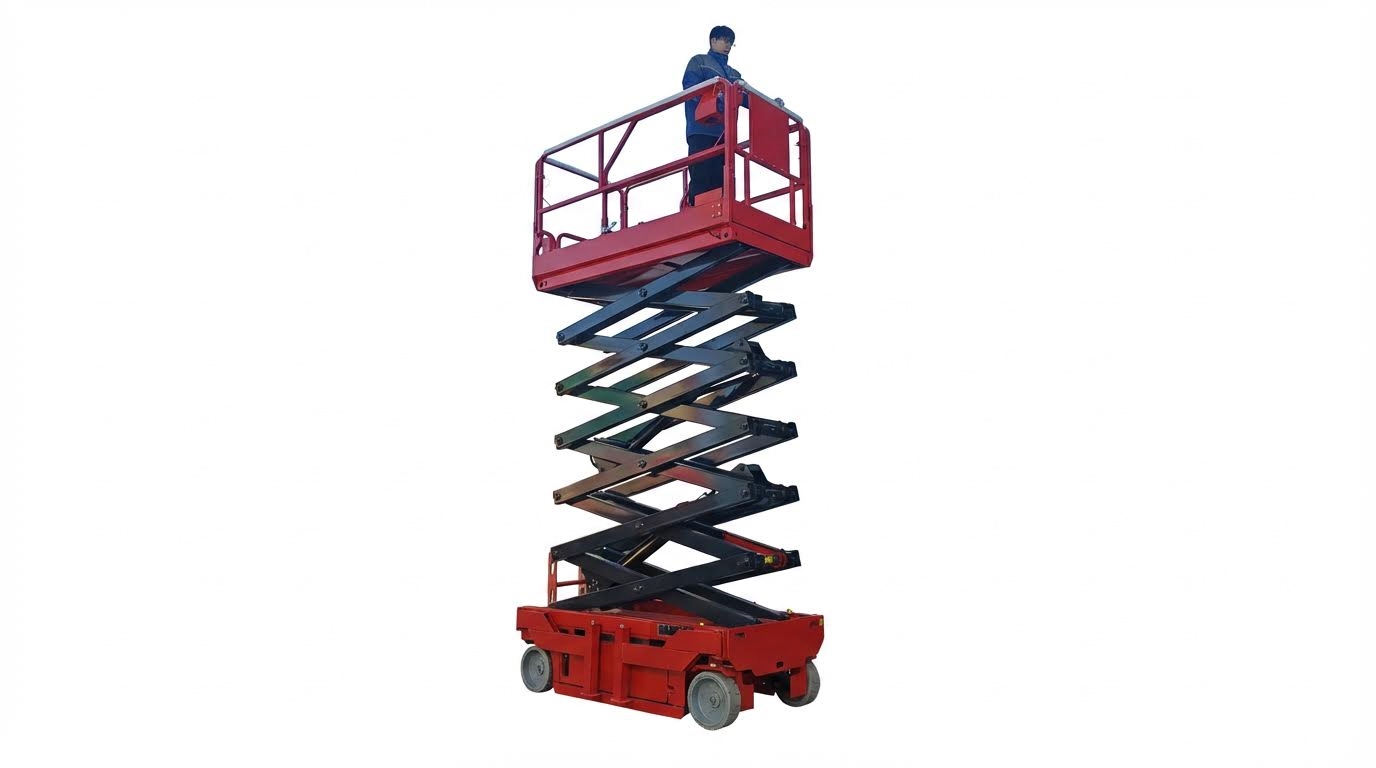
On a compliant unit, the guardrail system is the core of scissor lift fall protection. OSHA requires that guardrails be installed and in good condition before operation, and that workers stand only on the work platform floor, not on boxes, ladders, or added devices to gain extra reach. OSHA’s scissor lift guidance states that guardrails must be installed to prevent workers from falling and that operators should avoid leaning over them. Using planks, ladders, or other devices on the platform invalidates the original stability tests and can defeat the guardrail protection. OSHA has specifically prohibited the use of additional devices such as planks or ladders on aerial platforms to increase height or reach.
- Guardrails must be complete (top rail, mid‑rail, and toe board where required).
- Workers must not climb, sit, or stand on guardrails.
- Workers must not lean so far over the rail that their center of gravity moves outside the platform footprint.
- External equipment (like forklifts) must not be used to elevate or support the platform, because it compromises stability. OSHA notes that using external equipment to lift the platform violates safe design and stability assumptions.
When these conditions are met, the guardrail system provides continuous, passive fall protection without needing harnesses or lanyards in most situations. This is why, under OSHA’s interpretation, PFAS becomes mandatory only when the guardrail system or platform use no longer matches the ANSI design basis.
When Personal Fall Arrest Systems Are Required
Conditions That Trigger PFAS Use
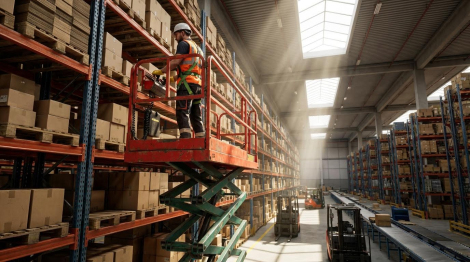
On compliant scissor lifts, the guardrail system is normally considered adequate scissor platform fall protection, and tie-off is not required under OSHA interpretations when the lift meets ANSI A92.6 and workers keep firm footing on the platform floor. OSHA noted that PFAS becomes necessary where the scissor lift does not comply with these provisions. In practice, PFAS use is triggered when:
- Guardrails are missing, damaged, or lowered, so they no longer provide full perimeter protection. OSHA requires guardrails to be installed and maintained to prevent falls.
- The manufacturer’s manual or site-specific rules require tie-off regardless of guardrail condition.
- Non-standard work practices increase fall exposure, such as working with access gates open or handling materials that force workers to lean outside the rail envelope.
Where PFAS is required, the system must be evaluated using performance criteria such as those in Appendix C to 29 CFR 1910.66, including free-fall limits, arresting forces, and clearance. Fall protection is also required whenever workers are 6 feet or more above a lower level under 29 CFR 1926.501(b)(1), so any loss of effective guardrail protection at that height or above demands a PFAS solution.
Engineering Limits Of Guardrails And Anchor Points
Guardrails on scissor lifts are engineered and tested as collective fall protection, not as personal fall arrest anchors. They are designed to resist typical lateral loads and impact from a worker losing balance, provided workers stand on the platform floor and do not climb or use planks or ladders to gain extra height. OSHA explicitly prohibited using added devices such as planks or ladders on the platform because they invalidate stability tests.
By contrast, anchor points for PFAS are engineered to carry much higher loads from a dynamic fall. Typical design guidance requires minimum static capacities on the order of:
| System Type | Minimum Anchor Static Capacity |
|---|---|
| Travel-restraint system | ≈ 2 kN (about 450 lbf) |
| Fall-restricting / fall-arrest system | ≈ 8 kN (about 1,800 lbf) |
These values align with guidance that anchor points must be specifically engineered and rated for fall protection; platform guardrails are not acceptable as PFAS anchors. Guidance for elevating devices stresses using built-in, labeled anchor points inside the platform and prohibiting tie-off to guardrails. For effective scissor lift fall protection, any PFAS used on the platform must connect only to manufacturer-approved anchors that meet these load requirements and are compatible with the harness, lanyard, or SRL.
Comparing Scissor Lift And Boom Lift Requirements
Aerial platforms and boom lifts follow different fall protection logic. On scissor lifts, the guardrail system is the primary fall protection; tie-off with PFAS is generally required only when guardrails are missing, compromised, or when the manufacturer or site policy mandates it. OSHA guidance emphasizes maintaining guardrails and keeping workers on the platform floor to prevent falls.
Boom lifts are treated more like mobile fall hazards because the platform can move horizontally and vertically, exposing workers to catapult and ejection forces. For that reason, tie-off is mandatory at all times in boom lifts. Operators must use a full-body harness with a lanyard or SRL connected to a designated anchor point inside the boom platform. Both lift types are still subject to general OSHA fall protection thresholds at 6 feet and above, but the control method differs: collective protection (guardrails) for compliant scissor lifts versus continuous personal fall arrest for boom lifts. Understanding this distinction helps safety managers choose the correct scissor lift fall protection strategy and avoid over- or under-specifying PFAS on jobsites.
Applying The Rules On Real Jobsites
Risk Assessment And Lift Selection
On real jobsites, scissor lift fall protection starts with a structured risk assessment before you ever raise the platform. Supervisors should review surface conditions, wind exposure, traffic patterns, overhead obstructions, and nearby power lines, then decide if a scissor lift with compliant guardrails is enough or if a different access method or added PFAS is needed. Scissor platform must operate only on firm, level surfaces, away from slopes, holes, and debris to maintain stability and reduce tip-over risk. Outdoor work should account for weather; most outdoor-rated scissor lifts are limited to wind speeds below 28 mph, and moving the lift while elevated is generally prohibited unless the manufacturer explicitly allows it in the operating manual.
- If the task is directly under the work area with no need to reach out or over, a scissor lift with intact guardrails will usually provide adequate fall protection.
- If the task requires horizontal outreach or work over obstacles, a boom lift may be safer, but then continuous tie-off with a full-body harness and lanyard or SRL to a platform anchor point is mandatory under aerial lift rules.
- Where guardrails on a scissor lift are missing, damaged, or removed for material handling, a personal fall arrest system is required if the lift is still used, or the lift should be tagged out until repaired to restore compliant protection.
- Work near power lines or transformers requires extra clearance; lifts must stay at least 10 feet away from electrical power sources, and only qualified workers with electrical safety training should operate in these zones to control electrocution risk.
Load planning is also part of scissor lift fall protection. The combined weight of workers, tools, and materials must never exceed the platform’s rated capacity, and using external equipment like forklifts to lift the platform is prohibited because it bypasses the lift’s stability design and increases the chance of a fall or tip-over. Workers must stand only on the platform floor—no ladders, planks, or makeshift height boosters—because these invalidate the stability assumptions used in the design and testing of the machine and can place them above the guardrail line. Selecting the right lift type, confirming guardrail condition, and controlling site hazards together determine whether guardrails alone are enough or PFAS and alternative equipment are required.
Training, Inspection, And Rescue Planning
Even with the right equipment, scissor lift fall protection fails without disciplined training and inspection. Employers must train operators under OSHA’s training rules to understand when fall protection is needed, how to use harnesses and anchor points, and how to recognize hazards such as overhead power lines, unstable ground, and traffic around the lift before they start work. Training should also cover prohibited behaviors like climbing or leaning over guardrails and using ladders or planks on the platform, which defeat the guardrail system and greatly increase fall risk by raising the worker’s center of gravity.
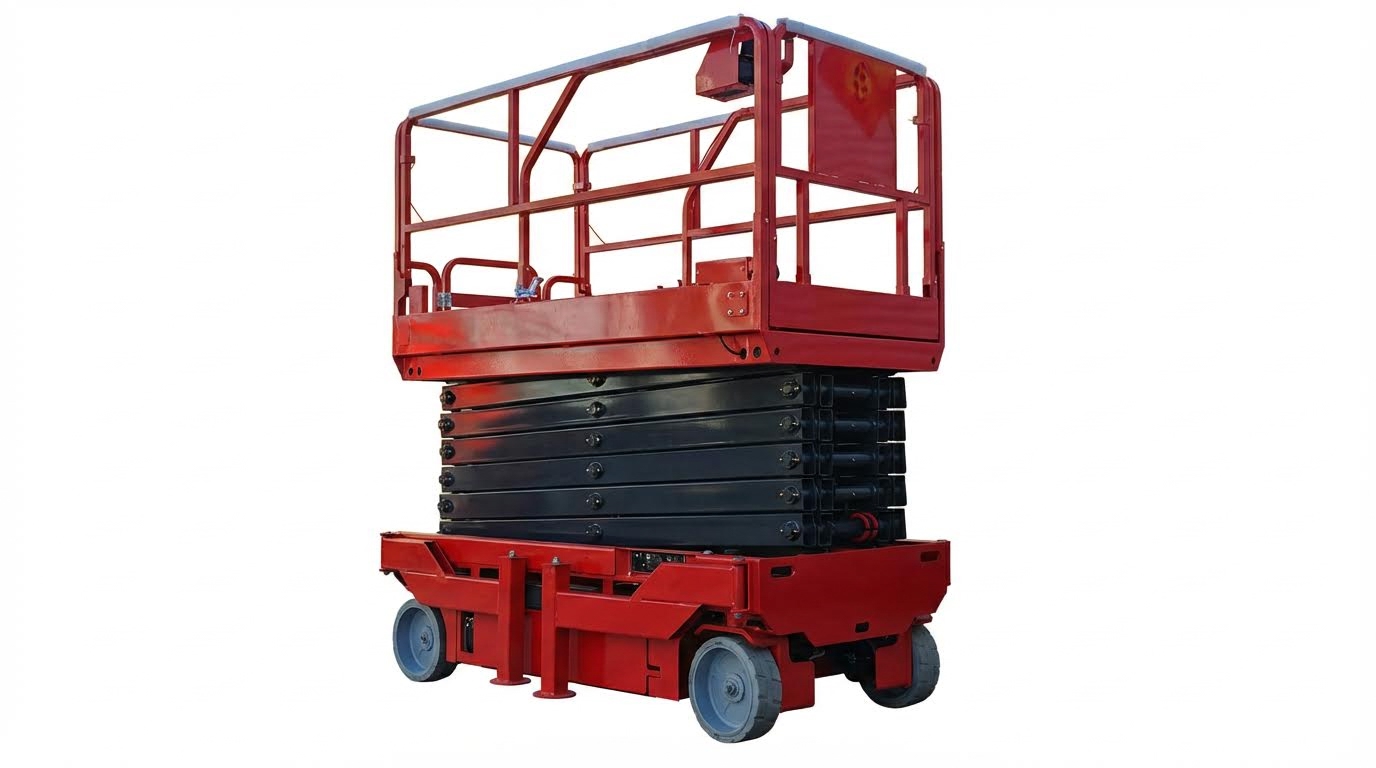
- Operators must inspect the lift before each shift, checking controls, brakes, tires, and especially the condition and continuity of guardrails to ensure they still function as the primary fall protection system in line with manufacturer guidance.
- If PFAS is used—because guardrails are compromised or site rules demand tie-off—workers must inspect harnesses, lanyards, and connectors before every use, and a competent person should perform a detailed inspection at least every six months to remove damaged gear from service.
- Anchor points used for fall arrest must be engineered for the required loads; built-in platform anchors are designed for this purpose, while guardrails are not acceptable as tie-off points for PFAS because they are not rated for arrest forces and may fail in a fall event.
A written rescue plan is the final piece of a compliant fall protection program. When PFAS is in use, the plan must define how to quickly rescue a suspended worker, including who responds, what equipment they use, and how they communicate during the event and how often drills occur. Practicing this plan helps crews react in minutes, not hours, limiting suspension trauma and secondary injuries. When training, inspection, and rescue planning are integrated into daily routines, jobsites apply the scissor lift fall protection rules consistently instead of relying on last-minute decisions at the platform controls.
“”
Key Takeaways For Safer Scissor Lift Operation
Scissor lift fall protection depends on using the machine exactly as its engineers intended. When guardrails are complete, intact, and used correctly, they provide reliable, passive protection without harnesses for most straight‑up work. The moment you alter that system—by removing rails, standing on objects, or leaning outside the platform envelope—you leave the tested safety zone and must introduce PFAS or stop work.
Engineering limits also matter. Guardrails are not anchors and must never take fall‑arrest loads. Tie off only to rated anchor points designed into the platform, and size harnesses, lanyards, and SRLs so they control free fall and clearance. Treat boom lifts differently; their motion and ejection risk make continuous tie‑off mandatory.
On site, build decisions around a simple sequence: assess the task and environment, choose the right lift type, confirm guardrail integrity, then decide if PFAS is required. Back this up with operator training, pre‑use inspections, and a written rescue plan that crews practice. Operations and safety teams that follow this method keep scissor lift work efficient, OSHA‑compliant, and aligned with the design intent of platforms like those from Atomoving, while sharply reducing the chance of a fall or tip‑over.
Frequently Asked Questions
Is fall protection required when operating a scissor lift?
Fall protection is not required if the scissor lift has properly designed and maintained guardrails in place, according to OSHA standards. However, if the guardrails are missing or incomplete, operators should use a full-body harness or fall restraint system. OSHA Scissor Lift Safety Rules.
What personal protective equipment (PPE) is required for scissor lift operation?
While working on a scissor lift, operators must ensure that guardrails are in place as a primary safety measure. Additional PPE like helmets and safety boots are recommended. If guardrails are compromised, a personal fall protection system (PFAS), including a full-body harness, must be used. Scissor Lift Safety Guidelines.
What are the key OSHA requirements for scissor lift safety?
Key OSHA requirements include ensuring guardrails are installed and maintained to prevent falls, proper training for operators, and regular equipment inspections. Operators should never stand on guardrails and must always check that safety systems are functional before use. Scissor Lift Safety Training.