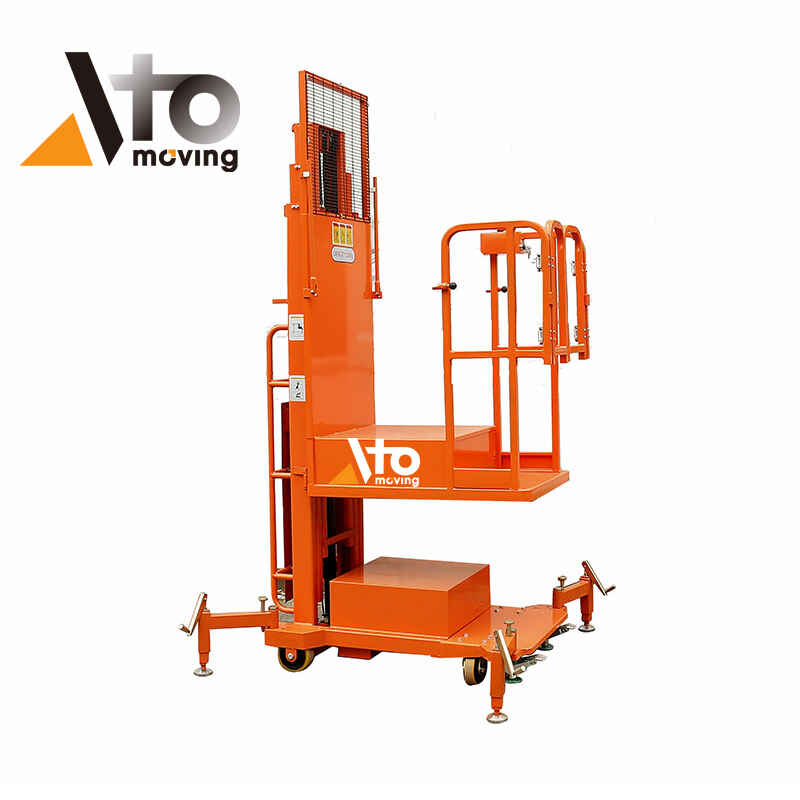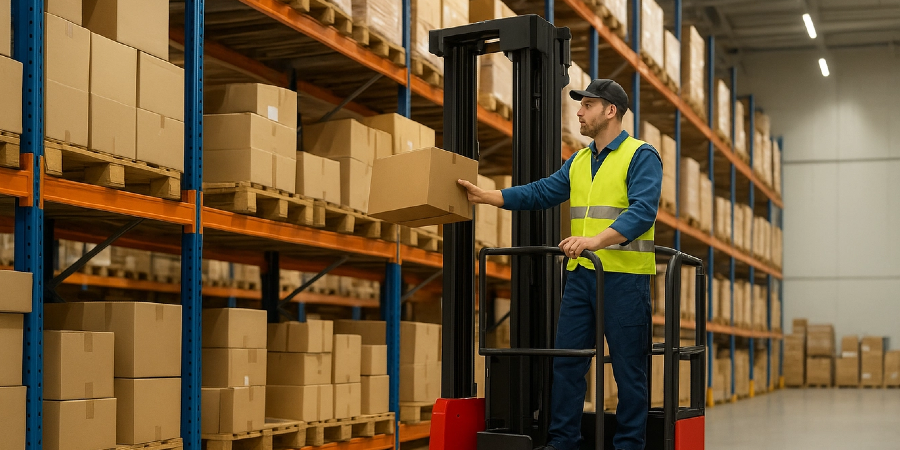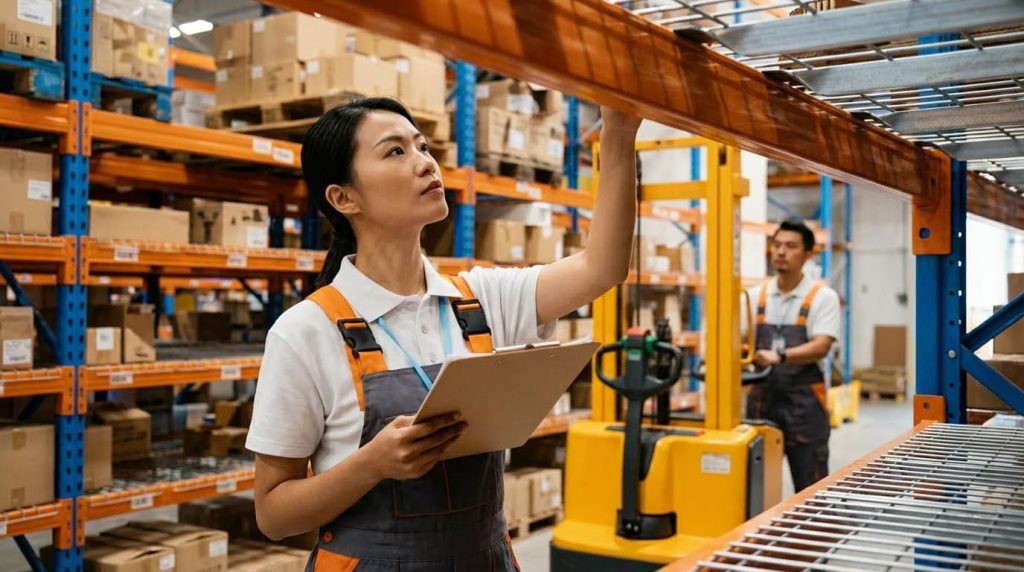
In warehousing, a cherry picker is a type of mobile elevating work platform that lifts an operator to work or pick at height with both vertical and horizontal reach. If you are asking what is a cherry picker in a warehouse, this guide explains how it differs from order pickers and scissor lifts, its core components, and how it actually operates day to day. You will also see the key technical specs, power options, and safety rules that govern these machines. By the end, you will understand where cherry pickers fit in a warehouse layout and how to choose and operate them safely and efficiently.
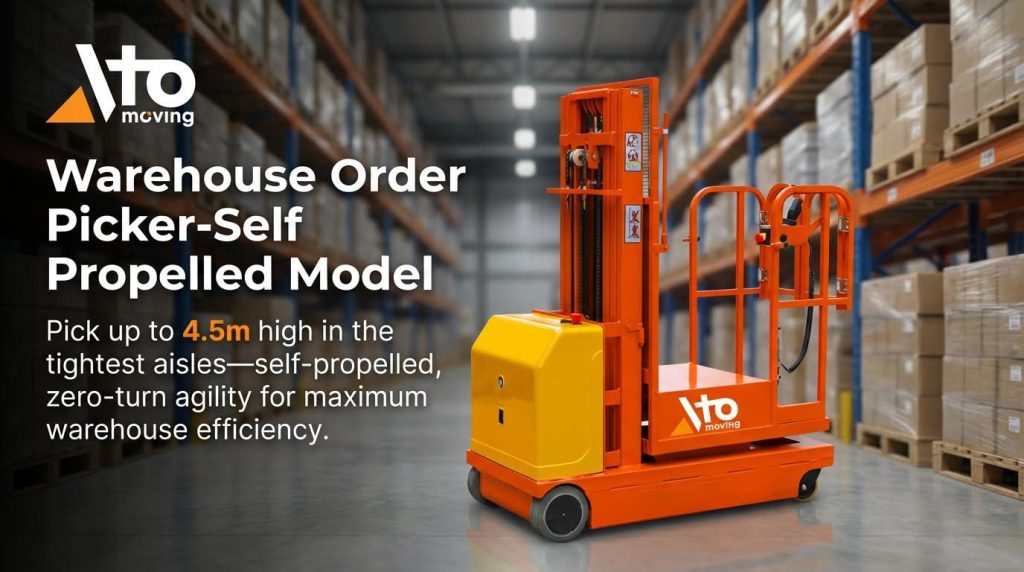
Defining Cherry Pickers In Warehouse Context
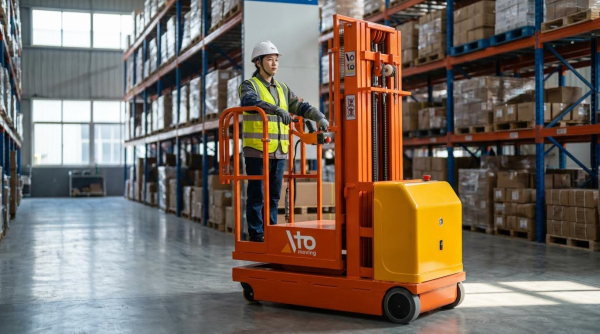
Cherry picker vs. order picker vs. scissor lift
When people ask what is a cherry picker in a warehouse, they often mix it up with order pickers and scissor lifts. In a warehouse context, a cherry picker is an aerial platform with an extendable boom that provides both vertical lift and horizontal outreach, often reaching up to around 100 feet in height with moderate side reach. Typical platform capacities are in the 300–500 lb range, which is enough for one person plus tools, so they are mainly used for maintenance, lighting, fire‑system work, and building services inside or around warehouses, not for intensive case picking.
An order picker, by contrast, is purpose‑built for piece picking from pallet racking. It is a type of forklift where the operator platform elevates with the forks so the operator can pick cartons or eaches directly from storage locations. Order pickers in warehouses commonly work above the second racking level and can reach elevated heights of about 240–456 inches (20–38 ft) with typical capacity ranges of 1,500–3,000 lb, using 24 V or 36 V battery systems. These machines are optimized for high‑level order picking productivity and ergonomics, with wide pick windows and clear‑view masts, not for reaching over obstacles.
A scissor lift is different again. It uses a criss‑cross (pantograph) mechanism to raise a fixed platform straight up and down, with no real horizontal outreach. Many scissor lifts can handle loads up to about 1,000 lb and reach roughly 50 ft, which makes them suitable for heavier maintenance jobs where you can position directly under the work. In tight warehouse interiors with limited aisle width, scissor platforms often fit better than cherry pickers, but they cannot reach out over conveyors, mezzanines, or racking in the way a boom‑type cherry picker can.
Quick comparison for warehouse planners
| Equipment type | Primary motion | Typical warehouse use | Key limitation |
|---|---|---|---|
| Cherry picker (boom lift) | Vertical + horizontal | High‑level maintenance, access over obstacles | Lower capacity, needs more aisle/clear space |
| Order picker | Vertical along racking | Case/eaches picking from pallet racking | No outreach beyond aisle; not for overhead MEP work |
| Scissor lift | Vertical only | Maintenance directly above the unit | Must sit directly under work area; no outreach |
Core components and operating principles
In warehousing, what is a cherry picker in a warehouse from a mechanical point of view? It is a mobile elevating work platform built around a powered chassis, an articulated or telescopic boom, and a guarded work basket. The chassis may be electric or engine‑driven and typically includes drive motors, steering, brakes, and sometimes outriggers or stabilizers for higher‑reach models. The boom structure provides the key advantage over other lifts: it can rotate and articulate to move the platform both up and out, allowing operators to work above and beyond obstacles such as racking, conveyors, dock canopies, or building services.
The work platform (basket) is a small, railed deck designed for one or two people plus tools, with a rated load that often falls in the 200–300 kg (about 440–620 lb) range on many self‑propelled boom lifts. Typical models in the 12–22 m working‑height class provide platform heights of roughly 10–20 m, safe working loads around 200–280 kg, and horizontal outreach between about 6–19 m, which illustrates the balance between reach and payload engineers must consider. Control stations are provided both at the base and in the basket; the operator usually drives and positions the machine from the basket using proportional joysticks for lift, slew, telescope, and drive.
From an operating‑principle standpoint, hydraulic cylinders and/or electric actuators extend and retract the boom sections, while a slewing ring allows rotation to cover a working envelope without constantly repositioning the chassis. Integrated safety systems monitor tilt, load, and platform position; if limits are exceeded, the system can inhibit unsafe movements to maintain stability. For safe warehouse use, operators must follow established procedures, including pre‑use inspections of controls, hydraulics, and safety devices, and must never override hydraulic, mechanical, or electrical safety systems. Daily checks, correct use of outriggers where fitted, and strict respect of load limits are essential to prevent tipping or structural overload. These engineering and procedural controls together define how a cherry picker functions reliably and safely in a warehouse environment.
Key Technical Specs, Powertrains, And Safety
Height, outreach, and load capacity ranges
When you ask what is a cherry picker in a warehouse, you are usually dealing with compact boom-type platforms adapted for indoor aisles and racking. Typical warehouse cherry pickers offer working heights from around 10–12 m (33–39 ft) up to about 20–21 m (65–68 ft), with platform heights roughly 2 m lower than the stated working height. For example, self‑propelled booms with warehouse-suitable geometry can provide working heights around 12.1 m with 10.1 m platform height, and safe working loads of 200–227 kg (440–500 lb) across several compact models. Larger articulated booms can reach 15–17 m working height with 9.4–9.7 m outreach and similar 225 kg (500 lb) basket capacities, while heavy‑duty units extend to about 21–28 m working height and 13–19 m outreach with 250–280 kg (550–620 lb) capacities for more demanding sites in the same range. In general warehouse practice, this translates into:
- Working height: roughly 8–20 m for indoor racking and building work.
- Horizontal outreach: about 6–13 m, enough to reach over conveyors, docks, or mezzanines.
- Platform capacity: typically 200–300 kg, covering one or two people plus tools and small parts.
Order-picking variants that lift the operator with the load, often used instead of a boom where aisles are very tight, can reach up to 240–456 in (6.1–11.6 m) with 1,500–3,000 lb capacities in warehouse racking applications warehouse order picker. For any cherry picker in a warehouse, you must match height and outreach to the top beam level plus a working allowance, and ensure the rated load covers the operator, tools, and any picked cartons with margin.
Typical spec envelope for warehouse cherry pickers
| Parameter | Typical Range |
|---|---|
| Working height | 8–20 m (26–65 ft) |
| Horizontal outreach | 6–13 m (20–43 ft) |
| Platform capacity | 200–300 kg (440–660 lb) |
Electric, diesel, and Li-ion power options
For indoor logistics sites, what is a cherry picker in a warehouse almost always means an electric or hybrid machine because of emissions and noise limits. Traditional electric cherry pickers use lead‑acid traction batteries, similar to many order pickers that run on 24 V or 36 V battery systems order picking machines. These are proven and relatively low‑cost, but they require watering, equalization charging, and defined charging rooms or ventilated areas. Modern Li‑ion powered cherry pickers reduce maintenance, support opportunity charging, and keep performance more consistent over a shift, which suits multi‑shift warehouses and 24/7 operations.
Diesel or full rough‑terrain powertrains are more common outdoors, yet some facilities use bi‑energy or hybrid booms that can switch between electric drive indoors and combustion power outdoors. Key selection points include:
- Indoor air quality: zero tailpipe emissions are preferred inside racked storage.
- Duty cycle: Li‑ion is attractive where machines run many hours per day with short breaks.
- Charging infrastructure: confirm you have enough chargers and electrical capacity for the fleet.
- Noise limits: electric units are quieter, important for mixed‑use or night‑shift operations.
Battery and powertrain considerations
Lead‑acid systems have lower upfront cost but higher lifetime maintenance. Li‑ion reduces maintenance labor and unplanned downtime, especially when paired with onboard diagnostics and self‑checking systems similar to those used on advanced order pickers to cut downtime and support planned maintenance windows aerial platform.
Stability, fall protection, and OSHA/ANSI compliance
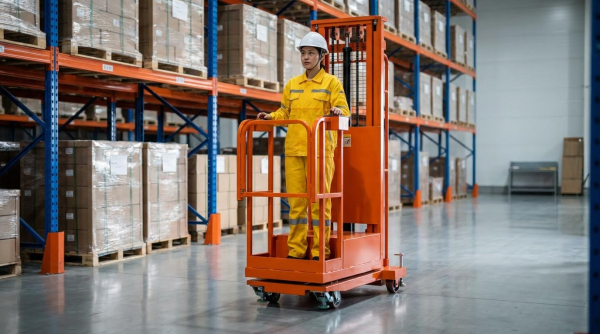
From a safety and compliance standpoint, what is a cherry picker in a warehouse is first and foremost an elevated work platform that must meet OSHA/ANSI rules and be operated under a formal safe‑work system. Operators need accredited training and certification to understand hazards, controls, and emergency procedures, and employers must verify those qualifications before allowing use as outlined in typical cherry picker SOP guidance. Daily pre‑use inspections must check controls, hydraulics, tires, safety devices, and emergency stop buttons, with any damage or malfunction reported and repaired before operation to maintain safe function.
Platform stability depends on staying within rated load, using outriggers if fitted, and positioning the machine on firm, level floors. Overloading or uneven loading increases tip risk, so the combined weight of workers, tools, and materials must always stay within the stated capacity, and operators should avoid reaching or climbing on objects to gain extra height per safe work practices. Workers must wear a full‑body harness with a lanyard anchored to the basket or boom and must not tie off to nearby racks or building steel, which can cause serious injury if the platform moves unexpectedly according to fall‑protection rules.
- Key OSHA/ANSI-related practices in warehouses:
- Define and mark exclusion zones to prevent struck‑by or crushed‑by incidents around the machine in line with hazard controls.
- Maintain safe clearance from overhead services such as power lines and building structure, treating all lines as energized and keeping a minimum separation distance where applicable as recommended for aerial lifts.
- Stop work in high winds or severe weather and secure the machine when not in use to avoid instability or damage as part of standard procedures.
OSHA and related standards also expect documented inspections, maintenance, and operator training records, with continuous monitoring of procedures to keep them aligned with current regulations and best practice for aerial lift compliance. In a warehouse environment, integrating these requirements into site induction, traffic management plans, and permit‑to‑work systems is essential to operate cherry pickers safely around racking, pedestrians, and other material handling equipment.
Warehouse Use Cases, Layout Fit, And Selection
Typical warehouse applications and limitations
When people ask what is a cherry picker in a warehouse, they usually mean an aerial platform used for tasks above normal forklift height, not for full pallet handling. In warehouses, cherry pickers are best for maintenance on lighting, sprinklers, conveyors, and building services, as well as inventory checks or light piece-picking where horizontal outreach helps reach over conveyors or mezzanine edges. Their platforms typically carry one person plus light tools, with many units rated in the 300–500 lb range for combined load capacity in typical cherry picker applications. Limitations in warehouses include slower travel in tight aisles, limited payload for heavy case picking, and the need for clear overhead space to avoid beams, ductwork, or sprinklers. For high-throughput order picking above the second rack level, dedicated warehouse order picker with capacities around 1,500–3,000 lb and lift heights up to about 456 in are usually more efficient than cherry pickers in distribution centers.
Aisle widths, racking heights, and floor loading
To integrate a cherry picker into a warehouse layout, you must match machine geometry to aisle and rack design. Self-propelled boom-type platforms with working heights from about 12 m to over 20 m (roughly 39–68 ft) and outreaches up to 13 m (about 43 ft) allow access to very tall racking or roof structures in industrial buildings. However, these machines can weigh from roughly 2,500 kg to well above 9,000 kg, so you must confirm floor slab capacity and any mezzanine ratings against the machine’s maximum wheel load, not just its total weight. Because booms swing and articulate, they usually require wider clear aisles than narrow-aisle order pickers; tight VNA aisles are often unsuitable unless the boom works from cross-aisles or service lanes. When deciding what is a cherry picker in a warehouse layout context, it is essentially a shared-access maintenance tool that works from main drive aisles, docks, staging zones, and open work areas, not a primary truck inside very narrow rack tunnels.
Total cost of ownership and maintenance planning
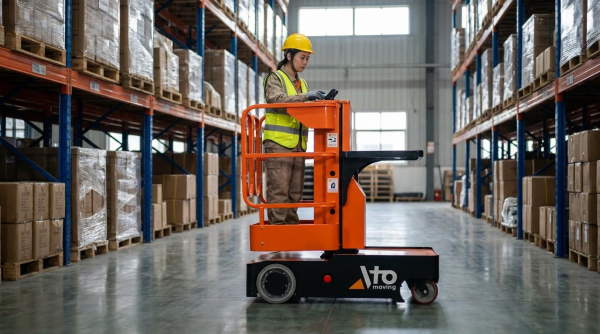
For cherry pickers used indoors, total cost of ownership is driven by utilization, power source, and preventive maintenance discipline. Electric or hybrid units avoid exhaust and reduce energy cost per hour compared with full diesel, which suits most warehouse applications where duty cycles are moderate. Regardless of powertrain, daily pre-use inspections of controls, hydraulics, and safety systems, along with scheduled lubrication, oil and filter changes, and prompt repair of leaks or damage, are essential to control lifecycle cost and uptime under typical SOPs. Planned maintenance should also include regular checks of emergency stop functions, fall-protection anchor points, and tires or wheels to avoid failures that can halt operations and trigger compliance issues. When you evaluate what is a cherry picker in a warehouse from a financial perspective, it is often a shared asset whose cost is justified by safer access to height, reduced need for scaffolding, and flexibility across maintenance, inventory, and light picking tasks, provided it is maintained to manufacturer and safety-standard requirements.
“”
Final Thoughts On Using Cherry Pickers In Warehouses
Cherry pickers give warehouses safe, flexible access to work at height where outreach over obstacles is vital. Their boom geometry, platform capacity, and powertrain must match racking heights, aisle widths, and floor loading so the machine stays stable in every position. Engineers should size working height and outreach to the highest task plus a clear working margin, then verify slab capacity against maximum wheel loads, not just total weight.
Electric or Li‑ion power works best indoors because it protects air quality, lowers noise, and supports long duty cycles with planned charging. Order pickers and scissor lifts still handle most pallet and case work, while cherry pickers serve as shared maintenance and inspection tools from main aisles and open zones. Safe use depends on trained operators, daily inspections, correct load distribution, and strict respect for interlocks, fall protection, and OSHA/ANSI rules.
The most effective warehouses treat cherry pickers as engineered systems, not just machines. They integrate specification, layout checks, and preventive maintenance into one plan, often alongside Atomoving solutions. When you follow that approach, cherry pickers improve uptime, cut scaffold use, and raise safety performance for all work at height inside the facility.
Frequently Asked Questions
What is a cherry picker in a warehouse?
A cherry picker in a warehouse, also known as an order picker or stock picker, is a type of aerial work platform used to retrieve items from high-level shelving. It allows operators to safely and efficiently access elevated areas in large warehouses and distribution centers. These machines are essential for maintaining productivity in environments with extensive vertical storage. Aerial Work Platform Guide.
What are the main differences between a cherry picker and a forklift?
A cherry picker, or aerial lift, is designed primarily for lifting people to access high shelves or perform maintenance tasks, while a forklift is used for transporting and lifting heavy materials. Cherry pickers are typically more maneuverable and better suited for reaching extreme heights compared to standard forklifts. However, they are not intended for heavy material handling. Cherry Picker vs Forklift.
What safety precautions should be followed when using a cherry picker?
When operating a cherry picker, it’s crucial to adhere to several safety guidelines:
- Ensure the equipment is inspected before use.
- Operators must be trained and certified.
- Never exceed the machine’s weight capacity.
- Keep the area clear of obstacles and debris.
- Always wear appropriate personal protective equipment (PPE).
These practices help prevent accidents and maintain a safe working environment. Warehouse Safety Tips.