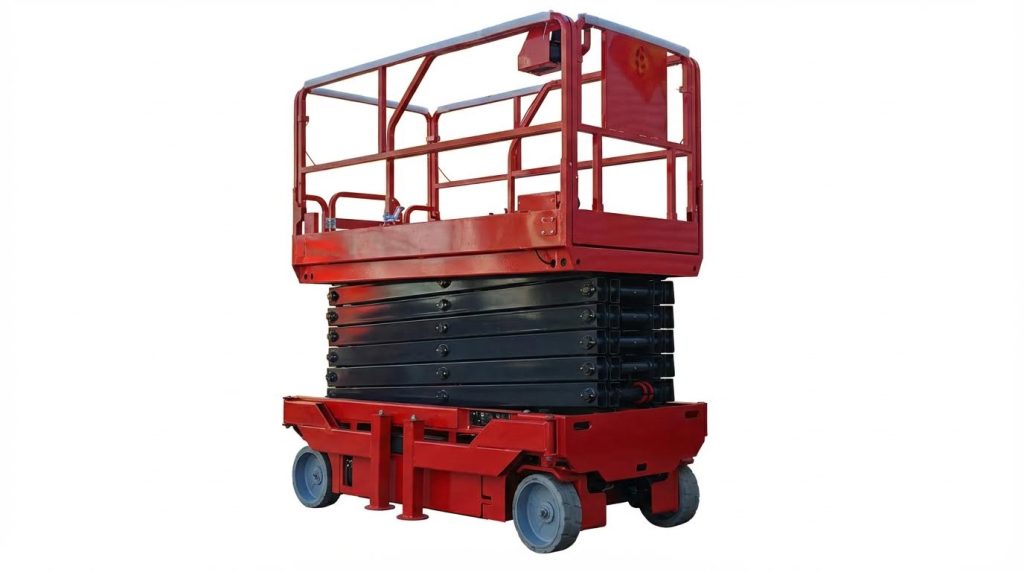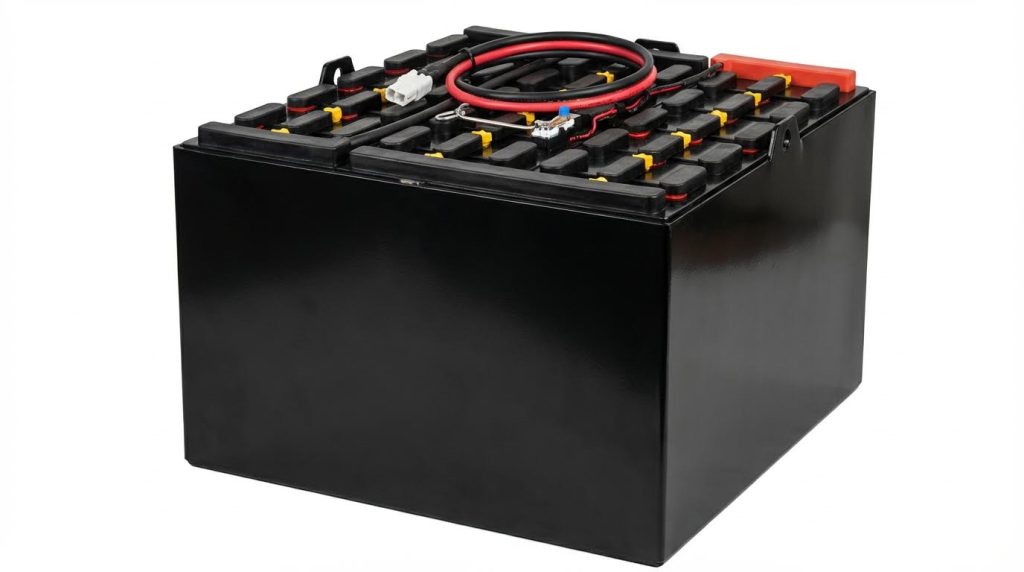
Knowing how to tell if a walkie stacker battery is bad is critical for safety, uptime, and battery life. This guide walks through real‑world symptoms, simple electrical tests, and how to separate battery faults from charger or truck issues. You will also see how lead‑acid and lithium batteries fail differently, and what preventive checks keep them in service longer. Use it as a structured, step‑by‑step reference before you decide to repair, recondition, or replace a pack.
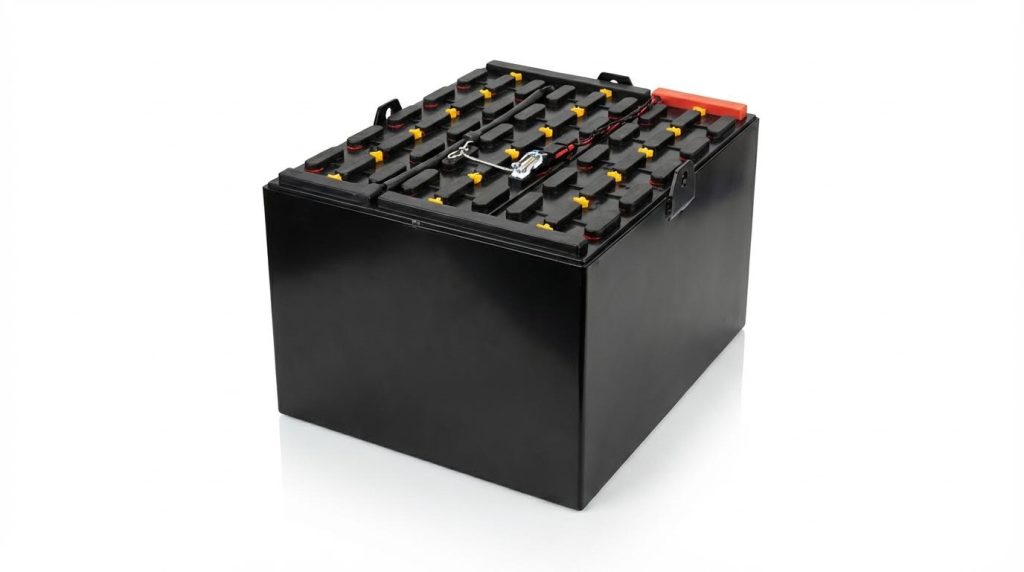
Key Signs Your Walkie Stacker Battery Is Failing

Common symptoms in daily operation
In daily use, a bad walkie stacker battery usually shows up first as performance loss, not a total shutdown. If you want to know how to tell if a walkier stacker battery is bad, start by watching how the truck behaves over a full shift.
- Shorter run time: The truck used to last most of a shift, but now needs charging much earlier, even though charging time and workload have not changed. This “short battery usage time” often points to reduced capacity in one or more cells, especially if the charger output voltage is normal. Charger output higher than battery voltage with poor run time usually indicates a battery, not charger, fault.
- Slow lift and travel under load: The stacker may drive or lift normally when empty, but slows or stalls when carrying rated loads. This is a typical sign of voltage sag under load and increased internal resistance in aging cells.
- Frequent low‑voltage or fault indications: If the truck’s controller or display shows frequent battery or power faults, or if indicator lights stay in a fault state, it often reflects unstable battery voltage. A controller light that remains steadily on instead of cycling normally can indicate an electrical fault that should be checked along with the battery. A steady controller indicator light is treated as a likely fault condition.
- Hard starting or random power loss: The truck may hesitate when you first key on, or it may suddenly lose power and then recover. This can happen when one battery in a series string has dropped to a very low voltage or has an intermittent internal connection.
- Visible and measurable clues: In addition to behavior, basic checks give strong hints the battery is failing:
- A single battery or monobloc reading below about 7 V in a 12 V unit shows severe discharge and possible damage. Voltage lower than 7 V on one battery is treated as serious discharge.
- If two batteries in the same pack differ by more than about 0.7 V at rest, that imbalance is a strong indicator that at least one unit is faulty and may need re‑activation or replacement. A voltage difference greater than 0.7 V between batteries is considered a failure criterion.
When several of these symptoms appear together—short run time, slow lift, repeated low‑voltage alarms, and abnormal voltage readings—you can be confident the battery is near end of life, even before detailed testing.
Safety and standards to keep in mind
When you investigate how to tell if a walkier stacker battery is bad, safety and basic standards are as important as the test results. A failing battery can leak, overheat, or arc, so treat every check as a formal inspection, not a casual look.
- Visual inspection before testing: Always start with a visual check of cases, terminals, and cables. Look for cracks, bulging, or electrolyte leaks on lead‑acid batteries, and check that electrolyte levels cover the plates where applicable. Cracks, leaks, and low electrolyte level are treated as critical defects. Corroded or loose terminals increase resistance, can cause heat and arcing, and must be cleaned and tightened before any load testing.
- Personal protective equipment (PPE): For lead‑acid batteries, use eye protection, chemical‑resistant gloves, and suitable clothing. Acid can spray during equalization or if a case fails. Good practice is to neutralize any corrosion with a baking soda solution and rinse, as commonly recommended for industrial batteries. Cleaning terminals and neutralizing corrosion is a standard maintenance step.
- Follow electrical testing norms: Never perform voltage or load tests on a visibly damaged or leaking battery. Let a freshly charged battery rest (typically several hours) before open‑circuit voltage checks to avoid misleading readings and reduce gassing. Rest periods of 4–6 hours are commonly used before open‑circuit voltage tests. Use insulated tools, avoid bridging terminals, and follow the truck manufacturer’s lockout procedures before disconnecting the pack.
- Recognize when to stop and tag out: If you find severe voltage imbalance (for example, more than about 0.7 V difference between units in the same string), visible case damage, or signs of overheating, remove the stacker from service until a qualified technician inspects it. Significant voltage discrepancies are grounds for battery re‑activation or replacement. This approach aligns with common industrial safety practices that prioritize equipment isolation when electrical integrity is in doubt.
By combining these safety steps with the operational symptoms, you can quickly decide whether the issue is minor maintenance or a failing battery that should be removed from service.
Step‑By‑Step Electrical Testing Of Stacker Batteries
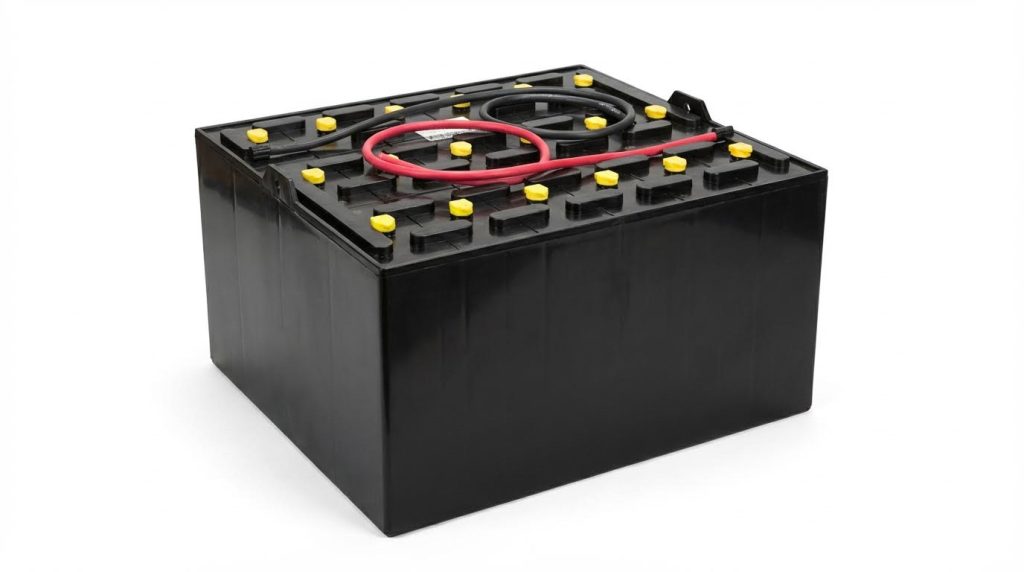
Visual inspection and basic multimeter checks
Start every diagnosis of how to tell if a stacker battery is bad with a safe visual inspection. Park the truck, lower the forks, power off, and wear eye and hand protection. Then check the battery area methodically before you touch a meter.
- Visual checks
- Look for cracked cases, bulging sides, or any signs of electrolyte leaks on or around the battery. Leaking and low electrolyte levels are common in lead‑acid batteries.
- Inspect terminals and connectors for white/green corrosion, pitting, or heat discoloration. Corrosion creates resistance and voltage drop under load. Cleaning with a baking‑soda and water mix is a standard practice.
- Confirm cables are tight, strain‑relieved, and not frayed or pinched along the mast or chassis routing.
- Basic multimeter checks (no load)
- After a full charge, let the battery rest 4–6 hours where possible. Then measure open‑circuit voltage at the main terminals. A 12 V lead‑acid at about 12.6–12.8 V is typically fully charged, while around 11.8 V corresponds to roughly 20% charge. These reference voltages are widely used for quick state‑of‑charge checks.
- On multi‑battery packs, measure each battery separately. A single unit below about 7 V in a nominal 12 V block indicates severe discharge and likely damage, and a difference greater than about 0.7 V between two batteries in the same string is treated as a failure condition that usually calls for re‑activation or replacement. Service procedures flag these thresholds as critical.
- Basic truck‑side checks
- Verify the emergency stop and key switch with a multimeter for continuity. If the emergency stop shows open (no conduction) in the run position, replace it before blaming the battery. Standard troubleshooting uses continuity to confirm switch health.
If any case damage, leakage, or extreme voltage imbalance shows up at this stage, you already have strong evidence the battery is bad, even before deeper electrical tests.
Voltage, load, and specific gravity measurements

Once the basic checks are complete, use controlled electrical tests to confirm whether the stacker battery can still deliver capacity and current. This is where you move from “suspicion” to hard evidence of how to tell if a walkier stacker battery is bad.
- Open‑circuit voltage (OCV) – pack and cells
- After a full charge and rest period, measure OCV at the main terminals and compare to nominal values for the system voltage. For lead‑acid, 100% charge is typically around 2.10–2.13 V per cell, giving about 12.6–12.8 V for a 12 V block. These values are commonly used in industrial battery testing.
- For LiFePO₄ modules, a rested voltage around 13.3 V after charge is typical for a 12 V nominal pack. This is a standard reference value for post‑charge checks.
- Load test – voltage under current
- Apply a controlled load roughly equal to about 50% of the rated capacity for lead‑acid batteries and monitor voltage for 15 seconds. The voltage should not drop below about 9.6 V for a 12 V unit during this short test. This pass/fail criterion is widely used in battery standards.
- On Li‑ion packs, observe voltage sag during normal lifting or travel. A sharp, immediate drop or truck shutdown at high indicated state‑of‑charge points to internal resistance or protection cut‑off rather than a simple low‑charge condition. Operational load monitoring is a standard practice for Li‑ion.
- Specific gravity (SG) – flooded lead‑acid only
- Charge the battery fully, let it cool, then use a hydrometer to measure SG in each cell. Values around 1.265–1.285 at 25 °C indicate a fully charged cell; consistently lower values show sulfation or loss of active material. These SG ranges are standard for traction batteries.
- Compare cells: large SG spreads between cells signal one or more weak cells that will drag down the whole pack even if pack voltage looks acceptable. Unequal SG is a key marker of defective cells.
Quick reference – typical 12 V lead‑acid values
| Test | Healthy range | What a bad result suggests |
|---|---|---|
| Open‑circuit voltage | ≈12.6–12.8 V | Chronic undercharge or sulfation |
| 15 s load test | Stays ≥9.6 V | High internal resistance / lost capacity |
| Specific gravity | 1.265–1.285, cells within close range | One or more weak or failing cells |
When voltage, load, and SG all point in the same direction, you have a solid technical basis to decide whether the walkie stacker battery is still serviceable or effectively at end of life.
Differentiating battery, charger, and truck faults
To avoid replacing good batteries, you must separate battery problems from charger or truck issues. A structured sequence of tests makes this clear and supports reliable decisions on how to tell if a walkier stacker battery is bad versus mis‑charged or mis‑diagnosed.
- Check the charger first
- Connect the charger to the battery and measure its output voltage during the charge phase with a multimeter. Under normal operation, the charger output should be higher than the battery’s present voltage; if it is low or unstable, the charger is at fault. Service guidance explicitly uses this rule to separate charger vs. battery faults.
- If charger voltage is normal but the battery still shows short runtime or low voltage after a full cycle, the problem is inside the battery, not the charger. Short usage time with normal charger output is treated as a battery defect.
- Isolating truck‑side faults
- With a known good or freshly tested battery installed, power the walkie stacker and observe the controller indicator lights. A steady fault light or defined flash code (for example, repeating patterns pointing to communication issues) indicates a control or wiring problem rather than a weak battery. Error patterns are commonly tied to handle‑controller communication faults.
- Check for voltage at the truck’s main contactor and controller under key‑on. If battery voltage is stable at the terminals but drops only inside the truck harness, suspect high‑resistance connections, contactors, or wiring instead of the battery itself.
- Putting the evidence together
- Battery fault likely when: open‑circuit voltage is low after full charge, one or more batteries are below about 7 V, there is more than about 0.7 V spread between batteries in the same pack, or the pack fails load and SG tests. These thresholds are used in field diagnostics to flag replacement.
- Charger fault likely when: the battery tests acceptable on OCV, SG, and a short load test, but the charger output never rises above battery voltage or never reaches the expected charge stage.
- Truck fault likely when: a known good battery and charger are in use, but the stacker still shows intermittent power loss, error codes, or voltage drops only inside the truck wiring or controller.
By following this sequence—visual, multimeter, load, SG, then charger and truck checks—you minimize guesswork and can document clear, technical reasons before you repair, recondition, or replace a walkie stacker battery.
Lead‑Acid Vs. Li‑Ion: Failure Modes And Maintenance
Typical failure patterns and root causes
Lead‑acid and lithium‑ion walkie stacker batteries fail in different ways, and those patterns are a big part of how to tell if a walkier stacker battery is bad. Lead‑acid packs usually show gradual loss of run time, more frequent need for charging, and uneven cell voltages or specific gravity between cells. Common root causes include undercharging, which promotes sulfation on the plates and permanently reduces capacity due to incomplete charge cycles, as well as chronic deep discharges below about 20% state of charge that stress the plates and separators. Overcharging, incorrect charger settings, or leaving the truck on charge for long periods drive up temperature, accelerate water loss, and corrode plates, which shortens life and can cause visible case swelling or venting issues through excessive heat and plate corrosion. Poor watering practices are another lead‑acid failure driver; low electrolyte exposes plates and leads to irreversible drying and shedding of active material when distilled water is not added as required. In lithium‑ion (e.g., LiFePO₄) packs, the most common issues are cell imbalance, rising internal resistance, and reduced usable capacity after many charge cycles. These batteries rely on a battery management system (BMS); faults often first appear as the truck shutting down early under load or refusing to charge even though pack voltage still looks normal. BMS diagnostics allow you to see individual cell voltages, temperature, and cycle counts, and will flag cells that are out of balance or overstressed by reading cell voltage, temperature, and cycle data. Both chemistries are sensitive to extreme temperatures: high heat accelerates chemical breakdown and gas generation, while very low temperatures increase internal resistance and reduce available power, which can make a marginal battery look “bad” long before it actually reaches end of life because of chemical decomposition at high temperature and resistance rise in the cold.
Preventive maintenance and testing intervals
Preventive maintenance is where the difference between lead‑acid and lithium‑ion really shows up, and it is also where you get the clearest answers on how to tell if a walkier stacker battery is bad before it fails in service. Lead‑acid batteries need routine visual checks for case damage or leaks, terminal corrosion, and correct electrolyte level; low fluid must be topped up with distilled water only by inspecting casing, leaks, and fluid level. They also benefit from scheduled equalization charges to rebalance cell voltages and fight sulfation, especially in multi‑shift or opportunity‑charging operations because skipping equalization leads to unequal cell voltages and sulfation. For condition checks, a simple program is to fully charge, let the battery rest, then log open‑circuit voltage, specific gravity (for flooded designs), and a short load or discharge test; fully charged 12 V units typically sit around 12.6–12.8 V at rest, with specific gravity roughly 1.265–1.285 in healthy cells based on open‑circuit voltage and hydrometer readings. Lithium‑ion packs require less day‑to‑day care, but they do need periodic BMS checks to confirm that cell voltages are balanced, temperatures stay in range, and internal resistance is not trending up too fast through BMS verification and internal resistance testing. A practical testing schedule is to increase test frequency as batteries age: quarterly checks in the first year, then stepping up to bi‑monthly, monthly, and even weekly tests for units older than four years, with replacement recommended if static voltage and load performance fall below defined thresholds following age‑based testing frequencies and minimum static voltages. Combining this structured testing with good charging discipline—charging fully until the indicator turns green, avoiding chronic deep discharges, and matching chargers correctly to the battery chemistry—will extend service life and give you early, objective evidence when a walkie stacker battery is no longer fit for duty.
“”
Summary: When To Repair, Recondition, Or Replace
Deciding what to do with a weak walkie stacker battery starts with clear evidence. Operational signs, visual checks, and electrical tests must agree. Short run time, slow lift under load, and low‑voltage alarms point to lost capacity. Voltage, load, and specific gravity tests then confirm whether the pack can still deliver safe current.
If a few cells or blocks are weak but the case is sound and voltages are only slightly unbalanced, reconditioning can help. Equalization charges, careful cycling, and cell‑level checks may recover useful life, especially on lead‑acid packs that suffered from undercharge. Plan this work when the truck can be down and document before‑and‑after readings.
Replace the battery when you see severe voltage imbalance, repeated failure of load tests, case damage, leaks, or signs of overheating. At that point the pack is a safety risk, not just a cost item. Tag the truck out until a safe pack is installed.
The best long‑term strategy is structured care. Follow the inspection and test steps in this guide, tighten charging discipline, and adjust test frequency as packs age. This approach lets Atomoving users protect operators, avoid unplanned downtime, and budget battery replacements on their own terms.
Frequently Asked Questions
How do you know if a walkie stacker battery is faulty?
A faulty walkie stacker battery often shows specific symptoms. You might hear a clicking sound when trying to operate the equipment, or experience slow cranking. Other signs include an illuminated warning light on the dashboard, swelling or bloating of the battery case, or reduced performance. If your battery fails to hold a charge despite proper maintenance, it could also indicate failure. For professional guidance on testing, consider reviewing Battery Testing Methods.
What are the common tests to diagnose a bad battery?
There are three widely used methods to test a battery’s health: specific gravity testing, load testing, and capacitance testing. Specific gravity testing measures the electrolyte density in lead-acid batteries, while load testing evaluates how the battery performs under simulated operational conditions. Capacitance testing assesses the battery’s ability to store energy. These techniques can help determine whether your walkie stacker battery needs replacement. Learn more about these tests at Battery Testing Techniques.
What factors can cause a walkie stacker battery to drain quickly?
Several factors can contribute to rapid battery drainage in material handling equipment like walkie stackers. These include excessive use of auxiliary systems (e.g., lights or alarms), overcharging, and high ambient temperatures. Additionally, old or poorly maintained batteries may lose their ability to hold a charge effectively. Regular inspections and adherence to manufacturer guidelines can mitigate these issues.