Choosing the right scissor lift size starts with understanding how platform dimensions, lift height and capacity work together. This guide explains what size scissor platform are available, how engineering limits affect their performance, and how to match a model to your workflow and safety requirements. You will see typical ranges for platform sizes, vertical travel and load ratings, plus the key trade‑offs between footprint, mobility and ergonomics. Use it as a practical sizing roadmap before you commit to a specification or layout change.
Key Scissor Lift Size Ranges And Definitions
When people ask what size scissor lifts are available, they usually mean three things: platform size, lift height, and capacity. This section defines the main size bands you will see on spec sheets so you can compare models quickly and shortlist the right range for your job.
Typical platform length and width ranges
Platform size is the footprint you actually work on or place loads on. It must match both the load dimensions and the available floor space.
| Platform size type | Typical length range | Typical width range | Example sizes from real models |
|---|---|---|---|
| Compact work-positioning tables | 600–900 mm (≈24–36″) | 600–900 mm (≈24–36″) | 24″ × 36″ platforms on light-duty tables used for 2500–6000 lb capacities |
| General industrial lift tables | 1300–2500 mm | 820–1500 mm | Examples include 1300 × 820 mm and 2500 × 1500 mm platforms on stationary industrial lifts with 400–8000 kg capacities |
| Large / heavy-duty tables | up to ≈3000 mm and beyond | up to ≈3000 mm and beyond | Industrial ranges commonly offer from 24″ × 36″ up to 120″ × 120″ platforms for very large loads in heavy-duty series |
From an engineering point of view, most standard industrial scissor lifts sit roughly in this band:
- Small: about 600 × 600 mm to 900 × 900 mm (24″ × 24″ to 36″ × 36″)
- Medium: about 1300 × 820 mm to 2000 × 1300 mm
- Large: about 2500 × 1500 mm up to roughly 3000 × 3000 mm (≈120″ × 120″)
Custom platforms outside these ranges are also common in project work, but they will usually still be based on these core size families. When you evaluate what size scissor lifts are available, start by matching your largest load length and width to one of these platform bands and then check the rest of the specs.
How platform size affects other specs
A longer or wider platform increases overturning moments and structural stresses in the scissor arms and base frame. Designers compensate with thicker sections, wider bases, or reduced rated capacity. This is why two lifts with the same capacity can have different allowable load distributions and why oversizing the platform “just in case” can drive up cost and footprint without adding real benefit.
Common lift heights and vertical travel bands
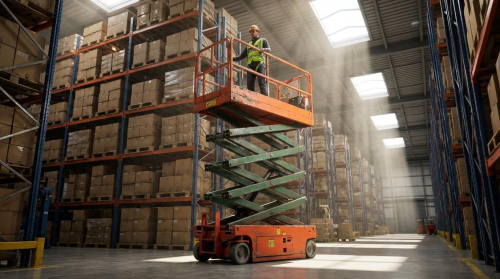
Vertical travel is the stroke of the lift from fully lowered to fully raised. It is the key dimension for reaching work heights, conveyors, docks, or mezzanines.
| Application band | Typical vertical travel range | Typical raised height range | Example data from real models |
|---|---|---|---|
| Ergonomic work-positioning (benchtop level) | 500–700 mm (≈20–28″) | ≈750–900 mm (≈30–36″) | Travel of 22–24″ with raised height around 30 1/2″ on several industrial tables with 2000–9600 lb capacities and on 2500–6000 lb tables in compact sizes |
| General industrial height adjustment | 990–2000 mm (≈39–79″) | ≈1200–2500 mm depending on self-height | Stationary industrial lifts offer lifting heights between 990 mm and 4210 mm, with self-heights from 205–850 mm, giving a wide travel range for production lines and workstations across 400–8000 kg capacities |
| Cargo / dock / mezzanine service | up to ≈6000 mm (≈236″) | Dock or mezzanine height, often 3–6 m | Hydraulic cargo scissor lifts support lifting heights up to 6 m for moving goods between floors or dock levels with capacities from 500 kg to 40 tons |
| Tilt-and-lift workstations | ≈500–700 mm lift plus tilt | ≈1200–1300 mm including tilt | Tilt-and-lift tables show raised heights around 46 3/4″ to 50 3/4″ with lift speeds of 20–44 seconds and tilt angles of 30° or 45° for 1000–4000 kg capacities |
To relate these bands to everyday use:
- Assembly and packing: often need work heights around 1.0–1.2 m for good ergonomics, so travel of about 500–800 mm is common.
- Automotive and heavy equipment: work heights around 1.8–2.0 m are typical for aligning with lines or fixtures, so multi-stage scissor sets with 1–2 m of travel are used. Ergonomic guidance often cites about 1.2 m for electronics assembly and 1.8–2 m for automotive work
- Floor-to-floor or dock-to-mezzanine: expect travel in the 2–6 m range and correspondingly larger bases, cylinders, and structural sections.
When you map out what size aerial platform are available for your project, treat platform plan size and vertical travel as a matched pair. A long-travel unit with a very small base can become unstable, so manufacturers usually increase base size, scissor span, and cylinder bore as lift height goes up.
Quick checklist for defining your size band
To narrow the correct size range before you look at detailed catalog data, answer these questions:
- What is the heaviest load (including pallets, fixtures, and people if applicable)? Add at least 20% safety margin. Engineering guidance recommends oversizing capacity by about 20%
- What are the maximum load dimensions (L × W) including overhang and packaging?
- What minimum and maximum work heights do operators or processes need?
- Is the lift stationary, or must it move through doorways and aisles?
- Are there pit-depth limits or maximum allowable closed height?
Once these are defined, you can quickly filter catalog tables by platform size band and travel band, then fine-tune based on capacity, duty cycle, and power source.
Engineering Factors Behind Size, Capacity And Performance
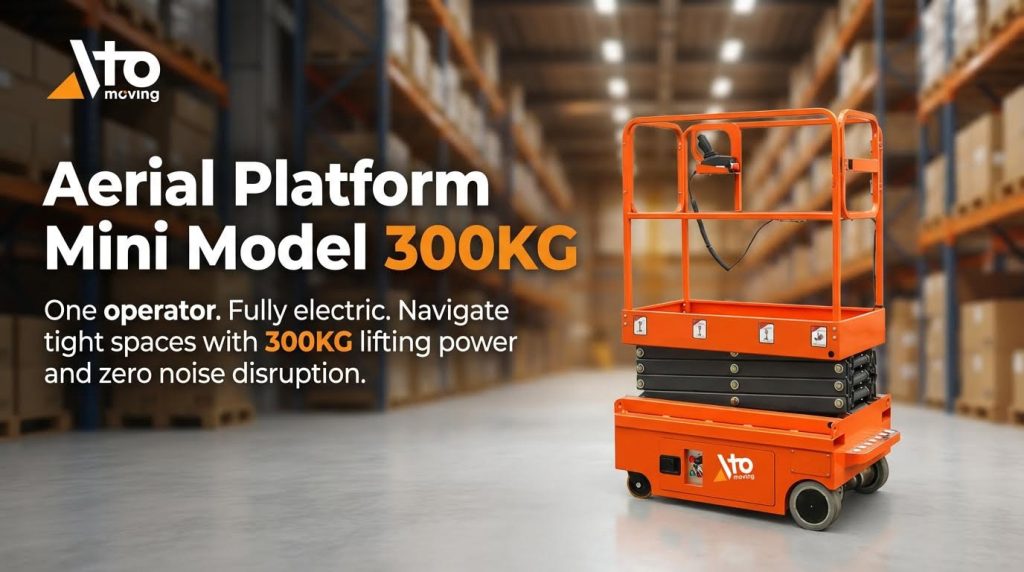
Engineering choices behind platform size, capacity and hydraulics explain what size scissor lifts are available and how they behave in real work. This section links dimensions and powertrain decisions to stability, duty life and safety, so you can read spec sheets with a critical eye.
How platform size drives load distribution
Platform size is the first driver of load distribution, stability and structural stress. As the plan area grows, loads sit farther from the scissor pin joints and centerline, increasing bending moments in the arms and base frame.
- Larger platforms increase overturning moment and require wider bases or higher steel sections.
- Off‑center loading becomes more likely as platform length grows.
- Engineers use safety factors and deflection limits to keep platform tilt within safe values under rated off‑center loads.
- Platform length and width must match the largest load footprint to avoid overhang and instability. Platform size must accommodate the largest items handled without causing instability
| Engineering aspect | Effect of increasing platform size | Design response |
|---|---|---|
| Load footprint vs. platform area | More room for large loads; higher risk of off‑center placement | Specify clear loading zones and off‑center ratings |
| Bending in scissor arms | Higher bending moments and deflection | Use thicker arms, higher‑grade steel, or double‑wide designs |
| Base frame stability | Higher overturning moment | Wider base, anchoring to floor, or pit mounting |
| Lift capacity potential | More area to support heavier loads | Upsize cylinders, pins, and bearings to keep stresses within limits |
Real‑world scissor lift platforms range from about 24″ × 36″ up to about 120″ × 120″ in standard industrial tables, with many manufacturers also offering custom dimensions. Platform sizes from 24″ × 36″ to 120″ × 120″ are commonly available This wide range is the engineering answer to what size scissor lifts are available for different load footprints and stability requirements.
Why off‑center loading matters
Scissor mechanisms are most efficient when the load is centered over the intersection of the arms. Off‑center loads shift the resultant force, increasing torsion in the platform and uneven compression in the arms. To manage this, designers rate lifts for edge and corner loading, reinforce platforms, and may add platform centering devices that improve life by controlling how loads enter the structure. Platform centering devices can double or triple lift life
Capacity ratings, duty cycles and safety factors
Capacity ratings, duty cycle and safety factors are tightly linked. The same platform size can be engineered for light, intermittent use or for continuous, heavy‑duty service by changing structural sections, hydraulics and safety margins.
| Parameter | Typical engineering approach | Example data from real products |
|---|---|---|
| Rated capacity | Set below structural and hydraulic ultimate limits using safety factors | Industrial scissor lifts range from about 400 kg to 8,000 kg, and some cargo models reach 40 tons. 400–8,000 kg range 500 kg to 40 ton cargo units |
| Vertical travel | Chosen to match process heights and ergonomics | Standard tables offer about 22″–72″ travel. 22″ to 72″ vertical travel Other ranges reach 990–4,210 mm. 990–4,210 mm lifting heights |
| Duty cycle / design life | Cycles and loading spectrum define fatigue life of arms, pins and welds | Industrial units may carry standard warranties like 10 years or 250,000 cycles, with options up to 3,000,000 cycles. 10‑year / 250,000 to 3,000,000 cycle options |
| Safety factor on load | Rated capacity typically includes ~25–50% margin over expected maximum service load | Selection guidance often recommends choosing a lift at least 20% above the heaviest expected load to cover variation and distribution. Add ~20% capacity buffer |
To answer what size scissor lifts are available from a capacity standpoint, you can expect standard industrial tables from about 500 lbs up to over 10,000 lbs in many catalogs, with specialized cargo lifts far beyond that range. Models can range from handling 500 lbs to over 10,000 lbs
- Higher capacities require larger cylinders, larger pin diameters and thicker scissor arms to keep stresses within allowable limits.
- High‑cycle applications drive design toward better bearings, tighter tolerances and sometimes platform centering devices to reduce uneven loading.
- Safety systems such as overload protection valves, dual hydraulic circuits and mechanical locks back up the structural safety factor. Dual hydraulic circuits and overload protection are common
Standards and compliance
Industrial scissor lifts are designed against standards that define safety factors, stability limits and control requirements. Many stationary tables conform to ANSI codes and similar European standards. Some tables conform to applicable ANSI codes ANSI MH29.1, for example, covers design, performance and safety for industrial scissors lifts. ANSI MH29.1 defines key safety requirements
Lift speed, power source and hydraulic design
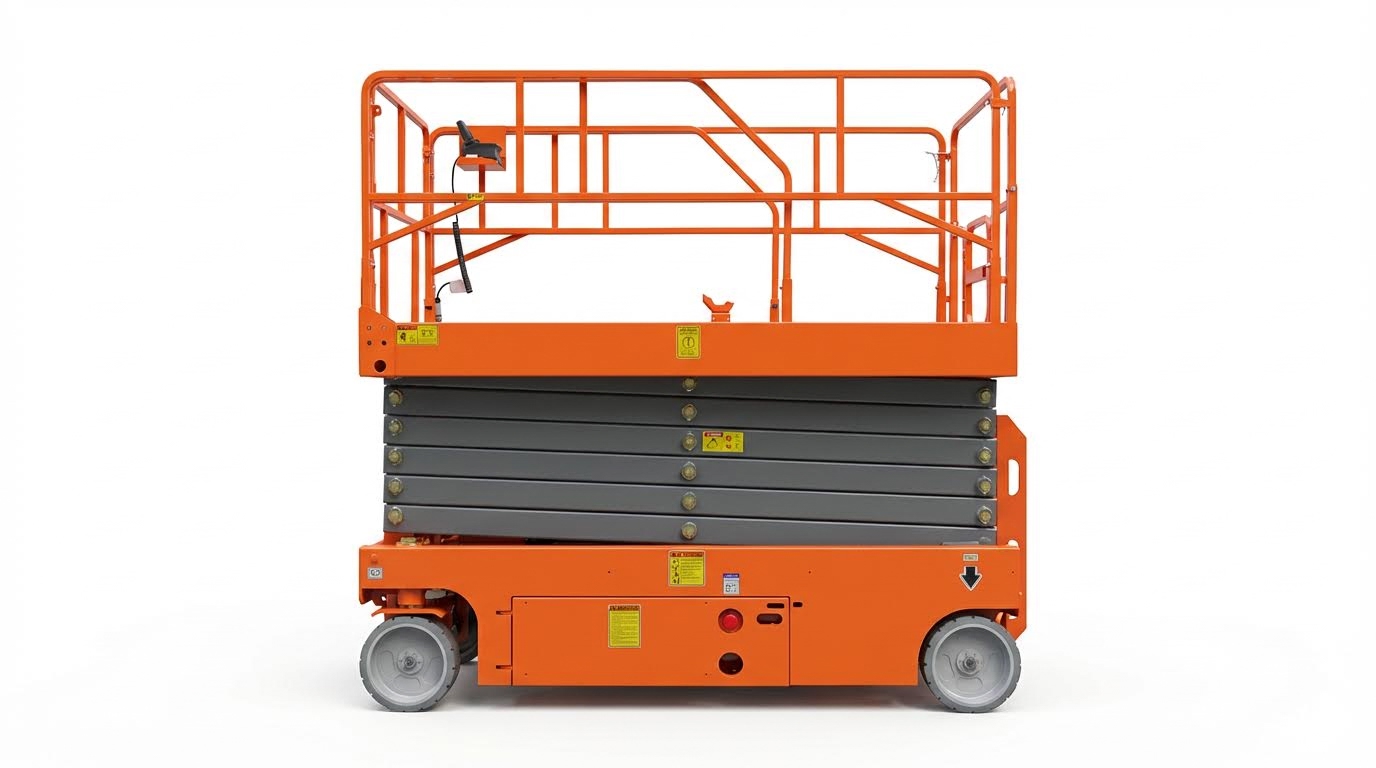
Lift speed, power source and hydraulic design determine how quickly a scissor lift reaches its working height and how efficiently it uses energy. These factors also limit what size aerial platforms are available for a given duty cycle and environment.
| Design variable | Typical ranges / options | Engineering impact |
|---|---|---|
| Lifting speed | About 12–90 seconds from lowest to highest position, depending on stroke and load. 12–26 s examples 20–90 s range | Faster speeds need higher flow rates, larger pumps and more motor power, increasing heat and energy use. |
| Power source | Hydraulic (electric motor‑driven), electric screw, or pneumatic drives. Hydraulic, electric and pneumatic options | Hydraulic is common for heavy loads; electric suits clean, quiet indoor use; pneumatic fits hazardous or spark‑sensitive areas. |
| Hydraulic efficiency features | Energy recovery circuits and high‑efficiency valves can cut consumption by about 20%. Energy recovery reduces power use by ~20% | Lower operating costs, less heat generation, and smaller required power supply. |
| Operating temperature range | Hydraulic oils and seals can be specified for about -20°C to 80°C. High‑temperature‑resistant oil rated -20°C to 80°C | Ensures consistent speed and response in cold rooms, outdoor yards or hot process areas. |
- Heavier capacities and longer platforms usually mean larger cylinders and higher oil volume, which slow the lift unless pump size is increased.
- Designers balance speed against motor size, duty cycle and available electrical power.
- For high‑throughput lines, intelligent controls and programmable lift sequences reduce wasted travel and cycle time. Touchscreen controls can program lifting sequences and provide fault self‑diagnosis
Hydraulic components and safety
Engineering details inside the hydraulic system support both performance and safety. Machine‑grade cylinders with proper return lines, double‑wire braided hoses with JIC fittings, and steel reservoirs are typical on industrial units. Machine‑grade cylinders, braided hoses and steel reservoirs are common Safety controls such as over‑speed protection, emergency power supply and guardrail interlocks ensure the platform stops or locks if speed exceeds limits or if guarding is not secure. Over‑speed protection and guardrail interlocks are used to enhance safety
Selecting The Right Scissor Lift Size For Your Application
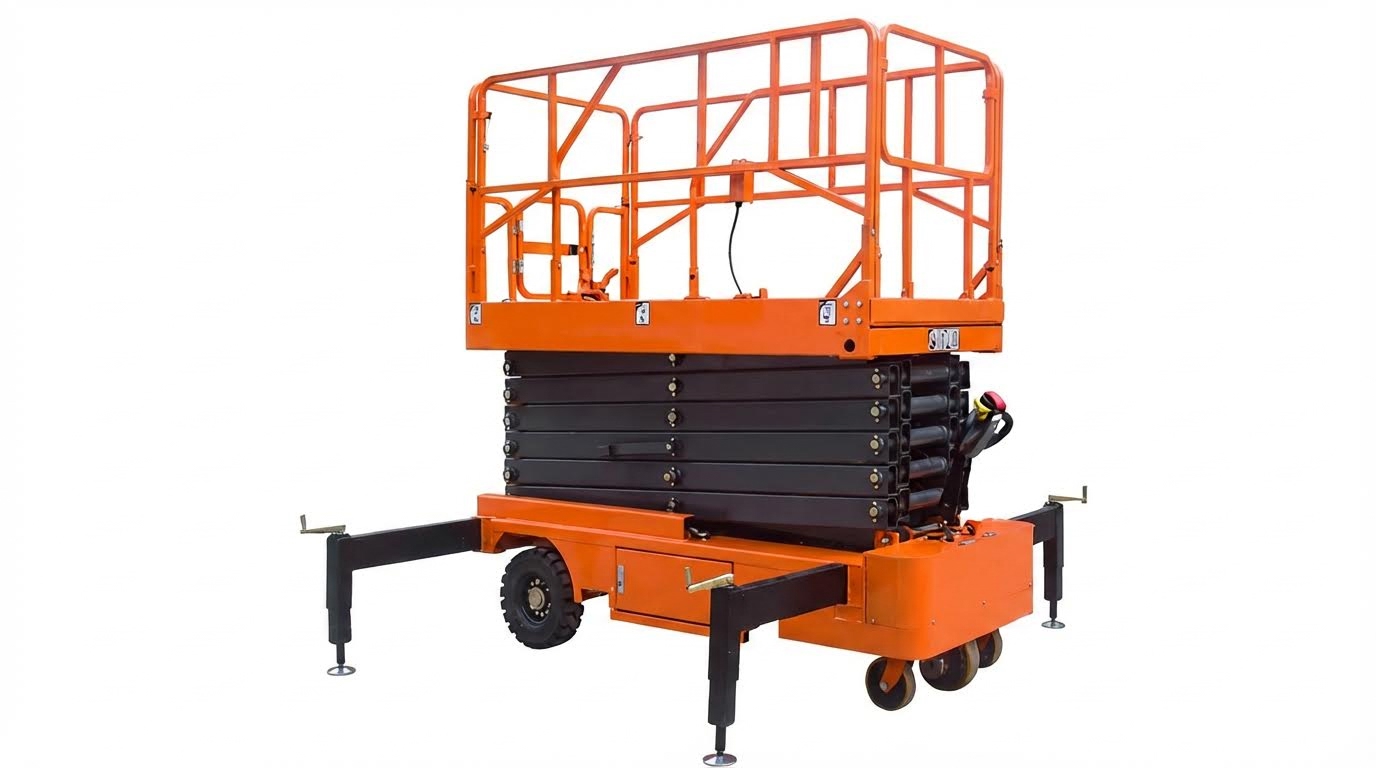
Matching platform and height to workflow and ergonomics
When you ask what size scissor lifts are available, the real question is which size fits your people, product and process. The goal is to keep work in the ergonomic “power zone” while safely handling the largest items you move.
- Define your work height range – Measure current working heights (floor, conveyor, bench, truck bed, mezzanine) and target a platform height that keeps hands roughly between elbow and mid‑chest for most tasks.
- Map all load interfaces – Note the lowest and highest transfer points (e.g., 800 mm conveyor to 1,800 mm rack beam) and choose a vertical travel band that comfortably spans that range. Typical industrial scissor lifts cover roughly 990–4,210 mm of lift depending on model. Industrial lift ranges and travel
- Size the platform to the largest load – The platform must fully support the biggest item without overhang. Typical platforms span from compact 24″ × 36″ up to about 120″ × 120″ in standard ranges. Example platform size ranges
- Check clearance and approach paths – Confirm there is room around the lift for manual pallet jack, carts or forklifts and that operators can step on/off without twisting or overreaching.
- Align lift height with ergonomic standards – For light assembly, many plants target about 1.2 m work height, while automotive lines often work closer to 1.8–2.0 m to match conveyors and fixtures. Typical ergonomic work heights
Quick ergonomic sizing checklist
- Record lowest and highest transfer points.
- Measure average operator elbow height.
- Set target platform height so hands stay between mid‑thigh and shoulder.
- Confirm operators can reach all areas of the load without bending or stepping off the platform.
- Verify visibility and line of sight at maximum height.
Once you know what size scissor lifts are available in standard catalogs, you can compare them against these workflow dimensions and decide whether a stock or customized platform is required. Many industrial models offer configurable platforms, for example 1,300 × 820 mm up to around 2,500 × 1,500 mm, to match specific product envelopes. Customizable platform dimensions
Balancing capacity, footprint, mobility and safety
Choosing the “right” size is a trade‑off between how much you lift, the space you have, how often you move the unit, and the safety margin you want. Data on capacities, travel and platform sizes helps you make those trade‑offs explicit.
| Selection factor | Typical engineering guideline | Relevant data from common scissor lifts |
|---|---|---|
| Load capacity | Rate lift ≥ 120% of heaviest expected load for safety margin. | Industrial tables span roughly 400–8,000 kg, while some cargo lifts reach 40 tons. 400–8,000 kg range Up to 40‑ton cargo lifts |
| Platform size | Plan for full support of longest and widest load, plus handling clearance. | Standard platforms range from about 24″ × 36″ to 120″ × 120″; custom examples include 1,300 × 820 mm and 2,500 × 1,500 mm. 24″ × 36″ to 120″ × 120″ Metric platform examples |
| Vertical travel | Travel must cover all transfer heights with some buffer. | Typical vertical travel ranges from about 22″ to 72″ in many industrial tables, with some models lifting up to around 6 m for cargo handling. 22″–72″ travel range Up to 6 m lifting height |
| Footprint vs. space | Ensure enough floor area for base frame, guarding and traffic lanes. | Long platforms (e.g., 2.5 m for glass sheets) may require layout changes or reinforced pits. Example of layout modification for long platforms |
| Mobility | Use stationary units for fixed points; mobile units for flexible workflows. | Stationary tables are common on production lines; mobile tables trade some capacity for maneuverability in changing work areas. Stationary vs mobile considerations |
| Safety and standards | Prioritize overload protection, emergency stop, guards, and compliance with relevant codes. | Industrial scissor lifts typically follow ANSI‑type standards for design and safety; additional features can include dual hydraulic circuits, over‑speed protection and guardrail interlocks. Example safety features |
From an engineering perspective, start with capacity and safety, then work back to footprint and mobility. Many scissor lift tables in the 500–10,000 lb band are sized by adding about 20% capacity above your heaviest load to allow for weight variation and off‑center loading. Recommended capacity margin
- If space is tight – Choose the smallest platform that fully supports your load and consider deeper pits or taller scissor stacks instead of a longer table.
- If loads are heavy and repetitive – Favor stationary, pit‑mounted units with robust steel bases and high‑duty‑cycle hydraulics.
- If processes change often – Use mobile scissor tables with moderate capacities and compact footprints, accepting some compromise in maximum load or platform size.
- If safety is critical – Specify overload protection, emergency lowering, guard rails and compliance with industrial lift standards such as ANSI‑type requirements for scissor tables. Industrial scissor lift safety requirements
Understanding what size scissor lifts are available in terms of capacity, platform envelope and travel lets you design from the task backwards, instead of forcing your process to fit the equipment. When you balance these four levers—capacity, footprint, mobility and safety—you end up with a lift that improves throughput, protects operators and fits your floor space for the long term.
Final Thoughts On Specifying Scissor Lift Sizes
Scissor lift sizing is not just about picking a platform that “fits.” It is an engineering decision that links platform area, vertical travel, capacity, and hydraulics into one stable system. Platform size sets the load footprint and overturning moment. Travel and base geometry set stability. Capacity, duty cycle, and safety factors protect the structure over its full life. Hydraulic design and power source decide speed, energy use, and how well the lift fits your plant utilities and environment.
Operations and engineering teams should start with the task, not the catalog. Define the heaviest load, largest footprint, and exact work height range. Add at least 20% capacity margin and insist on full support of the load with no overhang. Check that base footprint, guarding, and approach paths fit your layout and traffic. Then choose hydraulic and control options that match your cycle rate and safety rules.
When you follow this sequence, you use scissor lift geometry and safety principles to your advantage. The result is a platform that lifts smoothly, stays stable under off‑center loads, meets standards, and supports long, low‑maintenance service in Atomoving or any other facility.
Frequently Asked Questions
What are the standard sizes of scissor lifts?
Scissor lifts come in a variety of sizes to suit different tasks. The average height range for most scissor lifts is between 10 feet and 60 feet. Some specialized models can reach heights exceeding 120 feet. Scissor Lift Size Guide.
- Standard scissor lifts: 20 to 60 feet tall.
- Specialized models: Over 120 feet tall.
- Workspace sizes typically range from 2 to 10 feet wide.
Can a scissor lift fit in an elevator?
Yes, some of the smallest scissor lifts are compact enough to fit inside an elevator. These models are particularly useful for indoor construction or maintenance work in tight spaces. Small Scissor Lifts Info.
What are the weight capacities of scissor lifts?
The weight capacity of scissor lifts varies depending on the model and manufacturer. Most standard electric scissor lifts can support loads ranging from a few hundred kilograms up to approximately 450 kg (1,000 lbs). Larger industrial models may have higher capacities. Always check the equipment specifications for exact figures.
What types of batteries are used in scissor lifts?
Scissor lifts typically use one of two battery types:
- Lead-Acid Batteries: Known for reliability and lower cost, these are commonly used in many scissor lift models.
- Lithium-Ion Batteries: A newer technology offering benefits like faster charging times and longer lifespan, increasingly adopted in modern scissor lifts.